Since 2016, singer Bethel Nnadi has been trying to blow. Whenever he wants to release new music, he empties his account — and sometimes even sells his property — to cover the costs. It’s been tough, but he says he believes in his music and knows it will all be worth it in the end.
Speaking with Zikoko, he opens up about how he found music, his encounter with Joey Akan, and why he’s not giving up anytime soon.
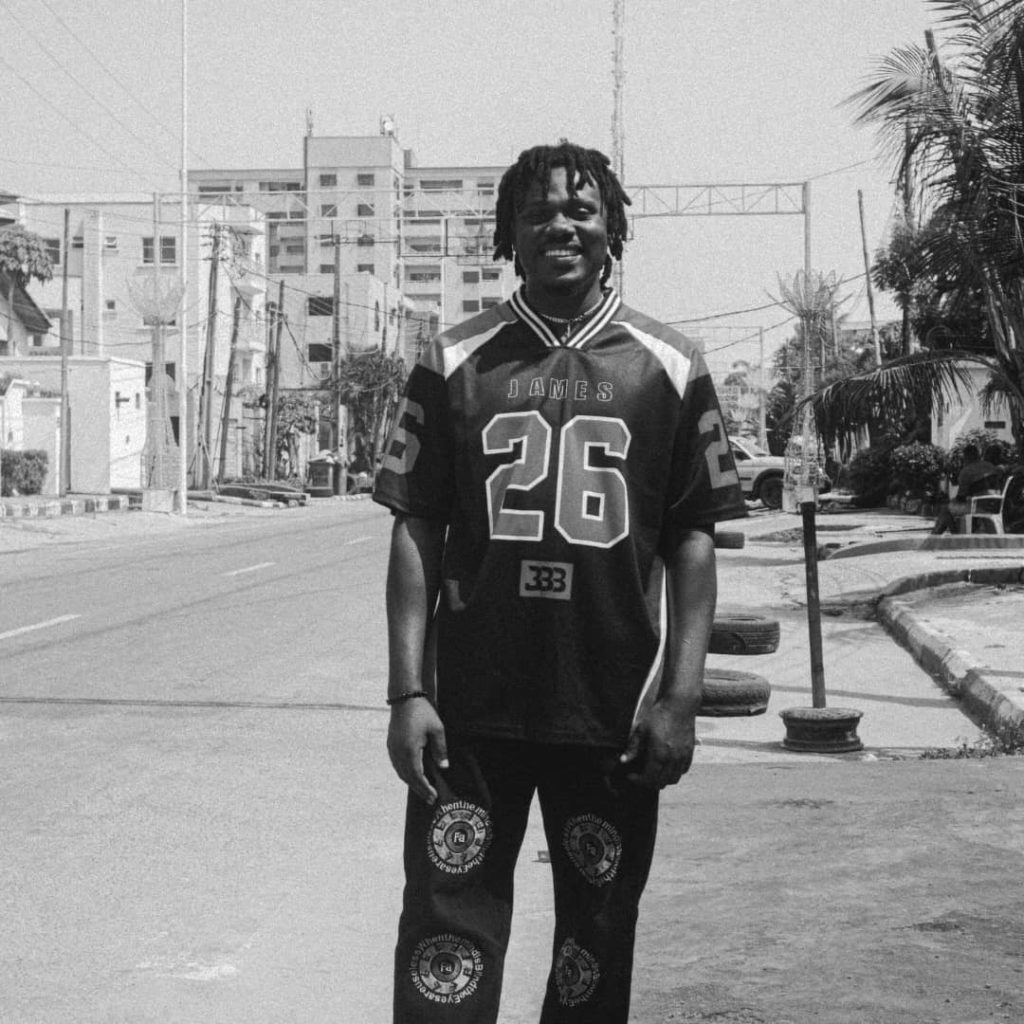
This is Bethel Nnadi’s story, as told to Dennis.
I grew up in a conservative home in Owerri, Imo State. My parents were devout Pentecostals, so secular music was banned in our house. In fact, anything “of the world” was banned. But in 2015, I left secondary school and discovered Afrobeats.
I had written JAMB but didn’t get offered admission. So I spent my time obsessively listening to music and waiting for the next year to try again.
But on December 8, 2016, everything changed. A musician friend, who made one of the tracks I had been playing on repeat, randomly took me to the studio. There, I recorded my first Afrobeats song, “Money in the Bank.”
As I stood in the booth, freestyling, beads of sweat rolling down my face, I knew that my life would never be the same. With every fibre of my being, I was going to be a musician. It didn’t matter that it was my first time in a studio; I was certain I wanted more.
I shared my song with all the members of my community and it gave me a new identity. I was semi famous. The children who played on the street pointed at me when I walked past. Even if it was just in my village, I was a star, and it felt good.
ALSO READ: My Girlfriend Almost Killed Me With Billing Because I Hang Out With Celebrities
Later, I tried my hand at gospel, but it felt contrived, and the lyrics didn’t come. A few producers also sent me beats and asked me to try writing pop songs for them, but the lines didn’t come either.
I believe good music comes from the spirit. So I locked in and wrote songs about my life. Every heartbreak, every win, every sad experience fuelled my music. I was going to be the “next Runtown.” Later, I delved into Igbo rap like Phyno, but it didn’t speak to me. I then decided to try becoming the “next Burna Boy” because he didn’t always sing about women. I thought that or the “next Fireboy” would be nice.
I never stopped writing my songs, but after I wrote JAMB for the second time and didn’t get admission, I started learning computer engineering as an apprentice in Owerri. I focused on software repairs and servicing cyber cafes and business centres in my community. I worked with NIIT Imo State and the master agent for BetKing.
Then someone reached out. He had a record company called Ugobest Music based in Ikorodu. So I travelled to Lagos to meet him. But it didn’t go well. I went back to Owerri with no music and no record deal.
In 2019, Darling FM, a radio station in Owerri, invited me to a forum for musicians, where I met the journalist Joey Akan. We took pictures and traded stories about our experiences in the music industry. He said many things, but one stuck with me: “Even while being undiscovered, do not stop writing music.” That advice would save me later.
I knew I had to put more songs out, and I needed to market them. So in 2020, I tried to get my song “Ghetto 2 International” on the radio in Owerri. I emptied my account and sold my phone to pay the marketer. I also made flyers for my music. I was dead broke, but the song was played on Darling FM. The sacrifice was worth it.
In 2021, I was one of 26 young musicians selected for the Slim Brown Mentorship Program. It was a huge win that opened me up to what was possible. Pushing my music from Owerri didn’t seem tenable. I needed to be in a big city where musicians’ dreams come to life. So I moved to Lagos.
I moved in with my brother, who lived in Odoguyan, somewhere in Ikorodu. I was broke and not earning a living, so I had to beg my siblings for money. I felt sad and was sinking into depression. But I remembered what Joey Akan said, and I pulled myself back up by writing songs.
Later, I got a tech job in Apapa. I hated it. I hated tech. I didn’t belong in that industry, but I had to do it. I went to the office twice a week and moved in with another brother who lived in Ajegunle, because it was closer to work. Then one day, on my way back from work, I saw a studio. I leapt with joy. I went in and spoke to the producer I met. We were going to make music together.
But he was no producer. I couldn’t have known. He was an apprentice. I had the beats, so I recorded in the studio. He was to mix and master, but he made a mess of the songs. I abandoned them.
Then one day in Ikorodu, I saw the flyer of another studio. I called the number and we made music together. It was a cover of “Romeo Must Die” by Ruger and BNXN. It was much better than the Ajegunle experience. I actually liked how the song turned out, so I emptied my account to make a short music video.
By now, my friends know me. Whenever I want to put new music out, I am phoneless. I trade my phone to foot the bill. Everything I have, I sacrifice for my music. I believe you have to invest in yourself.
There’s so much I want to do to invest in myself: grow my followers, upgrade my style, and improve my overall look. But I can’t afford it right now. I simply can’t keep up with the lifestyle that comes with making music. That’s why I locked my hair in 2023. I needed something to give me an identity, to help me stand out and look cool. And even though re-locking it leaves me in pain for three days, I endure it for the music.
Having this big dream and realising nobody is coming — it’s just you and you alone — can be hard. One of my songs, which I will release soon, “Landslide,” is about this.“ I’ve been struggling in life, looking over from a landslide, chasing the same goal. But I can never lay low. We are not backing down,” I sing in the song.
I have not gone back to university. I see my mates have graduated, but I don’t care. I don’t mind. I have even more important business with my music than worrying about school. School can wait. I have devoted my time to pursuing music. It’s an uphill battle, and I know it will be tough, but I believe in myself. You have to believe in yourself.
By day, I still work in tech as an engineer. But in the evenings, I isolate myself and work on my music. Sometimes I wake up with new songs in my head, and I start vibing to them. I’ve also given myself a stage name, Belziee. I was going to go for Bethel, but another musician already has that name.
What I need is a record deal. If I can find a record label to sign me, it would be easier. But until then, just like Joey Akan said, I’ll keep writing the songs.