Bikiya Graham-Douglas first came to the spotlight with her role in Flower Girl, which earned her an Africa Magic Viewers’ Choice Award (AMVCA). But long before she transitioned to the screen, she had built a stellar career as a theatre actress.
Since Flower Girl, she’s starred in films like God Calling, Funmilayo Ransome-Kuti, and Guy Ritchie’s Hollywood war drama The Ministry of Ungentlemanly Warfare, in which she played Madame Igbokwe. She has also worked as a producer, including on For Amina, released last year, and Remi X Nneoma, coming in 2026.
But acting wasn’t always an easy path for her. Growing up, her father didn’t always support her dream of becoming an actor. In this interview with Zikoko, she opens up about fighting for the career she wanted, finding her place in the industry, and the moment her father finally apologised to her.
This is an AsToldTo Dennis.
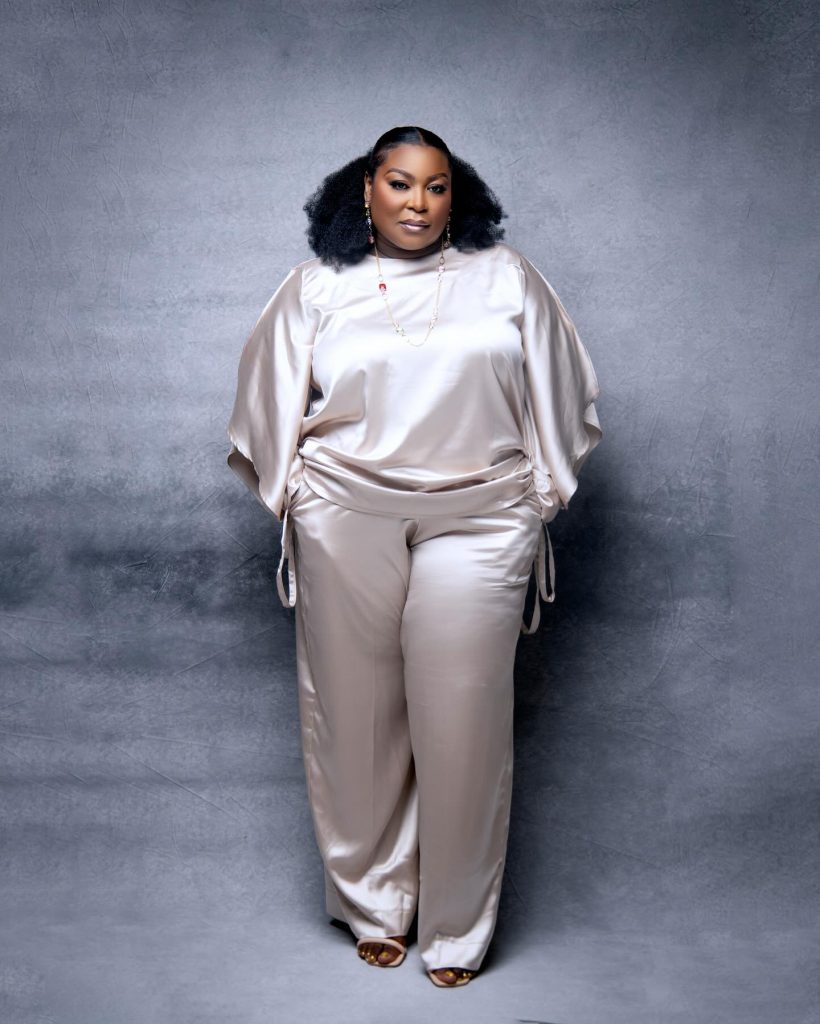
The first time I told my father I wanted to become an actress, it felt like the wind had been knocked out of me. I stood still, watching him, anticipating what he would say. “You would become a lawyer,” he said finally. I was shattered.
I come from a long history of strong women. My mother’s grandmother chose not to be complacent and fought her way through in a society that didn’t give her her due. We called her Omosefe — a child is worth more than wealth. She became a successful businesswoman, owning properties across the country.
My mother’s mother, my grandmother, was widowed early in her marriage, left alone to raise nine children by herself. She only went to school up to primary six, but she didn’t relent. She sent her children to school, some even abroad. One was an ambassador, another an inventor, and another became a minister. She spoke over 50 languages, and she owned businesses and properties across the country.
Subscribe to Zikoko Pop newsletter, The Feed, for the most important pop culture news
ALSO READ: The 10 Best Nollywood Movies About Nigerian History
My mother was a medical doctor who later became a member of the House of Representatives and then an ambassador. Her sister was a minister. For us, acting was something you did for leisure, not as a career. Like my mother, who once played Sidi in a staging of Wole Soyinka’s Lion and the Jewel, I was supposed to only think of acting as leisure, not a real job.
So I went to the University of Portsmouth and did my bachelor’s in Economics and Law. But I never stopped thinking about acting. When I left university, I was supposed to be like my siblings and get a master’s degree. But I applied to the London Academy of Music and Dramatic Art and got a scholarship.
This tiny taste was all I needed to know that this is what I wanted to do with my life.
My mother said to me, “Whatever you do, make sure you’re the best at it.” My father was furious. To him, I was wasting time and opportunity. A master’s degree in Economics and Law would solidify my standing in the labour market. I shut him down, and our relationship strained.
After my program at the London Academy of Music and Dramatic Art, I returned to school, this time to the Oxford School of Drama, where I got a master’s in Acting. I specialised in Shakespearean acting. Then Daddy fell ill. His doctor, a childhood friend of his, was based in the UK. He had been his private doctor for years, so he had to come to the UK for treatment. I went into full caregiver mode.
Every day, he watched me leave the house for Oxford to learn to be an actress — the career he had specifically told me not to pursue. We had disagreements, sometimes fights. And every day I came back home and cared for him.
It was my father who first introduced me to theatre. Growing up, he was a Commissioner for Youth, Sports and Culture. He took my siblings and me to watch theatre plays. I watched him be part of theatre shows as commissioner.
He booked artists to perform at events and carnivals. This was why I wanted to become a performer — because my father had shown me how exciting it was to be one. How could I even have been resentful of him in those days when he was sick and I cared for him? It was he who showed me that this life was possible. And I loved him for it.
As I left Oxford, he got better and went back to Nigeria. I wanted to continue my training.
So I went to The Bridge Theatre Training Company, where I learnt Drama/Theatre Arts and Stagecraft. I moved back to Nigeria and threw myself fully into theatre. At first, I was acting only in the classics: Lion and the Jewel, Death of the King’s Horseman, The Gods Are to Blame. But then I realised we needed to tell more stories.
I had to do something.
So I started Beeta Productions to make fresh stage plays. I realised I needed fresh dramas to stage, so I started the Beeta Universal Arts Foundation (BUAF), under which I launched the Beeta Playwright Competition to elevate playwrights.
In all of this, my father didn’t see my vision. But things started to change after I landed the role of Stella in the 2013 Michelle Bello flick, Flower Girl. To date, it’s one of my most lauded performances. I didn’t know that my father watched the film, but he did — and he loved it. I was nominated for the Africa Magic Viewers’ Choice Awards (AMVCA) for Best Supporting Actress for the role, and I won. Later, my mother told me my father had gathered all his friends into a room and made them vote for me. He was proud of my work, and I didn’t know it yet.
That same year, in 2014, UNESCO (United Nations Educational, Scientific and Cultural Organisation) decided to name Port Harcourt the World Book Capital. BUAF was tapped to be the official theatre partner for the event. My parents attended the plays that we put together.

After my father had watched these plays and we were winding down, he finally had something to say. In front of everybody, Daddy took the microphone and apologised to me for not supporting this passion of mine as aggressively as he should have earlier on.
That was who he was. He was the kind of man who apologised and made up. I burst into tears and we hugged each other.