This question is becoming as ubiquitous as the number of movies we see springing up on YouTube.
More Nigerians are turning to YouTube to consume feature films. And because of this, even established filmmakers are bringing their work to the yard — Kunle Afolayan uploaded his classics — and creating exclusive movies for the platform.
YouTube has slowly become a major platform for film consumption in Nigeria, especially because of the accessibility as compared to cinemas and paid streaming platforms.
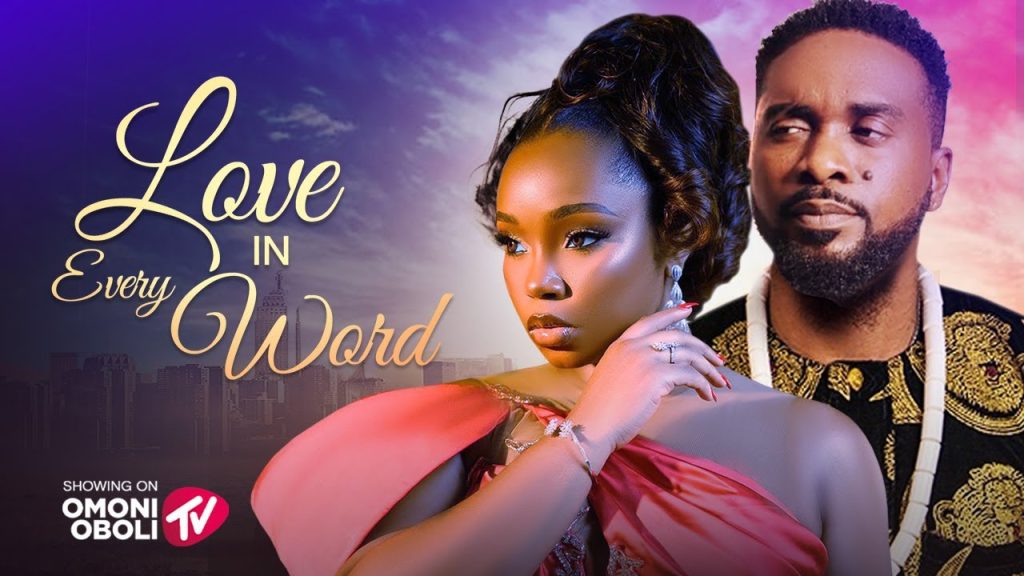
One of the most talked-about Nigerian movies in 2025, Omoni Oboli’s Love in Every Word, debuted on YouTube and has racked up over 32 million views and counting. That means an estimated 1 in 8 Nigerians have watched it.This raises an important question: Is YouTube just a convenient alternative for the moment, or are we watching the early stages of a larger shift?
A not-so-straightforward history
In many ways, modern Nollywood was born out of a rebellion against traditional gatekeepers.
Before independence, much of what Nigerians watched on screen was controlled by the colonial government.
Post independence, Nigeria film culture emerged as a distinct art form. Throughout the 1970s and 1980s, filmmakers were making films on celluloid for theatrical release. But celluloid filmmaking was expensive, and as the economy worsened, it became increasingly difficult to sustain.
In a bid to nationalize the media,the Nigerian Television Authority (NTA) was established in 1977, bringing the country’s regional television stations under one national network. At the time, some of Nigeria’s most popular programmes lived on NTA.

However, by the late 1980s, the old models were no longer working. Producers had grown frustrated with the limitations of state-controlled broadcasting, and some, including Amaka Igwe and Zeb Ejiro, began exploring alternatives outside NTA. This search for new distribution channels coincided with the rise of VHS technology, which offered filmmakers a cheaper, more accessible way to distribute their work independently.
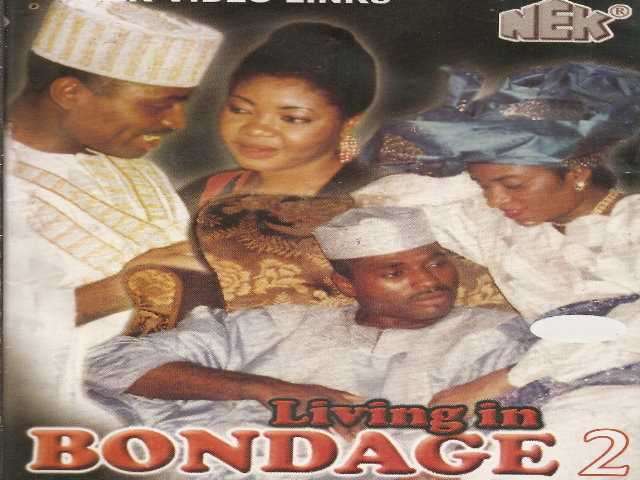
In 1992, Kenneth Nnebue helped prove just how powerful that model could be with the release of Living in Bondage. According to the now-famous story, Nnebue had imported a large stock of blank VHS cassettes that were not selling as expected. Rather than let them sit idle, he decided to put a film on them. That film was Living in Bondage.
The unprecedented success of Living in Bondage proved that direct-to-video filmmaking could be commercially viable, and it sparked an explosion in production that has not slowed since.
While the stories of the VHS era were enjoyable, I definitely do not miss the movie trailers that were sped up and had seemingly all had the same fast-talking narrator. Or worse, how every movie was seemingly split into countless parts like some kind of cursed pizza. Seriously, did Last Burial really need to have four parts?
As for the term “Nollywood,” that came a bit later. It was coined in 2002 by Canadian journalist Norimitsu Onishi in his New York Times article titled: Step Aside L.A and Bombay for Nollywood. To be compared to Hollywood and Bollywood, two of the most iconic film industries in the world, was a recognition of just how significant Nigerian cinema had become.
But what is a film industry without cinema? Like an avoidant partner, Nollywood found its way back to cinema releases in the mid 2000s. This era saw a return to films with bigger budgets, more layered stories, and higher quality productions.
Then came Streaming
All over the world, technology was changing how people engaged with daily life and movies weren’t left alone.
Nollywood’s streaming era began with IrokoTV, a Nigerian owned platform founded by Jason Njoku in 2011. Everyone loves a good story, and in no time, the industry caught the attention of global streaming platforms like Netflix and Amazon Prime video.
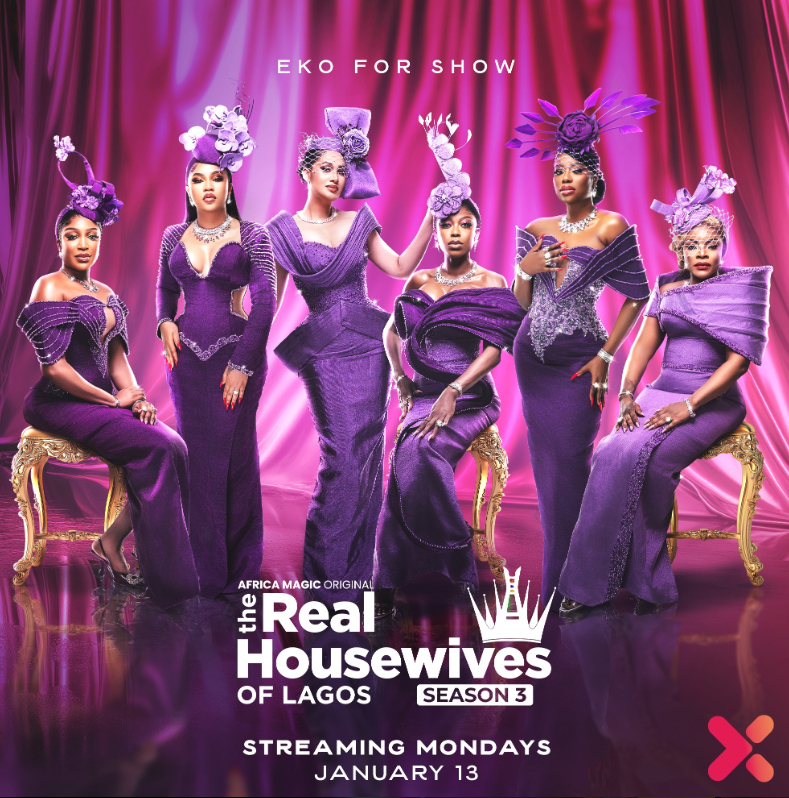
However, when the industry needed them the most, they vanished. In 2024, Amazon Prime scaled down its operations in Africa. Earlier this month, Multichoice announced the shut down of Showmax. As an aside, I’m really going to miss the Real Housewives of Lagos franchise.
While these exits are sad and do not mean well for the industry. It is not hard to make sense of. With over 100 million Nigerians living in extreme poverty, swinging multiple paid subscriptions is a luxury. Ask the average Nigerian why they don’t use streaming platforms, and they’ll ask you how they are supposed to pay for the data AND the subscription.
How YouTube is saving the day: The one-eyed man in the land of the blind
Filmmakers are feeling the squeeze of the streaming exits just as much as the audience.
“With the absence of major global streaming platforms, filmmakers have had to find a way to keep working while still being able to make decent profit,” Mo Fakorede, a Nollywood film director and producer tells me.
“I wouldn’t say YouTube is a more financially viable platform, rather the platform that somewhat works at the moment,” she adds.
For many, it simply comes down to the ease of doing business. Traditional distribution is notoriously difficult. As film director Tobiloba Rotipin points out: “It’s very expensive to make a film. It’s equally expensive to put a film out. There’s also the fact that you’re sharing your profits with the government and 20 other entities”
On YouTube, creators become their own distributors. “YouTube is one of the quickest distribution channels and fastest way to recoup, especially now that streaming is a bit stiff-necked,” said Becca Ashang, a filmmaker.
All that glitters might not be gold
While YouTube removes traditional gatekeepers, the platform isn’t a total creative free-for-all. Ashang points out that YouTube’s monetization guidelines act as a new kind of censorship.”YouTube has stringent rules,” she explains. “It doesn’t allow filmmakers to explore as much as we would want to. Imagine not being able to show action or be as intense or dark as you want in certain movies.”
This restriction, combined with the algorithm’s demand for constant content, has influenced the types of stories being told. Rotipin admits there is an obvious, repetitive pattern to many YouTube films today, stating, “I think it’s worse than the home video era. But what they both have in common is they’re keeping the industry alive.”
Addressing concerns that YouTube content might be of lower quality, filmmaker Laju Iren in an interview with TechCabal’s Frank Eleanya argues that quality is subjective. “There are some people who don’t really care for a N100 million production. But if a story is good, they are good. You might say I don’t really like this film, but what if 2 million people beg to differ?”
So, is YouTube the definitive future of Nollywood?
“YouTube cannot be the future of Nollywood,” Mo Fakorede states plainly. “The budget for YouTube films can’t make big-budget films, and the industry needs big-budget films to stay alive and survive. Every platform is a necessary evil.”
Similarly, Kunle Afolayan in a conversation at the Lagos Business of Film Summit 2026 summarised it succinctly: “YouTube is the biggest platform for young people running solo who want to bypass gatekeepers. For a lot of people who can’t get to the cinema, Netflix, or Prime Video…that is the way to go. But for some of us who want to go international, it is not the future”.
Rotipin remains optimistic about the traditional big screen, noting that the biggest films recently have still been cinema or Netflix releases. “I don’t believe [YouTube is the future]. There’s a quiet renaissance happening in the industry. I think we have a future as a proper industry, with a proper theatre culture. [YouTube] will keep the industry alive until we circle back to doing cinemas again.”
YouTube may not be the final frontier for Nollywood, but its impact on the industry is already undeniable. It is currently keeping Nollywood’s stories alive and has enabled emerging filmmakers to bypass traditional gatekeepers while giving audiences easier access to films.
It may not have revolutionized the art of Nigerian filmmaking, but it has definitely redefined how Nigerian films are distributed and consumed.