• Oriekaose Agholor was barely nine years old when he got his first taste of the Nigeria Police’s incompetence. Years later, in his adulthood, he saw that things hadn’t changed, so he decided to do something about it. This is his story as told to Orame.
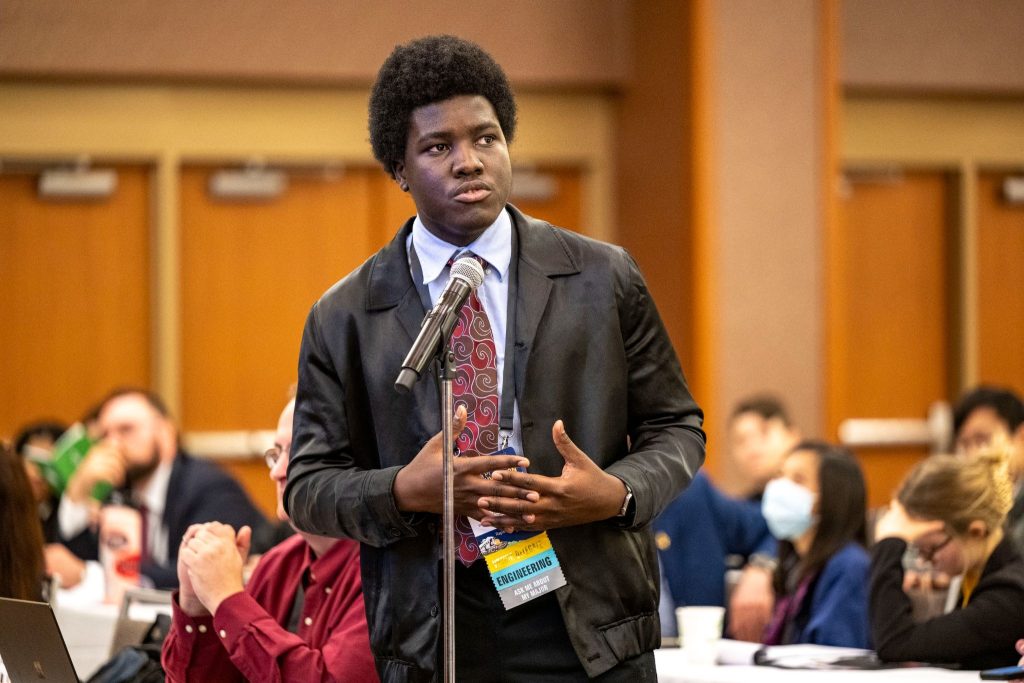
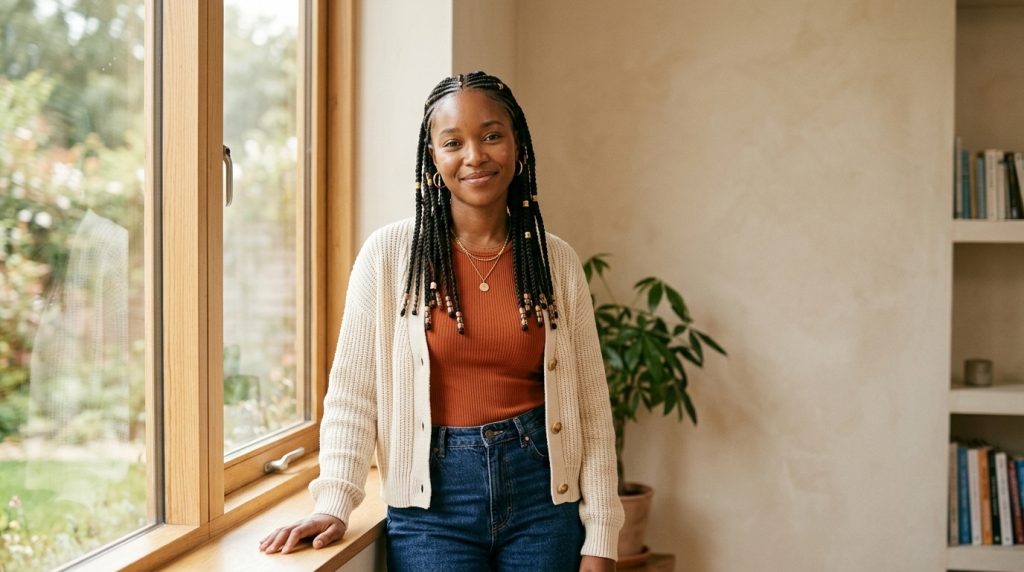
    Oriekaose Agholor

    When you grow up in Nigeria, you learn very early that you are your own government. If there’s a fire, you fetch water. If there’s a security threat, you lock your gate and pray. I learned that lesson at eight or nine years old, when my school bus was involved in an accident on the expressway. We waited, but no police or road safety personnel came.

    Eventually, the teachers with us flagged down a Keke, and we went home. If we’d been bleeding instead of just stranded, that delay could have killed us. In Nigeria, it can feel as if nobody knows who you are or where you came from; help will not get to you, no matter how bad the situation is.

    Years later, during the 2020 lockdown, I started actively watching the news with my dad. I would watch news stations like Arise TV, Channels, and sometimes CNN. I kept hearing the same two words, week after week, month after month: “unknown gunmen.

    What shocked me the most was that it wasn’t just ordinary people saying it. It was the police and the military. Our very own security forces, telling the country that the people terrorising us were simply unknown. That never sat right with me. That was when the idea for the Wahala app came to me.


    The Big Daily is your weekday shortcut to the biggest news shaping Nigeria. We cut through the noise, connect the dots, and explain why the news actually matters, all in one quick read.


    When I started telling people about the idea, the reaction split right down the middle. Some got it instantly, no convincing was needed, but a lot of people, including people very close to me, asked the same question first: don’t we already have Twitter and Instagram for this? 

    I had to explain, over and over, that those platforms weren’t built for real-time reporting. If you’re an average person and you film an ongoing robbery and post it, it has to go viral before enough people see it and actually respond — and by then, whoever did it would be long gone.

    Social media rewards what’s trending, not what’s happening ten minutes from your house, and these days it’s obvious that it wasn’t built for the kind of misinformation-proofing a safety tool actually needs.

    What hurt even more, honestly, was realising the loudest support wasn’t coming from my own circle. I had a few hundred followers, so when we put out the call for beta testers and asked for general feedback, I assumed at least 20% of my own people would respond, but that wasn’t the case. 

    It was strangers, people I’d never met, who actually showed up first.

    I started commenting under security stories on Arise TV and Channels TV’s Instagram pages, one person at a time, pitching the app to people already venting about insecurity in the comments. Those strangers became our first real users, long before anyone in my network did.

    The idea itself didn’t come from me alone. I met my co-founders, Tunji, in 2015 from secondary school, and Kosi around 2022. What brought us together on this project was a shared frustration with the state of security in Nigeria. 
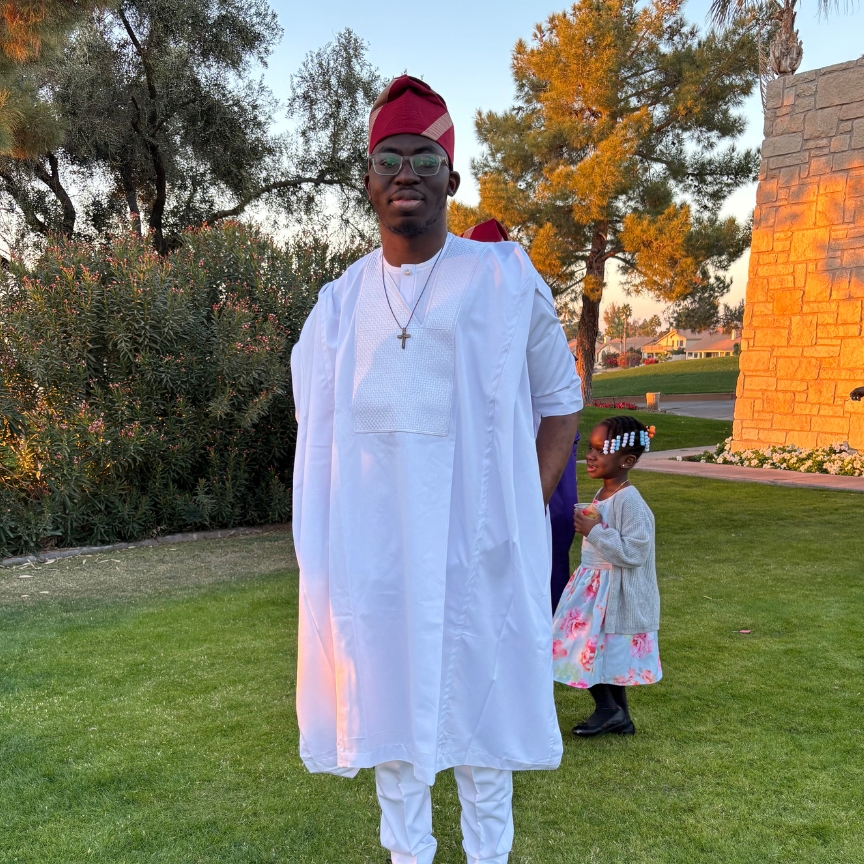
    Tunji

    Kosi had survived a “one-chance” robbery: he had gotten into the wrong bus and jumped out just in time before anything worse could happen.  Tunji remembers a night where he lay awake listening to gunshots coming from outside his own compound, wondering if anyone else could hear them, wondering who, if anyone, was coming to control the situation.
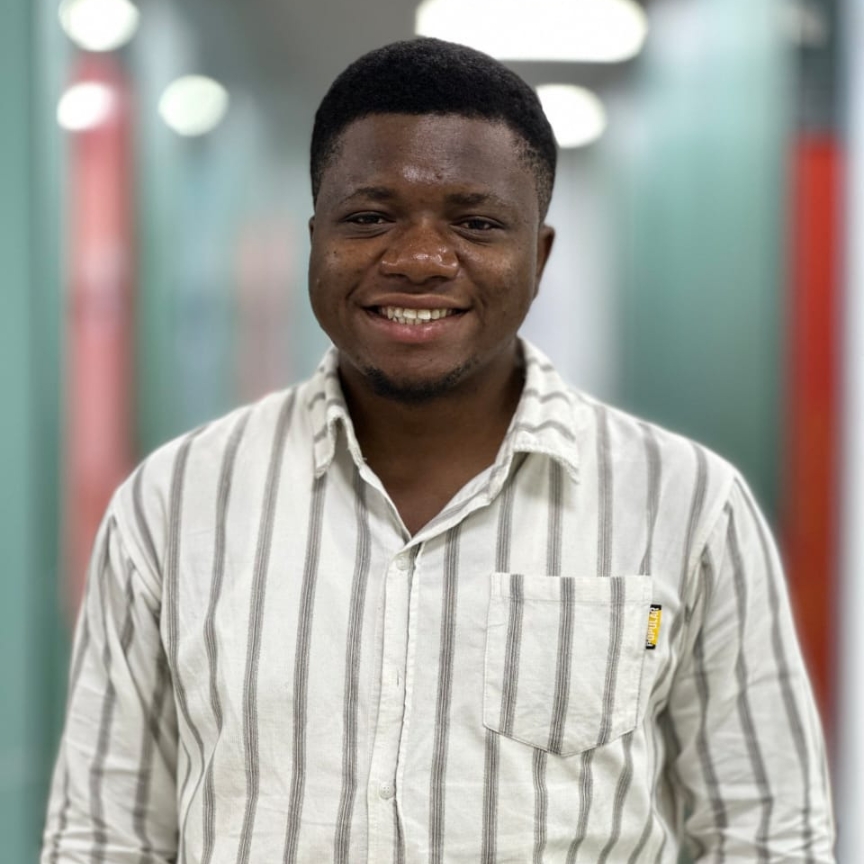
    Kosi

    We were young, still in school, and we kept telling ourselves we’d build something “when we had more experience, more time, and more money.” At some point, we just asked each other, “What can we build now?” And that question solidified what the Wahala App is today.

    What followed was three years of failure. We didn’t have the skills yet. My undergrad was in robotics and mechatronics, and I’m currently doing a master’s in mechanical engineering at the University of Michigan. None of that involves the software you use to build an app. 

    The first attempt at building the app was a Figma file and a friend who tried to flesh it out, but their interests never really aligned, so it died. A second attempt with someone else went the same way: a good idea but no follow-through.

    I remember my mentor once telling me that nobody hands you money or belief just because you have a good idea; if you have to build the first version out of toothpicks and paper, build it out of toothpicks and paper. That line followed me as I tried again. 

    It wasn’t until October last year that things actually aligned, not just our schedules, but our experience. By then, we’d all levelled up in our own corners: I’d picked up enough software skills outside my formal training, Kosi had sharpened his mobile development skills, and Tunji had real production experience. We pushed, and pushed, and by late April this year, the app was live.

    Once it was live, the three of us split along the lines of what we’d each spent years getting good at. I handle the app’s vision and mission, as well as the app’s AI feature.

    The AI scrapes and verifies incident reports from credible Nigerian news sources around the clock, which populated the map with real data before we had many users at all.

    Kosi, who has a degree in computer engineering and works in the human resources tech space, owns the mobile app, the user interface, and the notification urgency.

    Tunji, who studied computer science and mathematics and has worked with Amazon and Twitch, built our entire mapping infrastructure from the ground up. His maps enable people to see that an incident happened ten minutes from them, not just read a headline about it.

    Get More Zikoko Goodness in Your Mail

    Subscribe to our newsletters and never miss any of the action

    Between the three of us, there’s no single founder-and-developer dynamic; we’re all technical, which means the product can move as fast as our shared urgency.

    Watching the map fill in for the first time, even before real users joined, was its own kind of shock. In a single day, you’d see terrorism pins spreading across the North, banditry tearing through the Middle Belt, kidnappings locking down the South.

    It looked like something out of an investigative documentary. I had to build a deliberate mental block to keep functioning, the way I imagine a doctor does, working around blood and death often enough that it stops being able to stop you. 

    If I sat in the full weight of every notification, I’d never have shipped anything. What surprised me is that the data cuts both ways: the same feed that shows the worst of the country also shows when the police actually make an arrest or recover someone. 

    We assume the government is failing at everything, all the time. The data doesn’t always agree. If people think the government is doing 20 per cent, the honest number is sometimes closer to 30. That realisation changed something for me about how I view law enforcement in the country. This is not me forgiving them for the times when they simply didnt do their job, but it has given me a clearer picture.

    We’re a little over two months in now, with just over 100 users. A few weeks ago, a friend received a real-time alert in the app about an incident, and the story he’d been warned about didn’t become public until the following Tuesday or Wednesday, almost a week after he learned about it. When I shared this with the team, that moment solidified the work for us because that’s the app’s goal.

    We’ve been doing a ton of research about the accessibility of the app, and we’ve found that in places like the South and Middle Belt, most people have some kind of Android device, even an old one, and that’s enough to run the app.

    A photo of a suspicious car, a flooded road, a car involved in an accident, a building on fire, or a video of a robbery in progress, posted anonymously, can warn an entire street before the next person walks into the same danger. 

    The harder case is the North, where the worst attacks happen, and connectivity is almost nonexistent. Nobody fleeing a gun stops to film it, but somebody in that community usually is documenting it. 

    There’s an Instagram account, run by someone who goes by “the English Malam,” that somehow manages to get real footage of bandits on motorcycles, almost always after the fact. That information already exists. It’s just stuck on one person’s page instead of reaching the people who need it in time. 

    Our plan is to put that same documenting instinct directly into the hands of community leaders, vigilantes, forest guards — people already doing this informally — and pair it with SMS-based alerts, so that knowing about danger doesn’t require owning a smartphone or having data, just a phone that can receive a text.

    None of these fixes Nigeria’s security problem, and I’m not naive enough to think that one app can. What it can do is shrink the gap between something happening and the people nearby finding out, the same gap that, decades ago, left a school bus full of kids waiting on an expressway with nobody coming to help them. The number of Nigerians who die or disappear and become mere figures is alarming. I want a market trader’s warning to count as much as a politician’s private security detail does. That’s the thing I couldn’t stop thinking about long enough to leave it alone.
    The Naira Life Conference is returning on August 22, 2026, in Lagos! Come learn from finance experts and industry leaders, and partake in unfiltered conversations about building wealth and diversifying your income stream in a country like Nigeria. Real stories, expert advice you can actually use, and a community ready to build wealth together. Secure your spot here.
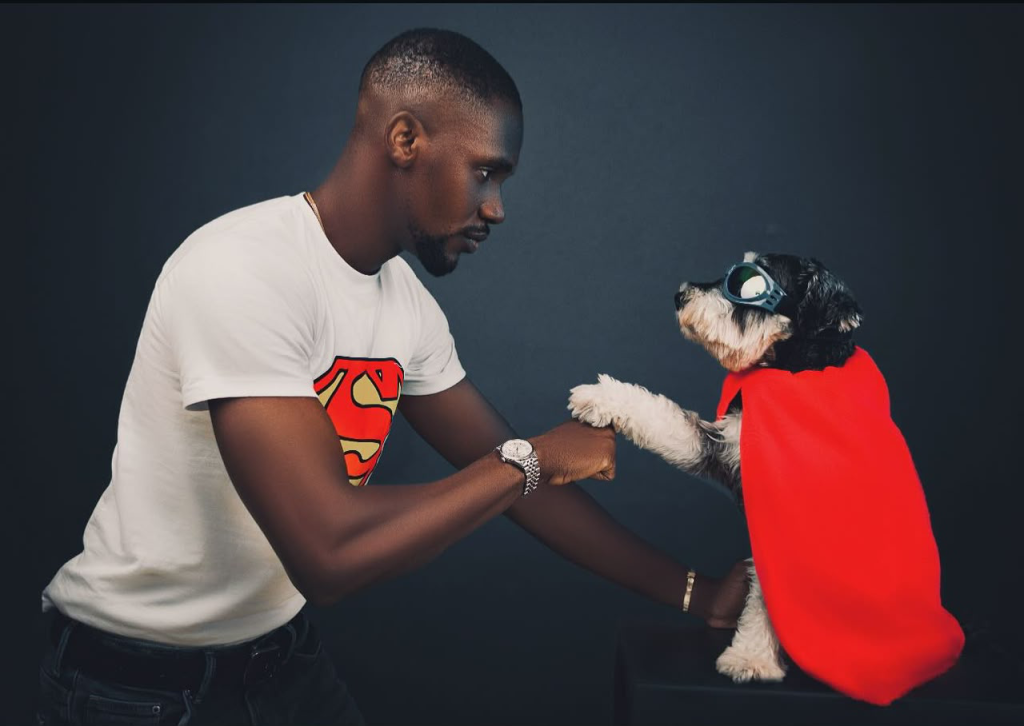
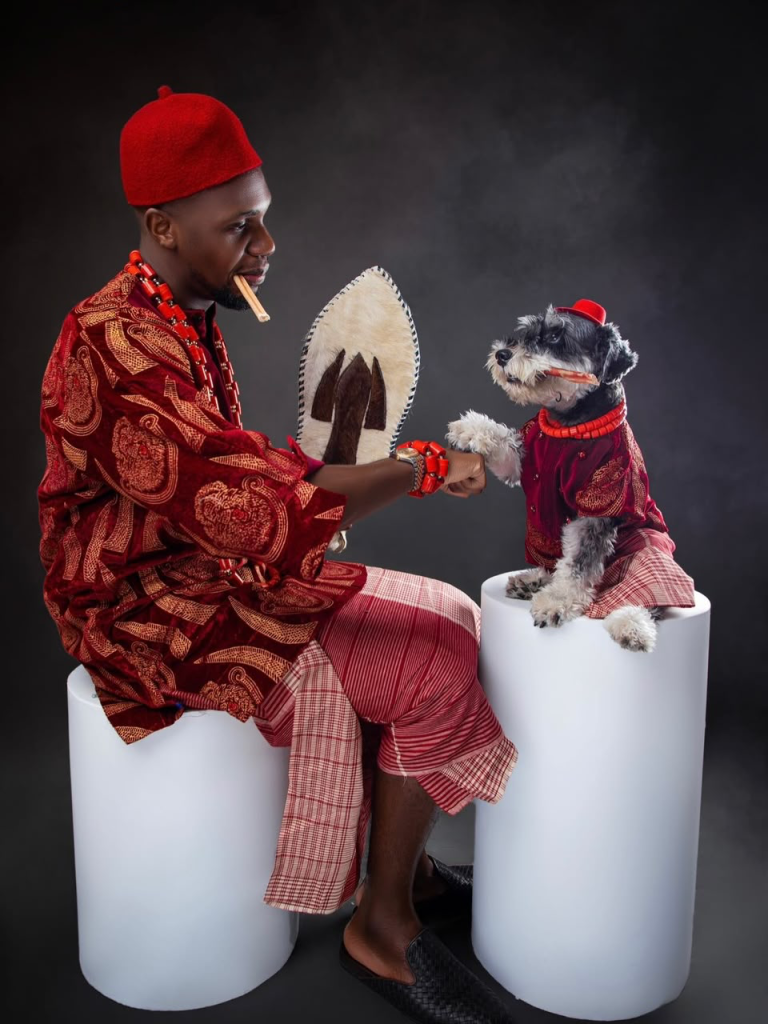
  • Three years ago, content creator Oga Duke (Oreoluwa Osoba) adopted a puppy to feel closer to his late uncle. He never imagined Duke would become the companion who helped him survive grief, saved his life and helped him build a community.

    In this story, Oreoluwa opens up about the bond with his puppy and why he hopes more people will see pets as family, not just animals.

    I got Duke in 2023, at one of the lowest points in my life. I’d just lost my uncle, who was a second father to me, and I wasn’t coping well. I’d always been “too busy” whenever he asked me to visit. The day before I finally planned to see him, he died. 

    I carried that guilt for months.  I became angry with the world,  withdrew  from everyone and distracted myself with working out, but nothing helped. If anything, I only became depressed. 

    Growing up, my uncle always had dogs. They were a big part of our relationship. He bought me my first dog, and caring for animals became something we shared. After he passed, getting another dog felt like the closest thing to holding on to those memories.

    That’s how I found Duke. A family in South Africa had just had a litter of puppies, and I adopted one. At first, I panicked. He’d just flown in and was throwing up. I remember thinking, What have I done? But I’d already committed, so there was no turning back.

    Get More Zikoko Goodness in Your Mail

    Subscribe to our newsletters and never miss any of the action

    Barely two days later, I hit another low. I filled Duke’s bowl with food, locked myself in my room, and decided I didn’t want to keep living. 

    But Duke wouldn’t eat. Instead, he stayed outside my door, barking and scratching relentlessly until my neighbours came to check on us. Everything I’d planned fell apart.

    When I finally opened the door, he climbed onto the bed and curled up beside me. It felt like he understood how I felt. That was the beginning of our bond.

    Before Duke, physical touch wasn’t my thing. I hated hugs and rarely showed affection. But Duke would come looking for cuddles, and I quickly realised that being close to me made him happy. Without noticing it, I started changing too. 

    The more I cared for him, the lighter I felt. Gradually, I found my way to happiness again.

    Becoming a dog dad made me more patient. You can’t stay angry around a dog for long. He’ll just stare at you like he has no idea why you’re upset. Eventually, you soften.

    When I started posting Duke online, Nigerians didn’t get it. People said I needed help because they couldn’t understand why a grown man would treat his dog like family.

    Ironically, everything changed once our content started getting attention internatonally. Now, strangers stop me just to ask how Duke is doing. I’m glad we made more Nigerians see that pets deserve love, too.

    But as Duke became more popular, I also realised I had to protect him. Some brands treat him like a prop and don’t care about his welfare during shoots. I’ve walked away from opportunities because of that. No amount of money is worth compromising his well-being. 

    I even trust his instincts with people. Duke is one of the friendliest dogs you’ll ever meet, so if he doesn’t like someone, I pay attention. A friend used to frequent our place with toys and treats, but Duke refused to go near him. Later, I found out the person had been trying to scam me. 

    I once liked someone who said she couldn’t date me because she didn’t want to compete with Duke for my attention. That made me realise that anyone I end up with has to understand that Duke isn’t just a pet. He’s family. 

    Duke has also changed how I think about responsibility. In Nigeria, people get pets because they’re cute without understanding how demanding they are. They need proper food, healthcare, and attention. 

    Pets aren’t accessories you pick up only when you’re in the mood. They depend on you, and loving them means showing up every single day. 


    Read Next: My Soulmate Broke Up After A Car Accident Left Her Paralysed

  • If your Netflix watchlist is currently looking bone-dry and you’re tired of scrolling for hours just to end up watching old sitcom clips on TikTok, I’ve got you.

    From thrilling epics, romantic entanglements and hostage dramas, Nollywood has back-to-back hits on Netflix. If you’re looking for what to watch on the streamer this month, here are the 10 best Nigerian movies to watch this July.

    10. The Waiter (2024)

    Running time: 1h 40m

    Director: Toka McBaror

    Genre: Comedy, Thriller

    Akpos (Ayo Makun) is on his very first day as a waiter in a posh Abuja hotel hosting a big event for the Minister of Poverty Alleviation (Shaffy Bello). A heavily armed ex-army captain (Bucci Franklin) and his boys hijack the building and take everybody hostage. Then it goes from kidnapping to a revolution, forcing everyone to answer the question: Who is responsible for this country’s problems?

    The Waiter is streaming on Netflix.

    9. King of Thieves (Ageshinkole) (2022)

    Running time: 1h 50m

    Director: Tope Adebayo and Adebayo Tijani

    Genre: Epic, Thriller

    Oba Adegbite (Odunlade Adekola) just wants to enjoy his new crown, but a powerful thief, Ageshinkole (Femi Adebayo), shows up to scatter his kingdom. Ageshinkole is such a menace that he beats up witches, wizards, warriors and literally everyone the King sends. The problem gets so big that the King forces his head hunter (Ibrahim Chatta) on a suicide mission to bring the thief’s head or lose his own.

    King of Thieves (Ageshinkole) is streaming on Netflix.


    Subscribe to Chronically Online, a Saturday special edition of the Zikoko Daily Newsletter, Where We Break Down Five Topics That Got The Internet Talking That Week


    8. Ijogbon (2023)

    Running time: 1h 55m

    Director: Kunle Afolayan

    Genre: Drama

    Four stubborn friends (Ruby Akubueze, Kayode Ojuolape, Fawad Aina and Ebiesuwa Oluwaseyi) go to play in the mountains and somehow stumble on a bag of diamonds. Tempted and excited, they take it for themselves. But the diamonds come with wahala. They belong to some dangerous people who’ll go to any length to get them back. Now, these kids have gone from planning their new, rich life to running around for survival.

    Ijogbon is streaming on Netflix.

    7. The Rise of Igbinogun (2021)

    Running time: 1h 52m

    Director: Idea Chukwuma “Onesoul” Innocent

    Genre: Epic

    Trained by her dad, Ogbu (Enyinna Nwigwe), Igbinogun (Damilare Kuku) leads a gang of misfit thieves to steal from the rich and give to the poor. But the problem starts when she embarrasses the Prince (Blossom Chukwujekwu) so badly in battle that the man literally deletes himself out of shame. The kingdom is upside down and Igbinogun suddenly has to step up and become the leader of her village.

    Igbinogun is streaming on Netflix.

    6. Ile Owo (2022)

    Running time: 1h 36m

    Director: Date Olaitan

    Genre: Horror, Thriller

    Busola (Immaculata Oko-Kasum) thinks she has secured a soft life when she falls for Tunji (Efa Iwara), a fine boy from a super-rich family. But the red flags start waving almost immediately. Tunji’s family is hiding some dark, creepy secrets, and Busola quickly realises that marrying into this kind of wealth is far from a blessing. 

    Ile Owo is streaming on Netflix.


    READ NEXT: The 10 Best Nollywood Movies Of 2026 So Far, Ranked


    5. A Sunday Affair (2023)

    Running time: 1h 36m

    Director: Walter Banger

    Genre: Drama, Romance

    Toyin (Dakore Egbuson-Akande) and Uche (Nse Ikpe-Etim) are lifelong besties until one man, Sunday (Oris Erhuero), enters the chat and scatters everything. It first starts as a harmless crush, then turns into a messy love triangle that tests the limits of their sisterhood.

    A Sunday Affair is streaming on Netflix.

    4. Jolly Roger (2022)

    Running time: 1h 28m

    Director: Walter Taylaur

    Genre: Drama

    Brume (Daniel Etim-Effiong) is battling life problems: his mom just died, his wife’s dealing with infertility, and two corrupt policemen (Frank Donga and Toyin Oshinaike) are extorting him. Then, the worst happens: his wife is murdered by the officer. Brume teams up with his guy, Dammy (Deyemi Okanlawon), to pose as a flamboyant yahoo boy, lure the corrupt cops and kidnap them. From there, it becomes a chaotic hostage drama fueled by revenge.

    Jolly Roger is streaming on Netflix.

    3. Devil Is A Liar (2025)

    Running time: 1h 39m

    Director: Moses Inwang

    Genre: Drama, Romance

    Adaora (Nse Ikpe-Etim) is a rich, single lady who falls for fine boy stylist Jaiye (James Gardiner) just to escape family pressure. But that’s a huge mistake because Jaiye is scum. He and his partner Anna (Erica Nlewedim) scam Adaora blind, force her to get an abortion, fake his death, and set her up for jail. Adaora gets out, catches him living large with a new family, and goes into revenge mode and wreaks havoc.

    Devil Is A Liar is streaming on Netflix.


    Get More Zikoko Goodness in Your Mail

    Subscribe to our newsletters and never miss any of the action


    2. One Too Many (2022)

    Running time: 1h 30m

    Director: Kayode Kasum

    Genre: Drama

    Otas (Chimezie Imo) is just trying to go to NYSC camp when a tragic accident leaves a friend dead, and the police wrongfully pin the death on him as a murder. With Otas locked up, his mom, Adesuwa (Dakore Egbuson-Akande), is forced to confront her own dark past and trauma tied to Nigerian police brutality.

    One Too Many is streaming on Netflix.

    1. The Herd (2025)

    Running time: 1h 51m

    Director: Daniel Etim Effiong

    Genre: Crime, Drama

    Gosi (Daniel Etim-Effiong) travels to Ekiti for his best guy Fola’s (Kunle Remi) wedding to Derin (Genoveva Umeh). The wedding is beautiful until Nigeria happens. On the drive to the hotel, gunmen disguised as herdsmen ambush their convoy. They kill the groom and drag Gosi, Derin and a bunch of other motorists into the bush to demand ransom. Long story short, this is a direct look at the ghetto that is Nigeria’s insecurity crisis.

    The Herd is streaming on Netflix.


    ALSO READ: Alexx Ekubo Had Range. These 10 Movies Prove It


  • The recent renaming of Polycystic Ovary Syndrome (PCOS) to Polycystic Ovary Metabolic Syndrome (PMOS) marks a shift in how the condition is understood. For many people living with it, the new name better reflects its hormonal and metabolic nature, rather than focusing primarily on ovaries and fertility.

    In this article, we spoke to 10 Nigerian women living with the condition about what the name change means to them and whether they believe it will lead to greater awareness, diagnosis, and care

    1. “I Would Be More Excited If There Were More Awareness” — Mercy*, 30 

    I’m not on social media like that, so I found out about the name change while I was on a call with my friend, who is a doctor. When she told me about it, I honestly didn’t feel any type of way. Yes, I’m glad for the name change, but I think I would be more excited if there were more awareness of the condition. 

    I got properly diagnosed five years ago, and I have had to deal with constantly educating people on what it meant. I also had to endure being constantly invalidated by the health professionals because they couldn’t simply wrap their minds around it, even though it is their job to do so. 

    The name change is great. I have friends with PMOS who don’t have cysts, so I’m genuinely happy for them, but I would like to see more awareness being shed on the condition. 

    2. “I’m Excited About it Because I Don’t Have Cysts” — Etim*, 28

    I work in media, so I actually found out about the name change when my managing editor sent me a link to an article talking about it. I can’t lie, I’m excited about it because I don’t have cysts. Most of my symptoms stem from the hormonal and metabolic effects of the condition, and I appreciate the fact that this name change might show that PMOS isn’t just about fertility, like most male doctors in this country keep saying, so they can trivialise your struggles. 

    It affects not just the reproductive systems but also other parts of the body. In my case, that included insulin resistance and excess testosterone levels, and I hope that all the doctors who tried to gaslight me into thinking otherwise are having an inner reflection moment, but that’s if they’re even aware of the name change. We live in Nigeria, after all. 

    3. “I Am Glad the Conversation Will Now Shift From Just Fertility ” — Banke*, 35

    I found out about the name change while I was doomscrolling on Instagram one day, and to be honest, I’m just blank about it. I don’t know if that’s because I had to go through different medical professionals before I finally found a gyno that actually listens to me, or if it’s because the whole fertility conversation surrounding the condition has never moved me, because of my decision to never bring a child into this world. 

    However, I am glad that the conversation will now shift from just fertility and reproduction, and we can start discussing other areas of our health that PMOS has affected. 

    4. “I Almost Gave Up on Not Getting Diagnosed” — Mary*, 25 

    I was on Twitter when I read about the name change. At first, I thought they were lying, but I googled and found out it was real. I remember calling my friend to talk about it, and I burst into tears. The number of times I’ve been misdiagnosed by doctors, simply because I didn’t have cysts, almost made me give up on getting diagnosed. 

    This condition has severely affected my physical and mental health, and yet, it was when I was visiting my family in an entirely different country that I was able to get a diagnosis from a kind gyno who made me feel validated in a way no one back home had made me feel. I can’t fully describe how happy I am with the name change, because it means that people with this condition can now get properly diagnosed instead of being carelessly dismissed, like I was.

    5. “Because I Didn’t Have Cysts, Hardly Anyone Paid Attention” — Kiki*, 28

    I got the information about the name change on a group chat with other women who also have PMOS, and I remember thinking ‘finally’. When I got diagnosed two years ago, it was only because I finally had cysts. I should have been diagnosed years before that, because I was already having symptoms that were directly linked to PMOS, but because I didn’t have cysts, hardly anyone paid attention to me. 

    They told me it wasn’t a big issue, and I’m sure several health professionals probably still detest me because of how I made them uncomfortable after they made the entire conversation about cysts. The name change really made me emotional, because what if I never got cysts? Everyone would have been comfortable misdiagnosing me because of that? 

    Get More Zikoko Goodness in Your Mail

    Subscribe to our newsletters and never miss any of the action

    6. “For Years, it Felt Like I Was Crazy” — Anita*, 38

    No one is happier than I am over this name change. I found out about it when my gyno texted me because she was happy that more research would be done on the condition. I still can’t stop thinking about the relief that washed over me when I read more about the name change, because for years, it felt like I was crazy. 

    I’ve never had polycystic ovaries, but my insulin resistance is severe in a way that is quite concerning. So, before I met my current gyno, health professionals loved to pass me around because they didn’t really know what to do with me, since I didn’t have the textbook symptoms that they were used to. This is why I’m so giddy about the name change: more research will be done, and people can know more and be more aware. 

    7. “I Wish Our Doctors Were Better Informed” — Daniella*, 24

    Honestly, I am happy the name change is getting the right attention,even though my doctor was not aware of the news, and I had to be the one to inform her about something she should know. 

    I think that’s why I’m 50-50 about it all, because yes, more attention is given to the other symptoms of the condition, but when will funding start going into treatments and research? Research on the female body barely exists, and it is getting tiring. I wish our bodies were given more attention, and I wish our doctors were better informed. I shouldn’t have to be the one telling my doctor. She should know. 

    8. “They Would Only Look Into My Matter if I Lost Weight” — Binta*, 42

    I got the news about the name change from my husband, who is aware of my diagnosis, and really, I can’t express how happy I am about this. Even though I’d been struggling with my symptoms since I was a young girl, I didn’t get my official diagnosis until my early 30s and even then, I was still invalidated by health professionals. 

    Everyone kept blaming my weight, and kept telling me they would only look into my matter when I finally lost the weight. I thank God for my husband, who found a good endocrinologist who actually listened to me and let me know all about insulin resistance and how it is connected to the condition. She made me feel seen, and it is such a blessing that the name change acknowledges that it’s not only about fertility or reproduction. PMOS symptoms are more than that, and I’m just really happy the world is finally waking up. 

    9. “There’s a Possibility Women with PMOS Might Still Get Invalidated” — Basiroh*, 25

    I only found out the name about two weeks ago because I’ve been on a social media detox. When I saw the announcement from my friend, who sent it to me because she is aware of my condition, I was really glad, but at the same time, it made me wonder whether Nigerian healthcare professionals will be up to date on it. 

    It took time for some of them to get used to the previous name and understand it. Who is to say that they’re not going to have a hard time wrapping their heads around this one? Most of them are not even being paid well for the work they’re doing, so there is a huge possibility that women whose symptoms align with PMOS might still get invalidated. I’m hoping that I might be wrong, and women whose symptoms are broader get the treatment they deserve. 

    10. “For Years, I Lived My Life Without a Diagnosis” — Rachel*, 23

    The day I saw the news on Instagram, I was in class, and I got sent out because of my excited yell. For years, I kept telling doctors that something was wrong with my body. I was convinced that I had PCOS, and because I didn’t have cysts, they told me I was thinking too much and that I shouldn’t worry. So for years, I lived my life without a diagnosis. I was even starting to think that maybe they were right, and I was reading too much into it, but then the news came out, and it turns out that I was very much right. The doctors just didn’t care much. 

    It was this news that finally convinced me to reach out to a gyno a friend recommended. I’ve not met her because I’m currently at school in another state, but she’s aware of the name change, and she believes that I can get diagnosed. I am really just happy that I might get my diagnosis after being gaslit for a long time. 


    The Naira Life Conference is returning on August 22, 2026, in Lagos! Come learn from finance experts and industry leaders, and partake in unfiltered conversations about building wealth and diversifying your income stream in a country like Nigeria. Real stories, expert advice you can actually use, and a community ready to build wealth together. Secure your spot here.


  • Love Life is a Zikoko weekly series about love, relationships, situationships, entanglements and everything in between.


    Dayo* (29) and Tomisin* (27) met in 2022 when a mutual friend connected them. 

    On this week’s Love Life, they talk about how a failed NYSC posting pushed them together, dealing with uneven efforts from one party, and how a phone screenshot almost ended it all.

    What’s your earliest memory of each other?

    Dayo: We met through a mutual friend in 2022. Our mutual friend referred Tomisin to me because I helped people sort out their NYSC postings. 

    From her very first message to me, I could tell she was a warm, chatty person. She easily asked questions and made conversation, even though we had never spoken before. It threw me off because I was in professional mode and wasn’t expecting that energy. I actually had to call my mutual friend and ask her, “Does this girl know me from somewhere?” She said no, that’s just how Tomisin is with people. 

    Tomisin: I couldn’t tell whether he was being professional or just rude. I was doing my best to be friendly and warm, and he was giving me these flat, one-word responses. Like he was just tolerating the conversation. I didn’t know what to do with that. 

    I thought, “Okay, this person is not interested in small talk.”

    So I pulled back and just focused on the business at hand. But it was confusing because I’d heard good things about him from our mutual friend, and the energy did not match.

    Get More Zikoko Goodness in Your Mail

    Subscribe to our newsletters and never miss any of the action

    Screaming. But how did the posting conversation go?

    Dayo: It was a disaster, which had never happened to me before. My plug failed, and Tomisin was sent to Edo for camp. She’d been specific about wanting Lagos, and I gave her my word because I always had a 95% success rate. 

    Tomisin: I was devastated. I cried and sent him a heated voice note. My mum was also upset, and she sent him a voice note when he didn’t pick up our calls. It was a whole thing because this was not what we agreed on. He had assured me that everything was taken care of, and that I’d be serving in Lagos like I wanted.

    Dayo: This was the first time my plug had failed me. I didn’t even know what to do, and her mum’s voice note made it worse. She wasn’t even angry. She just sounded really hurt, like I’d intentionally put her daughter in harm’s way. 

    I explained that I would get her redeployed after camp, but she was already in tears. So I went to her house to meet her and her parents in person. I sat down with them, apologised properly, and promised that the redeployment would happen. Then, on the day she was leaving for camp, I followed her all the way to the park. And before she boarded, I gave her ₦20k. 

    Oh. Why did you do that?

    Dayo: I just felt bad. It wasn’t her fault, and she was going somewhere she hadn’t planned to go. I wanted her to at least have something in her pocket.

    Tomisin: That gesture really got me. And while I was in camp, he kept checking on me and even sent more money. That was when I started seeing a different side of him. The professional, dry-response guy was gone, and there was actually a very caring person underneath.

    What happened after camp? 

    Dayo: I got her redeployed to Lagos as I promised, and I lowkey thought that would be the end of our interaction. But I found myself texting her and checking on her even after everything was resolved. She was struggling with her PPA placement, so I helped with that, too. And before I knew it, we had built a friendship. I always had one reason to text or call her. 

    Tomisin: It was so funny how he went from this “one-word texter” to constantly being in my DMs. We talked almost every day. And what stood out was that he actually paid attention. If I mentioned in passing that something was bothering me, he would come back to it later and ask how it was going. 

    Most people let things like that slide, but not Dayo. I don’t think I’ve met anyone as attentive as him. 

    Nice. So at what point did you realise you liked each other?

    Dayo: It was gradual on my end. I started noticing I was going out of my way to reach out to her even when I didn’t have a reason. I was just looking for excuses to talk to her. But even then, I still wasn’t sure what the feeling was.

    Then, one day, during a conversation with our mutual friend, she mentioned that we’d actually make a cute couple. I think that was the first time I pictured us together and I couldn’t get the thought out of my mind. I knew she was single, so I felt it was a done deal in a way. 

    Tomisin: I actually wasn’t trying to date anyone. I had relocation plans, and I didn’t want to get into something that was going to turn into a long-distance relationship. So even though I was starting to like him, I wasn’t going to make any moves. I just let things be.

    So who made the move?

    Dayo: I did. I asked her out in February 2023. 

    Tomisin: I said yes. By that point, I had decided to go with what felt right rather than overthink the relocation thing. He was good to me, and I liked him. So it was a very easy yes. 

    What were the early days of the relationship like?

    Tomisin: Not the best period of my life. I didn’t have a job at the time. My plans to relocate weren’t going the way I wanted. Things were generally not looking up, and I was in a low mood for a lot of that period. Dayo was trying his best; he was very generous and showed up in ways I genuinely didn’t expect. I really appreciated that, but I was just unhappy. It had nothing to do with him.

    Dayo: I couldn’t stand seeing her sad. I’d tried to pull some plug for a job, but it didn’t work. A part of me felt really frustrated because we were supposed to be in the honeymoon phase of our relationship, but Tomisin was constantly sad and worried. 

    At some point, beyond offering words of encouragement and trying to speak on her behalf, I felt I needed to do something about her situation. So I put her on a monthly allowance. I also took her out regularly, making sure she had what she needed for day-to-day life.

    My NYSC hustle was going well at that time, and I had forex income on top of it, so I was comfortable enough to do it without feeling the strain. 

    I even had the idea at one point of opening a small breakfast cafe and setting Tomisin up to manage it. That one didn’t work out in the end, but I was thinking about how to set her up properly. 

    But then, things slowed down for me financially in 2024. And that was tough.

    I’m sorry. What happened, though?

    Dayo: My NYSC plug passed away. So that whole side of my income just stopped. And the forex trading had become slow, too. So the money wasn’t coming like it used to. Luckily, around that same time, Tomisin had started picking up freelancing and was earning well. So I felt relieved that she wouldn’t feel the bite after I stopped her monthly allowance. 

    But that’s when I also started noticing something about her.

    What did you notice?

    Dayo: That she is stingy. Not frugal, actually stingy. Before, I’d always assumed she was disciplined about saving and careful about spending. I respected that. But when I was the one who needed something, I saw what it actually was. I would ask her for as little as ₦10 or ₦20k, and she would look me in the eye and tell me she didn’t have it. I knew she was lying. 

    Sometimes she would give it, but then she would make sure she collected every kobo back. It was strange to me. My girlfriend, whom I’d done a lot for when she wasn’t in a position to do for herself.

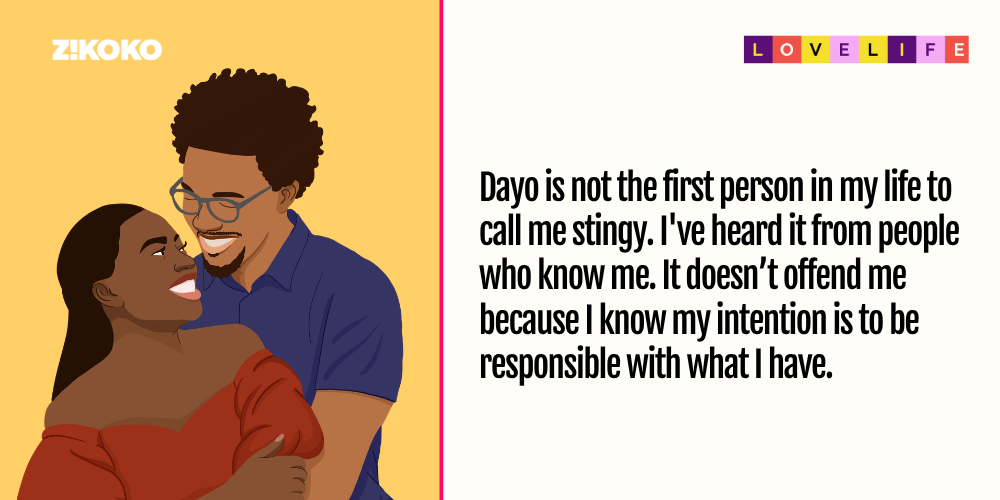
    Tomisin: I prefer to say I am frugal. I have always been careful about money. I don’t believe in giving it away just because someone asks, unless it is a genuine emergency. That’s how I was raised and how I operate. Dayo is not the first person in my life to call me stingy. I’ve heard it from people who know me. It doesn’t offend me because I know my intention is to be responsible with what I have.

    But doesn’t that bother you? That your partner calls you stingy?

    Tomisin: Not really. I’ve heard it many times. I know who I am with money, and I’m not going to pretend. But I also want to push back on some of what Dayo says. Not everything he calls stinginess is stinginess. Sometimes I genuinely don’t have money to give, even if there’s a number sitting in my account. Money can be allocated; it can be tied to something; it might not even be entirely mine. He doesn’t always consider that. Once he believes that I have money, he expects me to splurge or readily give when he asks.

    Dayo: I hear that. But when you’ve been with someone, and you’ve done as much as I did for her during the period she was struggling, and then when the tables turn, they’re lying to your face about ₦20k, that goes beyond being frugal. 

    Did you ever bring up these concerns with her?

    Dayo: I did. I sat her down and called her stingy to her face, and like she said, she didn’t flinch. She basically just said, ” Yes, I know I’m like that.” 

    That response shocked me because I came prepared for a real conversation, and she just responded as though it was old news.

    Tomisin: I also want to say something else about this. I sometimes genuinely question how broke Dayo actually is when he says he is broke. He’d say he doesn’t have money, and then the next minute he’s suggesting a date or doing something that costs money. So it’s hard for me to know when to take the complaints seriously and when it’s just a habit of speech. I’m not saying he doesn’t have moments of need. But the signals are often confusing, which affects how I respond.

    Dayo: That’s because I know how to manage. I still want to make it a good time for us, even when things are tight. That doesn’t mean I’m not genuinely struggling.

    So, did you guys ever land on a fix?

    Dayo: Not really, it got to a tipping point around March. My car broke down and needed serious repairs. I was looking at about ₦500k, which I didn’t have at the time. So I went to Tomisin and asked if she could l loan me. She said she didn’t have the money. I knew from how she said it that she was lying. I found a way to get into her phone, looked at her account balance, took a screenshot of it and sent it directly to her.

    Tomisin: That was a serious violation of my privacy. He went through my phone without my permission, then took screenshots of my bank details and sent them to me like it was a normal thing to do. I don’t care what his reason was or how frustrated he was. That’s not okay. You don’t go through your partner’s phone, and you definitely don’t screenshot their financial information and use it against them in an argument.

    Dayo: I wasn’t trying to invade her privacy for no reason. I was tired of being lied to. If she had just said, I have the money, but I can’t loanit right now, I would have accepted that. I wouldn’t have liked it, but I would have accepted it. What I couldn’t accept was being looked in the face and told she didn’t have money when I knew she did. I needed her to stop lying to me.

    How did you guys resolve this?

    Dayo: We stopped speaking for about two months. No calls or texts, nothing. I think that’s the longest we have gone without speaking since we got together. It was bad. I was angry and missed her terribly, but I wasn’t going to reach out. Then she did in May.

    Tomisin: I apologised; not for everything, because I still believe he shouldn’t have gone through my phone. But I apologised for my role in how things escalated. I didn’t want to lose what we had over a fight about money.

    Dayo: But it still hasn’t been properly resolved. I love her and I’m not going anywhere. I just need her to actually work on that aspect. Because it’s not even just with me. I watch her decline her siblings’ requests. She’ll say no to family members very pointedly. And that worries me a lot, especially with someone I plan to build a family with. 

    Tomisin, is he right about the family part?

    Tomisin: He isn’t entirely wrong. I’m the same way with money across the board. It’s not something I only do with Dayo. My siblings and friends have experienced it. I know it can read as cold or uncaring even when that’s not my intention. I am not someone who says no because I enjoy saying no. I say no because I have always felt strongly that money has to be treated seriously. But I also recognise that there is a version of being careful with money that crosses into cold-heartedness. I’m trying to do better. It’s a work in progress.

    Dayo: It makes me think sometimes. Not about whether I love her, because I do. But I think about the bigger picture. Marriage, having children, and going through hard seasons. You can’t do any of that with a partner who disappears when things are tight. 

    You mentioned trying to do better, Tomisin. What steps have you taken?

    Tomisin: I now have a budget that I put aside for random requests. So it makes it easier for me to pull from that when anyone comes to me. Even if I can’t give them all they ask for, I’ll have something for them. With Dayo, I’m learning to do things a lot more in our relationship. I admit I’ve gotten used to having him play the sole provider role, but these days, I’m opening my purse a little more.

    There are times I freak out, especially when I spend huge sums. For instance, we went to a fancy place for his birthday and spent ₦150k. I just kept drawing different scenarios in my head of how that money could have been better utilised. 

    I think there’s a version of me that can give more freely. I just need to get there in my own way and at my own pace. It’s not something that changes overnight.

    Fair enough. What’s the best thing about being with each other?

    Dayo: Everything else, honestly. This money issue is real, and I am not trivialising it. But outside of that, Tomisin is genuinely one of the most enjoyable people I have spent time with. She is funny. She has a way of thinking about things that I find interesting. She went through a genuinely hard period when we first got together, and she didn’t collapse. She kept pushing. I respect that a lot. 

    She makes me want to show up. Even when I have my own problems, I still want to make sure she’s okay. That’s not something I’ve felt with everyone. 

    Tomisin: He’s one of the most caring people I’ve ever met in my life. I know I frustrate him with the money issue, and I know it has caused real damage between us. But I also know that what he has brought to this relationship is something I don’t take for granted.

    On a scale of 1 to 10, how would you rate your love life?

    Dayo: 7. We’re a work in progress, and I think we’ve both been intentional about keeping the relationship going. We might get to a 10 before the end of the year

    Tomisin: 7 also. We’re still figuring each other out. But the foundation is solid and we’ll be fine.

    If you want to share your own Love Life story, fill out this form.


    If you’ve enjoyed reading Love Life, our flagship series on love, heartbreak, and relationships, we have exciting news. We’ve partnered with Cassava Republic to publish a book based on the flagship. Coming January 2026, it’s about to be your favourite book.

    Pre-order now and be the first to read it.

  • GridLocked is a daily pop culture guessing game built for Nigerians. Every weekday by 9am, you’ll get six clues, sixty seconds, and an answer only a Nigerian would know.


    Today’s GridLocked is a song.

    How many clues do you need to get it right? 👀

    Share your result when done, but don’t spoil the answer for others. (Missed the last GridLocked? Play it here.)

    2 July 2026

    PLAY NEXT GRID: Can You Guess The Drink? (3 July 2026)

    Come back every weekday by 9am for a new grid or subscribe to Z Daily, Zikoko’s daily newsletter, to get new GridLocked puzzles, real Nigerian stories and other fun content in your inbox.


    How to Play GridLocked

    • The Goal: Guess the answer for the day before time runs out. (The answer could be a Nigerian person, place, song, movie, or even slang.)
    • The Lock: You cannot type a guess until you have revealed at least one tile (clue).
    • The Reveal: Tap any tile to reveal a clue. Every clue describes the answer for the day. The fewer tiles you flip, the better.
    • The Clock: You have 60 seconds to guess right. The timer starts the moment you flip your first tile. (You get multiple guesses.)

    The GridLocked Squares: What Do They Mean?

    When the game ends, you see your guess count, total time spent, and the number of tiles flipped. The tiles are shown as white and purple squares.

    • ⬜ (White) = A tile you flipped
    • 🟪 (Purple) = A tile you left closed

    The fewer white tiles you have, the better your result.

    • Best Result = ⬜🟪🟪🟪🟪🟪 | Guesses: 1 (Only needed one clue and one guess to get it right)

  • Bola* (39) and her husband, Biodun* (43), agreed to a temporary long-distance arrangement when he got a lucrative job in another state. But when he stopped coming home, Bola reached her limit. She moved with their children and refused to return until he agreed to reunite their family.

    At the end of this story, you’ll get to answer one question: Did she fuck up or not?

    This is Bola’s dilemma, as told to Betty:

    My husband, Biodun, and I met at church in 2010. He was handsome, charming and a solid Christian, so when he asked me to be his girlfriend, I happily said yes. 

    The relationship was beautiful, and in 2012, we got married. Biodun taught at a secondary school while I ran a provision store. We didn’t have much, but we lived comfortably within our means. 

    Everything changed in 2017, shortly after we had our second child.  A building contractor from the church offered Biodun a job in Abuja. The pay was generous, and he’d also earn commissions. We agreed it was too soon to move the whole family, so he moved alone while I stayed back with the kids.

    The first year was amazing. The extra income transformed our lives. I moved to a bigger shop, hired a live-in nanny and even bought a car. Biodun also bought a car and rented a spacious 2-bedroom apartment in Abuja. Every month, he’d fly to Ibadan, spend about a week with us, then return to work. We were happy. 

    The Naira Life Conference is returning on August 22, 2026, in Lagos! Come learn from finance experts and industry leaders, and partake in unfiltered conversations about building wealth and diversifying your income stream in a country like Nigeria. Real stories, expert advice you can actually use, and a community ready to build wealth together. Secure your spot here.

    The problems started in 2019.

    I suggested joining Biodun in Abuja, but he refused. He said the city wasn’t safe, and he didn’t want the kids growing up there. I wasn’t convinced, but I accepted his reason. 

    Then COVID happened. Biodun could no longer make his monthly visits because of the lockdown. The nanny also quit and moved out. Suddenly, I was stuck at home alone with two kids. He called often, but phone calls couldn’t replace having my husband around.

    After the lockdown was lifted in May, I waited for Biodun to visit, but he didn’t. After two months, I asked him when he planned to come home. That’s when the excuses started. 

    He was really busy because business had kicked off again. He had an important event he couldn’t miss because of  networking. The excuses kept coming, and I grew more upset.

    I even reported him to his mother. She promised he’d come home, but nothing changed. I kept telling him how much the children and I missed him, how lonely I was becoming and how I needed him around. He’d promise to visit soon, but he never did.

    I stayed patient for a whole year. 

    When he told me he wasn’t going to make it to Ibadan for Christmas in 2022, I simply said, “No problem.”  After the holidays, I packed my things, took my children and moved in with my married sister. 

    Get More Zikoko Goodness in Your Mail

    Subscribe to our newsletters and never miss any of the action

    When my mother found out, she was livid. She called Biodun, who bombarded me with calls, demanding that I move back into the house with the kids. I refused. 

    I told him I was tired of the loneliness. If he was going to make me live like a single mother, I at least wanted another adult in the house to talk to at the end of the day. I told him I wasn’t coming back unless he agreed to relocate us to Abuja or return to Ibadan himself. 

    By then, I’d also convinced myself he had another woman in Abuja. I was determined to make it hard for him to abandon our family. 

    He accused me of standing in the way of our progress, and I accused him of trying to avoid his responsibilities. We couldn’t see eye to eye. It took both our families’ intervention before he finally agreed to let us join him in Abuja.

    But now I wonder if it was worth it. We moved here in 2023, yet Biodun still feels distant. 

    He leaves early every day, comes home late and barely speaks to me beyond what’s necessary. He’s affectionate with the kids, but it’s like he’s shut me out completely. I’ve tried different ways to bridge the gap between us. I even suggested moving back to Ibadan, but he refused. 

    Now, I’m in Abuja with my husband, but I feel just as lonely as before.

    I’ve been asking myself if I messed up by insisting we move here. I was only trying to protect my home.

    See what other people are saying about this article online.


    READ ALSO: Sunken Ships: My Brother and I Stopped Speaking. I Lost Him to the APC 


    • In CEMEA, Visa has seen growth in tokenised transactions from 26% in 2023 to 70% in 2026
    • Since the launch of stablecoins’ settlement capabilities a year ago in CEMEA, settlement volumes have increased nearly 60 times

    June 30, 2026 – Visa today outlined a series of AI, stablecoin, and token capabilities designed to help clients across the Central and Eastern Europe, Middle East, and Africa (CEMEA) region participate in the next generation of commerce. Ahead of the Visa Payments Forum, taking place in Paris on July 1, Visa shared how two foundational shifts — artificial intelligence and stablecoins — are transforming the front-end and back-end of commerce and money movement, and how Visa is enabling clients to adapt, scale and build trusted new experiences.

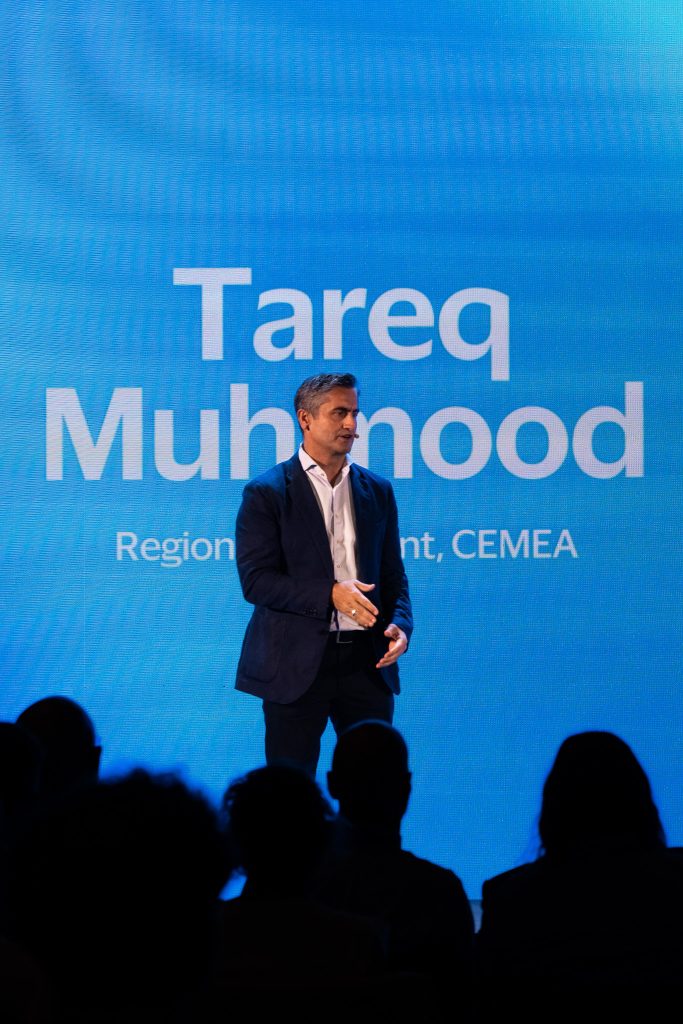
    “Commerce is entering a new phase that is increasingly intelligent, programmable, and embedded into everyday experiences,” said Tareq Muhmood, Regional President, CEMEA, Visa. He added, “For companies serving the digital economy, the opportunity is significant, but so is the need for trust and interoperability. Visa is focused on providing the infrastructure and intelligence to innovate confidently across the front- and back-end of payments and deliver better experiences for the consumers and businesses they serve.”

    Powering the Front End of Commerce with AI

    Visa detailed how AI is reshaping how transactions are initiated, authorised, and trusted, while also accelerating how new commerce experiences are designed, developed and delivered. As AI agents increasingly act on behalf of consumers and businesses, Visa Intelligent Commerce, the company’s platform for agentic commerce, provides the trust and controls needed for AI agents to securely discover, initiate, and complete transactions.

    To support this shift, Visa is working across the ecosystem to help ensure agent-initiated transactions are transparent and trusted. This includes merchant enablement through the newly launched Agent Score, created with New Generation, which allows merchants to evaluate their websites for agentic commerce readiness — specifically, whether AI agents can navigate, understand and complete tasks on a merchant’s website.  Merchants also need to know which agents can be trusted to transact on their sites, and agents need confidence that they are interacting with legitimate merchants. With the launch of Agentic Directory, Visa is providing a directory that includes agents and merchants that have been verified as legitimate participants in agentic commerce.

    Enhancing Tokens for AI-Driven Commerce

    One of the key drivers of eCommerce growth in the CEMEA region has been the growth of tokenisation, bringing more secure, convenient and seamless payments to the region across eCommerce and mobile channels. In CEMEA, Visa has seen a rapid increase in tokenised transactions, growing from 26% in 2023 to 70% in 2026. 

    Today, tokens already carry a highly secure data set purpose-built for digital payments. As commerce extends to new channels and agents, Visa is enriching the data to provide more details on the transaction type, where the token is being used and who is making the payment. A second key advancement is a token assurance signal. Token use is evaluated throughout its lifecycle — based on provisioning and behavioural history — to generate a signal of trust behind each transaction

    Together, these advancements help strengthen the role of tokens as a foundation for trusted digital and AI-driven commerce, giving clients richer context and stronger assurance as transactions become more automated, embedded and intelligent.

    Modernising the Back End of Money Movement with Stablecoins

    Visa shared progress in modernising settlement and value transfer through stablecoins and blockchain-based infrastructure. With Tokenised Deposits, the company will build the technology layer that can allow banks to turn traditional deposits into programmable, always-on digital money. This gives banks a way to match the speed and flexibility of stablecoins while keeping funds on the balance sheet.

    Visa is also expanding stablecoin settlement pilots across multiple regions, blockchains and currencies. Building on its first stablecoin settlement pilots in early 2025, Visa has moved billions of dollars in stablecoins across VisaNet, with an annualised run rate of approximately $7 billion as of March 2026. With issuing banks already settling seven days a week on-chain with Visa, Visa is working to extend seven-day settlement to include acquirers, increasing flexibility and frequency across the entire ecosystem. Since the launch of stablecoins’ settlement capabilities a year ago in CEMEA, settlement volumes have increased nearly 60 times.

    To enable consumers and businesses to spend stablecoin balances anywhere Visa is accepted, Visa continues to expand stablecoin-linked card programs. With more than 160 programs live or in development globally, adoption is expected to accelerate.

    Leveraging AI to Turn Insights into Intelligence 

    To help clients respond to rising customer expectations, Visa is combining modern infrastructure with data-led capabilities that can support better decision-making across the payment journey. The company is introducing an AI-powered travel intelligence capability that helps banks anticipate customer travel needs before a transaction occurs. Launching today in CEMEA, Visa Trip Intelligence combines VisaNet intelligence with third-party data and can infer travel intent, generate personalised trip itineraries and provide activation-ready insights, enabling banks to deliver timely pre-travel support, reduce payment friction and offer more relevant benefits, services and experiences to customers while they travel.

  • Every successful content creator has one thing in common. They all started at zero. Zero followers. Zero brand deals. Zero comments. Zero views.

    Yet, while many people see the polished videos, viral moments and brand collaborations, very few understand what it actually takes to build a personal brand from the ground up.

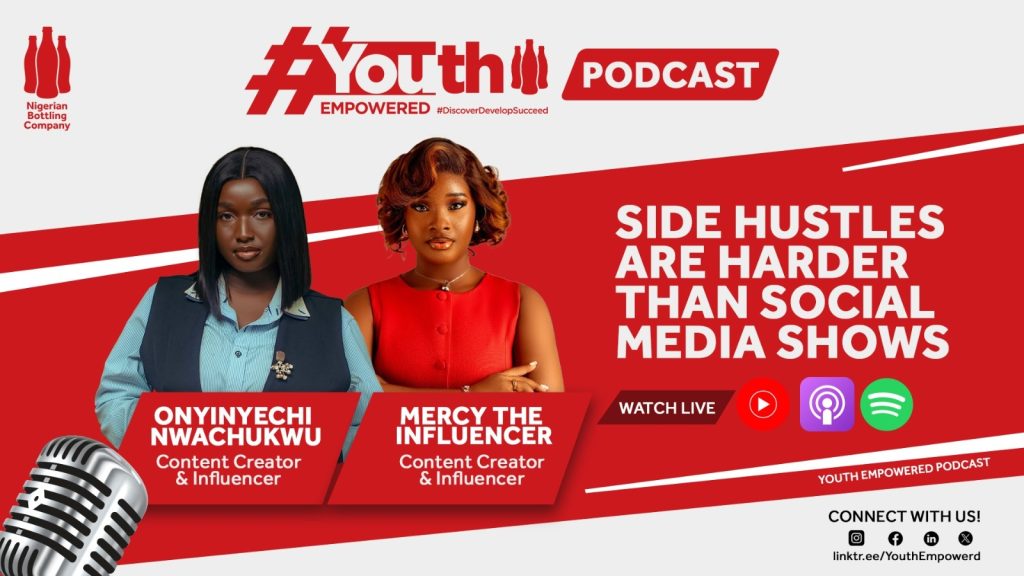
    On the latest episode of the Youth Empowered Podcast by the Nigerian Bottling Company, digital creators Mercy the Influencer and DarkSkinned Ella pulled back the curtain on what it really means to create content online. From overcoming self-doubt and social anxiety to developing a content strategy that drives growth, the conversation offered practical lessons for anyone looking to build a presence in today’s digital economy.

    Everyone starts at zero

    For both creators, the journey wasn’t as glamorous as social media often makes it seem.

    Before the followers came, there were moments of uncertainty, inconsistency and questioning whether content creation was even worth pursuing.

    “I kept trying. I kept learning. I kept believing in myself,” DarkSkinned Ella shared while reflecting on her early days as a creator.

    Mercy admitted that her own breakthrough didn’t come from chasing followers but from solving a problem she personally experienced.

    After struggling with severe skin issues and feeling misled by skincare recommendations online, she decided to create honest content documenting her own experiences.

    “I wasn’t thinking about followers,” she explained. “I just wanted to tell the truth.”

    Ironically, that authenticity became the turning point for her brand.

    Consistency isn’t just posting every day

    One of the biggest myths the guests challenged was the idea that consistency simply means posting more.

    According to Mercy, consistency is about creating a schedule you can realistically maintain.

    “The starter pack to grow your page is six pieces of content every week,” she explained.

    Whether that’s one post every day or two posts a day across three days, the goal isn’t perfection—it’s building a rhythm your audience can rely on.

    Every creator needs a strategy

    Perhaps one of the most practical moments of the episode came when Mercy introduced a simple framework aspiring creators can use to structure their content.

    She explained that every content strategy should include three types of content:

    • Growth content to attract new audiences through educational posts, tutorials, tips, and insights
    • Community-building content that helps audiences connect with the person behind the brand
    • Conversion content that encourages audiences to take action, whether that’s making a purchase, joining a community or engaging more deeply

    Rather than posting randomly, she encouraged creators to intentionally balance these content types to build both visibility and long-term engagement.

    Authenticity beats imitation

    The conversation also challenged one of social media’s biggest traps: comparison.

    While many creators try to replicate someone else’s style, both guests agreed that audiences respond best to authenticity.

    “If I vlog like somebody else,” Mercy explained, “people won’t see me—they’ll see the other person.”

    Instead of chasing trends that don’t fit, they encouraged aspiring creators to identify the kind of content they genuinely enjoy making and build from there.

    Because when content feels forced, audiences can usually tell.

    Stop waiting to be perfect

    One of the most memorable moments of the conversation came when the discussion turned to fear.

    Fear of looking awkward. Fear of being judged. Fear of creating something that nobody watches.

    For Mercy, embracing that discomfort became part of the journey.

    “I celebrated 1,000 posts,” she said. “That was 1,000 times of sounding cringe.”

    She recalled setting up photo shoots outdoors because she couldn’t afford proper lighting, with passersby staring at what looked like an unusual setup. The content later generated paid opportunities that made every uncomfortable moment worthwhile.

    Darkskinned Ella shared a similar perspective.

    “If you want to be a good content creator, forget shame,” she said. “Do it shamelessly.”

    More than content creation

    Beyond algorithms, followers, and brand deals, the episode explored something much bigger: believing in yourself before anyone else does.

    Both creators agreed that growth doesn’t happen overnight, and comparing your journey to someone else’s only distracts you from your own progress.

    Instead, they encouraged young Nigerians to start where they are, keep learning, and remain consistent—even when the results aren’t immediate.

    As host Moses Dickson reminded listeners at the end of the episode, “The challenge isn’t to have everything figured out. It’s simply to take the first visible step.”

    Whether that’s posting your first video, pitching your first client, launching your first idea or making your first sale.

    Because every success story begins in the same place.

    Zero.

    Watch the full episode of the Youth Empowered Podcast on YouTube or listen on Spotify and Apple Podcasts.

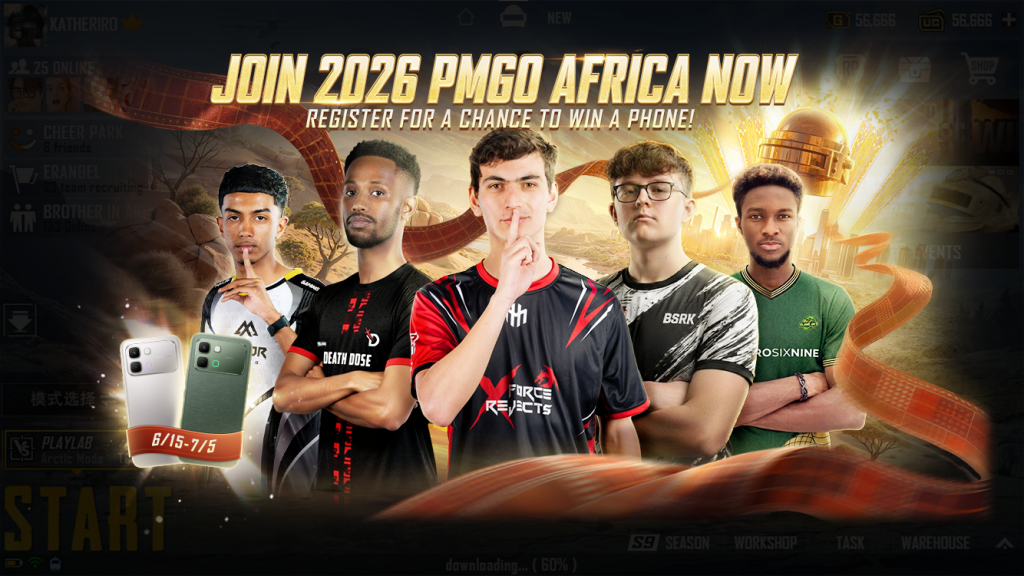
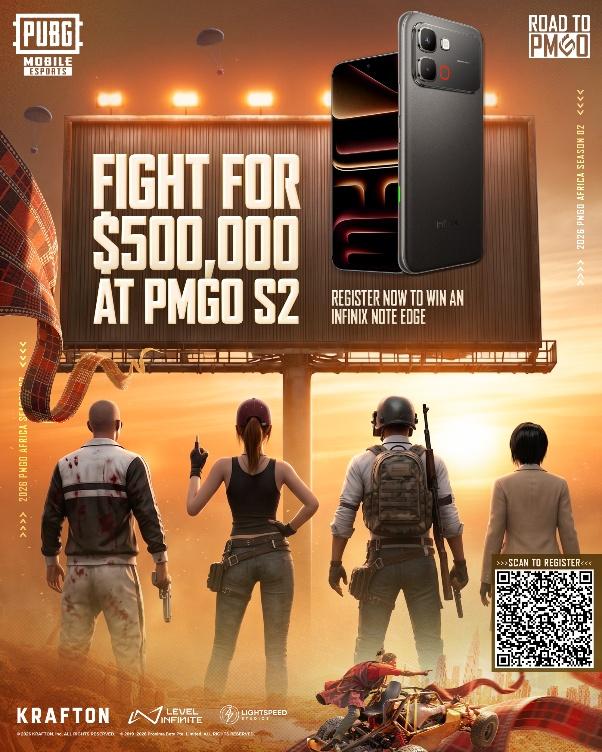
  • PUBG MOBILE has officially announced the opening of registrations for the Road to 2026 PMGO Season 2, inviting competitive players across Sub-Saharan Africa to compete for a place on the global esports stage and a pathway to some of the biggest prize pools in mobile gaming.

    The tournament represents the final opportunity in 2026 for African teams to qualify for the PUBG MOBILE Global Championship (PMGC), the pinnacle of PUBG MOBILE Esports, where the world’s best teams will battle for a share of a $3,000,000 prize pool. Beyond the PMGC qualification opportunity, the Season 2 champions will also secure a direct slot at the 2026 PUBG MOBILE Global Open (PMGO) Season 2, where they will compete for an additional $500,000 prize pool.

    As part of the registration campaign, PUBG MOBILE is rewarding players before the competition even begins. Every successfully registered participant will automatically be entered into a lucky draw, with four winners set to receive an Infinix Note Edge smartphone.

    The Road to 2026 PMGO Season 2 underscores PUBG MOBILE’s continued commitment to growing esports across Africa and creating opportunities for emerging talent to compete at the highest level. With only one direct pathway available to PMGO Season 2 and the final PMGC qualification slot for the region on the line, the tournament is expected to attract some of the continent’s strongest teams.

    Participation is open to players who have achieved Platinum Tier or higher in Ranked Classic Mode during the current season or any previous season. Eligible teams must consist of at least four players, with the option of registering a substitute player.

    Interested players can register by accessing the PUBG MOBILE Road to PMGO registration portal, selecting their preferred region, creating a team, inviting teammates, and completing the registration process. Players are advised to carefully select their region during registration, as region selections cannot be changed once confirmed.

    This announcement comes at a time when African esports continues to gain momentum, with more players and teams earning recognition on the international stage. Through initiatives such as the Road to PMGO, PUBG MOBILE continues to provide a platform for the continent’s most talented competitors to showcase their skills and pursue professional esports opportunities.

    Whether competing for regional pride, international recognition, or a share of the millions of dollars in prize money on offer, the Road to 2026 PMGO Season 2 presents a defining opportunity for African PUBG MOBILE players to prove themselves among the world’s elite.

    Players can register now and begin their journey toward global esports success. Follow the official PUBG MOBILE Tiktok page for updates.