GridLocked is a daily pop culture guessing game built for Nigerians. Every weekday by 9am, you’ll get six clues, sixty seconds, and an answer only a Nigerian would know.
Today’s GridLocked is a song.
How many clues do you need to get it right? 👀
Share your result when done, but don’t spoil the answer for others. (Missed the last GridLocked? Play it here.)
22 NOVEMBER 2026
Guess The Song01:00
Title
Guesses: 0
00:00
How To Play
The Goal: Guess the answer for the day before time runs out. (The answer could be a person, place, song, movie, or even slang.)
The Lock: You cannot type a guess until you have revealed at least one tile.
The Reveal: Tap any tile to reveal a clue. Every clue on the grid describes the answer for the day.
The Clock: You have 60 seconds to guess right. The timer starts the moment you flip your first tile. (You get multiple guesses.)
The Score: ⬜ (White) = A tile you flipped 🟪 (Purple) = A tile you kept hidden.
Best Result = ⬜🟪🟪🟪🟪🟪 | Guesses: 1 (Only needed one clue and one guess to get it right)
Come back every weekday by 9am for a new grid or subscribe to Z Daily, Zikoko’s daily newsletter, to get new GridLocked puzzles, real Nigerian stories and other fun content in your inbox.
How to Play GridLocked
The Goal: Guess the answer for the day before time runs out. (The answer could be a Nigerian person, place, song, movie, or even slang.)
The Lock: You cannot type a guess until you have revealed at least one tile (clue).
The Reveal: Tap any tile to reveal a clue. Every clue describes the answer for the day. The fewer tiles you flip, the better.
The Clock: You have 60 seconds to guess right. The timer starts the moment you flip your first tile. (You get multiple guesses.)
The GridLocked Squares: What Do They Mean?
When the game ends, you see your guess count, total time spent, and the number of tiles flipped. The tiles are shown as white and purple squares.
⬜ (White) = A tile you flipped
🟪 (Purple) = A tile you left closed
The fewer white tiles you have, the better your result.
Best Result = ⬜🟪🟪🟪🟪🟪 | Guesses: 1 (Only needed oneclue and oneguess to get it right)
Love Life is a Zikoko weekly series about love, relationships, situationships, entanglements and everything in between.
Timi* (29) and Toun* (28) met at a hair salon in December 2023, after she took his turn in the braiding queue. On this week’s Love Life, they talk about three months of distant replies after exchanging contacts, a fight over having his siblings vet her, and why Toun thinks his sisters treat him like a child.
If you want to share your own Love Life story, fill out this form.
What’s your earliest memory of each other?
Timi: The hair salon in December 2023. I wanted to braid my hair, but the salon was crowded in the afternoon, so I came back in the evening. One lady was ahead of me, but she had about 20 minutes left, so I decided to go and buy food. When I came back, the hairdresser had started on someone else’s hair. That person was Toun. I was really pissed because the hairdresser had my number, and she could have called me instead of having someone else take my spot. I was ready to argue with her, then Toun said something in the sweetest voice I’d ever heard. I can’t even remember what she said. I just calmed down immediately.
Toun: Such an insane first impression, but that was also my earliest memory of Time. He walked into the salon like a diva, and I was just there thinking, “Who’s this one?” I was also lowkey wondering why he didn’t just go to a male salon; they braid hair too.
Anyway, the moment he showed up, I could tell he wanted to cause a scene. I understood it was his turn. But he wasn’t there, so I took the spot. However, when I noticed he was upset, I apologised. I didn’t think much of him after that. Honestly, I judged him a little. I didn’t show it, but I rolled my eyes in my head.
Timi: She definitely hid it well because all I saw was a girl who said sorry nicely, and I’d have probably given up my spot even if I was around.
Get More Zikoko Goodness in Your Mail
Subscribe to our newsletters and never miss any of the action
Right. So what happened next?
Toun: I forgot about him completely. Then I finished and started leaving the salon, and he ran after me. I thought, “What does this guy want again?” He introduced himself and asked for my number. I hesitated, but he asked nicely, so I gave it to him.
Timi: I actually couldn’t get my eyes off her. I tried to make eye contact a few times, but she wasn’t even looking in my direction. I even complimented her hair when the hairdresser finished, but she just said a quick thank you and moved on.
I knew I wanted to be friends, and I wasn’t sure if we’d meet again, so I asked for her number. Thankfully, she gave it to me.
Did you guys talk after that?
Timi: I didn’t reach out that day, just so I didn’t come off as too desperate. I texted the next day, though, and I wished I hadn’t.
She just gave me the straightest “Who’s this?” ever, and I had to introduce myself again. She apologised and claimed she forgot to save my number. I didn’t believe it, but we joked a little, and that was it.
After that day, we barely spoke for about three months. I reacted to her statuses and checked up on her sometimes. But her replies were always so polite, but distant. I didn’t take it personally at first. I figured she was busy. After a while, I started to wonder if she just didn’t like me.
Toun: I didn’t have time for men then. I also thought he was a diva, and he wasn’t my type. He braided his hair, and my parents hate that. I knew they would never accept it. So I kept my replies short and polite because I didn’t want to send any mixed signals. In the past, I’d have even set my boundaries from the day we exchanged contact, but we already had the hair salon drama, and I didn’t want to add to that.
Also, I didn’t dislike him. I just didn’t think about him much.
Fair enough. What happened after those three months, though?
Timi: We met at the salon again in April. We’d already stopped texting on WhatsApp by then. I wasn’t reacting to her statuses or checking up on her. So when we met again, I wanted to return the energy. Polite, but distant. So I said hi and minded my business.
Toun: I noticed the energy felt off. I tried to talk to him, but he didn’t really engage. That night, I texted him and asked what was wrong. I wanted to know why he wasn’t friendly at the salon. I knew he was probably returning the same energy, but I wanted to know for sure. I guess it’s also a female thing to get curious when you stop receiving attention.
Timi: I told her straight up that she was snobbish and standoffish. I didn’t mince words. Then she explained that it wasn’t like that. She said she just had a lot going on, and wasn’t entertaining men at all, including platonic friendships. She, however, apologised for making me feel unwelcome. That conversation felt like the reset button, and it was how we actually started a friendship.
I see. What was the friendship like?
Toun: We started talking more, and my view of Timi changed completely. He wasn’t a diva as I had initially assumed. He has four older sisters, and that explains a lot about the way he acts.
Timi: I’m the last-born, and I grew up around women. I’m comfortable talking about my feelings, and I’m used to being taken care of. Some people read that as dramatic, but I don’t care.
Toun: Anyway, I got to know more about his family, what he’s been up to and what he hopes to achieve for himself in future. We also discovered that we had similar tastes in movies.
Timi: Everything she said. We really enjoyed each other’s company, and I’d always tease Toun that we could have been friends even earlier if she wasn’t forming. She was the actual diva, to be honest. We talked about everything, including our love lives. We found out we were both single, and we even talked about what we were looking for in our next partners. We texted every day, called every night, and she’d always thank me for being so thoughtful.
Toun: That’s one of the things I really like about Timi. Mention something in passing, and he’ll do something about it the next time you guys are together. And he does it for everyone, as long as you’re someone he holds dear.
Sounds nice. Was there any expression of interest in something romantic, though?
Toun: Not immediately, but we eventually got to that point. We went on a couple of casual dates, and even though we were telling ourselves we were just two male and female friends, we knew something was bubbling to the top. At that point, we were constantly looking forward to spending time together.
Timi: Left to me, I’d have made my move that same month we reconnected. I’ve always had this fear that when you let a friendship with a girl linger for too long, you’ll end up getting friendzoned. But I always felt there was no rush because I could tell Toun liked me. I knew everything about her, and I knew she didn’t have any other guy apart from me.
I think by the third or fourth month after we reunited, though, I decided I was going to ask her out. Then we had a fight.
Oh. What happened?
Timi: We went out one day, and I said something about having my sisters vet her before I made her official. I meant it as a joke. My sisters have always been involved in my life, and I’d shown them Toun’s pictures. I just wanted their opinion, but it didn’t mean I’d listen to whatever they said. But Toun didn’t seem to understand my point of view. She got really heated.
Toun: It sounded like he couldn’t make his own decisions and needed permission from his sisters. I hadn’t even met them at that point. They had seen pictures of me and felt like they were already judging me if he needed their permission. He says it was a joke, but I don’t believe that at all.
I still wasn’t convinced by his explanation, so I pulled back for a couple of days. At that point, I was thinking all sorts. I’d heard that men with only sisters often have sisters who cause problems. I wasn’t sure I wanted to be involved in a drama like that.
But then he came back and apologised. He told me he didn’t mean it that way, and I accepted.
You accepted to date him?
Toun: Oh no. I accepted his apology.
Timi: It felt awkward to ask her out again fresh off the argument. So things dragged for another month. We didn’t know what we were doing. We kept talking, but we avoided the topic. We acted like a couple without calling ourselves one. I didn’t know if I should bring it up, and I didn’t want to seem desperate. So I waited for the right moment, but it never came.
When did things finally change?
Timi: In November, when my mum turned 60. I invited Toun to her birthday party, and that’s when she met my family.
Toun: Everyone was so nice. His sisters welcomed me, and I felt comfortable. I looked at them and thought, “I can see myself being part of this family.” I also realised in that moment that I’d probably been overthinking a lot of things. The week after the party, we had the “what are we” conversation. Timi asked me out, and we became official in November 2024.
What were the early days of the relationship like?
Toun: Really sweet. We live close to each other, so we saw each other often. I did most of the visiting. As I visited more, I got closer to his sisters. They liked me because I was the first girl Timi had brought home. They welcomed me, and they included me in everything, so I never felt out of place.
We also continued going on dates, and just amplified all the bonding activities we used to do when we were still friends. It basically felt like an extended honeymoon phase.
Timi: Everything she said. I also couldn’t visit her as much even though we lived close, because her parents are strict. I didn’t want to cause trouble, so I’d usually hang around a couple of blocks from their building. In the end, we just agreed it was better for us to meet at my place. Toun also had nosy neighbours who’d always try to poke their noses whenever they saw us together.
My sisters also adored her. I was happy to see them get along, despite the worries I also had from the jump. They’d call her just to chat, and they’d ask me why I hadn’t brought her around sooner.
Sounds like it was all smooth sailing.
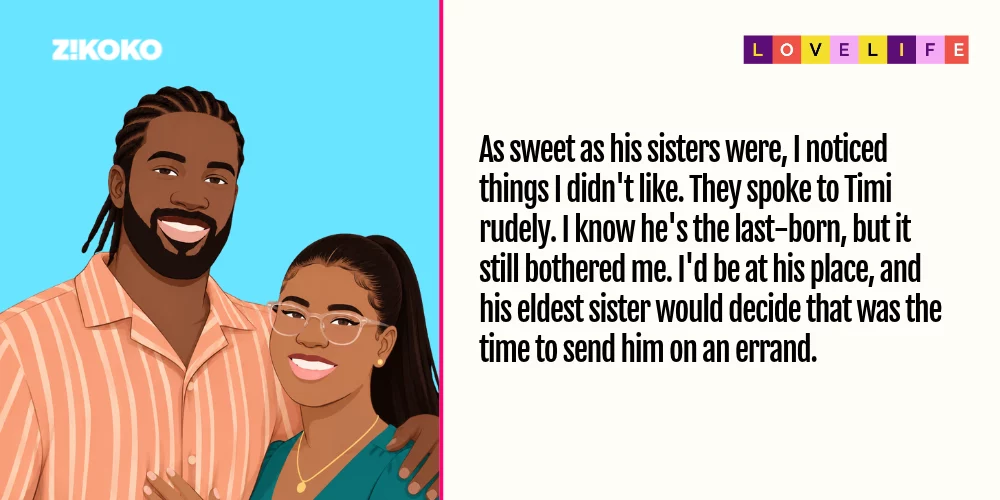
Toun: Well, yes. Timi and I generally didn’t have any issues. But as sweet as his sisters were, I noticed things I didn’t like. They spoke to Timi rudely. I know he’s the last-born, but it still bothered me. I’d be at his place, and his eldest sister would decide that was the time to send him on an errand. Timi would just go. He didn’t hesitate.
I also noticed the name-calling and the way they talked to him in front of me. I didn’t know how to bring it up. Timi really loves his sisters, and I didn’t want it to sound like I was questioning his relationship with them.
But did you eventually bring it up?
Toun: To be honest, I kept pushing it off until I couldn’t hold it in anymore. I told him what I’d noticed and said I wasn’t trying to cause trouble. I just wanted him to know it bothered me. But then he kept saying whatever I noticed was normal with siblings, and it frustrated me. I think they could still respect certain boundaries, especially if he talked to them about it.
Timi: To me, some of these things were normal. My eldest sister is seven years older. I really can’t put up a face when she sends me on an errand or needs my attention.
I understood where Toun was coming from, but I still felt it was a tricky issue. These are the people I grew up with. They like Toun so much, so I couldn’t see why she was bothered. Errands and name-calling are normal things siblings do. It would do the exact opposite if I started telling my sisters what they can and can’t do when my babe is around. The next question will most likely be, “Is it your babe that is putting you up to this?” And once they get that feeling that Toun is putting me up to things I naturally wouldn’t do, it could be problematic. So I told her I couldn’t have that conversation.
Oh
Toun: His refusal made me feel he wasn’t considering my feelings. We argued about it for a while, and I went home upset a few times. I think I even told myself I’d stop coming to his house. But it was difficult to do that because he wouldn’t even let me off. While I’m all angry and forming vex, this man will text me to come pick up something he just made or something he ordered for me.
I’d go there, and while I’m around, one of his sisters will make one snide remark or even yell at him. I think his eldest sister loved doing that most. She suddenly had errands for Timi whenever I came over.
Screaming. Did you guys ever find a middle ground, though?
Timi: I hated those arguments. I felt caught between the people I love, and I really wasn’t trying to dismiss her concerns. It was just a weird place to be, especially because even amid all of these concerns, my sisters genuinely liked Toun. She can admit to that. They could be trolling me, sending me on errands and still being all chummy with Toun. So imagine trying to bring up her concerns.
I didn’t agree to have any talk with my sisters, but I found ways to work around it. We started meeting more and more outside. Sometimes, we didn’t head straight home when we got back from work. We’d meet at a restaurant and then go to the mall, which was about a 20-minute walk from our area. Then on weekends, we’d go somewhere private. I had a friend who had a flat to himself because his uncle relocated. I had an arrangement with him, and he sometimes gave me the key so we could have the place to ourselves. That significantly reduced how much time we spent at my house.
Toun: Then two of his sisters relocated last year. The remaining two aren’t as problematic. They give Timi his privacy whenever I’m around.
Timi: My sisters aren’t problematic.
Toun: Whatever. You get my point.
Curious, though. How do you both plan to navigate this if your relationship progresses to marriage?
Timi: I think once there’s considerable distance, Toun’s worries will disappear. I mentioned how things got better when we stopped spending as much time at home. So imagine we’re married and in another state or in a different part of the city entirely. And, beneath it all, I know my sisters only have good intentions. They like her.
Toun: I’m not saying they’re bad people. I have a good relationship with them. I just don’t want to blur the lines. I don’t want them to treat me the way they treat their baby brother.
I’m grateful I’ll have many sisters-in-law. But it worries me too. His sisters do small things that Timi would never understand, even when I explain them to him. I worry about what that will look like if we get married. Will I deal with in-laws who feel they can do what they want because the groom is the last-born, the baby of the house?
I had the conversation with my own sister, and she told me to embrace Timi’s sisters and overlook his dynamics with them. She thinks I’m worrying too early.
Let’s move on, guys. You mentioned having really strict parents, Toun. Does this mean they aren’t aware of your relationship?
Toun: Timi met my parents last year, and he understood what I meant about their strictness from that first visit. It actually wasn’t planned. They’d been away for the week and arrived earlier than expected. They both walked into the living room at the same time, and I can’t even remember if they answered Timi’s greetings.
Timi: Her dad actually did. It was her mum who just had this really interesting look.
Toun: I introduced him as my friend, and that same day they already had things to say about his hair. They didn’t like the braids, and they said so on the spot. But in the last year, they’ve seen how Timi treats me, and they’ve softened a little. They still ask a lot of questions.
Timi: I keep my visits really short and always stay very respectful. They’ve stopped commenting on my hair, but Toun tells me they still complain occasionally. Especially this one time when I went blonde. But they’re calmer now, and they know we’re dating.
It’s been over two years of dating. What’s the best thing about being with each other?
Timi: Toun is calm and kind. She also makes me better. She makes me think about my choices, and she tells me the truth, even when I don’t want to hear it.
Toun: He’s affectionate and loyal. He listens, and he apologises when he’s wrong. He’s also a family man, and I see how he treats the people he loves. I know he’ll treat me the same way. He also makes me laugh when I’m tense, and I don’t take that for granted.
On a scale of 1 to 10, how would you rate your love life?
Timi: 8. We’re doing well. We still have a few things to figure out, mostly around our families.
Toun: 8.5. I’m happy. And I love how we always find our way back to each other after a fight.
*Names have been changed to protect the identity of the subjects.
If you’ve enjoyed reading Love Life, our flagship series on love, heartbreak, and relationships, we have exciting news. We’ve partnered with Cassava Republic to publish a book based on the flagship. Coming January 2027, it’s about to be your favourite book.
If you want to share your own Love Life story, fill out this form.
Grief doesn’t always show up only when someone dies. Sometimes, there’s too much to deal with in the immediate aftermath. Family members to comfort, burial arrangements for the deceased and making space for mourners who show up. Then, weeks, months or even years later, something as ordinary as a song or a name can bring the loss rushing back.
These Nigerians have been there. They open up about the unexpected moments grief finally caught up with them, and how they’ve navigated the loss of people they loved.
“I felt like someone poured icy water all over me” — Jacob*, 26, M
First, I lost my boyfriend. Then I lost his older brother. After my boyfriend died, I continued living in the same house with his older brother. One night, he had an asthma attack and died before we could get him to the hospital.
For the next week, I moved around on autopilot and barely had time to process what had happened. I notified the rest of their family, received guests, and answered endless questions about what had happened.
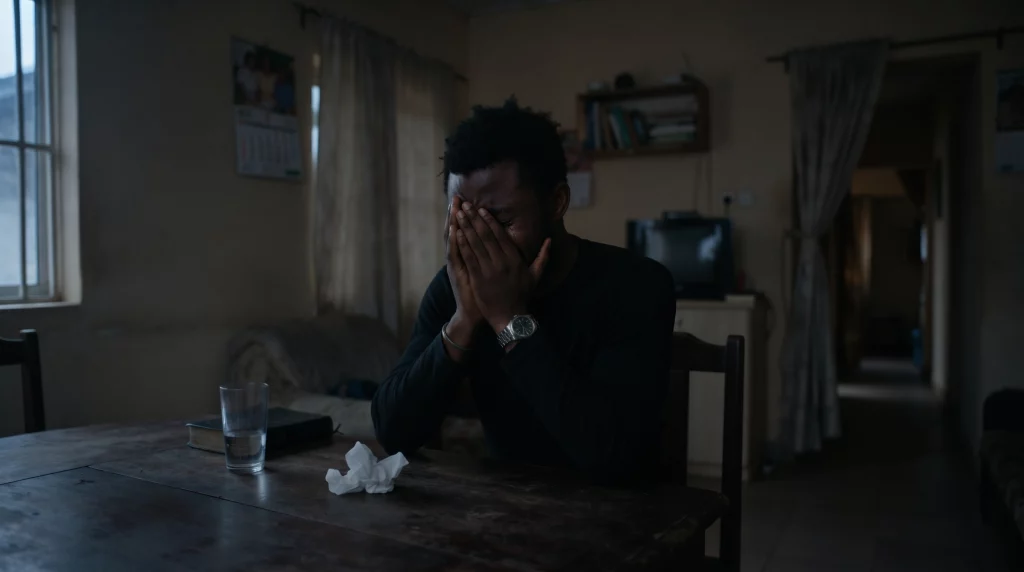
The grief finally caught up with me on a random Wednesday, nine days after my boyfriend’s brother died. I was alone at home and had gone to the sitting room to watch TV when I noticed his framed photograph on the console.
Suddenly, it felt like someone dumped a large bucket of icy water on me. I had a mental breakdown, and in that moment, I felt the full weight of his absence. This man was really, really gone.
I started crying and shaking uncontrollably. My heart was pounding, and I struggled to calm myself down. Eventually, I called some friends who came to spend time with me. Afterwards, I left the house for two weeks to clear my head.
This wasn’t the first time I was losing someone. My father died in 2016, and then my boyfriend just in March 2026. But losing his brother so soon afterwards, in October, affected me in a way I hadn’t expected.
I think the grief I’d pushed aside after my boyfriend’s death, combined with the shock of losing his brother, finally caught up with me. After that day, though, I’ve found it easier to process both losses and move forward.
“Four years of grief hit me at once” — Favour*, 28, F
My cousin died in 2021, but I didn’t cry. It wasn’t because I wasn’t hurt. My mum and my aunt were too devastated by the loss to handle the urgent burial arrangements, and my uncle’s blood pressure had become so high that he couldn’t step in either. I had to take charge of everything.
I went to the mortuary, organised the embalming, bought a coffin and a burial space. My cousin was only 15. After he died, I also went to their house and arranged his room. I made sure I didn’t throw away even a scrap of paper.
Once the burial was over and all the mourners left, I pushed the whole ordeal to the back of my mind. I didn’t realise how much I had buried until 2025, when I was onboarding a new intern at work.
One minute, I was stretching my hand out for a handshake and the next, I was bawling my eyes out on my knees and clutching my chest. I lost control of my emotions. All the tears I hadn’t shed at my cousin’s burial seemed to come pouring out at once.
I had to take two weeks off work, and I started therapy, which has made it easier to process his loss. I think about that day and almost laugh sometimes because I’m sure I scared everyone.
“I found out from a Facebook post” — Patience*, 21, F
When my father passed away, the comfortable life I’d always known changed completely. I had to change schools, move houses and adjust to a new location.
My mum had sent me to a friend’s house and told me my father was recovering from his illness. Then, just two days after my birthday, I saw a Facebook post announcing his death. The grief consumed me immediately. I cried and honestly wished I could join him.
My grief consumed me for the next nine years. I struggled with depression, dysthymia, suicidal ideation and self-harm, and I was still a teenager. Yes, my father had his flaws, but I would give anything to have him live again.
Get More Zikoko Goodness in Your Mail
Subscribe to our newsletters and never miss any of the action
“ I can’t listen to that song ever again” — Jeremiah*, 25, M
I lost my aunt to cancer in 2025. Around the time her illness worsened, I was listening to Ethel Cain’s The Preacher’s Daughter album a lot. On the day I heard that she died, I had Sun Bleached Flies on repeat.
That day, I paid full attention to the lyric, “God loves you, but not enough to save you.” I can never listen to that song again because it takes me straight back to the day I lost her.
I’d left religion years earlier, but I prayed a lot for my aunt to get well. I even made a pact with my sister that I’d come back to church if she got better. She never did.
Losing her has made me more anxious about losing other people I love. Sometimes, I look at my mum and block out thoughts of her dying someday. When I’m with family, I try to bring up memories of my aunt, especially moments when she was around. Even now, those conversations can make me cry.
People say grief gets easier with time, but I still feel a violent ache in my chest when I think of her.
Sometimes, I pray to her. I know she’s gone, but doing that makes her feel close. I also avoid doing certain things because I imagine her watching me. My spirit has refused to let go, so these things make her feel like she’s still here.
“I mourned afresh when my husband proposed to me” — Simi*, 56, F
I lost my mother when I was 16. She had gotten into an accident and was admitted to the hospital. I was away at boarding school, so they brought me to see her. She died shortly after I got there.
I was sad, and I’ve never experienced another loss that felt as painful as hers. But the grief only hit me when my husband proposed to me in 1995.
As I looked at the ring he had given me, I suddenly realised my mum wouldn’t be there to choose aso ebi with me or pack my eru iyawo. It felt like someone placed a heavy weight on my shoulders, and I wept for days.
My husband was so confused; he kept offering to buy another ring if I didn’t like the one he gave me. It was almost funny. It took weeks before I felt like myself again. Even now, whenever I reach a new milestone, I think about my mum. I wish I could share those joys with her.
Every week, Zikoko spotlights the unfiltered stories of women navigating life, love, identity and everything in between.
What She Said will give women the mic to speak freely, honestly and openly, without shame, about sex, politics, family, survival, and everything else life throws our way.
The subject of today’s #WhatSheSaid is Tonye*, a 35-year-old content creator and business owner who moved from Port Harcourt to Lagos at 22 to pursue a vision that no one around her believed in. She spent five years in a secret relationship with her best friend, built two businesses and a home with her, and was told it had all been a mistake. Then the friend married a man and came back.
Can you tell me about yourself?
My name is Tonye. I am 35, and I will always introduce myself as a Port Harcourt babe, even though I have lived in Lagos for thirteen years. Lagos people hear that and laugh, but PH is where my head was formed, so I stand on it.
I make content, I model when the job is right, and I co-run two businesses. One is a beauty brand, and the other is a PR agency. I will get into how those came about because they are tied to everything else I am about to tell you.
I am an only daughter with a mother who has opinions about everything, and I am the type of person who goes quiet when she is serious. My friends say I am dry. I say I am just not in the mood to waste words.
What were you like growing up in Port Harcourt?
I was very restless. Between 5 and maybe 12, I was always outside playing games with the estate’s children. I would get hurt playing football or wrestling, then run back out the next day. Eventually, I started filming funny videos on my mum’s phone in the compound, and she would come out and ask who I was performing for. I would just laugh it off.
I started modelling for small local brands in uni. Nothing big, mostly shoots in someone’s living room with a bedsheet as a backdrop. But I was good at it, and more than that, I enjoyed it. I also made skits I was now sharing on the internet on the side, watched the numbers move slowly, and started to understand that what I wanted to do needed a bigger room than, at the time, I felt Port Harcourt had.
What do you mean you needed bigger room?
I had to leave PH. It was a few months before I finished uni. I had been tracking which creators were getting the real brand deals, and all of them were in Lagos. The agencies were in Lagos, the casting calls were in Lagos, and the people with money to spend on a face were in Lagos. I could stay in PH and be a big fish in a small pond, or I could go and risk being nothing in the ocean. I chose the ocean.
My mother was completely against it. We had this argument in the kitchen while she was cooking, and she did not even turn around. She said, “So you want to go to Lagos to become a runs girl?” I just walked out.
She said it again that week, and again the week after. She told her friends I was going to Lagos to “find trouble.” She called me stubborn, ungrateful and a disgrace, and she insulted my dreams, and I will not repeat how.
I did not shout back. I packed my bag, I told her I loved her, and I left. I think the calm made her angrier. I was 22, I had no plan beyond a vision, and I did not care what anyone called me.
What were your first years in Lagos like?
Quite messy. I did not have money for a place, so I jumped from house to house. I stayed with a cousin in Ikeja for three months until her husband started giving me looks that said my time was up. Then I stayed with a friend from uni in Surulere, sleeping on a mattress in her living room. After that, I stayed with a distant aunt in Lekki who charged me in advice instead of rent, which was somehow worse.
I carried everything I owned in two bags and a ring light. People think the hustle looks glamorous from the outside. In reality, I was charging my phone in other people’s sitting rooms and eating whatever was offered so I would not feel like a burden.
Money came in small pieces. A shoot here, a brand post there, a skit that did well and then three that flopped. When I finally had enough to send some home, I sent it quietly without a message attached. My mother called two days later and said, “Tonye, how are you managing? Are you eating?” That was it. No apology, no mention of the runs girl comment, just a question about food. In my mother’s language, that was her admitting she had been wrong. I took it.
Did you end up getting your own place?
A friend and I decided to rent one together. Her name was Kemi*.
Tell me about Kemi.
She was two years older than me, and we were very different. She always had a plan, and I just went with the flow. She could persuade anyone and lower any price; she’s done it with our rent and with landlords often, without raising her voice. She could calm a very angry client in one phone call. She could cook jollof that was too good.
We met through a shoot. She was working in PR for a fashion brand, and I was the model for the campaign. She watched me struggle with a bad stylist and stepped in without being asked, fixing the whole thing in less than 30 minutes. Afterwards, she told me I was good but bad at selling myself. I jokingly asked her to teach me, and she agreed but only if I bought her food.
That was how our friendship started. I cooked; she taught me how to pitch myself to brands, and within a few months we were basically living between our places. When our rent expired at the same time, getting a place together felt like the obvious decision. We found a two-bedroom in Chevron with a balcony.
How did your friendship develop?
We just got closer and did everything together. Slowly, I started to notice things changing between us. It was one small thing after another that neither of us commented on.
She would do my edges on Sunday nights, and her fingers would stay a little too long. I would catch her watching me during a call, and she would immediately look away. We started sitting closer on the couch when we watched movies, until one day I realised our legs were touching and neither of us had moved.
Then there was a night NEPA took the light after a heavy rain. We didn’t have fuel, and both our rooms were boiling; the only working fan was in mine. She came in with a phone torch and said, “I’m not sleeping in that oven, shift.” So we lay there, side by side, sweating and talking nonsense in the dark about whether her ex had been boring or just badly raised.
At some point we stopped talking. Her arm was against mine, and I could hear her breathing change. I thought, why is nobody moving? I turned my head, and she was already looking at me. Neither of us said anything for what felt like a full minute. Then she said, very quietly, “Tonye.”
I said, “Yes?”
She said, “Nothing.”
I kissed her. I would love to say it was brave, but honestly it felt like the only logical thing left to do. She kissed me back like she had been waiting for it for months, and I realised she probably had.
Get More Zikoko Goodness in Your Mail
Subscribe to our newsletters and never miss any of the action
The fan was doing very little, and it did not matter. Her hands were warm and certain, like she knew what she was doing. Mine were the opposite. I kept apologising for not knowing what I was doing, and she just laughed against my neck and told me to stop talking. She took her time with me like no man ever had. It was slow and careful, and by the end I was shaking while she held me.
In my late teens, I barely dated, but it was mostly men. I was fine with them, so I kept that curiosity I had for women in a drawer in my head and never opened it. I did not think it would ever matter. I was wrong.
What was the morning after like?
Awkward in the most ridiculous way. She made tea, which is something she never does, and we sat across from each other at the kitchen table like two people at a job interview. She cleared her throat and said, “So.” I said, “So.” Then we both burst out laughing and could not stop.
I was 24, and she was 26. By the end of that week, we were together. But it had to stay undercover.
Why did it stay undercover?
Because she needed it to. Kemi’s family was deeply religious, and her mother lived in a world where church members had opinions about everything. She said hers was not like mine, and that if anyone found out, her family would not just be upset; they would physically harm or disown her.
So we had rules. We kept two bedrooms or so, everyone believed, though we only ever used one. We never posted each other in anything that looked romantic. In public we were best friends, sometimes sisters. When her mother visited, I would move my toothbrush into the guest (‘my’) room and put my things in a bag under the bed.
I told myself it was fine. All I needed was her. I thought the secrecy was a small price for having her at all. Besides, it’s Nigeria.
What did your life look like at that point?
It looked like a marriage, honestly, just with a very polite public face. We started our beauty brand first, because I had been using my own skin as a lab for years, and Kemi had the business brain to turn that into something real. She handled the clients and suppliers. I handled the product, the content, and its face. A year later, we added a PR agency because her work had given her contacts, and I had built an audience that brands wanted access to.
We bought a car together and split the instalments. We travelled constantly to Accra, Dubai, Zanzibar and Cape Town, always booked as two friends on a girls’ trip. We got a dog because she wanted one and a cat because I wanted one, but they grew on both of us. We had a shelf of mugs we had bought on different trips, and a drawer of takeaway menus from places we loved.
Everyone around us saw two friends who were doing well. What was actually happening was that we were building a life. Then it all started falling apart.
What do you mean? When?
When I was 29, and she was 31. I came home from a shoot one Thursday, and she was sitting on the couch with her hands folded in her lap, which is what she does before she says something she has rehearsed.
She said, “I need to tell you something, and I need you to let me finish.”
I said, “Okay.”
She told me she was straight. She said she had been confused for years, that what we had was a mistake, and that she was truly sorry for wasting my time. She said it in the polite voice she uses with clients, as if she were apologising for rescheduling a meeting. She said she did not want to hurt me, that I deserved someone who could love me properly, and that she could not be that person.
Five years, and she apologised for my time.
I said “okay” about four times. I did not shout, I did not cry, and I did not argue, because there was nothing to say. She packed a bag that night and left.
What was it like to be in the apartment afterwards?
It was like living with a ghost. Her mug was still in the sink, her scarf was still hanging on the chair, and her perfume was still in the bathroom. Our dog waited by the door every evening for a week. Even our cat felt her loss and sat on her side of the bed, refusing to move. Everywhere I looked there was something we had chosen together, and I could not move any of it.
I did not touch her side of the wardrobe for four months. I did not wash the mug, which sat in the sink until one day I finally threw it away in a rage and then cried for an hour.
I’m so sorry. What happened with the businesses?
She went completely silent. She sent a liaison, a woman I had never met, to handle all communication about the beauty brand and the agency. This woman emailed me in a very polite tone with subject lines like “Operational Alignment.” I thought, I built a company with someone, shared a bed with her for five years, and now her assistant is sending me calendar invites.
The same year, she got engaged to a man. A very nice man, by every account. She blocked me everywhere, on WhatsApp, Instagram and email. They were married the next year.
I did not go to the wedding, obviously. I found out about it from a mutual friend, who looked sorry and slightly terrified as they told me.
Was that the last you heard of her?
Two months after the wedding, I got a message from an unknown number. It was a long apology. She said she had made a terrible mistake by cutting me off. She said she missed me every day, that she did not know how to live without me in her life, and that she wanted to find a way for us to still be friends.
I wrote back one line: “But you cut me off?”
She replied within minutes. She said she had been scared, had panicked, and had wanted to do the right thing but had done it badly. She asked me to give her a chance to fix it.
I did not respond. She messaged the next day again, and the day after that. She sent small things: a photo of the dog’s old toy that she had found, a screenshot of a joke we used to quote, a voice note of her laughing at something and saying, “I thought of you.” She did not give up for a month, maybe two.
What made you respond?
I was tired. I had spent almost a year mourning someone who was alive, and she was now saying I did not have to anymore. When you are grieving, that is a very persuasive offer.
We met for ‘coffee’ first. It was neutral, public, and short. She looked exactly the same, which was somehow the worst part. She cried at the table, and I did not. We talked about the business, and about the pets who were living with me. We did not talk about the marriage.
The second coffee turned into breakfast, then dinner, and the third dinner turned into a drive that ended with us parked outside my building, neither of us getting out.
Not easily. I fought it for the longest time, because she was married to a man and she kept telling me she was straight. I said it to her face: “You said you were straight. What is this?” She said she did not know. She said she was confused and that she had made a mistake in thinking she could outrun what she felt for me.
I knew exactly how that sounded. I am a grown woman, and I know what a married person who “does not know” sounds like. But she looked at me the way she used to, and she held my hand in the car. She said, “I want you. I want this. I am so sorry it took me this long to know it.”
I believed her. One thing led to another, and we were back in each other’s bed. It was the same as it had always been, her hands, her mouth, my name in her voice. I lay there afterwards with her head on my shoulder and thought, I am home.
What happened next?
I asked her, “So what are we doing?”
She was quiet for a moment. Then she said we should just see each other on the side, quietly, and that her husband did not need to know. She said it like she was suggesting dinner plans.
I got up, got dressed, and left. I was shaking with rage. I had spent a year being erased and months being persuaded, and she was still offering me the same terms, the same secret, the same small corner of her life. I walked out and thought, I am an actual fool.
Was that the end?
No. I eventually went back. She kept calling, and when I finally picked up, she told me she was ready to explain everything properly. She said her husband would be out that night, that I could come, and that we would talk like adults. I went. We sat on her couch, and she was gentle and sorry, and one thing led to another again. I told myself I would leave after one more kiss. I stayed for a lot more than a kiss. Then, I heard the door before I saw him.
I froze. My heart was loud in my ears, and my first thought was that this was the moment someone was going to get hurt. I looked at Kemi, and she did not move. She did not jump up, pull away, or gasp. She lay there like she had been expecting him. He stepped into the room, and I braced for shouting. He stood in the doorway for a moment, looked at us, and I waited for the explosion. It did not come. Instead, he leaned against the frame and smiled, slowly and almost warmly.
He said, “Don’t stop on my account.”
I did not understand at first. It genuinely felt like a Nollywood skit. Then he started taking off his watch, calmly, like he was getting ready to join something. He set it on the console table, walked toward the couch, and looked at Kemi. She looked back at him, and something passed between them that I will never forget, because it was not surprise. It was permission.
I said, “Ehn?” Like I croaked. Then, louder: “Hell no.”
I grabbed my bag, my shoes and half my clothes, and I ran out of that house.
What did you do afterwards?
I blocked her. I blocked him. I blocked everyone connected to either of them, and I told myself I was done. I cried for three days, and then I got angry, and the anger was clean and useful.
We still had the businesses, though, which meant I could not walk away completely. I hired a lawyer to start the process of splitting everything: the beauty brand, the agency, the assets and the shared accounts. I thought it would be clean. I thought lawyers would make this boring and final, which is the whole point of lawyers.
How has that gone?
It has not helped at all, to be honest. It has been four years, and we are still not done. Kemi will not agree to a split. She delays, sends objections through her side, asks for more time, and changes her mind about the terms she agreed to. Every time we get close to a final agreement, she finds a new reason to reopen it.
I know exactly why. As long as the businesses are tied together, she has a reason to be in my life, and she knows it. She knows I put blood, sweat and tears into the brand and the agency. She knows I will not walk away from something I built with my own hands. She knows I still have feelings for her, and she is using them.
She will not leave me alone. She calls, sends messages through mutual friends, and turns up at events I am hosting, acting like we are fine. She is trying so hard to get me back into her life, and into her husband’s. He quote-unquote likes me. He sends me Christmas messages. He once suggested we all have dinner, “to clear the air.” It would be funny if it were someone else’s life.
Do you still love her?
With my whole heart. People assume that once someone treats you badly, the love dies. It does not. It sits there and gets heavier.
I have always been a one-person babe, loyal to the core. I was like that when I dated men, and for more than a decade now I have been exclusively with women. I do not know how to love lightly or halfway, and I have never met anyone who made me want to learn.
I cannot let her go. I have tried every version of it. I have moved, changed my number, deleted her photos, taken down every memory, and told myself a hundred times that I deserve better. Then she says my name in a voice I know, and I am twenty-four again.
Where does that leave you now?
Honestly, in a place I did not expect. I have been asking myself a question I would not have entertained five years ago.
Her husband is not a bad man. He is not violent, he is not unattractive, and he has never been unkind to me. The whole thing with the couch was bizarre, and I will never forget it, but he has not threatened me or lied to me. He just seems like a man who wants his wife to be happy and has decided that includes me.
So I keep wondering, maybe I can try? Maybe we can do this? Maybe there is a version of this life where I stop fighting what everyone else is offering me and just accept a smaller place at the table.
I do not know. Some nights I think it is the most humiliating idea I have ever had. Other nights I think it is the only way I get to keep her.
When her younger sister’s addiction left her unable to care for her baby, Peace* (42) stepped in and raised her niece as her own. Now, seven years later, her sister wants her daughter back. Peace is torn between letting go of the child she’s cared for all these years and preserving her relationship with her sister. What would you do in her shoes?
My youngest sibling, Elizabeth* (32), has struggled with addiction for years.
I first suspected something was wrong during Christmas celebrations in 2014, when I visited my parents. Elizabeth had just finished university, and we were sharing a room during the holidays. One evening, I noticed an odd substance tucked away among her belongings. It had an unusual smell, so I asked her about it, but she denied that it was drugs. I didn’t think much of the incident until my parents started complaining about her behaviour after she got her first job in Kano. That’s when things began to spiral.
Elizabeth stopped coming home and eventually cut off contact with my parents and siblings. When my mother finally visited her in Kano, she found her in a terrible state. Elizabeth was clearly under the influence of drugs and seemed like a different person.
She eventually lost her job and returned to Ilorin, but by then, her behaviour had changed significantly. She was often disoriented, and my parents could hardly trust her alone. They also caught her smoking several times.
Get More Zikoko Goodness in Your Mail
Subscribe to our newsletters and never miss any of the action
We enrolled her in a faith-based rehabilitation programme, hoping she would get better, but she kept running away from home to places where she could continue using drugs. We’d find her, bring her back, and then she’d disappear again, sometimes for months. It became an exhausting cycle, especially for my aging parents.
So when Elizabeth became pregnant in 2019, we worried about how she would cope. Her addiction hadn’t improved, and we were afraid she might disappear again or put the baby’s life at risk. Towards the end of her pregnancy, she moved in with me so I could keep an eye on her until she gave birth.
In November 2019, she gave birth to a baby girl, Praise*. I hoped becoming a mother would encourage her to turn her life around, but she disappeared again in the thick of COVID, just a few months after the birth. We knew very little about the child’s father, so my parents took over her care.
It was a tough responsibility, especially because of my mother’s poor eyesight. As Elizabeth’s older sister, I felt obligated to step in. I had teenage children and was in a better position to give Praise the care and attention she needed.
I took Praise to Abuja, where I live, and have provided for her ever since. I’ve singlehandedly paid her school fees and handled all her needs. She’s a cheerful, bubbly child who reminds me of the person Elizabeth was before addiction took over her life. Over time, we grew so close that she started calling me Mummy, and I’ve come to see her as my own daughter. She’s never felt like a burden to me.
In 2023, my twins moved to Europe for their education, leaving Praise and me at home with my husband. Then, in 2024, I lost him to cancer. It was tough, but having Praise around made it easier to cope with the loneliness of being widowed. She kept me company and made me laugh. Caring for her gave me something to do every day.
Meanwhile, Elizabeth’s repeated relapses had worn down my patience. At one point, we arranged mentorship sessions for her with a well-known female pastor in the hope that the guidance would help her. But after one session, Elizabeth stole the pastor’s phone and disappeared. We eventually discovered that she’d exchanged it for drugs. I had to pay for the replacement phone since my parents couldn’t afford it. I was so upset that I stopped involving myself in her struggles.
However, Elizabeth continued to battle her addiction. In 2024, she had a near-fatal overdose and nearly lost her life. She eventually moved back in with my parents for good, and when we saw her determination to seek help, my siblings and I pooled resources to pay for her rehabilitation.
Her recovery has been encouraging. Last year, she got a teaching job and started helping my mother with her business. I’m genuinely happy to see her gradually rebuilding her life.
But that progress came with a difficult conversation. When I called Elizabeth to congratulate her on getting a job, she told me she wanted to take Praise into her custody. I was taken aback. I couldn’t understand why she wanted to disrupt the only life Praise had known, especially when she was still rebuilding her own. Elizabeth however insisted that she had the right to have her daughter back.
I raised my concerns with my parents, and they understood where I was coming from. To avoid an outright disagreement, they suggested that Praise spend the Christmas holidays with them. We hoped the visit would help her gradually adjust to spending more time with her biological mother before any permanent change.
When Praise returned, I asked how she’d found the visit. She said she’d enjoyed spending time with her mum, but missed me and the environment she was used to. She also found my parents quite strict and wasn’t too comfortable staying with them.
Beyond my attachment to Praise, I’m concerned about whether Elizabeth is ready to take on the responsibility of raising a child. Praise was only about eight months old when Elizabeth left her in our care, so she has never really had to raise her. I know she’s making progress, but I’m still afraid of the possibility of another relapse and don’t want Praise caught up in the consequences.
At first, I used Praise’s school calendar to postpone the decision. I told Elizabeth that she should finish the school year before moving in with her. But September came and went, and I was still reluctant to let her go. Elizabeth pressured me to send her, but my parents eventually intervened again, insisting that Praise should remain with me at least until the Christmas holidays.
Elizabeth has since distanced herself, but I only became concerned when Praise told me that Elizabeth had called her using her teacher’s phone number at school. I’m worried she might be saying things that could confuse Praise.
Now that December is approaching, I’m becoming even more reluctant to let Praise visit her mother. I’m afraid that if she goes, Elizabeth might refuse to let her return, and I may never get her back. I’ve even considered cancelling the visit altogether.
I know Elizabeth is Praise’s biological mother and I understand that she wants to raise her daughter. But I’ve raised this child since she was a baby. I don’t know the right thing to do. I love Praise, and the thought of losing her after all these years is painful. But I also don’t want my personal attachment to get in the way of what’s best for her. What would you do if you were in my shoes?
Someone you know has left or is planning to leave. 1,000 Ways to Japa speaks to real people and explores the endless reasons and paths they take to japa.
Toke (19) finished secondary school at 16, spent a year in pre-degree, another year at a Nigerian private university, and then moved to Poland to study medicine in February 2026. Here, she tells us how she found her way past unaccredited schools, why medical scholarships are so hard to find, and what part-time work can actually cover.
Where are you now, and when did you leave Nigeria?
I left Nigeria in February 2026, and I currently live in Northeastern Poland.
Nice. So what was life like before you left?
I finished secondary school in 2023 when I was 16. The plan had always been to go abroad, but it didn’t happen immediately. I completed a year of pre-degree in 2024, then 100-level at a private university in 2025. My parents didn’t want my life to stagnate while we waited, so they said I should go to school, and if the japa happened along the line, fine. In February this year, I left.
Was moving abroad something you wanted, or did you follow your parents’ wishes?
I wanted it. I’d always known, because my parents want a better life for us. I also have family members abroad, so we hear what they’re doing, and I’d daydream about living like that. I just didn’t know what the process would look like.
Interesting.! Why Europe, and not Canada or the US?
I’m studying medicine, and my first thought was Canada or the US. My dad didn’t want that for me. In Canada, the UK and the US, you have to finish an undergraduate degree before you can study medicine. I was fresh out of secondary school, and he didn’t want me to do a degree, then four more years of medicine, because I’ll probably be too tired by then. Europe is friendlier because they admit students straight from secondary school.
Understandable. Why Poland specifically?
Well, I chose it because I did my research. My parents wanted me to have somewhere I could settle and work, or move on from. Poland offers an international degree. It’s recognised across the Schengen area and the EU, and you can use it if you want to move to the UK, US or Canada. I wasn’t sure I’d want to stay in Poland, so I wanted a degree that wouldn’t tie me to the country where I studied.
Walk me through the research. Where did you start?
YouTube and Google first, then ChatGPT. I watched people talk about their experiences and how to do the documents, because sometimes the website says one thing and reality is another.
Then I stumbled upon a website called Medlink Students. It lists countries and universities that offer medicine, dentistry, or veterinary medicine in English, along with their requirements and application processes. They even offer a free consultation, which made my research a lot easier.
The Big Daily is your weekday shortcut to the biggest news shaping Nigeria. We cut through the noise, connect the dots, and explain why the news actually matters, all in one quick read.
Accreditation. I’d heard on TikTok about students who studied in Russia and were told their degrees weren’t valid when they graduated, and about a school in Ukraine, I think, that wasn’t even real. I didn’t want to waste six years, so I looked for good accreditation and schools with partnerships in places like the US and Canada.
Wow, that’s scary. Once you picked a school, how did you apply?
I went through their website, but some schools don’t update it in a timely manner. So I emailed to say I was a prospective student interested in studying medicine in English and asked for the requirements, and they sent them to me. Then I applied in January last year.
And the visa? How did that go?
I’m not exactly sure about the process, as my parents handled most of it. What I can say is that it depends on what you’re applying for, because study, work and the Schengen visa are all different. It’s very unpredictable. I’ve heard of people on government scholarships in Poland who were still denied by the embassy, and others who appealed and were denied again. The process is honestly crazy.
Were there any scholarships for Nigerians or international students?
I didn’t find any for myself, because you rarely find scholarships for medicine. There are scholarships for other courses, but they’re mostly for master’s and PhD, though I think there are some for undergraduates. There’s the Narodowa Agencja Wymiany Akademickiej (NAWA) scholarship and the Nicolaus Copernicus scholarship, which is for African countries and specifically includes Nigeria.
How did you feel once you got admitted and your visa was approved?
Relieved, honestly. I’d taken an unintentional gap year after finishing 100 level, and I felt behind because my mates were entering 300 and 400 level while I was starting again. It was exciting too, with a new country, new place and new people. But mostly, it was a relief to finally be passing that stage.
Okay, so you land in Poland. What were the first few weeks like?
I came with my mom, so I wasn’t alone. That helped, because we don’t have family there. We were jet-lagged, but I wouldn’t call it culture shock, because I’d watched a lot of YouTubers who live there.
The weather was the only real shock. Everyone kept saying it’d be cold; I expected it, and I still wasn’t ready. The other things were that everybody minds their own business and doesn’t eat spicy food. I love pepper, so that was hard.
Was it hard finding community?
I lived in Warsaw for six months before I resumed school this month. My parents wanted me there because it’s the capital and I’d integrate faster than in a smaller city. They know that if left to me, I won’t go out.
For the first month, I didn’t go out at all, so I knew nobody. Then a YouTuber I watch posted about a church service she attended, and it was a church I’d attended back in Nigeria. So I went, introduced myself to her, and joined the community; it’s so lovely. After a month alone, it was so nice to see other Nigerians.
I’m a homebody, so not really. The other events I went to were from church too, like a fake traditional wedding in August that people I knew from church organised. If I hadn’t gone to church, I probably wouldn’t have met anyone.
How are you handling the language barrier?
In Warsaw, I completed a four-month semester at a language school, which helped me understand bits and pieces of Polish. I’m also taking language classes as part of my course, because you can’t do clinical rounds without learning the language.
Let’s talk money. Can you work as a student, and does the minimum wage cover the cost of living?
I don’t work right now because my schedule is jam-packed, but I’ve looked into it. Student workers have privileges until 26, like no bank charges and discounts on train tickets.
The minimum wage is about 31 PLN per hour. If you worked seven to eight hours a day as a part-time student, that’s roughly 3,000 a month. Rent is around 1,500, depending on where you live; groceries are about 400; transport is about 110; and miscellaneous is 150 to 200. So it covers everything, with some left over. It’d take a toll on you stress-wise, but I think it’s worth it.
Do you miss Nigeria?
Honestly, no comment! (laughs) I miss the spicy food. Sometimes I wake up at night craving food I can’t eat. I also miss my friends and family.
Is there anything Nigeria could have done differently to keep you here for medicine?
A lot. The requirements are strict; you need at least a C in subjects like biology, chemistry, maths and physics, and not everyone meets them. Student life isn’t always favourable, and the universities that are have tuition fees that are off the charts. If Nigeria had the kind of opportunities Europe offers, I might have considered it. Unfortunately, it hasn’t reached that level yet.
Do you see yourself coming back to practise?
If, by some miracle, Nigeria ends up paying doctors more than Australia, which I heard pays the most, then why not?
What’s one thing you love about living in Poland?
The small things. There are pedestrian crossings where cars actually stop. I was about 50 metres from a crossing once, and the first car already stopped for me. Nigeria had scarred me, so I was like, “You could have just gone; why are you waiting for me?” I also love the self-checkout at supermarkets. Those two made my life better.
What would you say to someone thinking of studying in Poland?
Just go for it. If you’re contemplating it, literally, just go for it.
On a scale of one to ten, how would you rate life in Poland right now?
I’d give it a seven. It would honestly be a ten if not for the weather.
Thank you so much, Toke! Anything you’d like to add?
Thank you for having me.
Want to share your japa story? Please reach out to me here
GridLocked is a daily pop culture guessing game built for Nigerians. Every weekday by 9am, you’ll get six clues, sixty seconds, and an answer only a Nigerian would know.
Today’s GridLocked is a landmark.
How many clues do you need to get it right? 👀
Share your result when done, but don’t spoil the answer for others. (Missed the last GridLocked? Play it here.)
22 NOVEMBER 2026
Guess The Landmark01:00
Title
Guesses: 0
00:00
How To Play
The Goal: Guess the answer for the day before time runs out. (The answer could be a person, place, song, movie, or even slang.)
The Lock: You cannot type a guess until you have revealed at least one tile.
The Reveal: Tap any tile to reveal a clue. Every clue on the grid describes the answer for the day.
The Clock: You have 60 seconds to guess right. The timer starts the moment you flip your first tile. (You get multiple guesses.)
The Score: ⬜ (White) = A tile you flipped 🟪 (Purple) = A tile you kept hidden.
Best Result = ⬜🟪🟪🟪🟪🟪 | Guesses: 1 (Only needed one clue and one guess to get it right)
Come back every weekday by 9am for a new grid or subscribe to Z Daily, Zikoko’s daily newsletter, to get new GridLocked puzzles, real Nigerian stories and other fun content in your inbox.
How to Play GridLocked
The Goal: Guess the answer for the day before time runs out. (The answer could be a Nigerian person, place, song, movie, or even slang.)
The Lock: You cannot type a guess until you have revealed at least one tile (clue).
The Reveal: Tap any tile to reveal a clue. Every clue describes the answer for the day. The fewer tiles you flip, the better.
The Clock: You have 60 seconds to guess right. The timer starts the moment you flip your first tile. (You get multiple guesses.)
The GridLocked Squares: What Do They Mean?
When the game ends, you see your guess count, total time spent, and the number of tiles flipped. The tiles are shown as white and purple squares.
⬜ (White) = A tile you flipped
🟪 (Purple) = A tile you left closed
The fewer white tiles you have, the better your result.
Best Result = ⬜🟪🟪🟪🟪🟪 | Guesses: 1 (Only needed oneclue and oneguess to get it right)
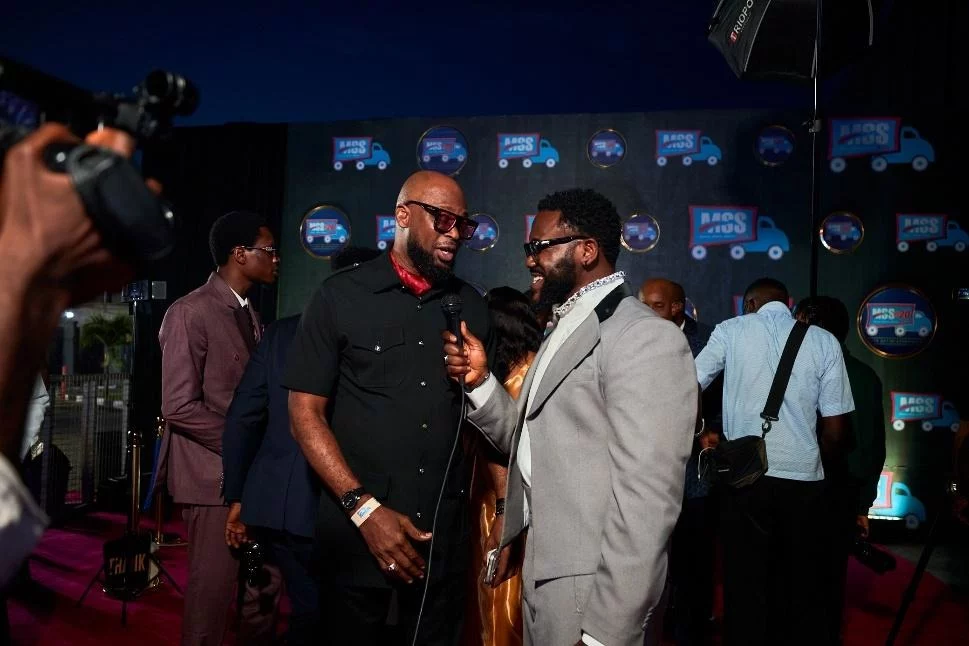
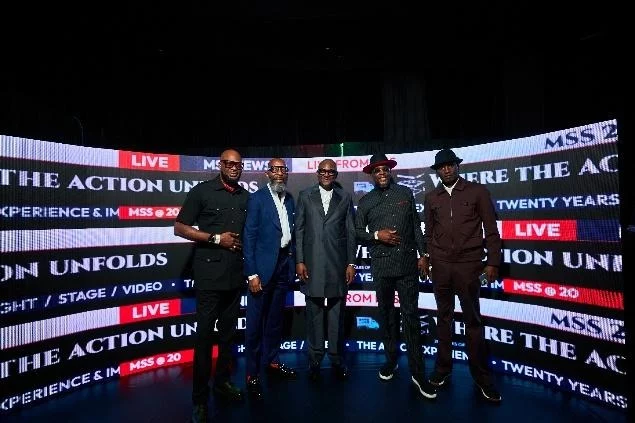
Mobile Screens and Sound Limited (MSS) celebrated its 20th anniversary with an evening that brought together style, innovation, entertainment and nostalgia. From the first arrival to the final beat of the after-party, there was always something new to take in.
Held at Harbour Point, Victoria Island, Lagos, the gala was far more than a milestone party. Sound, screens and lighting were woven into every part of the evening, creating an experience that engaged guests from the moment they arrived.
With Creative Elegance as the dress code, the evening was an invitation to interpret glamour with a little imagination, and the guests certainly came prepared to make statements. The room was filled with looks that deserved their own moment in the spotlight, with each guest bringing a personal interpretation of elegance. It was grand without losing its creativity, sophisticated and stylish in every direction you looked, and the red carpet had its fair share of moments.
From the red carpet, the experience unfolded one detail at a time. Before reaching the main hall, guests passed through the Experience Tunnel, an elaborate showcase of MSS’s work in event technology. The first section featured a hallway lined with screens displaying different visuals, creating a striking corridor of moving images. Further along, the setting shifted into a distinctly retro-inspired display of rigging, lighting and sound equipment, arranged in a way that gave familiar production elements an entirely different aesthetic. A gorgeous newsroom installation added another highlight, rounding off an experience that offered guests a glimpse into the creativity and technical craft behind the industry.
And then came the main hall. The stage was positioned at the centre, creating a distinctive setup that drew attention from every direction. Screens surrounded the space, extending across different angles and even the ceiling, making the room feel immersive rather than conventional. It was a fitting showcase for a company celebrating two decades in event technology, with every element contributing to the atmosphere.
One of the evening’s memorable moments was the screening of the MSS@20 documentary. Taking guests through the company’s journey, the documentary offered a chance to look beyond the celebration and reflect on the years of work, milestones and people that brought MSS to this point. Amid the glamour and excitement, it was a welcome moment to pause and appreciate what it takes to build something that lasts.
The entertainment programme kept the energy going, with co-hosts Kenny Blaq and Sola Mogaji, popularly known as Schullz, steering the evening with their humour and lively exchanges. Choreography and other performances added rhythm and spectacle, ensuring there was plenty to keep guests entertained.
Just when you thought the evening had given you enough to talk about, MSS took the celebration beyond the event hall with a drone show. The night sky became a canvas for an impressive display that unveiled the company’s new logo, celebrated its 20-year milestone and paid tribute to the people who had been part of its journey.
The new logo also marked a refreshed expression of MSS’s identity and its positioning as a one-stop destination for event technology, bringing lighting, sound and screens together under one brand.
As the formal programme drew to a close, the celebration continued into an after-party, giving guests the opportunity to unwind, mingle and enjoy the occasion in a more relaxed atmosphere.
Beyond the beautiful outfits, immersive setup and entertainment, the heart of the evening was the people. Partners, clients, well-wishers, friends and family came together to celebrate the company’s journey and the relationships that have helped shape it over the years. It was a gathering that brought together different parts of the MSS story, from longstanding professional relationships to the personal connections that make milestones worth celebrating.
Looking back, the MSS@20 Gala Night brought together many of the elements that make a grand occasion memorable: fashion that made a statement, an Experience Tunnel that offered a creative introduction to event technology, an immersive main hall, a documentary that stirred reflection, performances that kept the energy alive and a drone show that took the celebration skyward.
Twenty years of bringing events to life deserved a celebration that felt just as remarkable. And MSS certainly gave its guests an evening to remember.
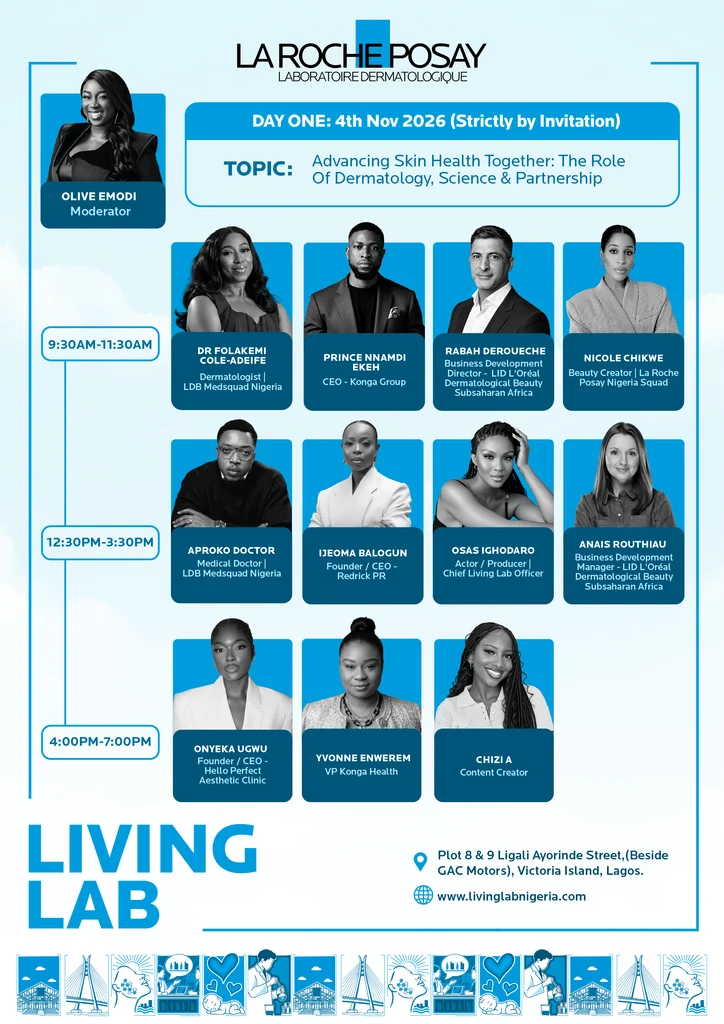
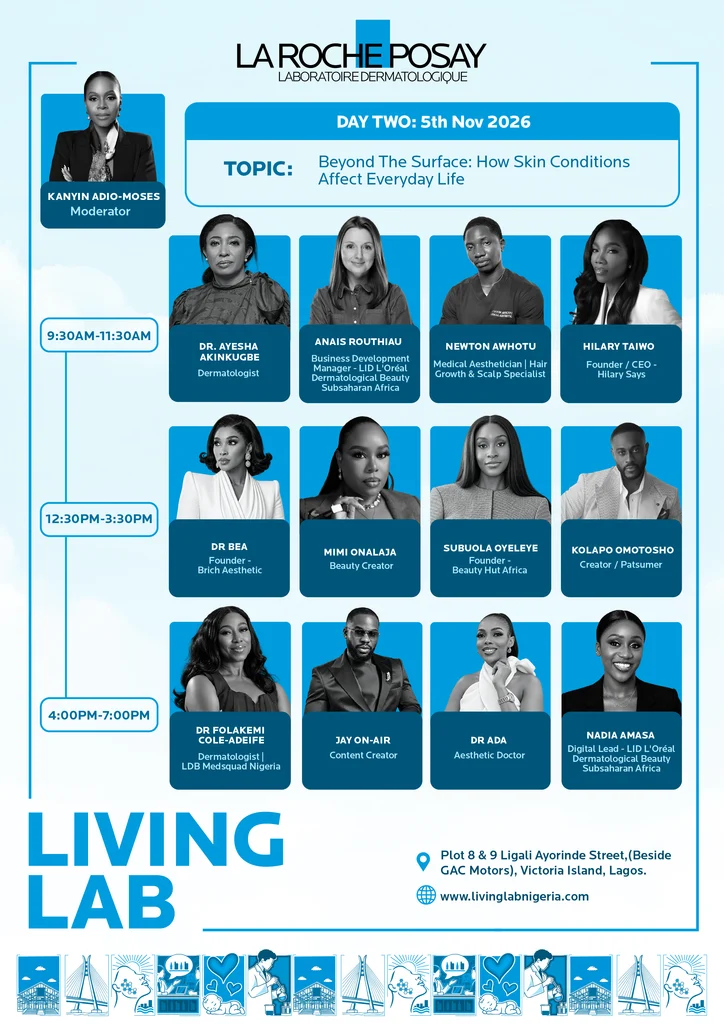
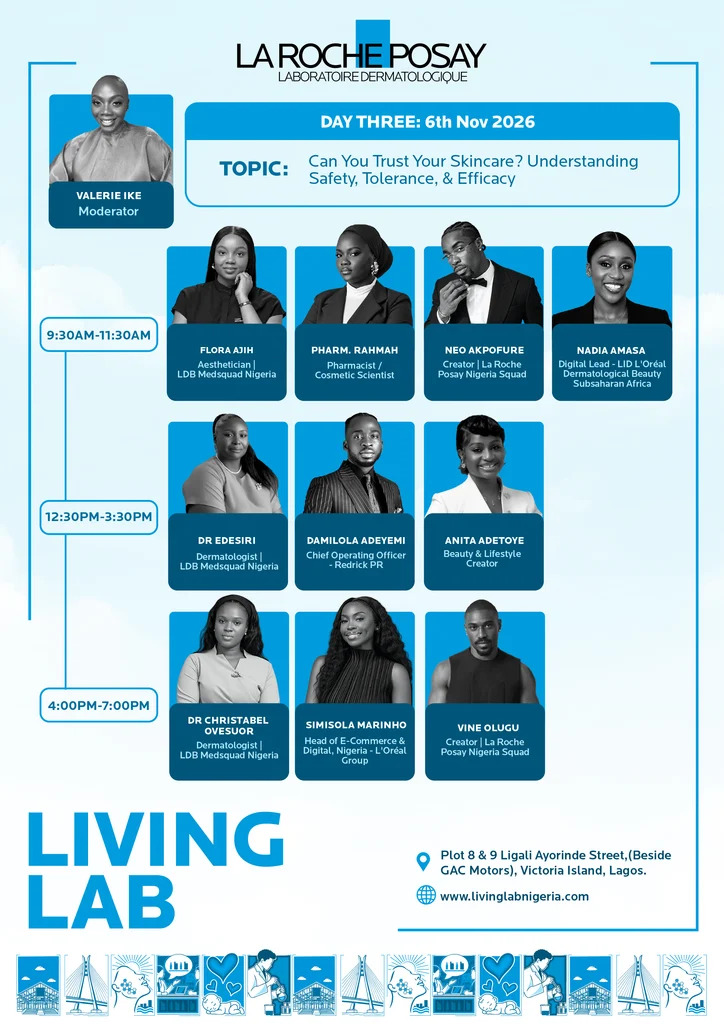
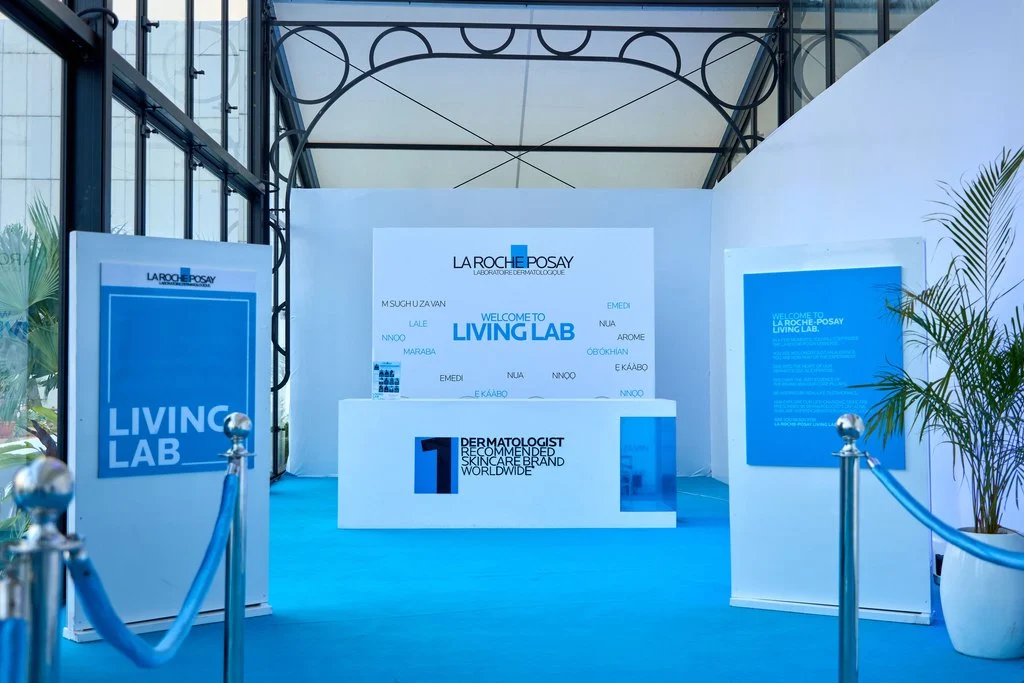
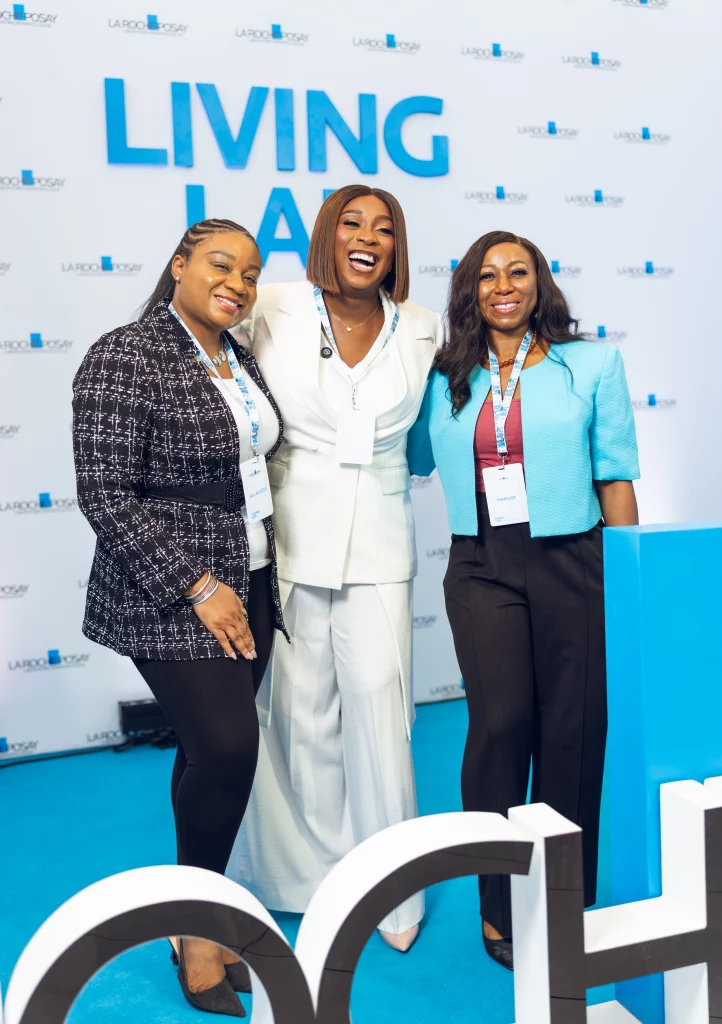
Skincare conversations in Nigeria often swing between two extremes: hyper-filtered social media routines promising glass skin overnight, and quiet struggles with acne, hyperpigmentation, and damaged skin barriers. On Thursday, November 5, 2026, La Roche-Posay bridged that divide by officially opening the doors of its immersive Living Lab Lagos to the public.
Taking place at Oasis by The Five Palm in Victoria Island, the multi-day experience began with an exclusive welcome evening on November 3, followed by an invite-only preview on November 4 for healthcare professionals, public figures, celebrities, influencers, other important guests and the media. But Day Two, the first day open to the general public, was where clinical science met real-world stories.
The Three-Day Panel Programming: Bridging Science and Culture
Across the full three-day schedule, the Living Lab assembled Nigeria’s foremost dermatologists, cosmetic scientists, medical aestheticians, and digital tastemakers to dissect the skin health ecosystem:
Day One (4th Nov 2026 – Strictly by Invitation)
Day Two (5th Nov 2026 – Public Debut)
Day Three (6th Nov 2026 – Public Day Two)
Deep Dive: The 9:30 AM Plenary Panel — “Beyond The Surface”
The defining conversation of the entire public launch took place during the Day Two morning session. Moderated by Kanyin Adio-Moses, the panel dove headfirst into how chronic skin conditions do not just sit atop the dermis; they also dictate mental health, professional confidence, and daily quality of life.
1. The Quality of Life Index & The Psychodermatology Link
The session opened with a powerful premise from the clinicians: clinical skin health is fundamentally incomplete if a doctor only evaluates the lesion and ignores the mind.
“Skin health is more than just your skin. It’s how you look, and it’s how you feel. When we measure the effects of various skin conditions, we consider quality of life. You could have acne, hyperpigmentation, or inflammatory conditions like psoriasis and lichen planus… but skin health is not complete without evaluating your daily quality of life and how that condition affects you mentally.”
Panellists elaborated that social withdrawal, dreading photos, avoiding family gatherings, or turning down job interviews is one of the earliest signs of a severely impacted patient. A clinician cannot treat a condition strictly biologically without confronting its psychological burden, because the two are inextricably connected.
2. Hilary Taiwo on Hyperpigmentation: “It’s Something You Manage, Not Something You Fight”
Skincare formulator and founder of Hilary Says, Hilary Taiwo, offered personal and professional perspective on dealing with dark spots and hormonal melasma:
“I just had to get to a place where I understood that the skin is constantly regenerating. Even if you treat it, it flares at some point. Give it a few months, and it might come back, whether due to inflammation, hormones, or external triggers. For me, getting to the point where I realised hyperpigmentation is something I have to manage for the rest of my life was liberating. Once you accept management over an overnight cure, it doesn’t control your peace of mind anymore.”
3. Newton Awhotu on Youth, Acne Scars, and Setting Realistic Expectations
Medical aesthetician Newton Awhotu highlighted the clinical difference between managing active breakouts and treating secondary scarring, especially in younger patients:
“When you deal with teenagers experiencing acne at school, they are often facing bullying. What you recommend for an older adult is completely different from a young teen, but the common denominator is setting realistic expectations. Acne is something you treat and manage, but acne scars and enlarged textured pores are far more difficult to reverse completely. The appearance can be significantly improved, but early intervention is everything. Address acne early before it becomes permanent structural scarring.”
4. Dr Uzoamaka Iloabachie: Clinical Empathy Over Unsolicited Scrutiny
In one of the most resonant moments of the morning, Dr Uzoamaka Iloabachie (Principal Clinician at Skintisfaction Clinic) urged the room to replace judgment with human empathy:
“The message is to be empathic. It’s not just in clinical consultations or high-stakes interviews; everywhere they go, people stare. People look, and they fail to realise how deeply that wounds someone inside. I have literally walked up to people in public, unsolicited, and said gently: ‘I hope you don’t mind, I’m a dermatologist, could you please come see me, because I can help you.’ Rather than stare, rather than judge, choose to be helpful rather than harmful.”
Inside the Walkthrough: Bringing Dermatological Science to Life
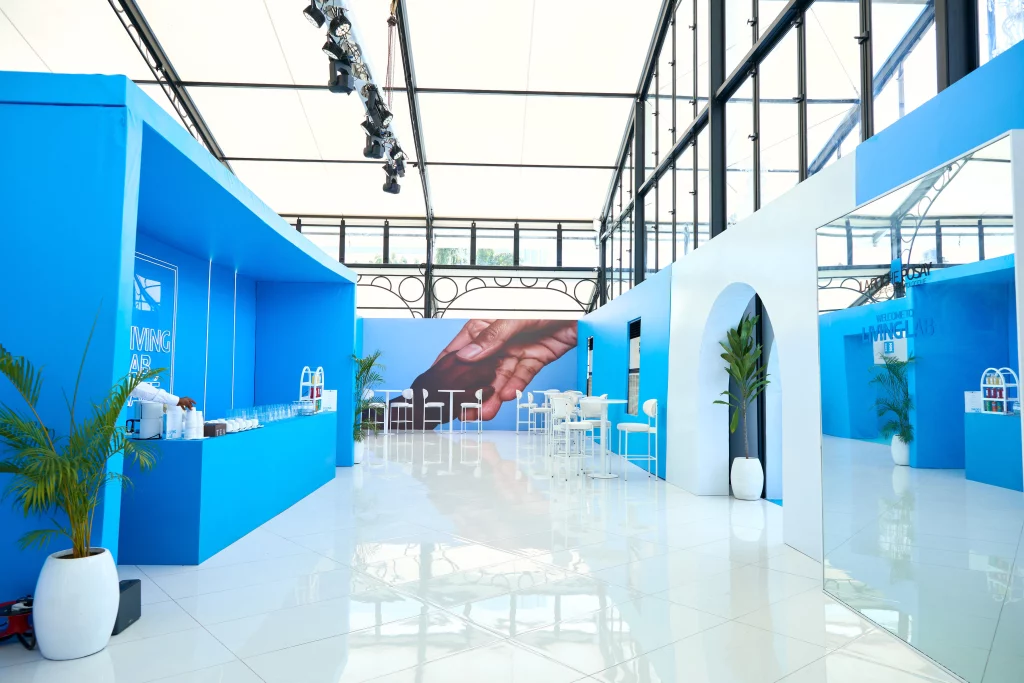
The Nigerian edition of the Living Lab, modelled after La Roche-Posay’s Paris experience, removed the clinical detachment often associated with dermatology. Rather than presenting another cosmetic shopping spree, the venue was divided into structured, educational zones that guided visitors through cohort sessions.
Key Zones Across the Living Lab
Following the morning plenary session, visitors moved into this walkthrough exhibition, structured around the five curated zones:
The Blue House: A walk through 50 years of dermatological heritage, spotlighting how French thermal spring water and active ingredients evolved into globally recognised clinical formulations.
The Innovation Corners: Interactive hubs dedicated to key dermatological challenges:
Mela B3: Unpacking Melasyl™ and its inhibition of excess melanin precursors before dark spots surface. This hub breaks down the cellular mechanisms underlying the relationship between UV exposure, inflammation, and stubborn hyperpigmentation.
Effaclar: Exploring non-stripping approaches to acne, oily skin, and post-blemish marks.
Anthelios: Showcasing broad-spectrum, zero-white-cast sun protection formulated for tropical climates.
Cicaplast & Lipikar: Highlighting soothing solutions for damaged barriers, extreme dryness, and atopic-prone skin.
Scars of Life Cinema: A screening room hosting a documentary exploring the physical and psychological toll of severe skin barriers and atopy.
Free Dermatologist Consultations: Certified dermatologists provided free, one-on-one skin evaluations throughout the morning and afternoon.
Konga Health Pop-Up Store: An on-site dispensary allowing attendees to shop their newly prescribed regimens with a direct 15% discount.
Why the Living Lab Matters for Lagos
The debut of the Living Lab in Lagos is more than just a brand milestone; it sets a new standard for experiential beauty in West Africa. By demystifying clinical dermatology, confronting the emotional toll of skin conditions, and placing certified doctors at the forefront of the consumer journey, La Roche-Posay has proven that true skin health begins with science, patience, and unyielding empathy.
At the end of 2024, Jenrola Lawore watched a vertical show called The Brooklyn Coffee Shop and immediately knew she had seen the future. ‘This is the thing,’ she remembers thinking.
So she wrote a pilot episode and took a show called Happy Hour to Guinness. “ You guys, this is the next thing. Be the first. Be the pioneer,” she told them. “You would think that I just wanted to put money in their pocket.”
Guinness’s answer, in her retelling, was the corporate shrug every creative knows by heart: “It’s cool, but we’re not sure.”
In a way, it was a much-needed redirection: “If Guinness gave us money, there would have never been a Cynthia Is a Fucking Bitch,” Jenrola says. “We would have made Happy Hour. It would have blown up, because of its huge ass budget and marketing spend.”
What Jenrola needed was for them to see the format and vision, and since they could not, she showed them instead.
In August 2025, Jenrola Lawore sent the script to Oluchi Nsofor, who eventually became the show’s producer, and told her to read it. Oluchi finally read it on her way to a friend’s house and told her: “I don’t know what your plan is, but I would love to come on this project, even if it is as a production assistant.”
Jenrola Lawore and Oluchi Nsofor. Photo Credit: Dieko Lawore
Born out of failure, Kind of
If you have been on Instagram for more than five minutes in the past few months, you’d have seen colourful young adult women on your screen on the page cynthiaisafxxkingbitch.
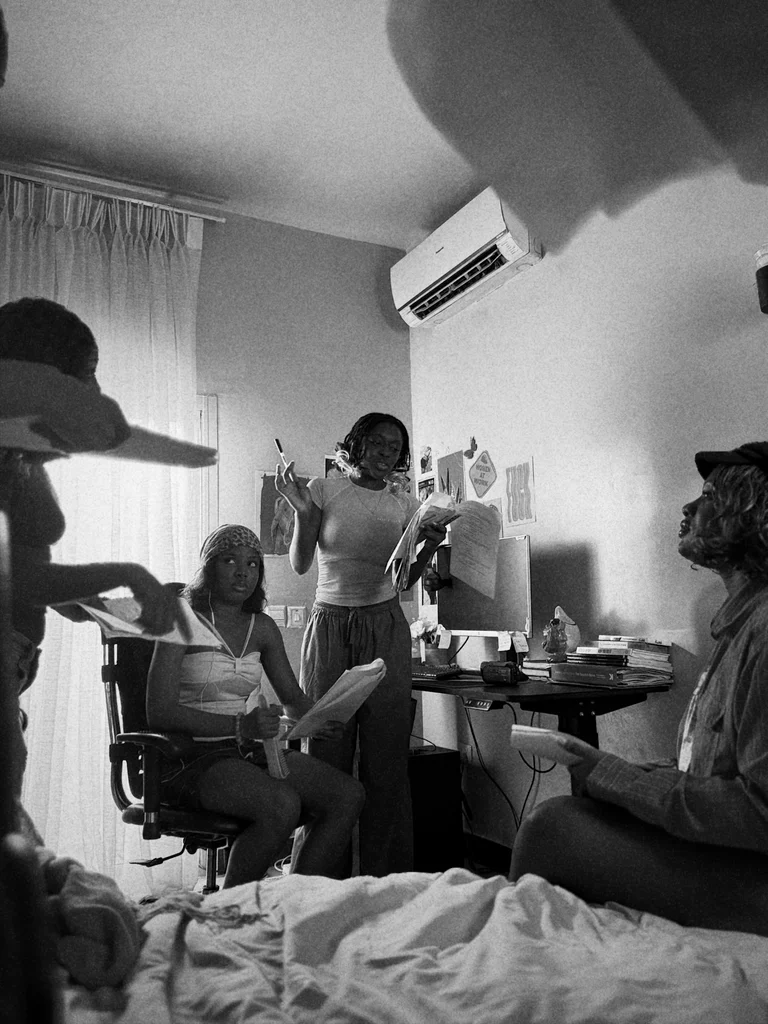
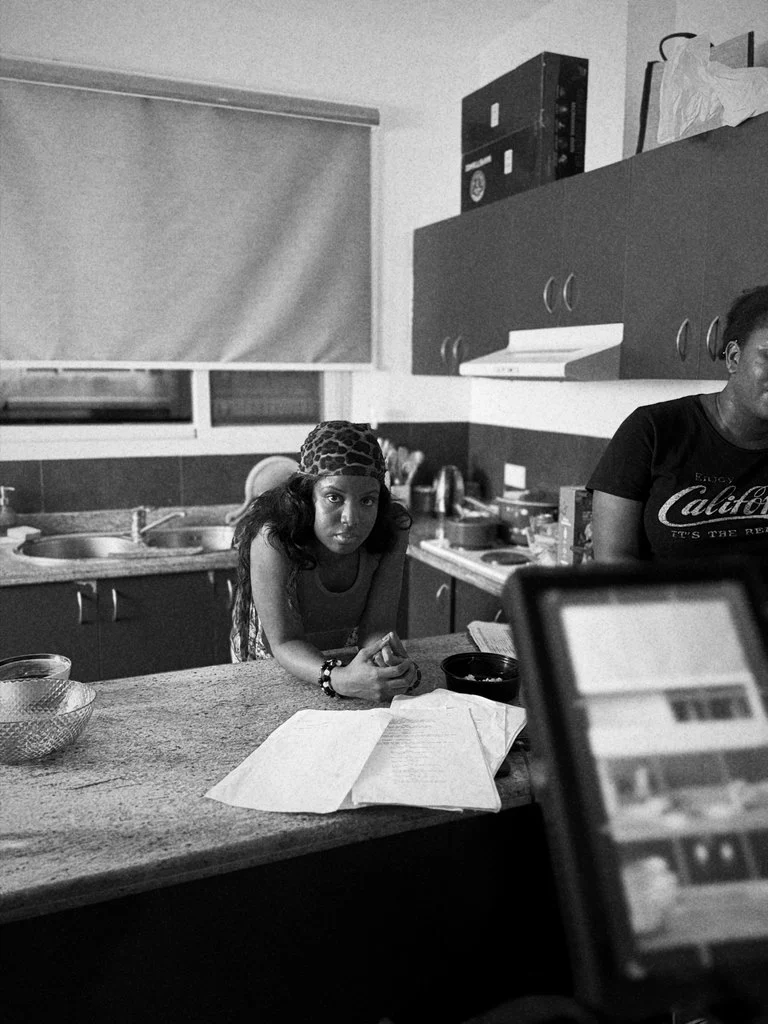
Cynthia Is a Fxxking Bitch is a ten-episode vertical drama on Instagram, made for your scrolling. It follows a group of friends in Lagos, and the trouble starts the way trouble always starts with women of that age: a boy, a text message, and two rival friend groups about to take sides. The episodes run about two minutes each, which means you can finish the whole thing in the time it takes your hairstylist to do your edges, and somehow that is all the time it needs to get you attached.
When I spoke to Jenrola Lawore and Oluchi Nsofor over a video call, the entire interview felt like gisting, the same way the show feels like good gist. Oluchi joined in from her family house, apologising for the background noise before anything else. Jenrola logged on from her phone, mid-apology for being late, and somewhere in the first few minutes we realised I know her sister. None of this has anything to do with the plot of Cynthia Is a Fxxking Bitch, except that it sort of does: this is a show about friendship, made by friends, and talking to them feels like being added to the group chat.
At some point in our conversation, Jenrola says Cynthia is a Fxxking Bitch was “born out of failure.” Oluchi laughed, “I’ve been waiting for you to say it, I swear, but it’s not necessarily failure. It was more of vex.”
Jenrola agrees with the correction. “I don’t even think it was anger,” she says. “I just wanted them to see it. You know when you have seen something, but the powers that be are not yet seeing it? It was not anger or frustration. It was just more so: you guys are not seeing it. I need to show you. If I write it for you, you don’t see it. If I paint a picture, you don’t see it. Maybe if I made the thing, you would see what I’m talking about.”
So she made the thing. She wrote the script in August 2025, they shot the first episodes that September, and by March 2026 the first five were done. Five episodes is not a season, so they went back and shot five more.
Betting on Vertical Dramas
The bet underneath all of this is that vertical dramas and short episodes shot in 9:16 for the phone is not a gimmick. It is where Nollywood is going, just as Nollywood goes everywhere.
“There’s nothing that Nollywood does not jump on,” Oluchi says. “Is it YouTube? Is it Netflix? Is it Showmax? We are there.” She remembers Jenrola’s urgency from the beginning: the best time to hit is now. While they were still editing, other vertical series started appearing, and the space has only gotten more crowded since.
Jenrola is honest about the risk. “I don’t know about the longevity of the format. I don’t know if it’s going to last for one year and die out. But I know that attention spans are short, people love a spectacle, and people love to be entertained. So if you have those three in mind when building your show, you’re good.”
What she was less willing to gamble on was waiting for permission. That is the real origin of Cynthia Is a Fxxking Bitch: not spite, but proof. A proof of concept with zero naira in corporate marketing spend.
Get More Zikoko Goodness in Your Mail
Subscribe to our newsletters and never miss any of the action
What a “No” Actually Costs
Making that proof was not glamorous. The equipment came from friends: production houses run by people they knew, a friend’s studio they could walk into with their cinematographer and pick out a monitor, a tripod, whatever they needed.
“In the film space, relationships are super duper important,” Jenrola says. “Everybody’s always talking about, we need money, we need money. But if you know what you’re doing, you may not need as much money.” Her rule for favours is radical clarity. “Tell someone, if you mix and master the sound for me, I will do script supervision for you. Let’s all be clear. Not the one that tomorrow you now come and ask me, since I mix and master for you, come and give me 5 million.”
BTS Pictures. Photo Credit: Titilayo Sanni
The budget for the second shoot came back at double the estimate. “When we eventually did a proper budget, we found out it was going to cost us times two of what we thought,” Oluchi says. And there were costs in naira that never made it onto a spreadsheet.
“There are things Jenny paid for that were not in the budget. There are things I paid for that were not in the budget breakdown. Your Uber costs you 30, 40k, your business, because the thing you’re picking up can cost 150k.”
So they spent where it showed, on the crew. Water in the fridge, dietary requirements asked about, small chops on set.
“Taking care of people’s stomachs is very, very important on set,” Oluchi says. “When people see those little things are being taken care of, they’re more understanding.”
One piece of chicken in the small chops was so small it looked like a lollipop, and everybody joked about it. Oluchi says that through all of principal photography, there was never a walkout, never a ‘do what you want, we’re going home’ moment.
The audience found the show before the money did. Early teasers pulled in strangers, people who were not friends of the cast, asking where the show was. The crew saw that interest was there, so they stopped posting teasers and went back to shoot the final five episodes.
Certain brands that came on board; Meji Meji, Beauty Hut, Severe Nature, By Bablo, and Luvv By Bella paid nothing; they sent merchandise in exchange for visibility, and the placements were written into the story so smoothly that Jemmy, the friend group’s resident talker, could go on about restocking her products mid-episode without it feeling like an ad break. “Jemmy is a yapper,” Oluchi says. “So obviously the only person that could yap about using the brand in the film was Jemmy. It worked.”
For Jenrola, every placement was also an exhibit in the case she has been building since Guinness said no. “It’s a play to show potential financiers that there is space for your brand inside this thing. See how we placed these people here. Look at our collaborative posts, look at the numbers they are doing. So be comfortable giving us money.”
At one point, the funding conversation briefly became a marriage conversation. “Do you know I’ve always wanted to marry an executive producer?” Jenrola said. “That’s somebody that gives you money to make films. So any man I marry, it’s like, baby, take $100 million, go make a film.” Oluchi’s version is more hands-on: “I want to marry the one that wants me to become an executive producer. With his money, of course.”
The joke plays out like a tennis match, each person picking up the ball the other serves; it’s easy for me to see the chemistry between them that must have played out on set.
Behind-the-scenes. Photo Credit: Titilayo Sanni
What Next For Jenrola and Oluchi?
If season two happens, the plan is for nobody to pay for it out of their personal funds. “A season two that will not involve using any personal funds at all,” as Oluchi puts it, with sponsors already hinting.
But the ambition goes beyond one more season. “This thing was set up to show that something can be done, and it’s been done,” she says. “It’s season two for the people, and for us to show that it’s not just a fluke. We can do more. Whatever form it takes, bigger, better, more compensation, more money, more projects.”