The rainy season in Nigeria runs from April to October. But for people living in Lagos, a low-lying coastal city surrounded by water, it often means flooding. Poor drainage and decades of neglected infrastructure have turned places like Lekki and other high-end island areas into flood zones.
Despite the high cost of housing, basic systems still fail. For residents like Cynthia (26) who live in these flood-prone areas, one night of heavy rain can mean losing their homes, belongings, and the uneasy hope that next time, the water won’t find its way back in.
In this story, she recounts what it was like to live through one of Lagos’s most severe floods in 2025.
As told to Aisha Bello
It had been raining since Sunday night; a slow, endless downpour that blurred day into night. By Tuesday, the whole estate was submerged. The road outside had turned to a river, but that was normal for Lekki. Flooding belongs out there, but not inside our homes.
That morning, I stayed upstairs, curled up in my duvet, half-asleep to the sound of rain drumming steadily on the roof. I didn’t realise it was the sound of the estate drowning.
The cold was comforting, the kind that wraps around you and lulls you into deeper sleep. Around noon, I finally decided to go downstairs.
The moment my foot touched the last step, I froze. The living room was already covered in murky brown water, spreading quickly across the floor.
I’d only been asleep a few hours. How could my home have turned into a floodplain in that time?
Moving In and Early Warnings
I live in an estate in Lekki. It’s supposed to be one of those places where you can breathe a little easier — less chaos, some sense of order. The terrain is marshy, but it’s never a problem until it rains and the water starts to rise.
I moved in on May 10, and it hasn’t even been six months yet. My housemate and I live in a four-bedroom two-storey home. We turned one of the rooms into our studio and kept another as a guest room.
We’re both artists. I make rugs: tufting and mat-making with wool and yarn. My housemate also works in the creative space. The plan was to build a “craft house,” a kind of open studio where people could come, create, and connect. We chose this place because of the location. Lekki is central, secure, and easy for people to reach. It felt like the right foundation for what we were trying to build.
But almost from the start, the rain became our biggest obstacle. Since we moved in, the estate has flooded so frequently that it has disrupted practically every aspect of our lives. There’s the flooding outside the estate, the one right at the entrance, and then the one that creeps into the estate itself. It’s like three layers of water closing in, each one worse than the last.
Because of this, we’ve had to pause many of our plans. I host rug tufting classes from home, and we’ve had to reschedule at least three times because of the weather. Even simple things, like hosting dinner for our community, get cancelled once the rain starts.
The estate flooding happens almost every time it rains heavily. The water just sits there, stagnant, for days. Then there’s the house flooding — the one that keeps me anxious. Before the big flood in September, we’d had one where water seeped in gently, rising through the pipes and trickling past the front door. It wasn’t bad then, just a thin film on the floor in the guest room and kitchen. But it was enough to scare us.
We didn’t know that was just a warning of what was to come.
The Worst Flood: September 23
That Tuesday afternoon, I was still trying to make sense of the water when I heard movement near the kitchen. Our guest, my housemate’s friend, was frantically lifting things.
“What’s going on?” I asked, still half in shock.
“There’s water everywhere!” he said, splashing past me.
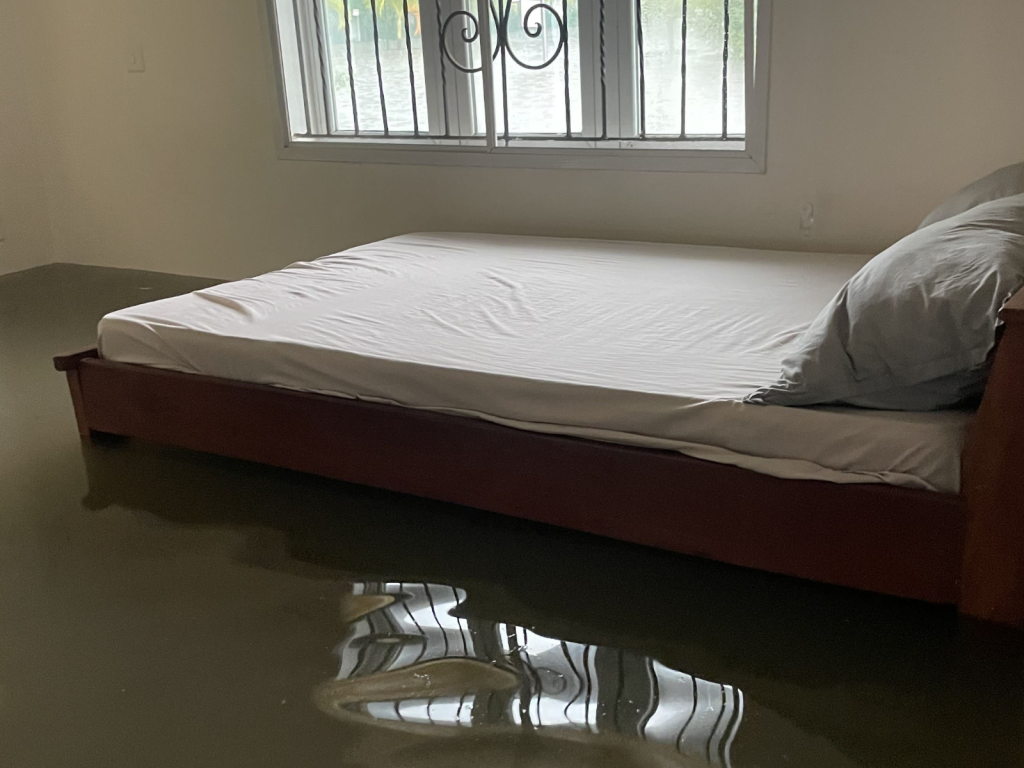
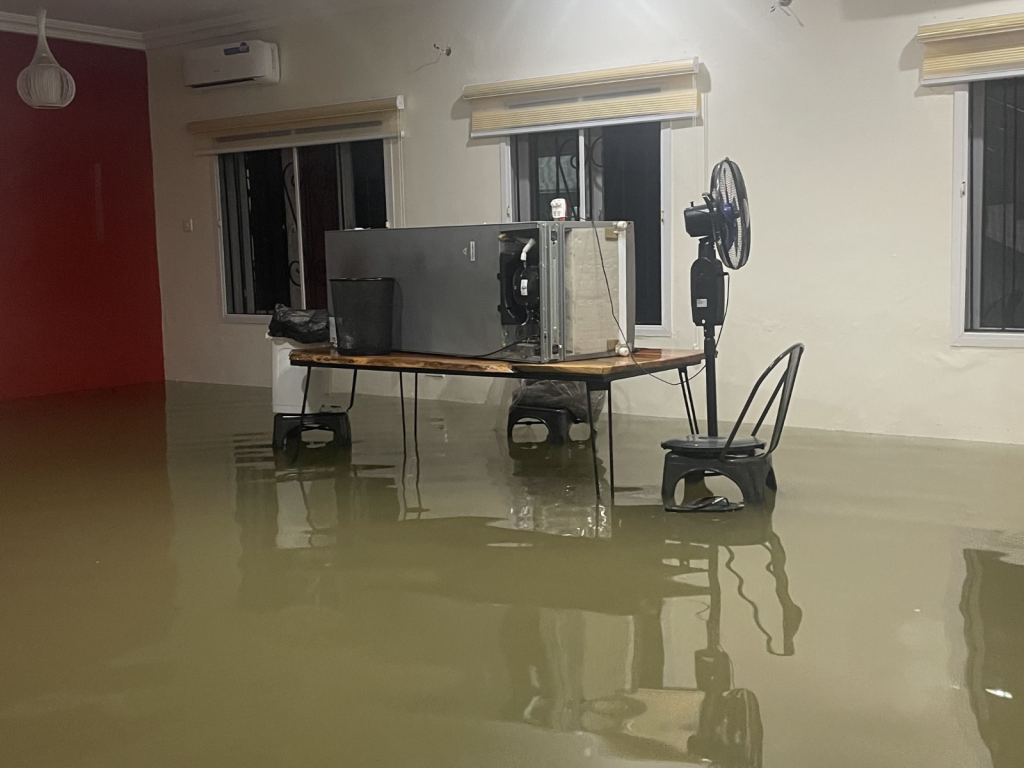
We didn’t have time to think. We carried everything we could upstairs: electronics, furniture, kitchen appliances, even the fridge. The guest room bed went up too; the water had already submerged the bed frame.
By the time we finished, the water had risen to my knees, and at 5’2, that felt like a lot.
At one point, I almost panicked, but our guest said, “This isn’t the time.” He left shortly after, but I stayed. I couldn’t leave my cat.
By evening, I was wading through water trying to feed him. The flooded roads delayed my cat’s food delivery, so I had to pay extra for the dispatcher to slog through the estate. The water was at his chest when he reached my gate.
By the next day, exhaustion had set in. I was anxious and a little depressed. I didn’t want to move. My friends eventually came to drag me out, literally. They waited at my estate’s junction and hired someone to carry me across the water because walking through it myself wasn’t safe.
I’d tried to walk out on my own, but halfway down the street, I stopped. The water had risen so high that I knew it would reach my neck if I took one more step. It wasn’t worth the risk or the possible infection. So I swallowed my pride and climbed onto a stranger’s back.
When I returned days later, the water had drained, but the house reeked of rot. The stench clung to the air: thick, sour and unbearable.
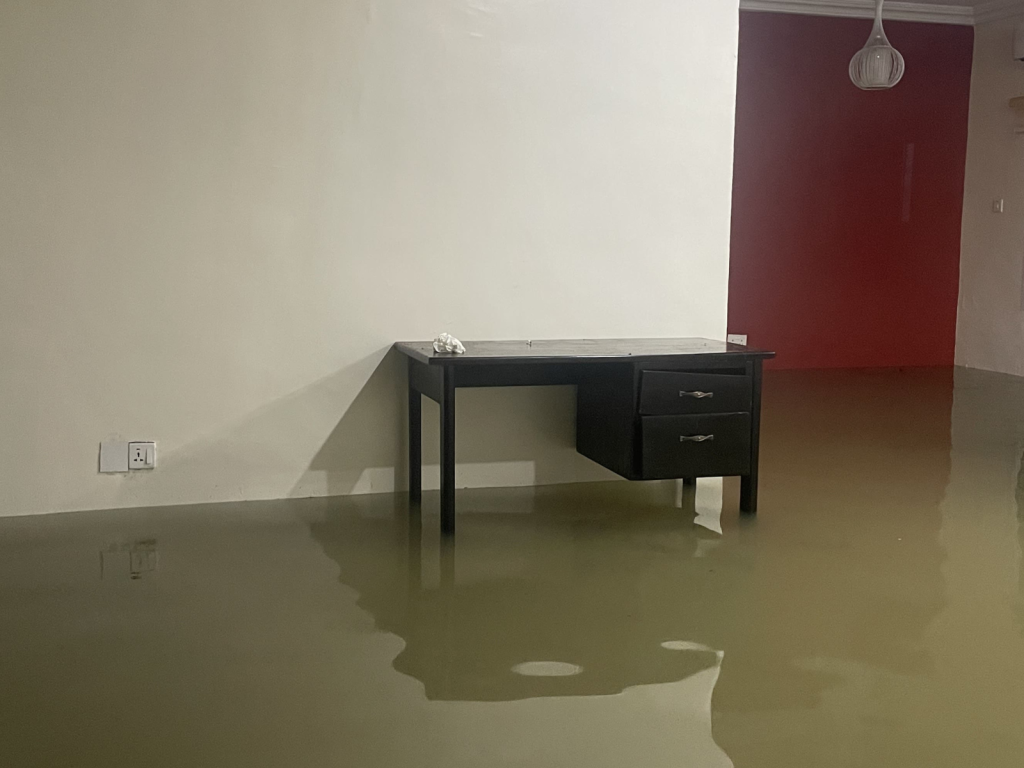
A thick line on the walls marked how high the flood had climbed. Maggots wriggled in the fridge. We’d only just stocked up that week. Everything, from meat to fruit, stew, and leftovers, was rotten. We threw it all away.
We’d saved the electronics but not the peace of mind. I had to completely reshuffle my budget — including food, repairs, and unexpected expenses that weren’t part of the original plan for the month.
The Aftermath: Cleaning, Living with Anxiety, and Adjusting
It’s been two weeks since the flood, and everything is still in disarray. Time, space, and even safety have been thrown off balance. When we first got back, the house reeked of rot and dampness.
In a moment of disbelief, I shared the flood aftermath on social media. That’s when a Lagos-based cleaning company, Shaaré, reached out to offer a deep clean, free of charge.
It was such a kind gesture, and honestly, we desperately needed it to get past the overwhelm.
They came in, scrubbed, and disinfected every corner. They practically brought the house back to life. Even then, my housemate couldn’t bring herself to stay. The anxiety was too much. So, for almost a week, I was the only one sleeping here, moving through the silence and trying to adjust to how different everything felt. Everyone finally returned a few days ago, but the house still doesn’t feel the same.
I’m still anxious; I can’t shake the feeling that a terrible downpour might happen again.
Most of our things are still out of place. We only just put the fridge back downstairs, and even that felt like a risk. The kitchen items are still upstairs, just in case. None of us can bring ourselves to fully unpack. The fear of another flood lingers.
Every rainfall now feels like a warning. When it rained again earlier this week, I woke up panicking, half-expecting to find water rising at the door. Thankfully, it wasn’t that bad this time. Our houseguest had already moved things out of harm’s way before I even got out of bed.
Still, the anxiety hovers. We’ve started planning for floods the way other people plan their routines. It’s unsettling how normal it’s become: keeping valuables upstairs, checking the weather, moving through the house like we’re waiting for something to collapse.
Decision to Leave — and What Flooding Says About the Lagos System
What angers me the most is that it happened at all. Before moving here, I lived in Ajah for almost two years and never once saw water enter my house. So, to be paying nearly three times my old rent and still find myself trapped in knee-deep water feels insane. It shouldn’t be happening. Not here. Not anywhere.
Flooding in Lagos highlights the inadequacies of our systems and infrastructures. The drainage is blocked, the city is overbuilt, and no one seems to care. The solutions are basic: proper drainage, stricter building laws, and some actual enforcement. But instead, people build over drainage paths, government officials look away, and we all make jokes about “Lagos flooding season” like it’s harmattan.
It’s not funny. It’s loud, deliberate neglect, and somehow, everyone has accepted it as “normal.” Because that’s what happens here: nothing changes for so long that people stop expecting it to.
We have already decided to leave when our rent expires. There’s no point staying in a house you can’t trust to stand when it rains. But even when I move, I’ll still remember the smell of rot in my kitchen, the sight of a delivery man chest-deep in water, the anxiety that lingered and the quiet understanding that Lagos will always test how much discomfort you can normalise, until you finally reach your limit.