Growing up poor often leaves marks that rarely fade with money. Sometimes, it’s in the way you save leftovers until they spoil, argue endlessly about turning off the generator, or refuse to hire house help even when you can afford it. For others, it’s choosing to live modestly when there’s a chance to live bigger. In this story, four Nigerians reflect on the habits they still carry from growing up poor, and how these choices continue to define their lives.
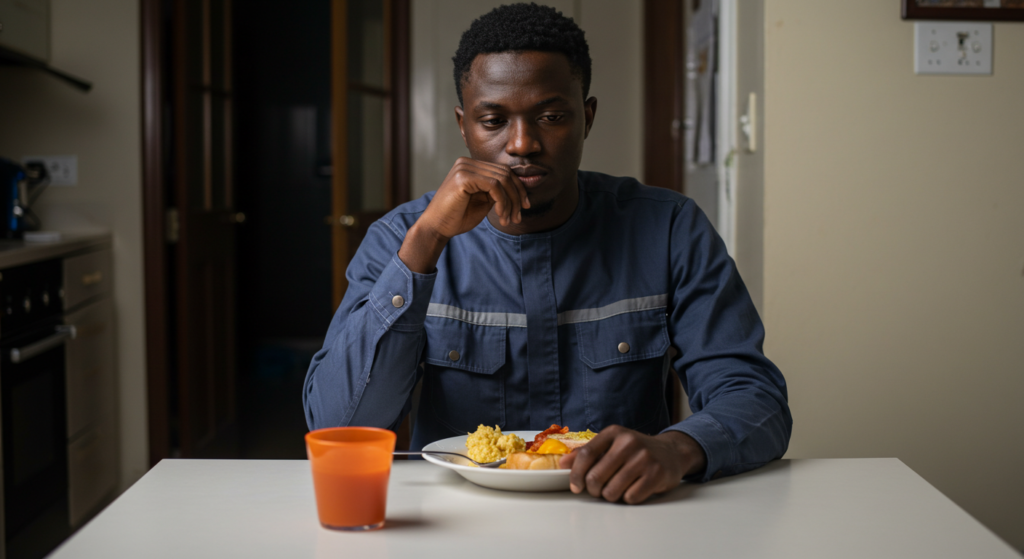
“I’ve stacked over ₦10 million in four years, but I still live like I’m broke. It feels like I’m saving for a future self that may never come.” — Abayomi*, 33
Abayomi sometimes feels like he’s still living in his parents’ house in Ibadan, where every naira was stretched thin and luxuries were off the table, even though he now earns ₦600k as an HR consultant at an agency in Lagos.
“I save about 70% of my income every month. On paper, it looks like discipline — something to be proud of. But in practice, it feels like I’m punishing myself. I eat basic meals, buy the cheapest things, wear clothes until they start to fade, and walk past the things I desperately want because the price just doesn’t make sense to me. I’ve stacked over ₦10 million in four years, and knowing that money is sitting somewhere helps me breathe easy at night. But during the day, it feels like I’m suffocating.”
He calls it survival mode, the only way of living he knows. “Sometimes, I hate myself for it. I live like a junkie even though I work hard — no new car, no nice holidays, no little treats.
People around me think I’m stingy with myself, but I genuinely get depressed when unnecessary money leaves my account. Even in relationships, it shows. Girls leave after a few months when they realise I don’t spend on myself, not to mention them. It’s like I’m saving for a future self that may never come. I hope I live to see it.”
Abayomi laughs when he lists some of his “funky habits”:
- Eating every bite of food, even when I’m full.
- Turning off lights obsessively to save electricity
- I use Bokku nylon bags to pack lunch to work, because I paid ₦150 for them.
- Taking danfo instead of Uber, even when dressed for work.
- Eating before going out so I won’t “waste money” on food.
- Feeling guilty anytime I spend on myself.
- Always buying the cheapest option.
- Sticking to Chicken Republic when I finally decide to “treat” myself.
- I avoid fine dining because I can’t justify the cost.
- Feeling depressed when unnecessary money leaves my account.
“At work, I’m the hardworking guy. But outside, I look unhealthy, like I don’t care about myself. My parents even comment on how lean I look sometimes. I just don’t know how to stop. Growing up poor wired me this way, and now that I’m no longer poverty-stricken, I don’t know how to live differently.”

“Sometimes, I feel like I’m raising my children the way I was raised, with scarcity as the main lesson.” — Ahmad*, 46
Ahmad, a finance executive, admits his frugality sometimes borders on punishment. Despite living in Magodo, one of Lagos’ wealthiest neighbourhoods, he still carries the weight of his childhood in Ikorodu, where he grew up desperately poor.
“This is where my wife and I clash. I still live like the boy who grew up poor, while she reminds me every day that we’re not our parents, and we don’t have to live like them anymore.
I make the children finish every grain of food on their plates. If they leave leftovers, I pack them into the fridge and reheat them later in the week. I yell if someone forgets to switch off the TV in the children’s living room or leaves the heater running. Sometimes, I even sneak into their rooms at night just to turn off the AC when they’re fast asleep.
Vanity treats? I hold back. They wash their clothes by hand sometimes, even though there’s a perfectly good washing machine at home, because it saves electricity and teaches discipline.
During our last holiday, we could afford to take all the kids to Miami. But I insisted we only go with the younger ones — fewer flight tickets, less spending. My wife was furious, but I couldn’t stomach wasting that much on leisure.
Sometimes, I feel selfish. I see the way the kids look at me when I say no. My wife catches me more often these days, reminding me that this might be deeper than stinginess, maybe trauma. I’ve worked my way up to being a finance executive, earning close to ₦3 million monthly, yet I still live as though going broke is one mistake away.
Maybe it’s the accountant in me who is always over-budgeting down to the last naira. But I know now what I’m battling is a scarcity mindset, and I may need therapy. Because while I’m trying to protect my kids, I might also be passing down anxieties they don’t deserve.”
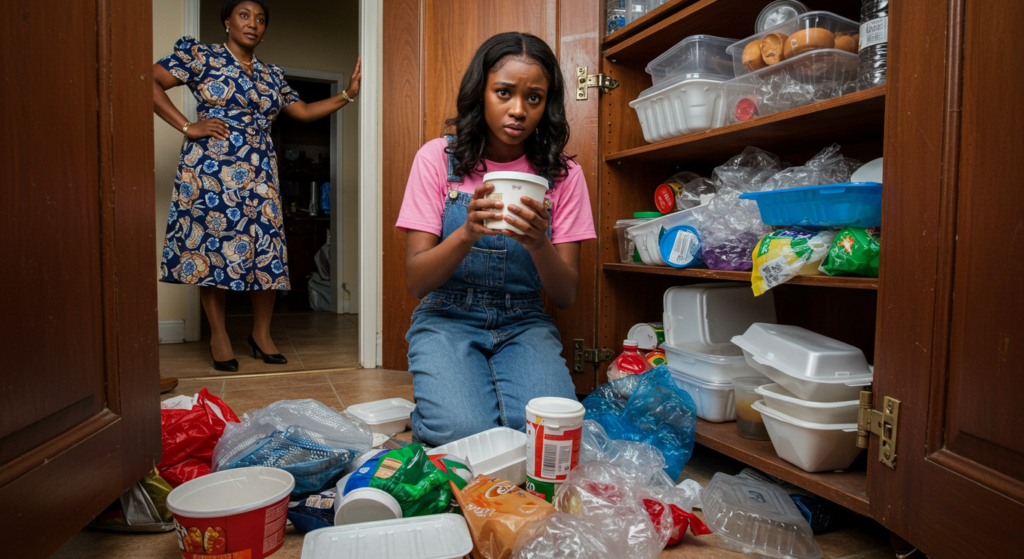
“My aunt swears that poverty is following me because I hoard everything. Sometimes, I think she might be right.” — Abisola*, 24
Abisola moved to Abuja last year to live with her wealthy aunt after landing an entry-level role as a customer support officer at a bank. But while her aunt spends freely and replaces things without blinking, Abisola clings to every item like it’s her last.
“I wash and rewash Ziploc bags, keep every shopping nylon and takeaway pack, and hold on to ice cream containers until the cupboard is full. My aunt will walk into the kitchen and start shouting, ‘Poverty is worrying you! Are you planning to start a recycling plant?’ Maybe she’s right. Even old clothes, I separate them into ‘inside clothes’ instead of throwing them out. I know I look like a maid in the house sometimes, but I can’t let go.”
My grandmother was the same way, and I grew up watching her cupboards filled with old tins, bowls and disposable plates. I swore I’d be different, but now I see myself doing the same thing. I don’t know if it’s frugality or fear, but I can’t let go. Even though I earn ₦500k a month, I feel like if I waste something today, tomorrow I’ll need it and won’t be able to afford it.”
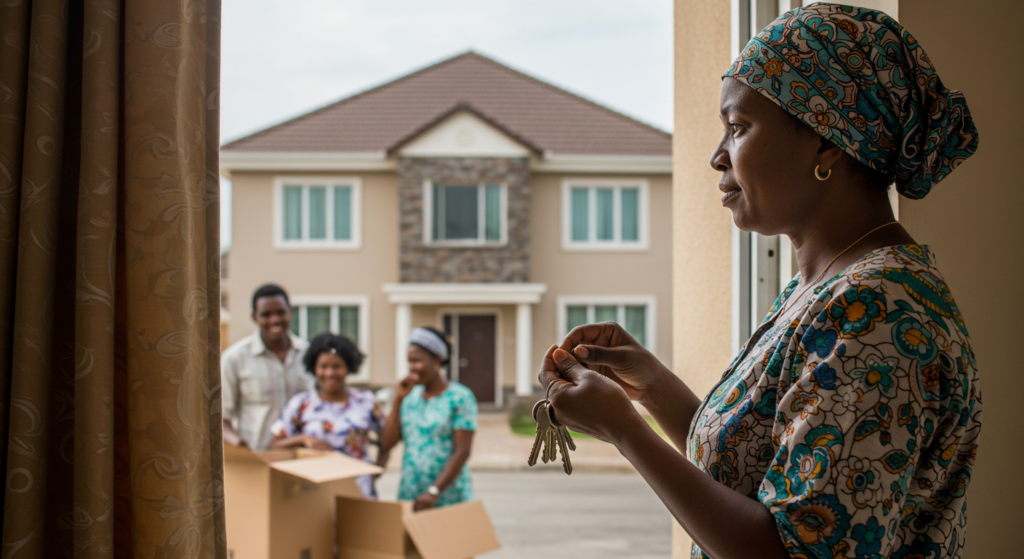
“I’ve lived in rented apartments for over 15 years. We finally built our own house in 2021, but my husband still insists on living in a rented apartment.” — Hassanah*, 48
Hassanah has spent most of her adult life shuttling between rented apartments with her husband and two children. Now that they finally have a house, her husband has chosen to rent it out instead.
“When my husband got transferred to Abuja in 2008, we lived in a couple of places until we finally settled in a rented bungalow in Wuse around 2013. It felt comfortable — three bedrooms, a proper estate, and the kids had their own space. My husband works with a government insurance agency and does some travel and tourism work that brings in extra money. So, compared to the average Nigerian, we were doing okay.”
Even though she doesn’t earn an income, her husband has always given her allowances, which grew with time. “I’ve been a full housewife since the beginning, handling all the chores without any house help. My husband increases my monthly upkeep money every few years, outside of whatever he buys for the house. By 2021, he was giving me ₦200k a month. That made me feel cared for and secure.”
But in 2019, something shifted. Her husband started building a duplex. “I was so happy; after more than 10 years of renting, I thought we were finally moving into our own house. I dreamed of setting up the kitchen the way I liked, decorating, and just having a place that was ours. But when the house was completed in 2021, my husband decided to rent it out to tenants instead of moving in. He said he wanted to ‘make his money back.’ I was furious. We were still paying rent while strangers lived in the house that should’ve been our home.”
Over three years later, the tenants are still there. “I don’t even know how much rent he collects. Anytime I bring it up, he explains that renting it out now is smarter, and we’ll eventually move in. He believes it’s better for the family in the long term. But to me, it feels like a scarcity mindset, or maybe greed. Why should we be paying rent when we have a house?”
Hassanah just swallows her feelings now. “I don’t fight him about it anymore, but I silently resent him. I keep imagining that by the time he decides we can finally move in, maybe ten years from now, the house will already be worn out and our kids will have moved out. It feels like my dream of a permanent home slipped through my fingers.”

“I can afford more now, but I still haggle over everything. My friends even call me when they’re going shopping.” — Joseph*, 28
Joseph is a Lagos marketing professional earning ₦450k monthly, yet his childhood habit of haggling trails him into every purchase.
“I still price aggressively in markets even though I can afford it. The day I realised I tend to overdo it was when I argued with a keke driver over ₦200 change. It was a short distance that usually cost ₦100, but he wanted to charge my cousin and me double. When I gave him ₦500, he returned only ₦100. I started a scene until my cousin pulled me back and told me, ‘That’s what they do for a living. You have a decent job and earn good money; they’re just trying to feed their family. Sometimes, just let it go.’
Maybe she was right about sacrificing for the underprivileged, but I still be pricing everything else. I compare cost per pack and litre for groceries, sometimes spending four hours in the supermarket swapping brands and calculating ‘cheaper for more value.’ My friends even call me when shopping because they know I can haggle until the kingdom comes.
I don’t know if it actually saves me money, but it feels like an instinct I can’t shake. My mother raised us to be price-conscious. Even on a ₦450k monthly salary, it’s still an integral part of me.”