Nicole*, 30, grew up seeing gold as a fashion and tradition, but a move to London turned it into her smartest financial safeguard. Now, she is using precious metals to beat cash volatility and build lasting wealth. Here is how she is stacking gold to secure her future and why she thinks you should too.

As told to Aisha Bello
I am an Edo woman. Stereotypically, we love loud jewellery — big earrings, heavy rings, the kind of pieces you see at parties. Where I’m from, people view gold as an aesthetic flex and, secondarily, as an investment.
However, since moving to the UK in 2022 and deepening my financial literacy, my philosophy has shifted. I have learned to place more value on being wealthy rather than merely appearing wealthy.
While I still own gold jewellery, I no longer treat it as an investment vehicle. Instead, I focus on gold bars and bullion coins. To me, gold remains a simple asset class that I understand, with intrinsic value, limited supply, and global trust.
The Aha Moment
My relationship with gold started early. When I was five, my ears reacted badly to non-precious metals, so my mother bought me my first pair of 18-karat gold studs.
But I didn’t understand the true power of gold and its ability to provide liquidity until I was 14.
My iPad had broken. I was broke, and I needed a desperate fix. My friend and I brainstormed ways to raise cash, and then I realised: I was wearing the solution. I had a necklace with a gold pendant and a pair of earrings. I took one piece to New Benin in Benin City and sold it.
It gave me enough cash to repair my iPad and some extra money. Looking back, selling it was technically a bad financial decision — gold prices have soared since.
But the lesson was invaluable: Gold is money. It is the ultimate store of value. If I ever need liquid cash, I know I can sell it anywhere, at any time, and get paid instantly.
My Strategy
Now that I am older, living and working in London, my strategy is driven by two things: volume and tax efficiency.
I hate taxes. If there is anything that makes me a conservative investor, it is the desire to legally avoid giving away my returns. This is why I have shifted my focus from small gold bars to bullion coins.
Here is the breakdown of why this matters in the UK:
- VAT: Investment gold, whether bars or coins, is exempt from Value Added Tax.
- Capital Gains Tax (CGT): This is the kicker. Selling a gold bar for a profit usually attracts tax. However, coins produced by The Royal Mint are considered legal tender. Because they are technically money, their appreciation is tax-free.
This classification gives me an edge. When I sell a gold coin for profit, the government doesn’t take a cut.
The Portfolio Breakdown
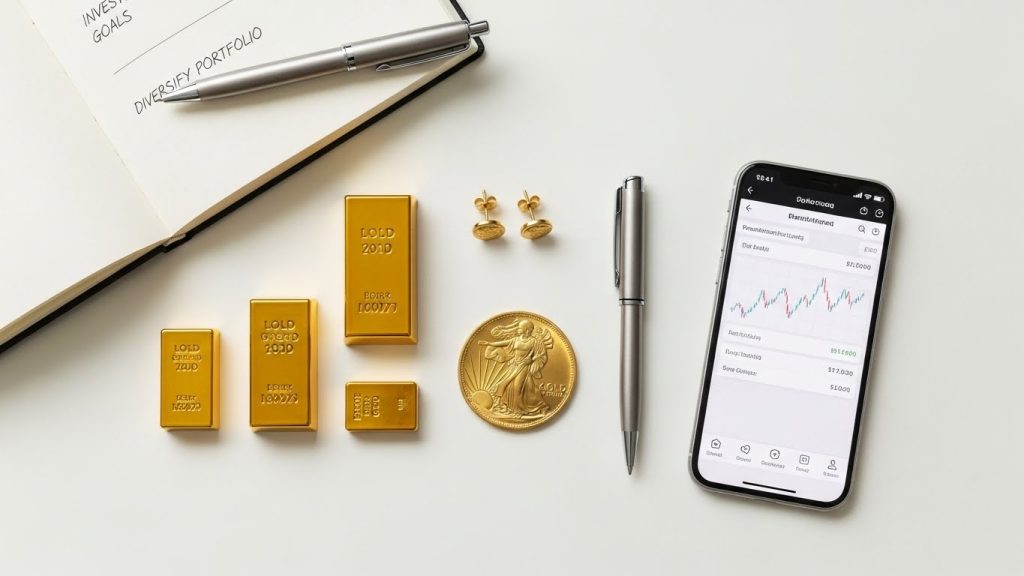
Gold is my safety net. It is my hedge against currency devaluation. My current collection, worth just over £2,000, looks like this:
- Bars (24-karat, 99.9% pure): One 1-gram bar, and two 5-gram bars (11g total).
- Coins (22-karat, 91% pure): One 8-gram coin.
I buy and forget. I don’t obsessively track daily price changes because this is a long-term play.
How I Buy
I started my journey buying tiny 1-gram bars. Now, I focus on buying in bulk to save money.
It works just like wholesale shopping: the smaller the bar, the higher the markup you pay on top of the gold’s actual value. By saving up and purchasing larger bars or coins, I pay significantly lower fees and receive more gold for my money.
To get the best value, it’s better to save up to buy in larger volumes rather than buying small pieces frequently.
My Purchasing Channels:
- The Royal Mint: It is incredibly easy and secure. You sign up, place your order, and they deliver within five days.
- Bullion by Post: I use this for pre-owned coins. They’re slightly cheaper than new ones, but of the same quality, just not mint fresh.
I pay online, the gold is delivered, and I put it away. Simple.
The Ambition: From £2k to £50k
Last year, I wasn’t aggressive with gold. I bought high, hoping the price would continue to rise due to global instability and the de-dollarisation trend. It was a good time to enter the market.
This year, however, I am shifting gears. I trust cash less and less every day, and electronic money feels ephemeral—just numbers on a screen. I want to hold physical assets.
My goal: £50,000 worth of gold by year-end.
To achieve this, I plan to:
- Save £500 per month specifically for gold
- Execute bulk purchases twice a year to avoid high markups
- Make a career move to increase my income and invest more aggressively. I also plan to move more of my cash into gold as a store of value.
Advice for Beginners: Break the Mental Ceiling
Start small. Buy a 1-gram bar. It costs around £140 or about ₦205,000 in Nigeria, depending on market prices.
Growing up, I only saw gold bars in movies, usually in bank vaults. I assumed they were for billionaires. Buying my first tiny bar shattered that ceiling. I looked at it and thought: “Oh, that’s it? I can do this.”
That first purchase changes how you think about money. It proves wealth is accessible. After that, depending on where you live and tax rules, you can upgrade to coins or bigger bars to maximise returns.
Bottom Line
In 2025, gold enjoyed its strongest year since the late 1970s, rising steadily by approximately 65% and reaching record highs. Its consistent gains show why it continues to be a trusted safe-haven asset, especially amid global economic uncertainty.
Read Next: I Make Up to ₦700,000/Week Trading Gold in the Forex Market — Here’s How I Do It

Follow Zikoko Money on Instagram for relatable stories and actionable insights to help you make the most out of your money.