
Global Mobility Is the New Leverage
For Tolu Olusina, career growth didn’t come from waiting for promotions or salary reviews. It came from recognising early that where you work can matter just as much as what you do. By treating global mobility as a strategic decision, rather than a side effect of ambition, she moved from doing physically demanding, high-impact work in Nigeria to managing billion-dollar portfolios within global institutions. Along the way, her income increased by roughly 300% in under 5 years, offering a clear case study of how crossing borders can serve as economic leverage.
“I believe career pivoting is one of the strongest ways to build financial advantage,” Tolu says. “If you’re looking to increase your earning potential, it helps to stay open to change, whether that means moving across organisations, industries, countries, or continents. For me, those transitions have been the most powerful form of leverage.”
The numbers back her up. Between her time as a consultant in London and her current role in South Korea, her income has surged by approximately 300%. But the story behind that figure was more than just a passport. It required a fundamental unlearning of what it means to work hard.
The Pivot: From Real Work to Real Money
Tolu’s career began in Nigeria with a degree in Civil and Environmental Engineering from the University of Lagos in 2016.
Her early years were defined by grit. She worked in engineering consulting and later with an international NGO in Maiduguri, Borno State, delivering critical infrastructure, including water and renewable energy, to conflict-affected areas.
“It was very stressful but impactful,” she recalls of her time in Borno. “I pushed myself to my limits. I feel like I did more ‘real work’ in Nigeria. But when I left Nigeria, real money started to come.”
The lesson was clear: impact and income don’t always go hand in hand. While the work in Nigeria was fulfilling, the physical and mental demands were not commensurate with the financial reward. Seeking a balance, she applied to and secured a scholarship for a Master’s at Imperial College London in 2019.
Unlearning the Best Student Mindset
Upon arriving in the UK, Tolu faced a professional culture shock. She quickly realised that the academic excellence that made her the best graduating student in Nigeria didn’t automatically translate to success in the Western corporate world.
“I had to unlearn a lot of things,” she admits. “The skills that help people thrive in schools — go to class, read your books — did not translate to working internationally. In the UK, it was very important that I knew how to communicate. You can’t be too stiff.”
She spent two years at Mott MacDonald as an engineering consultant, earning between £30,000 and £40,000/year. It was a stable start, but she knew she had to learn to position her value to climb higher. This lesson proved vital when she transitioned to the US to join the World Bank—a move that took resilience and applications to over 30 positions in the organisation.
“The US pays more. It’s a capitalist society; they always want to know the value you bring,” she explains.“If I know how to do data analysis, I have to present it confidently without feeling like I’m boasting.”
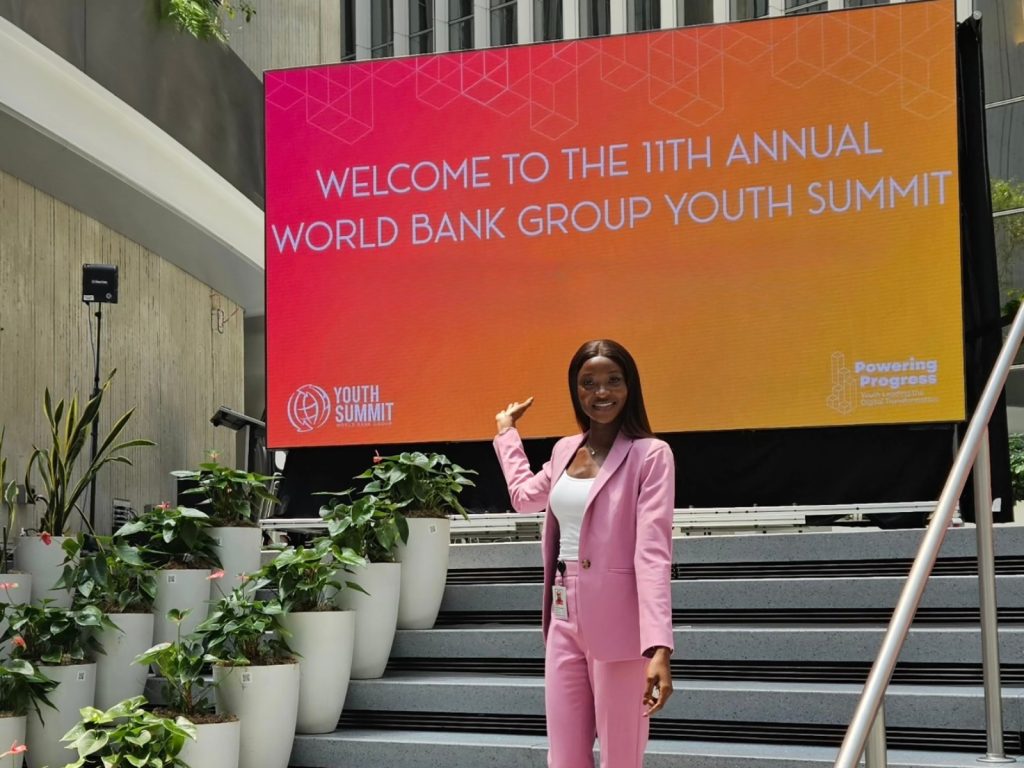
The World Bank Experience
At the World Bank in Washington, D.C., the scale of Tolu’s work exploded. She went from supporting £10 million in infrastructure projects in the UK to analysing multi-billion-dollar portfolios — a move that came with a 100% salary increase.
“At the World Bank, a single project can be $300 million, and an entire portfolio can be $20 billion. My clients changed from other engineering firms to countries, engaging directly with ministers, governors, and presidents.”
Her role involved reviewing country proposals for climate funding and analysing metrics such as CO2 reduction and gender impact to ensure loans and grants were used effectively. This high-level exposure also taught her the art of office politics in global institutions.
“I’m still figuring it out,” she laughs. “But you want to learn how the system works. I build allies. Your allies can be somebody who will speak up for you in a room when you’re not there.”
The Privilege of Mobility: The UN Passport
One of the most tangible benefits of her rise within the World Bank (a specialised agency of the United Nations) was the acquisition of a United Nations Laissez-Passer (UNLP). For a Nigerian passport holder, this was a game-changer.
“A Nigerian passport limits how far we can go. Sometimes life doesn’t reward the hardest worker; life rewards whoever is ready,” Tolu notes candidly. “The UN passport facilitates travel. I didn’t need to apply for a visa to Italy. For Laos, we just walked into the embassy, and they said, ‘Okay, come back tomorrow, we’ll give you the visa.’”
This mobility allowed her to visit project sites globally, ensuring she was always in the room where decisions were made
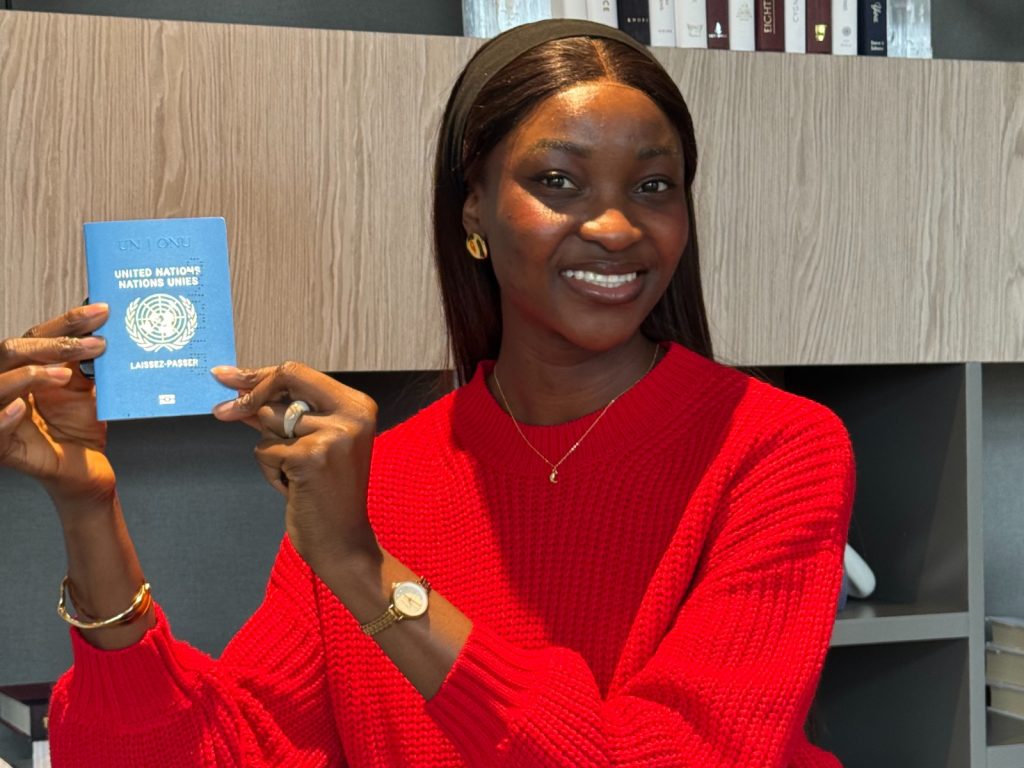
Tap the photo above to see how the UN Laissez-Passer works
The Risk and Reward of South Korea
In 2025, Tolu took her biggest risk yet: moving to South Korea to join the Green Climate Fund as a Data Management Officer. The job found her, thanks to her track record.
“I didn’t need to sell my value anymore. When I showed them my CV, they were just like, ‘Oh, this is exactly who we’re looking for,’” she says.
Compared to her first job abroad, her income has increased by 300%, and she now oversees a $19 billion portfolio supporting climate action in developing countries. The reward was significant, but it also came with a lifestyle trade-off.
“I traded some things to go to Korea,” she reflects. “It’s safe, the cost of living is lower, but I don’t travel as much as I did at the World Bank, and I really miss my community of friends and family back in D.C.”
Building the Next Generation: CareerCultureHQ
Recognising that her experience could guide other young professionals, Tolu launched CareerCultureHQ, a digital platform that provides career insights.
“I started CareerCultureHQ to help professionals reimagine ambition, build high-value skills, and unlock global career opportunities,” she explains. “I’d love to collaborate with organisations like the World Economic Forum, Aspen Institute, or the Cannes Lions International Festival of Creativity to bring this vision to life.”
Finding Your North Star
Despite her global mobility and financial advantage, her advice to young professionals remains grounded in introspection rather than blind imitation.
“You can’t chase somebody else’s dream,” she says. “You need to figure out what’s most important to you. For some people, it’s money. For others, it’s community. For me, I wanted flexibility and work that poured into me as much as I poured into it.”
From Lagos to London, D.C. to Seoul, Tolu Olusina’s journey proves that in the modern economy, your location can be as important as your vocation. By mastering the art of the pivot, she has built a well-grounded career and a life on her own terms.
Also Read: How I Landed a $175k/Year Investment Banking Job as a Nigerian in the US

Follow Zikoko Money on Instagram for relatable stories and actionable insights to help you make the most out of your money.