At 29, Kabira Ilo (Kabs) is a certified chef and the owner of one of Ibadan’s most talked-about restaurant spaces. But before the business success and seven-figure monthly income, she was just a frustrated University of Ibadan student trying to stretch her ₦5k allowance.
Here’s how she turned a hostel balcony hustle into a thriving multi-branch business, survived wild debts, and is navigating the wild reality of the food industry.
This is Kabira’s story, as told to Boluwatife

I never planned to be a chef.
If you had told me 10 years ago that I’d be running a restaurant in Ibadan, I would have laughed. I wanted to study Law. I wanted a good life.
I didn’t grow up poor. My family was more or less middle-class, and we didn’t struggle. However, I wanted to be wealthy. I wanted the fancy things in life. I’d see celebrities with their kids in swimming pools on TV, and ask myself, “Why aren’t we in a pool too?” I’d watch kids on the KKB show and wonder why I wasn’t one of them. Why couldn’t I attend the big schools they talked about on the show?
My parents were civil servants, and I knew that a similar career wouldn’t give me the life I envisioned. To me, Law was the ticket. It came with respect and a fat bank account.
But when my admission letter to the University of Ibadan (UI) came in for the 2015/2016 session, I was offered a spot in Education and Religious Studies.
I was devastated, but people told me, “Just take it. If you get a first class in 100 level, you can cross to Law.”
So, I put my head down and read. I got a first-class GPA, but then, my HOD refused to sign me out. Only three people had earned a first-class in the department, and he “couldn’t let his top students go.”
I called everyone, pulled strings, and begged, but the man didn’t budge. I was so angry. I retook JAMB and got into UNILAG, but it was the same course of study. Maybe I should’ve taken it as a sign to let things go, but stubborn child that I was, I stayed at UI to fight.
I tried to switch again in the 200 level, and then in 300 level. Nothing worked. By now, it was 2018. I finally decided to rest my case. Law was not going to happen.

The Naira Life Conference is returning on August 22, 2026, in Lagos! Come learn from finance experts and industry leaders, and partake in unfiltered conversations about building wealth and diversifying your income stream in a country like Nigeria. Real stories, expert advice you can actually use, and a community ready to build wealth together. Secure your spot here.
Figuring out my life led me to cooking
When my dream of studying law died, I came under internal pressure to figure out my life. I had financial support from home and didn’t really need money, but I felt like I had to do something.
I started by selling bedsheets. I took a two-month tailoring class during one of our endless strikes, and my parents got me a sewing machine. I’d buy materials at the market and sew them myself. When school resumed, I’d drag 40 to 60 bedsheets to the hostels and sell them to freshers for ₦3,500 to ₦4,000. I loved the money, and I was so proud seeing my bedsheets on the hostel washing lines.
The real shift happened when I joined AIESEC. They often needed volunteers to make light bites for their events, and I began volunteering to make punch and kebabs. I already liked cooking and sharing with my friends, so making the kebabs came easily to me. AIESEC provided the foodstuff, and I made it for free.
My kebabs soon became popular with students, and I started making them for campus parties. My “brand” name was “Sticks and Chill.” It was pretty casual. Sometimes I sold to students on weekends, but mostly at parties. The parties themselves weren’t frequent, so the kebab hustle didn’t really stick.
By the second semester of 300 level, my dad retired, and my allowance started dwindling. I went from getting money on demand to getting ₦5k or ₦10k after several days of asking. I became legitimately scared of going broke.
One weekend, after days of being flat-out broke, my dad sent me ₦5k as usual, which wasn’t a lot of money, so I began considering ways to make it last longer.
I went on my WhatsApp status and asked: “If I make stir-fry pasta, would you guys buy?”
Everyone said yes.
I watched a YouTube tutorial on how to make stir-fry pasta, then I took the ₦5k to the Bodija market, 10 minutes away from campus. I bought a pack of chicken, some pasta, and peppers. I cooked in my hostel room and posted the finished product on WhatsApp. I made six or seven plates at ₦1200 each, and I sold out immediately.
The next day, I decided to try again. I borrowed ₦3k from my friend, bought three packs of chicken, and sold out again. The business was moving, so I continued the following weekend, and then the next.
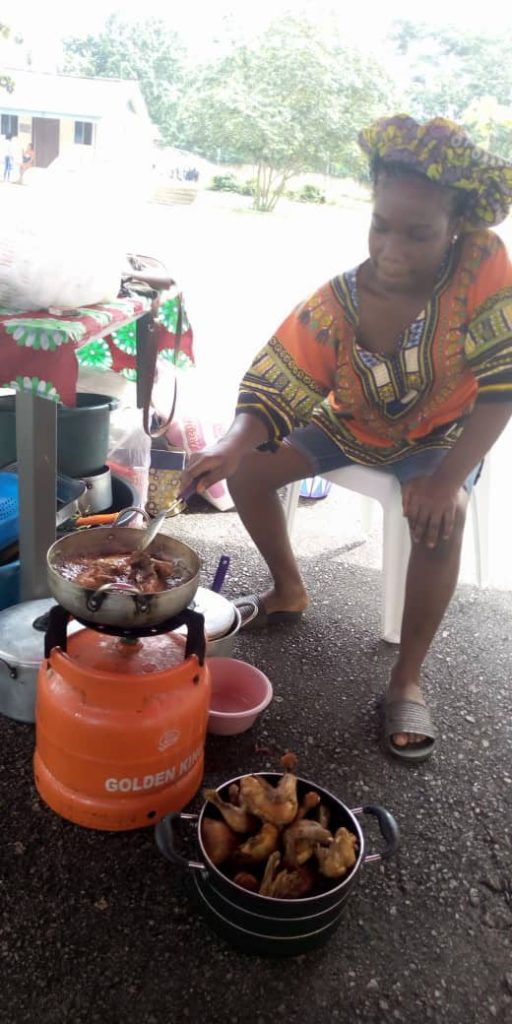
At first, I was selling on Saturdays and Sundays. Then I considered the stress of classes and the need for structure in the business, and updated the model to allow people to pre-order during the week and have their food delivered on Sunday.
Demand grew within weeks. I went from one pack of chicken to three, then five, then ten. Cooking inside the hostel wasn’t allowed, but my three roommates were incredibly accommodating. I lined up kerosene stoves on our balcony to cook. At one point, I was borrowing stoves from friends, lining up four or five, and cooking with all of them at the same time to meet 80 orders every Sunday.
On Saturday, my friends would help me with meal prep. On Sunday morning, while everyone was in church, I’d be cooking at the hostel kitchenette. Initially, I did all the deliveries myself, hopping from hall to hall, charging ₦300 for delivery, until my keke guy offered to help.
As soon as I was done cooking, I’d give him the food and the customer’s number, and he’d make the deliveries and keep the delivery fee. The business was chaotic, but I somehow saw it through until I graduated in 2020.
The lazy Twitter post that changed everything
I returned home to Lagos around the time COVID hit, hoping to find a 9-to-5. I wanted to carry a laptop and look pretty. I took several online courses, but none interested me. I was living lavishly during lockdown on the money I’d saved from school, but I didn’t yet think of cooking as a sustainable business.
In May, after complaining to a friend that I hadn’t found a job, she told me her parents were out of the country and invited me back to Ibadan. I obsessed over the math. “If I sell just one plate of food for ₦1,500 a day, I can survive.”
So, I told my dad I was leaving. He was worried, but he said, “If it gets too tough, just come back home.” That gave me the ultimate confidence. I packed my bags and returned to Ibadan.
For days, I was too lazy to do anything. I bought ingredients and left them in the freezer. One afternoon, I finally forced myself to cook. I was so tired when I finished that instead of packaging it nicely, I just dumped all the pasta into a foil tray, put three pieces of turkey on it, took a picture next to a leaf, and posted it on Twitter with a ₦3,500 price tag.
That single, lazy post blew up.
My DMs went wild. People were asking, “Where is this? How much?”
From that day in 2020, I haven’t rested. My Sunday-only hustle turned into a Monday-to-Sunday job.
From a wooden kiosk to a ₦40 million duplex
People loved the pasta, but after a while, they started asking for rice. I expanded the menu slowly, adding basmati fried rice, ofada, and dodo.
In 2021, when my friend’s parents returned to the country, I had enough money to rent my own apartment. But having customers come to my house for pickups felt unsafe and stressful. So I decided to look for a physical space.
I walked into UI to get a spot and found a small wooden kiosk at Zik Hall’s Black Market. I paid about ₦30k in annual rent, cleaned it up, and bought an industrial burner. The school authorities strictly discouraged leaving burners outside, so I kept mine inside and that tiny wooden shack became a literal oven. The heat was unbearable, but I pushed through.
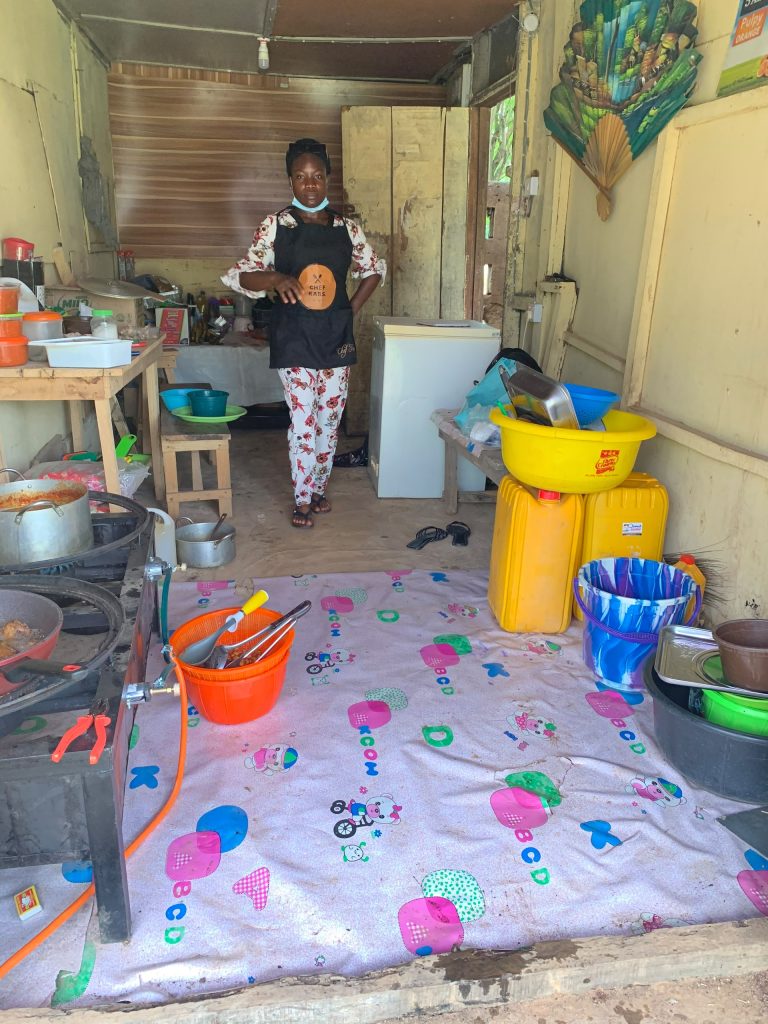
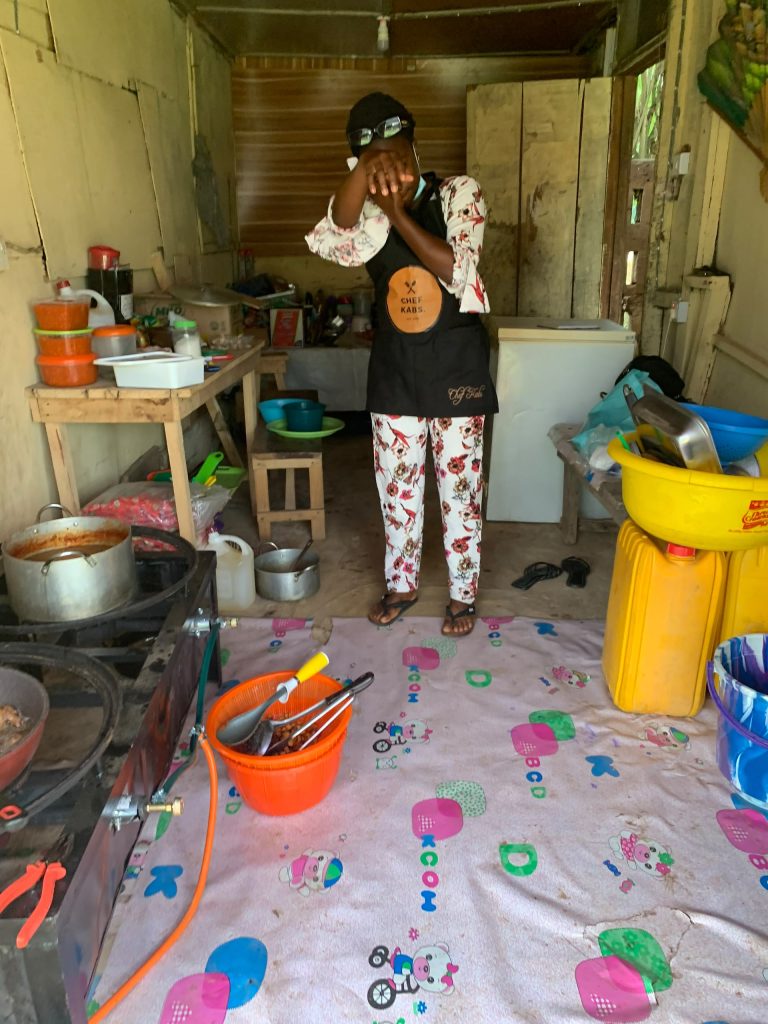
In 2022, I briefly paused operations to attend my three-week NYSC orientation camp, and when I resumed, business boomed immediately. That was when I really accepted that the business was here to stay. Maybe I was actually doing a good job.
I rented the kiosk next to me, knocked down the wall, and expanded. When my parents saw how much the business had grown, they finally stopped trying to get me a government job.
At this time, everyone was calling me “Chef Kabs.” It bothered me because I wasn’t officially trained. So, I saved every single naira from the business, and in 2023, I paid nearly ₦3 million to attend Red Dish Chronicles Culinary School in Lagos. I commuted back and forth for a year. It was a massive financial risk, but it was worth it. I graduated in 2024 as a certified chef.
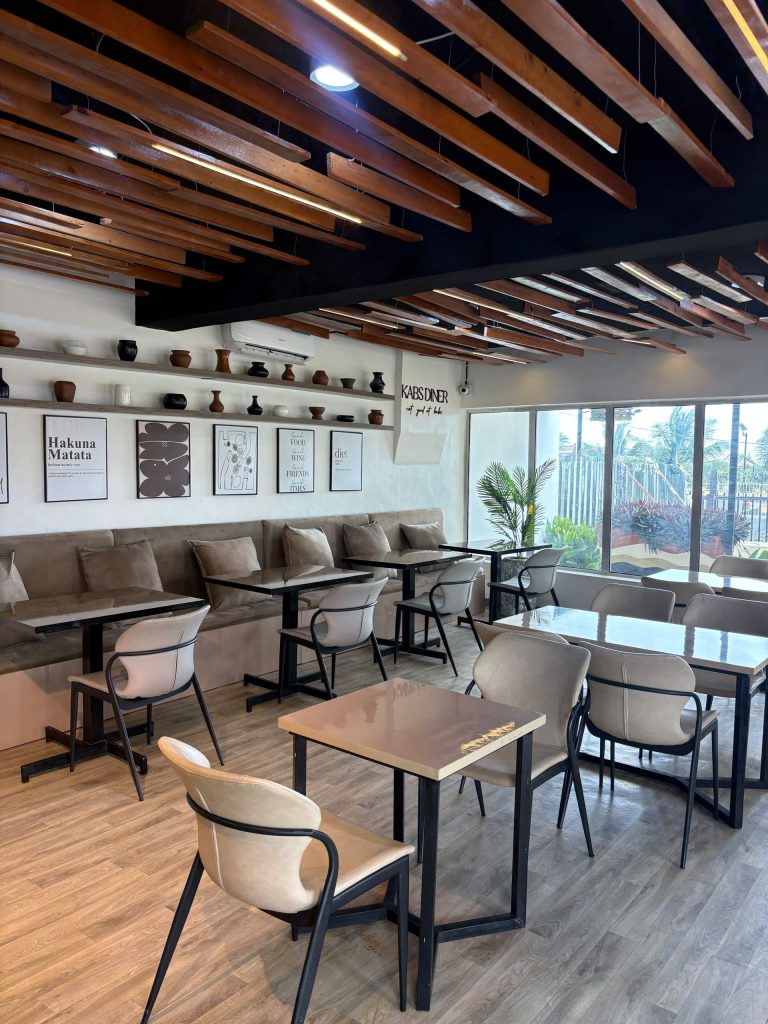
When I returned, my old shop felt too small. I wanted more. An agent showed me a five-bedroom duplex with a pool in Ibadan, and I decided to rent and renovate it. The project was supposed to cost about ₦12 million, but my architect blew things out of proportion, and the cost slowly ballooned to ₦40 million.
I had only about ₦10 million in savings and had to take about ₦23 million in loans. I still had my store in UI, so I was also pumping every single kobo from my daily sales back into the construction.
After several trials and tribulations, I finally launched the space in December 2024. The restaurant has been really successful. I made enough to pay off every single loan in six months.
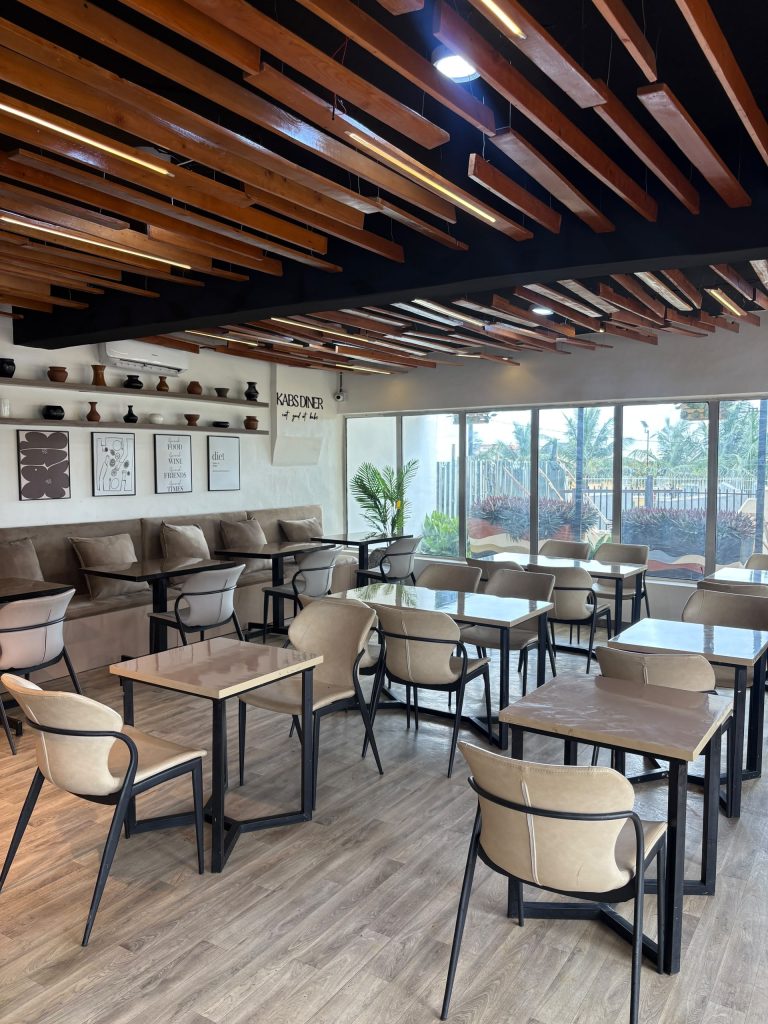
My business today
Today, I run multiple legs of my business: Pasta Xpress by Kabs (the quick-service restaurant), a themed monthly brunch club called Sunday at Kabs, and Kabs Bar (canned mocktails and cocktails). This August, I’m launching Kabs Diner — a casual evening spot for wings, burgers, and milkshakes because Ibadan deserves a proper late-night food culture.
The business pays me a comfortable seven-figure monthly income, but it’s not all roses. Entrepreneurship in Nigeria will test you. Managing labour is a nightmare. I’ve had staff turn off the AC on customers because “they were cold.” I’ve also had to temporarily close my UI branch due to staff diverting funds to their personal accounts.
I’ve made my peace with the loopholes, though. You block one, the staff find another, and you block it again. If someone asks me for advice on starting a business like this, I’d tell them to think twice. Making money is stressful!
But on a serious note, I’d tell them to be very resilient. Don’t measure your progress by how it’s going for somebody else. Just pace yourself, and you will eventually get the hang of it. You can’t expect a one-year-old business to be the same way as a three-year-old or 10-year-old business. It’s really just time.
NEXT READ: A Dress Mishap at 16 Inspired Oluwasewa Akinrimisi to Build a Global Fashion Brand