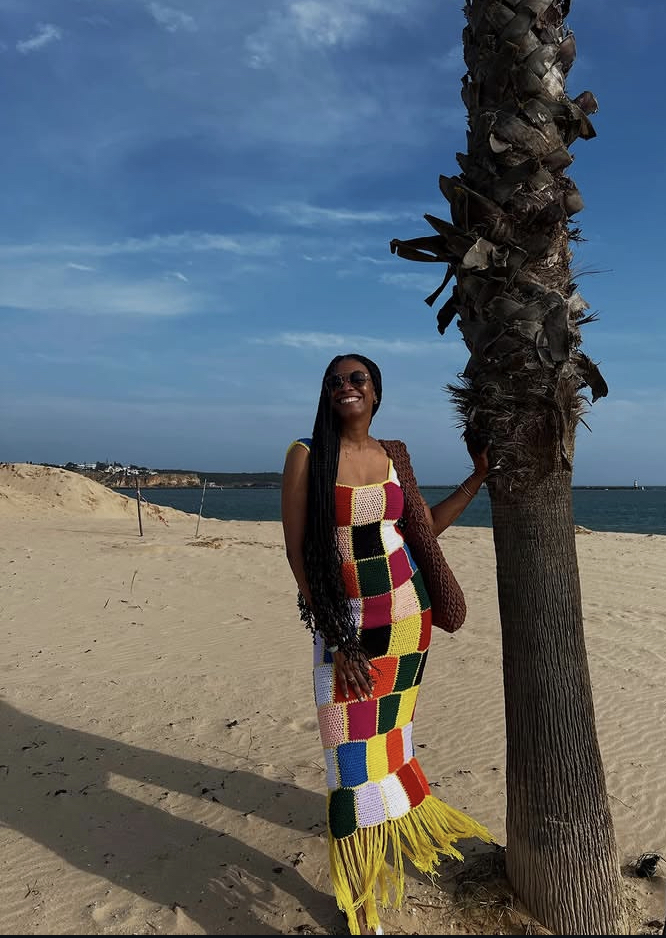
There’s a version of a bride we all recognise: polished, predictable, almost rehearsed. The lace, the corset, what a bride should look like. But what happens when someone decides we do not all have to look the same? Elizabeth Adedeji isn’t just asking that question; she’s answering it, one stitch at a time.
Through 21 Wool Street, she’s turning crochet into something far more expansive than craft, using it to create bridal pieces that feel personal, intentional, and deeply lived-in. For the bride who wants to look like herself, not what is expected, Elizabeth is quietly and steadily widening what’s possible.
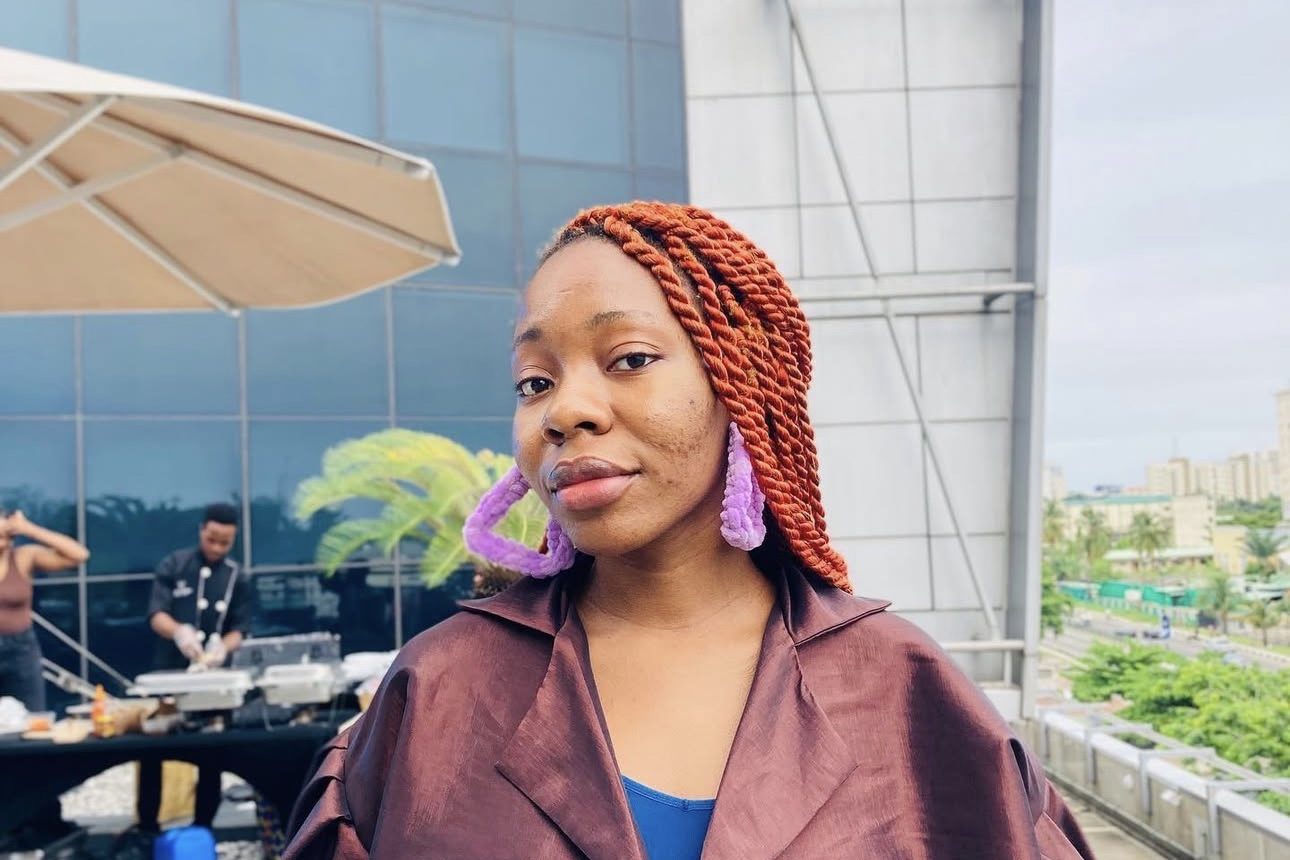
Can you tell me the story of how you started 21 Wool Street? What moment or experience made you realise crochet could be more than a hobby and become a brand?
I started 21 Wool Street in 2017, but the seeds were planted a bit earlier. Before then, I was just having fun with crochet as a little hobby. Then I started seeing more people experimenting with it as clothing pieces that looked more modern and fitting for our generation on YouTube and Instagram, and I was curious. I started creating tops, skirts, and more.
In 2016, one of my friends reached out because she needed something to wear to the beach. I had already made a crochet beach outfit for myself, so I made the same design in burgundy monochrome for her, and she got so many compliments. I remember thinking, “Wait, people will actually pay for this?” From there, I started making pieces for classmates at university, receiving orders and referrals, and it slowly became clear that this wasn’t just a hobby. It was something people connected to, valued, and wanted more of, and that’s when 21 Wool Street began to take shape as a brand. The brand has evolved over the years, incorporating additional techniques such as macrame into our designs.
When did you rebrand to bridal crochet?
I’d like to clarify that the brand doesn’t focus exclusively on bridal wear. It started with crochet beachwear, but evolved naturally in response to customer demand and our own creative direction.
As people engaged with the pieces, there was growing interest in how the craft could extend into more occasion-led designs, and into accessories like bags and earrings. Bridal is one expression of that evolution.
At its core, the brand is always building on what resonates with our communities. Crochet is an art form that allows for that kind of fluidity.
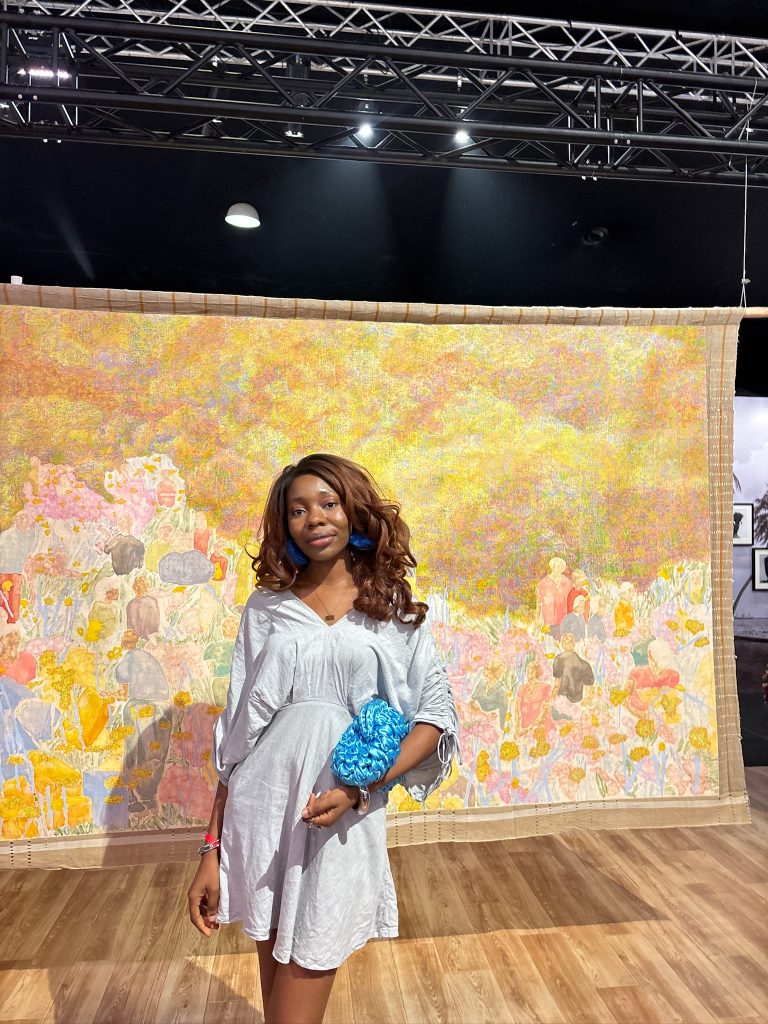
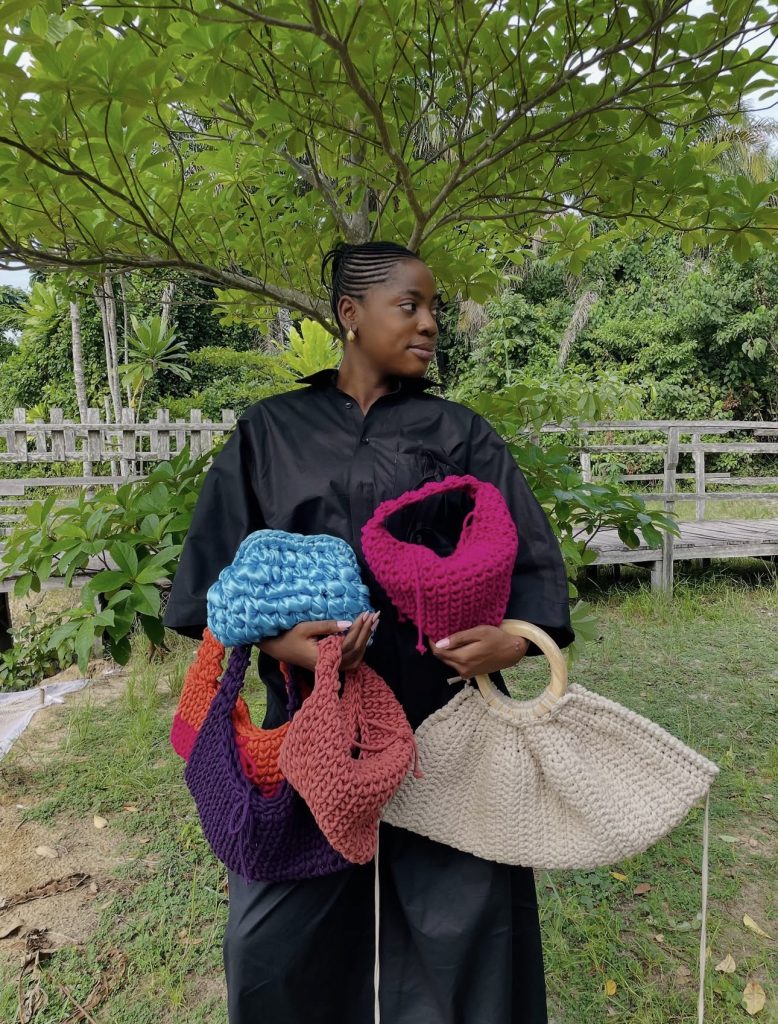
Can you walk us through how you chose the name 21 Wool Street?
I wanted something that captured multiple dimensions of the brand: its youthfulness and our use of sustainable materials. That sense of youthfulness is especially important to me because the brand is designed for both the young and the young at heart.
I think when anyone hears 21 Wool Street, they immediately think of community. A space where you fit right in because what we create was made with you in mind.
When people hear the term ‘crochet bridal wear,’ it can sound unconventional. How do you navigate that?
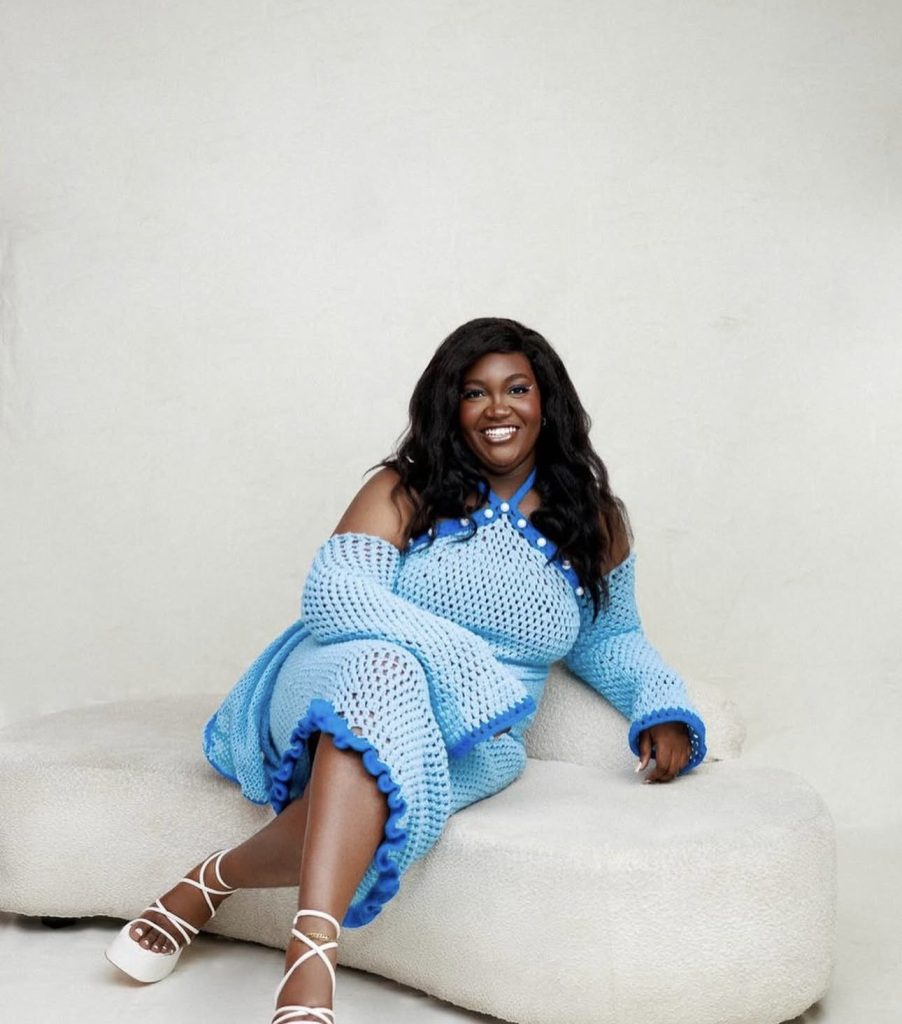
Yes, when people hear that, it can sound unconventional. But at 21 Wool Street, it’s never just about crochet; we’ve evolved to incorporate many craft techniques into our design language, including crochet, macrame, and eventually weaving. This has allowed us to blend texture, stitch, and material in ways that feel unique and personal.
What does crochet allow you to express that traditional bridal fashion doesn’t?
Our designs are for women who want to look different, try something new, and bring elements of themselves into what they wear. It won’t be for everybody, but if you’re looking for something distinctive, something that truly reflects who you are, this approach can be for you. Sustainability is also a key value; pieces can be re-worn, reused, passed down, or even sold. A lot of bridal fashion today can feel templated: the same corsets, fabrics, and silhouettes.
Craft-based designs are another way to stand out on your wedding day. And it doesn’t have to be the entire outfit: a veil, accessories, bouquet, or floral accents can incorporate craft artistry, bringing both individuality and sustainability into your celebration.
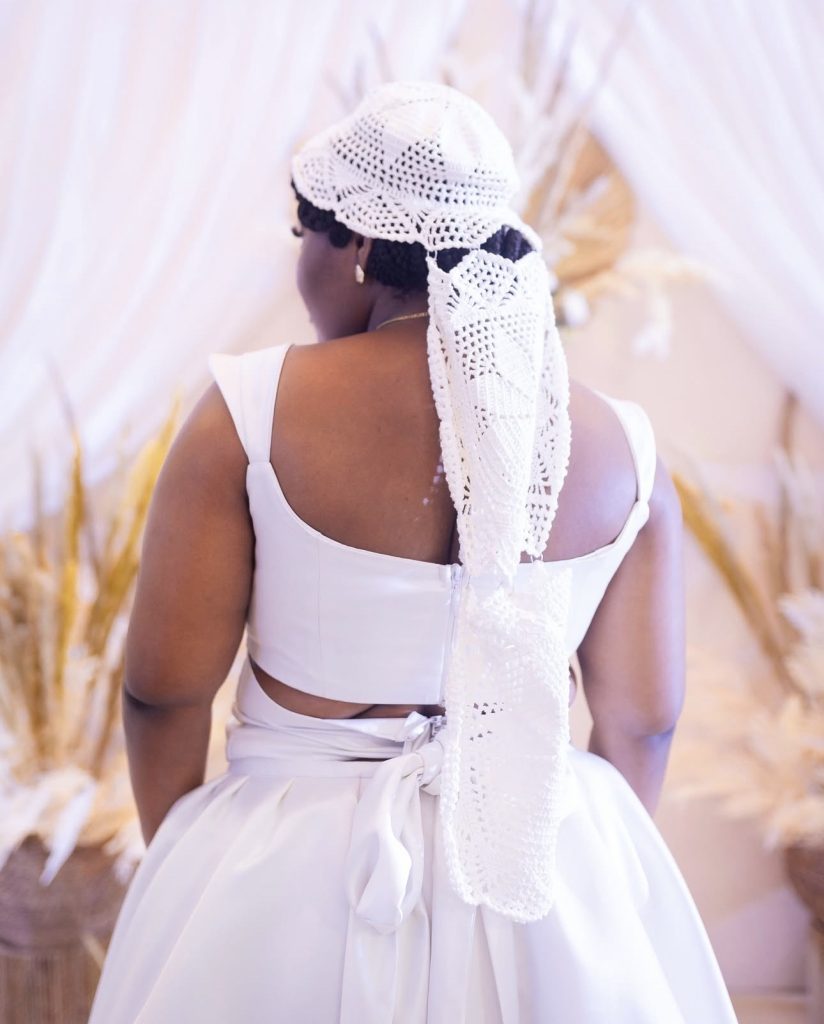
What problems do you think traditional Nigerian bridal fashion creates for women? How does your work challenge or respond to those pressures?
I think wedding culture, not just in Nigeria, but globally, has stripped a lot of soul, tradition, and meaning from weddings. There is so much pressure to look a certain way and follow certain rules without really asking why. It can push women into conforming, into appealing to one glorified aesthetic. If that’s your thing, that’s fine; it can be beautiful. But in Nigeria, there is a very specific ‘ideal’ bridal look, and if you step outside of it, you’re seen as strange or an outcast. That pressure makes people stop being themselves.
There is also a huge financial burden. People are encouraged to spend outrageous amounts on things they’ll wear once, not necessarily the best quality or even what they truly like, instead of thinking about their future, their home, or their life after the wedding. My response through crochet is about sustainability, reusability, and collaboration. Whether I’m designing a dress, veil, or bouquet, it’s a process that brings part of your life into the piece. It’s about creating something meaningful, not just expensive.
Do you see 21 Wool Street as part of a wider shift in how Nigerian women think about their wedding day?
Yes. I want women to start thinking about sustainability, rewear value, and reuse value, rather than seeing their wedding dress as a one-day thing. I want people to think of their wedding dress as a long-term investment, something you pour into and get so much more out of.
So, what kind of bride do you design for?
I design for women who want to stand out, who want something memorable, and for their wedding experience to truly reflect who they are.
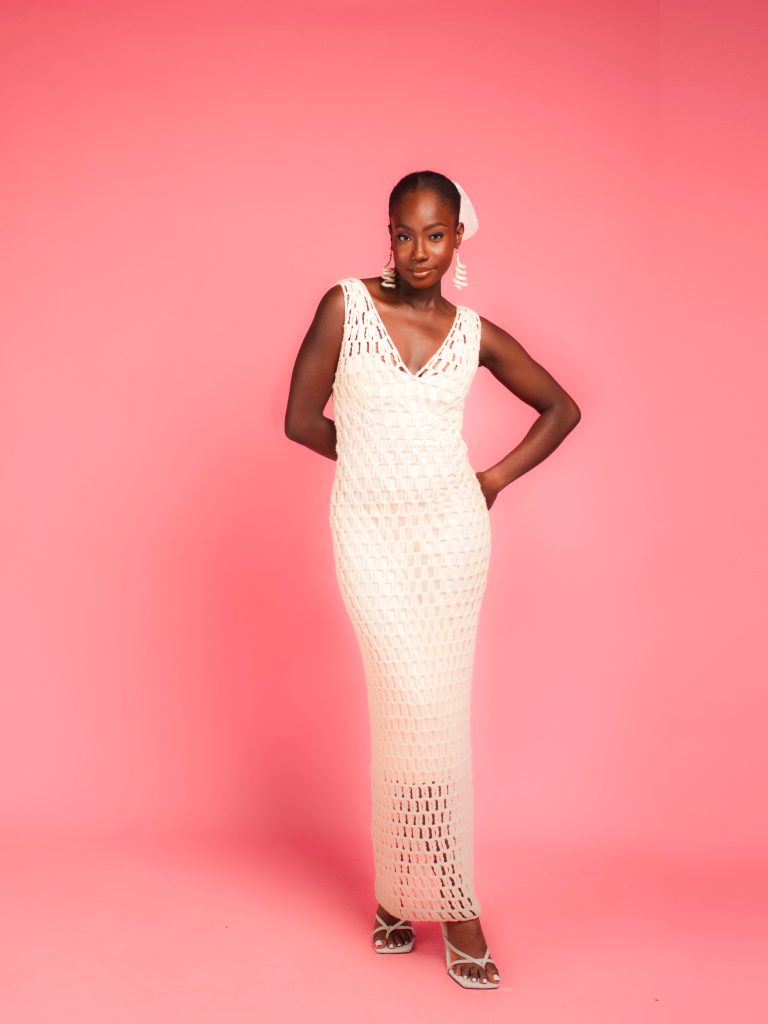
When I designed for my sister, she wanted something retro, free, and comfortable, something that felt like her. Not just any crochet wedding dress would have worked. The fact that I, her sister, designed it was also an important part of the story she wanted to tell. So for every woman, it will mean something different. But it always starts with intention: Do you want something unique? Do you want something that reflects you? Does it align with your theme and your values? It’s for the intentional bride, someone who wants to be free, comfortable, different, and themselves, not what society says a bride should look like.
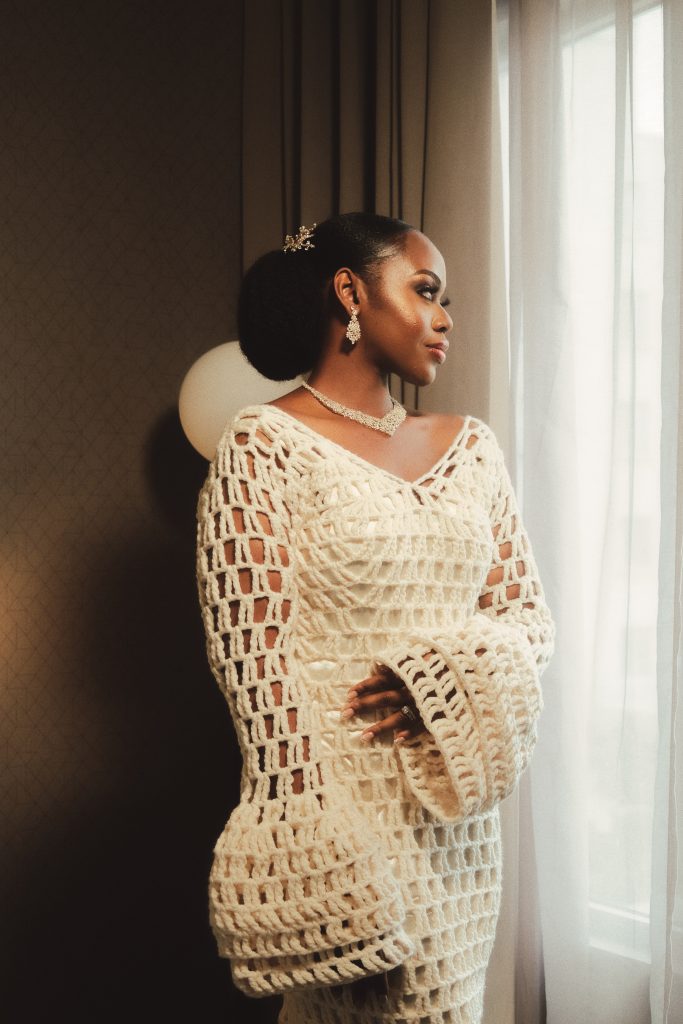
If you had to summarise the soul of 21 Wool Street in 3–5 words, what would they be and why?
- Intentional — because nothing we create is rushed or accidental. Every piece is thought through, from concept to the final stitch.
- Unconventional — a word deeply connected to how people perceive the brand and what we truly represent. We think differently. We design differently. We dress differently. Crochet itself sits outside the expected, and we embrace that fully.
- Comfort — because the wearer is always at the centre of our designs. Can you sit in it? Walk in it? Breathe in it? How does it feel on your skin? Beauty should never come at the expense of ease.
- Timeless — I’m not just designing trendy pieces; I’m creating pieces made to last. Pieces you return to again and again. Pieces you never get tired of. Pieces you’ll proudly show your children, nieces, or nephews, or even pass down to them.
Walk me through the process of making a crochet wedding dress, from idea to final fitting.
It always starts with a conversation. I want to understand the bride: her personality, how she moves, her comfort level, and the emotional vision she has for her wedding day. From there, I move into research, mood-boarding, sketching, and stitch testing. I search for the right yarn texture and colour for the design, create sample swatches where necessary, and once everything is approved, we move into constructing the piece.
The bride is kept updated throughout the entire process. Our bridal wear requires extensive experimentation with yarn choice, stitch density, lining, and reinforcement. These all matter. Sometimes the bride already has a clear design in mind, and my role is to translate that vision in a way that works structurally and aesthetically. Balancing structure, durability, and delicacy comes down to technique.
The final outcome depends on the design, the yarn thickness, and the stitch or pattern used. Because crochet behaves differently from traditional fabrics, testing and sampling are essential to understand what works and what doesn’t. I’m also very intentional about sourcing high-quality materials, because the right yarn makes all the difference in how the piece looks, feels, and lasts.
What’s the most challenging part of designing in crochet for brides?
I wouldn’t say I’ve had one major challenge. Most of the brides who come to us already understand the work to an extent; they’ve seen what we do, they trust the process, and they’re intentionally choosing crochet. So I haven’t really had to convince anyone that it works. If anything, the challenge is internal rather than external. Crochet is slow, and bridal timelines can be tight, so it requires careful planning and precision. Thankfully, we’ve had amazing clients who reach out with enough time to really work through the process properly.
Crochet bridal is often one fitting, sometimes with very limited room for adjustment, which means every stitch has to be done carefully and intentionally. I remember working with my first international bride in 2023. We couldn’t take measurements in person, so she worked with a tailor on her end. There was still that fear, wondering if the piece would fit perfectly once it arrived. Thankfully, it did. Moments like that remind me how much trust, care, and focus go into every piece, even when the process itself is working well.
What details or techniques are unique signatures of your work, if any?
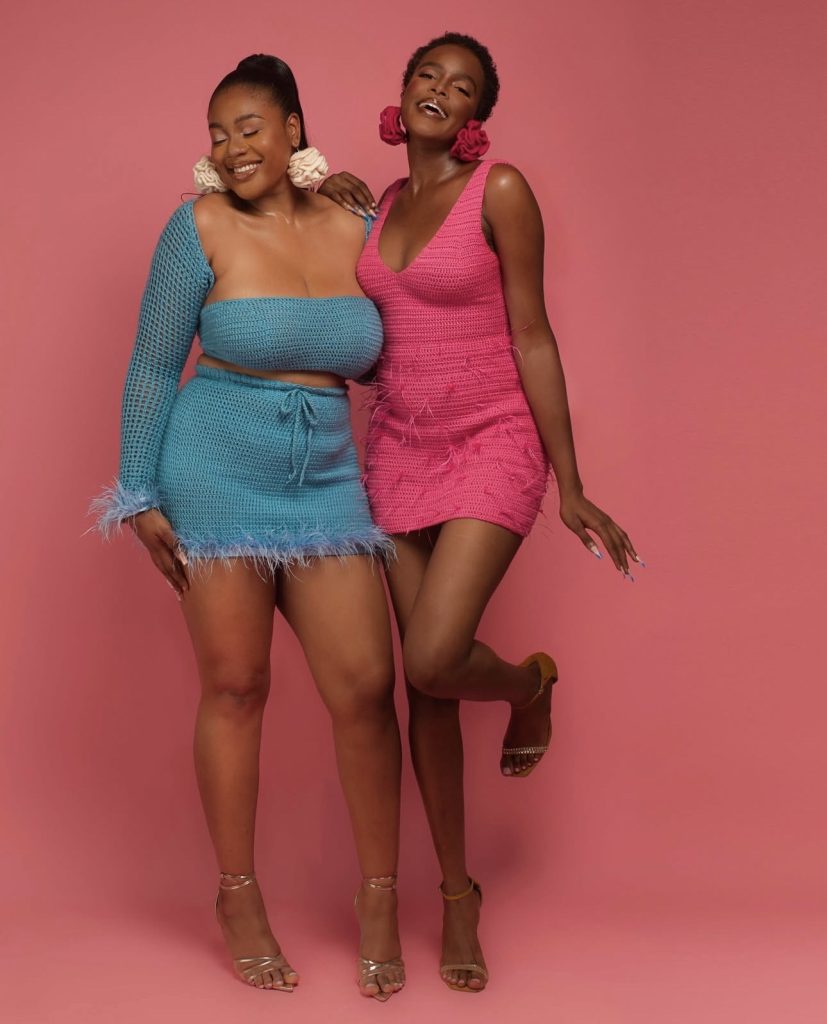
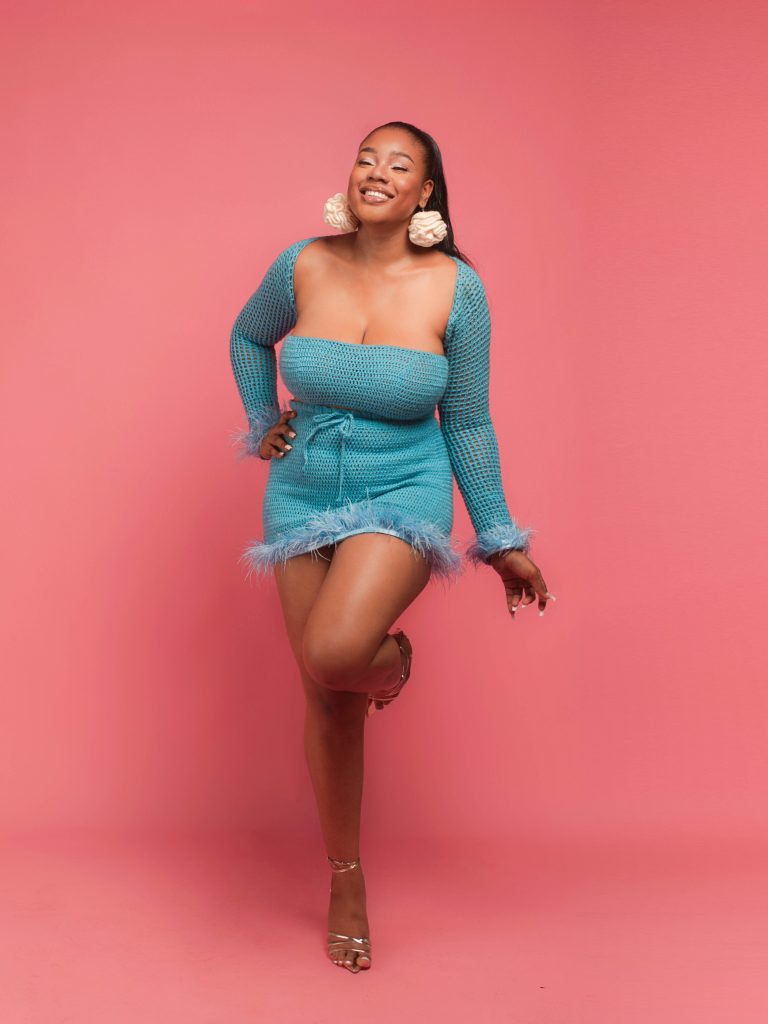
I don’t think I’ve fully figured it out yet; there’s still a lot of experimenting happening, but there’s something about a 21 Wool Street piece that, once you see it, you just know it’s us. There’s a strong play on colour in our work, alongside bold stitches, sculptural sleeves, and thoughtful finishing. I like exploring how colour shifts a piece’s mood, making it feel softer, bolder, or more expressive. I’m very particular about durability: properly weaving in ends, clean edges, and paying close attention to how the piece feels against the body. My work may look soft, but it’s built to last.
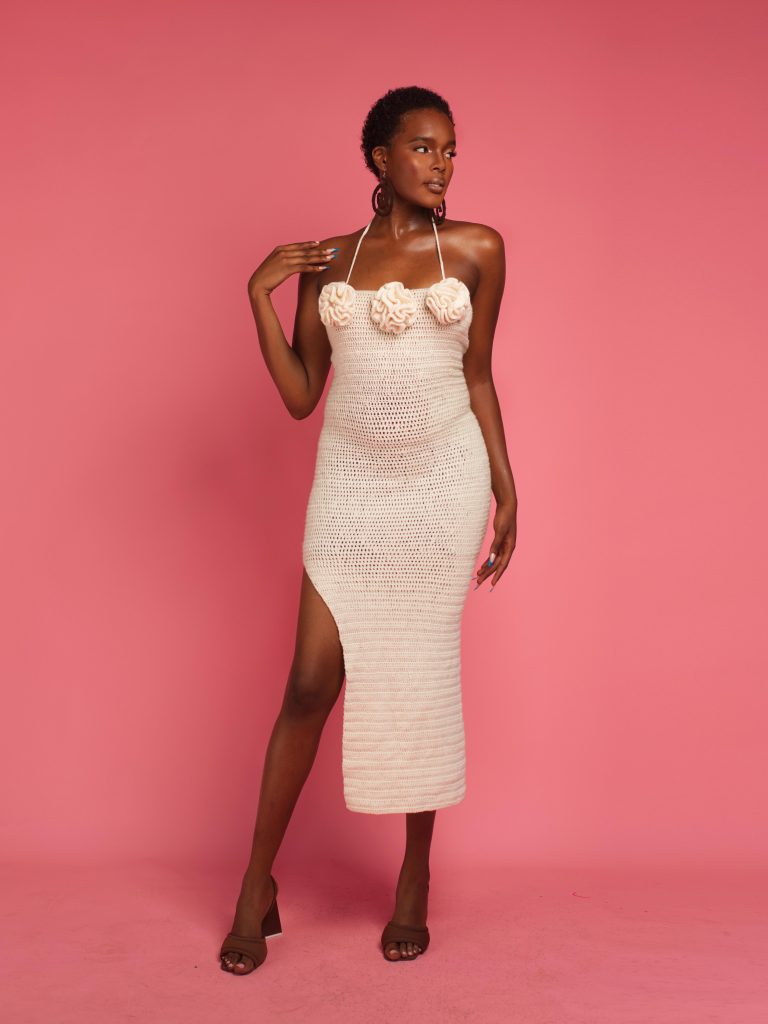
You’ve said your pieces centre on individuality and intimacy. What does that mean in the context of a wedding?
It means collaboration. It means long conversations, research, getting to know who you are, what you love, and what you don’t. I use all of that to create something that feels like you. When people see the piece, they should see your story.
Do you see your work as feminist? If yes, how?
Yes. I see my work as supporting women’s rights. Fashion has historically relied on women’s unpaid or underpaid labour, fast production, and bodies being shaped to fit trends instead of the other way around. My work challenges that by slowing the process, valuing handmade labour, and creating pieces built around the woman without forcing her to fit into a standard shape or aesthetic. Sustainability is also part of that. Caring about the earth and the future is deeply connected to caring about people, especially women, who are often the most affected by environmental harm and unfair labour systems.
What kinds of reactions do you get from brides who choose crochet over traditional materials?
I’ll use my sister again. She wasn’t a mainstream bride. Even her traditional wedding look was inspired by our grandmother. The reactions were mostly positive. There was some critique, but people celebrated her individuality. She was very happy, and she’s still happy with how she looked on her wedding day. 21 Wool Street brides are very intentional. They know what they want, which is why choosing crochet over traditional materials is an easy yes for them
Can you walk me through a week or a day in the life of the brand 21 Wool Street and you, its founder?
My mornings usually start with design work: sketching, reviewing concepts, responding to client messages, and planning new pieces. If I’m in production mode, I spend hours crocheting, testing patterns, adjusting structure, and making sure each piece feels right. Some days are dedicated to workshops. I prepare materials, plan lessons, and teach people how to crochet, from beginners to creatives who want to explore it as a business or artistic skill.
On Saturdays, I volunteer at a school where I teach children how to crochet and create with their hands. In between, I’m delivering orders, sourcing materials, photographing work, going through emails, brainstorming future collections, and thinking about how the brand can grow.
You’ll Love: How Ore Akinde Turned Crochet into a Multi-Million Naira Fashion Business
What’s it like running a niche creative brand in Nigeria, especially one that asks brides to step outside the norm?
It’s very challenging because most people are drawn to mainstream fashion, big designers, and popular styles. Choosing to build something niche means you’re constantly asking people to step outside what feels safe and familiar. But at the same time, it’s deeply rewarding. We’re seeing a shift: people want to see themselves reflected in what they wear. They care about sustainability, individuality, creativity, and meaning.
The most rewarding part is seeing people choose my work for moments that matter, like birthdays, graduation, going on vacation, weddings, and watching them feel seen in what they wear. It’s also exciting to collaborate with other niche brands and creatives who share similar values. Opportunities like working with international brands — I worked with Toms when it launched in Nigeria — or being approached by people who are intentionally seeking something different, remind me that there is value in what I do.
What challenges or misconceptions do you often have to battle?
A big challenge is that running a business in Nigeria is already hard. Access to funding, inconsistent power supply, high material costs, and logistics all make scaling difficult. Beyond that, crochet itself is misunderstood. People see it as “just crochet” and expect it to be cheap or fast. But crochet is not fast fashion. It is slow, handmade work. Every stitch is done by hand, which means production takes time and care. Scalability is also a challenge because crochet cannot be rushed or mass-produced the way factory fashion is.
Another challenge is helping people understand the value of what they’re paying for. My work comes from a place of care, sustainability, and creativity, but many people still hesitate to invest in that. Access to quality raw materials is also limited here, which increases cost. All of this makes running a sustainable, handmade brand more demanding, but somewhat also more necessary.
How do you measure the brand’s success? What matters most to you beyond sales?
Success for me is not a number. It’s about impact. It’s about how we think about fashion in a world slowly being damaged by climate change. We all need to play a part, and one way is through the clothes we wear.
Success looks like: Teaching people to crochet; educating people about sustainability; helping women understand the life cycle of fashion; designing pieces that can be reworn, reused, and passed on. It’s about making crochet more mainstream, while showing that you can look beautiful and still care about the earth and your surroundings. For me, success is pushing sustainable fashion forward.
What kind of future do you imagine for the Nigerian bridal industry?
I imagine a future with: More diversity and creativity. Less exploitation. More collaboration and care. I want to see more thoughtfulness in how services are provided, more freedom for women to look different, and more celebration of individuality. I want diversity in fabric, style, culture, and expression, a bridal industry that allows women to truly be themselves.
What do you hope 21 Wool Street contributes to that future?
21 Wool Street helps widen the possibilities of what bridal can be. By introducing crochet and handcrafted techniques into bridal fashion, I want to show that there’s room for softness, comfort, and individuality alongside tradition. I hope the brand contributes to a more intentional, respectful approach to bridal design, one that values craftsmanship, honours the wearer, and treats creative labour with care.
What’s a dream project you haven’t done yet?
I have quite a number, my goodness! My dream is to make 21 Wool Street more than just a fashion brand; I want it to be a lifestyle. That includes creating products that fit into your home and blend craftsmanship with everyday living. I won’t say more than that for now.