Someone you know has left or is planning to leave. 1,000 Ways to Japa speaks to real people and explores the endless reasons and paths they take to japa.
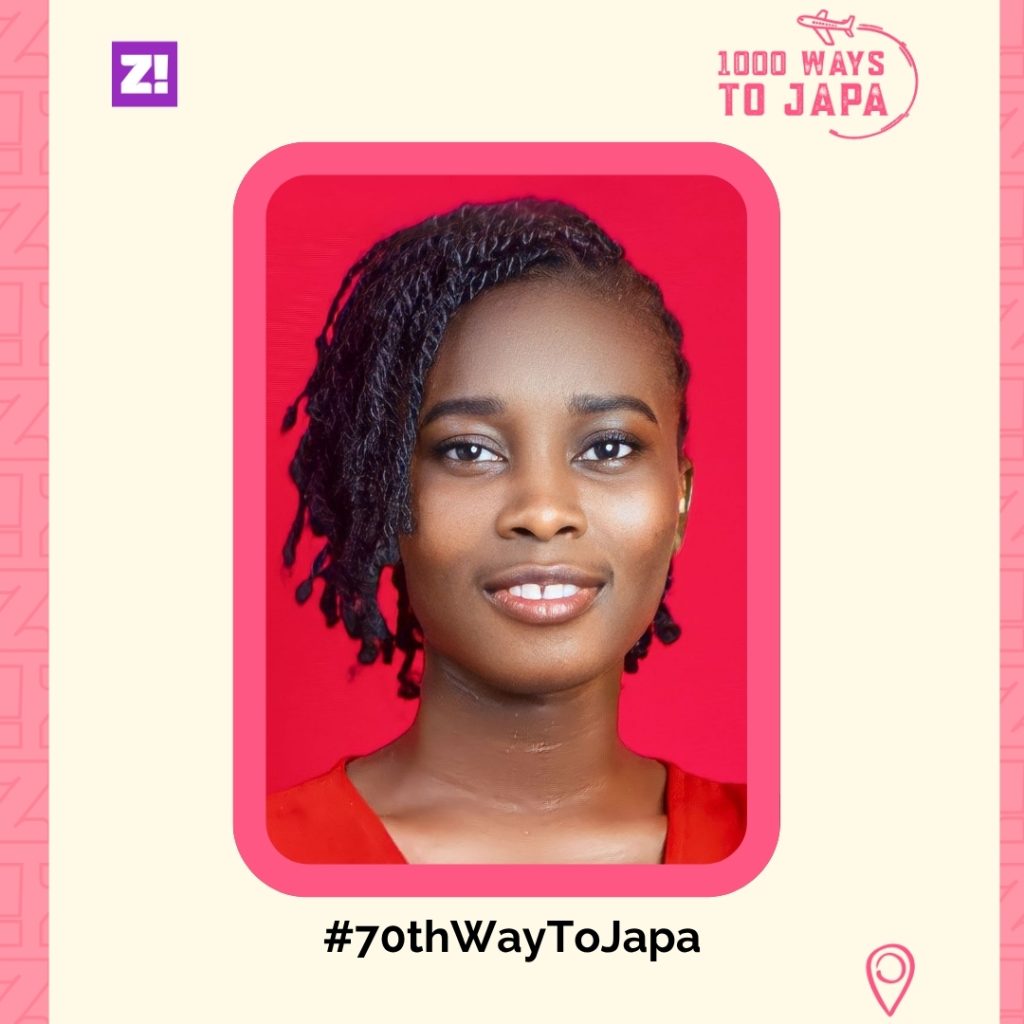
After Victoria graduated from university, she spent two years applying for scholarships but was rejected multiple times. In 2024, it finally clicked, and she moved to the Netherlands on a full scholarship. In this story, she tells us how she did it.
Where do you live currently, and when did you leave Nigeria?
I’m in Wageningen, Netherlands. I moved here in August 2024 to start my master’s degree.
What made you want to leave Nigeria?
After earning my bachelor’s degree, I wanted to pursue a master’s abroad to gain exposure to higher-quality education. But, like many Nigerians, I didn’t have the money to fund studies overseas, so I started looking for scholarships. I actually began the search during my National Youth Service Corps (NYSC) year; that’s even when I got my passport, specifically because I was already planning to apply.
Before you left the country, what were you doing?
I studied agricultural administration at FUNAAB, so my degree had a management component and wasn’t purely science-based. During NYSC, I was posted to teach agriculture at a school. After that, I got a job as an HR officer.
I worked for two years while also being heavily involved in community-focused projects. I volunteered with Non-Governmental Organisations (NGOs) working on the Sustainable Development Goals (SDGs), particularly on zero hunger and quality education, and I co-founded a waste-management business that converted tomato waste into tomato purée.
When did you begin looking for scholarship opportunities?
I’ve always been looking, even during my NYSC. I was just applying everywhere and getting rejected for about two years before I finally got one.
I applied to the United States (US), the United Kingdom (UK), Italy, and the Netherlands. I was looking for full funding wherever I could find it. I ultimately focused more on the Netherlands because of its strength in agricultural studies; Wageningen University & Research (WUR) is ranked the best agricultural university in Europe, and I’m very passionate about agriculture.
Want to share your japa story? Please reach out to me here.
Walk me through the application process. How did you actually apply to WUR?
The application for admission is submitted through the Studielink platform. You submit your CV, your official university transcript and a motivation letter. I applied to the Development and Rural Innovation program and got my offer of admission within two weeks. For your CV, I recommend using the Erasmus CV format.
The scholarship process began after the admission offer. I was nominated for the Africa Scholarship Programme (ASP) in March 2024. The nomination comes from the university; you don’t apply for it directly, you’re selected after you’ve been admitted.
Once nominated, you’re given a two-week assignment to write a research proposal and answer specific motivation letter questions they set. Then, if your assignment is accepted, you’ll be invited to an interview.
Interesting. What was the interview like?
They ask you to explain your research proposal to show that you actually wrote it yourself. They also ask you to revisit your motivation: what your goals are, and how you will be relevant in Africa or the world when you’re done. I expressed myself clearly, and by May, I got the success email. That was when I knew I had the scholarship. I packed my bags and moved to the Netherlands.
What did the scholarship actually cover?
Everything. Tuition fees (over £25,000), travel costs (including a return ticket to Nigeria if I want to visit), and a monthly stipend of about £1,200. The total package is close to £100,000.
They also handled all the immigration documentation themselves. I didn’t need to show proof of funds or arrange anything for the visa. I just took my passport and my scholarship letter to the Nigerian embassy, they stamped it, and that was it.
That’s very impressive. Did you have to pay for anything during the entire process?
The only thing I paid for was the IELTS exam, which was about ₦96,000 at the time, and maybe my transport to the embassy. Funny enough, I paid for my IELTS exam with money I won in a Big Brother Africa prediction contest. I won $150. So technically, even that, I didn’t pay from my savings.
Wow, that’s so cool. I’m curious, though, how did you tailor your work experience to fit the programme?
First off, it’s very important that you don’t put things in your CV that don’t connect to the program you’re applying for. When I was building my CV, I didn’t include my HR experience because it didn’t align with the program I was applying to. I focused on my volunteer work with NGOs advancing the SDG goals, specifically zero hunger and quality education, and on a waste management business I co-founded with a friend. The kind of work that impacts your community and seeks to solve a problem sustainably is exactly what these programs want to see.
Even if the experience feels small, like a student project, if it connects to what you want to study, put it in. They want to see that you’re already making an impact, not just that you have professional experience in any field.
And the motivation letter, how should someone approach it?
This one is very important, and I could go on and on about it. Don’t write a secondary school essay. Don’t write “I am very skilled in data analysis, and I got a first class,” that’s not what they’re looking for. A motivation letter has to tell a story; mine began with me being the first girl in my community to attend university. I narrated how my parents struggled to fund my education, how, despite that difficulty, I pushed through, got strong grades, started volunteering, and co-founded a business. I built a narrative that identifies a problem, a struggle, resilience, and a vision for solving that problem.
One of the girls who got the Africa Scholarship Programme this year wrote her entire letter around the concept of Abiku, the Yoruba belief in children who are fated to die young and keep returning. She framed her life story through that lens. That’s the kind of thing that makes a recruiter stop, because the question they’re really trying to answer is: what will carry this person through two years of a hard master’s program when everything feels like too much? Not necessarily the skills they have.
You mentioned two years of rejections before this. What kept you going?
I started applying in 2022, and I didn’t get a scholarship until 2024. At some point, I almost gave up. But here’s what I always say now: the scholarship application you don’t submit is already a rejection. So keep submitting. Even if you don’t feel ready, submit. You never know the one that’d click. The breakthrough might come from the application you almost didn’t send.
What was it like when you arrived in the Netherlands?
The thing that hit me hardest was how straightforward Dutch people are. There’s a difference between being rude and being direct, but sometimes with Dutch people, that line is very thin. I once watched a student tell a lecturer in the middle of class that her published paper was “trash.” The lecturer felt so bad that she started sobbing, but to him, it was just critical feedback. I’ve noticed the same straightforwardness among Dutch people in other instances. That kind of thing takes real adjustment to get used to.
Another shocking thing was the weather. I arrived at the end of summer, and I was not prepared for how cold it was or how dark it got by 4 pm. In the first six months, I felt depressed, homesick and lonely for most of the time, but after a while I got used to it. It also helps that there are strong Black communities here, especially if you ever go to bigger cities like Amsterdam.
What’s the cost of living there like? How far does the €1,200 actually go?
If you’re frugal, you can survive and even save on the monthly stipend. Rent is the biggest thing that takes your money here. It typically runs between £500 and £600 a month, so almost half the stipend goes there immediately. If you’re disciplined with the rest, you should be able to save at least 30% of the monthly stipend, but if you’re an odogwu spender, it will not be enough.
Yeah, that makes sense. Can students work on the side?
Yes, as a student, you can work up to 16 hours a week, but only if it doesn’t affect your grades. If your performance drops below the scholarship’s threshold, they’ll withdraw the funding and send you back. So be careful.
If you speak Dutch, the opportunities are wide open. But without Dutch, you’re mostly limited to manual work like cleaning, babysitting, delivery, and warehouse jobs. Formal office roles almost always require Dutch.
What do you love most about the Netherlands?
The peace. Honestly, if you are living here legally and your papers are in order, you will have a genuinely good life. It’s a law-abiding, structured country. There’s no chaos. I sometimes just stay home, watching YouTube and working on my data analytics skills, and I feel completely settled. That kind of stability is something I deeply appreciate.
Is there anything that has made living in the Netherlands difficult?
If I’m going to be honest, there hasn’t really been. The hardest thing I’ve experienced, I’d say, was when I wanted to go to Nigeria to do my thesis fieldwork, and the university said I couldn’t because Nigeria is on its red zone list for security. That was so painful. I’m a Nigerian student trying to return to my home country for research, but my institution didn’t consider it safe enough. I had to conduct all my interviews online instead. It worked out, but it was so painful. It’s really sad that Nigeria has that reputation. I’m always having to defend my country to people here.
Do you miss Nigeria?
Don’t make me cry. I miss it so much. I miss the social warmth, the fact that there’s always someone who cares what’s happening with you. Here, you mind your business, whether you like it or not. The loneliness is always in the background, even when you have friends.
At some point, you realise you can’t fully get used to their way of living, and you still want that intimacy. But for stability? I prefer life here. The trade-off is clear to me.
Do you have any plans to return?
I’m not moving back permanently, even though I miss home. My scholarship includes a return ticket, and they encourage you to come back; it looks good on their records and keeps Nigeria on the list of countries they recruit from. So I’ll probably visit and come back. That’s what most of the previous scholars do. My student visa is valid for two years, so there’s flexibility.
Any mistakes you’d warn people about?
I got so locked into academics that I didn’t attend conferences, even though my scholarship covers conference costs. I was a bit intimidated. As a Black person in a very white academic space, that feeling of not fully belonging is real, even when nobody is being hostile. So, my advice is to throw yourself in anyway. Talk to your supervisors, share your ideas even when they feel half-formed, and make friends outside your immediate circle. Those connections are how internships happen, how PhD opportunities come up, and how you build a life here.
What would you say to anyone who wants to follow this exact path?
Do it yourself. I cannot stress this enough: do not use agents. All the information you need is on Google, on the official university website, and it’s free. Agents will take your money and tell you things you could have found yourself. Research the scholarship and the program; tailor your application.
And be honest with yourself about whether you actually like reading. This is a master’s program; it can be rigorous. If you are not a reader, this is not the route for you. But if you are, get your passport, get your transcripts, build a CV that reflects the work you’ve actually done, write a heartfelt motivation letter, and keep applying until something lands. The application you don’t submit is already a rejection.
On a scale of one to ten, how would you rate life in the Netherlands?
It’s an eight. I want to say ten because life here is genuinely sweet, peaceful, structured and straightforward. But ten is for God. What I will say is that the job market, especially if you’re in the biotech space, is excellent. Organisations like Unilever recruit students here for internships that often lead directly to permanent work visas. If you position yourself well and put yourself out there, you will get what you’re looking for.

The Naira Life Conference is returning on August 22, 2026, in Lagos! Come learn from finance experts and industry leaders, and partake in unfiltered conversations about building wealth and diversifying your income stream in a country like Nigeria. Real stories, expert advice you can actually use, and a community ready to build wealth together. Secure your spot here.