Life has become noticeably more expensive in Nigeria over the past few years. Food prices have climbed, transport fares have doubled in many places, rent is becoming harder to afford, and even basic household items cost more than before.
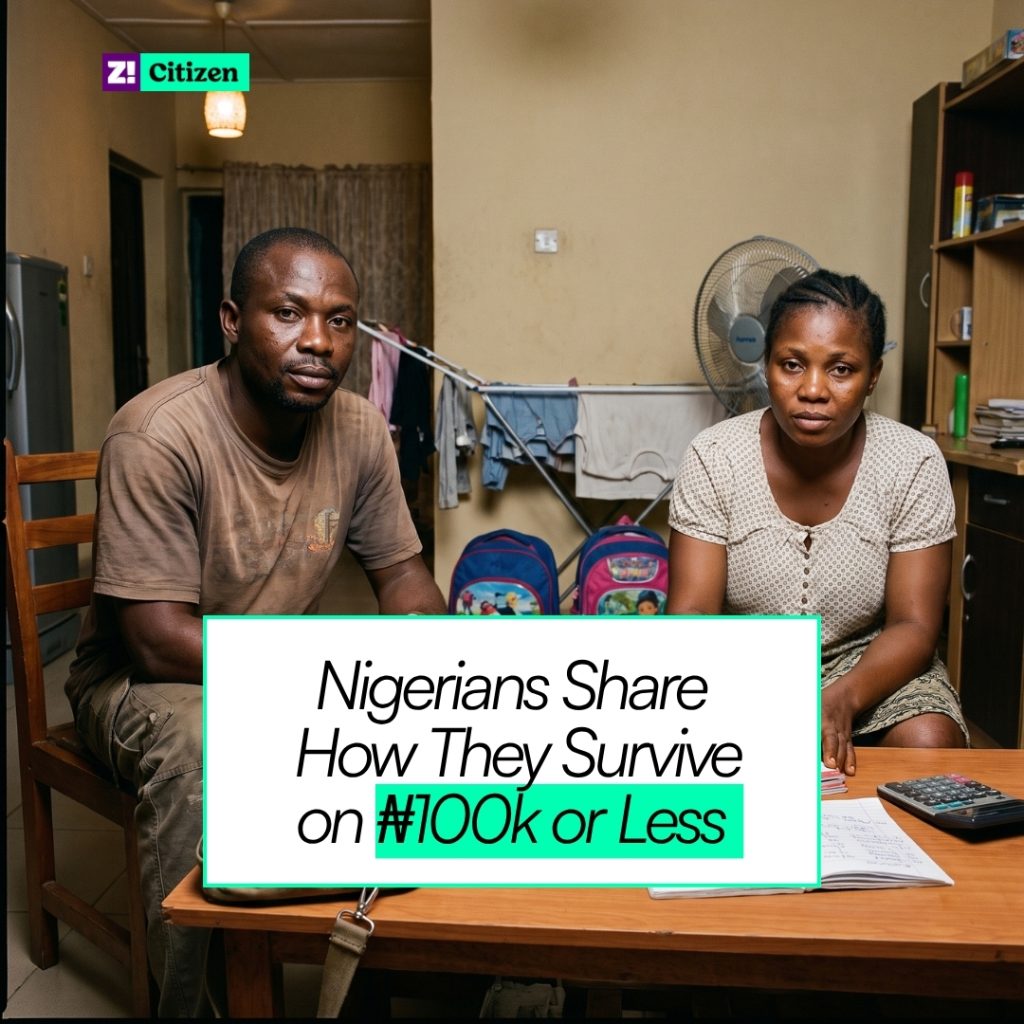
For Nigerians earning ₦100,000 or less every month, surviving is about finding creative ways to stretch every naira. We asked Nigerians earning ₦100,000 or less how they’re making it work. Here’s what they told us.
1. “My children think I work night shifts.” – Bose*, 29, F
I’m raising two children on my own. Their father hasn’t been in the picture for years, and there were days I genuinely didn’t know where our next meal would come from.
I used to sell okrika clothes and made around ₦30,000 in a good month, but it simply wasn’t enough to feed my children and keep them in school.
Eventually, I started doing sex work because it was the only thing that paid enough.
My children think I work night shifts, and I hope they never find out the truth. Every decision I make is about making sure they have food to eat and can stay in school. As long as I can give them that, I’ll keep doing whatever it takes.
2. “I walk to work so I can afford food.” – Jumoke, 24, Supermarket Worker (₦55,000/month)*
After the fuel subsidy removal, I stopped paying for transport every morning. Instead, I walk about 40 minutes to work. I leave home before the sun comes out, so it’s easier.
I only take a bus home if I’m too tired to walk back. It saves me a few thousand naira every month, and that money usually goes toward food or unexpected expenses.
It’s not easy, but I’d rather spend that money on feeding myself than on transport.
3. “Living with my aunt is helping me save.” – Jolomi, 25, Pharmacy Assistant (₦65,000/month)
I earn ₦65,000 every month, but I still live with my aunt, even though my office is over an hour away.
I spend about ₦20,000 on transport every month, but staying with her means I don’t have to worry about rent or cooking every day. If I lived alone, my salary wouldn’t last at all.
I’ve been trying to save little by little, but at this rate, moving out isn’t happening anytime soon.
Wish someone would just explain what’s going on in Nigeria?
That’s exactly what The Big Daily Newsletter does. We break down Nigeria’s biggest stories, explain what they mean, and why they matter, all in one quick read.
4. “The shop owners let us buy food on credit.” – Tunji, 37, Painter (Around ₦50,000/month)
I’m a painter, so my income depends on whether I get jobs. Some months are good, but most aren’t. There are weeks when my phone doesn’t ring at all.
My wife braids hair, but business has been slow for her, too.
The only reason we’ve been able to get by is that the shop owners in our area know us. They let us collect food on credit and tell us to pay whenever I get my next painting job. I honestly don’t know how we’d feed our children if they didn’t trust us like that.
5. “My church helps me when things get really difficult.” – Ngozi, 32, Hotel Cleaner (₦25,000/month)
I’m a single mother, and I work as a hotel cleaner. I earn ₦25,000 every month.
By the time I buy food, pay my child’s school fees and recharge my phone, there’s almost nothing left.
Thankfully, one woman from my church sometimes calls me to clean her house and pays me ₦40,000. The church also shares foodstuffs from time to time.
Those moments make a huge difference because I’m not even thinking about saving anymore. I’m just trying to make sure my child and I make it through each month.
6. “My wife’s salary keeps us going.” – Peter, 37, Danfo Driver
In 2023, the company I worked for shut down, and I lost my job.
I spent about two years looking for another one without any luck before I started driving a danfo bus.
On a good day, I make between ₦10,000 and ₦15,000, but not every day is a good day. My wife recently got a job as a primary school teacher and earns ₦50,000 every month. That salary has been a blessing. We combine our incomes to feed our family and meet the children’s needs.
There’s rarely anything left after that, but having two incomes is what keeps us afloat.
7. “Private lessons are what keep me afloat.” – Salome, 25, Private School Teacher (₦25,000/month)
I got my first teaching job after NYSC at a private school, and my starting salary was ₦20,000. They didn’t always pay the full amount. Sometimes, I’d receive ₦18,000.
I eventually negotiated it to ₦25,000, but it still wasn’t enough. School closes around 3 p.m., but I don’t go home because I have private lessons until about 7 p.m.
Almost every teacher at my school does the same thing. The money from private lessons is what helps me survive because my salary alone can’t.

The Naira Life Conference is returning on August 22, 2026, in Lagos! Come learn from finance experts and industry leaders, and partake in unfiltered conversations about building wealth and diversifying your income stream in a country like Nigeria. Real stories, expert advice you can actually use, and a community ready to build wealth together. Secure your spot here.