Someone you know has left or is planning to leave. 1,000 Ways to Japa speaks to real people and explores the endless reasons and paths they take to japa.
Racheal (29) left Nigeria for Canada to get her master’s degree. With zero scholarship funding, the journey was riddled with a visa rejection, packaging tomatoes on a farm, a shawarma side hustle, two accounting jobs, and nine months of unemployment. But eventually, she got Canadian citizenship. This is how she did it.
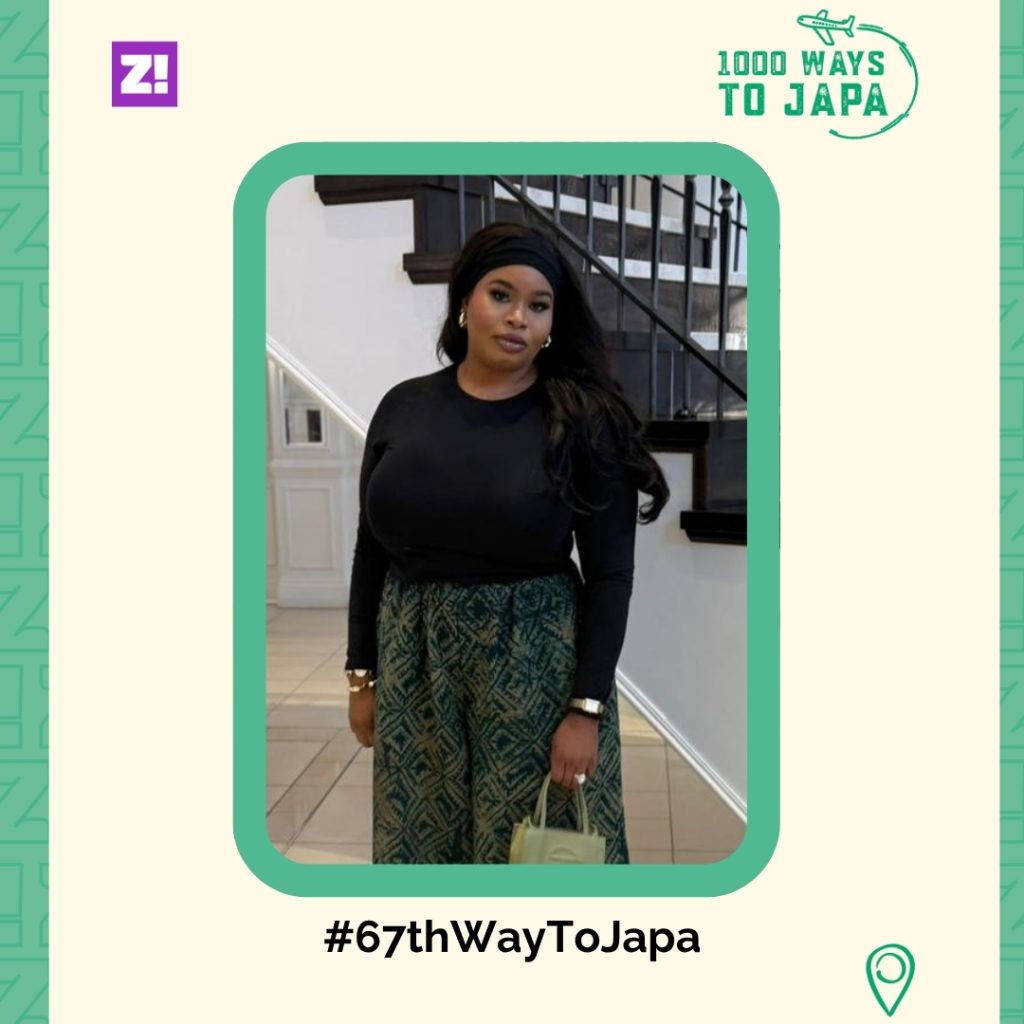
Where do you currently live, and when did you leave Nigeria?
I currently live in Toronto, Canada. I left Nigeria in December 2018. So it’s been over seven years now.
And where did you land first? Toronto?
Yes, I landed in Toronto, but my school was in a smaller town called Windsor, Ontario. So Toronto was just the entry point; I moved to Windsor after.
I see. Why did you leave Nigeria?
Honestly, my parents had planned it before I even graduated. My dad and my mum, of blessed memory, used to talk about it. My dad was always telling people, “When she graduates from university, I’m going to do everything to make sure she goes to Canada for her master’s.” That’s exactly what he did. He pulled all his resources.
I was heavily involved, too, but it had been in the works for a while. The original plan was actually for me to go to Cyprus for my undergraduate studies, but my dad decided I wasn’t ready to leave home yet. So we decided on Canada for my master’s.
Walk me through the visa application process.
2018 was very different from what it is now. I had travel history; I’d been to the UK and the US, so I put in what I thought was a stellar application. My dad’s bank statements, property documents, everything. I submitted in June 2018 and didn’t hear back until September, when I was rejected. They said something about a lack of intent to return to Nigeria.
School started in January, so I submitted a second application that October. In November, my visa was approved. I still remember I was at the passport office in Abuja, renewing my passport, when I got the approval letter.
That’s a good turn of events. Do you remember what the whole process cost?
The details are a bit fuzzy now, but the total didn’t even reach $1,000. The biggest expense was the visa fee, which was around $500-$600. Then I paid for medicals, which were around ₦100,000 at the time. The whole process wasn’t as expensive as it is now.
What did you study, and where?
I attended the University of Windsor in Windsor, Ontario, and I got my master’s in International Accounting and Finance. My bachelor’s was in Banking and Finance, so it was a natural progression.
How was the programme funded? Did you have a scholarship?
No, I had absolutely zero funding. My programme didn’t even offer scholarships then, and I doubt it does now. My dad paid my tuition in full, and he gave me an allowance for about six months after I landed. After that, he basically said, “You need to figure it out.”
Interesting, so what did figuring it out look like?
I started with a job on a farm, packaging tomatoes. A bunch of Africans I’d met in my programme were doing it, so I figured, why not? I lasted just two days. I genuinely wanted to die there. It was crazy.
On the third day, a friend told me about a company called Sutherland Global in downtown Windsor. They were recruiting massively for customer service associates. I took my CV and went. After an interview, I got the job. I worked that job throughout my time in school, which I graduated from in May 2020.
Moving from Nigeria to Windsor, what were some culture shocks you experienced?
The isolation and loneliness were insane. I came from a background where everything was communal; you’d just walk into your neighbour’s house and watch TV. People were always together. In Canada, your neighbours will walk past you and say nothing. If you don’t have friends in this country, you can go missing, and nobody would even know. Everyone minds their business to an extreme degree. That shock hasn’t gone away, honestly. It still affects me now in Toronto.
So sorry to hear that. What was the job at Sutherland actually like?
It was customer service, so it was a mix of good and bad. On some days, racist people would call in, and sometimes, I even had to work overnight shifts into the early hours of the morning.
The clients I worked for were the Entertainment and Sports Programming Network (ESPN), during a period when Ultimate Fighting Championship (UFC) was blowing up, so people would call whenever they had any issues with their subscriptions. After a while, it was Disney+. It was a roller coaster, but that job was my lifeline. I was earning about $16 an hour.
And what was your cost of living like in Windsor at that time?
My rent was $500 a month because I lived in a shared apartment, and that covered all utilities, water, everything. Groceries were maybe $100 to $150, and I was splitting grocery runs with a friend so we’d cook together. My total monthly expenses were around $650 to $800, depending on the month.
That sounds affordable. But did you rely solely on your salary from Sutherland?
No! I ran a catering business called Legho’s Express. I started it back in Nigeria after my National Youth Service (NYSC). I started Legho’s Express during that period, just out of passion. My mum used to cook for people as a side business, so I learned from her.
When I got to Canada, and money wasn’t flowing easily, I thought, “I might as well continue.” I wasn’t getting customers at first, but then I made shawarma for some friends one evening, and they were like, “This is so good, why aren’t you selling it?”
So I made an Instagram post, and there was this guy I’d met when I first arrived in Windsor, someone had introduced us to help me find my feet, and he was a bit of a public figure at the time. They used to call him Swag Daddy. He posted about it, and the business just took off from there.
I was selling the shawarma for $10 a piece. On a good weekend, I’d sell 10 to 20 pieces, which was an extra $100 to $200, split with the friends who helped me.
After you graduated in May 2020, what happened?
I grew up in Lagos and am a big-city person, so I’ve always wanted to live in Toronto. I started applying for jobs there, but I didn’t get any offers right away.
I kept working at Sutherland from home because they had moved to remote work. This was during the COVID lockdowns. Then, in October 2020, I got an accounting job. It was based in Vancouver, but fully remote. I had that job until January 2021.
Yikes. What happened there?
I’ll be honest. It was my first major accounting job, and I didn’t really understand the work. My performance wasn’t where it needed to be.
How long were you unemployed after that?
About six months. Then I got a proper accounting audit job with PricewaterhouseCoopers (PwC) in July 2021. That was also remote. I held that until January 2022, then I got what I was calling my dream job, the one that was finally going to move me to Toronto. In April 2022, I packed my bags and moved, even though the job said I could stay remote in Windsor. My friend was also moving to Toronto at the same time, so we got an apartment together.
That’s good news. Was there any culture shock of moving from Windsor to Toronto?
Yes, definitely. I used to visit Toronto on weekends; it was a four-hour drive, but visiting and living there are very different. I was paying $500 in Windsor, and that covered everything, water, utilities, all of it. When I moved to Toronto, I was paying around $2,000 just for rent and bills, for one room in a two-bedroom apartment, and we’ve not even talked about groceries; that’s a completely different category of expense on top of that.
I also sold my car. In Windsor, my car insurance was $150 a month. In Toronto, they were quoting me between $450 and $500 for the exact same car. My job was remote, so there was no reason to keep it. Plus, Toronto’s public transport is actually really solid; trains come every few minutes, so I didn’t really need it.
Are you still working at the job that moved you to Toronto?
No, I’m currently a software engineer at TD Bank. Completely different field from accounting.
Wow! Complete 360, how did that happen?
Between my last accounting job and where I am now, I had nine months of unemployment. I was applying for accounting positions to no avail. Accounting is an incredibly saturated field, especially here in Canada.
Then I stumbled on a programme called Obsidi, by the Black Professionals in Tech Network (BPTN). It’s specifically for Black individuals. The idea is to increase Black representation in tech, because we are very underrepresented in that space. I applied casually and got in.
Tell me about the programme itself.
It’s a 12-week boot camp, and it is not a walk in the park. I came in with zero programming knowledge. From day one, you hit the ground running. You’re learning from scratch and covering different aspects of programming, from software engineering to cybersecurity.
Obsidi has affiliations with companies; TD Bank is one of them. At the end of the programme, they place you with an affiliated company, which then assigns you to a department based on your performance.
And you didn’t have to interview for the TD role?
I didn’t have to interview, but your performance inside the programme is your interview, essentially, and once you’re in the company, you have to keep proving yourself.
What’s life actually like as a software engineer at TD Bank?
I love my job. I genuinely love it. The work culture at TD makes me feel secure. I have a very supportive manager and very supportive teammates. I’m the only Black person on my team, but I have never felt excluded or left out. They hold my hand through things when I need it. I take the job very seriously because I know what it took to get here. I raise my hand when I’m confused; I don’t slack off. Two years in and I’m still enjoying it.
That’s so nice to hear. Let’s talk about your immigration status. I’m assuming you’re a permanent resident now?
No, I’m a citizen now. I got my citizenship last year. June 2025.
Congratulations!! Can you walk me through the full immigration timeline?
Okay. So when you graduate from a 16-month programme in Canada, you’re entitled to a three-year Post-Graduate Work Permit (PGWP), which is what I got. During COVID, there was a Temporary Resident to Permanent Resident (PR) pathway, but I didn’t qualify at the time. I didn’t have more than one year of Canadian work experience, and I was also missing my English exam results. A lot of my friends who were at Sutherland with me got their PR through that route.
After I lost my accounting job, I didn’t want to wait another year to accumulate the Canadian experience I needed. So I applied for PR using my Nigerian work experience instead. That’s why mine took longer; while other people were getting PR in about six months, mine took over a year. I submitted in March 2021 and didn’t get it until June 22, 2022.
You must have been so sad. Why the delay?
Yes, I was. When I called to follow up, I applied for Global Case Management System (GCMS) notes, which is a way to get your full immigration file, and found out my application had actually been approved months before, in December of the previous year. It was just sitting on an officer’s desk. They emailed me in June to let me know I had my PR.
After that, I waited two years. Because I’d been travelling in and out of Canada a lot, I had to account for time spent outside the country. I applied for citizenship in January 2025 and took my oath of citizenship in June 2025. In total, from my arrival in Canada in 2019 to citizenship, it was about six years.
Would you recommend Canada, and would you recommend the study route?
Moving to Canada changed my life for the better, so I recommend Canada, but I wouldn’t recommend the study route right now; the exchange rate and the general cost of living make it very difficult.
If you qualify for PR directly, pursue that; you can apply directly for PR from Nigeria. Just visit the website and see if you meet the required points. If studying is your route, make sure you go for a 16-month or two-year programme so you get the three-year work permit and have more flexibility to find your footing.
So far, what don’t you like about Canada?
The cold, nobody ever gets used to the cold. And, as I said before, I deeply miss communal living. In Toronto, even within the Black community, everyone is guarded. People are avoiding each other because there’s this assumption that we’re all trouble to each other, and because of that, it gets lonely. Really lonely, especially if you don’t have family or friends close by. That’s the part people don’t talk about enough.
On a scale of 1 to 10, what would you rate Canada?
Seven. I go back to Nigeria every December, and that should tell you something.
Want to share your japa story? Please reach out to me here.