Projected Deaths from El Niño in Nigeria
On Wednesday, September 23, 2026, researchers at the University of Chicago’s Climate Impact Lab published a report stating that about 31,400 more Nigerians could die from extreme heat between September 2026 and February 2027 because of El Niño in Nigeria. This is the highest projected toll of any country on Earth, with global deaths estimated to be about 451,000.
Just to be clear, this is a projection of deaths above a normal year, not a confirmed toll. The lab itself says its full methodology is still awaiting peer review, but the researchers say the point is to show governments that there might be fire on the mountain. But before we talk about what the Nigerian government is doing to quench that fire, let’s break down what El Niño is and what it means for Nigeria and the whole world.
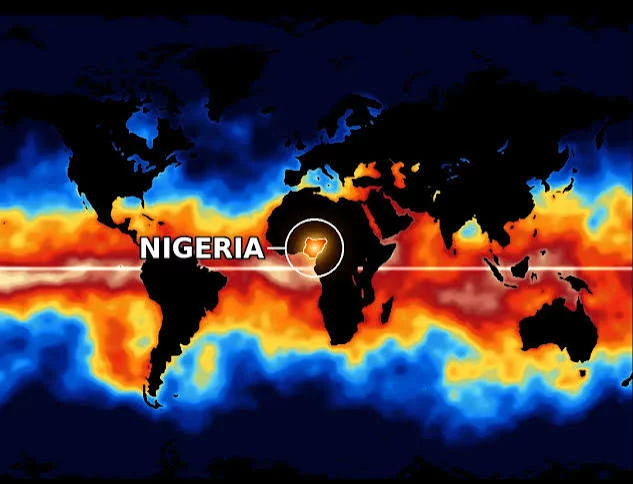
What is El Niño and how long will it last?
El Niño is a natural warming of the Pacific Ocean that shifts weather patterns thousands of kilometres away. According to the National Oceanic and Atmospheric Administration (NOAA), it happens every two to seven years and lasts 9 to 12 months.
But this one’s a monster, according to the researchers. The World Meteorological Organisation (WMO) said on Thursday, September 3, 2026, that it would intensify and last into early 2027. On Thursday, October 8, NOAA put the odds of the heat rising from strong to very strong through January–March 2027 at over 83 per cent.
Why is Nigeria top of the list?
Nigeria is in the direct path of the heat. With about 237.5 million people, Nigeria is the most populous of the four Sahel countries facing the worst of it, so the same heatwave reaches far more people. The Sahel is projected to lose 66,800 people to heat, and nearly half of those deaths would be from Nigeria.
According to the Nigerian Meteorological Agency (NiMet), in the days leading up to Thursday, October 22, temperatures reached 41°C in Nguru, Yobe State, and 34°C in Lagos.
These numbers mean thousands of Nigerians are exposed to high risks at once, with older people, young children and people with existing health conditions most at risk. Heat doesn’t announce itself. It just takes the people with the least protection.
The heat is getting wesser
In February 2026, NiMet’s Seasonal Climate Prediction, presented in Abuja by Aviation Minister Festus Keyamo, pointed to a predominantly neutral ENSO phase, which simply means no El Niño.
NiMet made an update in its Seasonal Climate Prediction report on August 13, but that update said El Niño’s temperature impact might not be significant between August and October.
Meanwhile, the National Emergency Management Agency’s (NEMA) preparedness push centred on the seasonal prediction and flooding. Its July 13 advisory covered flash floods in 26 states and the FCT. We found no national heat action plan, no public heat-alert system and no cooling or hydration points announced anywhere.
You have a role to play
You don’t have to wait for the government to do something before you act.
- Drink water regularly, especially if you work outdoors;
- Avoid strenuous activity during the hottest hours;
- Avoid walking under the sun for long hours if you can
Beyond personal habits, NiMet and the WHO have extended precautions to the institutional and community level.
- Employers and schools are explicitly urged to provide shaded rest areas, ensure cross-ventilation, and mandate regular cooling breaks.
- Communities are advised to protect local water sources from excessive evaporation and to plant trees proactively.
- Check regularly on high-risk individuals, specifically babies, transport or construction workers, and neighbours managing high blood pressure or diabetes, as extreme heat rapidly worsens underlying cardiovascular and kidney strains.
Know the signs of heat exhaustion
- Dizziness,
- Headache
- Nausea and
- Weakness
- Confusion, seizures or fainting could mean a life-threatening emergency. Get medical help immediately if you feel unwell.
El no no
Heat deaths are preventable, and the Climate Impact Lab lists heat warnings, outreach to vulnerable people, cooling centres, hydration stations and worker protections as ways to cut them, so here’s what to demand from the government.
Ask NiMet, NEMA and the Federal Ministry of Health for a national heat action plan for El Niño, and when it will be implemented and published.