


During the 2023 general elections, the Labour Party did something Nigerian politics had not seen in a long time: it made people believe. Its presidential candidate, Peter Obi, pulled 6,101,533 votes across 12 states, finishing third place in a race that had, for two decades, generally been considered a two-way competition between the People’s Democratic Party (PDP) and the ruling All Progressives Congress (APC)
The Labour Party (LP) also won six Senate seats and 34 House of Representatives seats. To top it off, its gubernatorial candidate, Alex Otti, became governor of Abia State. The party’s successes are generally attributed to the Obidient movement, an online movement named after Peter Obi, who was essentially a sensation during the elections.
And so, like magic, in a matter of months, the “Obidient” movement, fueled by young, loud, and eager, and patriotic Nigerians, converted an online movement into electoral results. But it did not last.
Presently, in March 2026, LP holds zero Senate seats, fewer than 13 House of Representatives seats, and one governor. Obi, the 2023 presidential candidate, through whom it gained momentum, defected to another party on New Year’s Eve 2025. Its national chairman is fighting a court-sanctioned removal, and the movement that powered its rise has now publicly distanced itself from the party’s leadership.
What could’ve possibly gone wrong?
There is Fire on The Mountain
To understand LP’s collapse, you have to understand the state it was in post the 2023 elections, specifically on an organisational level.
The Labour Party had no serious ward-level organisations, no sustained membership drives, and no grassroots fundraising infrastructure. Local LP branches remained weak or effectively inactive after the 2023 elections. A clear example of this was the party’s failure to provide agents for over 50,000 polling units during the vote. happened because they didn’t have organised ward chapters to supervise locals. Meanwhile, the APC and PDP have permanent offices and “ward chairmen“ in almost every corner of the country. While the APC and PDP kept their local branches active and held regular drives to sign up new members, the Labour Party stayed focused on top-level politics.
In 2023, Julius Abure and Lamidi Apapa both claimed to be the rightful National Chairman, leading to conflicting court orders for months. Again in early 2026, the party was divided between a group led by Abure and a caretaker committee led by Nenadi Usman, the current interim chairman of the Labour Party. These suggest that the party had no clear internal chain of command capable of resolving disputes or enforcing discipline, which meant that when the disagreements came, as they inevitably do in Nigerian politics, there was no system to contain them.
This is a familiar story in Nigerian opposition politics. The Labour Party is falling into the same ‘opposition trap’ that destroyed the Alliance for Democracy (AD) party in 2006—the party was embroiled in a leadership tussle between Mojisola Akinfenwa and Adebisi Akande—and the ANPP in 1999 as well.
How to Set Your Own House on Fire
The story of LP’s collapse is incomplete without Julius Abure, the party’s national chairman, or at least, the man who still insists he is its national chairman despite a Supreme Court ruling that says otherwise.
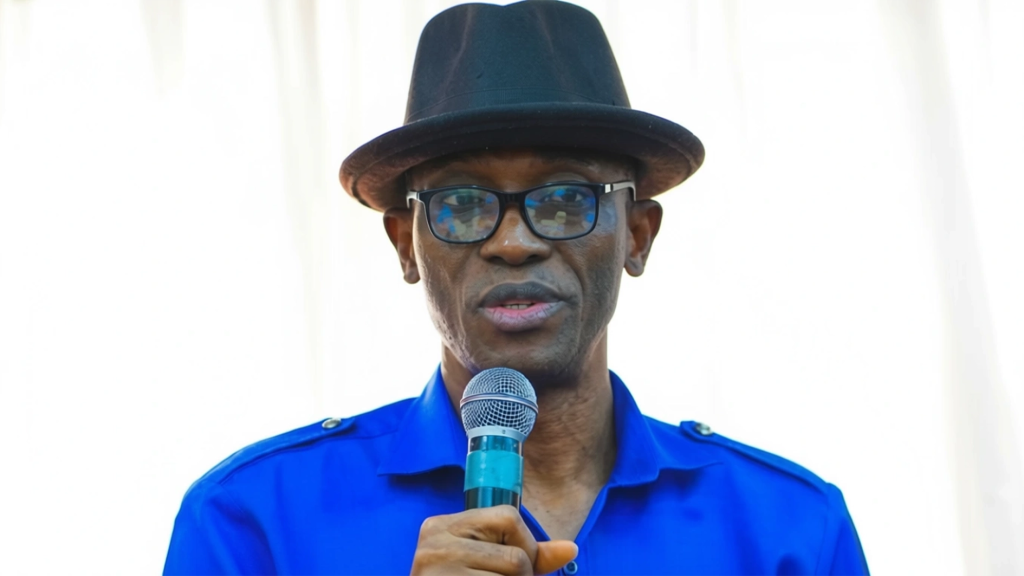
If LP’s structural weakness was a slow-moving disaster, Abure’s factional war was the booster. After the Supreme Court ruled against his continued tenure as national chairman in 2025, Abure refused to accept the outcome. His faction proceeded to issue the suspensions of key party figures like Alex Otti and Ireti Kingibe and made public threats to expose the party’s management of 2023 campaign funds.
As recently as January 2026, Abure himself insisted that “Labour Party remains the best alternative to achieving a prosperous Nigeria,” a claim that would carry more weight if his faction were not one of the primary reasons the party can no longer make that claim with a straight face.
While the leadership crisis did not create LP’s structural failures, it made them impossible to ignore. The absence of members in most wards was documented during the 2023 campaign, months before the big fights between Abure and Apapa started, but every week the Abure story dominated headlines; it was a week the party could not talk about policy, comment on Tinubu’s governance, or strategise for 2027.
Where Are You Going?
Between 2024 and early 2026, LP lost all six of its senators and at least 21 of its 34 House members to defections — mostly to the APC, and a little to the PDP. It started in July 2024, when Senator Francis Ezenwa Onyewuchi of Imo East quietly crossed the aisle to the APC. Five months later, Chinedu Okere of Imo, Mathew Donatus of Kaduna, and four others all headed for the APC. By 2025, Senator Ireti Kingibe of the FCT left to join the African Democratic Congress (ADC), and Senator Neda Imasuen of Edo South left for the APC. Enugu’s Dennis Agbo, Chidi Obetta, and Sunday Umeha decamped to the PDP and the APC, respectively. By March 2026, LP held zero Senate seats—six senators in, zero senators out, a complete wipeout in under three years.
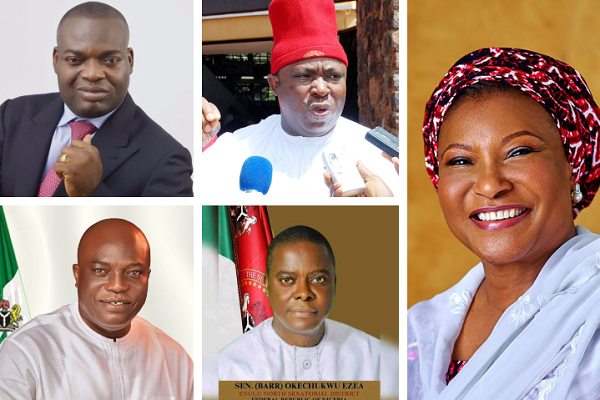
The Labour Party has responded to these defections, and it’s been outraged. It labelled the defectors “ingrates” who had given “no support” to the party. It didn’t stop there; LP published a “Hall of Shame” register of those who had left. One might say that the outrage, though unflattering, was understandable.
If you’re wondering how these people were able to defect so seamlessly, the answer lies in Section 68(1)(g) of the 1999 Constitution, which provides that lawmakers may defect without necessarily losing their seats when a formally confirmed merger or split within their party occurs. LP had neither, yet its members walked away freely, retaining their salaries and offices.
Civic groups and legal analysts have called for amendments to mandate automatic seat forfeiture in the absence of a judicially confirmed party split, and for the Independent National Electoral Commission to play a more active monitoring role. But those reforms have not been implemented, and in the meantime, the constitutional loophole remains available to any Nigerian lawmaker who decides that their political ambition stands a better chance elsewhere.
The defection crisis is not entirely LP’s fault. But a party with stronger internal discipline, stronger constituency relationships, and a more credible threat of political consequences might have made some of those defections more costly to contemplate.
The One-Man Party
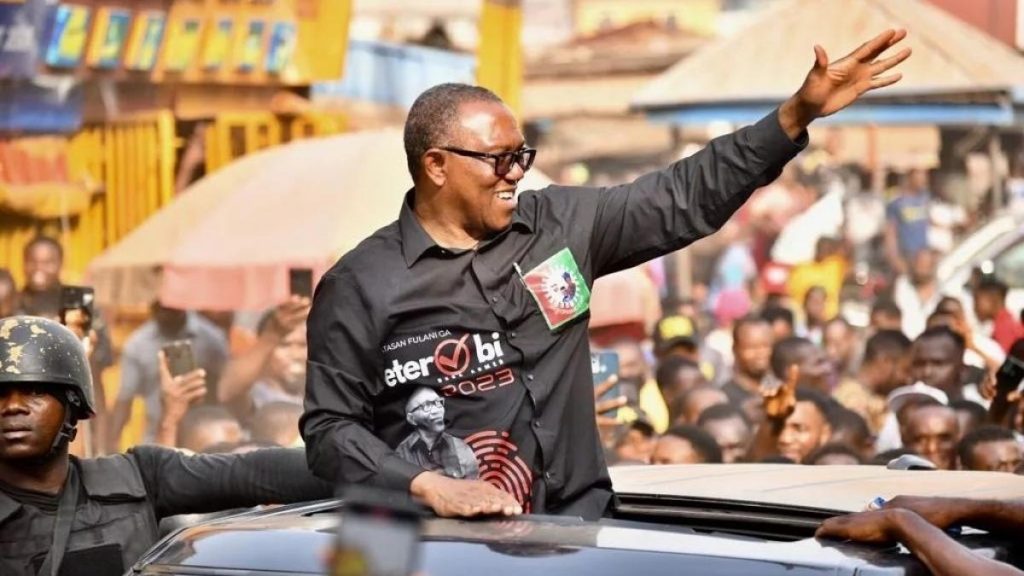
No honest analysis of LP’s collapse can be whole without Peter Obi, not because he was responsible for it, but because the party’s dependence on his personal appeal was a structural failure, and one that LP has now acknowledged in the most awkward terms possible.
In December 2025, LP spokesperson Obiora Ifoh accused Obi of never meaningfully investing in party-building and described the LP’s 2023 decision to adopt him as its presidential candidate as “the greatest political mistake.” LP National Secretary Umar Farouk Ibrahim had said months earlier, in July 2025, that “Peter Obi is not with Labour Party, he’s on his own.” Critics across the political landscape had long described LP as a “one-man party,” built only on Peter Obi’s popularity rather than any coherent ideology or organisational identity. This view was proven correct in early 2026 when Obi left the party for the ADC. Without him, the Labour Party has struggled to show it has its own strength or a clear plan of its own.
There is an argument that Obi focused more on his personal campaign than on building the Labour Party as a lasting organisation. However, a party serious about its own future does not allow itself to become so dependent on a single personality that the personality’s exit becomes an existential event. LP did exactly that.
On December 31, 2025, Obi formalised what had been an open secret for months; he decamped to the ADC at a rally in Enugu. Flanked by David Mark and Aminu Tambuwal, his defection was called a “rescue journey” against APC governance. By March 2026, he had revalidated his ADC membership in Anambra and was already building coalition conversations for 2027. LP called his departure a “relief.” Its spokesperson said Obi “has clearly lost the charm” that had once animated the party.
A party and its most prominent figure spent three years failing to build anything together. In a July 2025 interview with News Central, Ikechukwu Amaechi, the publisher of TheNiche Newspapers, described the Labour Party’s crisis as ‘unnecessary’ for a group that had performed well in the 2023 elections. And unnecessary is what it was.
Last Man Standing
In Abia State, Alex Otti has spent the same period governing in a way that appears to please his people. Traditional rulers have called him the best governor Abia has had since its creation. He has resisted defection pressure, denied coalition rumours, and when asked about his future in the LP in early 2026, offered a careful but pointed answer: “Nobody knows tomorrow, but I’m currently in the Labour Party.”
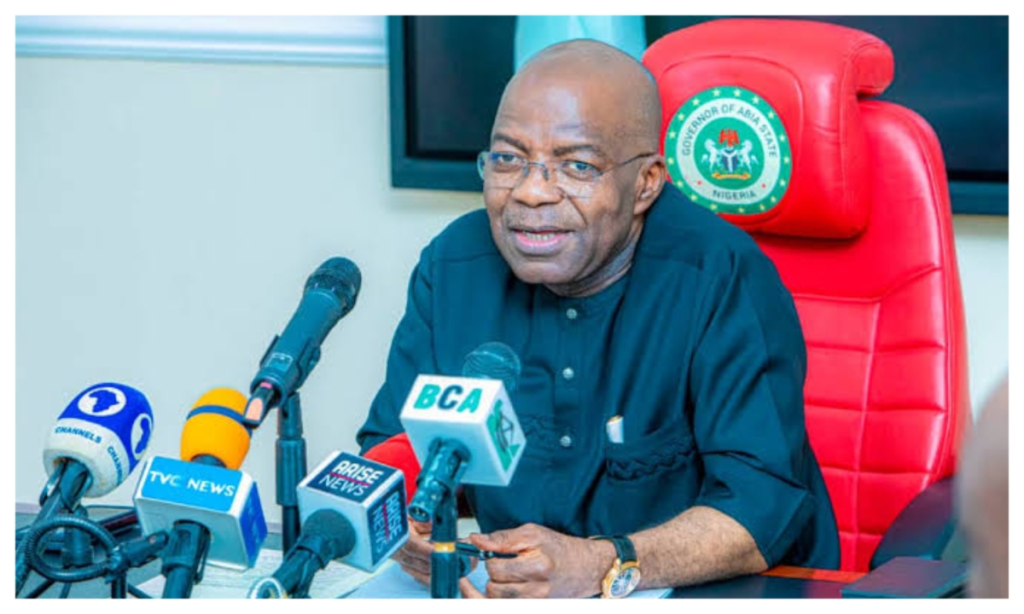
That sentence is doing a lot of work. It is not a ringing endorsement of the party’s future. It is a person keeping his options honest while doing his job. Otti’s presence in LP is significant not because it signals the party’s health, but because it signals what LP could have been —and wasn’t— everywhere else. His governorship is proof that LP’s 2023 project was viable. It is also, at this point, nearly the only proof that remains.
The Defection Syndrome is Spreading
The Labour Party’s collapse did not happen in isolation. PDP also lost multiple governors to APC in 2025, and the broader opposition landscape entering 2027 is fractured — LP gutted, PDP factionalised, Peter Obi now in his third party in three years, and the ADC elevated from obscurity to relevance almost entirely on the strength of Peter Obi’s name recognition. Reports from The Guardian say that a lack of discipline and a ‘giving up’ attitude have made the opposition weak. Because they are not working together, they are struggling to challenge the ruling party before the 2027 election.
The APC has benefited the most from all the chaos but has strategically leaned into the vacuum created by it. By welcoming politicians who switch sides and using the state apparatus to enforce disputed court orders, the APC has turned the opposition’s problems into its strength. But the APC’s actions are hardly an excuse for the Labour Party. The party’s structural failures, its over-reliance on Obi, its inability to convert the Obidient movement’s energy into lasting organisation, and its catastrophic internal implosion are LP’s own. External pressure finds the cracks that already exist and capitalises on them. LP had many.
The Obidient movement itself saw this coming. When LP attempted to launch an “Obidient” Directorate” in 2024, members of the movement publicly rejected it, describing it as a “brazen attempt to co-opt” their independent grassroots force. A party that could not retain the loyalty of the movement that made it relevant was a party in serious trouble, and it was in that trouble long before the defections and the departure of its most prominent member.
When the Opposition Disappears, So Does Democracy
Nigeria heads into 2027 with a ruling party that faces no coherent national opposition. That creates a glaring imbalance and is not good for democracy, regardless of one’s views on any individual party.
The scale of this imbalance is best seen in the numbers: APC now commands a two-thirds majority in the Senate with 84 seats and controls 31 of the 36 states. In a democracy, this level of consolidation effectively grants the ruling party the power to amend the Constitution, with virtually no legislative friction.
The Labour Party had a window, a genuine window, to become that opposition. It didn’t build when it had the chance. Now it is asking voters to believe in a party with zero senators, and a chairman the Supreme Court has already ruled against.
Whether it can recover from that is, at this point, genuinely unclear. What is clear is that the failure was earned.
So… What Now?
It is important to know why LP’s implosion should matter to the average Nigerian, even those who never attended an Obidient rally, never voted LP, and have long since made peace with the idea that Nigerian politics is riddled with electoral malpractices and disappointment. The answer is that a democracy without functional opposition is not a democracy in any meaningful sense. It is a coronation with extra steps, and that affects everyone, LP voter or not.
The question then becomes practical. If the two parties most positioned to provide that opposition— LP through its 2023 momentum and PDP through its 16 years of federal governance— have both failed to hold the line, what exactly can ordinary Nigerians do?
The first and most foundational thing is to stay on the voters’ register and show up. Voter apathy is not neutrality; it is a gift to whoever is already in power. The Obidient movement proved in 2023 that mass civic participation can genuinely move numbers. That capacity does not disappear because the party that channeled it imploded. It just needs a new direction.
The second thing is to watch your lawmakers and make noise when they move. Knowing who your representatives are, what they voted for, when they crossed the aisle, and to whom is the infrastructure that makes defection expensive.
Finally and most importantly, do the research before the next election. No party’s ballot position is a substitute for scrutiny. What has their party actually built at the local government level? Who is funding this candidate? These questions are not far-fetched. They are the minimum due diligence that is expected of citizens seeking government reform.
The Labour Party may or may not recover. The PDP may or may not reorganise into something coherent, and Peter Obi may or may not find in the ADC what he could not build in LP. None of that is within the average Nigerian’s direct control. The politicians contesting in 2027 will either meet alert voters or nonchalant voters. And it’s in our best interest to be the first.
