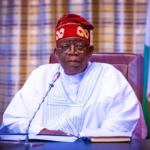
• After a highly controversial election in February 2023 and the heated post-election drama, Bola Ahmed Tinubu was sworn in on May 29, 2023, as the 16th President of the Federal Republic of Nigeria. 

    From student loans to cybersecurity taxation, we take a stroll down memory lane to highlight how events have unfolded in the past year under the Tinubu-led administration.

    May 2023

    At his inaugural speech, President Tinubu’s first official decision was to remove the fuel subsidy, stating that Nigeria needed to redirect the subsidy funds to nation building. This led to a sharp increase in petrol prices from ₦195 to around ₦660 per litre, and a resultant increase in inflation in the months that followed.

    Read: Fuel Subsidy: Tinubu Went off Script, and Nigerians Are Facing the Brunt

    June 2023

    As the war for access to fuel raged on, the President added a twist with foreign exchange. The CBN announced that the exchange rate will be unified, merging all forex market segments into a single window determined by market forces. The Central Bank Governor, Godwin Emefiele, was also suspended. This came following his decision to redesign the naira notes which influenced the disastrous cash scarcity of January 2023. 

    In the same month, President Tinubu introduced the student loan bill and signed the Nigeria Data Protection Bill 2023 into law to establish a legal framework for safeguarding personal information. 

    The story: Tinubu Wants Obazee to Investigate CBN. But He Has a Dark Past

    July 2023

    President Tinubu shifted his focus on infrastructure development to create jobs, and address housing and road deficits. 

    As the newly appointed chairman of the ECOWAS, he was also a core part of the decisions regarding the Niger Junta, which changed Niger’s political climate. Tinubu received backlash for his initial suggestion of a military response. Subsequently, the ECOWAS resorted to placing bans on the Niger Republic. 

    Let’s not forget that he promised us palliatives in this month too. We’re still waiting for our credit alerts.

    The story: Tinubu Has Gifts for Nigerians. What Are They?

    August 2023

    President Tinubu announced a rollout of Compressed Natural Gas (CNG)-powered buses to cushion the impact of high transportation costs after the fuel subsidy removal. The President also released his ministerial nomination list which saw some reshuffling and an increase in youth leaders. They were inaugurated on August 21, 2023.  

    The story: Nigeria’s Ministers and Their Portfolios in 2024

    September/October 2023

    These were the twin months of drama and vindication for the President who had been facing court challenges over his victory as Peter Obi and Atiku Abubakar accused him of electoral manipulation. The tribunal started in September but somehow dragged into November.

    In October, allegations of drug trafficking and money laundering against him were also declared null and unfounded. 

    In what seemed like a hope sparker, the president declared a cash transfer program for the poor and an N-Power program for unemployed graduates. Both of which, much like the palliatives of July, are now non-functional. 

    On October 1, 2023, President Tinubu released a statement awarding ₦35,000 provisional wage for all treasury-paid federal government workers for six months. He also announced that it will commence payment of ₦75,000 to ₦15 million households at ₦25,000 per month, for a three-month period from October-December 2023 among other financial schemes. 

    The Story: The Presidential Election Tribunal: What You Should Know

    November 2023

    Nigerians dragged their president over alleged national budget padding and a plan to buy a presidential yacht. The president denied this and claimed that the demand was made by the Nigerian Navy. 

    The NLC, TUC and other associations went on strike in response to a physical assault on their leader, Comrade Joe Ajaero. The Federal Housing Authority also embarked on a demolition spree in the Festac area of Lagos state. 

    The Story: Key Takeaways from President Tinubu’s ₦2.1 Trillion Supplementary Budget

    December 2023

    The President announced the commencement of a feeding programme for primary school pupils. The program has been in a hiccup state from the start.

    January 2024

    The Vice President, His Excellency, Kashim Shettima, commissioned a 37-man committee to review the 2019 Minimum Wage. Prior to this, On October 1, 2023, the president had awarded a ₦30,000 relief fund to treasury-paid workers. This marked the beginning of a thread of tension-laced discussions with no end in sight.

    The story: About Nigeria’s Plan to Increase the Minimum Wage

    February 2024

    The NLC went on a two-day strike because of the minimum wage and general economic difficulties. In a bid to solve this, the 37-man minimum wage committee finally convened for the first time in March.

    March 2024

    Under the leadership of President Tinubu, the ECOWAS lifted the sanctions placed on Niger Republic, while minimum wage discussions continued as the NLC proposed ₦615,000. There was also a massive blackout in parts of the federation as the national grid fell, and underwater submarine cables were compromised leading to a four-day internet downtime. The Federal Government announced the commencement of a 700 km Lagos-Calabar coastal highway construction through the minister of works, David Umahi.

    The story: Why the ECOWAS Lifted All Sanctions on the Republic of Niger

    April 2024

    Tinubu’s whereabouts were unknown for over a week after returning from a trip to Saudi Arabia in April 2024. The vice president was also out of the country at the time, causing a stir. 

    Fuel scarcity made a comeback, with prices going as high as ₦1000 per litre at fuelling stations. NNPCL dispelled rumours of trying to increase fuel prices and stated that the hike was as a result of logistics issues. However, VOA stated that the scarcity was a result of debts. The ministry of power implemented theElectricity Tariff Hike, another policy that saw mixed reactions from Nigerians.

    The story: Yet Another Fuel Scarcity: How Are Remote Workers Coping?

    May 2024

    The Office of the National Security Advisor (ONSA) entered the limelight for a Cybersecurity levy CBN imposed on electronic transactions. This sparked outrage on social media until it was eventually suspended. Landmark Beach and other businesses on the Lekki coastline were demolished for an interstate highway project under the direction of the minister of works, David Umahi for a coastal highway project but the demolished sites were eventually mapped out of the plan in a bid to avoid damaging submarine network cables. 

    The President also set out to commission road and infrastructure projects such as the remodelled third mainland bridge, apapa bridge and national library among others, to mark his first year in office. 

    The NLC gave the minimum wage committee a May 31 deadline to reach an agreement and implement a new minimum wage. 

    The story: Is NLC Winning The Minimum Wage Negotiations?

    With the many trials and tribulations Nigerians have faced in the past year, one can only imagine how the next three years of President Tinubu’s administration will go. 

    RELATED POST: The Year in Review: These Events Drove The Hottest Conversations in 2023.

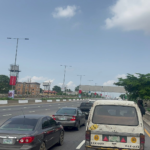
  • If your trip cuts through Gbagada expressway or involves the Apapa-Oshodi-oworonshoki bridge, you may need to find an alternative because of the traffic caused by canopies that have been set up on the expressway.

    What’s happening?

    President Bola Tinubu scheduled the commissioning of the refurbished Third Mainland Bridge among other infrastructural projects for Sunday, May 26, 2024.

    The purpose is to mark the one-year anniversary of his tenure by highlighting his achievements in this period.The road commissions and inauguration started in Lagos on May 26, and are expected to last till May 31, 2024, but the resultant roadblocks are taking their toll on Gbagada road commuters already.

    These projects include the Apapa and Tin Can Island roads, Southern parkway at Abuja, National Assembly Library Complex, the Abuja Light Rail Project and the Lagos-Calabar Coastal Highway.

    Public Response

    Nigerians on X (FKA Twitter) have expressed their disapproval of the canopies at Gbagada and the resultant traffic. They have also relayed that they believe the commissioning is unnecessary, and has not been properly carried out, as it did not put the interest of road users at heart.

    However, this is just the first of many commissions and traffic may continue in other parts of the nation until May 31, 2024 when the president completes this exercise.

    Read: What You Should Know as Third Mainland Bridge Rehabilitation Commences

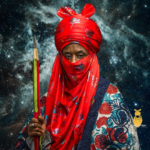
  • On Thursday, May 23, 2024, Muhammadu Sanusi II, Ex-Governor of the Central Bank of Nigeria (CBN) and former Emir of Kano, was reappointed as the Emir of Kano, four years after being deposed by former Governor Abdullahi Ganduje. This decision follows the Kano State House of Assembly’s repeal of the 2019 law that created four additional emirates and led to Sanusi’s removal in March 2020.

    The kingmakers formally selected Sanusi as the sole Emir of Kano at the Government House on Thursday, after sitting Governor Abba Yusuf signed the Kano State Emirate Council (Repeal) Bill 2024 into law, dissolving the five emirates created under the previous administration.

    The four emirs appointed by Ganduje are expected to vacate their seats within 48 hours and submit all properties to the commissioner of local governments. Sanusi has been officially reinstated as the Emir as at Friday, May 24, 2024.

    Why was Sanusi taken off the Emir seat in 2020? 

    Lamido Sanusi was sacked after six years as Emir of Kano in March 2020 by former Governor Abdullahi Ganduje. The official reason given for his removal was “total disrespect to lawful instructions from the office of the State Governor and other lawful authorities, including his persistent refusal to attend official meetings and programmes organised by the government without any lawful justification, which amount to total insubordination.”  

    Ganduje later claimed that Sanusi’s removal was because he broke the law and it was a calculated move to save the system and culture.

    Sanusi’s outspokenness against some state policies, and his political beef with Ganduje, was believed to be a factor in his removal. His criticism of the government for taking a foreign loan to build a railway was said to have upset Ganduje.

    Sanusi challenged his removal as Emir and the state government’s allegations in court but failed. He also challenged the creation of the new Emirates following his deposition, but the court did not rule in his favour.

    Why does Lamido Sanusi’s appointment as Emir of Kano matter? 

    The reinstatement of Lamido Sanusi as the Emir of Kano, with the official name, Muhammadu Sanusi II, holds significant political and historical importance.

    Sanusi’s removal in 2020 was widely criticised as a political move by Ganduje. His reinstatement by Yusuf is seen as a restoration of justice.

    The Kano Emirate has a long history, dating back over 1,000 years. Splitting it into multiple emirates in 2019 was compared to a similar controversial emirate split by Governor Abubakar Rimi in the late 1970s, which was later reversed. 

    His reinstatement suggests a shift in the relationship between the emirate and the state government under the new administration.

    How did the Emirate officials react to this?

    The reinstallment was met with mixed reactions, one of which included a lawsuit and court order restricting his reinstallment. 

    Alhaji Aminu Babba Dan Agundi, the Sarkin Dawaki Babba of the Kano Emirate, filed the application at the Federal High Court in Kano and the court has issued an order stopping the Kano State Government from enforcing the Kano State Emirate Council Repeal Law. Justice Mohammed Liman granted this order on Thursday, May 23, 2024. 

    What does this imply? 

    The lawsuit which was presented as a fundamental rights case is directed at the Kano State Government, the House of Assembly, the Speaker, the Attorney-General, the Commissioner of Police, the Inspector-General of Police, the Nigeria Security and Civil Defence Corps and the State Security Service.

    The judge ruled, “That parties are hereby ordered to maintain status quo ante the passage and assent of the bill into law pending the hearing of the fundamental rights application.

    “That in view of the constitutional and jurisdictional issues apparent on the face of the application, parties shall address the court at the hearing of the fundamental rights application which is fixed for the 3rd of June 2024.

    [ad]

    “That in order to maintain the peace and security of the state, an interim injunction of this Honourable Court is granted restraining the fifth to eight respondents (CP, IGP, NSCDC and DSS) from enforcing, executing, implementing and operationalising the Kano State Emirate Council (Repeal) Law.

    “That parties are hereby ordered to maintain status quo ante the passage and assent of the bill into law pending the hearing of the Fundamental Rights application.

    “That this case is adjourned to the 3rd day of June 2024, for hearing of the fundamental rights application.” 

    “Status quo ante” refers to previously existing state of affairs. This means that the repealed law, known as the Kano State Emirs (Appointment and Deposition) Law, which had created Rano, Karaye, Gaya and Bichi Emirates in addition to Kano, and also deposed Lamido Sanusi, are still in order.

    The High court order contradicts the validity of Sanusi’s appointment as sole Emir of Kano, however the state government has officially installed him. It is unclear what will happen next.

    Public Response

    The new Emir has garnered a number of supporters on social media who believe that he is a good man deserving of his post after his initial sack. However, several individuals believe that he may soon be dethroned again if the next political administration does not like him.

    Catch up with: Emir Sanusi Banished. Ado Bayero Crowned. Here’s What’s Happening In Kano State.

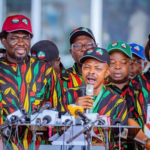
  • The National Labour Congress (NLC) must’ve taken the “no gree for anybody” theme of the year seriously with their minimum wage negotiations. They’ve still not settled, following meetings between the minimum wage committee and labour unions in Abuja on May 15 and 21, 2024. 

    The federal government proposed a wage increase from ₦35,000 to ₦48,000 per month at the first meeting. The organised private sector (OPS) settled for ₦54,000 while labour unions maintained their stance of ₦615,000 to cope with the high cost of living. 

    In the second meeting on May 21, 2024, the federal government and the OPS maintained ₦54,000 because the government is short of funds. After a 30-minute break, they proposed the sum of ₦57,000. The final proposal from labour was ₦497,000. The meeting was then adjourned till Tuesday, May 28, 2024.

    The major concern of the NLC is that the newly proposed amount will do nothing to help workers survive the current economic conditions, considering the electricity tariff hike, housing rates and inflation. The labour unions have given the federal government until May 31, 2024, to conclude negotiations and announce a new national minimum wage, threatening industrial action if their demands aren’t met.

    [ad]

    The federal government has stated that although the Tripartite Committee on National Minimum Wage is yet to conclude negotiations, the new minimum wage, whatever the final amount may be, will be backtracked to May 1, 2024, regardless of when negotiations end. 

    READ: About Nigeria’s Plan To Increase The Minimum Wage.

  • Like everything in Nigeria, getting admission into any top-rated university is long, stressful and highly competitive — from the long queues during JAMB registrations to the hurdles of WAEC and post-UTME examinations. 

    It can also be difficult to determine what to pursue as a career in the first place. We checked and these are the best courses to study for a successful career in 2024: 

    Computer Science

    Some of the richest young people in Nigeria today tech bros. To join the gang, you should probably start with a degree in Computer science. The possibilities are endless — you could become a games developer, cybersecurity expert, cloud computing engineer, software engineer, or UI/UX designer. The minimum amount for each role ranges between ₦200,000 to ₦1.5M per job. 

    Fashion Design

    Once upon a time, fashion design was something for middle to lower-class Nigerians. Now, with designers like Mai Atafo, Atelier, Veekee James, and Yinka Ash making millions per dress and changing that narrative, we can look at fashion design as a goldmine.. Bachelor of Fashion or Creative Design does have a nice ring to it, and it wouldn’t hurt to charge $500 (₦750,000) per dress for starters. 

    Management

    Every team or organisation needs a manager. The managers start from entry level roles and work up the ladder. They often work as Human resource managers, Project managers, and General managers among other things. The salary here often increases per certification and role but can start from a minimum of ₦200,000. The salary increase is often tied to the success of the projects or businesses. 

    Accounting 

    Accountants are highly sought-after professionals in every sector of the economy. Studying accounting makes you qualified for financial analyst, auditor, bank manager and credit officer roles. Payscale stipulates that the average salary of accountants in entry-level roles is about ₦200,000 to ₦450,000 monthly.  

    Marketing

    Marketing has become an indispensable need with entrepreneurs and start-ups taking over the business world. Marketing graduates can fill corporate roles in sales, business development, digital marketing, retail management and management. The average monthly salary is ₦200,000 for these roles.

    Medicine and Surgery

    Nigerian parents will be happy to see this on the list. Facts don’t lie and one is that doctors are some of the most sought-after specialists across the globe. According to Glassdoor, the average Nigerian doctor earns about ₦283,000 monthly. Graduates can work as surgeons, residents, general medicine registrars and more. 

    Law and legal studies

    Legal practitioners are some of the most esteemed and sophisticated professionals in the country. Every sector of the economy has a role waiting for lawyers and law graduates. Glassdoor speculates the average law graduates earn between ₦180,000 to ₦200,000 per month at entry level.  Some available job roles include compliance officers, human resources managers, corporate lawyers, criminal defence lawyers and mediation officers. 

    Pharmacy 

    Pharmacy is focused on the production and prescription of drugs to treat patients. Pharmacy graduates can work as pharmacy managers, pharmacists, researchers, and factory managers. Entry role salary starts from ₦150,000 for pharmacists. 

    Civil engineering

    From designing buildings to constructing roads, civil engineers are the cream of the crop when it comes to engineering courses in Nigeria. Civil engineering contracts are one of the highest-paying in the country with a minimum of ₦400,000 per project. 

    Theatre arts 

    Theatre arts is an exceptional course with many opportunities waiting for its graduates. The entertainment industry is always on the lookout for the next talent in dance and acting, with professionals in this course being the first in line for such projects and opportunities.  

    Other jobs like actors, set managers, producers, filmmakers and costume designers all give Theatre arts graduates a variety of career options to choose from. They charge from ₦400,000 to ₦700,000 per movie, depending on the scale of these projects.

    Architecture 

    If you have a passion for bringing imagination to reality and can work independently as well as with teams, this is the course for you.  Payscale research shows that the average architect can make about ₦1.5 million per project for entry-level roles like project architect, site architect, senior data architect and site operations manager. 

    Mass communication 

    In love with the media? Mass communication allows you to work around it. Mass communication is versatile in practice and offers opportunities in roles like public relations officer, journalist, editor, radio host and content writer. Payscale research shows the average salary of Mass Communication majors in Nigeria is ₦300,000.

    [ad]

    Electrical engineering

    Electrical engineers are also amongst the top-rated professionals in the engineering field in Nigeria.  Their technical abilities are essential to the development of many equipment, devices and systems, making them invaluable to the production sector in Nigeria. Jobs like assistant engineer, technician, instructor and manager are available to professionals in this course. Payscale research shows the average salary for an electrical engineer is about ₦1.2 million per project.  

    Estate and property management 

    Estate management is a highly lucrative industry in Nigeria with professionals earning a fairly high income thanks to the number of property projects in development. Available roles are property manager, property agent and site supervisor. Payscale also shows the average salary expectation can go as high as ₦600,000 per property. 

    Nursing

    They might not be the first courses to pop into your mind when you think of the health sector, but nurses enjoy a comfortable work-life balance. Nurses might not make as much as their stethoscope-wearing counterparts, but they are in even higher demand. According to Payscale, the average salary of a registered nurse is between ₦100,000 to ₦250,000 monthly depending on experience in the role.

    Business administration 

    Business administration is a high-income field of professionals with a variety of applications across the labour market.  Senior administrative roles often provide a steady income for graduates in this field. The salary is estimated to range from ₦200,000 to ₦450,000 monthly.

    Biochemistry 

    Like MLS, biochemistry offers a variety of career options in the health sciences. The variety is even higher here as professionals play an integral part in other important industries like food and pharmacy. 

    Jobs like lab assistant, research scientist, forensic scientist and clinical biochemist are all available to professionals in this course. Salary Explorer indicates the average monthly salary of professionals in this course is about ₦200,000 to ₦300,000 a month.

    Agricultural science 

    Your father might have a heart attack if you put this on your JAMB form, but agricultural science is one of the most technical fields of study in the university. With many branches and innovations around it, agriculture helps you make a living and still have time for other businesses. 

    Jobs like farm manager, biotechnologist, extension service provider, geneticist, pathologist, food scientist and surveyor all pay competitive incomes to graduates of the course. The average salary for agriculturists is around ₦150,000 to ₦250,000 

    Economics 

    Graduates who study this course can take their pick of jobs like financial analyst, business operations manager, economist or lecturer. Glassdoor puts the average income of professionals between ₦130,000 to ₦230,000 monthly. 

    Medical lab science

    Medical lab science or MLS is the go-to course for fans of the health sciences who don’t want to spend 7 years studying medicine.  Professionals here have access to an array of jobs like lab assistant, lab manager or medical officer. Payscale research indicates the average monthly salary is ₦100,000

    English and literary arts

    This is one of the most sophisticated art courses to study in Nigeria. As language and communication experts, graduates of this course are highly sought after for roles like journalist, editor, content marketer, and administrative executive. 

    According to GlassDoor, the average salary for graduates of this course ranges between ₦80,000 and ₦200,000 monthly for entry-level roles with an abundance of jobs available in multiple industries.

    Language and communication studies

    Like most language courses, this provides art students the flexibility to work in media, communications and management teams across industries. 

    Available roles include public relations officer, content marketer, copywriter and editor. The average salary for these professionals according to Glassdoor is around ₦70,000 to ₦150,000 monthly. 

    There’s always the option of switching to entrepreneurship if these courses and figures don’t work out for you and you change your mind. 

    Read more: A Case for Staying Unemployed

  • Around 8 pm, on May 18, 2024, a trailer crashed into at least three buses and groups of students heading home from late exams at Imo State University junction, Owerri. The accident was reportedly caused by a brake failure, and the driver of the truck is missing and allegedly on the run. 

    The trailer allegedly belongs to the Dangote Group.

    Is this the first time we’re seeing something like this? 

    No. In January 2021, a dangote truck loaded with cements claimed about 18 victims on its path when it crashed into shops and properties in the Akungba-Akoko area of Ondo state. Eight of the victims were students of Adekunle Ajasin University at Akungba-Akoko.

     The resultant tension from students led to a temporal shutdown of the university. The company paid ₦500,000 to each family that was affected by the incident. 

    What is the public response to the accident at IMSU?

    Social media is abuzz with condolences and agitations regarding the absence of laws that guide trailer activities and drivers’ accountability on the road. 

    Others have said that the junction is notorious for accidents and the government should build a flyover bridge to prevent a repeat in the future. 

    [ad]

    Meanwhile, the Governor of Imo State, Hope Uzodinma, released a press statement sharing his condolences and stating that investigations were underway, and the Ministry of Health would actively help in providing medical services. 

    Read: Who Has to Die Next Before Something Is Done About the Ojuelegba Bridge?

  • On Friday, May 10, 2024, the Niger State Speaker of the House of Assembly announced that he planned to “assist” young victims of banditry attacks in his constituency by marrying them off. 

    What is the genesis of this issue? 

    The Speaker of the Niger State House of Assembly, Abdulmalik Sarkindaji, said that he only came up with these plans because he had been approached by religious leaders in Mariga LGA regarding how the orphans were helpless after the banditry attacks that took their parents. 

    Sarkindaji stated he would pay the dowries for the bridegrooms during a mass wedding ceremony scheduled for May 24. He described the initiative as an empowerment project to alleviate the suffering of the orphans.

    Although local religious leaders supported this idea, it didn’t sit well with the Minister of Women Affairs and members of the public who took to social media to air their grievances.

    What did the Minister of Women Affairs do about this?

    The Minister of Women Affairs, Uju Kennedy-Ohanenye, expressed reservations about the legality of the wedding, questioning whether the girls had reached the age of consent and marriage as defined by Nigerian laws, including the Child Rights Act. Subsequently, Kennedy-Ohanenye filed a complaint to the police and sought a court order to halt the plan for further investigations on the girls’ consent, ages, and marriage arrangements.

    She said, “I have filed for an injunction to prevent him from doing whatever he intends to do on May 24th, until a thorough investigation is conducted on those girls, to determine whether they gave their consent, their ages, and who is marrying them”.

    What was the speaker’s reaction?

    On Wednesday, May 15 2024, Honourable Sarkindaji announced his withdrawal from the planned mass wedding of orphans after the intervention of the Minister of Women Affairs.

    However, Sarkindaji later defended the initiative, insisting that the minister had misunderstood it. He said his intention was humanitarian and the planned marriages would not violate the Child Rights Act, contrary to the minister’s concerns.

    Sarkindaji emphasized that the girls, despite “being ripe for marriage”, don’t have the means to wed because they are orphans or from impoverished families. He urged the minister to visit his constituency to better understand the situation of the girls and see how she could assist them directly.

    The Speaker also stated that the preparations he made for the wedding, including paying bride prices on behalf of the grooms, remained in place, but the decision on whether to proceed with the wedding or not would be taken by traditional and religious leaders in the area.

    [ad]

    How is the public reacting to this event?

    The public’s reactions were divided, with support rising from the Imams and residents within Niger state. In contrast, members of the public in other areas of the country continue to raise concerns about the mass marriage. 

    A petition circulating online has garnered thousands of signatures, with citizens expressing shock and dismay over what they perceive as a misuse of public funds, a violation of the rights and dignity of vulnerable children.

    The Niger Imams council, represented by Umar Abudullahi states that the girls were not being forced into marriages. 

    The council maintained that the Minister had overstepped her bounds and would have the whole Imams in the country to battle with, if the weddings do not hold as planned.  

    They also asked that the Minister of Women Affairs tender an apology for her actions and words which have misrepresented their intentions and to retract her petition otherwise a lawsuit would ensue. The council also petitioned that her appointment be retracted and declared her unfit for the position of Minister. 

    “The planned weddings have the blessing of all the religious and traditional leaders from the area. The sponsor of the wedding consulted widely before accepting to take the responsibility and we are strongly behind him.

    “The girls are not underage and they are not being forced into marriage as the minister has made the public believe. This is what the minister failed to investigate,” the council added.

    Before this, the Take It Back Movement called on the Speaker to rescind his decision to marry off the 100 female orphans. 

    What happens next? 

    It’s unclear if the girls will be married off or not. The Imams council awaits a response from President Tinubu.

    This is a developing story. 

  • Some of the laws on this list have never ever been enacted, either because Nigerians don’t know them or because they just sound like page fillers in the Criminal Code Act of the Nigerian Constitution. 

    By the end of this piece, all you’ll wonder is “Who even thought of these laws?” 

    Witchcraft and juju 

    According to Section 210 of the Criminal Code Act of the 1990 Nigerian Constitution, if the accused confesses to being a witch or is confirmed to own or to have used charms on someone else, they get jail time. We all know village people are real, so if you have proof of their existence in your life, you can actually have them imprisoned. But if your accusation turns out false, you might be the one to spend ten years in jail. 

    One of the rare witchcraft cases to make it to court happened in Bauchi state in 2011. The case was settled amicably between the two witches, and it’s unclear if they served the two-year jail term.  

    Promising and failing to marry

    In the case of Egbe v. Adefarasin (1987) NWLR (Pt. 133) 594, the Nigerian Supreme Court held that breach of promise to marry is actionable. The court insists there must be proof of this promise, like letters, a ring or pictures. In the absence of this, witnesses can testify. 

    One Ms Mabamije received ₦20 million in 2016, among other things, because her fiance broke his promise to marry her. The law applies to both men and women, so if your longtime partner misbehaves or has broken their promise to marry you, you know what to do. 

    Motivating or challenging others to fight

    According to Section 84 of the Criminal Code Act in Nigeria, anyone who challenges another to fight a duel, or attempts to provoke another to fight a duel, is guilty of a felony and could be imprisoned for three years. The next time someone challenges you to throw hands, get them arrested immediately.

    Aiding or committing suicide

    Section 327 of the Criminal Code Act in Nigeria states that any person who attempts to kill himself is guilty of a misdemeanour and is liable to one year imprisonment. Anyone who aids suicide gets life imprisonment.

    But this law has been under review since October 2023, because it’s baffling that the government really thought one year of imprisonment was the best way to help suicidal people who actually need therapy and counselling. 

    Using fake gold or silver coins

    The consequence of dealing in fake gold or silver coins is two years in prison according to Section 148-151 of the Criminal Code. Imagine what the lawmakers of the ’90s must’ve been through for something like this to make the Criminal Code. 

    If like Peter in the bible, you don’t have silver or gold, you’re safe for now. 

    Disrupting religious service

    We have questions here. Does it count if the disruption is from the offering queue, or because members are busy staring at a fine Christian brother or sister? It probably does. 

    This also means if Muslims have to use the main roads for Jumaat prayers, it is illegal to disrupt them because you want to drive to your destination. Find this in Section 206 of the Criminal Code. 

    [ad]

    Insulting religions

    Considering how much this happens on social media, we have mixed feelings about this one.

    Section 204 of the Criminal Code says the punishment is two years in prison. However, Sharia law considers it blasphemy, which has been used to justify the killing of people alleged to be blasphemers

    Selling bad meat

    If Mr Shola who sells meat at Iba is reading this, your days are numbered, sir. 

    The next time you get bad meat, no need to shalaye or return it. Take it to the police station. You and the meat seller will discuss this in court. Outside food safety laws, Sections 243 & 244 of the Criminal Code specifically state a two-year sentence for people who sell diseased meat. 

    Street begging

    Lagos state banned street begging in 2023 and said defaulters would spend two to three months in jail if caught. A few people have faced the music in court for this, but many still roam the street in ignorance. 

    Cheating in business

    Section 421 of the Criminal Code spells out two years in prison for a trader who sells overpriced or stolen products to customers. 

    If this law were implemented, many Instagram vendors would be behind bars for their overpriced products, but that’s an article for another day. 

    READ NEXT: Five Nigerian Laws That Shouldn’t Exist

  • There’s new drama every day in Nigeria. Since we entered 2024, we’ve dealt with fuel scarcity, inflation, a drunk electricity grid, and electricity tariff wahala, but apparently, we’re only in episode 2, season 1. 

    In April 2024, the electricity tariff costs increased by over 240% for Band A users and fuel price jumped from ₦600 per litre to as high as ₦1000 per litre in May 2024. The National Labour Congress (NLC) relayed messages of displeasure to the Federal government regarding this situation, but not much has changed. 

    In an unexpected move, The NLC on Monday, May 13 2024, shut the gates of the Ibadan Electricity Distribution Company in Ilorin, Kwara State seeking the reversal of the electricity tariff earlier imposed. The Union members were at the IBEDC offices in Challenge and Baboko market areas in Ilorin as early as 7 a.m. to lock the gates and prevent anyone from going in. The same happened at the Discos in Lokoja, Abuja, Ikeja, Benin, Jos, Kaduna and other locations across the country.

    [ad]

    The Chairman of NLC in Kwara state, Comrade Muritala Olayinka said that the union was carrying out the instruction of the National Secretariat and that the offices would remain locked until the order to reopen them came from Abuja. 

    NLC members at a DisCo office

    Earlier, the labour unions had given the NERC  a May 12 deadline to withdraw the recent hike in electricity tariff or face the consequences, and their actions have shown how much they’re standing on business. 

    Following their protest on May 13, 2024, the President of the Nigeria Labour Congress, Joe Ajaero said that their actions became necessary because Nigerians were wallowing in power poverty, especially after the tariff hike when the government promised extended hours of power supply.

    He also went on to say that the government had ignored their letters and complaints, and that people were paying high amounts for electricity but not getting power supply, and that it was an unbecoming situation. 

    Pending when the federal government responds to their complaints and strike actions, it is unclear when or if the picketing actions against electricity distribution companies will continue.  

    Read: NEPA Has Favourites And You Might Be One of Them

  • As the arm of government that handles the prosecution and interpretation of all laws in the country, there are several tiers of the Nigerian Judiciary System the average citizen may not be familiar with. There are two categories of courts recognised in the Nigerian Constitution: federal and state courts. The National Judicial Council recommends justices or judges for the courts, the President appoints the Chief Justice for the federal courts, and the state governor does the same at state courts. 

    Three courts exist under the federal: the Supreme Court, the Court of Appeal and the Federal High Courts. Under the state courts, there is the High Court of the State, the Customary Court of Appeal and the Sharia Court of Appeal. Northern Muslim states usually have Sharia Courts rather than Customary Courts.

    The hierarchy of courts in Nigeria refers to how they are organised by level, jurisdiction and region with the federal courts wielding more authority.

    Tier 1 Courts: The Supreme Court

    The Supreme Court is the highest and most powerful court in the land and all decisions here are final. The apex court is provided for under section 230 of the 1999 Constitution of the Federal Republic of Nigeria (as amended). It comprises of Chief Justices and other justices who must not exceed 21. They are appointed by the president and must be qualified practitioners with at least 15 years of service. The Supreme Courts have the jurisdiction to reassess the decisions of the Court of Appeal. They also have the jurisdiction to determine State vs. State and Federal vs. State cases. 

    Tier 2: The Court of Appeal

    The second highest court in Nigeria is the Court of Appeal. It is located in Abuja alongside 20 other locations to make it more accessible to the masses. The Federal Court of Appeal is provided for under Section 249 of the 1999 Constitution of the Federal Republic of Nigeria (Amended). 

    The president of the Court of Appeal is the head of the 49 justices that operate the  Federal courts. The Court of Appeal hears and judges cases from other courts in the hierarchy. It has the jurisdiction to determine all election-related cases of the executive branch of government. The Court of Appeal is the centre of all legal systems in the country and is constitutionally required for three justices well knowledgeable in the customary and Islamic personal law to be included. 

    Tier 3 courts 

    The Tier 3 Courts are the Federal High Court, the High Court of a State/FCT, the Customary Court of Appeal of a State/FCT and the Sharia Court of Appeal of a State/FCT. All judgments reached at any of these courts can be appealed to the Tier 2 courts (Federal Court of Appeal).

    The Federal High Court

    The Federal High Court is based in Abuja but has other branches across the 36 states of the Country. The court is provided for under Section 249 of the 1999 Constitution of the Federal Republic of Nigeria (Amended). It has jurisdiction over civil matters and other cases as set out under Section 251 of the 1999 constitution of the Federal Republic of Nigeria (Amended). The court also has appellate jurisdiction to determine cases from tribunals.  

    The High Court of a State/FCT 

    The highest English legal court in a state, the court is provided for under Section 255 of the 1999 constitution of the Federal Republic of Nigeria (Amended) and has a large jurisdiction under the Constitution in Civil and Criminal Matters.  The court is presided over by a chief judge and other judges and has appellate jurisdiction on cases from the Customary and Magistrate Courts. It shares a lot of powers with the Federal High Court. 

    The Customary Court of Appeal of a State

    This is the highest customary law court in a state. The courts are established under Section 280 of the 1999 Constitution of the Federal Republic of Nigeria (Amended). The President of the State/FCT Customary Appeal Court is the head of the court, assisted by other judges to review decisions of Customary Courts in the state. 

    The Sharia Court of Appeal for a State/FCT 

    This is the highest Sharia court in the States. It is established under section 277 of the 1999 Constitution of the Federal Republic of Nigeria (Amended). The head is called the Grand Khadi, assisted by other Kadis to review decisions of Sharia courts in the state. 

    Tier 4 Courts: The State Courts

    State courts are the lowest courts in the hierarchy of courts in the judiciary. They include Magistrate Courts that handle all English legal cases, Customary Courts that handle all customary legal cases and Sharia courts that handle Islamic cases enacted in northern states. The courts are established under state law and are the only courts not established under the 1999 Constitution of the Federal Republic of Nigeria (Amended).  All judgments under these courts can only be reviewed by their Tier 3 counterparts.

    Tier 5 courts (others)

    Election Tribunals

    There are two types of Election Tribunals: The National Assembly Election Tribunals which handle petitions on disputed results of Senate and House of Representative elections; and the Governorship and Legislative Electoral Tribunals which handle disputed gubernatorial and state legislative electoral decisions. The Tribunals are set up by the President of the Federal Court of Appeal under the advisement of other chief judges and presidents of courts of appeals. 

    The Code of Conduct Tribunal

    This is established by the Chapter C1 Code of Conduct Bureau and Tribunal Act, No. 1 of 1989 Laws of the Federation of Nigeria. The Tribunal hears the petitions of citizens on corrupt public servants for breaches made under its provisions. The president of the country selects the chairman of the tribunal under the advice of the National Judicial Council. The judgment of the Tribunal can be reviewed by the tier 2 courts (Federal Courts of Appeal).

    National Industrial Court (NIC) 

    This court is provided for under Section 254A of the 1999 Constitution of the Federal Republic of Nigeria. It has exclusive jurisdiction over all industrial disputes including Workers’ Compensation Law, Trade Union and Labour Laws as well as Factory Law.

    While power needs to exist in sections like this, they all follow the same manual, so justice gets served equally. 

    For more information on courts in Nigeria, here’s What Every Nigerian Should Know About the Supreme Court.