• The Nigerian experience is physical, emotional, and sometimes international. No one knows it better than our features on #TheAbroadLife, a series where we detail and explore Nigerian experiences while living abroad.


    Today’s subject on Abroad Life had a culture shock when she went to the UK and found out that people weren’t as nice as she expected. After staying there for seven years and getting used to living that way, she moved back to Nigeria, only to be shocked that people were so nice and funny. 

    When did you first decide to move abroad?

    I didn’t decide by myself. I’d just finished secondary school at 16, and my parents decided they wanted my twin sister and me to go to the UK to study. This was in 2013. I’d been to the UK for holiday a couple of times prior, and the US just once, also for holiday.

    Expectation vs reality: UK edition.

    Every time I’d been to the UK before then, we stayed with family in London. This time, we went to a school in Buckingham. I thought, “Hm, Buckingham must be big and grand and bustling because that’s where the Queen lives. As in, Buckingham Palace.” See, it’s a small, quiet town that’s the opposite of what I thought it was. Apparently, Buckingham Palace is in London. 

    LMAO.

    Settling in was difficult. There aren’t a lot of Nigerians in Buckingham, so I had to socialise with people who didn’t understand my accent, jokes and culture. To make it worse, I was coming from an all-girls secondary school in Nigeria to a mixed university in the UK. The last time I mixed with boys was in primary school. Now I was classmates with… with men. 

    What was that like?

    I was scared. I didn’t know what I could say to them or the boundaries I could cross. It was as I gradually settled in I made male friends and learnt how to interact with men. 

    I wanted to get into a romantic relationship but couldn’t because I didn’t find anyone I really liked. And even the relationships that could have gone somewhere always ended because they wanted to have sex. As a Christian, I can’t have sex before marriage.

    Did things get better?

    I started seeing that although brits were very straight to the point, they used a lot of endearment terms like “sweetie” or “darling”. That made me feel a bit more at ease. Even if they were being mean, they still called you darling. 

    On the other hand, they didn’t joke a lot. Everyone was just so serious. Thankfully, I had my twin sister, and we did almost everything together. We lived together in school and changed apartments twice together. 

    Wait, how long did you stay in the UK?

    Seven years. We did a four-year course, and then a two-year master’s programme. The extra year we took was because our dad died. 

    Damn. 

    We travelled home in 2017 and found out our dad had died. We’d got to Nigeria on the 21st of that month. He died on the 15th. When we tried to call him before we got to Nigeria and his number wasn’t going through, my mum told us he travelled to a place where there was no network. 

    Imagine getting home for the holidays and finding out your dad is no longer alive. He’d promised to take us to different fun places that holiday, and he was just gone. It hurt like hell. We had to stay for the funeral and then stay with our mum too. 

    One thing I learned from my dad’s death was that people from different backgrounds approach death differently. 

    How so?

    In Nigeria, people showed they cared by saying stuff like, “Be strong” and “It’s better to lose your dad than your mum, so be thankful”. That didn’t really sit right with me, especially when I compared it with all the messages when I got back to the UK. All the “We love you” and “So sorry about your loss”. It was just different, and better. 

    Tell me your favourite part about the UK.

    Accessibility to a wider range of stuff. Stuff like gluten-free food, same-day deliveries, good roads and electricity. You can’t beat that. 

    And your least favourite thing?

    The UK is brutally expensive. I say “brutally” because nobody cares if you can’t pay for something. They’ll bring the police for you. For example, if you owe one month’s rent, you should be afraid because they can bring the police to arrest you. There’s no “take this discount because you’re my customer”. Nope. It’s all very official. At first, I thought it was them being wicked, but I just realised, business is business. 

    By 2020, I finished my master’s and moved back to Nigeria.

    What was that like?

    Imagine having culture shock in your own country. I hadn’t lived in Nigeria as an adult, so it was difficult settling in again. First of all, I had to get used to the fact that Nigerians joke a lot — a reality I wasn’t used to in the UK. Someone would say something, and I’d get angry before I realised it was a joke. Or a “cruise”. I had to learn all the terms like “japa” and “sapa”. People were also much nicer. Even strangers. 

    It took me over a year, but I’ve now gotten used to being here. 

    Do you plan to stay?

    I’ll probably be out again for my master’s this year. This time, in the US. I haven’t told anyone because I haven’t got my admission and visa yet, but fingers crossed. 

    Fingers crossed.


    Hey there! My name is Sheriff and I’m the writer of Abroad Life. If you’re a Nigerian and you live or have lived abroad, I would love to talk to you about what that experience feels like and feature you on Abroad Life. All you need to do is fill out this short form, and I’ll be in contact.

  • This quiz will test your problem-solving abilities. Can you decode these phrases from just a clue?

    Here’s an example:

    Because it’s “Meta” four times.

    Let’s see how you do!

    This one is just one word

  • I got bored over the weekend, and as my mind was flying up and down, I thought, “What if Davido played a role in a Nollywood horror movie? What character would he portray well? What about Don Jazzy? Asa?” 

    When you have thoughts like this as a Zikoko writer, the next thing to do is pitch it to your editor. And so, I asked to do an article where I cast Nigerian musicians as stars of a Nollywood movie. Call it River of Gold.

    1. Blaqbonez

    Without reading this, you already know Blaqbonez is the talkative gateman of the wealthy businessman, that does unnecessary silly theatrics, and sings unprovoked. The twist, however, is that his bebelube is going to get him in trouble. He’ll stumble on information about his boss he shouldn’t know and get used for rituals in the first 20 minutes of the movie. 

    2. Don Jazzy

    Pete Edochie and Kanayo O. Kanayo are shaking. In this movie, Don Jazzy has used every single person close to him — except his wife and children — for money rituals. That’s even why D’Prince is not in this movie. 

    Don Jazzy was in his bathroom bathing with the blood of a virgin when Blaqbonez, his gateman, barged in to tell him to stream his latest song, “Raba”. You already know what happened next. 

    3. Asa

    Don Jazzy’s wife. The only reason she’s alive is that the babalawo told Don Jazzy that he’ll run out of fortune if anything ever happened to his wife. Asa doesn’t care though. She’s focused on her importing business and only has time for her two kids. And her kids? All they do is bully house help because they’re spoilt.

    4. Zlatan and DJ Cuppy

    The two kids. Perfectly clueless. Just vibing. They have only like 2 minutes of screen-time combined. Acting is very bad. 

    5. CKay


    The house help. He’s a bit too good at his job and he never complains even though all he does is get tortured by Don Jazzy’s children. 

    6. Davido

    Everyone in the village loves him because he goes around helping people and giving expensive gifts, but they don’t know he’s the reason people go missing from the village every month. They don’t suspect him too. A smart man. 

    7. Teni Makanaki

    She’s the priestess in charge of all the ritual killings. She meets Don Jazzy on week nights and Davido on weekends. They don’t know she’s the one running it for both of them.

    ALSO READ: Nigerian Singers, Leave Folake Alone and Focus on These Other Women

    8. Rema and Tems

    They’re the police investigators sent from the city to find out why people are going missing so frequently. Davido buys them over pretty quickly. What can small ₦5m not do?

    9. Tiwa Savage

    The village witch. She’s not important to the story like that. Everyone just knows she’s the village witch that used to eat people’s children a long time ago. But she’s lost most of her power and can now only cause stuff like measles, breakouts and period pain. Basically, she fell off as a witch.

    10. Benjamin

    The village youth pastor. He’s the one that eventually uses prayers and a big Bible to burn down Teni’s shrine and expose Davido. Also, his prayers somehow bring back all the people that have died from the rituals, and there’s a big happy reunion. To God be the Glory!

    11. Ayra Starr

    She’s the fine village girl Davido promised to marry and give the entire world to. She loves him with all her heart and soul and might. She stands in the corner and tearfully watches as Davido confesses his sins and is dragged out of the village to be stoned. The camera pans to her stomach. She’s with his child. That child will avenge his father. Watch out for part 2. 

    12. Kizz Daniel

    Nobody remembers his role, except that he was too cool to act properly. He’s fine though, which is why the director left him in the movie.


    YOU MIGHT ALSO LIKE: If Nigerian Musicians Had Side Hustles, What Would They Do?

  • Every week, Zikoko seeks to understand how people move the Naira in and out of their lives. Some stories will be struggle-ish, others will be bougie. All the time, it’ll be revealing.

    This week’s Naira Life is brought to you by Busha. Thinking of starting your crypto journey and trading the most secure way? Try Busha.

    Today’s subject on #NairaLife wanted to be a pilot until she had to study agric economics in university. Now, the seemingly unpopular career has taken her around Europe and Africa, and pays her much more than she imagined she’d be earning at 33. 

    Let’s start with your earliest memory of money.

    It’s closely tied to my dad’s accident in 1998. I was 9. He was coming back to Lagos after dropping my older brother in boarding school and a truck climbed over his car. There were broken ribs and damaged lungs. It was horrific. 

    Before the accident, my dad was the breadwinner in the family. He first worked as an economist in a big food conglomerate and then left to start his own business branding and printing gift items for any company he could get contracts from. My mum’s role was to support him at his printing place whenever she could, but the accident changed things. She took full charge of his company for the year he took to recover just so we didn’t suffer too much financially. 

    That didn’t mean we didn’t suffer though. We went from being an upper-middle-class family who could afford all their needs to a family that just managed to get by.

    That must have been difficult for you. 

    It was, but an advantage I had was that I was emotionally mature pretty early in life. I’m the second child out of five children and the only girl, so my parents did that African parent thing where they made me more involved in house affairs than my brothers. 

    About two years after the accident, things started picking up again. My dad was back in full control of his business and my mum had started her own business buying huge bulks of crops and vegetables from the north and selling them to restaurants. I’d even say things got much better than they were before the accident because of my mum’s business.

    On the holidays, I helped my mum sort out vegetables and followed her to deliver orders, and she paid me ₦500 for every day I helped her. That was like twice a week. 

    Moving from poverty to comfort in a short time made me decide one thing: I never wanted to be poor in my life. 

    What was your plan?

    I heard pilots made good money, and I wanted to see the world, so I wanted to become a pilot. My parents, scared of plane crashes, decided they wanted me to be a doctor instead. But I was terrible at chemistry and physics, and I knew I was scared of blood, so medicine was out of the door. 

    What I was good at, was economics, so I decided to go for it. My dad agreed, but on one condition — I had to go to the school he went to. University of Ibadan (UI).

    I ended up not going to UI. I applied to UI in 2004, but they were delaying admissions. An inside source told my dad the delays would linger, so we picked up a change of school form. This time, I applied to Michael Okpara University of Agriculture. But they didn’t have economics as a course. The closest thing they had was agric economics, so I just decided to go with it.

    Interesting. What was studying agric economics like?

    I fell in love with agric economics pretty quickly. The course talked a lot about food insecurity in Africa and how to help developing countries avoid food shortages. That was really interesting for me.  

    I also learnt that although it wasn’t a popular course to study, there were a lot of opportunities on a global scale. After my first year, my dad wanted me to try to study economics again, but at that point, I was already too invested in agric economics to stop. 

    I pretty much focused on my education throughout university, except for the time I tried to do business — which was a disaster. 

    I finished university in early 2011 and was deployed to Ibadan for NYSC. For the entire year, I worked at the agric and economics department of a research institute. My supervisor was a professor who did a lot of research work so I spent the entire year doing heavy research and writing papers. The job paid  ₦10k and NYSC paid ₦19k, but it was enough for me because I didn’t really have a social life outside of work. 

    At the time, what were the career opportunities for you?

    I was aiming to work at places like Food and Agriculture Organisation, World Food Programme, World Bank, Nestle, and International Fund for Agricultural Development. Those organisations hire agric economists for their work. 

    After NYSC though, my dad insisted I did a master’s in agric economics in UI, so I picked up a form, wrote the exams and passed. Right when I was about to start, my older brother who had gone to the UK to study reached out to tell me I had to drop my UI admission to chase something bigger for my master’s. At first, I resisted, but he kept talking about how brilliant I was and how he was sure I was going to get in, so I just applied. It was the 2013 European Union Erasmus Mundus scholarship

    During my first semester exams in UI, I got a call from the programme director saying I had gotten in. Amidst all my screaming, he was able to tell me to send a mail saying I accepted the scholarship, and just like that, I was in. 

    UI in the mud once again. What’s this Erasmus stuff about?

    LMAO. It was a two-year fully funded scholarship spread across four universities in four different countries. My first year was in Belgium, then I did summer school in Germany, my second year in Hungary, and summer school was in Spain. 

    At the beginning of each year, the scholarship paid €4,000 for us to settle in, and then €1,000 every month after for upkeep. 

    In my first year, we weren’t allowed to work while on the scholarship, but people complained, and they permitted us to work in the second year. I still couldn’t work sha, because I was now in Hungary and I couldn’t speak Hungarian. 

    From the €1,000 I received every month, I averaged €300 on rent and utilities, €100 on savings and €200 to send home. At home, things were getting bad again. My dad had gotten cancer and treatment was taking a lot of money. 

    On months when I didn’t send money home, I sent €200 to my brother in the UK. He was on a Nigerian government-funded scholarship that was supposed to pay him monthly, but they defaulted payments sometimes, so he needed money. With the rest of the money, I toured Europe because I had a Schengen Visa. Flights weren’t so expensive — I once took a €10 flight from Belgium to Hungary — but I was also staying in hostels and feeding myself. 

    So tell me, did you return to Nigeria after your master’s?

    Yep. I applied and got in for an internship with an agricultural research organisation in Nairobi before my master’s ended, so I returned to Nigeria to stay for a few months before going there. In early 2016, I moved to Nairobi for the six-month internship. It paid $1,200 per month. After the first six months, they renewed the contract and hired me as a research assistant. The pay was $1,500. 

    For that 14-month period, I sent home $300, spent about $250 on rent, $100 on feeding, and saved whatever was left after miscellaneous spending. I also brought my mum to stay with me for a month so she could relax from the stress of taking care of my dad and holding down the fort at home. 

    By 2017, I was done with my contract, and the organisation told me we were going to do the same thing in Mali in three months. The plan was to go back to Nigeria and rest for two or three months, then travel to Mali. But on my layover at Addis Ababa, my hand luggage was stolen.

    Damn. What was in it?

    My passport, wallet, university certificate, master’s certificate, amongst other important documents. 

    Ehn?

    The only thing I had with me was my phone. No money. I had to miss my flight, and then sleep at the airport for a night. The next day, after begging the airport officials for hours, they finally let me show them a scanned copy of my passport on my phone. After that, they called the Nigerian embassy to confirm I was in the system. I was, but that wasn’t enough for them to let me enter the country. They asked for my dad’s number and called him to wait to pick me up at the airport with documents that proved he was Nigerian and that he was my father. When they were able to reach my dad, they told the Addis airport to let me come home. 

    Chai. Did you get your stuff back?

    Nope. Never. I reported to the Nigerian police and to Ethiopian Airlines, but nobody could help. Then I tried to get a new passport to at least make the Mali trip, but immigration said they ran out of passport paper. So I was just stuck at home, crying every day. 

    Thankfully, I had $3,000 saved from Nairobi, so that’s what I survived on. I kept applying for agric economist roles in Nigeria, but they were hard to come by. When I eventually found one, they made me go through hours of testing and multiple phases of interviews, only to offer me ₦120k… 

    First of all, the pay was small. Then the place was far from my house, so I was going to be spending no less than ₦30k a month on transportation. I accepted it and told them to increase the pay to ₦150k but they didn’t, so I dropped it. It wasn’t good enough for me. 

    After seven months at home, my savings had gone down to $1,000, and I was getting frustrated from being home and unemployed. My dad spoke with his friend who had an NGO, and she gave me a job. Guess how much it paid?

    How much?

    ₦40k. 

    LMAO!

    I took it o. I was tired of doing nothing. I was at the job until December 2017 when I got a new job in Abuja. I saw the ad online and applied for it: a programme officer for agriculture and rural development in a development organisation. They were working on a project to help rural farmers in five Nigerian states have better roads to transport their goods and to connect them with markets that would buy their goods. 

    The job paid ₦160k for the first six months and ₦185k after. Luckily for me, my younger brother worked in Abuja as well, so I just moved in with him. After a few months, his ₦400k rent expired, so we split it evenly. Every month, we contributed ₦15k each for food and paid utility bills together. I sent ₦30k home from the rest of my salary and saved the rest. 

    I was at the job until April 2019 when I got a similar job at another development agency. 

    How much did this one pay?

    ₦320k. My brother and I moved to a new apartment. This time, the rent was ₦600k. I paid ₦350k and he paid ₦250k. I also increased my monthly givings to my parents to ₦50k. By 2020, I’d saved up to ₦1.2 million and used it to buy a car. That one emptied my savings. After that, I started saving ₦50k monthly. 

    At this job, we worked in the same office complex with a big development organisation, and we even did some work for the agriculture division of the organisation. 

    In late 2020, some of the managers from the agricultural division of the organisation came from their head office in Abidjan to do some work and somehow I got in a conversation where I was aggressively pitching myself to them for a job. My boss was friends with one of them, so when he overheard me, he joined the conversation and told them I was great at my job and pleasant to work with. They seemed impressed, so they told me to apply for a consultant role. By January 2021, I got the job and moved to Abidjan. The pay was $5,500 monthly. 

    *faints*

    LMAO! It’s good money, I can’t lie. I didn’t think my salary would jump that much in such a short time. I’ve worked there since then. We help African governments design agricultural projects, loan them money to do the projects and monitor the execution of the projects. The reason I’ve stuck with agric economics is that I enjoy working on projects like this. I enjoy knowing that I’m creating solutions so that Nigerians, Africans, can eat. 

    I love it. What did the huge raise change?

    The major thing was that I was able to give my parents more money, save more and start investing in shares and crypto. It’s been over a year since my salary increased, so right now, I’m hoping for a raise and another big break in my career. 

    From time to time, I also get calls from other development agencies to help them work on agricultural projects. For those ones, I charge $250 a day for however long the project takes. 

    (Average exchange rates over the years gotten from exchangerates.org.uk)

    If you had to do life again, would you do agric economics?

    I really wanted to become a pilot, so I think it would still be my first choice. But agric economics would be a very close second.

    Let’s look at your monthly financial breakdown.

    What are your savings and investments like?

    I bought land in Abuja in 2021 for ₦1.5 million. Then I have about $3,000 in shares in Trove, $4,000 in crypto, ₦1.8 million in Piggyvest and about $9,000 in the bank. 

    What’s something you want but can’t afford right now?

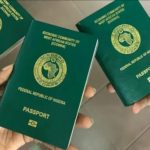
    It costs $150k to get a passport by investment in Grenada, and that’s what I want right now.  My Nigerian passport doesn’t do me so many favours. I’ve been denied visas to multiple countries. I also want my children to have a better passport than the Nigeran one so they can have better life opportunities and travel more. 

    And your financial happiness on a scale of 1-10?

    It’s a 7. I’m in a good place right now, but we both know humans are insatiable. I can’t afford my Grenada passport right now, so that’s a need. I also know there’s better opportunities for me in the future, so I’m excited. 

    Mad—

    I forgot to add, I also have ₦4 million in credit from people owing me. 

    ₦4 MILLION? Are you a loan shark?

    LMAO! When people ask, I find it hard to say no, or “I don’t have”. The problem after is that I don’t know how to meet people to say I want to collect my money back. After I remind them once, it feels like harassment to remind them again, so most times, I just count it as a loss. 

    My brother says people know that it’s a weakness and are taking advantage of me. He might be on to something.


    Now that you’ve made it to the end of the article, here’s exciting news: If you want to buy and sell Bitcoin, Ethereum, and more, deposit and withdraw instantly and securely, and manage your crypto portfolio, click here to download Busha.


  • The Nigerian experience is physical, emotional, and sometimes international. No one knows it better than our features on #TheAbroadLife, a series where we detail and explore Nigerian experiences while living abroad.


    For today’s subject on Abroad Life, moving to the UK when she was 10 is one of the things she wishes she could have changed. After experiencing racism from teachers and classmates for years, she finally learnt to stand up for herself. Now, she can’t wait to finish university so she can come back and experience what it’s like to live in Lagos. 

    When did you first decide to move abroad?

    I was 10 in 2011 when my parents decided they wanted me to join my two older sisters in the UK. I didn’t know why I was going at the time, but I recently asked my mum and she said it was because I was lonely.  The earlier plan was that I’d school in Nigeria, then leave for university. But they saw I was sad and lonely all the time, so they decided to ship me off in Primary 5.

    I don’t remember being lonely o, but I would have preferred being in Nigeria for secondary school.

    Why?

    My first few years in London were brutal. I went to an all-girls school and was the only black student in the entire junior school — JSS 1to  JSS 3, in Nigerian terms. I didn’t have anybody close to me that I could relate to. One of my sisters was already in senior school and the other was had gone to university.

    And then the racism. It was a boarding school, but whenever we needed to get on a bus to go somewhere, nobody sat beside me. Kids gathered in small groups and laughed at me too. Even the friends I made randomly said offensive stuff. Even the teachers were racist because they called me rude every single time I had a dissenting opinion.

    I’ve never been one to take nonsense, so whenever anyone said anything I needed to address, I swiftly did. And this got me in a lot of trouble. 

    Damn.

    One particular incident that will stay with me forever was when they said I needed to see a child psychologist because I left the school clinic. The flu was going around and I caught it, so I had to be in the clinic for a few days. When I recovered, I met the nurse to ask if I could go back to the hostels, and because she was on the phone, she just nodded and gave me a thumbs up. A few days later, I had to be in a meeting with the school administration and my dad. They called him to come all the way from Lagos because there was an issue that needed critical attention. Apparently, in addition to all the trouble I was getting into, I ran away from the clinic, so it was time for me to take things seriously and get me a psychologist. 

    My dad changed it for them o. He called them racist and threatened to take me out of the school if they kept misunderstanding me. But that experience really hurt me. 

    Did your sister know you were going through this stuff?

    If my sister wasn’t in that school with me, I wouldn’t have been able to cope. She’s the one I ranted to whenever stuff like that happened. In senior school, things were a bit more diverse, so she had Nigerian friends who rallied around me and told me things would get better. 

    Did you return to Nigeria often?

    I went back every year. Before my sisters left for the UK, they did a few years in secondary school in Nigeria and they always had interesting stories to tell. I wanted that. But the more I interacted with Nigerian kids my age, the more I realised I couldn’t relate to their stories — the shows they watched, the jokes they made, their slangs.  It was painful. 

    Did the racism stop at any point?

    No, but I learnt how to handle it better. The turning point for me was when I got into senior secondary school and Nigerians started joining my class. It’s like nobody sends their kids abroad for junior secondary school, but they do for senior secondary. These people had started secondary school in Nigeria and then transferred in senior secondary school, and they were exactly what I needed. With them, I had the freedom to speak without feeling judged, form cliques and just be a kid again. I could listen to them speak about their different experiences in Nigerian secondary schools for days!

    With my new social circle, I became more confident and was able to stand up for myself. If a teacher ever did something I thought was racist, I’d look them in the eyes and say, “You’re being racist.” And white people detest being called racist. 

    Was moving back to Nigeria ever on your mind?

    Not really, no. I had become used to being in the UK, and seeing how people complained about schools in Nigeria striking, the economy, and just the general state of the country, I knew I’d have better opportunities in the UK. Immediately after secondary school, I went into uni. I’m in my third year now. 

    What has that been like?

    I’ve absolutely loved it thanks to the people I’ve met. All my friends here are black, mostly Nigerians. I don’t interact with white people except there’s a school project where we have to work together. In my first year here, I was voted as president of the university’s Nigerian society. It’s been amazing meeting and representing Nigerian students from various backgrounds, and making sure they don’t suffer any form of unfairness. 

    What’s the plan for after uni?

    I definitely want to live in Nigeria for a bit after university, just to get some of the experiences I might have missed. For example, I want to know to live in Lagos and experience the Lagos nights everyone talks about. So if I find a good job, I’ll go back. When I eventually have children too, I want them to experience Nigeria. The end goal might not be to live there fully, but I want to be able to go and come whenever I like. I can’t make any solid plans yet because I’m still in uni, but that’s where my head is at. 


    Hey there! My name is Sheriff and I’m the writer of Abroad Life. If you’re a Nigerian and you live or have lived abroad, I would love to talk to you about what that experience feels like and feature you on Abroad Life. All you need to do is fill out this short form, and I’ll be in contact.

  • Football is pretty big in Nigeria. Almost every child who grew up here played ball as a kid. Many of us even thought we were going to become professional footballers, but here we are sitting at our desks and writing Zikoko articles because our parents didn’t let us go out to play that one time when we were 7 (definitely not because we were trash at football).

    Anyway, if you played these six football games growing up, show us your marriage certificate.

    1. O.G.O

    Let me not lie, I can’t remember what O.G.O means anymore. I just know that before the games started, the ball had to bounce three times while everyone shouted the letters, O-G-O with each corresponding bounce. After that, it became free-for-all. No teammates. Dribble everybody. Tackle anybody. Score. And then whoever scored would be the goalkeeper until someone else scored. As chaotic as it was, I actually really liked it.

    2. Middle man

    5 Of The Famous Football-Crazy Communities In Lagos

    God, I hated this one so much. All the kids would gather in a circle and pass the ball around, making sure the kid in the middle couldn’t get their leg on the ball. In some places, once the person in the middle “touched” the ball with any part of their body except their arms, they’d won it, and the person who lost the ball had to step into the middle and strive to touch the ball too. In other places, the person in the middle had to “collect” — to win the ball completely and make a pass to another person in the circle before they were allowed to leave the middle.

    Sometimes, we couldn’t decide whose fault it was that the middleman got the ball, so two people would argue (or quarrel) because they didn’t want to be the one in the centre. That’s where people learnt to lie.

    3. Kolo beating

    This one was just pure evil. Pure, unadulterated evil. It was so evil, we decided to write an entire article about it. If you don’t know about it (or don’t remember — smh, signs of old age), read the article. But spoiler alert, it always ended like this:

    4. Monkey post

    Street football in Africa: flyovers and floating schools - in pictures |  Cities | The Guardian

    Monkey post was where all the great finishers in Nigeria were created. How could a football post be so small? The point of monkey post wasn’t the goals though. It was the dribbles. The dirty, nasty dribbles that would leave you wondering why you left your house to come and be disgraced in front of everyone.

    ALSO READ: 7 Reasons Why You Are the Cause Of Your Problems

    5. One touch

    Sport and Dance – Nigeria

    This one wasn’t so competitive. Just simple one-touch passes. If you made more than one touch on the ball, you were out.

    6. Four post

    14 Slangs You'll Hear At Every Nigerian Street Football Field | Zikoko!

    There were four goalposts in a rectangle and one man to each post. Score anybody you like. Super fun. Sometimes, they added one-touch to it.

    QUIZ: Can We Guess The Football Club You Support?

  • Every week, Zikoko seeks to understand how people move the Naira in and out of their lives. Some stories will be struggle-ish, others will be bougie. All the time, it’ll be revealing.

    This week’s Naira Life is brought to you by Busha. Thinking of starting your crypto journey and trading the most secure way? Try Busha.


    The lecturer in this Naira Life wanted to be a tech bro as early as 2002, but he watched a few marketing strategy sessions in 2005 and decided to follow a marketing career instead. Along the way, he also learnt photography. Now, he uses his media skills to support his family because his lecturing salary can’t cut it.

    Tell me about your earliest memory of money. 

    The freshest memory I have of money was hearing that my mum had been scammed of millions and was in trouble. 

    Ah.

    My mum was 17 when she had me. My dad was 23. They were not married. Her parents didn’t want them to get married after I was born, so she single-handedly raised me. She sold gold and jewellery for a living. We lived in western Nigeria, but she’d go to the north to buy gold, sell it in Niger and Burkina Faso, and then buy jewellery to sell at home. 

    We were pretty comfortable. I had all the toys I wanted, the latest shoes, and I went to a good school. 

    That was until the year I turned 9, in 1995.

    One of her business partners who was supposed to collect money from customers, give her the money and then she’d deliver the goods collected the money and vanished. Nobody ever heard from him again. At the peak of the drama, my mum got arrested, taken to a police station and she came back with a swollen face. Things changed quickly for us. 

    From a private school, I was shipped to a public school. I didn’t get shoes and toys anymore, I saw my mum sell off her property one by one, and eventually, we had to move in with her parents. 

    Damn. What did this switch do to you?

    It didn’t hit me at first. At my new public school,  students had to wear brown sandals, but my mum couldn’t afford them. I kept wearing the fine shoes I had until the school seized them and had me walk home barefooted. Ah! It was only after then my mum struggled to get me the brown sandals. 

    The older I grew, the more the gravity of the situation dawned on me. Before the incident, my mum taught me to be generous at every chance I got, so if a friend came visiting and liked one of my toys or shoes, she encouraged me to give them. After the incident, someone came visiting and told me they liked my shoes and I gave them. If you see the scolding I got after. 

    It was also really hard watching her take on multiple odd jobs to make ends meet. She bought used jeans and dyed them blue to resell, she worked at a restaurant that barely paid so she could get food to bring home at night. 

    Did things get better?

    Gradually, with my dad’s help and with all the work she was doing, she was able to pay off the debt. By the time I turned 14, she had started working as a hairdresser and had a business centre for people to make calls on the side.

    Even though things were getting better, my requests for money were mostly met with rejection because we now had to be cautious about the way we lived. But I was a teenager and I had wants — the most pressing was the need to always be in cybercafés, around computers — so I found a way to start making money at 16. 

    My first job was helping people take their phones to Computer Village to fix them and helping other people browse and fill forms online. I helped one man fill his USA immigration visa lottery form and he won and moved to the US. These were people that lived around us, so I didn’t charge them. They gave me small ₦1k or ₦2k tokens, and I used the money to go to cybercafé. 

    A tech bro in 2002?

    I was so amused by the concept of computers and how they worked. I even got a certificate in computer appreciation, where I learnt the fundamentals of computers and programmes like Word, Excel and PowerPoint. At that stage, what I wanted to do was be an IT guy. I finished secondary school in 2002, but I failed physics in WAEC, so I couldn’t get into uni. We couldn’t afford WAEC in 2003, so I stayed at home and kept doing what I was doing.

    That year, my interest in computers grew and I got another certificate in information technology in 2004 instead of trying WAEC again. In late 2004, a church member who saw I was home and largely idle linked me with a job as an operations assistant at a haulage company. The pay was ₦12k and my job was to track inventory, ensure the trucks were well-serviced, confirm that the items the customers said they wanted to ship were actually there and take drivers’ complaints to the bosses. 

    I became an instant favourite at the job because I saved them a lot of costs. Mechanics were scamming them by double-charging on invoices. If they needed one thing, they’d write it in two different ways, so I pointed it out to the bosses. I wasn’t loved by the artisans, but the bosses loved me. There was no week I didn’t get a ₦2k or ₦3k tip, but not long after I started the job, they increased my pay to ₦15k. I was making no less than ₦20k monthly. 

    By the end of 2005, I had saved enough money to buy my mum a ₦70k generator. She loved it. The rest of the money was going to transportation and my own upkeep. The job was too far from my home, so I moved in with an uncle. 

    How long were you at the job for?

    Just over two years. But in late 2005, I had an experience that changed me from a tech bro to a marketing bro. The haulage company I worked with had another company that created and marketed tech solutions. Someone in that company was on leave, so they called me to assist in whatever ways they needed me to for some time. 

    Cloud backups didn’t exist at the time, so they created a solution for people to backup their sim card contacts and retrieve them if they ever lost their phones. When I got there, they were at the stage where they were talking about marketing the product to their customers, and I found the thinking and process that went into getting a product in front of people extremely amusing. I even occasionally dropped some good ideas. 

    That experience made me want to go to school again, but this time, not to study anything computer-related. I was going to study mass communication and major in public relations and advertising. 

    Didn’t you go to science class?

    I entered study mode to get a grasp of government, literature-in-English, and CRK so I could write a different WAEC that would qualify me to study mass communication. I wrote it in 2006. I failed ehn. 

    LMAO!

    I studied hard again and wrote GCE exams later that year. This time,I passed, but school was already in session, so I opted to get in through diploma instead because I didn’t want to wait an extra year. I picked up the diploma form for ₦15k, wrote the exam and got in. Guess how much was the school fees?

    ₦365k.

    I had only ₦200k in savings, so I told my mum I needed an extra ₦165k. She didn’t have it, but she went and asked her church if they could pay my fees, and they did. For free. 

    Mad, you finally got into school. How was your uni experience?

    In my first semester as a diploma student, I got into a situation that got me expelled. 

    Don’t kill me, please. 

    One of the members of my four-man clique was running late for a test, so in my naivety, I collected an extra question paper, wrote his name on it and kept it for him. Right before the test started, I called him again and he said he couldn’t make it, so I called one of the test invigilators to return the question paper, and right there I got accused of writing a test for someone. My explanation fell on deaf ears.

    The expulsion process took two semesters, so I kept going to classes and writing tests and exams, but at the end of the second semester, the panel decided I had committed malpractice and expelled me. I had a 4.8 CGPA. 

    That must have hurt.

    I didn’t tell my mum. I just stayed in the school hostel studying for another JAMB and POST UTME. In that period, I started helping computer science final year students do their projects for ₦15k and assignments for ₦3k because I knew a lot about computer stuff and even some programming. That’s how I survived. 

    I also learnt photography.  A friend who lived in a different state called me one day to say he wanted to stay with me for a night in the hostel because he had an event to shoot the next day. Because I had some free time, I told him to teach me photography so that whenever he had jobs, he wouldn’t have to travel. He’d just send me and give me a cut from the deal. He agreed. 

    After passing JAMB and POST UTME, I resumed 100 level in mass communication in 2009, aged 23. That’s when I told my mum about the expulsion incident. She was first angry, but she calmed down and appreciated me for trying again and getting back to school. 

     Because I’d been in the university environment since 2007, I became popular pretty quickly and got elected to be class rep. At this time, my mates who I started diploma with were already in their third year. But I pretty much studied with them since their first year, so I was acing all my courses and organising tutorials for people from year 1 to year 3. 

    Were you doing anything on the side?

    I started doing photography professionally. I took matriculation pictures, got some wedding gigs.

    In my second year, I had another business idea. It wasn’t new — people used to do it in 2007 when I was in diploma — but nobody was doing it on campus anymore. Basically, I reached out to cinemas around and got them to discount ticket prices for students once a month, and then got a university staff bus driver to pick the students from school and drop them off at the cinemas. After the movie, the bus took the students to nightclubs and then back to school. The entire thing cost each student ₦3k, but my profit was ₦700 on each student. From that money, I fuelled the buses, paid the driver and kept the rest.

    Starting the cinema thing was my first major opportunity to use my marketing skills. I got babes from my department to wear branded t-shirts and carry banners to hostels to make noise about it. As it became more popular, so did I, and my popularity brought me more assignments, projects and photography jobs. I even got club photography gigs where I took pictures of people having fun in clubs for ₦5k a night.

    Things you love to see.

    Absolutely. Doing things that made me money was a huge source of confidence in my ability to make money in the long run. In October 2012, in my third year, my friend and I went for a three-month internship in the media arm of a government parastatal. The pay was ₦15k, but then in December, they organised an event and told us to handle social media. A lot of the event’s huge success came from social media and the parastatal was happy with us, so they gave us ₦200k each.  After the internship, they kept reaching out to give us work. For example, a few months later, we got a big contract to do the scripting and copywriting of an animated video and I made ₦500k from the gig. From these monies, I paid rent, got a laptop, a camera and settled my mum. 

    In 2013, I graduated as the best student in my department and got about ₦200k in prize money from school. When my boss from the government parastatal heard, he sent me $1,000. I bought a car. It cost over a million, but I paid only ₦600k. My dad, who I was reconnecting with, covered the rest. 

    Also, my mum got married when I was in university and her fashion business was much more stable, so things were going good for her. 

    Nice! What happened after university?

    I went back to work at the parastatal doing comms and design work. They paid ₦30k for about five months, and then I had to go for NYSC camp. When I got back from camp, they increased my salary to ₦45k. I was on a steady ₦45k monthly with photography jobs here and there until 2015 when elections came, and through connections, I got copywriting jobs to work on politicians’ campaigns and made about ₦3 million. 

    In May 2015, I left the parastatal and got a job at a company that wanted to reach young entrepreneurs and help them get funding. They made me the project lead and paid me ₦70k in the first month, and ₦80k afterwards. 

    In August, through someone I’d worked for, I pitched to a top Nigerian bank to use WhatsApp as a channel for customer care, and they liked the pitch, so they took me on as a consultant on a three-month partnership that I made ₦1.8 million from. Most of this money was going into savings because I was planning to get married, but I was excited to be making so much money. 

    Fundssss.

    In November 2015, I Ieft the job I started in May because my university poached me. They’d just started a thing where they hired the best graduating student from various departments to work as graduate assistants, and they wanted to start hiring from the 2013 set, so they reached out to me. The pay was ₦108k, and one of my lecturers gave me a long talk about how I’d find fulfilment in the job and still have plenty time to do other things on the side — the latter part has turned out to be not so true.

    To be honest, since I started doing tutorials in school, I saw myself becoming a lecturer much later in life, but since the opportunity to start early came, I decided to take it. 

    I wasn’t happy with the pay because I’d just had a brilliant year financially, but I couldn’t do anything about it. 

    What happened next?

    Life has moved fast since then. I started my job as a graduate assistant while I got my master’s in the same department. In 2016, I finished my master’s with a distinction, my role changed to assistant lecturer, and my salary changed to ₦166k gross monthly and about ₦140k after tax. My salary hasn’t changed since then. 

    On the side, I still do photography, but only for corporate events. When I see copywriting and advertising jobs I can handle, I take them on. Most times, I get them from friends, acquaintances and referrals. I also do content writing for websites, and at some point, I managed an influencer and got percentages when we got deals. 

    I also married in 2016, and all the money I’d saved over the years came handy when we had to rent an apartment and when our son came in 2017. In 2017, I also started my PhD in my department and had to go to the UK for six months for a semester.

    Are you done with your PhD?

    I’ll hopefully be done this year. 

    Let’s talk about your current finances. 

    On an average month, I make about ₦400k in total. It can be much more in months when I get big deals, but it hardly goes below ₦350k. 

    What do you spend money on in an average month?

    That’s more than you make in a month!

    Yes o. I have to keep going into my savings every month. I have two savings accounts — one with a cooperative that takes ₦60k from my salary every month, and the other with a bank that I transfer to. I try to transfer at least ₦50k monthly to the account, but on months when I make big money, I save a lot. That’s how my family survives. Right now, I have about ₦500k saved. On some months, they can be as low as ₦10k, on others, they can be in millions. 

    My wife only just started her business as a fashion designer, so I’m looking forward to having support from her for the family when the business picks up. 

    Is there something you want right now but can’t afford?

    My own house. I’m not a fan of building houses from scratch, so a 3-bedroom house would be great right now. 

    How happy are you financially on a scale of 1-10?

    Let’s put it at a 4. When I was in the UK, I got a £1,200 monthly stipend from the school and made another £400 monthly from helping one of my lecturers do some graphic work. It was good money for almost nothing. 

    I want to get to a stage where I don’t have to work too much to increase my income. Right now, my plan is to finish my PhD first. That would move me from assistant lecturer to lecturer and add between ₦50k to ₦100k to my salary. Then I’ll have time to do more high-level media consulting, and more money to invest in my wife’s business so she can expand and be more profitable.  


    Now that you’ve made it to the end of the article, here’s exciting news: If you want to buy and sell Bitcoin, Ethereum, and more, deposit and withdraw instantly and securely, and manage your crypto portfolio, click here to download Busha.

  • The Nigerian experience is physical, emotional, and sometimes international. No one knows it better than our features on #TheAbroadLife, a series where we detail and explore Nigerian experiences while living abroad.


    Today’s subject on Abroad Life has a principle: staying in Nigeria is better than moving abroad. So when she moved to the UK for her master’s and then to South Africa for her PhD, she didn’t expect much, but working in a nursing home with physically aggressive people and living in an extremely unsafe city made her realise she was actually right the whole time. 

    When did you first decide to leave Nigeria?

    My decision to leave was strictly because I had an opportunity to. 

    After graduating at 29 as the best student in my department, I was retained and hired as a graduate assistant. I worked for a year at the department of environmental biology and fisheries, then qualified for a federal government scholarship that gave university lecturers the opportunity to further their studies abroad. For school, I decided to take the chance. I applied for my master’s at the University of Essex and got in to study environmental governance. 

    In my 30 years of living in Nigeria, I wasn’t interested in leaving. Nigerians always talk about japa, but I didn’t see the appeal. As long as I have a good job and a supportive family in Nigeria, why would I leave? I also noticed that, around me, the people who wanted to japa at all costs never really succeeded in life because they were too focused on trying to leave to see opportunities around them and never got to japa too.

    Can you share a bit more about this scholarship?

    By 2011, I qualified after one year as a graduate assistant. To be accepted, I signed a bond saying I would come back and work for the university for two years after my master’s. I also needed two guarantors who were lecturers in my university for the bond. If I didn’t come back, the government would hold them responsible, and they would have to pay back the cost of my tuition fees from their salaries—about ₦7 million each.

    The government sent my living costs to my school, which was sent to my pounds sterling account. The arrangement was pretty organised. I don’t know if they do it anymore. 

    Expectations vs reality: UK edition.

    Because one thing Nigerians that travel abroad do is send money home, I thought I would see extravagant wealth in the UK. I expected it would be easy to make money, and everyone there would be stinking rich because that’s just how stuff works abroad. It didn’t take me long to see that people were working really hard to make money. People were diligent. It wasn’t just la vida loca living. People had multiple jobs, shifts, paid bills and complained about finances just like in Nigeria. It made me realise that the concept of hustling wasn’t just a Nigerian thing, and that was interesting to see. 

    Was it easy for you to settle?

    It wasn’t so difficult because I made friends who were new to the UK like me, and we bonded over being newcomers in the UK. I had a friend from Chile who couldn’t make out the accents from the lectures and would always ask me what they were saying. I met people from countries like Azerbaijan — which I didn’t know existed. I met people who were fascinated by the Nigerian culture and stuff they read about Nigerians. A friend told me she read that Nigerians were the happiest people and I explained how, even if we were going through hell, we would make jokes, but it didn’t mean we were happy. That’s just how we are. 

    There was subtle racism and profiling here and there, but I didn’t pay too much attention to it. The most prevalent one was hearing that people were avoiding me because I was a Nigerian, and therefore, a fraudster. Some people who had those opinions later became my friends because they got closer to me and learnt that the fraudster tag were just stereotypes. Some others kept their distance. Racism also showed up when I tried to get jobs. 

    What kinds of jobs were you looking for?

    Anything I could do with my free time to make some extra bucks. Midway through my one-year programme, I got a job as a caretaker at a nursing home. I didn’t like it. Taking care of the elderly isn’t for everyone. They soiled themselves, fell, passed terrible remarks and misbehaved, and I had to smile through it all. The straw that broke the camel’s back was when I was assigned to an elderly man that had mental issues that made him aggressive and physically violent. In total, I was at the job for about five months before I quit. It was a degree they sent me abroad to get, not to make money. 

    School itself was difficult. There were times when I just wanted to give up because I was tired, but I remembered that I needed to make the university that sent me proud.

    Was there any point where you thought, “This abroad life might actually be the real deal”?

    Never. My belief that being at home was always going to be better than being abroad remained. Immediately I got my master’s degree, I came back to Nigeria to start my job as a lecturer. I was in the UK for only a year. 

    But wo and a half years after I started my lecturing job, in 2015, I decided to go abroad again for my PhD. 

    Where, this time?

    South Africa. More lecturers had seen the opportunity to study abroad so they were going to the UK, US and Canada, and it was expensive, so my school encouraged people who had already gone to more costly universities to consider cheaper places to further their education. That’s why I chose South Africa. I was pregnant when I moved, and my husband came to join me after some time. He, too, decided to get a degree when he got here. 

    Expectations vs reality: South Africa edition.

    It didn’t matter what I expected. What I saw was too bad. I lived in Johannesburg for the four years of my PhD, and my God, I couldn’t wait to leave. 

    Ah, why?

    Where do I start? Is it the crime? People say Nigeria is dangerous, but if they know how prevalent crime is in Johannesburg, they’ll love Nigeria. One day, someone came to visit me briefly and a few minutes after he got to my house, they’d stolen his car from the street. You have to watch your back everywhere you go and clutch your purses tight because someone might just be in the mood to mug you. 

    Or is it the racism? You’d think racism in the UK would be worse than in South Africa, but nope. White South African lecturers and students in my school wouldn’t even talk to me directly. The same thing white faculty members would tell white students face to face, they’d send to black students as a mail. 

    Or is it the riots? Riots that can just start any time and you don’t know how safe you are? I really disliked staying in South Africa. 

    The cost of living there was also really high. Rent, water bills, electricity bills, all expensive. My health deteriorated because I couldn’t sleep well. I was never at peace. 

    Was there anything that was enjoyable about living in South Africa?

    The only time I enjoyed South Africa was when my younger sister came to visit me. At least I had a family member with me. And then church also. The church was the only place I felt safe. 

    Apart from that, it was chaos. I remember one incident where we co-rented an apartment with a guy who spent his days and nights doing drugs, and he started beating his girlfriend and smashing plates in the middle of the night. In the same house where my husband and son lived. It was terrifying. 

    Was there any specific hate targeted at you for being a Nigerian?

    From what I saw, South Africans generally don’t like Nigerians being around. To be fair, a lot of Nigerians are in the streets selling drugs and getting arrested, and it’s dangerous for their communities, but that’s not enough reason to dislike Nigerians as a whole. When I was there, I also heard stories about how South African women prefer Nigerian men because they’re “more responsible”, so there might be some hate spewing from there too. But no, I wasn’t personally attacked.

    When did you leave South Africa?

    I didn’t bother to wait for my graduation ceremony. Immediately I submitted my final papers and my supervisor told me I was done, I bought my graduation gown and my family and I returned to Nigeria. We stayed there for four years. Now I’m back in Nigeria lecturing.

    So both abroad experiences proved you right.

    Absolutely. I’d rather just be here with my family knowing I’m safe and praying Nigeria becomes better so Nigerians don’t have to travel and face uncertainty. 

  • If you didn’t go to science class, you might feel that this quiz is unfair, but still, try your best. Can you name the first 20 elements in the periodic table?

    You have 2 minutes to list the first 20 elements on the periodic table. Go!

  • Get your mind out of the gutter and focus on the quiz. How many words can you make out of “Pegging” in 1 minute?

    Once you start typing, the timer starts. Let’s see how you do.

    “PEGGING” can be rearranged into 26 different English words. How many can you get?