• Netflix just announced that it has partnered with INKBLOT PRODUCTIONS to create a series!

    We are honestly not surprised because this low-key production company has had 11 hit Nollywood movies on Netflix such as The Setup, Love is war, Who’s the Boss, The Wedding Party 1 & 2 and Up North. They have been saddled with the responsibility of producing a series hailed as Nigeria’s First Young Adult series that follows the adventures of a teenage protagonist. And Nigerians are excited to finally watch a show that depicts the often-ignored demographic.

    Pin on Teacher humor
    You knowwwww!

    With that in mind, we made this list of things we expect to see in the series. We hope Inkblot productions is paying attention because we will riot if we don’t get what we want.

    Inkblot and Netflix, beware!

     1. The casting of age-appropriate actors

    Because the series is mostly set at a secondary school, we expect to see actual teenage actors playing the school children. We are talking about the protagonist, supporting characters, and extras. If we see any adults stuffed into school uniforms 2 sizes too small, there will be war.

    2. The casting of actors that can deliver

    It’s hard to criticize child actors because they’re adorable. But it must be said that a lot of the ones we have seen in the past no sabi the work like that. We need child actors who can actually act and not just deliver lines like cute, monotone robots.

    3. The use of Nigerian locations

    LOST IN LONDON - Latest Yoruba Movie 2019 Drama Starring Femi Adebayo -  YouTube

    There’s nothing worse than watching a movie/show that’s set in one country, but the locations used in it tell a different story. Since this new series is set in Nigeria, we want it shot here. In recognizable locations too so the viewers can relate.

    4. Proper depictions of Nigerian secondary school life 

    secondary school teachers | Zikoko!

    Those that attended Nigerian secondary schools know that it’s not too different from “Lord of the Flies”. We want to see the nitty-gritty of boarding-house life. If not as part of the main plot, then in the background.

    5. Realistic descriptions of Nigerian parent-child relationship 

    The Most Awkward Questions Nigerian Parents Ask At Random Moments

    You know what we mean. There is a…unique dynamic in Nigerian parent-child relationships and we need to see that in this new series.

    But we trust the writers working on it sha. They are our faves, and we know they will deliver.

    So, we’re giving Inkblot Productions the benefit of the doubt that they will see this, pay attention, and do the right thing (i.e. give us what we want and deserve). If the show premieres with 39-year-olds playing teenagers, we will rally the villagers, gather our weapons and ride at dawn.

    nene I-said-what-i-said-gif | Zikoko!

    And yes, there are other Nteflix-related news.

    From now to next year, ladies and gentlemen of the internet, we feast!

    Image
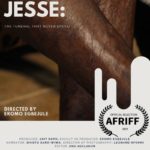
  • LAGOS, NIGERIA – On November 13th, award-winning journalist Eromo Egbejule’s directorial debut Jesse: The Funeral That Never Ended premieres at the Africa International Film Festival (AFRIFF) in Lagos. The documentary film is the previously untold and emotionally gripping story of another community in the oil-rich Niger Delta whose gift became a curse.

    Twenty-one years ago, a massive leak pipeline passing through the community, connecting the south and north of Nigeria, triggered an explosion that ultimately resulted in the death of at least one thousand people, with hundreds more undocumented and tens of survivors with ghastly scars. Jesse: The Funeral That Never Ended, the rehashing of that tragic story as it happened in 1998, is produced by Arit Okpo, the host of CNN African Voices Changemakers.

    “The documentary is the resurrection of an impeccably tragic story of a people who were hemmed in all sides by what should have been a blessing for them”, says Egbejule. “With all the stories coming from the Niger Delta, it was important for us to tell this one lest they stay forgotten and become drops in the ocean.”

    It captures the crucial moments before and after the pipeline exploded, through the eyewitness accounts of survivors of the long-lasting inferno, relatives of the dead, first responders at the scene and community leaders.
    Narrated by Singto Saro-Wiwa whose father, the playwright and environmental activist Ken Saro-Wiwa was hanged this month in 1995 by the Sani Abacha regime for his fervent criticism of the region’s exploitation, it also includes interviews with Nnimmo Bassey and the late Oronto Douglas, two contemporaries of the elder Saro-Wiwa.

    The film threads the environmental degradation of the Niger Delta, the evolution of its people into collateral damage to continue the conversation on the region’s bittersweet relationship with crude oil. In Okpo’s words, “the story of Jesse is the story of the Niger-Delta; a people for whom a gift has become a tragedy, a story of lives changed forever and of scars that exist long after the rest of the world has moved on.”

    PRODUCER

    Arit Okpo is a TV presenter, documentary filmmaker, and voice-over talent. She is the Host of CNN African Voices Changmakers, where she tells the stories of Changemakers across the African continent. She is also the host of Untold Facts, a web talk show exploring the perspectives and experiences of LGBT people in Nigeria.

    Arit produced and presented the current affairs show The Crunch and Nigerian politics show Naija Politics for Ebonylife TV.  She was Producer and Interviewer for a mini-documentary on Grammy nominee Seun Kuti as part of the United Nations African Allies Series. She has also produced mini-documentaries showing the work of the Obudu Conservation Centre and the British Council’s CreativeEnterprise Program.

    DIRECTOR

    Eromo Egbejule is a journalist who covers mostly conflict, politics, culture and human identity with a historical lens across West and Central Africa. His writing and photography have appeared everywhere including The Guardian (UK), Al-Jazeera, Washington Post, Telegraph, Financial Times, Times of London, The Atlantic, The Africa Report, Thomson Reuters Foundation, and others. 

    He has covered among other things the Boko Haram insurgency in northeastern Nigeria, gender violence and flooding in Sierra Leone, immigration in Guinea, the Anglophone crisis in Cameroon, Ebola epidemic in Liberia, landslides in Sierra Leone, pastoralist crisis across the Sahel, Sino-African investment in Djibouti as well as sustainability in the Peruvian Amazon. A 2016 CNN Multichoice Journalism Awards nominee, he is currently a Dag Hammarskjöld Fellow at the UN HQ in New York.
    In 2017, Egbejule was a visiting lecturer and researcher at Malmö University, Sweden. Jesse: The Funeral That Never Ended is his debut film.

  • Sometime in September, while condemning xenophobia, the Nigerian philosopher/prophet Burna Boy (Government Name: Damini Ogulu) solemnly vowed on Twitter to fight South African Rapper AKA (Government Name: Unknown). Tweet made 3rd of September 2019, exactly a month ago, has now been deleted.

    The logic behind this gauntlet drop is pretty clear. International Law stipulates that if two musicians physically fight, the country of the loser has to apologise to the country of the winner and stop extra-judicial killings. Xenophobia solved. 

    So in solidarity of Burna’s brave decision to be Nigeria’s Champion, I decided to listen to our dada-haired Messiahs 2019 banger “Anybody.” While listening I had an epiphany. The chorus of the song is fire but it also raises a fascinating question. It goes:

    Anybody, wey no want to soji
    Anybody, wey no dey carry body
    Nack am something, ahh
    Nack am something

    To ba ta fele, fele
    Nack am something

    It suddenly hit me. I mean I get wanting to beat up AKA (who doesn’t right?!) but the scope of this chorus goes further than beating up one annoying rapper. Is Burna Boy advocating for physical violence on certain portions of the Nigerian population with his incendiary lyrics? The chorus literally says “Anybody, wey no want to soji or Anybody, wey no dey carry body” such persons should be “Nacked (Nigerian slang for hit) with something” promptly. 

    He then proceeds to stress this point by crooning that “To ba ta fele, fele”, a Yoruba phrase which roughly translates to “if they misbehave in your presence” you are entitled to hit them with a weapon of your choice. 

    But then why would Oluwa-Burna (with his controversial past/present/probably future) say such a thing?! I set out to find out.

    I began by asking the important questions. “What does it mean to Soji?” And “Why does Burna-Boy strongly believe that a failure to do so should result in grave bodily damage?” 

    So “What does it mean to Soji?” This was a simple question to answer. The Nigerian man “Sojis” by “Carrying his body”. He does this by flailing his limbs around in an established rhythmic pattern. For example. He might mime the act of masturbating while hopping on both legs, etc. This act is commonly referred to in the Western World as “Dancing”. 

    And why “Why does Burna-Boy strongly believe that a failure to do so should result in grave bodily damage?” This was a tougher question to answer, but I solved it by digging deep and answering the existential question “What does it mean to be Nigerian?”

    For a significant percentage of the population, Nigeria is a terrible place to live. Thus, the average Nigerian consistently craves literal or metaphorical moments of escape and fleeting moments of happiness. This is where Nigerian music comes in. Nigerian music (from Fela to Wizkid) has been crafted in such a way that it is impossible for a Nigerian listener (or the occasional enthusiastic white man on Instagram) not to find the joy and escape he seeks. 

    In plain terms, it is literally impossible not to “Soji”. 

    Thus in Nigeria, if a man chooses to not “Soji” when confronted with Nigerian jams, he has made a deliberate choice to pick unhappiness over joy. Such persons are locally described as Bad-Belles. Furthermore, the negative energy of a bad-belle is a contagious plague to innocent bystanders around him. Nigerian poet, WizKid echoed this sentiment when he crooned in 2018 hit “Bad Energy” that “Bad energy stay far away”. He did so because he feared its unstoppable effects.

    Logically therefore, if you encounter a bad belle who refuses to Soji you should act by defending himself against such person.

    In summary, Burna-Boy is a lover of peace and positive vibes not an advocate for assault merely self-defence (except when he is literally threatening to assault someone on Twitter). The hidden meaning of the chorus of “Anybody” is: 

    “No longer shall we passively accept the Nigerian bane of unhappiness. Never again!!  Arise my fellow patriots!! Any man woman or child who wilfully chooses to deny himself and his fellow man joy, Assault him with the closest weapon!!! For if he is left unchecked our fleeting joy shall be stolen!!” 

    Words befitting of a true African Giant.  


    Guest article by Bartholomew Eboseremen

  • “I never get light for two days. Na wetin concern me concern global warming?”

    – The Average Nigerian
    People caring about the world and the environment

    With all of the problems in your life as a young Nigerian, you might believe that the climate emergency is a first world issue. But of your current challenges — Buhari’s ministerial list, un(der)employment, your laziness as a Nigerian youth — nothing is more pressing and affects all areas of your life, quite like the climate emergency. Nothing. Its effects are both immediate and far reaching. Let’s list them shall we?

    1. Heat

    Does your skin burn up the minute you step outside? Do you feel like you’re in a pressure cooker when you’re really just in a bus going to collect knacks? Have you abandoned knacks because it’s just too hot to fuck?

    It’s not guilt doing you in. It’s the earth heating up. July 2019 was the hottest month ever recorded on earth. And it will get worse. The days will get hotter, heat waves more frequent. Knacks are not the only thing your body will lose. Increased temperatures lead to dehydration, heat strokes, respiratory problems and deaths. “The sun hot, the sun hot” can and may actually kill you. 

    2. Air

    But then there’s a breeze to cool you down. Fresh air. Bliss. For where? The trees have been cut down. The air you’re breathing is bad. 10/10 would not recommend. Close your nose. 

    Nigeria has some of the most polluted cities in the world. If you live in Onitsha, Port Harcourt, Agbara, you know this to be true. There’s soot in the sky and “dust” falling on your body—except it’s not dust, and that’s just the one your eyes can see. 

    PM2.5 the smallest, most dangerous particulate has been found in Nigeria’s air and is already chilling in your lungs. You don’t even have to be living in Port Harcourt to be in danger. 

    Breathing polluted air can cause respiratory problems like asthma and lung cancer. You are also at the risk of ventricular hypertrophy and psychological complications. The polluted air you’re breathing in is also worsening your mental health. 

    Oh, by the way, you can open your nose now. Take a breath and when you’re ready, dive in. Let’s talk about water. 

    3. Water

    With the climate emergency comes an increase in the volume and frequency of rainfall. Add that to the loss of soil cover and water shed by felling of trees and you have Nigeria with 99 problems and water definitely at number one. Communities like Erah lose their houses to heavy rainfall. The streets in Benin, Abuja and other cities are flooded, carrying in their currents, debris, cars, and big men. 

    Guess what is a densely populated coastal city, with borehole pumps attached to most buildings, infamous traffic gridlocks, untreated wastewater, and is sinking at a rate of up to 25 centimeters a year with a projected loss of about 95 percent of the city’s northern surface to the sea by 2050? Jakarta, Indonesia. But if you thought Lagos, Nigeria, you wouldn’t be too far off the mark. The similarities between the two cities are uncanny. And despite this increase in rainfall in some parts, how weird is it that water is actually running out in others?

    4. Food

    Your face when you realise that climate change will eventually result in food shortage

    This brings us to food. Nigeria’s agricultural production is gravely affected by a myriad of climate emergency originated problems. Flooding, drought, unhealthy polluted soil, conflict, rise in temperature leading to an increase in pests and more. The pressure on land use and overpopulation completes the very likely picture of increased food insecurity. And with a lack of proper nutrition comes bad health.

    5. Health

    Extreme weather conditions lead to ill health. Fighting to survive these disasters lead to minor, serious, sometimes fatal injuries. Flooding increases water borne diseases. Polluted air causes respiratory illnesses as well as lung cancer. Increased temperatures lead to heat strokes, dehydration and more. Effects of the climate emergency also affect fetal and child development. The climate emergency fucks up your mental health. It is associated with conditions like anxiety, depression, PTSD, substance use disorder and suicidal ideation.

    6. War

    The buzzword conflicts you know about, that lead to loss of lives and destruction of property, are actually fueled by the effects of the climate emergency. Changing rainfall patterns in the northern and middle belt limit the grazing area of herders who then encroach on land of farmers leading to severe, deathly gbas gbos. 

    “In the Niger Delta, militant groups are attacking oil infrastructure, partially motivated by conflict over rights to land and waterways. Oil spills into waterways also contribute to food insecurity and malnutrition in this region.”

    Even Boko Haram whose initial support stemmed from frustrations over northern citizen’s access to basic amenities, uses water as a weapon, poisoning the water sources of its opposition. 

    According to the Notre Dame Global Adaptation Index, Nigeria is ranked as the 22nd least ready country to deal with the impacts of climate change. Luckily, we’ve highlighted the changes you need to make in your little corner in the world. But first know this and know this well:

    But keep your IELTS money first. Lol. Even after the Yahoovictus wahala blows over and these countries start begrudgingly giving you visa again, where you wan go? Why do you think they put the global in global warming? To decorate it? The climate emergency is fucking up cities and countries the world over. Everybody go hear am. Probably not like Nigeria sha but a visa will not save you from the climate emergency. 

    Help yourself

    I’m sorry to have been so grim in the earlier parts of this gist. Ask everyone who knows me, that’s not my real face. It’s just condition that made crayfish to bend. But I’m back to being positive now. 

    So, while the bad news is that glaciers are melting, sea levels rising, forests burning, cities sinking, desert expanding, the air making you mental, the good news is you may not die. You can act to reduce the impact of the climate emergency.

    Here’s how. 

    We plenty. Not only is Nigeria’s population large and growing, a majority of that population are young-ins like you and I. That is to say, whatever changes we make as individuals adds up to a significant sum as a collective. You, and the actions you take, matter.

    Lifestyle change

    Now I must tell you something that will annoy you. You are not the primary culprit in this climate emergency wahala. The Americas and UKs and France and Germanys, Shells and Exxonmobils, Coca Cola, Pepsi, Nestle, Unilevers of the world are the major bad guys and that’s the truth.  Although you and your government still join small sha.

    While the major ways to combat this menace include a halt to burning of fossil fuel, deforestation, plastic packaging etc., for this article I will focus on the things you and I can do right now to make a difference.

    First first, drop the single use plastic Lacasera bottle in your hand. Stop buying it. The ones you already drank and discarded you’re going to be inhaling and eating as micro plastics for a very very long time. E don do. 

    Now, lifestyle choices. Travel, fast fashion, agriculture, these are some of the largest culprits of greenhouse gas emissions. And these are areas where we can make a difference. Walk to your destination as often as possible. Buy a bicycle. Try to carpool. Enter BRT/Oshiomole buses as much as possible. Buy thrift clothes. Give out clothes you no longer need. Don’t buy as much clothes as often. 

    “It’s not okrika, it’s vintage you uncultured swine, now comot hand from my cloth,”

    said a city boy with sense.

    Rethink waste culture. #ShopUsed. A thing you are done with is not necessarily done for. Be adventurous with food. By that I mean try to enjoy food without meat in it. I know. I know. But what will it profit Amenze to eat fire burger every day from Tuckshop and lose the world? Just sha try to find joy in non-meat meals. 

    See, young people already dictate culture, influence policy, company strategy, drive innovation, tell our stories. As we climb our career ladders, we must  use the resources available to us for the environmental good. And we must do it together, as a community. 

    The climate emergency threatens all of the very fundamentals of life. It threatens our access to food, air, water, shelter. The math is simple. If we do not act, we will suffer, many will die. We still have a tiny window. It’s the day after the deadline, when the best work gets done anyway, so let’s double up and get to work. 


    Guest post by S.I Ohumu

  • I became a Big Brother Naija fan in 2017, avidly following the show and live tweeting my hot takes on all the drama. It was even more interesting to me because a lover and I were watching it as a sort of shared activity, something we could always discuss and watch “together” even when we were not in the same city. 

    Last year, it formed an anchor in my life where all else seemed pretty shaky. This year, however, the show has failed to grab me even though I had been impatiently waiting for it to begin since last year. 

    Here are my hot takes as to why this is:

    1. Who do 2019 housemates remind you of from previous seasons?

    The housemates this year seem to have been painstakingly selected to fit certain roles created by previous housemates of the last two seasons of the show. For instance, Omashola this year fills the slot of “real and down to earth” Season 2 winner, Efe.

    We even have our token married man, Mike, representing Thin Tall Tony in 2017 and Dee One in 2018. Tacha seems to be the 2019 equivalent of the controversial CeCe from last year’s edition. 

    I feel like if the right type of pressure is applied to these characters, the ensuing drama would generate even more publicity since the previous season was such a huge success. These similarities in personality are actually interesting resources that could work to the advantage of the viewer ratings, but alas

    2. Fake evictions, surprise housemates…

    An all too familiar script: The script seems too familiar, with Tacha and Seyi held in a separate room just like Bisola and Bally were fake evicted in 2017, and Khloe and Anto in 2018. “Surprise” additional housemates were brought in – Debie Rise and Bassey, Ese and Jon in 2017, and now Venita, Elozonam, Joe, Cindy and Enkay this season. What’s with the formula, guys? 

    3. I don’t have a problem with recycling but…

    The Friday night games seem to be poorly recycled versions of themselves. In the 2nd season of the show, the Friday night games used to be exciting, competitive and engaging to watch. In the 3rd season, the games didn’t seem as interesting, but if you generally enjoyed watching the show, you would find the challenges fairly interesting to watch. This season, the games seem to carry on for very long because they lack that extra edge of an adrenaline rush.

    4. It’s a small world, but that doesn’t mean the house has to be.

    The house is TINY (I may be exaggerating here, but bear with me) compared to the one in South Africa that was used in the last two seasons. Let’s just say that the beds are pretty much all touching, the arena door is BESIDE THE REFRIGERATOR, and the kitchen is a colourful narrow hallway with a sink at the end. 

    5. I WANT MORE BROMANCE AND SOME HATERS

    There do not seem to be as many organic relationship dynamics as there should be. 2017 gave us an instant gang formed by Efe, Bisola, Bally, Marvis and Thin Tall Tony as well as an interesting attraction between Miyonse and T-Boss. Last year, we were blessed with the incredibly sweet bromance between Miracle and Tobi, and the Alex-Cece rivalry. This year, none of the Khafi-Gedoni, Seyi-Nelson, Mercy-Ike connections are as remarkable as those of the past years.

    6. All these Ads

    The ad breaks are super long. Some of the ads also do not look like they belong on the show – more like a simple promotion on Instagram for two weeks would have sufficed. 

    7. One last one…

    The housemates are not being pushed as much. Where are the psychology and sociology experts? The creative writers who have studied reality TV shows from all over the world? They should be watching the show and coming up with scenarios that would stimulate the behaviours of these people trapped in the same house together.

    These housemates seem to be relaxed with nothing new and different challenging them. 

    Does that mean I’m gon’ stop watching it? Never

    All that slander out of the way though, I love big brother; and I am still watching the show especially with Don Jazzy tweeting about it like an obsessed person. I find the idea of the show extremely interesting from a behavioural psychology angle.


    Guest post by Joy Mamudu

  • While Nigeria toiled at the African Cup of Nations in Cairo, another team of footballers strove to do their country proud in the world’s football mecca. 

    AK Marvelous, the Nigerian team was minutes away from possible elimination. 

    Under Sao Paulo’s glowering sun and in just under 20 minutes they had played two games. Their first game against Kenya ended in a 3-0 victory.

    Then, they decided to watch their next opponents, Neymar Jr. Five, court-side, play ahead of their second game against them. This team was a special selection of players from different countries. A dream team if you will. But they were losing. They had gone five goals down against Brazil. The Nigerian team was confident they would defeat them. They exchanged assurances amongst themselves that the team was a walkover. They laughed as their soon-to-be opponents conceded goal after goal. 

    The Neymar Jr. Five defeated Nigeria 5-0. 

    After the defeat, the Nigerian team headed for the bleachers. At first, an argument threatened to break out amongst them. Blames were traded. The leader of the team, Teslim Ayomide immediately shut it down. He acknowledged they had taken their opponents for granted. He gathered his team in a circle. He calmly pointed out where everyone including himself had made mistakes. He asked for ideas on how they could beat their next opponent, Brazil, supposedly the best technical team in the competition. If they did not win, they would not progress to the next round.  

    “That was the best part of the tournament for me. The motivation. The talks. The adrenalin. We didn’t care who we were playing next. We knew we had to win,” recalled Lukman Olagoke, one of the team’s players. 

    Around the Nigerian team, other teams – 42 of them, from across the world – played, won, lost, strategized against opponents, screamed at each other. 

    The teams had travelled to Brazil for the Red Bull Neymar Jr tournament, the biggest five-a-side competition in the world, now in its fifth edition. It is held at the Instituto Projeto Neymar Jr, a football institute set up by Neymar and his family, in Praia Grande, a beachside municipality in São Paulo. Neymar is one of the biggest footballers in the world, and Red Bull, the biggest energy drink company in the world, that promises to give its drinkers “wings”. It is a fitting partnership. 

    The AK Marvelous team had emerged triumphant in the national stage of the tournament, beating 35 other teams in the country to represent Nigeria in Brazil. Across the world, over 100,000 players from 40 countries had competed to be at the finals. 

    The tournament was a very entertaining change from what the average football fan might be used to. Each game ran for only 10 minutes or ended when five goals had been scored. No goalkeeper was allowed. When a goal was scored, a player from the conceding team had ti leave the pitch. Each team had five players and was allowed two substitutes. Yet, it was clear in Sao Paulo that no matter what surface, no matter what the rules were, football inspired the same amount of emotions: a lot. Playing across a surface that would otherwise be a quarter of a regular-sized football pitch and for only ten minutes, players were as passionate, driven and hungry for victory as they would be on a bigger stage. 

    As such, the tournament was rich in highlights. It felt like a model United Nations of football, featuring a diverse group of teams that are not seen often in international tournaments like Georgia, Qatar, Kuwait or Mauritius. It produced refreshing David v. Goliath results that might be unlikely in professional football competitions (Panama 5 v. England 1 // Hungary 5 v. Brazil 0).

    Venue at Neymar Jr’s Five World Final in Praia Grande, Brazil on July 13, 2019.

    It reflected where the world is or should be going in terms of integration and diversity. Qatar’s team, for instance, was entirely made up of non-indigenes from Mali. The Japenese team had a half-Dutch player. The English team had two Nigerian players. In other cases, the make-up of the team was striking in ways that had nothing to do with dual nationalities. The Oman team, for instance, was made of family members: uncles and cousins. 

    The Ibadan-based Nigerian team, not to be left out, also, had a compelling story. As recent history goes, Ibadan is no longer known for producing top footballing talent in the country. Its most successful team, Shooting Stars FC last won the Nigerian Premier League in 1998. Yet the AK Marvelous team defeated better-fancied teams from Lagos and Port Harcourt. The team was created from the genius of their coach, Mr. Akeem Moshood. He registered for the competition and assembled the team through selections he made himself and word of mouth, through other footballers’ contacts.

    Neymar Jr is seen during Red Bull Neymar Jr’s Five World Final 2019 in Praia Grande, Brazil on July 13, 2019

    Before the Red Bull Neymar Jr competition, the seven-man strong team had never played together. The coach made champions out of them anyway. What they lacked in harmony initially, they made up for in determination 

    “The manager seemed like someone that wanted to help nurture young footballers. I was fasting the day I was called up to join the team. We had practise the same day. I had already trained in the morning and I needed to conserve my strength,” Olagoke recalled.  

    “After the call, I didn’t care, I had to leave immediately to join the team to train and play. It was not hard settling in.” 

    Outside of AK Marvelous, all seven men play for different amateur teams and football academies in Ibadan, staying fit and keeping ready for a golden opportunity to show their talents on the global stage. The Red Bull Neymar Jr. tournament was the perfect chance. 

    When it was time for the final group game against Brazil, the team was sufficiently amped up. Their game had invited considerable attention. The games in the tournament were played simultaneously across three courts but Court 2, most central was where most spectators were focused on.

    Perhaps the spectators also knew about the footballing history between Nigeria and Brazil, because they soon gathered from the other courts in large numbers.

    The referee blew the whistle for kick-off. The Nigerian team seemed to have decided to invite pressure from the Brazilian attack – wait for an opening and then counter-attack. The decision bore fruit after three minutes. One goal for Nigeria, one Brazilian player off.

    Cheers echoed around the stands. There was apparently no love for the home team. In seven minutes, AK Marvelous scored four more unreplied goals, defeating the “best technical” team in the competition, 5-0. 

    Soon after, they had to play against Kuwait in a playoff round after finishing second in their group. They lost and exited the competition. But they do not think they lost at all. 

    “Travelling to Brazil to represent your country is very big,” Olagoke said matter-of-factly. And it is. While there they also got to meet their football idol, Neymar; and players from other countries, bonding over the beautiful game they love. There were many opportunities to be inspired by the sheer talent on display, accomplishments, pride, the game can bring, which AK Marvelous fully took advantage of. 

    And that too, Olagoke reckons, is a kind of victory.


    The writer was in Brazil at the invitation of tournament organizers Red Bull. All photos courtesy of Red Bull. 

  • On April 1, 2018, my phone rang. The lit screen read ‘Dad’, but my father had died in February.

    “What horrible thing had I done that my dead father was calling me from the grave?”

    I answered and steeled myself for what was to come. After the longest three seconds of my life, my sister’s voice came through on the other end. Now, she didn’t call me with my dead father’s phone as an April Fools’ prank; she just didn’t possess enough self-awareness at the time to understand the terrifying nature of what had just happened.

    Those three seconds of anticipation were longer than the longest one minute of my life, which was the amount of time that passed between when my sister called (weeks earlier) to tell me my father had been involved in a car accident and when my half-brother eventually told me that my father had died.

    I was travelling through Benue in a bus filled with strangers around 9 pm on a Saturday in February when my sister called to frantically give me details about the accident. He’d run his car under a parked trailer while travelling home. He was already dead at the time of this conversation but no one had told her yet. 

    Attempts to reach my mother on the phone were unsuccessful, so I settled for my half-brother who was failing in his effort to provide a soft landing for me.

    “You have to take it like a man, you hear?” he said over the poor connection.

    “Guy, just tell me what the fuck is going on,” I replied in frustration, knowing I could soon run into a stretch of road where the connection would get worse.

    He confirmed that my 60-year-old father was indeed dead. I hung up almost immediately.

    I’m not sure when it happened, but I had developed a nonchalant attitude towards death a long time ago. When I lost a friend to death at 10, it didn’t weigh too heavily on me, even though we were close. At the time, I simply put it as being too confused by the finality of death. 

    When I was 13, my uncle died.  Midway through my loud, rolling-on-the-floor performance, I realised that even though it made me sad, I wasn’t really torn up about it;  I was only mirroring what everyone else was doing to not feel left out, especially under the prying eyes of the sympathisers that thronged our compound that evening.

    My nonchalance with death continued to grow over the years, but I had never lost anyone so close to me that the feeling would be challenged, until my father.

    When I got the news, I was in a bus headed to Taraba to spend a week with people I considered family during my service year in 2015, It was my first vacation in the  two years since I left home to work in Lagos. Other than imagining all the terrible ways my father’s death would affect my mother, the most terrifying thing on my mind after hearing about his death was that I might die that night too.

    I had spent a great chunk of the trip wondering how my family would take the news if they were told that I died in an accident on my way to Taraba, especially because they had no idea I was making that trip.

    So when I received the news of my father’s death, the thought became more chilling and I wondered if my mother could take such a call about me on top of what she already had to deal with.

    I quickly found out that my father’s death didn’t do much to challenge my nonchalance towards death; I didn’t feel the sting.

    Sure, it made me sad, and I was concerned about all the ways it was going to affect my very large family in the short and long run, but it didn’t shatter my world as you’d expect for someone whose father just met a tragic end. It made me feel guilty of being a terrible son.

    I tried my best to cry in the darkness of the bus, but I realised I was forcing it and attempting to openly act grief, so I gave up.

    Then I decided to fill the hole growing in me with ensuring the rest of my family was good. For context, my father was quite prolific with women in his days, so he married three wives and had nine kids (that we know of), who lived under the same roof.

    I called my sister to be sure she had been informed and sent her money to travel home in the morning. I didn’t have the right words to console her; I suck at the entire grieving thing.

    I called my other half-brother and then one of my half-sisters to talk through what had just happened, all the while trying to reach my mother. 

    I couldn’t get a hold of her until close to midnight, this time from a hotel room in Taraba. She sounded better than I feared she would.

    She made things easy for me; the words I had hoped to use to console her, were the words she said to attempt consoling me. Months later, I would find out that she was acting her best on the phone to not bother me about how she was taking it.

    I spoke with my sister again before bed and she asked me the one question I had been dreading all night – “When are you coming home?”

    To postpone what I believed was going to be a harrowing conversation, especially with someone of my sister’s disposition and considering the situation, I told her it would depend on how burial plans turned out. At this point, I had already lied that I was on a work trip to Benue State, conveniently not mentioning Taraba because that could trigger suspicion that I was on a joyride.

    Of my father’s nine children, four of us weren’t living in our hometown anymore, the other three were planning to return the next day. My half-brother, my father’s eldest, was in Kogi State, only a couple of states from Taraba. I could have told him that we could travel back together, but I didn’t want to go home.

    Before his death, my father worked in a neighbouring state, so he was absent a lot during my childhood, only ever around on weekends when he would mostly hang out with his friends, brothers, and cousins in town. What he helplessly lacked in physical presence, he made up for in responsible support.

    He cared a lot about his children and was especially interested in making sure that we were properly educated and took advantage of privileged opportunities. Sometimes, he was even openly loving.

    I remember when I returned home from Taraba some months after my service year and he hugged me  and said he missed me. It was a hug I was eager to break away from, but it was one of the best moments we ever shared. He never put it in so many words, but I’m sure he was very proud of me and I loved him for it.

    The night of his death, I remembered how, when I was a child, dressed in his shorts and white singlet, he’d sit me down every two weeks and dye my natural dreadlocks black to make sure it never turned brown.  It’s a memory that sticks out whenever I think about him. 

    These memories made me feel guilty that sleep came easily that night in February when I’d just heard of my father’s death. “Am I this coldhearted?” I asked myself.

    My sister called the next morning to tell me the burial had been fixed for Thursday, before asking the dreaded question about coming home again.

    “I won’t be able to make it,” I said as I prepared myself for what I knew was definitely about to come.

    “Is it because of work? Can’t you tell them your father just died? What’s wrong with you?” she asked, trying to make sense of my decision.

    It would have been easy to use work as a cover, but I was insistent that it was a personal decision that I wasn’t too interested in explaining to her, mostly because I didn’t fully understand it myself.

    She didn’t take my decision too well, and she expressed that in many words, but I’d learned to deal with her over our many years together, so it wasn’t particularly hard to just let her vent. I understood.

    I had to call my mother immediately to explain my decision before my sister did, and, again, she calmly accepted it, ever the great actress.

    My decision to not go home to pay final respects to my father in death wasn’t one that took a lot of thinking, but it wasn’t one that I took lightly.

    I realised that the way I wanted to mourn my father —  in silence — was one that would never conform to the circus our home was about to become – a revolving door of sympathisers who would say too little, or say too much; sympathisers who’d tell you to take it like a man because the women were now looking up to you; sympathisers who’d demand that prayers be made to send him off to heaven even though he was hardly ever a religious man; sympathisers who would, despite their good intentions, do nothing to assuage your grief.

    I didn’t want to be a part of that circus; I wanted to process in my own way, cut off from the rest.

    I was particularly ticked off by my siblings’ behaviour in the initial hours of my father’s death; a few of them posted his pictures on their social media feeds, announcing his death.

    While I do realise it’s hypocritical of me to criticise their own grieving process while I wanted to be left alone with mine, I was mostly ticked off because theirs affected mine.

    I only told a few friends about my father’s death.  A friend who I hadn’t informed saw my siblings’ social media feeds and put up a condolence message, with my name, on his own WhatsApp status before calling me. Another friend I hadn’t spoken to in years saw his message and reached out on Facebook to message me his condolences.

    My sister called again at some point to say the family picked out Aso Ebi to wear for the burial ceremony and asked if I wanted mine cut even though I wasn’t attending. 

    “None for me,” I remember telling her with exhaustion.

    In the year that has followed since my father’s death, I haven’t been able to fully convince myself that it was the right or wrong decision to not attend his burial ceremony, but I have learnt to accept that it cannot be undone and that I’m fine with it.

    A couple of my friends would ask what kind of relationship I had with the man, perhaps hoping I would say it was bad so they could make sense of my decision, but I loved my father, in the ways that I know to love.

    On the day he was buried, miles away from his final resting place, I did my best to shut out the thought that he was being put in the ground and would be gone forever; but, of course, my siblings put up pictures on their social media feeds to make sure I, or anyone else, didn’t miss anything.

    The very first time my father’s death really hit me as a real thing was a week later when I had to put down an emergency contact on the bus manifest on my way home. He was always my emergency contact and the realisation that he could never be that any more was haunting.

    I eventually made my way home seven days after I first received the news of his death. Seeing his grave for the first time is not a feeling I know how to properly put in words, not even now. It was upsetting that the man I’d known for all of my life was gone in the blink of an eye while doing something he’d done for at least half of his life — driving.

    I don’t remember our final phone conversation, not anymore, but the last time I saw my father was in December 2017 when I went home for Christmas. He travelled for work on Boxing Day and I was out with the rest of the family to see him off in the darkness before dawn, a darkness from which he was to disappear from me forever.

    I left for Lagos the next day, but he had believed I was going to stay behind until after the approaching New Year. When he returned home to find that I was gone, he called to express his mild disappointment with my absence in another one of our usual 30-second phone conversations (we’re both not men of many words).

    Sometime around October after a gruelling workday, I dialled my dead father’s phone number half hoping that he would pick the call. He didn’t, of course, so I left him a voice message that I was well aware he’d never be able to listen to. I told him that I missed him, and that I probably haven’t mourned him as deeply as I should have, but that I loved him regardless. It was unusually longer than 30 seconds this time.

    I have never shed a tear over my father’s death, and I’m not sure it’s a thing that I’ll ever do; but sometimes, I wonder if I’m just keeping all the grief stored away in some hole inside and that I might just explode someday when it’s full to the brim.

    Is that something I would like to happen to rid myself of latent guilt? I’m not sure, but if such a day does come, I hope it doesn’t kill me.

  • I’ve always been drawn to museums. I find myself going to the most prominent museums within the New York and Newark area at every opportunity I get. I’m not sure why, but it probably has something to do with the fact that that museums are often regarded as the epicenter of culture and for your culture to matter to the rest of the world, you have to be placed in an acceptable place of preservation.

    My reaction every time I go to a museum and the African exhibit is a tiny room with the barest minimum.

    At every museum I’ve been, I always run to the Africa exhibit first to see what they have on me, on the Yoruba people. Most times, I’m disappointed to find that the African exhibit is just a tiny room with one sarcophagus and the relics of my people have been thrown in a corner with the label “West Africa.”

    When my friend, Priceless, asked me to go to a Frida Kahlo exhibit with her at the Brooklyn Museum, I couldn’t resist the opportunity to go and check out the African exhibit they had. It felt like a dream come true: I would finally see what Brooklyn looked and felt like, see the life and art of a feminist icon and maybe learn some things about myself.

    What I had hoped to get from the experience was a clear reflection, but I got was a distorted image.

    Everyone Loves Frida Kahlo

    My friend and I love Frida Kahlo, so it made logical sense for us to go to a free show dedicated to her life. Turns out 500 other people also had the same idea. The exhibit was sold out hours before it opened, so we never got a chance to see it. How is this important? It’s not. But if you love Frida Kahlo, so do many other people and if you wait till the last minute to get tickets to see her life up close, you’ll be very disappointed. We went to the Africa exhibit instead.

    You stand out, until you don’t.

    As a child, I always felt out of place. I was singled out amongst my peers for many reasons including the way I spoke, the way I thought, the things I said and the things I didn’t have. For a long time, I resented myself because of this. I wanted nothing more than to be normal, to blend in. 

    But some time after puberty, I began to accept the things that made me different. I pointed them out to people before they had a chance to use them against me. These things started to define me: I was a nerd who watched discovery channel on the weekends with her dad. I read a lot and the things I read bled into the way I spoke. I hated heels and loved sneakers. I never felt like myself in makeup, but I loved getting my nails done. I loved superhero movies. I loved art-house movies. I loved movies, generally. These things still remain true, even in my third year of college. They usually make me stand out in any crowd. But for the first time in a long time, standing in the midst of the gentrification of Brooklyn and the fresh smell of halal trucks, I saw people like me and for the first time, I was no longer special. I didn’t know whether to be angry or sad.

    A Middle Eastern man will overcharge you for a hot dog until he he learns your name is Aisha, then he will give you a free water.

    I did not eat before I left my dorm in Newark, because I always forget to eat when I’m stressed, have a deadline, or have to be somewhere. I’m convinced that this is some form of self-harm, but I have no idea how to stop it.

    After two hours of travel, I was starving and the only thing available to me was food from overpriced halal trucks that lined the street. I decided to go for a hot dog that cost $5 ($4 more than it should have cost but who’s counting?). My friend got fish and chips which cost $10 (yes, you read that right). It was pretty clear that he was extorting us, but I was hungry enough not to care. While we were waiting for our food, my friend mentioned my name and the food truck guy put two and two together: Aisha + scarf = Muslim. I was impressed; most people miss the connection between the scarf and my Arabic name. You have no idea how many people I’ve had to yell “I’m Muslim” to over the course of three years. 

    The food truck guy tried sha, I’ll give him that. He told us that someone in his family is also named Aisha, returned  a dollar back and gave me free water. I wanted to point out that Aisha is a very common name, but my mother taught me to never get in the way of my own progress.

    Food truck guy, if you’re reading this, thank you. You’re a real one. Gentrification dey but we sef we dey.

    Your grandmother’s aso oke does not belong to her anymore.

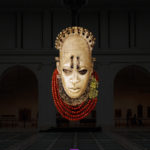
    Your grandmother’s aso oke does not belong to her. Neither do her beads nor the crown of your village king or images of your local masquerade. These things have been taken from you and put in a glass case, behind a line that says “Do not touch” so strangers can have something to take selfies within the “Africa” exhibits that are always the size of shoeboxes. 

    The Brooklyn Museum had a Yoruba exhibit so we went to see it. Boredom is a bastard, and so is curiosity. We had nothing to do and I wanted to prove to myself that I was Yoruba enough to recognise the things that had been stolen from us decades ago. Is there a better way to stick it to the white man than testing yourself on a pop quiz about your stolen cultural artefacts while they are in a glass case and on a pedestal you could only dream of being on?

    No seriously, I’d like to know.

    Anyway, as Priceless and I walked around the tiny exhibit I felt a range of emotions. I felt joy to recognise familiar things in a strange man’s land; things that felt like home. I felt conflicted to see the things that had been so integrated into my life that I took them for granted feel so foreign to me.

    I felt angry and ashamed at myself for my previous joy; this was obviously a terrible thing that no one should want. The cognitive dissonance is still something that I am unable to shake off. We saw some Ankara on display that I was sure my family had used for a burial once and some aso oke that had been stolen from Priceless’ family a century ago. We saw some crowns, definitely stolen from some unsuspecting king (or maybe it was a gift), and a video of a masquerade dancing on a tv screen on an endless loop. I would like to believe that many of these things were given in good faith.

    The dead should not have to live in the museum.

    Can we collectively decide to stop putting mummies in museums? At the very least, can we agree that putting mummies in museums is really weird?

    Think about it, if someone went to your ancestors’ burial sites, raided them, and put all their stuff and dead bodies on display for people to see, would that sit well with you? If you answered yes, you’re a psychopath. In fact, I’m convinced that everyone who went through the Egyptian exhibit without feeling a chill go through them is a psychopath. Whoever went through that exhibit and did not feel uneasy looking at dead bodies suspended in glass cases is a monster. Quote me. 

    Note: A huge part of me is disappointed that the mummies did not come to life and start moon-walking. Also, I was very glad to get out of that exhibit

    You can pull off wearing a butt plug in public if you try hard enough.

    Amidst the dread of walking amongst dead bodies, Priceless and I noticed this dude who was wearing something like a kente shirt, Ankara pants and a leather jacket. Why should I care about any of this, you ask? Well, he also had a fur tail on. A fur tail, I shit you not. And the only time I’ve seen a tail like that is as a butt plug. Now before you “well actually” me, I know it was probably a key chain or something but I’d rather think someone had the liver to wear an actual butt plug in public. Please, let me have this.

    “Feminist art” is code for vaginas and everyone has a nice one except Sojourner Truth.

    They had a “feminist” exhibit that was interesting, to say the least. The exhibit room was set up as a triangle, and the first thing you saw when you walked in was a dinner table with plates with different images on them. We started walking around the dinner table, and it was not long before we found a common theme; vaginas as far as the eye could see.

    There were flowy vaginas, psychedelic vaginas, “is that a vagina or a mangled piece of meat” vaginas, bloody vaginas, flower-metaphor vaginas so obvious my eyes rolled to the back of my head. There were a lot of vaginas. And underneath these vagina plates were names of notable women and goddesses. Hatshepsut had a vagina, Susan B Anthony had a vagina, Emily Dickinson had a vagina and then there was Sojourner Truth’s vagina.

    Sojourner Truth’s vagina was not a vagina. I’m not sure what it was, but a vagina it was not. I guess what I’m trying to say is, when accomplishments of complex and interesting women are boiled down into on-the-nose metaphors, it usually does not end well. 


    Guest Post by Aisha Aminu.