Written by: Matilda Inioluwanimi Adegbola
In a society where women had to fight to have their voices heard, Margaret Ekpo was a pioneering activist who risked it all to ensure women’s voices became impossible to ignore.
Born in 1914, during a time when Nigeria was under British rule and women were not allowed to vote, Ekpo completed her Standard Six education in 1934. Her dreams of entering teacher training were abruptly put on hold following the death of her father. To support herself, she entered the workforce as a pupil-teacher at local elementary schools.
Joining her husband, Dr John Udo Ekpo, a medical practitioner, in Ireland in 1944 allowed her to further her education at the Rathmines School of Domestic Economy in Dublin, where she studied for a diploma in domestic science. Upon returning to Aba in Eastern Nigeria, her husband began working at Aba General Hospital, while Ekpo established her own domestic science and sewing training school.
Ekpo’s introduction to politics was unexpected. Amid growing nationalist demands for independence from British colonial rule, local meetings were convened to protest widespread racial discrimination within the civil service. Her husband’s status as a government-employed doctor restricted his political involvement, leading Ekpo to attend these gatherings on his behalf. As the only woman present, she witnessed impassioned speeches by figures like Nnamdi Azikiwe and Herbert Macaulay, which inspired her to take action. Added to this was her observation of the rampant discrimination in the colonial medical sector, where Nigerian staff suffered unequal pay, inferior working conditions, and limited advancement opportunities. Colonial healthcare facilities were initially reserved exclusively for European officers, with access later extended to their local employees. Nigerian medical personnel, however, were prohibited from treating European patients.
Working alongside Funmilayo Ransome-Kuti, a key influence in Ekpo’s life, Ekpo actively advocated for women’s education, total independence from colonial rule, and universal adult suffrage. This advocacy was particularly crucial during the 1940s, an era when Nigerian women remained disenfranchised. It stayed this way even through 1951, when adult taxpayer suffrage was introduced, but it still excluded most women.
The task before Ekpo was clear: mobilise the women in Aba and its surrounding towns. Her vision began with the creation of the Aba Township Women Association (ATWA) and an ingenious strategy using salt.
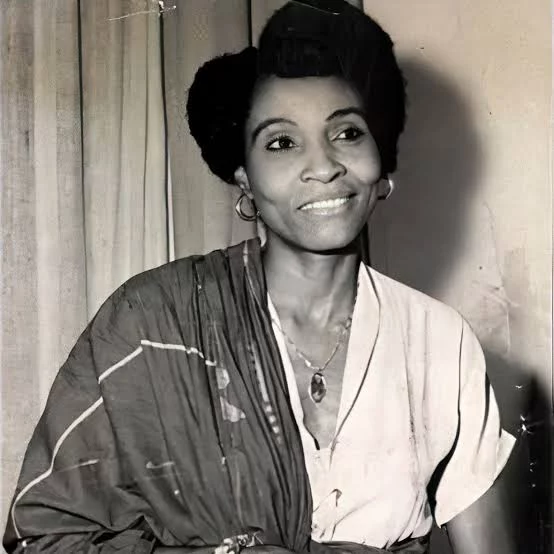
Following the Second World War, Nigeria faced widespread commodity shortages, particularly of salt. Following her shrewd plan, Ekpo acquired the entire salt supply in the Aba Market and tied access to it to ATWA membership. Women seeking to purchase salt were required to join the association, rapidly consolidating local women into a cohesive socio-political organisation. ATWA would evolve into a formidable political force, collaborating with the Aba Community League and the Aba Market Women’s Association to advance anti-colonial discourse, promote civic participation, and successfully dismantle the male monopoly on local governance by electing female representatives to the Aba Urban District Council.
In 1957, Ekpo’s own influence was formalised when she was appointed to the Aba Urban District Council Caretaker Committee. Despite making her mark locally, Ekpo had grander ambitions.
As a prominent member of the National Council of Nigerians and Cameroons (NCNC), Eastern Nigeria’s main political party, Ekpo served as the region’s sole female delegate at the London constitutional conference in 1953 and the Lagos constitution conference in 1954, ensuring women’s interests were represented throughout the nation’s constitutional negotiations.
In January 1959, she achieved a historic breakthrough alongside Janet Mokelu, with their appointment as Special Members to the Eastern House of Chiefs, a traditionally male-dominated institution.
Despite this and her significant influence among voters, when Ekpo sought nomination for the Eastern House of Assembly elections in 1957, the party hierarchy refused to endorse female candidates, blocking her candidacy. She persevered within the party structure, ultimately taking over the leadership of the NCNC women’s wing in 1960 – the year that Nigeria celebrated its independence.