Every week, Zikoko spotlights the unfiltered stories of women navigating life, love, identity and everything in between.
What She Said will give women the mic to speak freely, honestly and openly, without shame, about sex, politics, family, survival, and everything else life throws our way.
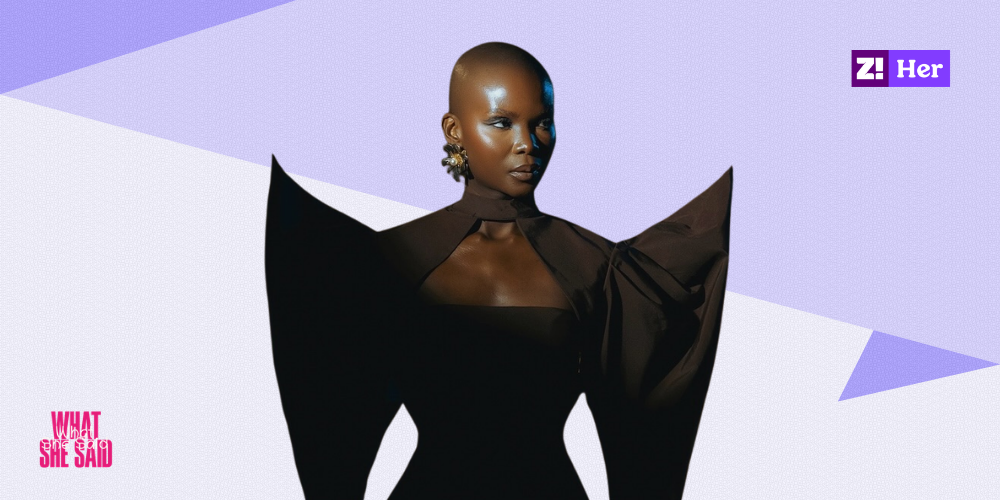
The subject of today’s #WhatSheSaid is Boma Dokubo, a 30-year-old creative strategist, model, founder, and advocate from Bayelsa State. Miss Grand Nigeria 2023 and now representing Oyo State at Miss Universe Nigeria 2026, Boma talks about being drugged by someone she considered a friend, rebuilding her career, starting her own agency, and everything life did to her in the three years between her two crowns.
Tell me about yourself. Where are you from, and where did you grow up?
My full name is Boma Dokubo, and I am 30, which I still can’t believe I’m saying out loud. I’m from Bayelsa State. I was born in Lagos but moved back to Bayelsa when I was about six, so that is really where I grew up. At 12, I moved to Rivers State and spent a few years living with my oldest sister, then moved back to Bayelsa. I went to university in Edo State, and immediately after university, I moved to Lagos. So different parts of Nigeria have shaped very different versions of me.
I was actually quite a popular child, which is funny because I don’t think I admit that to myself enough. I’m the sixth of seven children, but people in church, around our compound and in the community would call my parents Mama Boma and Papa Boma. I wasn’t the loudest child, but I was the child who did everything. I won prizes at birthday parties because I could dance. I was put into the adult choir when I was about 10. I started playing keyboard around that age and picked up guitar a few years later. I was in every church programme, every dance recital, every cultural performance.
Then, around 12, something shifted. I became much more inward. I started experiencing what I now understand was probably my own share of depression and insecurity. I remember being extremely uncomfortable with my body changing. That was also when writing really began for me. I started to journal literally everything I was thinking. At the same time, I had a complete turnaround academically. From around JSS2 until I finished secondary school, I don’t think I ever came second in class.
Faith was also a very big part of my childhood. I grew up in a very conservative church environment. I was the girl in the longest skirt. I didn’t wear trousers, earrings or makeup. Even though I had always been interested in fashion and beauty, I didn’t really get to explore them until university. Music, dance, writing, academics and faith probably defined me most. But there was also this very creative part of me that took much longer to have permission to come out.
With all your intellectual and creative skills, what career did you think you would pursue?
I honestly never had one straightforward answer. At one point, I decided banking was it, then accounting, partly because every time I walked into a bank, everyone looked so smart and successful. But at the same time, more than anything, I was Boma the musician. I was singing, writing, making covers, and starting to see that art could become something more than a hobby. I also somehow stumbled into baking and turned it into a really successful little business that helped me financially through my final year at university.
The engineering I studied was much more my parents’ choice than mine. Their argument made sense: I’m from Bayelsa State; I was good at maths and physics; petroleum engineering was a professional course; and oil and gas were lucrative. And ultimately, they were paying my school fees, so I thought, fair enough, let’s do it. Pageantry was absolutely never part of the plan.
How did pageantry come into your life?
My older sister had done pageantry, Miss Nigeria, but I was quite young and mostly just remembered seeing pictures. I never imagined it for myself. Growing up with four sisters, I genuinely thought I was the least attractive girl in my house. My sisters had what society would probably describe as softer, more feminine features. I had much stronger features and strong cheekbones. Beauty felt like something that belonged to my sisters.
I had already been modelling for a few years before pageantry even came up. I met another model who was also a pageant girl, and she casually suggested I should consider competing. My immediate response was basically, definitely not me.
Then, I had just left my corporate engineering job. I was exhausted and depressed, and trying to figure out what came next. A few days after that conversation, I thought, What exactly do I have to lose? And that was genuinely how pageantry entered my life.
Can you tell us more about your early experience in pageantry?
The first pageant I had originally applied for was Miss Universe Nigeria. But while preparing, I started to realise through conversations with my coach and chaperone that I probably wasn’t financially or emotionally prepared for that competition at the time. Then the opportunity came for me to represent Nigeria at Miss Grand International instead. Which sounds reasonable until you remember that I had never done a pageant before.
I was literally learning how to walk in six-inch pageant heels, how to catwalk, how to move in an evening gown, how to walk in a bikini, and how to present myself as a queen. And then suddenly, I was preparing to fly across the world and compete against more than seventy women. I had barely a month. It was one of the most ridiculous decisions I had ever made, but once I said yes, I knew I was going to give it everything I had.
I finished in the Top 20, won Best National Costume and placed highly in the Grand Voice competition. Those things meant so much to me because they became evidence that I could walk into something completely unfamiliar, feel terribly unprepared and still rise to the occasion.
What was life like behind that first crown that people didn’t get to see?
Behind that first crown, there was a woman trying very hard to prove that her life wasn’t falling apart.
I had just left a job that looked perfect on paper because I was deeply unhappy there. My family didn’t even know at first. I had spent years hearing that I was too emotional, that I took things too deeply, and I had genuinely tried to become less like that. I tried to stay in jobs I wasn’t passionate about. I tried to exist in environments that did not fill my spirit because that seemed like the sensible thing to do.
But I’m an artist. I feel things deeply. I think deeply. And eventually, I had to accept that constantly fighting that part of myself was making me miserable. So when pageantry came, there was a part of me that desperately wanted to succeed at something after making this terrifying decision to leave the life everyone expected me to live. People saw the crown. They saw the looks, the preparation, the international stage, the achievements. But underneath it, there was a woman trying to rebuild her confidence in her own choices.
At the time, I think I was trying to prove a point to the world. The biggest difference now is that I think I’m trying to prove one thing to myself.
Why did you return?
For a while after Miss Grand, I genuinely thought I was done with pageantry. It was incredible, but it was also hard. But over the years, after everything else life brought, loss, grief, drastic career transitions, healing and rebuilding, I started to miss what pageantry represented to me. There is something about pageantry that gives women permission to shine very loudly. You can shine in fashion, in how you speak, in your career, in advocacy, in creativity, in the way you represent where you come from. It creates this very interesting space where womanhood itself is allowed to take up room.
And then, when I actually began seriously considering Miss Universe, that familiar voice came back. Who do you think you are? You’re not prepared enough. Life has happened to you. You’re too broken. You don’t have what you need. Suddenly, I realised that the message I keep trying to put into the world, that you get to decide whether your circumstances have the final word on your life, was a message I needed to live myself again.
So this time I’m proving a different point. Not to the world but to myself. What has happened to me does not get to define me. I can be afraid and still move. I can feel unprepared and still show up. And I am allowed to begin again.
What She Said: My Perfect Boyfriend Had a Wife and Three Other Girlfriends
Very inspirational. It’s not always easy to come back. Can you walk us through the three years between these two pageants?
I’d like to start with the traumatic experience that actually happened three years before Miss Grand Nigeria, in August 2020.
I was drugged by someone I considered a friend at the time, someone I had met through the industry. I was drugged without my knowledge or consent, and the effects were extremely severe. I experienced hallucinations, lost consciousness and became very unwell afterwards. For a period of time, I struggled to function normally and had to receive psychiatric care. Recovery took a long time and affected both my mental and physical health. That period after the abuse was when I got some of my project management certifications. It was when I pushed myself into getting a job at a multinational engineering company. I was very quietly rebuilding my life after what had been the most devastating period of it.
It wasn’t until Miss Grand that I was encouraged by my chaperone to speak publicly about the abuse. My family also had concerns about me becoming, for lack of a better expression, the poster girl for abuse. They wanted me to approach the conversation gently, and I understood that. I also didn’t want everything I had rebuilt afterwards to disappear behind this identity of being a victim. So I spoke about it in subtle ways. I spoke about getting from the girl who genuinely did not know if she would make it through another day to becoming this woman who could stand on an international stage representing her country.
And then life did what life does.
The three years after that have been a lot. There has been loss, grief, depression, drastic career transitions, questioning around faith, building my own agency, becoming a creative strategist, returning to writing after not writing for a very long time, building two publications, new relationships and the reevaluation of old ones. I got into long-distance running, which completely changed the way I thought about discipline. And then there was turning 30.
So these three years have held extreme pain, loss, grief and sadness, but they have also held an extraordinary amount of growth, lot of healing, a lot of self-reflection, learning to love myself, learning to appreciate myself and learning to have the courage to build the things that actually matter to me.
What did healing actually look like for you?
Healing has never looked particularly beautiful to me. And I don’t think it has been linear either. There wasn’t a morning when I woke up and thought, okay, I’m healed now. For me, it has looked like telling myself the truth. It has looked like a doctor’s appointment. It looked like rebuilding a career when I didn’t feel particularly confident about anything. It has looked like learning to trust again, forgiving myself and others.
Sometimes healing has been prayer. Sometimes it has been journaling. Sometimes it has been running. Sometimes it has been sleeping. Sometimes it’s been walking away from a relationship. Sometimes it’s admitting that I don’t have the capacity for something.
I think social media sometimes presents healing as becoming this perfectly evolved person who has transcended everything that hurt her. That hasn’t been my experience. My experience has been becoming someone who knows what hurt her and still chooses to participate fully in her own life.
Was there anything you had to unlearn about what it means to be a strong woman?
Absolutely.
I think strength used to mean something very different to me. I’m naturally a hard worker. I’m disciplined. I’m extremely passionate. And for a long time, I thought that was a strength. Just keep going. Endure. Push through it. Overcome it. But the older I get, the more I realise that strength at its core has much more to do with honesty and authenticity. Strength is having a true relationship with yourself. Strength is accepting who you are and where you are. Strength is sometimes rest. Strength is being honest about your capacity.
And I think particularly as women we’re taught an enormous amount about endurance. Endure the relationship. Endure the work. Don’t be emotional. Be the strong woman who can take anything. I don’t believe that anymore. Sometimes strength is standing up for yourself and saying, I will not accept this. Strength is saying, I don’t have the energy for this right now. Strength can be taking a step away from something that doesn’t inspire you, fuel you or feel aligned with who you are.
Once I realised that having an honest relationship with myself became more important than proving to everybody else that I was strong, the very definition of strength changed for me.
You also mentioned your faith. What did your relationship with it look like during your hardest moments?
I started cultivating a personal relationship with God quite young. I was exposed to Christianity early, but I was also naturally inquisitive, so faith became something I wanted to understand personally rather than simply inherit. One of the most profound things I have realised as I’ve gotten older is that my relationship with God and my relationship with myself are far more connected than I used to understand.
Somewhere along my healing journey, I had to confront this question: how could I claim to love God while being cruel to myself? How could I speak about the value God placed on me while constantly speaking to myself as though I had none? That changed what spirituality looked like for me. There were parts of my faith that had become performative. I could pray for hours, but then speak terribly to myself afterwards.
So spirituality started becoming much more practical. Sometimes it looked like journalling. Sometimes it looked like taking myself on a solo date. Writing love letters to myself. Taking a bath because I wanted to care for my body. Resting. Being honest with God instead of trying to sound perfect when I prayed.
Faith taught me to pray, yes, but also to get up and act on the gifts I’d been given. That period of radical self-care and quiet creation was the seed for ALBA Studios: the first time I began to structure my creative identity into something tangible that could belong entirely to me.
Entering your 30s during all of this, did it change what you wanted or what you were willing to tolerate?
Thirty certainly doesn’t look the way I imagined it would when I was in my early twenties. And I always say something to my friends that even sounds funny to me: I feel younger at 30 than I did at 26.
At 26, there was this pressure I carried about everything I thought I needed to have and be. I assumed that by 30, the pressure would be ten times worse. Somehow, it has been almost the opposite. There are still expectations around what a woman should have achieved by this age. There are still moments when social media gets into your head, and you start wondering whether you should be married, whether you should have children, whether your career should look different. I’m human. Those thoughts still happen but I have become much better at tracing myself back to what actually matters to me. I understand now that my journey is peculiarly mine. There is no such thing as me being a late bloomer because I cannot be late to my own life.
My relationships have changed, too. I used to think having lots of people around me meant I was loved. I understand the importance of boundaries now. I would rather pour from overflow than constantly pour from depletion. Thirty hasn’t made me feel like I’m running out of time. It has made me much more interested in making sure that the time I have actually belongs to me.
So you built ALBA Studios while navigating all of this. What did building something of your own mean to you?
ALBA Studios grew very organically. Long before it had a name, I was already the person friends came to when building something. I would help with naming, positioning, visual direction, and how the whole idea came together. At first, I didn’t recognise it as a business or even a distinct skill set; it was just something I was doing naturally alongside engineering and pageantry, at one point even turning it into a side hustle.
So I had always done creative strategy. I just never really had the courage to put my own name or vision behind it and say, “This is what I do.”
Eventually, I realised there was a clear thread running through all of it. I wasn’t just helping with aesthetics, I was helping people turn an idea into something coherent and intentional. That became ALBA Studios: a strategy-led brand positioning and identity studio. Today, I work with brands, particularly within African fashion and luxury, to help them clarify who they are, how they should be positioned, and how that translates visually.
Building something of my own came from stripping away so many things: people who didn’t affirm where I was moving, environments that didn’t feel like me, and inherited expectations about what my life was supposed to look like. I genuinely believe your environment can place a ceiling on your capacity, and environment isn’t just where you live. It’s your people; it’s the voices surrounding you.
It was terrifying to take that step, but there was also an incredible sense of validation. Beyond making the most money I’ve ever had, I’m the most fulfilled I’ve ever felt professionally. There are nights I’m working at 3 a.m., and I suddenly think, Oh my God. I am awake at three in the morning doing work, and I’m not angry. I’m not depressed. Ideas are flowing. To experience that through something you get paid to do is such a blessing.
I named it ALBA because it means dawn or sunrise. For me, it represented a personal line in the sand; a symbolic marker of beginning again with clarity and intention.
When you talk about “beginning again,” does that philosophy extend beyond your studio work into other areas of your life?
Yes, absolutely. That’s actually where Alba Dawn comes from.
The connection between my agency and my impact work is very personal to me. Through ALBA Studios, my work is about brand identity, clarity, and helping something become what it has the potential to be. Alba Dawn takes that exact same belief beyond companies and applies it directly to people and communities.
While the studio is my professional practice, Alba Dawn is my social impact initiative. It’s centred on helping people find a pathway back after difficult or disruptive periods in their lives; built around rehabilitation, education, community, and access to opportunity. Because recovery isn’t just emotional; people need practical, tangible support to begin again.
My mother taught me early that if your life isn’t directly impacting someone else, all the success in the world doesn’t mean much. After everything I survived, I became deeply drawn to people whose lives looked like mine had at my lowest point, people society had written off.
That’s what led me to prison outreach.
I got the opportunity to volunteer with an organisation during a prison visit, and I genuinely think I will talk about that day for the rest of my life. When you hear the word prison, you automatically create an image in your head of the people you expect to meet there. But I walked into that space and saw women and young girls who were educated, articulate, intelligent, and still had this light in their eyes.
I remember thinking, ‘How can someone who has been confined within four walls for years be speaking with so much hope about what she is going to do when she leaves?’ Because I knew people outside those walls who had already decided their lives were over.
That did something to me.
If you’d like to be my next subject on #WhatSheSaid, fill this form.
What does a crown represent to you now, at 30, having built a full life beyond pageantry?
Pageantry gives you visibility. It puts you in rooms. It gives you access to government, institutions and people you may not ordinarily have had access to. A platform like Miss Universe can genuinely amplify the things you care about. But beyond all of that, there is something deeply personal about this crown for me. Whenever I’m asked, why Miss Universe, why now, my answer is very simple. I am proving a point to myself first. That my circumstances do not determine the direction of my life.
For years, I wanted to return to pageantry, but life kept getting in the way. And this year, I found the courage to say, I’m going to pursue what I want, irrespective of where life has placed me or how old I am. My mother reminds me of that, too. She got her university degree in her late 50s. She sat in classrooms with people younger than some of her own children and said, “You know what, I’m getting this degree.” That inspires me enormously.
So what does the crown mean to me now? It means I refused to decide that I was too old, too late or too far gone to pursue something that still mattered to me.
When the crown comes off, the cameras stop, and nobody needs anything from you. Who is Boma?
Boma is an artist.
At the core of who I am, I think that is probably the simplest answer. I have always felt things very deeply. I love deeply. I hope deeply. I dream deeply. I feel most at home in myself when I am being completely authentic, and sometimes authenticity is unconventional. Sometimes originality is strange. Sometimes it isn’t particularly palatable because it doesn’t look like what people are used to. But that is where I feel most alive.
With my agency, people literally pay me for my eye, my taste, the way I interpret things. Even my pageantry journey is being built from that same place of artistry. So when you remove the crown, the cameras, the work, and everybody else’s expectations, I am still somebody who wants to create. I am still somebody who wants to feel something deeply and turn it into something.
I hope I never lose that.
If you don’t win Miss Universe Nigeria, what do you hope this chapter still gives you?
Can I say this chapter is already giving me so much?
The courage it took for me to buy the form and actually apply already felt like a win. This is the first time I am actively juggling my baby agency with something as demanding as pageantry. So I am learning an enormous amount about time management, responsibility, emotions and stress.
But I think the most striking thing about this season is that pageantry has become such a mirror. A mirror into certain character flaws. A mirror into what I genuinely believe. A mirror into my integrity. A mirror into the relationship I have with myself. It has also put me in rooms and conversations with incredibly inspiring women. I’ve heard women talk about what they’re building, what they believe in, and what they want to change, and I’ve walked away inspired, even though technically we are competing against each other.
So this process has already stretched me enormously. Of course, winning the crown would be incredible. But I don’t need the final night to tell me whether this entire chapter was worthwhile. It already has been.
And if you do win, what do you want to do with that platform?
I genuinely think I would be doing the same thing, just in a different capacity. I want my life and my story to reach people who feel like society has written them off. People who think they have failed. People who think certain decisions they made, or decisions other people made that affected them, have somehow permanently limited what their lives can become. I want them to know that those limitations do not have to stand if they choose to rise again, to begin again.
But beyond words of hope and encouragement, I want to show people a practical pathway. I am extremely passionate about education. My mother always said that people can take almost anything material away from you. You can lose your car, your house, your money. But the knowledge you have gained is something nobody can take away from you.
So I would love to help create access to education and skills for people who need a new beginning, especially people coming out of situations where their lives have been interrupted or completely derailed. Support for people recovering from addiction, survivors of domestic violence, and people trying to rebuild after incarceration. Encouragement is important, but people also need tools. They need education. They need skills. They need meaningful work.
I don’t just want to stand somewhere and tell somebody, you can change your life. I want to be able to say, “You can change your life, and here is something that can actually help you do it.”
The heart hasn’t changed. I just have a clearer idea now of what hope needs to look like when it becomes practical.
What do you hope women reading your story take away from the woman you’ve become?
This is the one message of my life, truly.
Everybody deserves an opportunity to begin again.
Every morning you wake up is another chance to go at life again. To fight for the life that you want. To look your limitations in the face, look your circumstances in the face, and say, “You do not get to tell me when I’m through. I don’t care what was taken away from me. I don’t care where I ended up. I don’t care how far gone the world thinks I am. I can rise again. I can take up space again. I can reinvent myself as many times as I need to. I can change my life as many times as I need to. I can start again and again and again, at 20, at 30, at 40, at 50, at 80. I get to determine when I’m through.“
And I hope every woman who has been faced with whatever challenge life has put in front of her, her background, where she comes from, what she has experienced, the mistakes she has made, the things that have been done to her, remembers that.
As long as you still have breath in your lungs, you can begin again.
You’ll Also Love: I Sometimes Wonder If I Married the Wrong Brother