Sometimes, life puts you in messy situations where you’re not sure if you’re doing the right thing or not. That’s what Na Me F— Up? is about — real Nigerians sharing the choices they’ve made, while you decide if they fucked up or not.
Tade* (43) never imagined she’d have to choose between her husband’s life and her friend’s trust. But when a medical crisis pushed her family to the brink, she was pushed into making a bad decision.
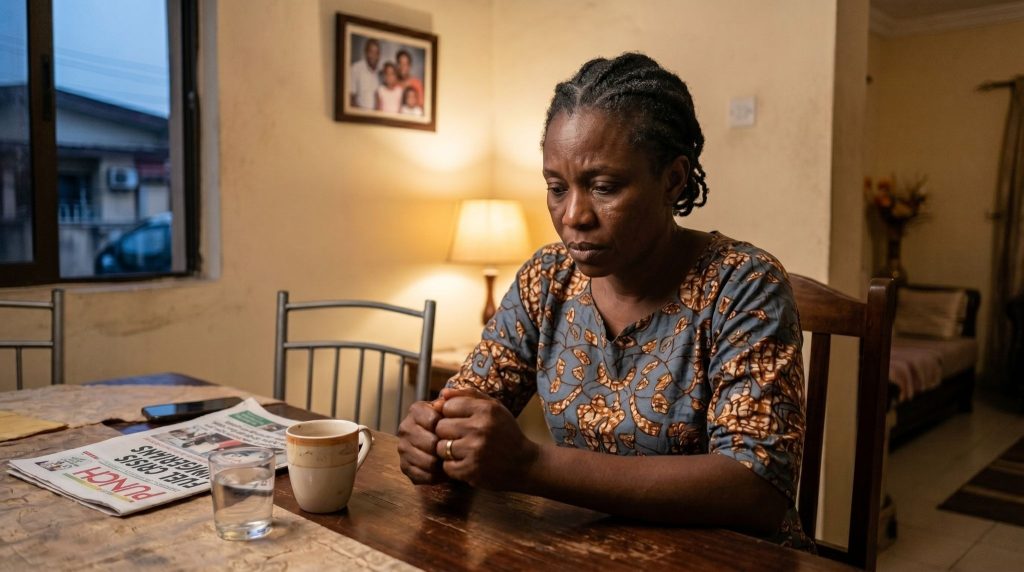
This is Tade’s dilemma as shared with Mofiyin
I met Bola* in 2007 when we were roommates in KwaraPoly. We grew close, and she eventually introduced me to her cousin, Shola*, who later became my husband. Even after Bola relocated to the UK to work in healthcare and got married, we remained close.
By 2021, I’d moved to Lagos when Bola approached me with a business opportunity that felt like an answer to my prayers. She wanted to start a wholesale cold room business and asked me to manage it for her.
I didn’t have a stable job then, and my husband worked as a junior sales representative for a beverage company. So I accepted her offer.
Bola invested heavily in the business, and it took off. We agreed that I would handle the day-to-day operations and remit money to her weekly in exchange for 15% of the profits. At the time, that income was enough to sustain my family.
Everything changed in November 2023 when doctors diagnosed Shola with kidney disease.
At first, we managed the dialysis cost, which was about ₦55k a week. But as his condition worsened, he needed more sessions and eventually had to stop working altogether.
Our bills quickly piled up. Between hospital expenses and school fees for our three children, we were barely staying afloat.
I told Bola everything we were going through. She sympathised, but that was where her involvement ended. Eventually, I asked her to increase my share of the business profits. She said she was still recovering her investment and had financial obligations of her own.
After a lot of pleading, she reluctantly agreed to increase my share by 5%. It barely made a difference.
As Shola’s illness worsened, I also saw a different side of his family. Like Bola, most of them offered little practical support. They only prayed or offered encouragement. The pressure kept building. I was caring for a sick husband, raising three kids, and trying to keep our heads above water. Every week came with another bill or a reason to panic about Shola’s health.
That’s when I started taking small amounts from the business. I always told myself I’d replace the money later. In 2025, Shola developed an infection that affected his dialysis fistula. Doctors said he needed urgent treatment that would cost ₦3 million.
I remember hearing that figure and feeling completely defeated. For weeks, I tried to raise the sum, but nothing worked.
One night, I woke up and heard my husband crying. Until then, he’d handled everything calmly, so hearing him break down shattered me. In that moment, I realised I couldn’t sit back and watch him die.
Without Bola’s knowledge, I sold one of the business’s industrial freezers for almost ₦5 million. This time around, I also convinced myself it was temporary, and I’ll return every last kobo I owed.
Shola’s procedure was successful, and for a brief moment, I felt hopeful. But that relief didn’t last long. A few months later, doctors said Shola’s kidneys were deteriorating beyond what dialysis could manage. The only real option left was a kidney transplant that would cost more than ₦14.5 million. By January, we’d sold personal belongings and exhausted contributions from family and friends. Even after all that, we’d only raised about ₦6 million. My last hope was a bank loan a friend was helping me process.
I became convinced the loan would come through before the shop rent was due in April, so I made another terrible decision.
I used money that had been set aside for the rent and sold some of the business’s stock to begin the transplant process. Just like before, I told myself I’d replace everything before anyone noticed.
But things didn’t go according to plan. In the last week of March, the bank rejected my loan application. I almost collapsed when I heard the news.
By then, I’d already used the money to begin the transplant process. And when I couldn’t pay the ₦4.8 million rent, we lost the business premises.
I couldn’t bring myself to tell Bola. Instead, I quietly moved what remained of the business operations to my house and hoped I could somehow fix the mess before she found out.
But Bola had become suspicious. Sales had dropped significantly, and the figures I remitted no longer reflected what the business used to generate. I suspect she sent someone to inspect the shop. Last month, she called me and lashed out after discovering the business was no longer operating there.
By then, I was too exhausted to keep lying, so I confessed. She rained every insult imaginable on me and threatened to involve the police.
The issue quickly spread through the family. Ironically, that was when people finally stepped in. They persuaded Bola not to pursue criminal charges, arguing that my husband was critically ill and that I was the only person in a position to repay the money.
I’ve agreed to pay her back, but she’s already started making arrangements to recover whatever remains of the business. What makes this even worse is that she still doesn’t know I’ve sold two industrial freezers and some of the business’s stock.
I know Bola’s anger is justified. She trusted me completely, and the business was never mine to sacrifice. But when I look back at everything that happened, I still don’t know what else I was supposed to do. I wasn’t spending the money on luxury or trying to enrich myself. I just wanted to save her cousin’s life.
My husband is still waiting for his transplant and grows weaker by the day.
We’re holding on to the hope that he’ll finally have the surgery before July. I’ve accepted that I may have lost Bola’s trust forever. But when I think about that night I heard my husband crying, I understand why I acted out of desperation.
Read Next: I Moved In With My Older Brother And Fell For His Wife