Someone you know has left or is planning to leave. 1,000 Ways to Japa speaks to real people and explores the endless reasons and paths they take to japa.
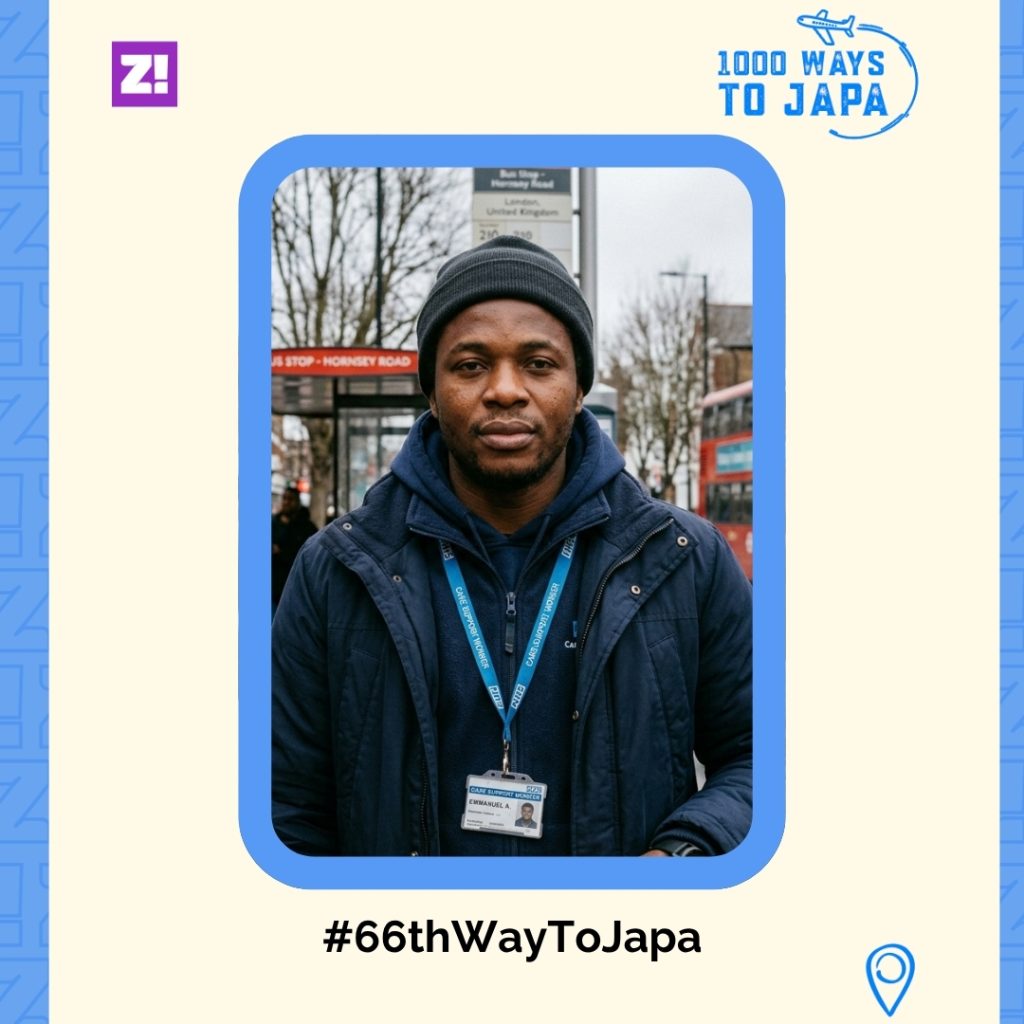
Joseph* (24) had just gotten his Banking and Finance degree when he decided that Nigeria wasn’t going to give him what he was looking for. So, he moved to the UK on a Health and Care Worker visa. In this story, he shares what the move was like, what life in the UK has taught him, and what he wishes he had known before arriving.
Where do you currently live, and when did you leave Nigeria?
I live in the UK. I left Nigeria in 2024.
What were you doing in Nigeria before you left, and what inspired your decision to move?
I had just finished university. I studied Banking and Finance. I moved about a year after I graduated. I was mainly motivated by my drive for better opportunities and a better future. Nigeria wasn’t giving me what I needed, so I made the move.
What visa route did you use to get to the UK?
I came on a Health and Care Worker visa. It’s a type of work visa where a UK employer sponsors you. The company offers you a job and sponsorship, and you submit that to the embassy along with other requirements. From there, you go in for your biometrics, answer some questions about why you want to travel, and wait for your visa to be issued.
How did you get the job that gave you the sponsorship?
One of my friends who was already here in the UK had a good understanding of these things; he helped me find the job and navigate the application process.
What documents were you required to submit?
When you’re applying for the visa, they ask for your basic information: your name, age, where you’re from, and the reason for travel, which, in my case, was for work. You’ll also be required to provide proof of employment from the company, such as an employment letter.
You’ll likely also be asked to take some medical tests, like a tuberculosis test and an English proficiency test, such as the International English Language Testing System (IELTS) exam, to demonstrate your English proficiency. The biometrics appointment is a key part of the process, too.
When you’re visiting the embassy, make sure you answer all the questions with a clear, honest reason for your travel. Don’t go there scared; respond with boldness.
That seems like a lot. How long did the process take, and how much did it cost?
The entire process took about seven months. In terms of cost, the visa itself was about £300, and my flight was roughly £1,000. All in, I’d say I spent about £1,500 to get here at the time. I’m not exactly sure how much it costs now.
You’ve been in the UK for roughly two years now. What is life like there?
So far, it has been a good experience; life here is organised and structured. There are more opportunities, and security is on a completely different level from Nigeria. If you follow the right path here, the system rewards you. It actually works.
What were some culture shocks you experienced in your first few weeks in Leicester?
The first thing that shocked me when I arrived was the cold; nothing in Nigeria prepares you for it. The second thing was 24-hour electricity; that sounds like a small thing, but when you’ve spent your whole life in Nigeria, experiencing uninterrupted power makes you realise how much we’ve been denied back home. In Nigeria, they made providing electricity look like some kind of favour.
I was also surprised by the orderliness. Everyone stops for an ambulance on the road, and everyone respects police sirens. There is structure in the smallest things. If you happen to find yourself without food, whether you’re an immigrant or a citizen, there are food banks you can go to. All you have to do is show them your ID, and they give you free food, fruits, and provisions. I don’t think anything like that exists in Nigeria.
Public transportation is also something else. Buses, trains, and everything run on a schedule. The buses have cameras, and when you miss a bus, you have to wait for the next one and best believe that it will come at the time it’s supposed to.
What are the downsides?
The tax system is one thing people genuinely complain about. The percentage they take is high, and sometimes it feels like that money goes to people sitting at home on benefits. It’s frustrating, even if the system ultimately uses the money to build the country.
Healthcare is another thing; it can be good or bad. Booking a doctor’s appointment is difficult, not just for immigrants, but for citizens, too. Luckily for me, I haven’t really fallen sick since I came here, but from what I’ve heard, the process can be burdensome for others. Getting an appointment when you need it is a real challenge.
And then there is just the feeling of not being home. It’s hard to explain, but there is something that constantly reminds you that this is not your country. No amount of good infrastructure takes that away.
What do you currently do for work?
I work as a carer. The job is good, and my co-workers are nice and supportive.
What do you miss most about Nigeria?
Family, first and foremost. I also miss the food; don’t get me wrong, you can find Nigerian food here, but it’s expensive, and it’s just different. Beyond that, I miss the freedom of knowing I’m in my country. There’s a certain ease that comes with being home that you can’t replicate anywhere else.
If Nigeria had been different, would you have stayed?
Yes. If I had a well-paying job and if Nigeria had the structure: 24-hour electricity, good security, I would not have left. Even people with money in Nigeria are looking for ways to leave. It’s not just about money. It’s about structure. Fix the structure, and many people won’t need to go anywhere.
Do you ever plan to return to Nigeria permanently?
At some point, yes, but as a young man with opportunities here and a job that lets me take care of myself comfortably, there’s no reason to come back now. If Nigeria improves, I’d go back, but till that time.
Financially, where do you have more buying power?
Here in the UK, obviously. But things are also very expensive here. Rent, food, everything. It’s not like you’re earning pounds and living cheaply. The cost of living is increasing day by day.
What advice would you give someone looking to move to the UK with the Health and Care Worker visa?
First, don’t come here expecting to be rich in your first year. Come with a plan, come with patience, and come with a reason. Don’t just travel because you want to; figure it out when you land.
Second, trust the process but protect yourself. The company gives you a job offer and sponsorship, and you submit it to the embassy. Don’t give your money to random people who claim they can sort your visa. Do it yourself, or work with someone who has been through it and genuinely knows how it works. When you go for your visa interview, go in confident. Tell them clearly why you want to travel. Be honest and be bold.
On a scale of one to ten, how would you rate life in the UK?
Eight out of ten. The systems work really well. You can pay your bills, you have opportunities, and things make sense here. It loses two points for the tax, the healthcare wait times, and the reality that no matter how good it gets, it is never quite home.
Want to share your japa story? Please reach out to me here.