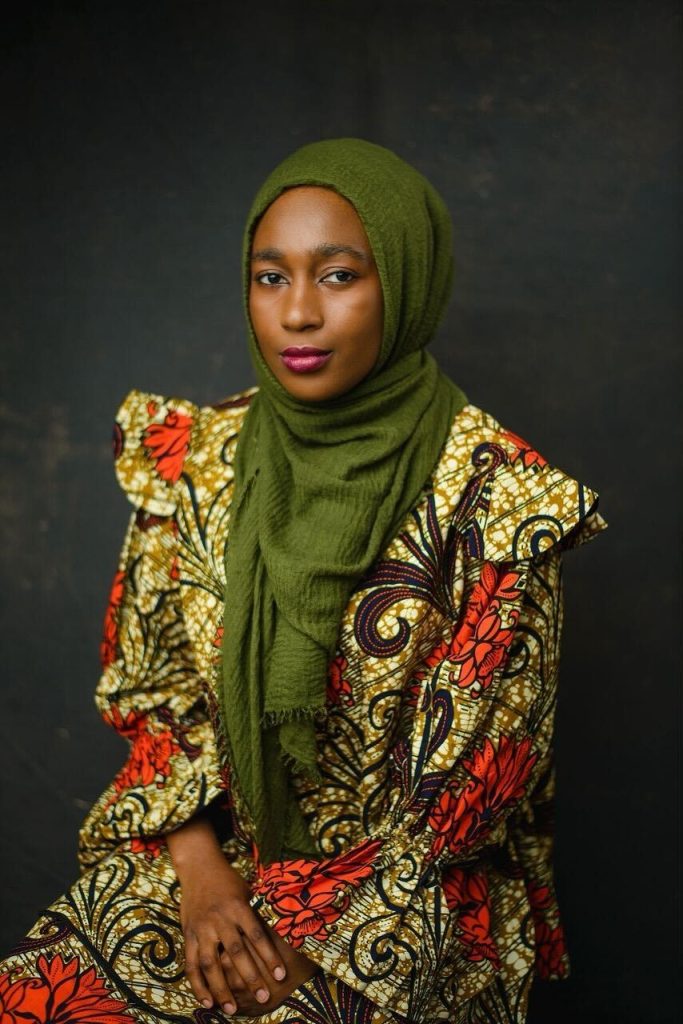
Korede Azeez, director and filmmaker, took a break from her 9-5 between 2020 and 2024. She didn’t plan for two of her films to get featured on global streaming platforms, but somehow, her dedication and hard work paid off. Our conversation with Korede was insightful and inspiring. At the core of her work, she is eager to build a platform for underrepresented groups and promote agency for women.
In this interview, Korede Azeez expands on the work she’s done, how her experiences inspire her output, and what she thinks creatives need to do more of.
I Know You Have a Degree in Mass Communication, But How Did You Get Into Filmmaking?
I have always been fascinated by stories and started reading at about five years old. When I was 8 or 9 years old, I wrote my first story. Then, growing up, I was in the drama club. So, my film career actually started with acting. I was a teenager in a series show, and it was such an exciting experience. I was really fascinated by the entire process and the prospect of Nollywood. Unfortunately, the show never made it on air cause the producer died. Then camera phones came out, and my siblings and I started acting and recording ourselves.
So, your interest in films has been there from a young age?
Exactly. Then it was time to go to university, and I remember being fascinated only by theatre arts. But then I did mass comm, and throughout my time in university, I was part of the radio drama. I used to listen to the BBC radio drama “Story Story,” and thought about reproducing what they did. Then I used to follow Tomi Adesina’s blog ‘Dear Future Husband’, and I asked her if I could turn it into a radio drama, and she said yes. That was my first time writing a script.
How did that translate into a career?
After university, my curiosity kept pushing me to think about what’s next, and then I ended up doing TV. Journalism wasn’t really for me, so I moved to the next best thing, which was film. I started reading about film, studying on my own. Then, during NYSC, I got a job at BBC Radio. While I was working, I met a friend who wanted to start a film collective, and we did, and that was how I made my first short film.
What’s it like being a full-time filmmaker?
First off, I’m not a full-time filmmaker.
Oh, interesting! What do you do?
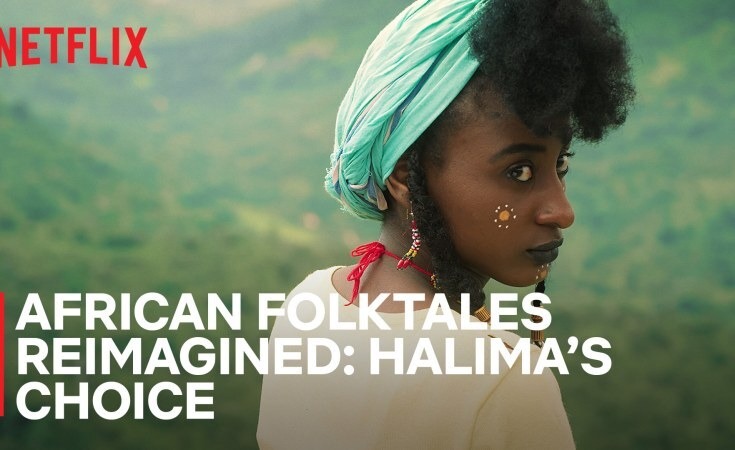
I’ve worked in operations full-time, and always worked full-time. The only time I didn’t work full-time was during COVID, from about 2020 to early 2024. Interestingly, it was during that period that my career blossomed. That was when I made my first feature film, “Blooms in June,” and when I got my Netflix deal that brought “Halima’s Choice” to the world. Then, “With Difficulty Comes Ease” with Prime Video.
Seems like a lot was going on at the time.
Yes, a lot was going on at the time. I was also pregnant during that period. And I think this is important because creatives always have the question of how to make things work. How to keep money coming and do it full-time.
Exactly.
Keeping money coming is important, but knowing how to do that is even more important. A lot of my experience with film, especially the things that went right, came from working in corporate spaces. So, I decided it was something I was going to do. Get corporate experience, do sales, marketing, and operations. I’m very excited to put everything I’ve learnt into practice when I’m ready to dive into filmmaking full-time. I always tell young creatives to get a job. But it won’t be the same path for everybody.
Some people have family money and a trust fund; if you’re one of them, then by all means. But if you know taking it on full-time will put a strain on your family, please get a job. Sometimes I think getting a job can give a better perspective and will help you write about certain things. Like if you worked in a hospital, the way you would write a hospital drama would be different from someone who doesn’t. The corporate world gives an insight into structure, and I think that’s something missing in the creative world and film space.
So it’s like you learn the language of the world or the genre you’re writing about?
Yes.
How instrumental would you say language is in shifting our perspectives?
Very instrumental. This was something I learned during my time with BBC Radio. Some dramas were in Hausa and Pidgin. The pidgin thing is interesting because, as much as we’re diverse, pidgin is like a universal language for Nigerians. Those of us who speak proper English are few. Nigerians are mostly uneducated or undereducated.
I mean, naturally, translation won’t be 100%, as things can get lost in translation. Living in the north has also helped me gain perspective, as I see the importance of knowing the language for where you are. There’s just something about seeing someone who understands you and speaks your language. And that’s the thing, if we’re trying to make an impact, we need to address the language issue. These films that we’re making are they reaching the people they ought to meet?
Also Read: Uzoamaka Power Made Call of My Life for Everyone Who Has Ever Loved Too Much
Do you think we haven’t been able to reach the people we need to because there’s an issue with our approach in films?
Sometimes it feels like a lot of the films and media products we come up with are for optics and just to say that yes, we’ve done something. Some people do the work and have an impact. But generally speaking, I think about how you can grow an ecosystem off the back of one product. Let’s assume you are doing something advocacy-related. There is nothing wrong with taking some of the revenue and creating a road show with a strong message, or spinning it into a play in a different language.
The cinema culture that we keep trying to push, not everyone can relate to or engage with. We need to understand the different methods that can be used and which ones speak best to a particular group of people. I think we’re also very greedy. People don’t want to put their money into things unless they’re sure it’ll pay off, but no one wants to start a pilot project or even do research and development.
Is it possible to communicate any sort of message in a country as diverse as Nigeria?
Yes. But you have to be clear on what you’re doing and who exactly you’re trying to reach. It’s like going back to the issue of structure. You can’t do what you want to do without doing the right amount of research. You need a strategy and a plan to execute things.
What themes do you use to pass across your message in the films you make?
If there’s anything I try to portray in my films, it’s agency for women. Everyone should have a problem with the patriarchy, but I particularly have a problem with how it makes women seem small and insignificant. Certain deals that they say like a girl is under her father until she’s under her husband, and how it robs her of her individuality. I want to build a world where women are not an afterthought.
Balance is an important aspect of this to me. I’ve seen where we push feminism very heavily, and it doesn’t land well in some spaces, especially with women who don’t realise that they have become agents of the patriarchy and make life even more difficult for women. Sometimes donor agencies want to give to projects, and they say things like, they don’t want stories where men are absent. I get the rationale, but it doesn’t provide a complete picture. Yes, you show men that men are present, but women won’t always feel represented in some of these things.
I believe in extending a lot of grace towards women.
So do I. That’s why Zainab’s character was so important to me. For people to see that making choices as a woman is not so easy.
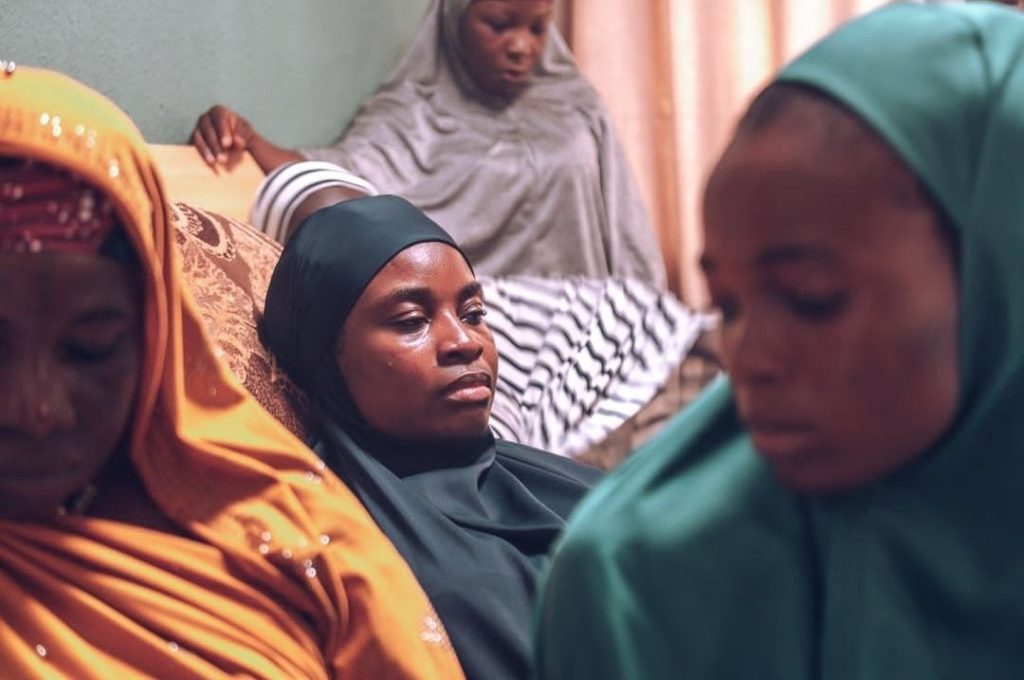
Let’s talk deeper about your experiences. How exactly did that impact your storytelling and films?
I think it’s given me a unique perspective. I’m hardly ever black or white. I’m always on the grey side of things. Like being in the East, people didn’t really know a lot about Muslims. It’s not even just about Muslims, but underrepresented people in general. I like to use the example of the gay community because there was a time when mentioning the word was taboo. But things are different now.
I guess that’s how it’s always been for me. Just being underrepresented and seeing the need for that representation. There were times in university when people would see me wearing a hijab and conclude that I don’t speak English or call me boko haram.
Them Calling you Boko-Haram is Crazy Work
I agree. But I like to think that they were like that because they didn’t know.
Studying mass communication made me see how important the media is in conditioning people, and I kind of see that as a mission or purpose for me now. To put these stories out to recondition people. Sometimes I think we are comfortable in our ignorance and are too reluctant to be open-minded. If people were a bit more open-minded, the world would be a better place.
Do you remember your first experience with people being ignorant?
Once in secondary school, my friends and I said we should bring Christian and Muslim materials and talk about them. And I remember reading everything and listening to them, and then when it was my time to talk, they didn’t listen. And I’m not even saying we need to convert each other, but I just want us to know and understand each other.
Sometimes these are the kind of things Nollywood should showcase.
That brings me to another point. Creatives need to get to the point where they are controlling the money so we can market and push the things we’re creating.
What do you think the effect of limiting information in the lives of women is in making choices for economic power and sexual and reproductive health?
When you limit women’s access to information on things, especially SRH, it can very well lead to the destructive consequences you were trying to avoid. When it’s not standardised, and people have to go look for information themselves and hide that they’re looking. Sometimes, the damage can cause permanent health issues. It will come to a point where women will be forced to find things on their own, and the ways they try may not be good, so why not just give them the information they need? Halima, for example, had to find her way; she didn’t know what she would see, but she left.
Regarding economic power, I think it’s the same thing. I’m very big on economic power because money is power. And men have controlled women for so long because they’re the ones who have had access to this power. If you’re able to have something of your own, no matter how little, there’s a sort of psychological safety that comes with it. You can do whatever you want now; there are remote jobs and options. There’s more access to knowledge and choice. I think a lot of the older generation don’t know how to address these issues with us, and I think it’s probably a culture of shame.
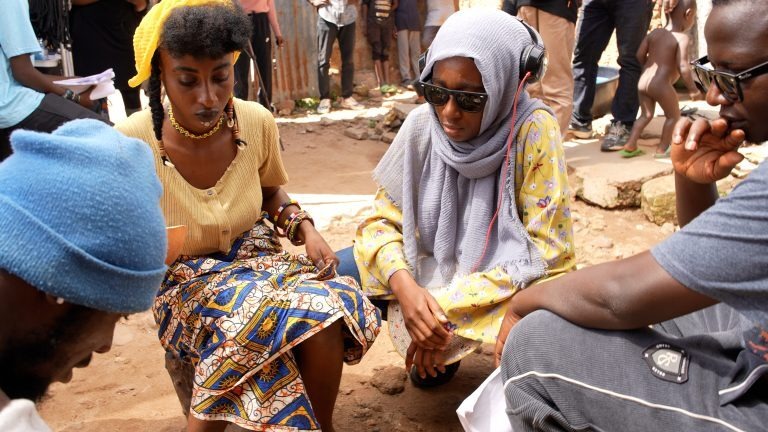
Do you think our folklore has the same impact?
Absolutely. Every story has to give a moral lesson, and it’s a very big part of our culture. I don’t think we’re getting away from that anytime soon.
Is it possible for women to have it all? How does the concept of choice feminism impact these things?
Having a family and choosing to build a home will always set a woman back. And that can be okay. Sometimes, younger people come to ask me questions about what will happen to their careers if they get married. And I tell them to be clear on what is non-negotiable for them. Women need to learn to plan their lives in seasons; you can have it all, but not at the same time. Before you decide to get married, have something for yourself. A source of income or a skill that you can continue growing.
Be ready as well for the possibility of your partner changing, and even yourself. Things won’t always be as amazing as they were in the dating phase. You don’t want to put the burden of your happiness on another person. That’s something my mum always tries to convey to me. My children should never be an obstacle to my success. At the worst, I’ll drop them off at Grandma’s. Women need to consider support and the support systems they have around them.
How do you think Nollywood pushes stereotypes in films, and how can it shift the story?
There was a film I watched that had a female character who really wanted to pursue a career in banking. But her husband wasn’t having it. She ended up doing what she wanted, but the end scene showed her sad in her office, and her husband was happy with his new wife. These sorts of films are being repeated, women are watching them, and relatives are echoing these things as well. Women are still just pushing out babies because they want sons, even though they have seven girls.
I also sort of blame traditional leaders because they keep preaching about being fruitful and multiplying and telling women not to kill their babies. Even in the north, there is still so much censorship. I remember this filmmaker was locked up in the north because a lot of themes in his film didn’t agree with the censorship board. So, there’s also that part of films that filmmakers have to look out for. This is why cinema in the north is more backward than in other parts of the country.
Would you say the media and films in particular are an important part of our goal of #ShiftingTheStory?
We underestimate just how important these films are. I remember getting a message from someone who had just watched with difficulty comes ease, and how Zainab’s choice of her fashion career gave her the courage to continue hers. These films can have a really powerful effect.