The process of planning a wedding in Nigeria, especially for the bride, is not easy. Brides have the unspoken and self-proclaimed responsibility of ensuring that everyone is responsible for something. Food, decorations, aso ebi. She is concerned about everything but herself.
Heritage Oni, an event content creator, was fortunate enough to see this gap. For over a year, she moved through weddings with a camera and caught the one thing everyone was missing. The need for bridal assistants.
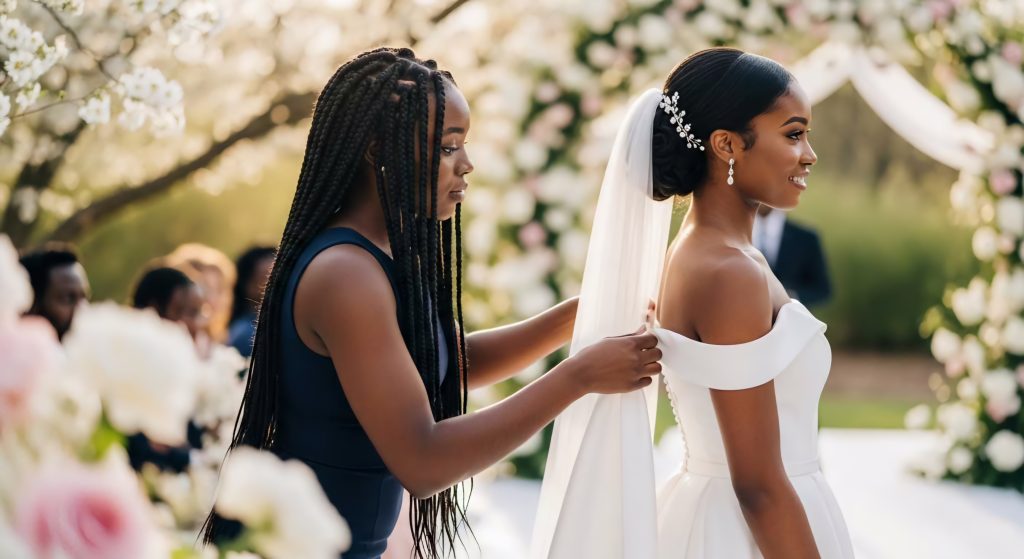
“It’s one of those things you can’t unsee once you’ve seen it. All that money, all that planning, those long months of preparation, and the bride still spends a good part of her own wedding feeling unsettled,” she said.
The wedding industry excels at managing logistics, but it often fails at managing the human. We spend millions on the stage but forget to support the main characters. A bridal assistant’s job is to ensure that the bride isn’t just the host of her wedding but a guest of honour at her own celebration.
“Brides always seemed to be frustrated on their big day,” she says. “And it was simply because the friends they expected to support them did little to nothing on that day.”
The problem wasn’t bad vendors or poor planning. It was a structural issue. There was a role nobody was officially filling. And everybody assumed someone else was covering it.
Heritage decided to cover it herself.
She launched BridesCompanion by Heriana in February 2026, a bridal support service built around one job: being the calm, steady, fully-present person in the bride’s corner from the moment the day starts till it ends.
What About the Wedding Planner and Bridesmaids?
Nigeria’s wedding industry isn’t small. There are planners, coordinators, decorators, makeup artists, hairstylists, caterers, photographers, and videographers. An entire ecosystem of people making a living off the fact that Nigerians love to celebrate weddings lavishly. So if all these people are already at the wedding, what exactly is missing?
Heritage’s answer comes without hesitation. “No matter how saturated an industry becomes, there will always be space for something new. Plus we are providing value by catering to the needs of brides, and once everyone understands they have nothing to lose, they will embrace it.”
That’s a specific kind of thought process. She’s looking at a crowded room and asking a different question. She’s not asking if there’s space? But “is there a need going unmet?” Getting that second question right is what separates a business from a passing idea.
The unmet need she identified is sentimental and practical. Someone who wakes the bride, feeds her, helps her get dressed and keeps her outfits in order through the chaos of the full day. Someone whose only job is making sure the bride feels okay.
The Chief Bridesmaid Isn’t Your Employee
The most common reaction Heritage gets when she explains her work is a variation of the same thing: “What’s now the work of the chief bridesmaid?”
It stung, especially when it came from close friends. She explained it to them, and they still didn’t get it. She stopped bringing it up and let the work speak for itself. A bridal assistant and a chief bridesmaid have completely different jobs, and understanding that difference changes everything.
A bridal assistant works behind the scenes. She makes sure the bride’s outfits are ready and put together, that she’s eaten, that she feels physically okay and emotionally safe through every transition of the day. She stays out of the photographer’s frame deliberately. Her job is to be effective, not visible.
The most demanding part of the job isn’t the morning prep, it’s the event itself. Once the day is in motion, a bridal assistant stays on standby the entire time, ready to move the moment she’s needed, while still managing everything else that needs to happen in the background.
Most brides come in warm. They booked for bridal assistants themselves, so there’s already an expectation of trust. It’s therefore imperative that they treat the assistant like a safe space, someone they can be real with. That may however change closer to the traditional ceremony or reception, when the overstimulation kicks in and everyone is just trying to get through the day.
The chief bridesmaid’s role works differently. She’s the one adjusting the bride’s dress at the altar during the vow exchange. She’s the one who can whisper something comforting at exactly the right moment, because she knows the bride personally.
The bridal assistant’s role is professional. The chief bridesmaid is personal. Together, they ensure that the bride is actually fully covered and cared for.
“Their responsibilities are totally different,” Heritage says, “and the presence of one doesn’t affect the output of the other.” Once people grasp that, the scepticism tends to dissolve.
Putting A Price on Emotional Labour is Difficult
Pricing emotional labour is difficult. How do you put an amount on being the provider of steady support? On the fact that someone showed up, read the room, and turned a chaotic morning into something manageable?
Heritage didn’t guess. She ran a market survey.
I wasn’t the first in the industry,” she says, “so I researched my competitors, analysed their rates against market demand, and balanced that with the unique value I provide.”
She studied economics, and she’s direct about why her education matters even in a career that has nothing to do with a classroom or a 9-to-5. “I didn’t just guess; I put my Economics degree to work by running a market survey to price the value I was providing.”
That combination of industry observation, competitor research, and personal assessment of value is how she landed on a price she could defend. She left what people might say was emotionally right or what clients could afford and followed what the market actually supported. The entry point for BridesCompanion is a ₦70,000 package, which covers assistance from the bridal morning all the way through to the end of the reception. Monthly earnings aren’t fixed. It moves with the bookings.
On what she wants a bride to feel, Heritage says, “I want them to feel warmth, to feel like she can trust me to be there for her.”
That’s the whole offer, really. A bride who actually eats before the ceremony, who doesn’t spend twenty minutes frantically searching for her second pair of heels. A bride who walks down the aisle feeling held and helped instead of harried. These small things add up to a completely different experience for the bride.
Heritage spotted the gap in the market, built the offer, structured her brand, assembled a team, and started booking clients. Building a team wasn’t the hard part, particularly because Nigeria has a labour-rich market, and people willing to work as bridal assistants aren’t difficult to find. What matters is the training.
In all of this, Heritage still works as an event content creator, capturing moments that matter. She wasn’t waiting for the perfect time to take it seriously. She already is. There’s value to be provided all around you. Like Heritage, you just have to notice, position yourself and hone in on that need.
Next Read: How This Copywriter Leveraged Her Community To Make ₦37 Million in a Year