In many ways, 2025 has been an eventful year for Nigerian politics. From cases of institutional incompetence, intimidation, corruption, international disgrace, and selective justice, Nigerians saw it all.
As the curtains fall on 2025, we have drawn up ten of the most controversial political events in Nigeria this year.
State of emergency rule
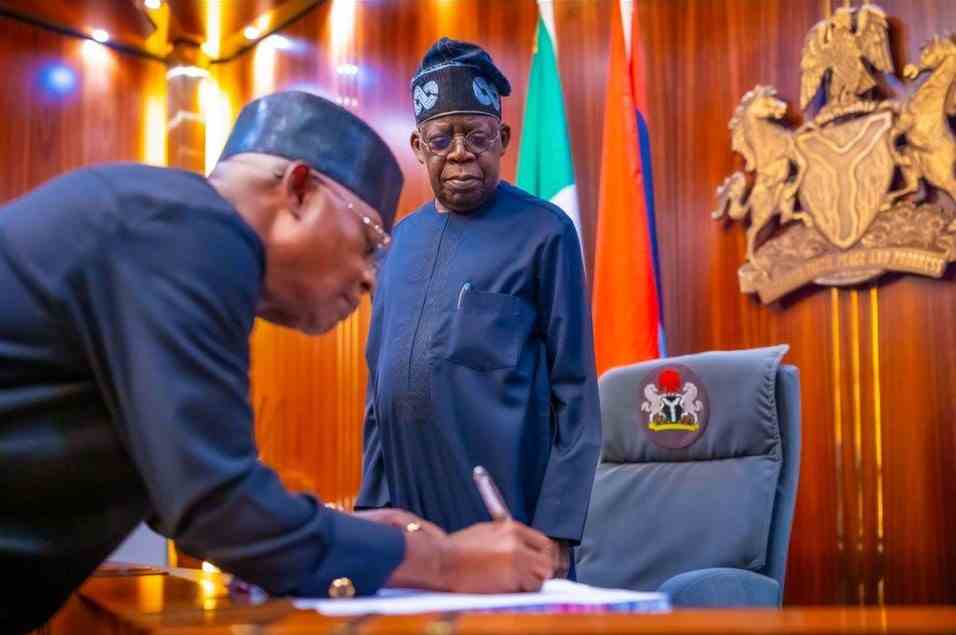
The state of emergency rule was unarguably one of the most controversial things to happen in Nigeria this year. On March 18, President Bola Ahmed Tinubu thought it’d be a brilliant idea to declare a six-month state of emergency in Rivers State on the basis of political instability.
Tinubu didn’t just declare a state of emergency; he took it up a notch, slamming the state’s governor, Sim Fubara, his deputy, Ngozi Odu, and the state’s assembly with a six-month suspension, too. In their stead, he appointed Vice Admiral Ibot-ette Ibas as the state’s military administrator.
The President’s decision was controversial for two reasons: the Nigerian constitution only empowers the President to declare a state of emergency in the event of disaster, national danger, or threats to public order. The political instability upon which Tinubu based the declaration did not exactly meet those grounds.
Secondly, the President is not empowered on any grounds to suspend a duly elected governor. None of the above-stated facts stopped the President, though. The cautions and advice from stakeholders didn’t stop him either. The only authority which could stop him (the National Assembly) unfortunately rubber-stamped the request, making a mockery of the Nigerian constitution.
Akpabio vs Akpoti-Uduaghan
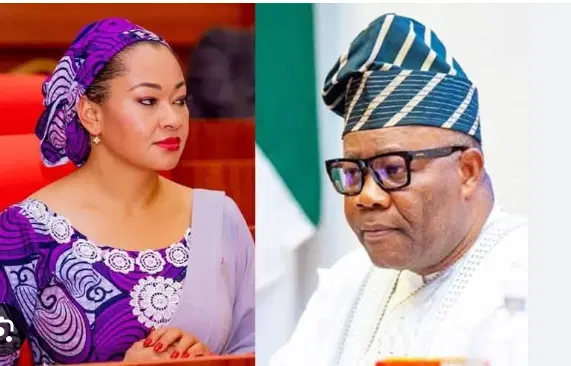
Another major controversy that rocked Nigeria in 2025 was the battle between Nigeria’s Senate President, Godswill Akpabio, and the Senator representing Kogi Central, Natasha Akpoti-Uduaghan.
Following a spat over a sitting arrangement, Akpoti-Uduaghan alleged the Senate President targeted her for refusing his sexual advances; she also filed a sexual harassment petition against him.
What followed the Senator’s allegations raised conversations about the treatment of women in politics: Akpoti-Uduaghan was slandered, insulted, and mocked by her colleagues, after which she was slammed with a six-month suspension for alleged misconduct, over the procedural spat.
Her sexual harassment petition was not treated with the care that it should have been. Despite public outrage and efforts, the Senate ensured that Akpoti-Uduaghan served out her six-month suspension, even though the court had ruled it illegal to suspend a Senator for that long.
KWAM 1 and Emmanson’s airline controversy

On August 6, Fuji singer, Wasiu Ayinde, also known as KWAM 1, was seen in a viral video, involved in what appeared to be a physical altercation with the staff of Valuejet airline over an attempt to board a flight with alcohol.
Following this, KWAM 1 was placed on a six-month no-fly ban, which was lifted a few days after he tendered an apology to the airline and the general public. The Federal Government also announced plans to appoint him as an ambassador for proper airport security protocol.
On August 11, a few days after KWAM 1’s case, a video of a female passenger in a scuffle with Ibom Air staff went viral. The passenger, later identified as Comfort Emmanson, was slammed with a lifetime ban, then charged in court and remanded in the Kirikiri correctional facility.
The stark difference between KWAM 1 and Emmanson’s treatment sparked public outrage and conversations around wealth and selective justice. Following this, the Ministry of Aviation ensured the ban against her was lifted. The charges against her were also dropped, and she was released from prison.
Tax reform bills
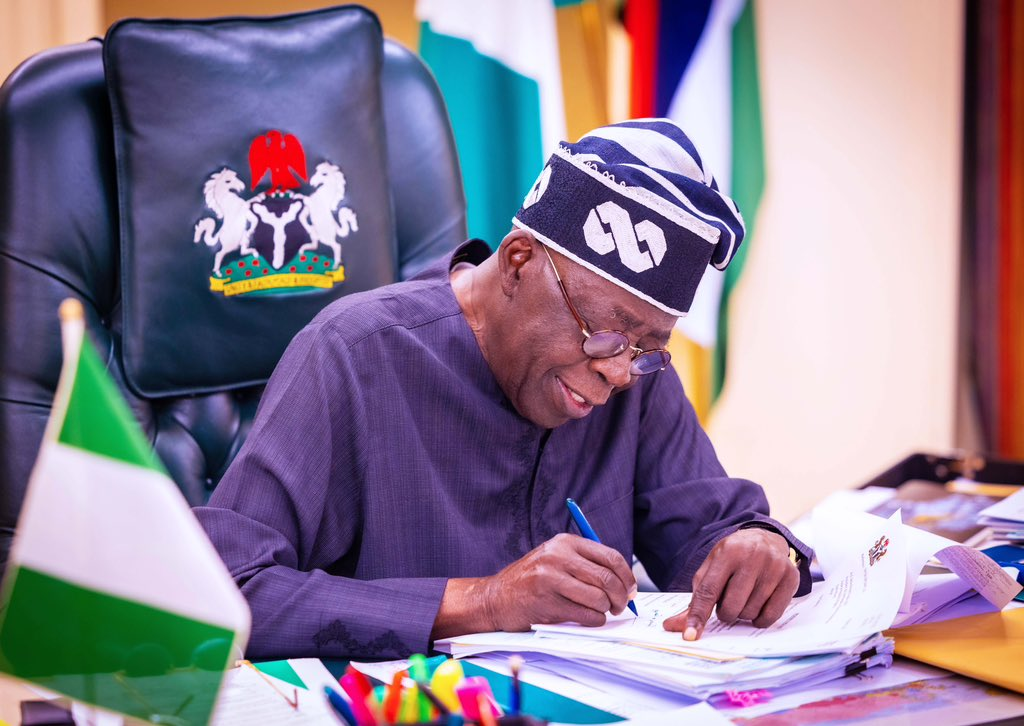
When President Bola Tinubu first presented the tax reform bills in 2024, we knew it’d raise some dust. What we did not expect was that it’d turn into a sandstorm.
The tax reform bills consist of the Nigeria Revenue Service Act, the Joint Revenue Board Act, the Nigeria Tax Act (NTA), and the Nigeria Tax Administration Act (NTAA).
The bills will reform Nigeria’s tax system in various ways, including a widening of the tax net and an increase in tax expectations for higher earnings. Though Nigerians kicked against some aspects of the bills, the National Assembly passed them, and they were signed into law by Tinubu in June 2025.
While people still grappled with the looming reality of the new tax laws, a lawmaker in the House of Representatives recently alleged that the version of the law passed in the House differs from the gazetted version, leading to even more distrust and outrage.
Tinubu’s conduct after the Yelewata massacre
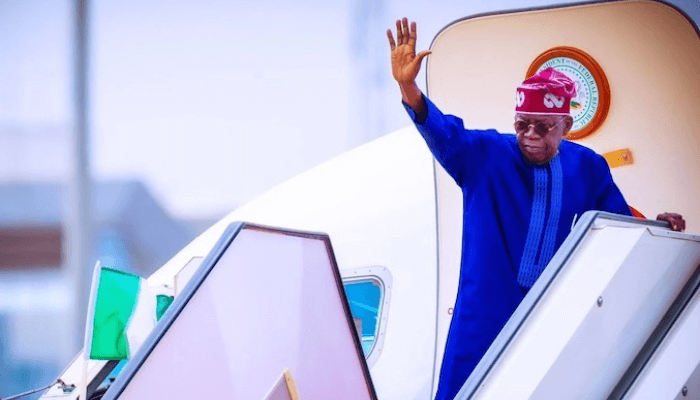
On Friday, June 13, suspected herders attacked Yelewata and Daudu communities in the Guma Local Government Area (LGA) of Benue State, reportedly killing about 200 people.
Naturally, after news of the attack broke, condolences and condemnation of the attack poured in from Nigerians across the country. Even global figures like Pope Leo XIV condemned the attack and empathised with the victims. But President Bola Tinubu, the one person whose voice Nigerians anticipated, was nowhere to be found.
Concerned citizens called out Tinubu’s insensitivity until he finally released a statement two days after the incident. Even then, the President did not visit Benue State to meet with survivors and victims’ families.
Tinubu finally went to Benue State five days after the tragedy, but did not visit Yelewata because, according to him, the roads were bad.
Certificate forgery scandal
On October 4, Premium Times published an investigation revealing that Nigeria’s Minister of Science, Technology, and Innovation, Uche Nnaji, had forged two certificates with which he obtained his position— his University certificate and a National Youth Service Corps (NYSC) discharge certificate.
As it concerns his University certificate, the two-year-long investigation revealed that Nnaji was admitted to the University of Nigeria, Nsukka, in 1981, but did not graduate.
Also, his NYSC certificate bore the signature of Colonel Animashaun Braimoh, instead of Colonel Edet Akpan, who was the NYSC CEO of the NYSC in 1986 the time, which Nnaji claimed to have served.
A few days after he was exposed, Nnaji turned in a resignation letter to President Tinubu. The drama led Nigerians to question the National Assembly, seeing as the ex-minister had submitted the forged certificates during his screening at the Senate.
Dangote vs PENGASSAN

Aliko Dangote has had a number of fights with different individuals, bodies, and authorities, but the most prominent might be his fight with the Petroleum and Natural Gas Senior Staff Association of Nigeria (PENGASSAN).
On September 26, PENGASSAN asked its members to embark on a nationwide strike over its qualms with the Dangote refineries.
Earlier, on September 25, the refinery had slammed about 800 members of its staff with immediate dismissal. According to PENGASSAN, the Dangote staffers had been sacked because they went against the refinery’s undertaking which prevented employees from joining unions.
The refinery denied the allegations but PENGASAAN was not having it; the strike took place and both parties remained at each other’s necks until the Federal Governemnt intervened and the strike was called off five days later.
Questionable presidential pardons
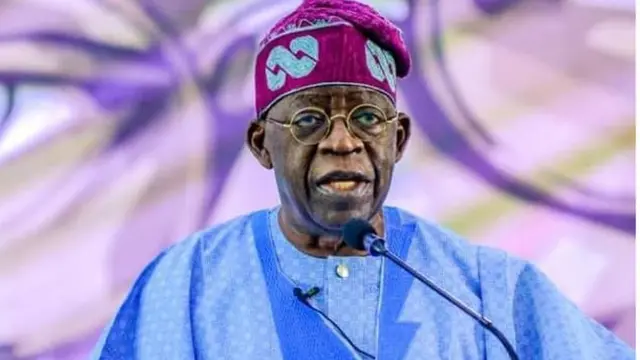
On October 9, President Bola Tinubu pardoned 175 convicts and ex convicts, but that was hardly controversial. The issue lay in the character of the pardoned individuals because many of them were human traffickers, killers, and drug offenders.
The list of pardoned persons angered Nigerians and they in turn, took to social media to call out the President. At first, it seemed as though the complaints fell on deaf ears, but weeks later, the President bowed to pressure, and reviewed the pardon list, making changes where the public had flagged.
Christian genocide controversy
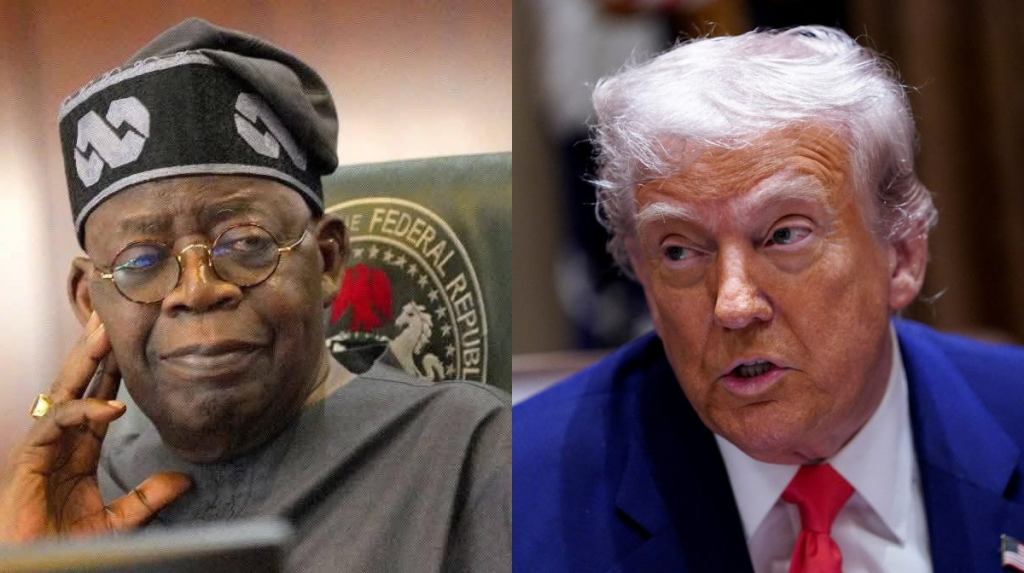
On October 3, US Senator Ted Cruz made an X post, which would later escalate into full blown diplomatic discomfort.
In his post, Cruz alleged that Nigerian officials had a hand in the “mass murder of Christians by Islamist jihadists.” Cruz’ tweet divided Nigerains into two groups— those who argued there is a Christian genocide in Nigeria and those who believe there isn’t.
While Nigerians still pondered on this, US President Donald Trump designated Nigeria a country of Particular Concern (CPC) on October 31; The CPC status is usually stamped on countries where religious freedom is violated.
Few days after the designation, Trump made an explosive post threatening to come to Nigeria “guns-a-blazing,” to stop the killing of christians if the Nigerian government won’t do it.
Again, this sparked conversations, not just in Nigeria, but around the world, over the rights of the US to make such threats against a sovereign nation.
In November, a Nigerian delegation met with a member of the US House of Representatives, Riley Moore in Washington, to have a “frank, honest, and productive discussion about the ongoing persecution of Christians and ongoing terrorist threats in Nigeria.”
Moore said they also explored “opportunities for strengthened cooperation and coordination between the United States and Nigeria to end the bloodshed.”
Wike vs Yerima
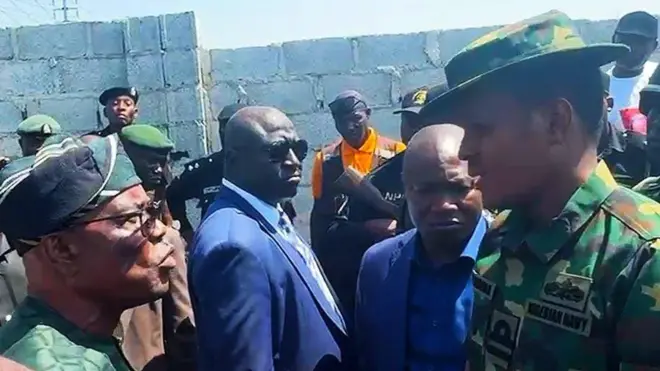
On Tuesday, November 11, the Minister of the Federal Capital Territory (FCT), Nyesom Wike got into a face-off with a young naval officer named A.M. Yerima, over access to a disputed property in the Gaduwa district of Abuja.
On the fateful day, Wike had gone with his entourage to enforce a demolition order, but was denied entrance by a naval officer who said he was equally acting on orders from a superior naval officer.
In the face-off which was captured in a now viral video, an upset Wike could be seen shouting at the Yerima who calmly insisted he could not allow him access.
The FCT Minister is quite unpopular with a number of Nigerians so it was no surprise that many took to social media to hail the young naval officer for what they described as bravery and discipline. However, some others noted and condemned two bigger issues— the use of government resources to secure a private property and the use of military power against an official of the Federal Government.
To 2026!
From the cases of institutional intimidation, to selective justice, incompetence, and more, the controversies listed here were not just talking points, they affected real people, all of whom are Nigerians.
As the curtains fall on 2025 and opens on 2026, we expect a lot more political developments and events, especially as it concerns the 2027 general elections. We can only hope that they are less controversial and less harmful to the Nigerian people as this year’s have been.
Before you go, help us understand how you and other young people feel about the 2027 general elections by taking this 10-minute survey.
Ever had a moment where Nigeria’s systems made life harder—or unexpectedly easier? We want to hear about your personal experiences that reflect how politics or public systems affect daily life in Nigeria. Share your story with us here—we’d love to hear from you!