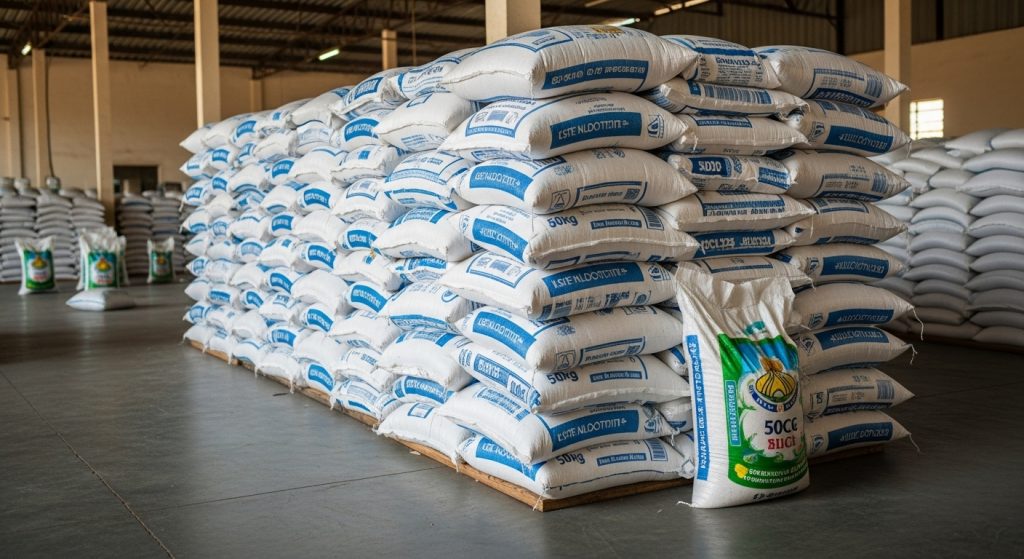
In a surprising twist for consumers, traders and policymakers, rice prices across Lagos have crashed dramatically after months of near-record highs. Once selling for almost ₦95,000 per 50 kg bag earlier in June, the same quantity now costs as low as ₦55,000 in markets like Daleko, Oyingbo, and FESTAC.
The fall has sparked relief among households but alarm among traders and farmers, whose livelihoods depend on stable prices.
So, what exactly is happening and will it last?
What’s Happening: A Sudden Market Correction
According to reports from Punch and Businessday, citing the News Agency of Nigeria (NAN), a 50 kg bag of rice in Lagos, which sold for ₦85,000–₦95,000 earlier in the year, now costs between ₦55,000 and ₦70,000, depending on the brand.
From Oshodi to Mile 12, traders are revising price boards almost daily as rice floods Lagos markets. Dealers report that both local and imported rice brands have dropped by over 20–30%, reversing the inflationary surge seen just months ago.
Earlier in the year, Nigerian rice prices had more than doubled compared to late 2024 due to high import tariffs, insecurity in producing states, and naira volatility. The earlier inflationary surges saw rice prices rise from ₦65,000 in January 2025 to peaks of ₦90,000–₦100,000 per bag by mid‑year.
Thus, the current decline represents a substantial market correction following months of inflation‑driven spikes, enabled largely by new import inflows and a strong domestic harvest that has temporarily eased scarcity.
The crash also mirrors a broader trend across Nigeria’s food system, where other grains like maize, millet, and sorghum have also dipped due to abundant supply and softening demand. For many Lagos residents, it’s the first real sign of food price relief after two years of unrelenting inflation.
Why Prices Are Falling
The crash is rooted in supply shocks, fiscal decisions, and global grain trends, all converging at once.
1. Increased supply from imports and harvests:
Large inflows of rice are entering the country through reopened land borders, especially from Benin and the Niger Republic. Combined with a strong harvest season from northern farms, this has created a glut in the market.
2. Government import waivers:
The federal government opened a 150‑day duty-free import window for rice, maize, sorghum, and wheat starting in July 2024. Although officially closed in early 2025, the policy unleashed tons of grain that continued to filter into Nigerian markets months later, driving prices below production cost.
3. Weak consumer demand:
Inflation and low purchasing power have forced Nigerians to cut back on food spending. As one trader told MoneyCentral, “Even with lower prices, people are not buying as before. They just don’t have money”.
4. Global supply boom:
India, the world’s top rice exporter, reversed export restrictions earlier this year, flooding the global market and pushing international prices down to their lowest levels since 2017. Nigeria, a major importer, is now benefiting from cheaper global stocks.
Zooming In: The Economics of It
When there is a surge in rice imports, the market experiences a rapid increase in rice supply that surpasses existing demand, leading to a sharp drop in prices. This is consistent with basic economic principles: when supply increases while demand remains relatively stable or weak, prices must fall to balance the market.
Traders do not control import volumes; government policies, such as duty waivers, and global trade dynamics influence these volumes. With large quantities of cheaper imported rice flooding the market, traders must lower their prices quickly or risk being unable to sell their stock. The influx corrects prices sharply because it disrupts any previous scarcity or high-price equilibrium, creating a buyers’ market where abundant supply pushes prices down until a new market balance is found.
In this scenario, prices fall abruptly, reflecting the immediate impact of increasing availability. This adjustment occurs quickly because rice is a staple food with highly elastic demand relative to price changes. This price correction is beyond the control of individual traders, as it relies on macroeconomic factors and policy decisions that determine how much rice enters the country.
Who’s Affected
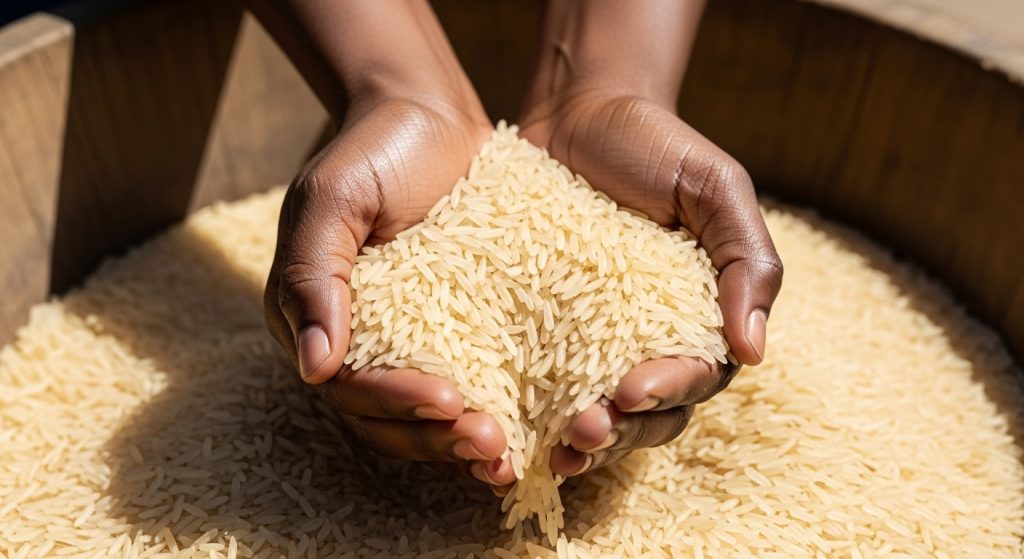
- Traders: Many Lagos dealers are selling at a loss. “I bought several bags at ₦80,000 earlier in the year; now I’m forced to sell at ₦65,000,” one retailer at Arena Market told Moneycentral.
- Farmers: Producers across Nasarawa, Kano, and Taraba are struggling. Some report losing 40–60 per cent of their investments because market prices have collapsed below their production costs.
- Consumers: For shoppers, it’s a rare silver lining. “This drop, if sustained, means more families can celebrate Christmas without worry,” one FESTAC resident said to MoneyCentral.
The Government’s Position
The Ministry of Agriculture insists the crash is mainly due to local production success, not imports. Minister of State Aliyu Sabi Abdullahi said massive government investments under the National Agricultural Growth Scheme had “ramped up production” and increased food availability nationwide.
However, farmer associations dispute that. They argue that waves of cheap imports, not policy success, caused the market glut. The All Farmers’ Association of Nigeria (AFAN) states that smallholders are now struggling to recover loans because the cost of fertiliser and herbicides has more than doubled since last year, pushing some out of business entirely.
What It Means for Nigerians
The fall in rice prices is mainly short-term relief, not yet a structural change. Food inflation remains high, and without a sustainable framework to balance domestic production and imports, prices could bounce back by December.
Analysts note three possible paths ahead:
- Short-term: Prices may remain relatively low through November as harvests continue and imported stockpiles hit markets.
- Medium-term: By December, seasonal demand during the festive period could push prices slightly upward again, especially if traders hold back supply.
- Long-term: If low prices discourage farmers from planting in 2026, the market may swing back to scarcity next year, a familiar cycle in Nigeria’s food economy.
Bottom Line
What’s happening in Lagos reflects a national balancing act: between affordability for consumers and survival for producers. The government faces pressure to support farmers without reversing price gains for urban families, who are already struggling with inflation.
For now, ordinary Nigerians are asking simpler, sharper questions: “Should I buy now or wait?” The answer, at least until Christmas, is clear: enjoy it while it lasts. Prices have fallen for now, but the story of rice in Nigeria is rarely stable for long.