It’s World Contraceptive Day! Over the past few months, we’ve explored different contraceptive options to help women take control of their sexual lives and reduce unwanted pregnancies and STIs.
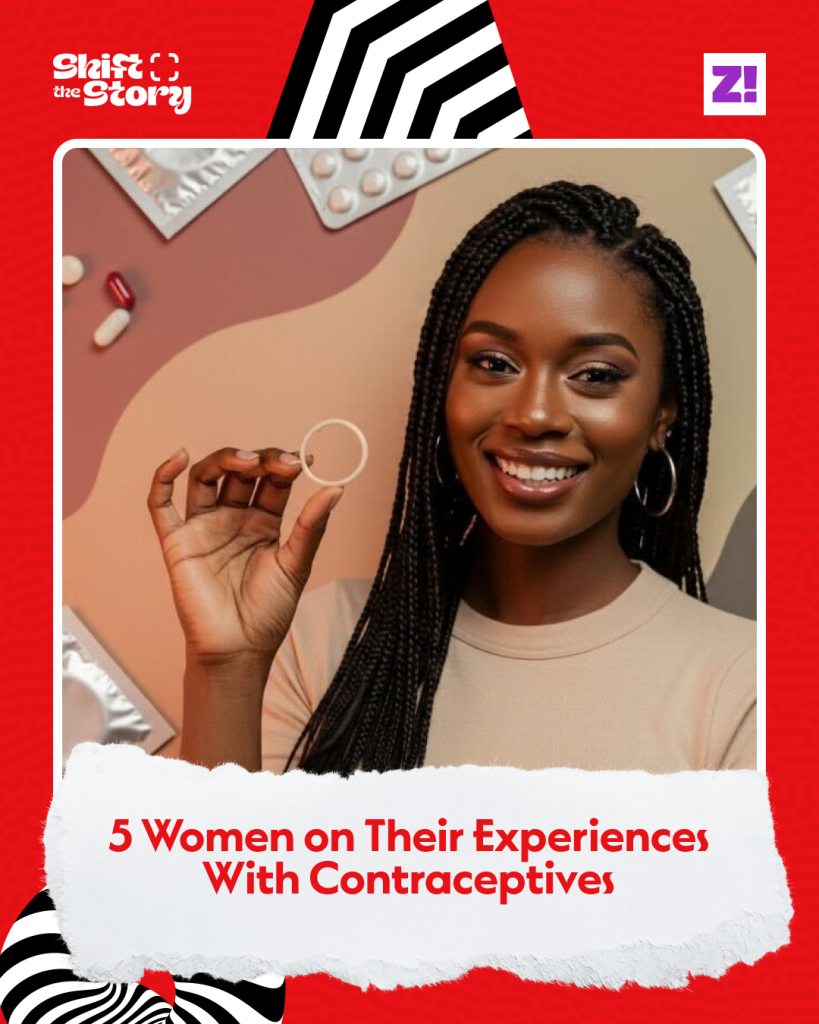
In this article, five women share their honest, first-hand accounts of what worked for them, what didn’t, and why.
‘’When I stopped, things got worse. I don’t think I’ll be getting back on it again’’- Chisom, 22
I chose the hormonal contraceptive Depo-Provera. A health professional injected it in my arm, and I was meant to get a new shot every three months.. The injections weren’t painful, but the side effects were hard to handle. I was always tired and hungry. When I stopped after four months, things got worse. I started having really painful periods, premenstrual cramps, headaches and body pains. I don’t think I’ll be getting back on it.
Tip: Contraceptive injections can cause a range of side effects, and periods and natural fertility can take some time to return after stopping.
‘’I decided to get an IUD as an emergency plan’’- Stella, 29
I went for an IUD after unprotected sex, not so much as a preventive measure but as an emergency plan because I didn’t want to get pregnant. The first attempt to fit it failed; the healthcare professional said it was “inside my cervix,” and it wasn’t placed right. They gave me meds to open up my cervix and asked me to come back the next day. The second attempt was still unsuccessful. I couldn’t get an arm implant because I wanted something I could use immediately as an emergency contraception. It was a shocking and learning experience because I never thought it would be a difficult thing. But it was.
Tip: IUDs are fitted through the cervix into the womb and are a highly effective method; insertion can be technically difficult in some people and, in cases of prior failed attempts, health professionals sometimes use medication to soften or dilate the cervix.
Also Read: The Pull-Out Method vs Contraceptive Pills
‘’I use condoms until I get comfortable with my partners’’- Temi, 27
I’m not on any long-term contraceptives because I’m worried about side effects. I’m also worried that I might go through the stress of getting one and still end up pregnant. I mostly just use condoms until I get comfortable with my partner, then we go raw. Then we stick to pulling out. I’m not really worried about pregnancy then because I know that if it happens, I won’t hesitate to do what needs to be done. Also, I have PCOS, so getting pregnant is something I need to be intentional about. If I ever get worried or anxious after sex, I just take the morning-after pill. When I’m in a more stable relationship, I’ll work towards getting what works for me. I feel like I could be an IUD girl.
Tip: Different emergency pills work for different timeframes. Some are taken within 72 hours, others within 120 hours after sex. It’s best to take them as soon as possible.
‘’I’ve had a few gaps, but it’s usually when I’m not sexually active’’ Simi, 26
I’ve been on contraceptives since I was 20, and it’s probably the best decision I’ve made. I’m not ready to be responsible for another human being. The pill has worked for me for six years. The only thing that will probably change is my brand choice, and they’ve never failed me. I’ve had a few gaps in between, but it’s usually when I’m not sexually active. I also encourage my friends to get on them, or at least something that works.
‘’I’m not ready for the side effects’’- Rukayat 23
I have PCOS, so my doctor recommended I get a contraceptive to help stabilise my periods and hormones. They specifically suggested the IUD, which is inserted in your cervix. After the consultation, I decided to do my own research, and it looked like the side effects outweigh the benefits. Weight gain or loss, heavy bleeding, and hormonal imbalance. I wasn’t ready for all that. I also learned that getting it wouldn’t solve the problem, so it seemed pointless. Also, I’m not sexually active, so it’s not like I was getting it to protect myself. Then there was the whole insertion process. I’ll probably reconsider it when I become sexually active or find a more comfortable alternative.
Tip: For many people with PCOS, hormonal contraceptives are a common option to regulate periods and hormones, but treatment should be personalised and discussed with a clinician.
Read Next: 4 Sexual And Reproductive Health Screenings Women Should Undergo And Why