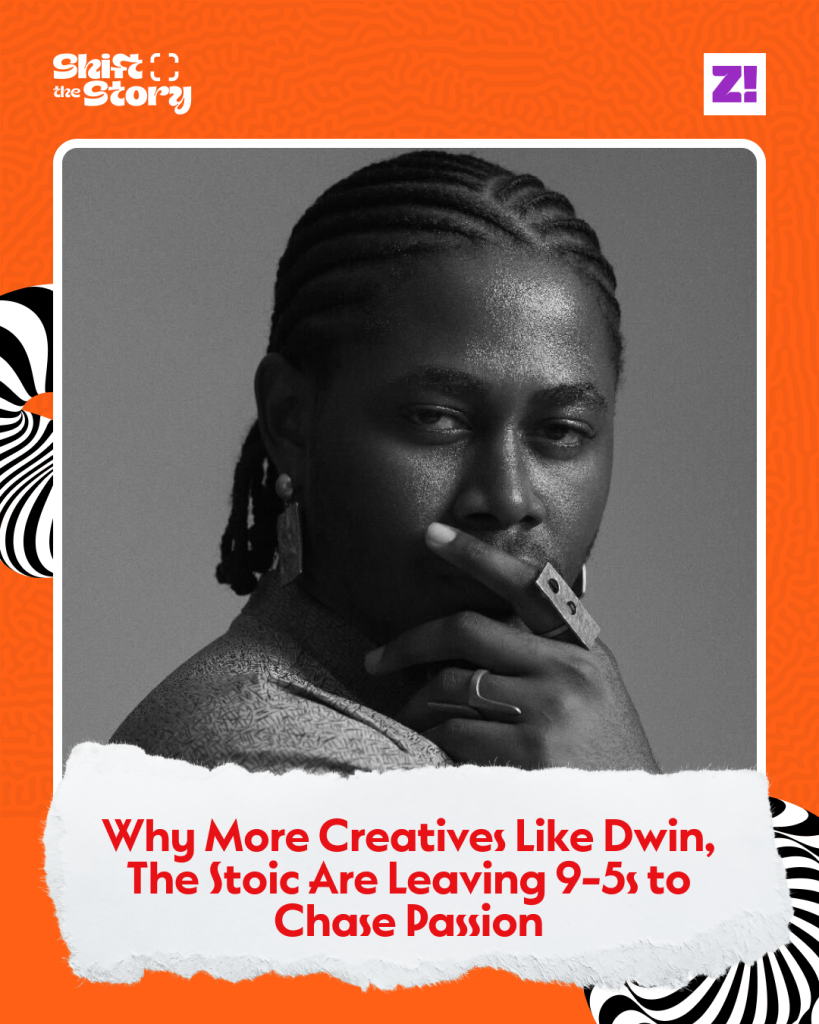
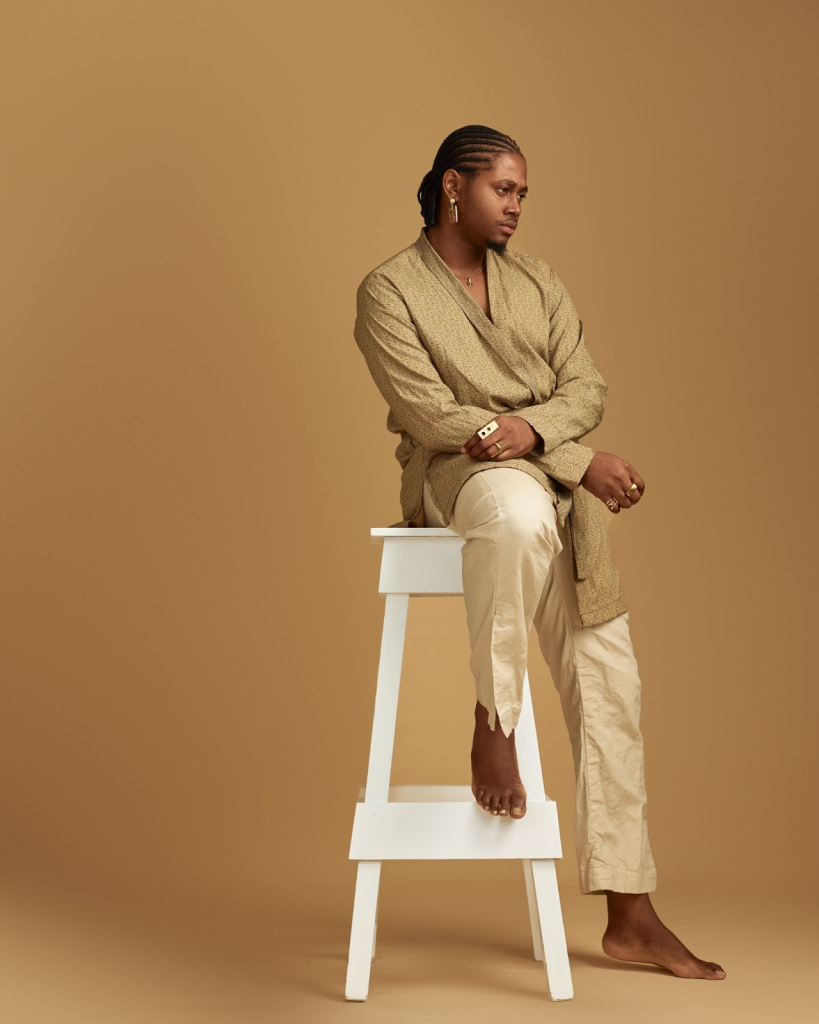
Since he’s been able to, Dwin, The Stoic has always told stories. Whether through code, culture writing, or music. From tech consulting to Tech Daily writing, the newsroom at Zikoko, and now music, where his ballads resonate with vulnerability and heart. His journey has now come full circle, with Stay the Night, recently being featured in Zikoko’s Life Series production.
In this article, he talks about what music means to him and the process of making the decision to pursue it entirely. The journey he’s had and the feelings of seeing the impact of his work on people’s lives.
Let’s start with your pivot from tech, why and how did that happen?
I would say it started with me chasing excitement and fulfilment. I wanted to be happy with the work I was doing. Art and media were things I also just had an interest in. After getting my degree, I worked at a media company for a while. I really enjoyed that one because we used to do advertisements for all types of clients, from NIBSS to Coke. I would write documentaries and do video editing. I got to use a lot of my skills and pick up some.
Then I worked as an intern at the African Artist Foundation. That was where I got very immersed in the art scene. At some point, I explored the idea of being an art curator, but the economy made my choice for me, so I decided to use my computer science degree.
I got a job with a tech consulting firm that allowed me to travel within West Africa. Then I worked briefly with a fashion start-up e-commerce company. I think it was in 2020 that I decided to do my own thing and freelance, but COVID happened.
While all this was happening, I was still doing music. My first album, Heavy Heart, came out two years before the pandemic. So, music had always been part of me. My father was almost a “professional” musician. When he was younger, he tried to run away with a band called the Monkeys, so that’s probably where I get it from.
How did you find the shifts, especially when you went from tech to writing?
I joined TechCabal as a writer towards the end of 2020. But I had been writing before then. In 2015, I was in Chimamanda’s workshop, which was the first time people recognised me as a writer. Joining TechCabal for me was an opportunity to combine my experience and knowledge as someone who has worked in tech with writing and editing.
My work with TC daily was when I also started writing properly. I interviewed a lot of interesting people at the time. Then the role at Zikoko opened up, and I thought I’d have a go at it. I went through the entire process, questions, and interviews. Eventually, I got the role, and I think that happened because I was just passionate about telling stories.
How did you adjust to the writing roles?
My experience with the media company helped because a lot of my work was creating content. I also took courses in journalism and other things. But what really did it for me was finding unique stories that intersected tech and lifestyle. One of our managing editors at the time experienced ‘a what I ordered vs what I got’ moment. For me, it seemed like a tech problem because it was an online issue, and it was one of the popular pieces I worked on.
Writing on topics that made me look at life differently and how everyday experiences affect us, helped. Understanding how people do things and why they do them. That experience taught me that you could get a unique piece from anybody when you get enough out of them. Because honestly, no matter how similar we are, we all have unique stories. Moving to Zikoko, I was happy because I got to interact more with culture, not strictly from a tech lens. There were all these verticals- Sex Life, Love Life, Naira Life, and all these things became important to me.
Why did you decide to focus on music full-time?
I think that, coming to the end of my role at Zikoko sometime in 2022, it hit me that my music was at the point where it was taking off. I was thinking about my career one day and thought about how I’d given a year or two of my life to the things I loved. But I hadn’t done that for music, and it was the thing I loved most. So, I decided to give my life to music. There’s this thing with artists where you feel like you want the art to reward you and give you what you want. But you can’t really get it from your art if you’re not paying close attention to it. And that’s the thing with life, what you pay attention to gets the most of you.
Also Read: Busayo Isola-Seinde On Building Worlds In Zikoko’s Life Series Production
How have you grown and embraced yourself with these changes?
Those things happen subconsciously. When I think of the skills I’ve developed over time, I realise that I just pull them out whenever I need them. Working at Zikoko, I leveraged my experience from the media house. Even doing music now, a lot of what I know and do is because of the experience I’ve gained. The newsletter I write to my fans, my ideas on how it looks, and its content came from my work at Zikoko. When I was editor-in-chief, I had the opportunity to look at many editorials and see how people did things. And that fed into my work there, which helps me do what I need to do now.
Also, my relationship with the media, I learned a lot about that, too, from my time at Zikoko. When I was editor-in-chief, I made sure we were intentional in treating the media with respect. Then, I attended events where I could interact with different people. Being in those spaces set me expectations and helped me transition into the music scene. Interacting at these events is a bit different now, but it has helped me establish a good relationship with the media. Knowing the type of people or professionals I need to help with tasks or things I need to handle currently as an artist.
I’ve also learned that life is about constantly reinventing yourself. Sometimes it’s not even that serious; you’re just learning from prior experiences and getting better at doing certain things. Our experiences really shape who we are.
So is Dwin, The Stoic, focusing on music full time or are you still writing poetry and doing other things?
Some things definitely suffer in this type of setup. I’m not writing officially anymore, but one of the ways I’ve kept up with it is through my newsletter. It gives me a chance to be vulnerable with my fans, tell them about my plans, and find out what they like and how they feel about things. Because the newsletter has been around since 2018, I can’t really say I ever stopped writing or will ever stop.
It also helps that I don’t do everything myself. I have a team that manages the community that listens to my music, and my assistant helps with admin. People manage strategy and finance, but ultimately, I have oversight over everything. Dealing with all this and being an entrepreneur, it’s difficult to focus on other aspects of my creative life. With poetry, I think one day I just decided that I’d rather sing my poems than write them. If I have an idea for a short story, I’d also tell it as a song.
I hope to do a bit more writing soon. I’m going on tour, so I think I will be able to do a bit more writing in between shows. At least I hope I’m able to.
Would you really be able to do more writing, with all the moving around?
Yeah. When I was in Abuja last year, I did a bit of walking, and that helped. I wrote a bit more when I was there, so I’m looking forward to doing that this time around.

Still on writing, what’s the experience been like writing music for people?
The first thing I would say is that I’ve had to get to a point where, when I make music or write a piece, I have to decide to stand by it. Some artists I’ve written for have come back for more because they like the vibe. I’m also able to switch across genres. It’s like how I was curious about stories, but now it’s with music. It’s easy for me, and I don’t experience creative conflict. If I get a beat or an instrumental, I can work with it; if there are a few lines already and I need to add or edit, I can do that.
I also don’t get too attached to songs. If I write something for someone, I’d probably think ‘Wow, this is a great song’ for a few seconds, then I think ‘Yeah, I can do another one’. Probably even a better one. The music is endless, so I don’t get too tied to a song. It’s their song I’m writing anyway, so sometimes I would use words I probably would never say myself.
Would you say the level of fulfilment is the same when you write for yourself and other artists?
I really like the act of composing. I just want to make a good song and have the right person or people embody the song. I won’t always be the right person to do that. Sometimes, it’s good for other people to market or embody the song, and I just get to be like “Oh yeah, I wrote that song”.
What’s the story behind Ignis Brothers and St Claire records, and are you with them today?
When I quit my job, the plan was to focus strictly on music. I didn’t have the intention of starting a business, or more specifically, owning a record label. But when I started, I realised there weren’t a lot of indie record labels who weren’t trying to run things like they do in America. We don’t have America’s economy. So, St. Claire records was for two things. The first was for myself, for the company to take the lead on deals and contracts. The second was to fill in the gap. I felt like I could add to someone else’s career the proper way.
The record label was inspired by a number of things, to be honest. It’s grown from when we first started, and now, I feel like what I’m trying to do is create a dev am, which was a company that Universal acquired. Kind of like how part of Mavins has been acquired. Again, we’re working with a lot of developing talents so that people can see them and they can keep doing the type of music they want to do.
Ignis Brothers as a group is technically now defunct. We’re not putting out any more music, but it started because I liked the idea of a group. Our first album release was in 2020. That was another place where I leveraged my skills from the media house. I was responsible for our marketing, admin, and websites. I think it’s something I’ll do again in the future, maybe a bit differently. It was also one of my justifications for starting the record label because I had technically managed two artists before that.
How do you manage all these things, work and life outside it?
I manage to thrive in chaos. But I also think it’s about having a focal point. For me, that’s usually the thing I can control; in all this, it’s the music. I’ve had to learn a lot over time, especially with running the record label. I mostly try to do things on a case-by-case basis, trying to always sort out the next best step with things that need to happen. I’m a lot more structured now. Initially, I was doing whatever came up in front of me, and it worked for a bit. But things have grown, and I needed to grow as well.
There are also the things that happen outside of work. My life has become exciting because I wake up every day not knowing what to expect. Mainly because things aren’t always positive. I remember the first time I got a huge influx of people. It was when I released Go With Me. Simi had seen it and reposted it on her page, and a lot of people had just come across it. Around the same time, I was on an editorial playlist on Spotify and stayed there for about a year. That also increased traffic on my page and with the music.

How do your fans and the audience usually react?
Sometimes they’re excited by it, and when this is the case, there are usually a lot of comments. It can get overwhelming sometimes, and social media gets a bit much. Dealing with that is not something I’ve hacked just yet. Typically, it would be nice to have someone manage my accounts, but I like being on my page and posting the things I want. Recently, I’ve been thinking of getting a burner because I’ve learned that things can be really different when you’re in the spotlight. I’ve been getting attention in small doses, but I’m adjusting. Sometimes, I go to places where I usually hang out, and people approach me to take pictures, and I like that. Sometimes you just feel people staring. And you can usually feel their eyes as well.
But I think my experience so far has been good. Most people mean well, and the people who don’t mean well, I choose not to see them. I’ve received a lot of great messages and comments.
Right, and that’s because of the kind of music you make. What inspires your lyrics and sound?
I intend to be vulnerable with my music, and I want people to be vulnerable as well. People have left messages telling me how my music made them cry, and they didn’t like it. But my response to that is, why are you against crying? Trying to fill in that gap inspires me. The tagline for St. Claire Records is making the soundtrack of your lives. I want to make music that can be a companion for my audience at any moment.
That’s why I try to make my discography diverse. Let people have songs that work for a night out, for weddings, when you’re with your friends, or when you just want to cry. I mostly approach music from the angle of love. But other things come with it, like jealousy, loneliness, heartbreak and grief. But I’m mostly inspired by my desire to address topics or things that help us be vulnerable.
I’ve had couples leave comments about how they had a fight, then reconciled after listening to one of my songs. A parent left a comment about how Streets helped them bond with their three-year-old son. Someone left a comment about how the same song helped her through grief. Sometimes the impact isn’t even direct or parallel. People find comfort in the music because of what’s in it.
That’s beautiful. How do you remain consistent with what you put out? Making sure it sticks to the theme and stays on character?
I think I only ever have issues with writing my newsletter or writing in general. I never experience writer’s block with music. I’ve always been able to write a song. Most times, what I need a break from is actually writing. Then I recharge by hanging out with friends and family. So just being able to chill with them, talk about our plans, and what we want to do.
I’m mostly working, so I’m trying to be more intentional about living. In a few weeks, I’ll be going to do archery with one of my friends. I’m looking to rest and lie down more often as well.
The effect of your music is quite clear, even with Zikoko. How did you feel when you found out it was being included in the Zikoko Life Series Production?
First of all, shout out to Dika and Ogranya. I really admire the work that they do. When I heard about it, I didn’t even know it was Stay The Night because Ogranya and I had a song on my last album (To You). Naturally, I thought it would be that one. But when they reached out, I was up for it because Zikoko is fam. The music I’ve made has always been cinematic, so seeing it be used in a film that adapted a real story felt good. The stories Zikoko publishes are always so relatable. I like that in some way I’m still a part of that.
Do you think Stay the Night fits with the theme of Something Sweet?
I think that is the point of what Stay the Night is about. The song itself speaks of two people who have some tension, and for some reason, they can’t be together. But it’s also insistent on seeing where things go. I think it translates to the taboo love that our characters experience. The stories are the same, and people can see that these things happen.
How do you feel about having your song featured on a Zikoko short film? Would you call it a full-circle moment?
It feels good. There’s a lot of sentiment as well. Working there, knowing that the vision is still the same and that somehow, I align with it. With what the films are doing alone. Speaking on the perception of women and emphasising that they have bodily autonomy. The film industry hasn’t been doing a good job with that. This is one of the reasons why Zikoko exists. Even being editor-in-chief, there were a lot of homophobic comments at the time, and these were regarding real stories that we were telling. But we also found people who could relate and people who couldn’t relate and weren’t homophobic.
Exposing these niche stories through music and film, the layers to it, and the impact they have are why I’m excited to be a part of it.

Can you tell us a bit more about the album the song comes from- Heavy Heart, and your latest album, Master of Ballads?
With Heavy Heart, it was supposed to be my songwriter’s resume. I wanted to put out an album because I had a lot of songs in my books and voice notes. So, it made sense to make an album because I had enough songs for it. The idea was to have people hear what I was putting out and contract me to write music for them. But the album came with fans and people who wanted me to keep releasing music. Then I think some of it was used in Skinny Girl in Transit, and that opened me up to even more people.
In 2020, 2021, I became a lot more sure that I wanted to do music. So, I started working on Master of Ballads. I needed to put out an album that made it clear that I was serious about being an artist. It was more than a songwriter’s resume. So, my fans can see how wide my range is and how I work. It’s the result of me putting in the work with music. I’ve done my research and exploring, and now I’m ready to take on what it means to be an artist. Now we’re really doing this. I really wanted to own the title.
You’ll Also Love: Anita Eboigbe Wants to Shift The Story With Zikoko’s Life Series Production
Master of Ballads is a beautiful name for an album. What inspires your album art and titles?
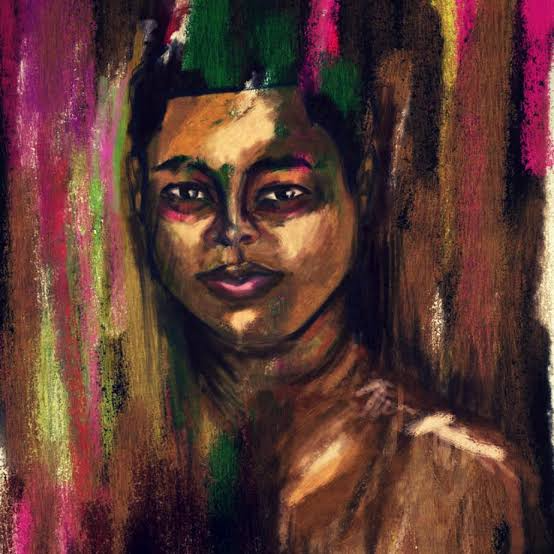
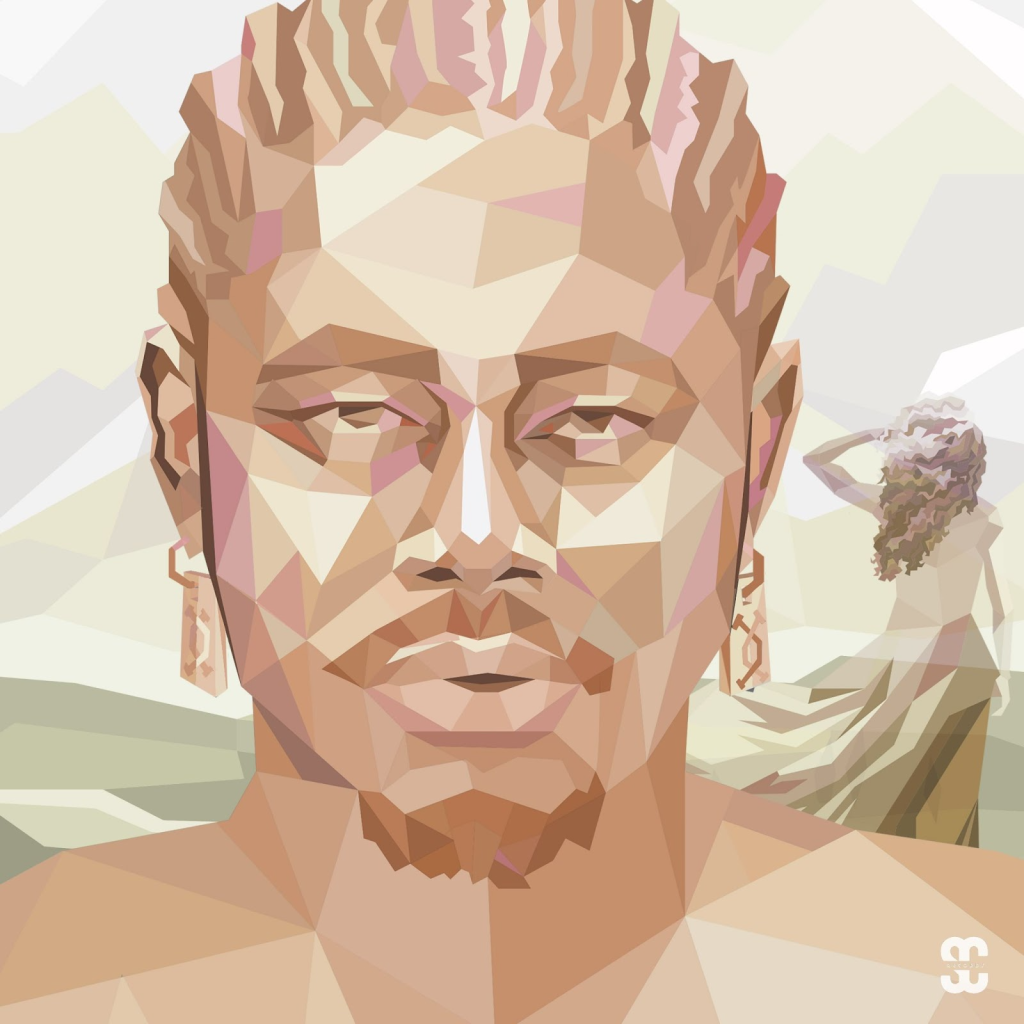
For the artworks, I like the idea of using portraits for my albums. In fact, it’s a tradition for me now. Portraits drawn by artists specifically. It’s also helped me learn to trust other artists, so I can say this is what I’m trying to do, and they work with it. Heavy Heart was done by my friend Ajet, a brilliant artist. It wasn’t like it was for the album, but it was a painting she gave me in 2017. I kept it, and when I started working on the album, I just knew it fit.
For the title, I was inspired by a Mumford and Sons song, the same place I heard the word stoic and made it part of my name. But it was also a pivotal moment for me. I was trying to get a lot off my mind at that time, and I was processing the loss of my sister. The record label is actually named after her.
When I was working on Master of Ballads, I knew I was going to continue the tradition for the album art. Then the title came from an interview I’d done where the interviewer, Emmanuel, referred to me as Master of Ballads. So, the title was Meet Dwin, The Stoic, The Emerging Master of Ballads. Naming the album after the title was me embracing my writing style. I decided to think of ballads beyond the genre of music and just see it as my writing style. The songs, despite cutting across genres, are written as ballads.
What else has changed in your approach and who you’ve become?
A lot has changed. I’ve had to become comfortable with a lot of intense social interactions. I’ve also learned to create boundaries. Knowing what I can and can’t do. This is where my team steps in, and I think that in considering growth, I also have to factor in my growth with them.
There are other ways I’m hoping to grow in as well. I want to become a touring artist, meeting my fans in their cities. I’m going on tour soon and I’m starting with Lagos, Abuja and possibly Ibadan. Next year, I plan on visiting more North American and European countries. Growth in this will also involve meeting and speaking to people who can aid execution. Like tour managers and people who are more familiar with these regions. Again, this will impact growth in my strategy. I’ve been seeing how my music works. I’ve been working with a lot of data as well, and that really helps marketing decisions.
How do you handle shows and meeting people?
I try to be intentional with it. If I’m visiting a city, I like to know what to expect and find out how many listeners I have in a city. So, I’m reaching and singing to people I know and marketing to expand my reach. I also like to stick to time. I don’t want people waiting for me to show up thirty minutes after the start time.
Meeting people gets very interesting. But if I’m making friends or a romantic partner, my goal is to try not to stress them. But the approach is different all the time, even with fans. I typically meet about twenty to fifty new people in a month, and at shows. So, it requires a lot of discernment too, deciding what makes sense to you at the time. Sometimes you live with things that shouldn’t be left for too long, and then it starts to ache.
I’m very immersed in my life and in my work. Even when I meet fans, I try to be as honest as I can. They share experiences with me, and sometimes they want to take pictures. But I appreciate that they’re also understanding. If I see someone who wants to take a picture and see that I’m not feeling like it, they respect that. But I always appreciate their stories. Sometimes I don’t expect it because they have a lot to say, and it might be heavy. But it’s worth it.
Meeting people who overshare can be a lot. If you happened to meet someone who hasn’t heard your music, which one would you recommend?
I would have to know the person first to see what they like. But I’d probably pick I Go Nowhere. There’s a reason it’s my top song currently. It is a very well-composed song, and most people love it.
Read Next: Let’s Go Behind the Scenes of “Nigerians Talk” with Desmond Ekunwe