Jayla*, 18, is obsessed with compulsive buying. What started as parent-sponsored shopping sprees has spiralled into an addiction she funds with her allowance, starving to save and leaning on friends, just to afford the next high. She calls it retail therapy, but the relief never lasts.
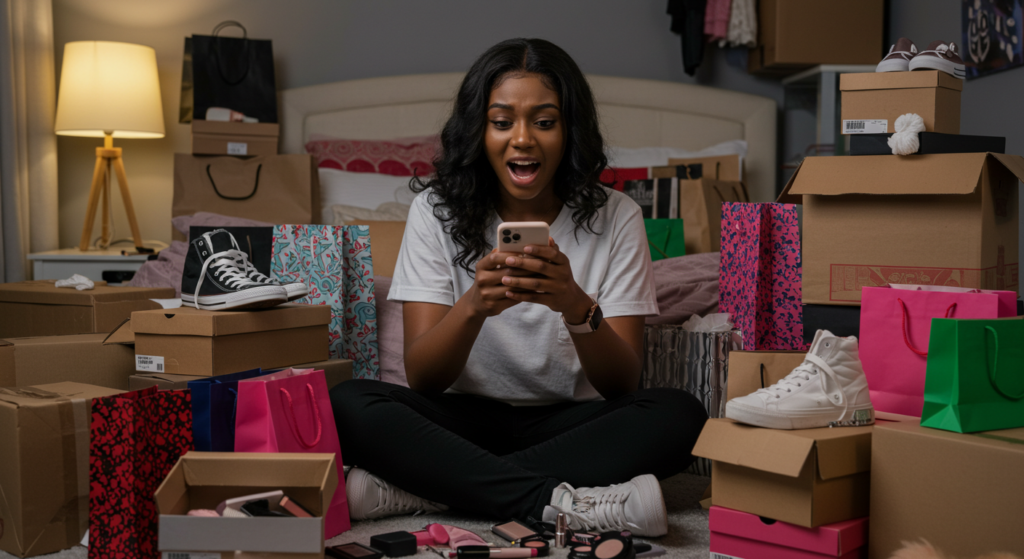
The smell of new leather makes Jayla’s heart race. Standing in her closet, surrounded by racks of shoes, bags, and dresses, the 18-year-old admits she often spends up to 14 hours a day hunting for her next purchase.
Shopping makes her feel alive.
“If I like it, I have to buy it,” she shrugs, eyes darting to a pair of block heels on her iPhone. “If I don’t, I’ll think about it until I’m restless. It’s like my mind won’t let me go.”
She calls it retail therapy.
The thrill is immediate, the happiness undeniable. But once the excitement wears off, she starts to crave it again. “It’s like a physical and emotional drowning,” she admits. “I feel this weight to shop constantly. The only release is to buy something new.”
Her closet at her parents’ home in Lagos takes up an entire room. Clothes spill into suitcases and even a storage unit. She doesn’t know how many garments she owns, only that she hasn’t worn most of them.
“Sometimes I’ll look around and see unopened packages,” she says, almost whispering. “And I ask myself: did I really want this, or did I just need to feel the thrill of buying it?”
Shopping, for Jayla, wasn’t always about compulsive buying. As a child, it was a family ritual.
“My parents would take us abroad every summer: Miami, London, Istanbul. We’d spend hours in malls, buying clothes, shoes, bags, and every shiny new item. It was the highlight of my year,” she recalls. “Back in Lagos, we’d shop at Miskay, Mango, or Ashluxe. The branded clothes, footwear, and armfuls of glossy shopping bags felt like magic. I lived for it.”
Those rituals vanished without warning.
“My parents started saying things like, ‘Inflation hit. The economy is tougher. University is expensive now.’ But honestly, I didn’t get it. All I knew was that one day, the excitement of shopping trips just disappeared. It felt like someone pulled the rug from under my feet.”
“I last had a big shopping summer in Miami, 2023. I was jumping from Target to Ross to Burlington, piling clothes, sneakers, and skincare products into my cart. By the end, my parents must have spent around $1,000 on just my haul.”
She pauses, then adds softly: “ I’ve been chasing that feeling ever since.”
Chasing the First High
By the time she entered university, shopping had become her private ritual. If she wasn’t buying, she was scrolling TikTok shops and Instagram thrift pages, filling carts with things she couldn’t afford.
“When I finally buy, I feel complete, even if momentarily,” she says.
It’s the first thing on her mind when she wakes up. “The tabs on my phone are always open to an online store.”
She compares it to a drug: “I keep looking for clothes in the same way someone might keep drinking or abusing drugs because they haven’t reached the point of escapism they were hoping to reach,” she says, tugging at the heap of unopened shoe boxes in her storage unit.
The thrill comes first. Her heart races when she clicks ‘add to cart’, the high hits a new level when the package lands at the door, and then the guilt when she unwraps and realises she didn’t need it.
Sometimes the euphoria lasts a day, sometimes only a few hours, before the chase begins again.
“I’ll always find the money, even if it means starving or guilt-tripping my friends into helping me.
Still, she insists her addiction to shopping isn’t a problem. “Buying new stuff just makes me happy,” she shrugs.
Her allowance is about ₦300k/month for food and living expenses. However, Jayla diverts ₦30k weekly into her “splurge fund.” Sometimes, this approach means surviving on cereal for days to save enough to shop.
By the end of her last school year, she had saved ₦900k. Half went to buying herself a new iPhone 13, even though her parents had already bought her an XR when she entered university.
“They don’t understand,” she says, shaking her head. “The seasons have passed. I don’t want to be overlooked.”
She spent the rest of her stash on clothes, shoes, and skincare — splurging everything in less than a month, even though she had hoped it would last the entire summer. Now back at her parents’ home, she hides her iPhone 13 whenever they’re around, switching back to the XR to avoid conflict.
“My dad always says I don’t know the value of money. Maybe he’s right. But I can’t help it.”
The Social Media Trap
If summers abroad planted the seed, social media keeps watering it. Jayla admits that what she sees online triggers much of her shopping.
“Every day, I see influencers flaunting their hauls, new designer brands, perfumes, and skincare routines. TikTok makes you feel like everyone else is living better than you. So you want to keep up,” she says.
“If influencers show up in something new, I feel like I’m behind. I want to be on that level too.”
There’s a constant loop of “must-haves” that she can’t stop obsessing over.
But this pressure has a cost. Jayla has lost friendships after repeatedly asking people to chip in or just buy her things.
“Earlier this summer, I sent a shopping list to a close friend who was travelling to the UK with her family. She ignored my calls and texts for three months. When I finally reached her on another number, she admitted she was avoiding me — said my constant requests felt like an obsession.
I got furious. She could have just said no. Instead, she almost ruined our friendship over something so small. I blocked her everywhere after that. When I’m ready, I’ll let it go,” she says,
Still, Jayla’s charm and persuasion often win. “Most of my friends always say yes in the end,” she says with a grin.
The Crash After the High
“After a big spend, I feel guilty. Sometimes I punish myself by skipping meals and avoiding outings. Then I relapse and shop again. It’s a cycle I can’t break.”
She describes her sneaker collection as her “babies,” but the love doesn’t last. If a pair looks slightly off, she doesn’t wear it. She’d often sell a pair at a discount on her Snapchat private story. Other times, it just sits in the corner, a reminder of wasted money.
Jayla often wonders if she inherited this habit from her mum, who also loves to shop.
“My mum splurges on wigs, shoes, and clothes to make herself happy. But she always says, ‘It’s my money, I worked for it.’ That’s the difference. She spends what she earns. I spend what I’m given.”
This mantra has stuck with Jayla. She repeats it often: once she starts earning, she’ll finally be free.
What Comes Next
Jayla wants to become a cybersecurity analyst abroad and earn foreign currency. She already imagines the life she’ll live: no children, just herself and a dog, and enough money to spend without guilt.
“I don’t care about saving. I just want to earn more, so I can splurge more. My friends think I should reduce my splurging. I don’t see it that way. Why reduce it when I can just make more money?”
She recognises the word “addiction” but doesn’t resist it. “It does something to me mentally. It gives me joy, but it also leaves me empty. Still, if it makes me happy, why would I stop?”
Her voice softens, as though she’s talking to herself. “Maybe one day, I’ll see it differently. But now, shopping is my primary source of joy. My therapy. My escape. Without it, I don’t even know who I’d be.”
Names* marked with an asterisk have been changed to respect the speaker’s privacy.