Trigger Warning: This article contains sensitive topics, including physical assault and abuse, which some readers may find distressing. Reader discretion is advised.
Obiora*, 52, left Nigeria with nothing but a dream. After years of hustling and finally building a stable life in the U.S., a long, bitter power struggle in his marriage forced him to start over in Nigeria.
He shares the breakdown of their relationship and why he has no regrets about choosing his freedom.
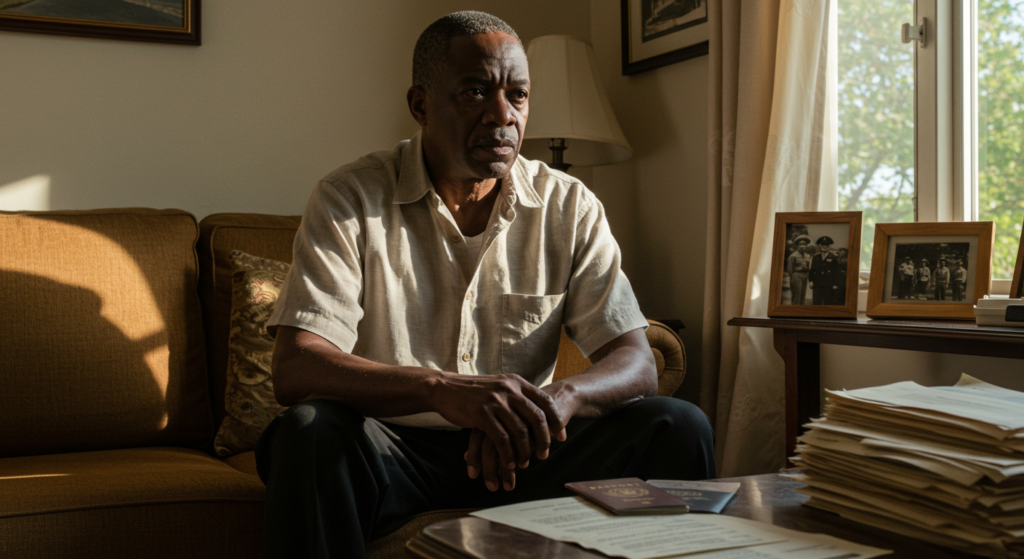
This is Obiora’s story as told to Mofiyinfoluwa
I was born in a small village in Anambra. My mother died when I was a child, and I watched my father, a struggling farmer, raise me and my siblings with barely enough to survive. I decided early that I would do everything in my power to escape that life.
I believed it would be easier to make it outside Nigeria — it didn’t matter where. After I finished secondary school in 1993, my father helped me raise money to travel to Gabon. I was 20 years old and got into a federal university to study electrical engineering. To support myself, I worked part-time as the youngest taxi driver in our Nigerian community. But in a few months, I started hearing stories about people leaving for America. The way they spoke about it, America was the land of true opportunity.
By 1995, I’d saved enough money from driving taxis to buy a plane ticket to Chicago. I didn’t tell my father; I just left on my student passport.
Looking back, it was a wild thing to do — I had no plan or contacts. But God was watching over me. At the last stop on the train from the airport, I ran into a fellow Igbo man who had been my neighbour back in Gabon. It was sheer luck.
He took me to his older brother, an army officer, who let me stay with him. He also helped me get into the army school while I worked in a bar at night. After finishing my course in electrical engineering, I joined the army full-time. It wasn’t glamorous, but it gave me the stability I’d always dreamed of. It covered all my bills, and I could finally afford to send money home without worrying about where my next rent would come from. Thinking about the times in the village when I’d eat nothing but garri for days, it felt like I had arrived.
My homecoming in 2000 was bittersweet. Nearly a decade after leaving home, I returned to bury my father.
That’s when I met Chioma. We were both at a phone call centre in the village, and talked while waiting to use the phone. She was very attractive and had a humble background like me. We connected instantly and stayed in touch. Within a year, we were engaged.
I came back to Nigeria in 2003 to marry her, and she moved with me to the U.S. Life was sweet initially. We had our first son within three years, followed by twin girls. I retired early from the army and used my savings to open an African grocery and cosmetics store. I also started exporting second-hand machinery and spare parts to Nigeria. My only request was that Chioma help manage the store so I could focus on expanding the export business.
But she didn’t want to work. For years, she refused to be involved in the business. When she finally did, I noticed money was going missing. She sent large amounts to her family and shopped recklessly. Chioma never wanted to be accountable, and I began to realise that America had opened her eyes. The naïve village woman I married had become someone else.
Suddenly, she wanted to rule the house. Even though we had agreed to raise our kids Catholic, like me, she later insisted on a Pentecostal church. Then she made major decisions about the children’s schools and our finances without my input. I expected her to appreciate the life I had given her, but she constantly nagged. Every time I challenged her, she threatened to call the police.
Then she started staying out late. When I asked questions, she’d tell me it was none of my business. I suspected infidelity but had no proof, so I hired someone to monitor her movements. When she found out, she flipped it. Whenever I left the house for business, she’d accuse me of going to meet other women.
I mostly ignored her until she completely crossed a line in 2011. I was meeting with two women from California at a restaurant. They owned an African bar and wanted to partner with me. In the middle of the meeting, Chioma stormed in, poured the wine on me, flipped the table, and left with my car keys. The women were humiliated and immediately ended the deal. I walked home that night feeling a rage I can’t even explain. When I got home, I lost control and beat her up.
She went to the police, and I was arrested. Even though our elders had earlier ruled in my favour after the incident, American law didn’t care. My friends helped bail me out, but the experience shook me deeply. That was when I decided: it was better to suffer in Nigeria than let Chioma destroy me in America.
If you want to share your own story, I’d love to hear it here.
Slowly, I liquidated my businesses, and in 2015, I told Chioma we were going home for a family holiday. What she didn’t know was that we weren’t coming back. I used the funds to open a car parts business in Abuja and settled the family there.
Back in Nigeria, I took back control. I cut down her monthly allowance and excluded her from the business entirely. I knew it made her restless, but I didn’t expect the drama that unfolded.
One day, in 2017, I received a call from the National Agency for the Prohibition of Trafficking in Persons (NAPTIP). Chioma had reported me for starving her and the children. I was shocked. But when the agents came to inspect the house, they found the house well-stocked and spoke to the children, who, after much questioning, told them Chioma had asked them to lie. The case was subsequently dropped.
I found out from her friends that she had been spreading false stories in the estate. She’d been trying to ruin my reputation and set me up as an abuser so she could gain sympathy and get social welfare to take everything from me. It made me furious.
We had a heated confrontation that night, and when she insulted me in front of the children, I used my hands on her. She ran out half-dressed and spent the night with a neighbour. When I returned from work the next day, she had packed her things and left with the kids.
A few months later, she tried to return, but I was done. I told her I was filing for divorce. That’s when she threatened to cut me off from our kids. Knowing she planned to use them to manipulate me, I didn’t fight it,
I cut off all contact for three years and watched from a distance. Eventually, she drained her savings and began relying on wealthy men just to feed herself and the children. That’s when I filed for child neglect and began fighting for custody.
It’s been over six years since we separated. The legal divorce is still dragging on, but I’ve moved on. I support my children directly now and give them whatever they need. Chioma has tried to mend things, but I won’t fall for it. Now, I clearly see that she never truly loved me. She only loved what I could give her.
It’s been a bitter lesson, but one I’ll never forget. No one will ever hold that kind of power over me again.
Click this to see what other people are saying about this article on Instagram
Read Next: I Love My Man, But Supporting Him Financially Is Tearing Us Apart