When Maama* was 11 years old she, ran away from her relatives in pursuit of education. She didn’t think she would need to have her father arrested to reach her goal.
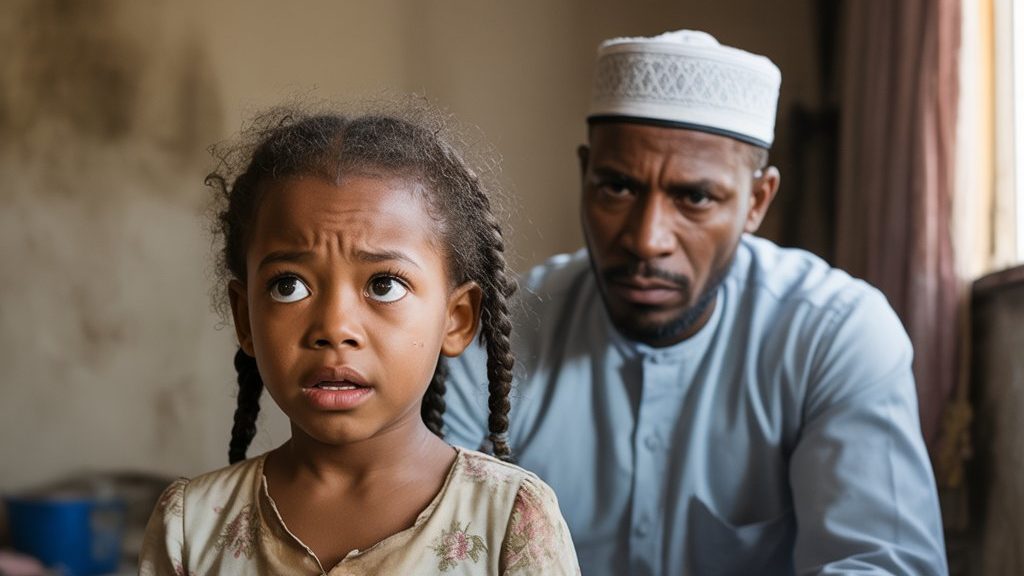
This is Maama’s Story as told to Queensie
Growing up, I was caught between two completely different worlds. On one hand, I had the Hausa traditions my parents held dear, and on the other, I was surrounded by a Yoruba community of school lovers. As a child, I dreamt about becoming educated, independent and having a voice.
Although my father was from Kebbi, I grew up in Ojoku, Kwara state. I was surrounded by Yoruba friends, children like me, who had education as a part of their normal lives. The passion was contagious, and it overtook me as well. I was a bright student and topped the class. I was even on a scholarship, so no one had to pay a dime for my school fees.
As a Hausa girl, though, I had certain expectations I didn’t fully understand. My parents were steeped in tradition and fervently believed that Hausa girls didn’t need an education or a voice. Marriage was the top priority, I didn’t realise how real that was until I turned 11. My family decided to marry me to my cousin, an 11-year-old boy I had never met.
ALSO READ: Creating Your Own Career Path: Tips from Women Who’ve Walked the Walk
It was a normal day until my dad announced that I was moving to Niger state. He said it was time for me to get used to the Hausa culture.
I was initially excited, bubbling with joy and hope for a new adventure. I expected that I would keep going to school while connecting with my Hausa roots. My Uncle picked me up at the park and I spent a month in Niger, patiently waiting for something to happen.
My uncle dropped a bombshell instead. He said “Maama, you’re getting married in a month”. My heart sank, and I kept reassuring myself that it was a prank, a nightmare that had somehow gained sentience. My dreams of school, growing into someone important, had been destroyed in moments.
Subsequently, I was taken to a remote village with no roads, schools, or clean water. I was encouraged to start practising my obligations as a soon-to-be wife. I would fetch water from the river and wash my cousin’s clothes. They told me it was my duty to make money for my own wedding, so I hawked Tuwo Shinkafa and Masa. My mother-in-law-to-be made the food, and I sold it to strangers as my future was being planned without me.
Deep down, I was devastated and miserable, trapped in a life I didn’t choose. One day, a stranger changed everything.
While I was hawking, a man I couldn’t recognise called my name and mentioned my school, asking me what I was doing there. “You’re supposed to be in school”, he said, and these words were like a lifeline to me. For the first time in that period, someone looked at me and didn’t see a bride-to-be but a girl with potential.
He told me that I didn’t belong in that village and urged me to find my way out. His encouragement lit a quiet fire, and I knew I had to do something. I convinced my cousin to take me back to my uncle’s town, and from there, I planned an escape.
On a Monday morning, I ran away to the park, travelling alone, returning to Kwara state. I was only a naïve 11-year-old. The journey was terrifying, there were rape attempts and kidnapping scares, but I made it back to Ojoku in one piece.
I immediately went straight to my secondary school because that was the only place I felt safe. My principal welcomed me, but it was not that simple. My family wasn’t done with me. I sought help from the Hausa chief in Ojoku, hoping he could convince my father to let me return to school, but he refused. He deferred to my father’s wishes, even though his own daughters were in school. Tradition had won again, but I was desperate and couldn’t give up.
I turned to the Oba of Ojoku, who was kind and called a meeting with my dad and involved welfare officials. My father agreed to let me stay in school. But the very next day, he stormed into my school, embarrassed my principal and insulted the Oba in front of guests. The Oba gave us two days to leave the town.
Again, I sought the help of a neighbour in my compound, a woman who saw my ambition and referred me to a man who involved the police. Eventually, my dad was investigated and arrested.
My case was referred to the Ministry of Women Affairs, and I was placed in an orphanage in Kwara. It was tough living like an orphan when my parents were alive, but I was safe. What more could I possibly ask? I resumed at JSS 2, and one day, a politician who visited the orphanage noticed me and offered me a full scholarship through secondary school and university. I am currently in my final year of university and have been married for six months.
I’m still amazed by how far I’ve come, but what makes me proud is being invited to events to speak to other girls. I’m even prouder when they tell me they want to be like me. It’s a reminder that I didn’t just fight for myself; I fought for them too.
I want to tell every woman reading this, know what you want. Be sure and don’t let anything or anyone stand against that. Stand your ground.
My dream now is to become a voice for the voiceless and an advocate for the less privileged. I went from being a survivor of early marriage schemes to a university student with a supportive husband and a platform to inspire others. I’m proof that you can rewrite your story no matter the odds.
NEXT READ: The Hospital Told Me to Wait Until I Had Another Baby Before They’d Give Me Birth Control