When Bellema*, 27, walked into a hospital ready to get on birth control after having her first child, she didn’t expect pushback. She had questions, she had options, and she was prepared. But the moment she said the words “family planning,” she was met with doubt, judgment, and the kind of dismissiveness that made her shrink from her own decision.
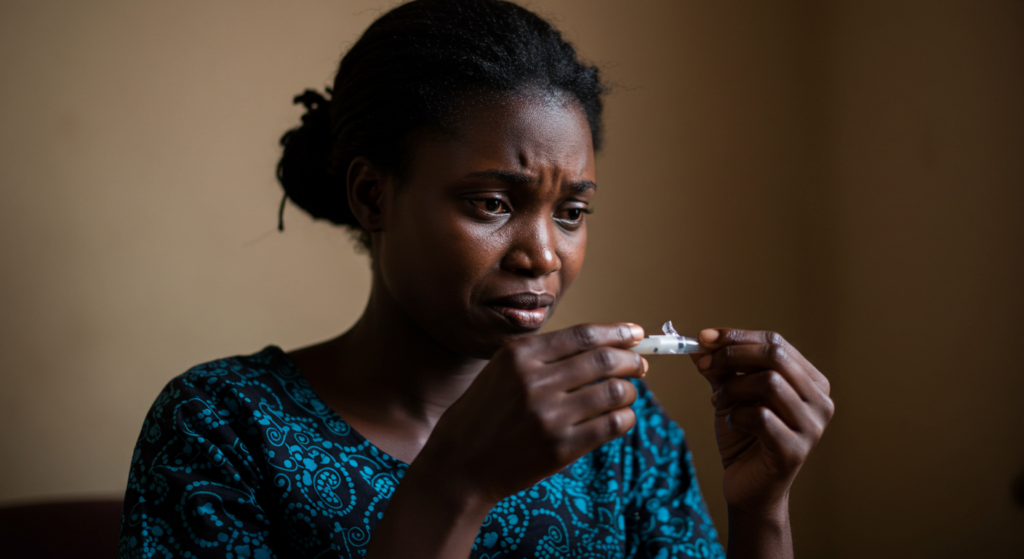
This is Bellema’s Story as told to Princess
The first time I heard about birth control was probably in secondary school. It wasn’t anything deep. We didn’t even call it birth control. It just came up in passing; friends talking, maybe something we heard around, or the basics we learnt in science or home economics class: condoms, abstinence, and STDs. But ‘birth control’ was never properly explained. My parents? Oh, they would never talk about something like that. Is it not Nigerians? You’re told nothing, but make the mistake of showing up pregnant, and see how the entire family will turn on you. The whole thing was just taboo.
I didn’t really understand it until I became an adult. I mean, properly understand it. My knowledge of ‘birth control’ truly started during this birth journey. It was at antenatal, when I was pregnant with my first child. Many women were complaining about not wanting to get pregnant and seeking preventive measures to take. Also, from friends who were mothers, too. I was probably 23. That was when I really began asking questions: what it does, how it works, what options exist.
At antenatal, the hospital staff really took their time to educate us on so many things: how to plan for the kids you have and the preventive measures to stop or pause having more. Methods like the IUD, injection, and implant. It sounded easy. A little scary, especially the IUD and implant. I was like, “How do they put a tube in your arm? Would it hurt? Would I bleed?” I kept trying to picture it. But they explained it to me in simple terms. And I’m the type of person who likes trying things, so I listened.
Before that, I used emergency contraceptives like Postinor-2. But taking those too much is not good for your system. It messes up your period. I had to stop. As for condoms, not all men enjoy them. Especially husbands. They’ll be like, “Why are we using condoms when we’re married?” Most of the time, they don’t care. You’ll be the one carrying the pregnancy. You’ll be the one looking for how to handle it.
Some people even try local methods. Like salt and water. Or taking a shot of something hot. It doesn’t work. At least not for me.
When my first child was a year and some months old, I went to the hospital. I told them I wanted to do family planning. They started explaining the options: injection every three months, an implant that lasts three or five years, and an IUD. I ruled out the IUD quickly. The idea of something being inserted into my vagina was a big no no. I was worried about pain. The injection felt easier, but I’m not great with dates and remembering appointments.
So I said let me go with the implant. That’s when the talk started.
The matron said, “Why? You just had your first child. You don’t even have a second one yet. Why are you doing family planning? Are you done having children? Does Oga know?” She told me I might regret it. That some women do it and then can’t conceive again. That people come back crying. I was asked how many kids I wanted. She said I should wait until I was done having all my children.
She didn’t yell. But her tone — that sarcastic and judgmental Nigerian aunty tone — it gets to you. Some doctors just stand their ground like that. “We’re also mothers,” they’ll say. “We know what we’re saying.” I tried to explain I wanted to space pregnancies, I knew my body was fertile. I didn’t want another child for at least four years. But I got tired. She was so sure of herself, it made me start doubting. I just told her, “Okay, maybe after baby number two.”
They didn’t force me out, but they discouraged me. Made me feel like I didn’t know what I wanted. And I went alone. It is normal for me to do stuff alone. It felt like something private. But that day, I wished I had someone with me.
Eleven months later, I was pregnant again. I was so upset.
When the second baby came, I didn’t waste time. I went back to the hospital and told them to give me the implant. Same hospital. Different doctor. They explained again that it’s a mini-surgical procedure. They’d cut the skin a bit and insert the implant in the arm. I got it. It wasn’t painful, I didn’t feel anything. I asked everything: Would it hurt? Would it affect my period? Could I still have sex right after? They answered me clearly this time.
That second pregnancy changed everything. My husband and I had to adjust, find extra income, plan more seriously, and make sacrifices. It affected my sex life too. I didn’t even want to “do the do” again. Libido died. I’d see him and just be like, “Nigga, get off me.”
It was mentally exhausting. Thinking of food, school fees, clothes, and diapers. I was always tired. Always thinking.
It took nearly two years between when I first asked for birth control and when I finally got it. Do I regret how it went? Not really. At least my firstborn has a playmate now. But I’m not making that mistake again.
I think Nigerian doctors, especially matrons, need to work on their attitude. If they’re having a bad day, they should stay home. Don’t take it out on patients. The sarcasm, the judgment, and the rudeness make people feel like they don’t deserve control over their own bodies. I’ve heard other women talk about the same thing. “Go home. You’re not ready.” That’s the answer we get.
My advice? We have the right to make our own decisions. Speak up. Ask questions. Go with someone if you need support. And if they talk down to you at one hospital? Go to another one.
Because this is your body. Your plan. Your life. And nobody should shame you out of protecting it.
NEXT READ: 10 African Women Talk About Using Birth Control