• Someone you know has left or is planning to leave. 1,000 Ways to Japa speaks to real people and explores the endless reasons and paths they take to japa.


    Toke (19) finished secondary school at 16, spent a year in pre-degree, another year at a Nigerian private university, and then moved to Poland to study medicine in February 2026. Here, she tells us how she found her way past unaccredited schools, why medical scholarships are so hard to find, and what part-time work can actually cover.
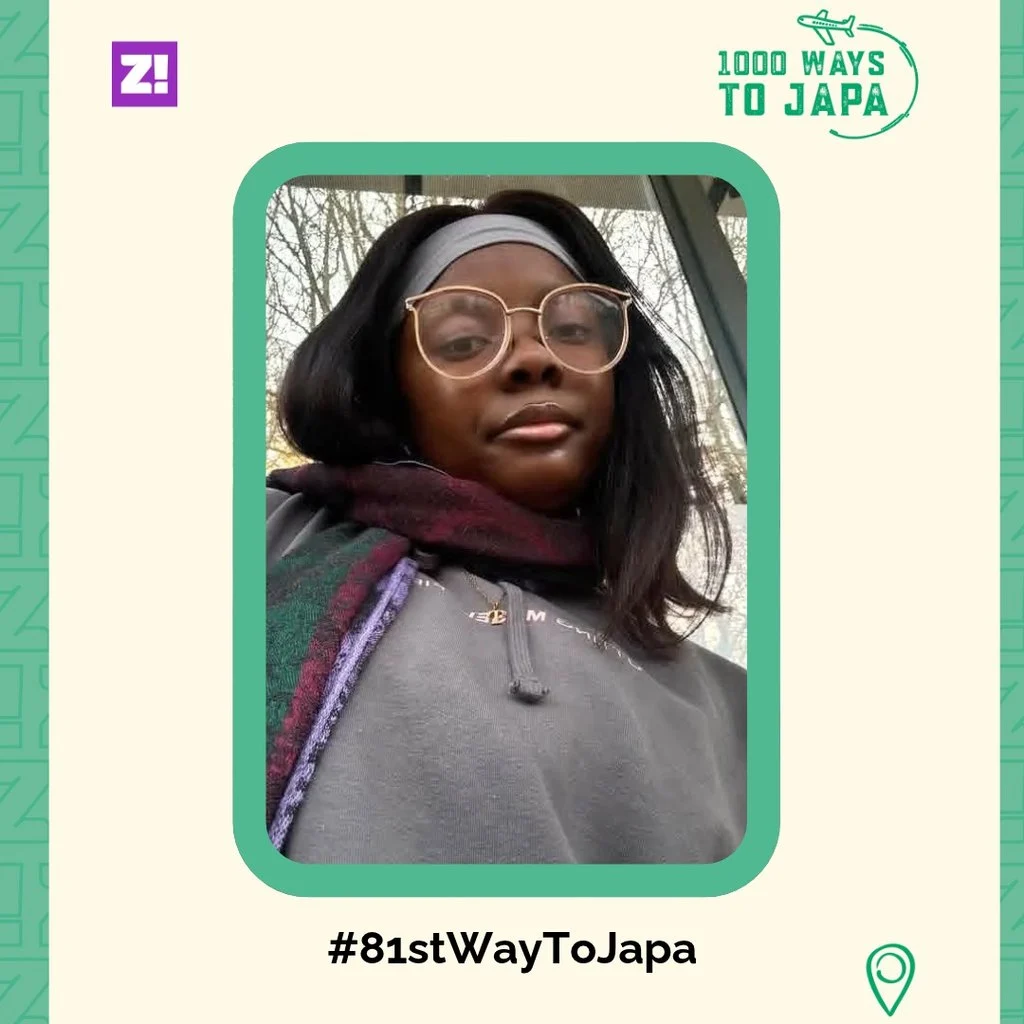
    Toke, a 19-year-old Nigerian student who moved to study medicine in Poland

    Where are you now, and when did you leave Nigeria?

    I left Nigeria in February 2026, and I currently live in Northeastern Poland.

    Nice. So what was life like before you left?

    I finished secondary school in 2023 when I was 16. The plan had always been to go abroad, but it didn’t happen immediately. I completed a year of pre-degree in 2024, then 100-level at a private university in 2025. My parents didn’t want my life to stagnate while we waited, so they said I should go to school, and if the japa happened along the line, fine. In February this year, I left.

    Was moving abroad something you wanted, or did you follow your parents’ wishes?

    I wanted it. I’d always known, because my parents want a better life for us. I also have family members abroad, so we hear what they’re doing, and I’d daydream about living like that. I just didn’t know what the process would look like.

    Interesting.! Why Europe, and not Canada or the US?

    I’m studying medicine, and my first thought was Canada or the US. My dad didn’t want that for me. In Canada, the UK and the US, you have to finish an undergraduate degree before you can study medicine. I was fresh out of secondary school, and he didn’t want me to do a degree, then four more years of medicine, because I’ll probably be too tired by then. Europe is friendlier because they admit students straight from secondary school.

    Understandable. Why Poland specifically?

    Well, I chose it because I did my research. My parents wanted me to have somewhere I could settle and work, or move on from. Poland offers an international degree. It’s recognised across the Schengen area and the EU, and you can use it if you want to move to the UK, US or Canada. I wasn’t sure I’d want to stay in Poland, so I wanted a degree that wouldn’t tie me to the country where I studied.

    Walk me through the research. Where did you start?

    YouTube and Google first, then ChatGPT. I watched people talk about their experiences and how to do the documents, because sometimes the website says one thing and reality is another.

    Then I stumbled upon a website called Medlink Students. It lists countries and universities that offer medicine, dentistry, or veterinary medicine in English, along with their requirements and application processes. They even offer a free consultation, which made my research a lot easier.


    The Big Daily is your weekday shortcut to the biggest news shaping Nigeria. We cut through the noise, connect the dots, and explain why the news actually matters, all in one quick read.


    What were you looking out for in a school?

    Accreditation. I’d heard on TikTok about students who studied in Russia and were told their degrees weren’t valid when they graduated, and about a school in Ukraine, I think, that wasn’t even real. I didn’t want to waste six years, so I looked for good accreditation and schools with partnerships in places like the US and Canada.

    Wow, that’s scary. Once you picked a school, how did you apply?

    I went through their website, but some schools don’t update it in a timely manner. So I emailed to say I was a prospective student interested in studying medicine in English and asked for the requirements, and they sent them to me. Then I applied in January last year.

    And the visa? How did that go?

    I’m not exactly sure about the process, as my parents handled most of it. What I can say is that it depends on what you’re applying for, because study, work and the Schengen visa are all different. It’s very unpredictable. I’ve heard of people on government scholarships in Poland who were still denied by the embassy, and others who appealed and were denied again. The process is honestly crazy.

    Were there any scholarships for Nigerians or international students?

    I didn’t find any for myself, because you rarely find scholarships for medicine. There are scholarships for other courses, but they’re mostly for master’s and PhD, though I think there are some for undergraduates. There’s the Narodowa Agencja Wymiany Akademickiej (NAWA) scholarship and the Nicolaus Copernicus scholarship, which is for African countries and specifically includes Nigeria.

    How did you feel once you got admitted and your visa was approved?

    Relieved, honestly. I’d taken an unintentional gap year after finishing 100 level, and I felt behind because my mates were entering 300 and 400 level while I was starting again. It was exciting too, with a new country, new place and new people. But mostly, it was a relief to finally be passing that stage.

    Okay, so you land in Poland. What were the first few weeks like?

    I came with my mom, so I wasn’t alone. That helped, because we don’t have family there. We were jet-lagged, but I wouldn’t call it culture shock, because I’d watched a lot of YouTubers who live there.

    The weather was the only real shock. Everyone kept saying it’d be cold; I expected it, and I still wasn’t ready. The other things were that everybody minds their own business and doesn’t eat spicy food. I love pepper, so that was hard.

    Was it hard finding community?

    I lived in Warsaw for six months before I resumed school this month. My parents wanted me there because it’s the capital and I’d integrate faster than in a smaller city. They know that if left to me, I won’t go out.

    For the first month, I didn’t go out at all, so I knew nobody. Then a YouTuber I watch posted about a church service she attended, and it was a church I’d attended back in Nigeria. So I went, introduced myself to her, and joined the community; it’s so lovely. After a month alone, it was so nice to see other Nigerians.


    Read this: She Moved to Canada Without a Job and Rebuilt Her Career From Scratch — 1000 Ways to Japa 


    Did you meet people outside church?

    I’m a homebody, so not really. The other events I went to were from church too, like a fake traditional wedding in August that people I knew from church organised. If I hadn’t gone to church, I probably wouldn’t have met anyone.

    How are you handling the language barrier?

    In Warsaw, I completed a four-month semester at a language school, which helped me understand bits and pieces of Polish. I’m also taking language classes as part of my course, because you can’t do clinical rounds without learning the language.

    Let’s talk money. Can you work as a student, and does the minimum wage cover the cost of living?

    I don’t work right now because my schedule is jam-packed, but I’ve looked into it. Student workers have privileges until 26, like no bank charges and discounts on train tickets.

    The minimum wage is about 31 PLN per hour. If you worked seven to eight hours a day as a part-time student, that’s roughly 3,000 a month. Rent is around 1,500, depending on where you live; groceries are about 400; transport is about 110; and miscellaneous is 150 to 200. So it covers everything, with some left over. It’d take a toll on you stress-wise, but I think it’s worth it.

    Do you miss Nigeria?

    Honestly, no comment! (laughs) I miss the spicy food. Sometimes I wake up at night craving food I can’t eat. I also miss my friends and family.

    Is there anything Nigeria could have done differently to keep you here for medicine?

    A lot. The requirements are strict; you need at least a C in subjects like biology, chemistry, maths and physics, and not everyone meets them. Student life isn’t always favourable, and the universities that are have tuition fees that are off the charts. If Nigeria had the kind of opportunities Europe offers, I might have considered it. Unfortunately, it hasn’t reached that level yet.

    Do you see yourself coming back to practise?

    If, by some miracle, Nigeria ends up paying doctors more than Australia, which I heard pays the most, then why not?

    What’s one thing you love about living in Poland?

    The small things. There are pedestrian crossings where cars actually stop. I was about 50 metres from a crossing once, and the first car already stopped for me. Nigeria had scarred me, so I was like, “You could have just gone; why are you waiting for me?” I also love the self-checkout at supermarkets. Those two made my life better.

    What would you say to someone thinking of studying in Poland?

    Just go for it. If you’re contemplating it, literally, just go for it.

    On a scale of one to ten, how would you rate life in Poland right now?

    I’d give it a seven. It would honestly be a ten if not for the weather.

    Thank you so much, Toke! Anything you’d like to add?

    Thank you for having me.


    Want to share your japa story? Please reach out to me here

  • Every week, Zikoko seeks to understand how people move the Naira in and out of their lives. Some stories will be struggle-ish, others will be bougie. All the time, it’ll be revealing.


    Hisa lets you buy and sell Nigerian and US stocks straight from your phone, all in one app. And with Hisa’s zero-commission campaign, new users who sign up before the end of 2026 can trade in both markets without paying trading commissions during the promotion. Ready to own a piece of the companies you know? 

    Download Hisa, create an account and start investing. Terms apply.


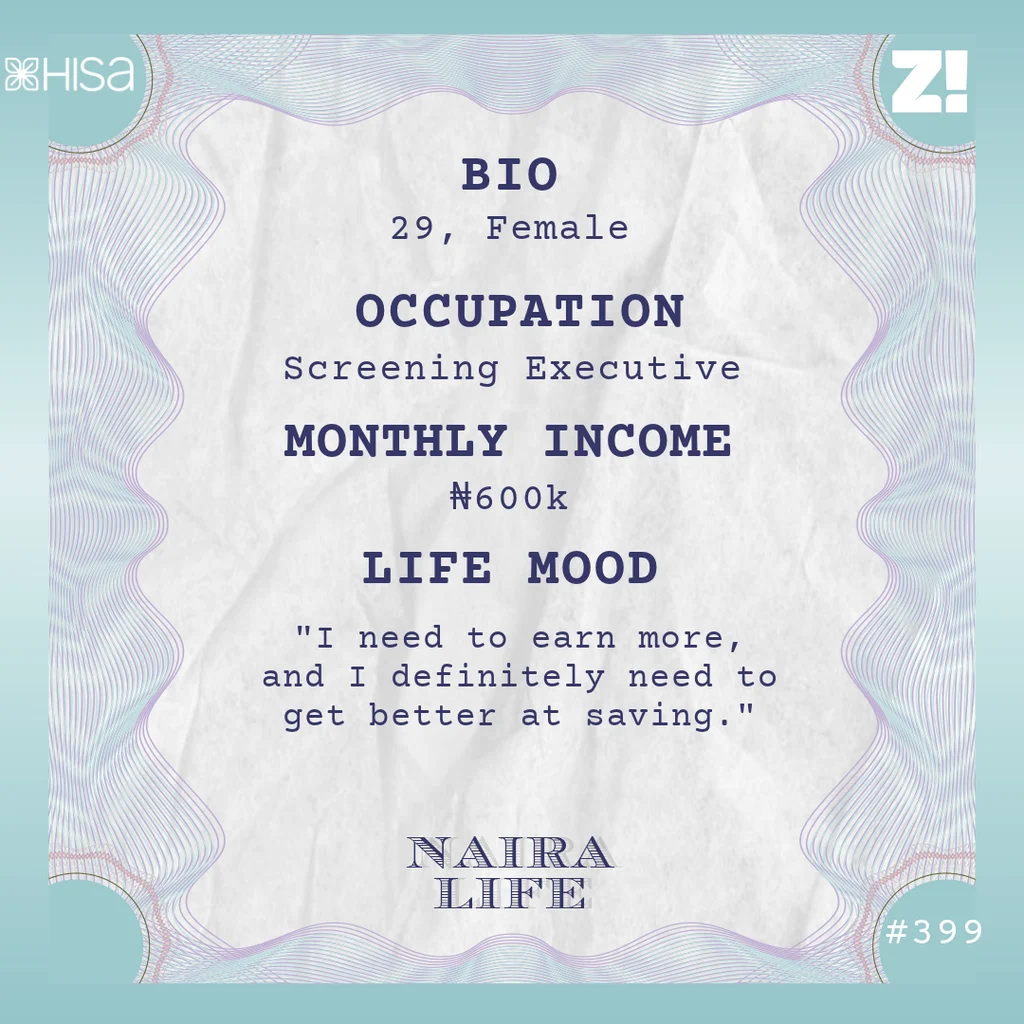
    NairaLife 399 bio toxic bank job

    What’s your earliest memory of money?

    I grew up in what I would call a very comfortable family. I had everything I wanted and needed, so I never really understood how money worked. All I knew was that if I wanted something, it was available, and if it wasn’t, all I needed to do was ask, and it would be provided.

    I didn’t handle money as a child. I wasn’t one of those kids who would do petty things and get rewarded with cash. My parents provided everything. It wasn’t until I lost my dad and the dynamics shifted that I understood the value of money.

    I’m sorry about your dad

    It’s okay. He passed when I was 12, around the time I was in JSS 2 or 3.

    Can you share some more about what things were like before he passed?

    We had a lot of domestic staff; people who handled the driving, the logistics, and household needs. I was pretty much a nepo baby. 

    My dad was very wealthy. He ran chains of businesses in Kaduna, from hotels and guesthouses to other side ventures. My mum was a housewife. All she had to do was look pretty and take care of the family.

    When my dad died, I didn’t immediately clock that I would never see him again. I didn’t even cry because I didn’t know what I was supposed to feel. That’s to show just how much of a bubble I was in. I didn’t understand that my living conditions might change. I thought everything would still be alright and we wouldn’t lack anything. It wasn’t until a few months, and then years, down the line that I realised there was a huge void.

    When did that void first hit you?

    The first time it hit me badly was during my JSS 3 graduation. I didn’t attend because my mum couldn’t foot the bills for the party. That morning, right after our family devotion, she called me aside and said, “After your exams, that will be it. No graduation, no preparation, nothing, because I need to channel the money elsewhere for your siblings.”

    I can never forget that morning. Prior to that, I had already been making plans with my classmates about the outfit and hair I’d wear to the junior prom. Having my hopes dashed like that felt terrible. It was the first major sign that things had changed.

    Did things keep shifting from there?

    Definitely. There were a couple of times when my school fees were delayed, and I had to pass up certain luxuries because we didn’t have them anymore. For instance, we had about three or four cars, and after my dad passed, my mum had to sell every single one of them. We moved from changing cars to shuffling between public transport.

    My mum took over managing one of my dad’s businesses, but the hospitality industry in the North was changing, becoming even more conservative, and the boom it had experienced while I was in primary school had died down.

    When did you first start thinking about making your own money?

    I tried getting receptionist and nanny jobs right after secondary school to make money, but my mum never endorsed it. She didn’t want my siblings and me to have the mindset that, because our dad was gone, we had to forget school and start working to make money.

    Because I didn’t get admission immediately, I stayed at home for two years writing JAMB and attending lessons, then completed a brief pre-degree programme in 2015 before enrolling in a state university in 2016 to study microbiology. It wasn’t until I got into uni that I started doing things for money.

    What were you doing in uni for money?

    Not to toot my own horn, but I am quite smart, and people around me knew I was very book-focused. I started attending night classes from my very first year. So whenever people needed someone to cover attendance, do assignments, or write exams for them, they knew to reach out to me.

    If I didn’t want to take the risk of actually writing an exam paper for someone, I’d go into the hall with them and let them copy from my sheet.

    How much did that pay?

    Exams were usually between ₦10k and ₦15k per course. Sometimes, if I met big girls who had money, I could charge ₦20k or ₦25k, and they’d pay. Assignments were much cheaper, around ₦3k to ₦5k. Other times, on really hungry days, I’d do an assignment and tell the person, “You know what, just give me food.”

    In a good month, especially in my third and final years when I met a lot of unserious students with carryovers, I was making an average of ₦30k to ₦40k writing exams.

    You mentioned knowing that what you did for money was risky. Why do it still?

    My pocket money was like ₦3k to ₦5k per month, and sometimes it didn’t even come. As the first daughter, my mum expected me to understand her financial situation and make sacrifices. It could be something like, “Oh. I can’t afford to send you money because of your younger siblings.” And I couldn’t question it. I just had to accept and manage somehow.

    I knew that getting caught impersonating during exams meant automatic rustication, or paying serious bribes to junior lecturers, so there was always tension. But I felt like I was helping my mother help me. I used the money to take care of myself and buy clothes. 

    By my final year, I was even making enough to outsource chores like laundry and fetching water. I didn’t save anything from those hustles, though. I didn’t feel a need to keep money somewhere. I’ve always felt money is meant to be spent.

    I did that throughout my time in uni, until I graduated in 2019. 


    We surveyed 5,000 workers across Nigeria’s formal and informal sectors to examine what Nigerians earn, where the money goes, and whether hard work actually translates to financial security. This is what we found. Download the Zikoko State of Income Report.


    What came next?

    I went back to Kaduna, and then COVID hit in 2020. I ended up spending the whole of 2020 and 2021 at home because I didn’t have the money to return to school for clearance. I needed about ₦250k – ₦300k because clearance at my school was incredibly slow and often took months. That money was to cover transportation, rent for an apartment (I’d left mine after graduation), and pay any outstanding school bills.

    I didn’t have that much, and my mum didn’t have it either. Those two years at home were some of the most frustrating years of my life. Classmates whose exams I literally wrote were posting pictures from NYSC camp, while I was stuck at home.

    My mum didn’t let me take menial jobs, so I spent my time doing house chores, taking care of my siblings, and reading novels and poetry. I subscribed to foreign magazines and tried submitting articles and poems to get paid, though none of those panned out.

    Finally, in November 2021, my mum raised the money, and I returned to school and finished my clearance in six months.

    Six months is wild

    See, I know people who spent years trying to get cleared and were stuck in the system due to one issue or another.

    Fast forward to November 2022, I finally got called up for NYSC. I served in the East and worked as an administrative assistant in an elite secondary school.

    NYSC paid ₦33k/month, and the school paid me ₦30k. It was later increased to ₦40k right before I finished my service in October 2023. The school also provided accommodation, so I didn’t pay rent. 

    Sounds like you had a great service year

    Not exactly. Working in that school stressed me out. With rich kids, you’re constantly walking on eggshells because if you speak to a child a certain way, they report you, and the school deducts a fee from your small salary. 

    After NYSC, I returned to Kaduna in January 2024 and started applying for jobs online. Most roles were in Lagos, and I didn’t have anyone to stay with there. Luckily, in March/April, a close family friend of my mum connected me to someone at a commercial bank. After a few interviews, I was invited to banking school in Abuja in May 2024.

    Nice. How did that go?

    Banking school lasted two months, and during that time, they paid me about ₦60k/month. In July 2024, I was assigned to a branch as a Relationship Manager. My starting pay was ₦350k, plus a housing allowance, bringing my net pay to around ₦380k.

    At first, I was so excited. ₦350k felt like a lot of money. In fact, the very first month I got paid, I exhausted the entire ₦350k in one week on hair, nails, clothes, bags, and sending money home. I even had to call my uncle to send me urgent ₦100k after I’d spent my entire salary.

    The excitement didn’t last long, though. When the actual workload hit me, I realised ₦350k was trash. “Relationship Manager” was just a fancy title for marketer. Every morning, they would grill us about leads and deposits and talk to us anyhow. Every day, CRM this and that. I would wake up in the middle of the night crying and having panic attacks. Even when I got customers who brought in deposits, as soon as they took their money, I was back to square one. Management would always make us feel like we were doing nothing and were just coming to collect our salary for free.

    One night, I stayed in the banking hall until almost midnight because my manager refused to let me finish a presentation the next morning. She wanted it sent that night. It was hell.

    Phew. That’s a lot

    Still, I kept enduring. In July 2025, there was a salary review, and my pay grew to about ₦420k. But it didn’t do anything to relieve the stress and burnout I was feeling. I was literally dreading going to work every morning.

    One day in December, I just woke up and told myself, “You know what? I’m done.” I resigned without any plan or savings. I just walked out.

    Ah. Just like that?

    I couldn’t do it anymore. Also, December marks the end of the financial year, and we were already hearing that targets for January 2026 would be tripled. I told myself I wasn’t entering a new year with that kind of pressure, so I just walked out.

    I didn’t even tell my mum until after I resigned, and she was furious. I didn’t mind. I’d been complaining about the job to my family before, and the person who wears the shoe knows where it pinches most.

    Get More Zikoko Goodness in Your Mail

    Subscribe to our newsletters and never miss any of the action

    So, how did you survive without a job or a plan?

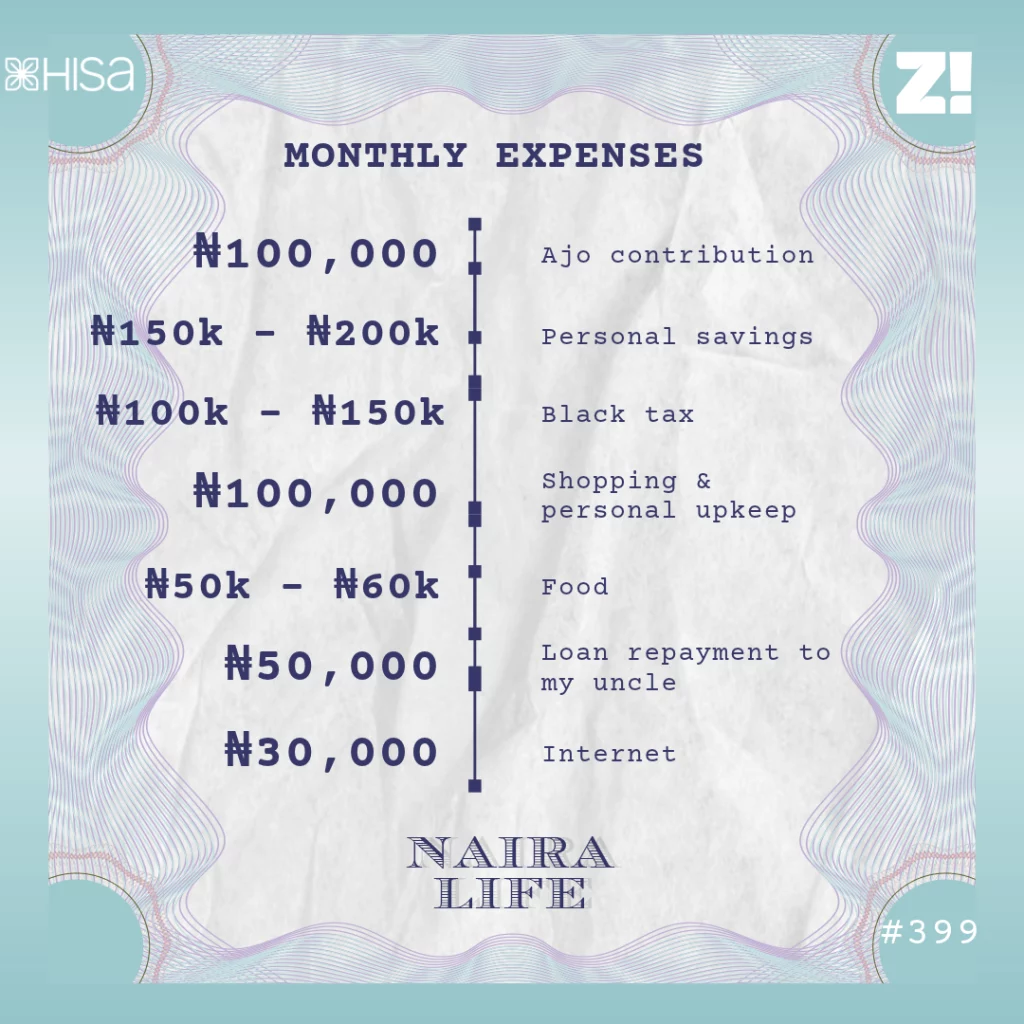
    It was very tough. I knew I didn’t want to do on-site work anymore and wanted to work only remotely, so I needed a good laptop. I also had a ₦100k monthly ajo commitment (₦50k each for two ajo groups) that I had joined in 2025 to get an apartment. I didn’t want anyone to embarrass me for owing ajo, so I had to pay that on time too. 

    To be honest, my family saved me during that period. I survived on small stipends from my mum, my aunt abroad, and close friends who gifted me money without me having to beg. I also collected one of my ajo payouts (₦250k) around this time, so that helped.

    In March, I reached out to that same uncle who always rescues me, and he loaned me ₦500k. I used ₦420k to buy a laptop and used the balance to offset an ajo payment.

    How long did this period of unemployment last?

    It lasted about five months. I was looking for any kind of remote job — data entry, call centre, customer service, even sales. I just wanted something.

    Thankfully, in May 2026, I got a BPO role for a US real estate company calling leads who had filled out forms on their website. It started as a base-pay role, then they switched it to commission-only, paying $14 per sale. I could call 100 people and only convert two. In a good week, I made $30 to $40. I only worked there for a month and made about ₦150k.

    I left in June when I got my current role, which is also a remote BPO setup, working for a Fortune 500 insurance company in the US.

    What do you do there, and what does it pay?

    I’m a screening executive, basically HR. I conduct initial phone interviews for candidates who applied to the company and book qualified ones for second interviews.

    It pays $3 an hour. I’m expected to work 40 hours a week, which is 160 hours a month — roughly $480, or about ₦600k. When they told me ₦600k during the interview, I was so happy because it was higher than what the bank paid me, and I didn’t have to leave my house. 

    I work a graveyard shift, from 5 p.m. to 2 a.m., and it can be exhausting because I make between 250 and 400 calls a day. But I still think it’s a better situation than working onsite. My real passion is non-voice customer service, so I’m still applying for chat and email support roles, but for now, I’m grateful.

    How do you typically break down your expenses on a ₦600k income?

    I don’t always hit the full 40 hours every week, so my actual take-home fluctuates a bit, but here is how my money usually goes:
    Nairalife #399 expenses

    How would you describe your relationship with money right now?

    I’m an impulsive spender and a very materialistic girl. Because I grew up having everything I wanted, adjusting has taken a lot out of me. If I see a dress I like, it makes zero sense to me not to buy it. I love the fancy things of life.

    At the same time, going months without a job earlier this year taught me the value of having something to fall back on. I just started forcing myself to be consistent with savings and currently have about ₦500k set aside. If I had been more diligent since June, I’d probably have triple that amount by now.

    What’s an ideal amount you think you should be earning?

    I think I deserve to earn between ₦1.5m and ₦3m monthly. In the remote world, there are always better-paying opportunities, so I just need to keep positioning myself.

    Is there anything you want right now but can’t afford?
    I really want an international vacation. That will probably cost between ₦10m and ₦15m, which I definitely can’t afford at the moment.

    Looking back, do you think quitting the bank without a plan paid off?

    100%. I don’t regret resigning at all. In fact, if I had known what I know now about remote work, I wouldn’t have wasted almost two years there. I would have left within a year and bought my laptop with my salary instead of taking a loan.

    However, I would never advise someone in my shoes to just wake up and quit their job without a plan. I have a very spontaneous, “I don’t care” attitude that makes me take wild risks, and it could have easily gone left. Get another job first before you walk away.

    How would you rate your financial happiness on a scale of 1-10?

    6. I’m grateful for where I am, especially compared to where I was at the start of the year, but there’s a lot of room for improvement. I need to earn more, and I definitely need to get better at saving.


    If you’re interested in talking about your Naira Life story, this is a good place to start.

    Find all the past Naira Life stories here.

    Subscribe to the newsletter here.
  • Every week, Zikoko seeks to understand how people move the Naira in and out of their lives. Some stories will be struggle-ish, others will be bougie. All the time, it’ll be revealing.


    Hisa lets you buy and sell Nigerian and US stocks straight from your phone, all in one app. And with Hisa’s zero-commission campaign, new users who sign up before the end of 2026 can trade in both markets without paying trading commissions during the promotion. Ready to own a piece of the companies you know? 

    Download Hisa, create an account and start investing. Terms apply.


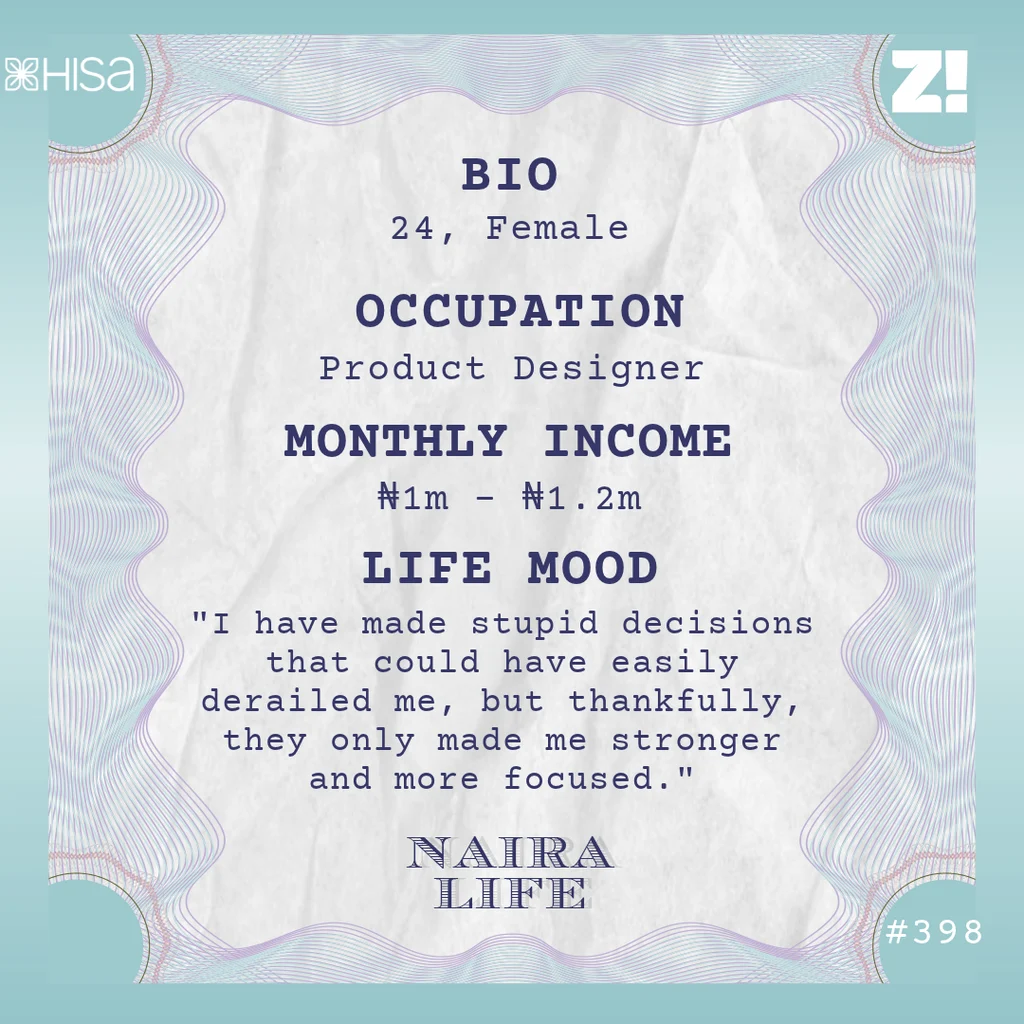
    Nairalife 398 bio abusive relationship

    TW: Verbal abuse.

    What’s your earliest memory of money?

    It was when my dad died. I was six years old, so the memories of most things that happened around this period are really hazy, but one I’ll never forget is how my dad’s relatives treated my mum and us kids.

    Before then, I often looked forward to my paternal uncles and aunts visiting because they were always so nice and brought gifts for my younger brother and me. But they became whole new people after my dad died. They locked my brother and me in a room with our grandma during the funeral proceedings, and only paid us any attention when they wanted to scream at us to stop crying. They treated my mum even worse.

    After the funeral in the village, we returned to the city and started living in a one-room apartment, instead of our three-bedroom duplex. Suddenly, we were only eating once or twice a day, and my mum’s answer to every request was, “I don’t have money.” 

    I remember thinking maybe money was a thing that disappeared when fathers died.

    I’m sorry about your dad. Do you know why your family had to leave the duplex?

    I only realised this when I grew older, but the duplex was my dad’s, and his relatives seized it. They had accused my mum of causing my dad’s death and practically taken everything they could get their hands on. 

    It really annoys me to think about it. I sometimes wish I’d been older when it happened, so I’d have fought for my mum. She’s a very quiet woman who’s more likely to wait for God to fight for her. Me, I believe in fighting for yourself. But that one has passed.

    What did your mum do for money?

    She was a housewife when my dad was still alive. His income as a bank executive was enough to cover all our expenses. When the issue with his family happened, she had to start making money. She did every odd job imaginable.

    My mum sold roasted plantain by the roadside, washed clothes for neighbours, and even took on cleaning jobs at schools and event centres from time to time. She really worked so hard to give us as close to the life we had with my dad as possible. 

    On multiple occasions, my brother and I would return from school to an empty house. We knew that meant mummy had gone to work, so we would lock ourselves indoors and wait. Several times, I would sleep off while waiting for her, only seeing her when she shook me awake the next morning for school. 

    I watched my mum go from the shapely, stylish woman she used to be to a thin person with haggard clothes and constantly bruised hands. Even as a young child, I was bothered by that. I just wanted to do something, anything, to make money too so she wouldn’t suffer like that. But my mum always refused to let me join her to hustle.

    When did you get a chance to start earning money?

    Immediately after secondary school in 2018. I was 16. My mum was going through a rough patch then. A local government task force had driven her away from the spot on the street where she roasted plantain, so she didn’t have a steady source of income. We couldn’t afford to pay for my JAMB exam, let alone other uni fees, so that was out of the question.

    I had always known how to plait hair just by watching people, so I used to do my own hair, as well as my mum’s. A tailor on our street noticed I was good and allowed me to use a small plastic stool in front of her shop. I started braiding hair for primary school kids and neighbours. I charged ₦200 – ₦1k per head, depending on the style.

    At the end of every week, I would make about ₦2,000 to ₦5,000. I would keep ₦1,000 for myself and hand the rest over to my mother for food. It wasn’t much, but it felt good to bring something home.

    I did this regularly for about a year, until I met the guy who almost destroyed my life.

    Hmm. Tell me more

    He was a 22-year-old uni student who lived alone in a decent self-contained room in our area. We met at my church. He was also a graphic designer and often handled the church designs. He was pretty popular, so I felt lucky when he asked me out. I said yes immediately.

    He also had money, and 17-year-old me looked at him like a saviour. He bought me clothes and regularly took me out to eat chicken and chips. He also randomly gave me pocket money; sometimes ₦5,000, sometimes ₦10,000, just like that. I felt loved and protected. I started relying on him for everything, and I even started giving my mum part of the money he gave me.

    How did your mother react to the money?

    At first, she thought it was from my hairdressing hustle. But when the money became too consistent, she sat me down and demanded the truth.

    When I told her about the guy, she was furious. She said something like, “You are only 17. A 22-year-old man who gives you money like this will want to own you. End it now.” But I was stubbornly in love. I felt my mum was just bitter because of what her in-laws did to her. In my head, this guy loved me.

    My relationship became a consistent source of arguments with my mum. A few months later, after another massive fight with my mum, I ran away from home and moved into my boyfriend’s apartment. At this time, he had moved to a different area, so she didn’t know where I disappeared to. That was incredibly foolish of me, but I guess it’s pretty obvious I didn’t have sense then.

    Get More Zikoko Goodness in Your Mail

    Subscribe to our newsletters and never miss any of the action

    How did living with him turn out?

    Haha. That’s when my foolishness came back to haunt me, because our living arrangement became a nightmare within two weeks.

    The sweet guy completely vanished, and he became really controlling. In hindsight, the red flags were there from the beginning. He never liked me talking to boys and would even raise issues about guys looking at me. This started before we moved in together, and I would always try my best to appease him. I used to think he was just jealous, and I even thought it was a sign of how much he loved me.

    He showed his true colours after I moved in. He seized my phone, saying I wanted boys to be calling me. He also forbade me from going outside, even to braid hair. He would lock me inside the house whenever he had to go out. Whenever he was angry with me, either because I spoke back to him or didn’t cook on time, he would insult me for hours. His favourite insult was, “useless street girl from a poor family.”

    He never hit me physically, but he broke my spirit completely. I was trapped indoors for close to three months.

    I’m sorry you went through that. How did you survive those three months indoors?

    He had a backup laptop that he only let me use to watch downloaded movies. Whenever he went out — which he did almost daily — he was comfortable leaving me with it because he always took his portable Mi-Fi, and there was no other way to connect to the internet.

    However, about a month into staying at his house, I talked one of his neighbours into sharing his Wi-Fi password with me. So whenever my boyfriend went out, I’d connect to the Wi-Fi and browse Facebook. That was the only way I could chat with my brother. By then, I was thinking of returning home, but I was scared of how my mum would react to me running away in the first place. My brother kept begging me to tell her where I was, but I refused.

    Sometimes, this neighbour would also go out, and I’d have no internet to browse. So, out of boredom, I started watching design tutorials that my boyfriend had downloaded on the laptop. At some point, I became interested in it and even started practising what I watched. 

    These days, I tell people I started designing out of boredom, but not many know I was also in an abusive relationship at the time.

    How did you get out of that situation?

    My brother eventually told my mum where I was, and she showed up one day with police officers. She actually told them my boyfriend had kidnapped me, haha. It seems funny now, but that woman was dead serious. He spent weeks at the police station before his family settled the police. We haven’t spoken since that incident.

    You know the interesting part?

    What’s that?

    My mum didn’t say a word to me about why I ran away. She just hugged me and took me home, almost like a silent forgiveness. I’ll forever be grateful for that. 

    One thing I learnt from that relationship was how much power money could give. I got into that situation in the first place because of money, and I vowed to myself that I’d rather make my own money than let any man use it to control me again.

    My younger brother had an old laptop he’d won through a church scholarship, and I borrowed it to practice design. If my ex could make money from it, I could too.

    I also returned to my hairdressing hustle, using what I made to buy data and design through the night. I redesigned everything I saw, from album covers to church flyers and skincare posters. Then, I’d post my designs on Facebook and WhatsApp. I did this even more throughout the COVID lockdown.


    We surveyed 5,000 workers across Nigeria’s formal and informal sectors to examine what Nigerians earn, where the money goes, and whether hard work actually translates to financial security. This is what we found. Download the Zikoko State of Income Report.


    When did design start making you money?

    Late 2020. A client’s friend, whose hair I plaited, needed a logo and menu card for her shawarma business. She asked who made my WhatsApp display flyer, and I told her it was me.

    She paid me ₦3,500 for the logo and menu. From there, referrals started trickling in. By 2021, I was charging ₦10,000 to ₦25,000 for design and branding gigs. Fiverr was also popular then, and I often got subcontracted gigs from people on the platform. I was making around ₦80,000 a month combining hair braiding and design gigs. I bought my first laptop that year and paid for my brother’s WAEC fees.

    In 2022, I fully dropped hairdressing to focus 100% on design. I also took some UI/UX design courses online to upgrade my skills, then joined Upwork. My monthly earnings climbed to about ₦200,000.

    Love it for you. So you became a full-time freelancer?

    For a short while. In mid-2023, a fintech startup saw a mobile app case study I posted on Twitter and invited me for an interview. That’s how I got my first 9-5 job as a junior product designer earning ₦350k/month. I was still occasionally taking on freelance gigs on the side.

    In 2024, I got a raise to ₦400k, and side gigs often brought that to ₦600k/month. That same year, I rented a proper ₦1m/year two-bedroom flat for my family (I still live at home). That felt really symbolic for me. I went from getting kicked out of a house as a child, to getting locked in one against my will, and then using my own sweat and skills to secure a roof over my head. It felt powerful.

    Inject it! What does your income look like these days?

    I moved jobs in 2025 and currently earn ₦800k/month. I also still have freelance branding and product design gigs that bring in an extra ₦200k to ₦400k monthly. Sometimes, it can be more.

    I feel incredibly grateful to be here. I have made stupid decisions that could have easily derailed me, but thankfully, they only made me stronger and more focused. Now, I’m planning for the rest of my life. 

    I read Naira Life stories of young people being intentional with managing their money and growing it, and I want that to be me too. After I changed jobs last year, I began consciously saving and investing at least 20% of my monthly salary, plus everything I earn from side gigs.

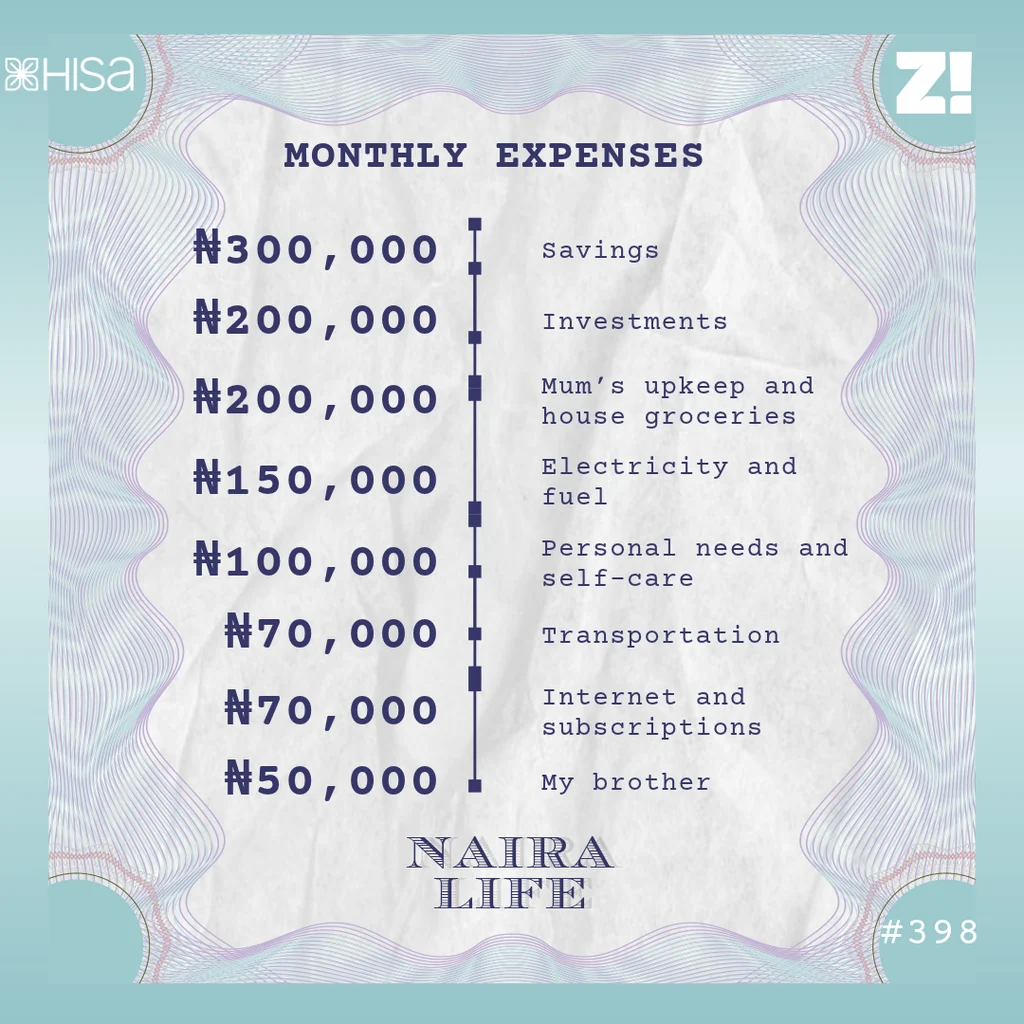
    What does this breakdown look like in a typical month?

    I currently have ₦4.8 million in my savings and ₦3.5 million in investments, mostly mutual funds and stocks. I chose both investment channels because I wanted my money to work for me and earn more than it would if I just left it in savings. 

    I use an investment app for my stocks, and it provides insights and groups stocks by performance and my interests, so I can make careful investment decisions. I believe my current portfolio is pretty healthy, but I’m always studying so I can do better and grow sustainable wealth.

    Do you have a savings and investment goal?

    I see my savings as an emergency fund, so I want to hit ₦15 million there. But my actual portfolio should be at least $50k by the time I’m 30. That’s my goal, and I believe it’s possible. I just need to keep earning more and manage my money well. 

    I also plan to get a degree at some point, and I’m looking to try an open university next year. I sometimes feel like it’s a huge fluke I’ve gotten this far without a degree. I don’t want to push my luck too far.

    How would you describe your relationship with money today, and how do you feel about your future?

    I’d say money to me is freedom. I’m free to do things without relying on people. I don’t even earn much yet, but I helped my mum open a frozen-food store last year. She doesn’t have to do odd jobs anymore, and she’s no longer haggard. I’m also supporting my brother at university. That’s what money can do, and I’m grateful I have it.

    I feel very optimistic about my future. It can only get better from here. I’m already manifesting earning in foreign currency for my next job, and I believe it will happen. I’m only 24. Who knows? I could be a landlady by 30.

    Rooting for you. How would you rate your financial happiness on a scale of 1-10?

    7. That’s only because things can get better. I’m happy and thankful. 


    If you’re interested in talking about your Naira Life story, this is a good place to start.

    Find all the past Naira Life stories here.

    Subscribe to the newsletter here.
  • Sunken Ships is a Zikoko weekly series that explores the how and why of the end of all relationships — familial, romantic or just good old friendships.


    Isabella* (26) and Peace* (26) became close friends in their first year of university. Their families knew each other, and by their final year, they were living together. But during a visit, Isabella discovered that Peace had been secretly putting weed in the food she served her. 

    For Sunken Ships, Isabella shares how the discovery changed her relationship with Peace and made her rethink what it means to be a good friend.

    How did you and Peace become friends?

    We became friends in our first year at the college of medicine. We started as study buddies, and by our second year, we had become very close. We visited each other’s homes so often that our families became close, too.

    In our third year, she had some issues with her accommodation and moved in with some cousins near the school. But after one of her cousins tried to assault her, she moved into the hostel. By my final year, I was tired of taking night classes and getting home late every day. My parents didn’t like me returning home so late, so I suggested staying with Peace. They agreed because they knew her well.

    What was living together like?

    Peace was my friend, and I really enjoyed her company. I loved the idea of living together because I felt like it would be a never-ending sleepover with my bestie, but that wasn’t the case. There were a few things I didn’t like about our arrangement.

    I grew up in a house where we shared responsibilities. If one person had an exam, the rest of us would help with their chores so they could concentrate. I assumed it would be the same with Peace.

    Whenever she had back-to-back assessments, I made sure there was food waiting for her when she returned. I wanted her to focus on studying without worrying about cooking. But when I had assessments, I didn’t get the same consideration. Nobody made sure I had food or helped me out.

    Another thing was that she smoked weed recreationally. I didn’t have a problem with it because she respected that I didn’t use it myself. 

    When did you start noticing that something was wrong?

    A few months after we moved in together, she suddenly withdrew and didn’t spend as much time with me. I think that was around the time she changed her mind and wanted me out of the space we were sharing. But she didn’t try to talk to me about it. I was the one mostly funding our lifestyle, so I think she found it difficult to ask me to leave.

    Instead, she went to the hostel’s accommodation manager and told him that I was staying there without permission. He told me I had to move out immediately because Peace reported me, and I had to find somewhere else to stay. 

    After I was forced to move away, I was still speaking to Peace, though. She didn’t know I knew she had been the one who reported me, and I didn’t want to turn it into a big fight. I had already decided it would be best to leave, since I was done with my own studies.

    Oh. What happened after you moved out?

    After I moved out, I still visited her at the hostel. I had finished school and was doing my clearance. I knew I would leave soon after for an internship, and I wanted to spend as much time as possible with my friends before that happened.

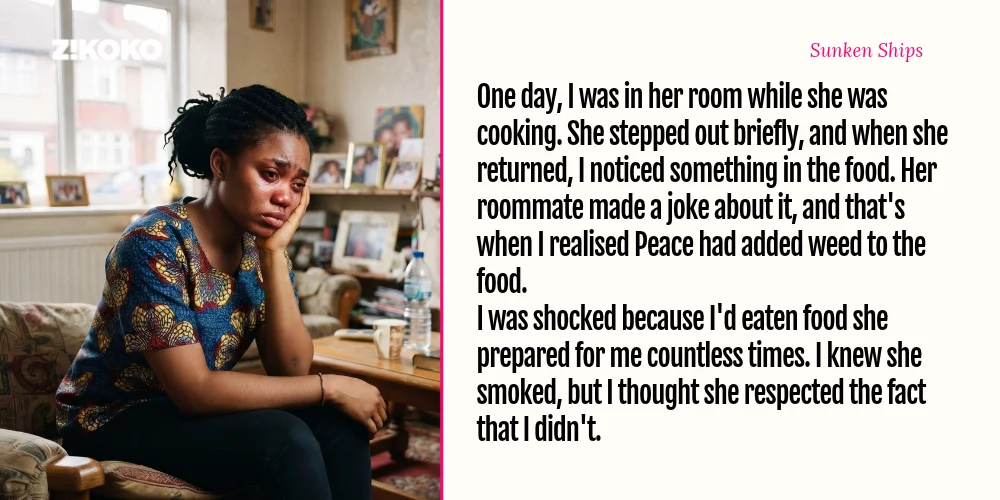
    One day, I was in her room while she was cooking. She stepped out briefly, and when she returned, I noticed something in the food. Her roommate made a joke about it, and that’s when I realised Peace had added weed to the food. 

    I was shocked because I’d eaten food she prepared for me countless times. I knew she smoked, but I thought she respected the fact that I didn’t. I had no idea she was putting weed in the meals she served me. I asked her about it, and she flippantly admitted that it wasn’t the first time she’d done it. 

    I was upset for several reasons. What if I’d had an allergic reaction? What if I had to take a drug test for something and I confidently said I didn’t use drugs, only for the result to say otherwise? I hadn’t consented to any of it. I should have been the one to decide whether I wanted to take something.

    That’s wild. How did Peace respond when you confronted her?

    She tried to make it seem like it wasn’t a big deal. It made me furious, and I left her place. I sent her voice notes explaining how angry I was and how she had hurt me. 

    But I still wanted to try to mend our friendship. I told her that if we were going to remain friends, she needed to take responsibility for what she’d done. I didn’t think that was an unreasonable thing to ask. 

    She responded with a long defensive message. She said she was surprised I hadn’t realised how strained our friendship had become. She talked about how she struggled with my successes and how she felt we were moving through life at different paces.

    She also said she valued our friendship too, but wouldn’t be “bullied into changing herself”. 

    Ah. What did you do next?

    I shared the message with another friend. She pointed out that Peace had essentially admitted to being jealous of my successes because I had graduated and had an internship on the horizon. She also asked why I was still trying to fix things with someone who had put me in a position where I was unknowingly consuming drugs and was unapologetic about it.

    That conversation made me think deeply about why I wanted to remain friends with Peace. I decided not to respond to Peace’s message. I just stopped trying.

    When I’m done with a close friendship, the person might not immediately realise it. I may still greet them, have a conversation and be cordial when we run into each other. But they won’t know what’s happening in my life anymore. Peace didn’t realise how much I had withdrawn until much later.

    Did you ever speak to Peace about what happened?

    No. We eventually crossed paths months later at my induction. She showed up at my parents’ house early in the morning to help with the cooking and cleaning.

    My mum saw her and asked me, “I thought you people were no longer friends.” I didn’t even know what to say. She had come to help, so I let her.

    At the end of the day, I thanked her and gave her food. I wasn’t going to be rude to someone who had come to help my family. But that didn’t mean we’d repaired our friendship. I’d already moved on emotionally.  

    Would you ever consider being friends with Peace again?

    No. I don’t think we can be friends again. There were too many things that happened, and the food situation was a major turning point for me.

    Has this experience changed how you approach friendships?

    Yes. I used to be a very self-sacrificing friend. Now, I’m more careful about people taking advantage of me. I only reciprocate the energy they send my way. I’m also very firm about my boundaries, and I’ll cut off anyone who disrespects them.

    I still want to be a good friend, but I don’t want to lose myself or put myself in harm’s way trying to prove it.


    Read Also: Sunken Ships: My Parents Couldn’t Afford My School Fees, but Bought My Brother an iPhone


    Hey, if you’d like to share your own #SunkenShips story with Zikoko, fill out this form!


  • Wedding guest hairstyle for Nigerian women using Darling hair

    Why Wedding Photos Are Harder on Hair Than You Think

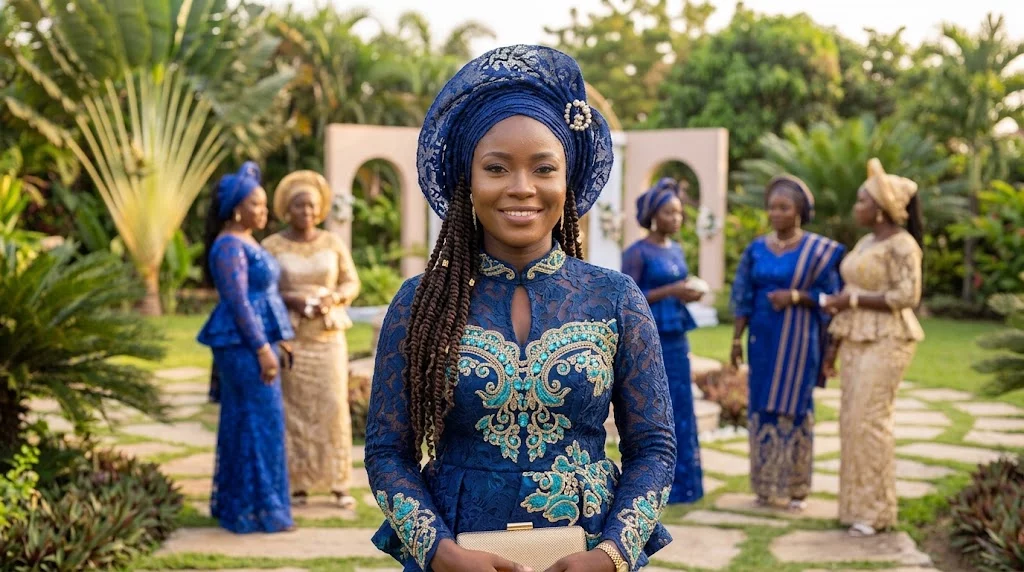
    At a Nigerian wedding, your wedding guest hairstyles have to survive more than the ceremony. From the church or mosque service to the late reception, you may be photographed by the official photographer, friends, family and strangers with phones. Bad angles, indoor lighting and phone flash can expose every detail. For wedding guest hairstyles for black women, the goal is not simply to look good at 10 a.m.; it is to still look intentional after nine hours in an aso ebi, a crowded hall and a gele.

    Phone flash is especially unforgiving. It can flatten depth and turn excess shine into a bright patch, while smooth styles lose impact when clean partings blur with sweat, movement, or touching. Texture holds visual interest because it catches light differently. So when deciding which hairstyles photograph best, choose a shape that still reads clearly from a distance and up close.

    Styles That Hold Up in Photographs

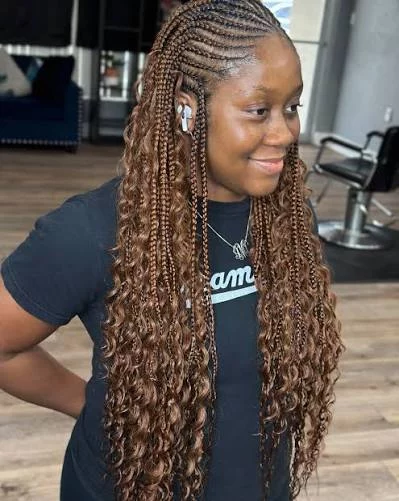
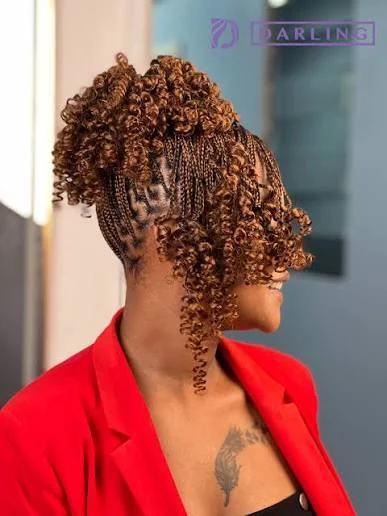
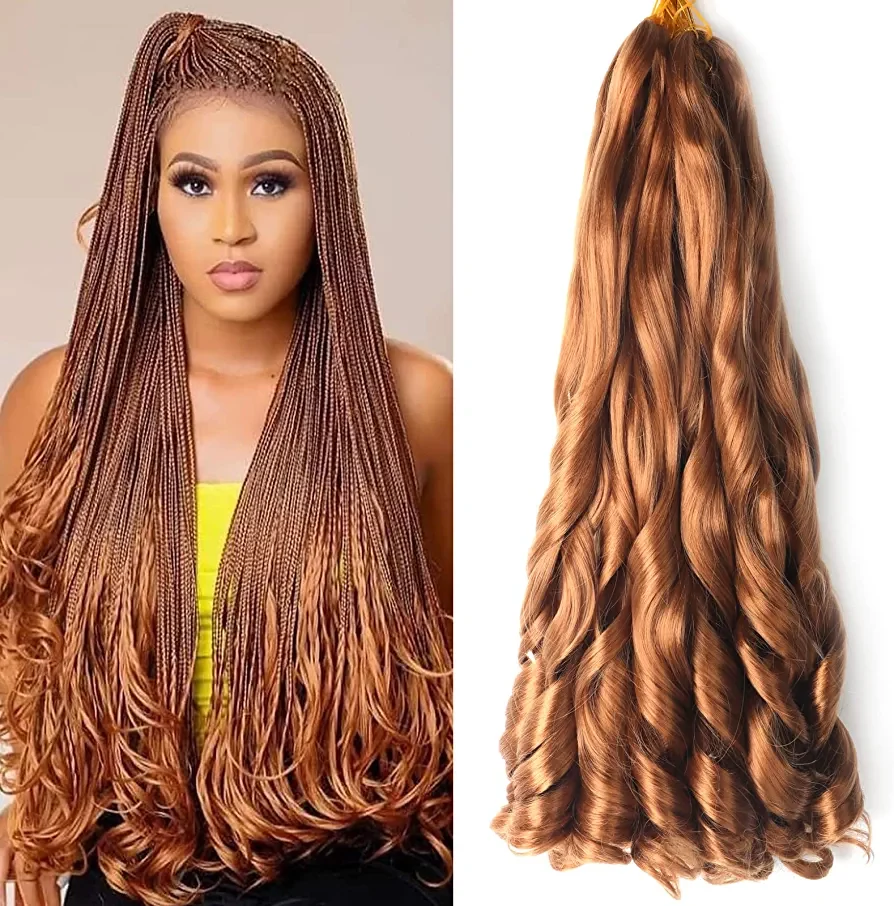
    French curl braids

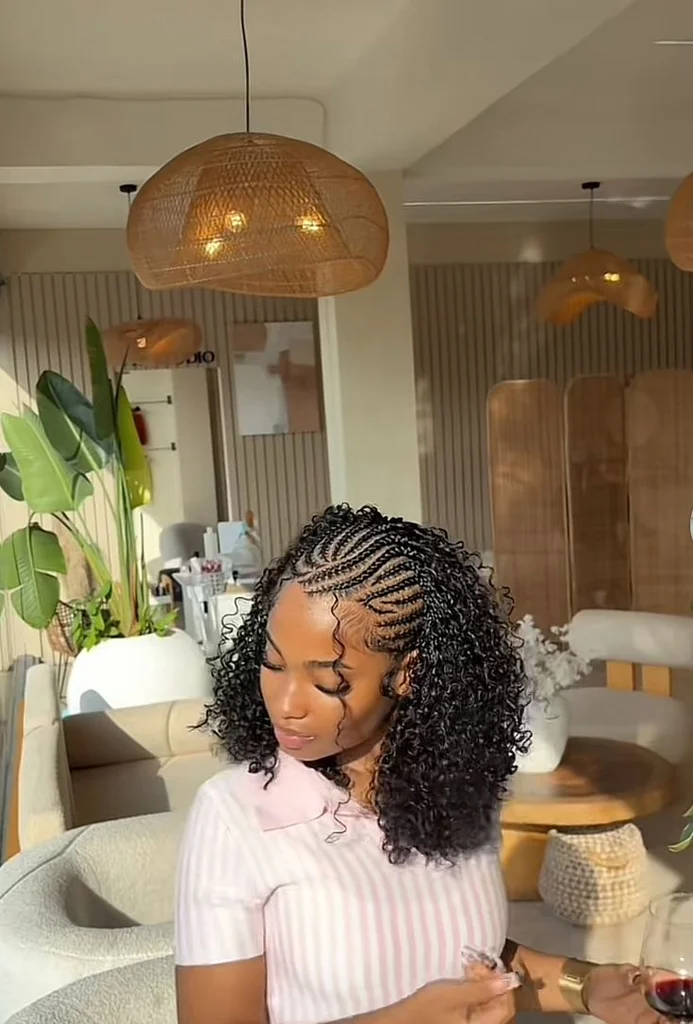
    French curl braids have the movement that makes a still photograph feel lively. The curled ends create texture, while the braid frames the face. They work especially well for a large wedding with plenty of full-length and close-up pictures. Curly Braids can give the style its defining finish. The limitation is maintenance: curls can tangle, catch on clothing or lose definition after hours of dancing and hugging. Keep the ends protected and avoid constantly touching them.

    Ghana weaving and patterned cornrows

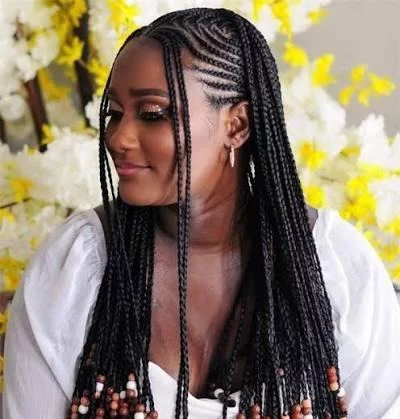
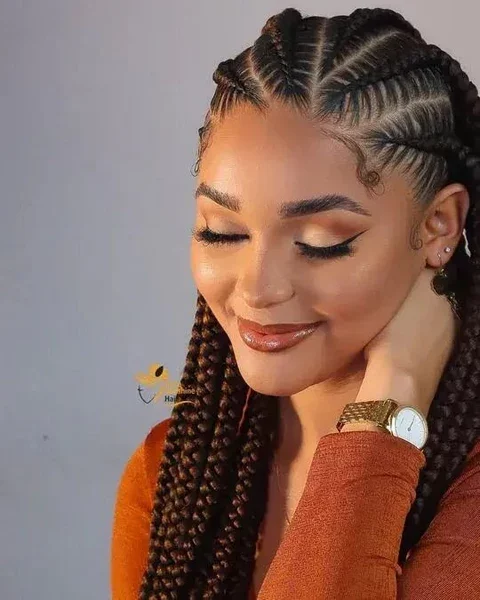
    Ghana weaving and patterned cornrows photograph well because their strength is in the lines. A neat pattern remains visible in group photographs, while the flat shape keeps the face and outfit unobstructed. These styles suit a big owambe, particularly when your aso ebi is detailed. Super Star is a practical choice when you want firm strands holding through a long day. The trade-off is installation time and tension: detailed cornrows need a skilled hand, and an overly tight style can become uncomfortable before the reception ends.

    Bohemian twists

    Bohemian twists bring softness and movement without looking too polished. Their textured finish works beautifully with makeup, statement earrings and the relaxed energy of a Nigerian reception. Bohemian Passion Twist looks its loose, dimensional character. They suit medium-sized and large celebrations, but the honest trade-off is frizz. After hours of movement, humidity, hugging and dancing, the texture can become less defined. Start with a clean install and avoid excessive touching if you want the texture to look intentional rather than messy.

    A low bun or gathered updo

    A low bun or gathered updo is the quiet option for a woman who wants her face, neckline and aso ebi to do most of the talking. The clean silhouette photographs especially well at smaller weddings, civil ceremonies or elegant receptions. It also leaves room for earrings and a dramatic neckline. The limitation is that smoothness shows everything under direct flash: flyaways, uneven edges and excess product. The style needs a careful finish and may need a small touch-up before the reception if the day begins with a long service.

    Boho braids worn long

    Long boho braids photograph beautifully because they create movement around the body. They frame the shoulders in portraits, show length in full-body photographs and add a relaxed contrast to a structured aso ebi outfit. Boho Braids are a strong choice for a large wedding or lively reception. They are not the lowest-maintenance option, though. Long lengths can tangle, catch on bags or clothing and feel heavier as the day goes on. If you will be dancing for hours, make sure the length and weight are comfortable before committing.

    Two-strand twists for a smaller wedding

    Two-strand twists are a good fit for a smaller, more intimate, or daytime-focused wedding when you want your natural texture to remain part of the look. Their repeated pattern gives photographs detail without feeling too elaborate. Natural Twist can help create a consistent finish. The limitation is definition: moisture, humidity and frequent touching can make twists loosen or look less crisp. They work best when you want understated polish rather than a highly sculpted hairstyle, especially for a civil ceremony or intimate reception.

    If You Are Wearing a Gele

    A gele changes the calculation. The best hairstyles that go with gele are not necessarily the ones with the most height. Too much crown volume gives the gele nowhere to sit comfortably and can create an awkward shape. Flat Ghana weaving and patterned cornrows work well because they sit close to the scalp. A low gathered style can also work, while long braids can fall below the gele and remain visible in photographs.

    Think about the reveal, too. If the gele comes off at the reception, your hair has already been compressed for hours. A style that depends on height or perfectly placed volume may not recover. Choose something that still looks deliberate when uncovered, rather than something that only works while the headwrap is on.

    Surviving the Whole Day

    The best hairstyles for wedding guest are the ones you can forget about once you leave the salon. If you are planning aso ebi hairstyles, consider the full schedule: service, photographs, greetings, food, dancing and the journey home. Do not test a new style on the wedding morning if you already know your scalp is sensitive to tension.

    If you are choosing attachments, Curly Braids can preserve the curled texture, Super Star can keep cornrow lines defined, Bohemian Passion Twist supports the textured twist look, Boho Braids gives long styles their movement, and Natural Twist works well for consistent two-strand twists. You can browse the full Darling range through the Darling collection at The Diva Shop.

    For Nigerian weddings, choose the hairstyle that can survive the entire story of the day, not just the first photograph.

    FAQs

    What hairstyle should I wear to a wedding as a guest?

    If you are asking “what hairstyle should I wear to a wedding”, start with the outfit, ceremony length and headwear. Choose a style that complements your aso ebi without competing with it. Braids, twists, low updos and neat cornrows all work; the best choice is the one that remains comfortable and defined through the reception.

    What hairstyle works best under a gele?

    If you are asking “what hairstyle works under a gele”, choose something that lies relatively flat or gathers low. Ghana weaving, patterned cornrows, low buns and long braids are practical options. Avoid excessive crown volume because it can make the gele difficult to place and may leave your hairstyle badly compressed when the headwrap comes off later.

    How many days before a wedding should I do my hair?

    “How many days before a wedding should I do my hair?” depends on the style and how quickly your hair loses freshness. For most braids and twists, one to three days before gives you time to settle the style without leaving it exposed for too long. A sleek updo is usually better done closer to the event for maximum neatness.

    Conclusion

    Great owambe hairstyles do not need to compete with the bride or the outfit. They need to complement your face, survive the Nigerian wedding schedule and remain recognisable in photographs taken from every possible angle. Whether you choose French curl braids, Ghana weaving, bohemian twists, a low bun, long boho braids or Natural Twist two-strand twists, think beyond the first mirror check. The best wedding guest hairstyles are the ones that still look considered when the church service becomes dancing, the gele comes off, and the camera keeps clicking.

  • Tura is one of those skincare products that never really disappears. Some Nigerians remember the bar from childhood, while younger shoppers are discovering it without the same nostalgia. That makes a Tura soap review interesting: does a familiar medicated soap still make sense today?

    The short answer is yes, for the right person. Tura Medicated is a straightforward cleansing bar that makes sense for someone looking for everyday cleansing and freshness, rather than a product promising to transform their skin overnight.

    Why an Old Bar Is Back in Younger Bathrooms

    Younger consumers now have access to body washes, exfoliating acids, serums and products built around specific skin concerns. Yet that does not automatically make a simple bar irrelevant.

    Part of the appeal of old Nigerian skincare brands is familiarity, but affordability and simplicity matter too. Tura Medicated is currently listed at ₦1,400 on The Diva Shop, with two packs recommended per head. That makes it accessible for someone who wants a basic medicated soap without building an elaborate body-care routine.

    What Is Actually in It

    Tura Medicated is presented as a medicated cleansing soap. The current product listing highlights wheat germ oil, allantoin and vitamin E, alongside a minimum TFM of 70%. The product is also described as suitable for all skin types.

    There is another reason to pay attention to the pack rather than relying on social media descriptions. NAFDAC records show TURA GERMICIDAL MEDICATED SOAP 65G under registration number 615467, with Godrej Nigeria Limited listed as the applicant in its 2019 analysed-products record.

    That does not mean every claim you see online is automatically true. Product registration and marketing claims are separate questions.

    What It Does Well

    So, is Tura soap good? As a basic cleansing bar, it has a clear proposition. It is designed to cleanse the skin and the retailer describes it as helping protect against body odour and other skin infections. It also contains vitamin E, allantoin and wheat germ oil.

    This is where some of the Tura soap benefits make sense in an everyday routine. If you prefer bar soap, want something simple for regular bathing and are mainly concerned with feeling clean and fresh, it can be a practical option.

    What is Tura soap used for? Primarily, it is a bathing soap intended to cleanse and support everyday skin hygiene. That is a more useful expectation than treating it as a solution for every skin problem.

    If you are considering Tura soap for oily skin, pay attention to how your own skin responds. Oily skin can still become irritated or dehydrated from over-cleansing.

    What It Does Not Do

    Tura is not a miracle treatment for acne, dark spots, uneven skin tone or every type of skin infection. A cleansing bar can be part of a routine, but persistent skin conditions may need targeted treatment from a qualified professional.

    It is also not a skin-lightening product. There is no reason to buy it expecting your natural skin tone to become fairer.

    The same applies to the question, “does Tura soap really work?” It can work well as a cleanser and for the everyday freshness its product description focuses on. That is different from promising that it will solve every skin concern.

    Who It Suits, and Who Should Skip It

    Tura Medicated makes sense for adults who want a simple bathing bar, like the feel of traditional soap and are looking for everyday cleansing and freshness.

    Who should not use Tura soap? Anyone who finds it irritating, excessively drying or uncomfortable should stop using it. People with very sensitive skin or an existing skin condition should be cautious about introducing any new cleansing product and should seek professional advice if symptoms persist.

    If your main goal is treating a diagnosed skin condition, do not substitute a cosmetic cleansing bar for medical treatment.

    How to Use It Properly

    The current product instructions recommend using Tura Medicated twice daily, morning and evening, and rinsing well with water after use.

    That does not mean more is always better. If twice-daily use leaves your skin tight, itchy or unusually dry, reassess the routine rather than forcing yourself to continue.

    Store the bar where it can dry between uses. A soap that sits constantly in water will disappear faster and become unnecessarily messy.

    The Verdict

    Tura Medicated is worth buying if you want a straightforward bathing soap with a familiar medicated positioning, particularly if you value simplicity and affordability. It is not worth buying if you expect it to lighten your skin, erase stubborn pigmentation or replace treatment for a persistent skin condition.

    At ₦1,400, the current listed price also makes it an accessible option for shoppers who want to try it without committing to an expensive routine. You can find it through The Diva Shop’s Tura collection.

    FAQs

    Does Tura soap really work?

    Yes, if the job you expect it to do is cleansing and supporting everyday skin hygiene. The product is not a universal treatment for acne, pigmentation or diagnosed skin conditions. Results will vary by skin type, so irritation or excessive dryness is a reason to stop rather than keep using it.

    Who should not use Tura soap?

    Anyone who experiences persistent irritation, excessive dryness or discomfort after using it should stop. People managing a diagnosed skin condition should not rely on a bathing soap as a replacement for appropriate treatment. If symptoms continue, speak with a qualified healthcare professional.

    How long does Tura soap take to work?

    There is no reliable universal timeline for a medicated soap to “work” because it depends on what you expect it to achieve. As a cleanser, its effect is immediate. For an ongoing skin concern, avoid assuming that more frequent use will produce faster results.

    Conclusion

    The interesting thing about Tura is that its appeal does not have to depend entirely on nostalgia. A younger consumer can choose a classic product for the same reason someone chooses any other basic skincare staple: it fits their routine, does its intended job and does not demand unnecessary complexity.

    That is ultimately the fairest way to judge the bar. Tura does not need to be everything. It simply needs to be useful at what it is designed to do.

  • Alt text: Tribal braids styles Nigerian women are wearing

    Back is the wrong word for it. Tribal braids never went anywhere. Your mother wore them, your aunt still does, and half the primary school photographs in this country are full of them. What changed is the appetite. Women book these styles on purpose now and pay properly for them, instead of treating them as the quiet option at month end.

    What People Mean by Tribal Braids

    Tribal braids is the catch-all for indigenous braiding styles, and in Nigeria that covers kolese, shuku, patewo, koroba and the Fulani braid. What they share is that the pattern is the point. The partings are the design.

    People ask where do Fulani braids come from and expect one country. The Fulani are twenty-five to forty million people spread across the Sahel, with communities in Guinea, Senegal, Mali, Niger, Cameroon, Chad and Nigeria, so the style belongs to all of them, not one place. The signature is a cornrow running front to back down the centre, face-framing braids at the sides, and beads, cowries or cuffs at the ends. Silver coins and amber were traditionally worked in, often family pieces, and a finished head carried information about background, marital status, age and standing.

    Why Tribal Braids Are Back in Demand

    Nothing about them disappeared. Kolese has been on Nigerian heads for as long as anyone remembers. What shifted is the money people now put behind it.

    The interesting part is how far the form has stretched without breaking. Colour, curly ends, jumbo sections, boho texture, none of it traditional, and yet a Fulani braid with burgundy ends and loose curls still reads instantly as a Fulani braid. The centre parting and the beads do the identifying work. Not many hairstyles survive that much handling.

    The Versions Nigerian Women Are Wearing

    These are the tribal braids Nigerians are actually wearing right now.

    Classic Fulani Braids with Beads

    [Image. Alt text: “Classic Fulani braids with beads using Darling Super Star”]

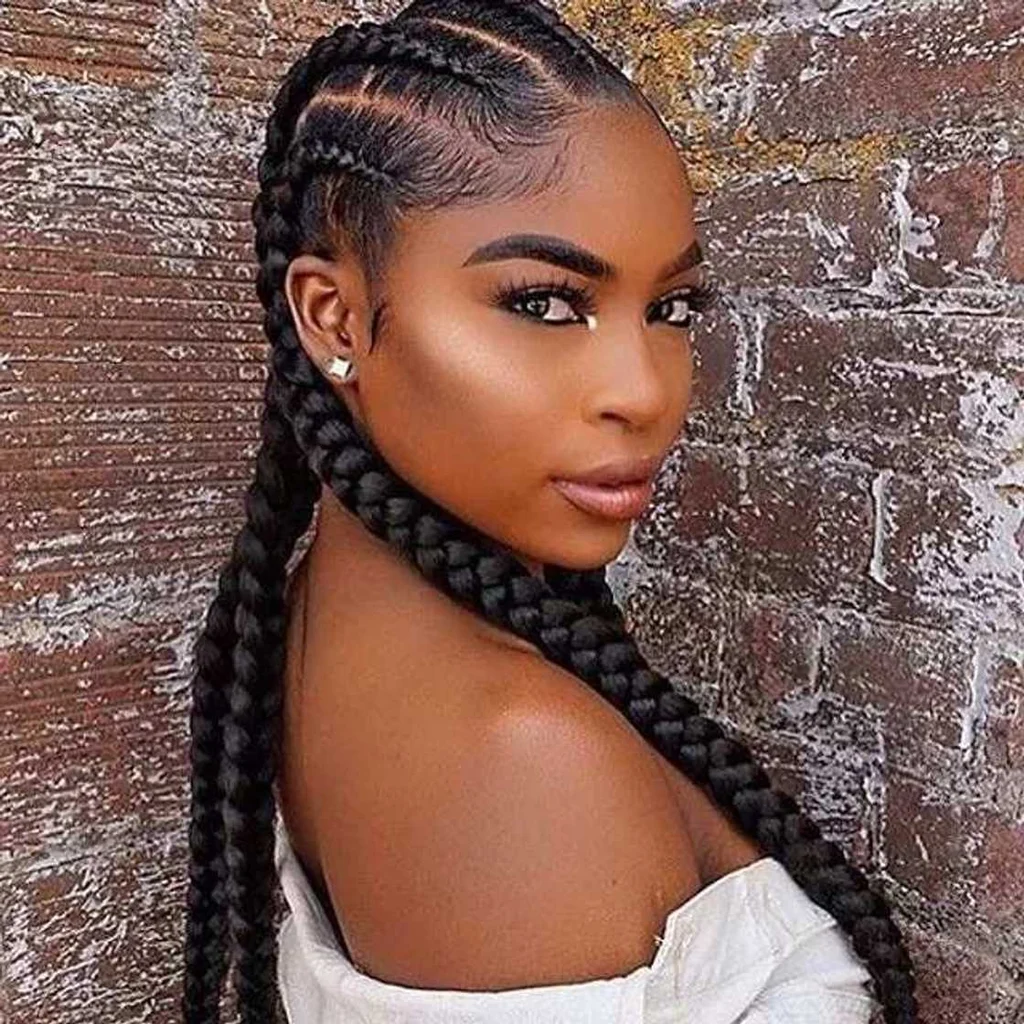
    Cornrows with beads is where most people start. A centre cornrow front to back, two or three braids either side of the face, the rest taken back, beads at the ends. 

    It lives or dies on the partings, since a crooked line has nowhere to hide. Darling Super Star is the sensible hair, because a firm strand holds a cornrow line clean for weeks instead of fuzzing by the second wash.

    Stitch Braids and Patterned Partings

    Image credit: Jaliza

    Alt text: Stitch braids with patterned partings using Darling Easy Vibes

    Stitch braids are cornrows with the partings set around half an inch apart and fed in as they go, which produces the ridged, stitched look and those razor-clean lines. They are the modern face of the whole category, and they will hold for four to seven weeks.

    This is where stylists get ambitious, curving the rows, splitting them, running them diagonally. Darling Super Star again for the crispest version, or Darling Easy Vibes if you want it lighter and quicker to install, which counts when a patterned set can run five hours in the chair.

    Fulani Braids with Curly Ends

    Image Credit: Paulee’s Blog, Pinterest

    Alt text: Fulani braids with curly ends using Darling Curly Braids

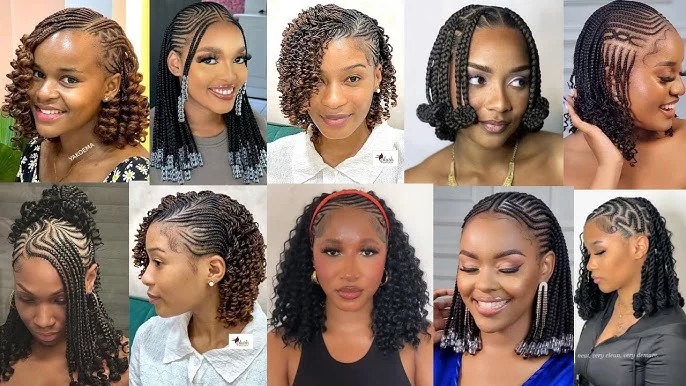
    The most-booked variation of the moment, and the one filling everybody’s feed. The braid stays traditional through the top and sides, then the ends are left curly instead of sealed off, so the head reads structured up top and soft at the bottom. It photographs beautifully, which is most of the reason it took off.

    Darling Curly Braids gives you the French and Spanish curl for those ends. Keep the beads on the face-framing braids only, since beads and curls on the same braid get busy quickly, and the curl already needs finger detangling most nights.

    Tribal Braids with Loose Boho Pieces

    Image Credit: Magicandssss on Facebook

    Alt text: Tribal braids with loose boho pieces using Darling Boho Braids

    The crossover style, and the one your mother will certainly have an opinion about. The partings and the centre cornrow stay exactly where tradition puts them, and then loose curly pieces are dropped in along the length to soften the whole outline.

    Darling Boho Braids carries those wavy pieces, and Darling Curly Braids works if you want the loose sections more defined. It suits anyone who likes the structure of a Fulani braid but finds a full set of tight cornrows too severe against their face. Beads still work here, just fewer of them than usual.

    Shuku, Patewo and Koroba

    Image Credit: Organic Beauty Essence on Instagram

    Alt text: Shuku, patewo and koroba tribal braids styles with Darling Easy Vibes

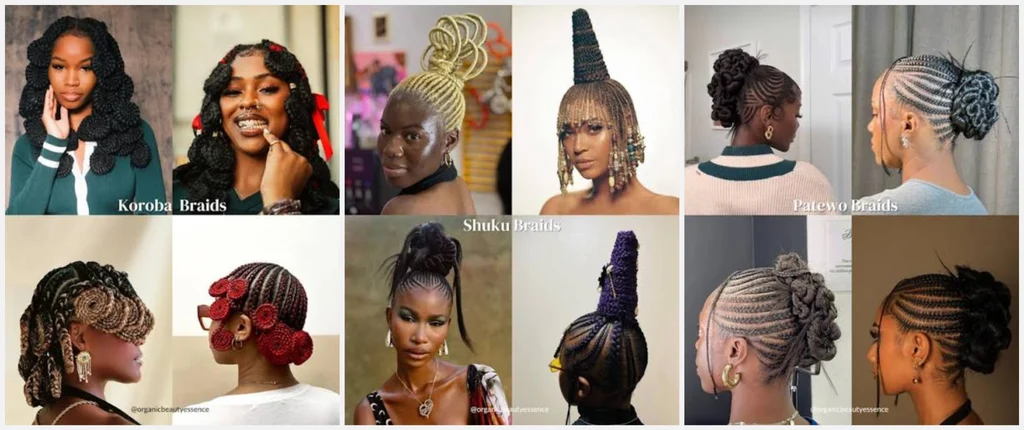
    The Yoruba styles, and the ones most likely to be sitting in your childhood photographs. Shuku gathers everything up into a raised crown. Patewo takes its name from applause, because the rows meet in the middle like two hands clapping. Koroba radiates out from the centre like an upturned basket.

    All three are pure pattern, which is why they carry an office and a wedding equally well and cost less than almost anything else here. Darling Easy Vibes keeps them light enough to sleep in from the first night, which the originals certainly were not.

    Getting the Details Right

    Three things sink these styles, and only one is braiding.

    Fuzzy partings come first. When the whole look is pattern, a soft parting is not a small flaw, so check the lines in a hand mirror before you leave.

    Then bead weight. A full row on fine hair pulls your hair all day, and it lands on the braids framing your face, where traction damage shows first. Fewer beads, or cuffs, or beads only on the thicker braids. Worth knowing if your hairline is fine.

    Six to eight weeks is a good timeline to rock your hair, and beads need re-securing as the style loosens. Look through the full Darling range at The Diva Shop for the right hair to complement your own hair.

    FAQs

    What are tribal braids?

    Tribal braids are indigenous African braiding styles built around patterned partings rather than length. In Nigeria the term covers kolese, shuku, patewo, koroba and Fulani braids. The Fulani version is the most recognised, with a centre cornrow, face-framing braids and beads at the ends.

    What is the difference between tribal braids and Fulani braids?

    Fulani braids are one kind of tribal braid, not a separate category. Tribal braids is the broad term for indigenous braiding styles across many communities. Fulani braids are the specific style with a cornrow running front to back, braids framing the face, and beads at the ends.

    How long do tribal braids last?

    Six to eight weeks with proper care. The partings soften before the braids do, so most people take them down when the pattern stops reading cleanly rather than when the hair itself gives out. Beads need re-securing as the style loosens.

    Conclusion

    Choose the pattern first and the length second, because the pattern is what anybody actually sees. And whichever one you book, pay for the partings. That is where the whole thing lives or dies.

  • Alt text: The best braids for every face shape

    Face shape is a useful guide and a bad rule. It tells you something real about where hair should sit, then gets treated like law, which is how people talk themselves out of styles that would have suited them. So here is the honest version of the best braids for your face shape, plus the two things that decide more than shape does.

    How to Work Out Your Face Shape

    Alt text: How to identify round, oval, square, heart and long face shapes

    Do it properly and it takes a minute. Pull your hair back, stand square to a mirror in good light, and look straight ahead. Compare three widths first, forehead, cheekbones and jaw, and note the widest. Then compare the length of your face to its width.

    ‘Round’ is width and length close together, with soft angles rather than corners.

    ‘Oval’ is length greater than width, with the three widths fairly balanced.

    ‘Square’ is a strong jaw, with width and length close.

    ‘Heart’ is a wider forehead narrowing to a smaller chin.

    ‘Long’ head is one with length noticeably greater than width.

    Most people land between two of these, which is fine. The nearest one is close enough.

    The Two Rules That Matter More Than Shape

    The first is proportion, which means your whole frame, not your face alone. A big volume of hair looks completely different on someone five foot tall and slight than on someone tall and broad, so the same braids can swallow one person and barely register on another. Judge the amount of hair against your body, not just your jaw.

    The second is finishing. Clean partings, edges that are not straining, ends properly sealed. A well-executed style on the supposedly wrong face shape beats a badly executed one on the right shape every time, and it is not close.

    Matching Braids to Your Face Shape

    Find your shape below. Each section stands on its own.

    Braids for a Round Face

    Alt text: Braids for a round face with Darling Super Star

    The best braids for round face shapes add height and length, which means long braids and twists past the shoulder. Length carries the eye downward, so width across the cheeks is not what anyone registers first. What works against you is heavy volume level with those cheeks, pushing width out where you already have plenty.

    Waist-length knotless braids are the reliable pick. Long two-strand twists do the same job, and a high bun with the rest hanging adds height at the crown. Darling Super Star gives cornrows a firm strand that holds its line without fluffing at the sides, while Darling Natural Twist handles the twisted version with texture that passes for your own hair.

    Braids for an Oval Face

    Alt text: Braids for an oval face with Darling Natural Twist

    Braids for oval face shapes are the easy case, since balanced proportions carry almost anything. This is the shape all the other rules are quietly written for, so your real question is not what suits your face. It is what suits your week and your patience on a Monday morning.

    Choose on lifestyle instead. Cornrows if you want four weeks of no thinking, a braided bob if you are tired of the weight, curls if you want movement. The whole Darling range is open, from Darling Super Star cornrows to Darling Natural Twist for something softer. The only thing to watch is very long, very straight braids with no texture, which stretch the proportions.

    Braids for a Square Face

    Alt text: Braids for a square face with Darling Bohemian Passion Twist

    With braids for square face shapes, soft texture at the jawline does more than anything pulled back tight. A strong jaw is a feature worth keeping. The job is putting something soft beside it so the outline reads rounder. Slicked-back styles with hard lines sharpen the corners you already have.

    People search for what hairstyle suits a strong jawline and expect a style name back. The real answer is texture at the right height. Bohemian twists are the strongest option, because the wavy pieces sit where the softness needs to be, and Darling Bohemian Passion Twist is the range. Darling Boho Braids does it in braided form, with loose curly pieces breaking the line down the side.

    Braids for a Heart-Shaped Face

    Alt text: Braids for a heart-shaped face with Darling Curly Braids

    Fullness low around the chin is what braids for heart-shaped face proportions need, because a wider forehead reads better when the weight of the hair sits near the bottom. Volume piled at the crown does the reverse, adding width where there is already width.

    Braids finishing in curls are the cleanest way there. The braid stays lean and opens out at the ends, landing the fullness around the jaw and collarbone. Darling Curly Braids gives you the French and Spanish curl for exactly that finish. A shoulder-length set does more for you than a very long one, since the curls then sit near your face rather than halfway down your back.

    Braids for a Long Face

    Alt text: “Braids for a long face with Darling Curly Braids

    Braids for long face shapes want width at the sides, and curls or loose boho pieces at mid-length deliver it better than anything else. The eye picks up width across the middle and the proportions settle. Very long straight braids do the opposite, running the line downward and drawing the face out further.

    Look for texture that begins between cheekbone and jaw, not only at the ends. Darling Curly Braids work beautifully cut to collarbone length, and Darling Bohemian Passion Twist builds soft width through the middle without much weight. Curtain-style side pieces are worth asking for. Skip a blunt centre parting on very sleek braids, which lengthens the line again.

    The One Thing to Tell Your Stylist

    Tell her where you want the hair sitting against your face. Not the style name, the position. Saying you want the curl at your jaw and not your cheekbone changes where she places the loose pieces in a set of Darling Boho Braids, and that is the difference between a style suiting you and the same style not landing. Look through the full Darling range at The Diva Shop so you can point at what you mean.

    FAQs

    Which braids suit a round face?

    Long braids and twists falling past the shoulder suit a round face best, because length carries the eye downward. Waist-length knotless braids, long two-strand twists and high buns all work. Avoid heavy volume level with the cheeks, which adds width where the face is already widest.

    How do I know my face shape?

    Pull your hair back, face a mirror straight on, and compare the width of your forehead, cheekbones and jaw. Then compare your face’s length against its width. Round is close in both, oval is longer than wide, square has a strong jaw, heart narrows to the chin, and long is clearly longer than wide.

    Do braids make your face look slimmer?

    Braids change proportion, not size. Length and vertical lines make a face read longer and narrower, while width and volume at cheek level make it read wider. Nothing about your actual face changes. What changes is where the hair sits, and what the eye notices first.

    Conclusion

    Treat your face shape as a starting point and let proportion and finish decide. The best braids for your face shape are usually the ones you were already drawn to, installed properly and placed where you want them.

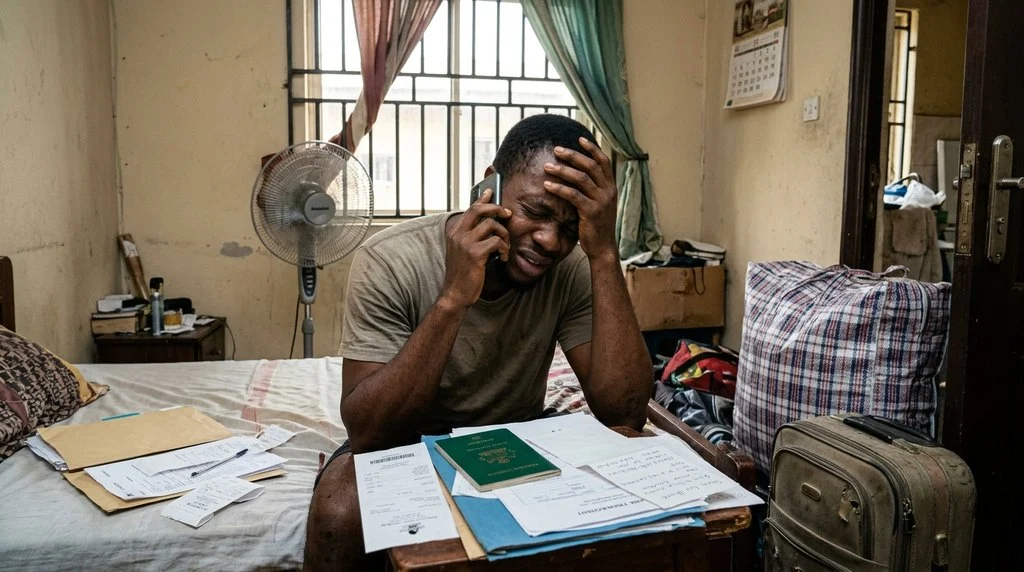
  • Ademola (34)* paid a travel agent ₦18 million between November 2025 and July 2026, and signed a fake marriage certificate to japa to the UK for work. He was given a 12-month job offer, but when he arrived, the company named in the letter denied issuing it. Everything went downhill from there. 

    This is his story, as told to Babatunde.


    Nigeria makes people desperate to leave 

    In 2025,  I decided to relocate to the United Kingdom because almost nothing is working in this Nigeria.

    After I made up my mind, I contacted a Nigerian travel agent who is based in the UK to help me with the process. I planned to go there first, build a life, and then, when the coast is clear, I would bring my wife and two children too. 

    Between November 2025 and July 2026, I made payments to the agent at different times. The total amount came to about ₦18 million. I was paying for the relocation arrangements.  I relied on him to handle the whole process without any issues.

    On April 7, 2026, I received a job offer from a film and theatre production company in Scotland, UK. I was happy because I thought everything had turned out well. And because I sold a few properties to come up with the ₦18 million  I spent. 

    The offer was for the Unit Production Manager Intern position for 12 months. It stated that I would resume on June 29, 2026, and earn £19,827.60 per year. That’s about ₦35 million. 

    I relied on the arrangements made for me and the employment offer. Eventually, I was granted a UK Temporary Work (Exchange) visa.

    But there was a difference between the job offer and the permission I had to stay in the UK. My initial permission was for six months, from June to November 2026. The employment offer, however, was for 12 months. So, I was expected to apply for an extension to remain in the country for the full duration of the job.

    But before I travelled, something else happened. The agent and the other people he  worked with in Nigeria asked me to sign a marriage certificate

    My  fake marriage

    One day, the travel agent called and asked me to go somewhere to sign a document.

    When I got there, they brought out a marriage certificate. The lady who wanted to act as my wife was also present. The document had already been prepared. They only asked me to fill in my name and sign it.

    I was shocked because I was not trying to get married. I was already married and had children. I did not understand why I needed to sign a marriage certificate to travel.

    From what I was made to understand, the arrangement was intended to make the woman and me appear to be a couple so that she could also travel.

    I was uncomfortable with it, but I felt pressured to go along with the process. Eventually, I signed the document because there was no agreement to refund my money, so I had no choice but to go along with it. 

    I knew the arrangement wasn’t right, but I was under so much pressure. It wasn’t until later that it hit me really hard:  the certificate wasn’t from ,the relevant Nigerian authorities. I had signed a marriage document with a woman whom I did not consider  my wife. 

    It was one of the most difficult decisions of my life. I could not tell my wife. 

    The ultimate shocker

    When I arrived in the UK in June, I was staying at the travel agent’s home. That was the arrangement until I could afford my own space. After a few days, I went to the address listed in my employment offer.

    I expected to begin the work I had been promised. Instead, I was told that the company had not issued the offer letter and had not authorised any such document. I almost fainted. 

    This was confusing because the letter carried the company’s letterhead and included details of the position, duration and salary.

    I had travelled all the way to the UK, believing that I had a job waiting for me. Now, the company was telling me that the offer was not theirs and that the employment arrangement was fake.

    I shared my story with them, and they said they would give me a job. But when they gave me the job description and payment structure, I knew I couldn’t stay there. 

    Meanwhile, I had already been spending weeks at the travel agent’s house with his family. He kept saying he would address the job issue, but nothing happened.

    After spending two months in the UK without the promised employment or secured accommodation, I decided to return to Nigeria.


    The Big Daily is your weekday shortcut to the biggest news shaping Nigeria. We cut through the noise, connect the dots, and explain why the news actually matters, all in one quick read.


    The Home Office wanted to know why I left

    After I returned to Nigeria, I received emails from the UK Home Office. They had noticed I left the country before the end of the period covered by my permission to stay. They wanted to know why.

    The employment offer was for 12 months, but my initial permission to stay was for six months. I was expected to apply for an extension to remain for the full employment period. 

    The company I was duped with also reached out and told me that the Home Office had contacted them to ask about my departure, since the employment arrangement was part of the information provided for my visa.

    I asked for my money back

    After I returned, I contacted the travel agent and asked him to refund the ₦18 million I had paid for the relocation process.

    There was another problem. Because of the marriage document, I now had difficulty getting the arrangement dissolved. The lady involved was unwilling to admit that the certificate was fake.

    I am worried about the implications, especially because I already have a family and do not want this arrangement to affect them or any future relocation plans involving them.

    I had spent ₦18 million on a process that had not delivered the job I was promised. I wanted my money back, but I was not getting the resolution I expected.

    I had to involve a lawyer

    Eventually, I retained a lawyer to write a formal letter to the travel agent.

    In the letter, my lawyers demanded that he confirm that the relocation process had not been properly coordinated and that the marriage certificate I had signed was fake.

    They also demanded that the agent refund my ₦18 million.

    I entered the process hoping to relocate for work. Instead, I returned to Nigeria without the job I had been promised, with a disputed marriage document to resolve and ₦18 million still at stake. 

    I have not been the same since I returned back to Nigeria. 

    Get More Zikoko Goodness in Your Mail

    Subscribe to our newsletters and never miss any of the action

  •  Crypto might be one of the riskiest forms of investing, but the Nigerians in this article took the risk, got lucky and walked away with unbelievable wins.

    From a Bitcoin wallet forgotten for years to a game played in the back of a class, they shared the biggest crypto wins of their lives and what they did with the money.

    “I forgot about my bitcoin for years and found my profit had tripled — Chidera*, 29, F.

    In 2019, I had a coworker who wouldn’t stop talking about Bitcoin. I didn’t even know how to invest, but all his talk got me excited enough to try. For my birthday that year, my uncle gifted me ₦50k, and  I invested it all in Bitcoin.

    Several things happened in my family during that period, and I soon forgot that I had kept ₦50k somewhere.

    Fast forward to 2025, I was applying for a Master’s programme abroad and needed my old email address to retrieve a transcript. While looking through the inbox, I found a verification email from the crypto app. I thought, “Let me just check this thing,” expecting to see the same ₦50k. 

    However, I opened the app to see that my money had grown to a little over ₦3m. I was stunned. I shouted so loudly that my friend staying with me at the time thought I was dying. 

    I put most of it into my Master’s fund. I’ve also started investing properly since then.

    “I played a Telegram game in classes, and made ₦300k — Tobi*, 22, M.

    In 2024, there was a  “coin tapping” trend everyone was doing. The idea was that you would play a game on Telegram, like tapping a coin, upgrading game animals, or inviting your friends for bonuses, and eventually win crypto tokens.

    It seems fake, and back then I thought so too. Everyone in my department was obsessed with it while I scoffed at the idea. But I was a bored 300-level student, and I love a trend. So, soon, I started tapping this coin.

    For months, I tapped during boring classes, in my room while watching movies on my laptop, and while waiting in queues. It became a mindless habit.

    When the token finally launched and landed in my wallet, I thought there was a mistake. I sold quickly and walked away with about ₦300k.

    It’s not a lot of money to me now, but as a broke uni boy, it was substantial. I never got back into crypto, though. I think it only worked back then because I didn’t feel pressured to be good at it. 

    “My son talked me into putting ₦100k in Solana.” — Emeka*, 55, M.

    I used to think crypto was for yahoo boys and people who like to gamble. But in 2021, my 16-year-old son got very involved in Solana and convinced his mum and me to join. 

    I invested ₦100k, an amount I could afford to lose. By the end of the year, that ₦100k was worth over ₦1.5m. I didn’t even know what to do with it or how it worked, but my son told me to sell it, and I did.

    To be honest, I didn’t really need the money, so I put it in an account for my son and gave it to him when he got into university in 2023. He used it to start his own crypto journey. Today, I think his investment is worth millions. I’ve never been so proud of somebody in my life.

    Get More Zikoko Goodness in Your Mail

    Subscribe to our newsletters and never miss any of the action

    “I started with ₦30k, and now I do this full time.” — Zainab*, 27, F.

    In 2022, a colleague showed me how to buy and sell USDT on peer-to-peer platforms for a small profit. I wanted extra cash, so I tried it. I started with ₦30k, and my first profit was ₦900. It was small but motivating, and I continued. 

    I also lost some money, though. I once lost ₦40k to a fake payment receipt. The buyer sent a screenshot; I released the funds, and the alert never came. After that, I never released anything until the money showed up in my bank app. 

    I kept reinvesting my money, and after a year, I was moving over ₦2m a week. I resigned from my bank job in 2024 and now trade full-time. I’ve also employed two people to help me manage the amount of money I move. 

    “I wrote crypto threads for ₦150k, and the tokens did a 40x.” — Juma*, 31, M.

    I’m a freelance writer, and in 2023, a small crypto project paid me to write a thread series explaining their product. They offered me half of my ₦300k payment in cash and the other half in their tokens. I wanted all cash, but they insisted, and I grudgingly took the offer.

    I didn’t think about the token for months. Then in 2024, the project got listed on a major exchange, and the price shot up. By the time I checked, my tokens had grown 40x in value. I was terrified it would crash, so I sold it over two weeks and ended up with a little over ₦6m.

    I used some of it to pay my rent and the rest went into my savings.

    “I bought ₦20k of Polygon on a whim, and it paid for my wedding.” — Adaeze*, 26, F.

    In January 2021, my cousin and I watched a talk about crypto, and, inspired, we randomly put ₦20k into different coins. Mine was a recently rebranded coin called Polygon. I regretted it the second I did it, but for my cousin, I decided I’d see it through.

    Later that year, I saw news that its value had shot up. I checked my account for the first time in months and discovered that my ₦20k was worth around ₦2.4m. I sold immediately and converted the money to dollars so it wouldn’t lose value.

    I left the dollars alone for four years. When my fiancé and I started planning our wedding in 2025, that money covered the venue, the food, and my white dress. My cousin never sold his, and he lost a lot of money. It still makes him upset.

    “I lost ₦400k to a scam, then I learnt my lesson.” — Ifeanyi*, 33, M.

    I’m a big risk taker, but initially that landed me in trouble. In 2023, I put ₦400k into a platform that promised to “double my money in 30 days” and called itself a crypto company. It turned out to be a Ponzi scheme. The website disappeared before the month ended.

    I felt so ashamed of myself, but instead of quitting, I decided to learn what I’d done wrong. I spent months watching tutorials and reading about how real exchanges work. In January 2022, I made a rule: ₦20k every month into Bitcoin, no matter what the price was or how scary the crash looked.

    There were months when the market was crashing, and my friends told me I was wasting money, but I stuck to my plan. Today, I’ve made about ₦3.5m from Bitcoin. I still can’t believe it.


    READ NEXT: I Escaped Poverty and Became a Multi-Millionaire in My 30s. Here’s How 

  • If there’s one thing society struggles to accept, it’s a woman who says she doesn’t want children. Somehow, making a personal decision about not becoming a mother is enough to invite unsolicited advice, religious lectures, predictions of future regret and, occasionally, questions about whether something is wrong with you.

    It’s almost as though a woman cannot simply say she doesn’t want children without having to defend her decision to an entire committee.

    child-free

    First, let’s establish something: being child-free is not the same as being barren or experiencing infertility. A child-free woman is someone who chooses not to have children, regardless of whether she is biologically capable of having them. Infertility, on the other hand, is a reproductive health condition that can make it difficult to conceive. While some women who experience infertility may eventually choose to live without children, there’s a significant difference between not being able to have children and not wanting them in the first place.

    But somehow, when a woman says she doesn’t want children, people are quick to assume she hasn’t thought it through or that she’ll eventually change her mind.

    The questions are almost predictable. What happens when you get older? What if you meet a man who wants children? Won’t you regret it? Who will take care of you when you’re old? Don’t you want to experience the joy of motherhood?

    Apparently, the possibility that a woman has considered all these things and still doesn’t want children is too difficult for some people to comprehend.

    And this pressure doesn’t just come from family members who are eager to become grandparents. Religious leaders also contribute to conversations that frame choosing not to have children as going against God’s will.

    In many Nigerian Christian communities, women are constantly reminded of the biblical instruction to be fruitful and multiply. Sermons about marriage and family often present procreation as an essential part of God’s plan, with some religious leaders suggesting that women who deliberately choose not to have children are being selfish, disobedient or refusing to fulfil their purpose.

    A similar expectation exists in many Muslim communities, where marriage, family and raising children are strongly encouraged. Islamic teachings describe children as blessings and a source of joy, and some religious leaders use these teachings to encourage women to embrace motherhood. While there’s nothing wrong with celebrating motherhood as a blessing, problems arise when these conversations suggest that a woman who deliberately chooses not to have children is going against her faith or failing in her religious responsibilities.


     You’d Also Like: Women – Led Protests That Made A Difference History


    But does believing that children are a blessing mean every woman must have them? Can a woman not be devoted and faithful, maintain her relationship with God and live a purposeful life without becoming a mother?

    The problem isn’t that religious teachings celebrate having children. It’s when those teachings are used to make women feel guilty about choosing otherwise. Why is a woman’s reproductive decision being treated as a spiritual obligation she cannot opt out of?

    The irony is that these conversations rarely acknowledge that motherhood is a significant, lifelong responsibility. It involves physical, emotional, financial and psychological commitments that shouldn’t be undertaken simply because a woman has been told it’s what God or society expects of her. And if we’re going to talk about God’s will, shouldn’t we also consider that people can have different purposes, callings and definitions of fulfilment?

    Get More Zikoko Goodness in Your Mail

    Subscribe to our newsletters and never miss any of the action

    Read next: My Ex Is Holding Our Business Hostage


    Some women don’t want to experience pregnancy or childbirth. Others don’t want the responsibility of raising children. Some would rather dedicate their time, resources and energy to their careers, businesses, relationships or personal interests. And some women simply don’t want children. They don’t have to be traumatised, financially unstable or secretly unhappy to arrive at that decision.

    Yet, society seems to struggle with the idea that a woman can find fulfilment outside motherhood.

    This is particularly interesting because many women grow up with the assumption that marriage and children are inevitable parts of their future. From childhood, conversations about their lives frequently revolve around finding a good husband, getting married and having children. Motherhood is presented as the natural destination of womanhood, and women who choose a different path are treated as though they’ve missed an important appointment.

    Even when a woman is firm about her decision, people are quick to tell her she’ll change her mind. Apparently, she’s too young to understand what she wants, hasn’t met the right man or hasn’t developed her maternal instincts yet. It’s almost as though people would rather believe a woman doesn’t know her own mind than accept that she might genuinely have no interest in motherhood.

    And speaking of men, why is one of the first questions women are asked whether their husbands or future partners agree with their decision? Why does a woman saying she doesn’t want children immediately become a conversation about what a man wants? Of course, having children is something partners should discuss before committing to a life together. However, a woman’s personal decision shouldn’t be treated as invalid until a man approves of it.

    There’s also the argument that choosing not to have children is selfish. But what’s particularly interesting about this accusation is how little consideration is given to the sacrifices women are expected to make when they become mothers. Their bodies, finances, careers, time and personal ambitions can all be affected by parenthood, yet choosing not to take on those responsibilities is somehow considered selfish.

    Nobody should have children simply because their parents want grandchildren, their church expects them to, their religious community demands it or society has decided that motherhood is the ultimate measure of a woman’s success. Children deserve to be wanted, and parenthood should be a decision people make willingly, not out of fear of disappointing everyone around them.

    And this isn’t an argument against motherhood. Women who want children should absolutely have the freedom to become mothers without being judged for that decision. But that same freedom should extend to women who don’t want children. Neither decision should make a woman more or less deserving of respect.

    At the end of the day, being a woman shouldn’t come with a compulsory motherhood clause. A woman’s purpose cannot be reduced to her ability or willingness to reproduce, and her life doesn’t suddenly become incomplete because she doesn’t have children.

    Maybe the real question isn’t why some women don’t want to have children. It’s why everyone else feels so entitled to convince them otherwise.


    Also Read: 16 Single Women Share The Worst Things Their Married Friends Have Said

  • We all have that one wishlist. That one tab you leave open on your browser, the cart you’ve been stacking since H1, and the items you randomly go back to stare at when you’re bored or wish you were holding them in your hands. 

    Well, it’s Black Friday season, which means the universe is giving you the green light to hit checkout like a sweet offer of a 70% discount if you shop with themix.ng. So, if you’ve been waiting for a sign to change your wardrobe and get new fashion accessories, these are seven reasons to stop looking and start buying.

    1. Black Friday with your favourite brands

    It’s Black Friday, and your favourite fashion brands are offering friendly prices on the pieces you love. Open your purse and grab your favourite brands like PUMA, Lacoste,e and GUESS asap.

    2. Staring at the same cart for months

    You’ve added, removed and re-added the same items so many times that your cart might start charging you for space. My friend, it’s Black Friday, and it’s the best time to get your wishlist for less. Shop now at themix.ng.

    3. Wardrobe doesn’t match moodboard

    You know what you want for your Detty December:to be outside and look like a million bucks. If you want to spice up your fashion with the best fashion pieces to go this season, GUESS is calling your name. Pick up the call.

    4. Rich look without breaking the bank

    You love the idea of looking sophisticated and wealthy. When you walk past people, you want them to wonder if you own a yacht. Lacoste is what you need. And you don’t have to spend all your money to get it.

    5. Need new sportswear for the gym

    If you’ve been hitting your fitness goals, or plan to start next week, you need sportswear that keeps you dry and focused through every rep. A fresh pair of PUMA sneakers or sportswear will never go wrong.

    6. You want to look like a Pinterest board

    Whether you’re shooting content for Instagram, filming a TikTok “Get Ready With Me”, or just outside enjoying life, you want your outfit to hit. Best bet? Get yourself some PUMA pieces.

    7. You love discounts

    Honestly, there’s a special type of joy that comes from catching your favourite pieces on sale. So what are you waiting for?

  • Building a career comes with challenges. Working as a Nigerian woman comes with its own special package: the pressure to say yes before the opportunity passes you by, figuring out money while everyone assumes your salary is plenty, the labels that follow women who speak up in meetings, and the family obligations that arrive with your first real salary. Sometimes what you need is to hear another woman say it out loud first.

    That’s the whole premise of Don’t Let the Smile Fool You, Uche Ofodile’s podcast about what’s really going on underneath the calm of leadership. No aspire to perspire to maguire. Just honest talk about the things women are actually navigating at work and with money. 

    We went through the catalogue so you can start with the essentials: five episodes to get you on your way. 

    1. “Somehow the financial floor doesn’t feel as solid as it should”

    Don’t Let the Smile Fool You, EP38, with Lisa Aladekomo

    Earning good money still comes with a specific kind of shame: if the salary is this nice, why doesn’t it feel like freedom? 

    Uche and Lisa explore why a good salary doesn’t automatically mean financial freedom. There’s the delivery trap  where the reward for hard, good work is more work. And the “your work will speak for itself” trap, this advice Uche calls almost criminal.

     Then the visibility tax, where panels, advisory seats and co-investment deals go to the women people actually see speaking, not the ones with their heads down and letting the work speak for itself. Finally,  the family tax every first daughter knows by heart: being the one who books grandpa’s doctor’s appointments costs you, and the first step is naming it so you can share it or outsource it.

    The most useful part might be the silence they name between senior women who trust each other with everything except investments, salary ranges and deals. Plus negotiation gems worth the hour on their own: no number is crazy, and every woman should know her ‘get out of bed’ number before any offer lands.

    2. “Later in your career the challenge changes. Your scarcest resource is time.”

    Don’t Let the Smile Fool You, EP37

    Saying yes builds early careers, and Uche has the receipts: a last-minute flight to London that put her in rooms she otherwise couldn’t access, and a Ghana move people called a demotion that ended with her as Chief Marketing Officer (CMO). But as you get more established in your career, your scarcest resource becomes time.

    Every yes now carries a cost: focus, time, energy, reputation. And the advice that made you visible doesn’t come with an expiry date. You just discover it stopped serving you.

    This solo episode gets into what happens when the yes stops working. Her example: a diversity, equity and inclusion committee she said yes to out of pure passion, without asking the practical questions. Did the committee have influence? Would the senior leaders she wanted to be seen by actually show up? Would its recommendations ever be executed? A good opportunity is not the same as a good opportunity for you. And her advice to women in their twenties: start training the no muscle now, not in your forties.


    You May Also Like: My Best Friend Set Me Up With a Man She Was Dating


    3. “It’s okay to doubt but never let doubt lead your life”

    Don’t Let the Smile Fool You, EP1, with Annick Atougbe

    If you’re waiting to feel ready before you raise your hand, press play. CEO of the Day, an initiative Uche and her team started to make International Women’s Day less performative, one young woman in the company is chosen to be CEO for a day, literally walking in the CEO’s shoes for 24 hours. Other companies were challenged to join. Seven did at the start; 33 joined in 2025.

    Annick, the 2025 winner, perfected her application all weekend and still sent it on deadline day; she was so sure she had lost that she asked for a few days to recover, then walked the floors so confidently that Uche wondered if she was even needed. 

    Her lessons are clear: leaders don’t need to have every answer; they need to ask the right questions. Strategy isn’t people deciding things in a room; it’s customers reacting to what you bring to the table.

    4. “Self-awareness can make you better. Self-consciousness will make you smaller.”

    Don’t Let the Smile Fool You, EP27 

    “She’s too aggressive.” “You’re being emotional.” “Too direct.” Uche calls these “unintentions”, words that are rarely meant to wound, but repeated often enough, they become instructions. 

    After one meeting comment turned into office gossip, she went quiet for almost a year, and nobody asked her to. That’s the point. No one had to tell her to disappear; the safest version of leadership had simply started to look like silence.

    If one throwaway comment ever made you start editing yourself, this episode is the reminder that not every softening of yourself is growth.

    5. “Your intention does not erase the impact.”

    Don’t Let the Smile Fool You, EP16 (“Am I the Drama?”)

    Inspired by Cardi B’s album (yes, really), this episode sorts workplace drama into three types. 

    Unaware Drama: The teammate whose good intentions keep producing chaos, because if ten people are telling you the same thing, it’s not gossip, it’s data. 

    Misunderstood Drama: Being read wrong for your face, your outfits, your presence, where the fix is not shrinking but giving context, like “I’m being direct because I care”. 

    Self-imposed Drama: Apologising  for existing, where the prescription is a proof list of your wins and retiring “sorry, can I just”. Confidence is clarity, not volume.

    Send this to the friend who needs it. Or the one who is the drama and needs to be told.


    Read Also: “You Love Your Child & Still Miss Who You Were Before” — Podcast Episodes Every Woman Should Listen To At Least Once