• If you made it to the end of 2025, chances are you’re one of two people: the one who finally found their person, or the one trying to gather the strength to try again in 2026. Either way, it’s not just you. Love has a way of putting people through the wringer, and every year comes with its own lessons.

    To make sense of it all, we spoke to Nigerians about how their love lives actually played out this year. Not the highlights people post online, but the real experiences behind the scenes: the dates that didn’t lead anywhere, the situationships that lingered too long, the relationships that brought peace, and the ones that fell apart.

    What we got was a mix of joy, frustration, clarity, and exhaustion. These 15 Nigerians reflected on their 2025 love stories and shared what the year taught them about dating, commitment, and knowing when to stay or move on.

    When you’re done reading, you can also look back on your own year. We’ve created a short quiz at the end that helps you make sense of what your 2025 love life really looked like.

    “I stopped dating to focus on money” — Seyi, 32

    At the beginning of the year, I made a very deliberate decision about dating: I wasn’t going to spend serious money on it. I’d had enough of high-effort dates that gulped my money only for things to fizzle out after two weeks. I told myself that if a date couldn’t happen without me stretching my budget, then it probably wasn’t worth it. I think that mindset limited my dating experience this year.

    I went on three dates between January and April. One was with a woman I met through a mutual friend. We had drinks, talked about work, and realised very quickly that we wanted different things. Another was someone I matched with online. We met for lunch, and the conversation stayed surface-level the entire time. The last date initially felt promising, but once I realised I was the only one making plans and following up, I stopped trying. None of them turned into anything close to serious, and after the third one, I didn’t bother again.

    Then I lost my remote job. It was a high-paying role, and losing it hit harder than I expected. I stopped moving around as much, stopped saying yes to outings, and started watching my spending closely. Dating completely fell off my radar. I didn’t feel sad about it; it just didn’t feel responsible to think about romance when I was trying to stabilise my finances. In a strange way, I was relieved that I didn’t have to worry about spending money on someone else while figuring my own life out.

    The only thing I genuinely missed this year was sex. I tried to exercise discipline, but I won’t pretend I was perfect. When the urge became too much, I helped myself. Other times, I reached out to old flames who didn’t need much impressing. Two of them were open to meeting, and we hooked up a couple of times with no strings attached. 

    Right now, my love life feels nonexistent. I’m not chasing anyone, and no one is chasing me. I don’t know what next year will bring, and I’m fine with that. For now, my focus is getting my finances back on track. Once I feel stable again, I’ll think about dating properly. Until then, love can wait.

    Get More Zikoko Goodness in Your Mail

    Subscribe to our newsletters and never miss any of the action

    “2025 taught me not to put all my eggs in one basket” — Nimi, 25*

    I spent most of 2025 in a situationship that didn’t benefit me at all. We met late last year and slipped into something romantic early this year. I hoped it would turn into a proper relationship, but it never did. He kept insisting that what we had was fine, even though it clearly wasn’t what I wanted. Without my consent, it became a friends-with-benefits situation, and I stayed longer than I should have because I kept hoping he’d eventually come around.

    What finally pushed me to leave was realising that he lacked empathy. I lost my mum a few months ago, and that loss changed everything for me. It was one of the hardest moments of my life, and he wasn’t there for me in any meaningful way. That was when I accepted that he didn’t genuinely care about me.

    Losing my mum made me realise how short life is. Life is too short to spend on people who don’t care, so I ended things. It hasn’t been long, and I’m still adjusting, but I’m hopeful the future will be better.

    Looking back, he wasn’t a caring person at all. We only went out once, and even in the early stages, everything revolved around him. I spent endless hours talking to him and making time for him, but I didn’t get that same energy in return.

    “It’s been a dreamy year” — Halima* 27

    This was the year I got cuffed. I got engaged this year, and I feel genuinely happy.

    We’ve known each other for a while, but we became more intentional this year. We officially started dating, and from the beginning, the effort was evident. We went on dates almost every month, and each one had its own theme.

    With him, I don’t feel alone. He’s intentional, and he knows me just as much as I know him. Being with him feels easy and reassuring. We’ve gone on more than 11 dates this year. If I had to count official ones, I’d say 11 out of 12, and December isn’t even over yet.

    He pays for our dates, and he always replies to my texts. Consistency has never been a question. If I had to describe my 2025 in one word, it would be bliss. It’s been wonderful.

    [ad]

    “I’ve sort of given up on finding love” — Bimpe*, 29*, F

    In February, I started seeing a former good friend casually, but adding sex to our friendship completely ruined it. Each time we met to hook up, he became cold afterwards. I felt like he thought I was trying to trick him into a committed relationship through intimacy. His constant hot-and-cold behaviour drained me, so I cut him off.

    In May, I met a fantastic guy at a bar. We both stepped outside to smoke, and he offered to help me light up. The attraction hit immediately. We exchanged contacts and started talking every day. He ticked all my boxes — tall, rich, and dreadlocked. My issue with him was timing. He wanted to get married at the beginning of next year, and I didn’t want to rush into marriage. We made out a few times, but things fizzled out by July.

    Since then, I’ve hopped in and out of talking stages. I met two people on dating apps and another at a restaurant. All I can say is that there’s nothing in the streets. I ghosted the restaurant guy when he told me he was going through a divorce. I didn’t believe him. Lagos married men stay married until I see divorce papers, please.

    Right now, I’m on my own. I’m trying to get a new job and increase my income. I don’t have time for Lagos men and their confusion, at least not for now.

    “Finding love is hard right now” — Chidi*, 28, M

    I haven’t been in a relationship since 2021. Back then, I saw myself as a playboy and stuck to casual flings. I avoided anything serious.

    As more of my friends started settling down, getting married, and building families, I began yearning for my own person. I decided to spend this year searching for her, but the shege I saw still has me shaking.

    I tried to stay upfront about wanting something serious with the women I met, but things kept going wrong. Just like last year, I moved from one situationship to another.

    In March, I entered a talking stage with a babe I met, but it only lasted two weeks. She came over to my place and tried to get me to dash her an expensive pair of sunglasses I had just bought. I said no. After she left, she never replied to my messages again.

    I can’t count how many times this year I met someone at a party, felt the vibe, exchanged socials, and sent a message; only for her to never respond. If you’ve found love, please stay there. There’s nothing outside.

    “I thought I’d be married by 30” — Ibukun*, 32

    I always believed I’d be married by 30; that was the timeline I imagined for myself. Now I’m here at 32, still single, still meeting men, and still having the same conversations that don’t lead anywhere. Most of the men I meet aren’t bad people; they’re just not ready for marriage, and that’s a hard thing to keep accepting year after year.

    For most of 2025, I stayed on my own. I didn’t date or entertain talking stages. Instead, I leaned heavily into my faith. I spent a lot of time praying, journaling, and asking God questions about my life. 

    Around August, I decided to try dating again. I met a man on Instagram, and from the start, he seemed like everything I’d been praying for. He was kind, financially stable, emotionally present, and clear about wanting something serious. We went on several dates and had lots of fun. Still, I couldn’t shake a feeling that he was holding something back. I tried to ignore it because everything looked right, but a voice in my head kept telling me to be patient.

    In September, he finally told me that he had a child. He explained the situation carefully and said he wanted to be honest because he saw potential in me. I appreciated his honesty, but I knew immediately that I couldn’t continue. I’m not ready to step into motherhood, especially not as a stepmother. After that conversation, I checked out emotionally. 

    I’ve been alone again since then. Some days are harder than others, especially when I think about how much I still want marriage. But I’m choosing to believe that 2026 will be kinder to me. 

    “I kept sleeping with my ex because it just felt easy” — Ibrahim*, 30

    My ex and I broke up in 2024, but we never really stopped talking to each other. Anytime talking to someone new felt stressful, I went back to him, especially for the sex.

    I went on dates with some people this year, but once conversations started turning serious, I lost interest. After those dates, I often texted my ex and asked if I could come over. We’d have sex and barely talk about anything else.

    If I’m being honest, I spent more time with him than anyone else this year. I know it’s not ideal, but I also think it’s better than ending up in a situation where someone new breaks my heart. He’s also not seeing anyone, so I know he needs me right now as much as I need him. 

    We’re both ending the year single and open to whatever the near future holds.

    “I was searching all through the year” — Mike* 32

    This year has been a rollercoaster for me. I ended a three-year relationship after we took a hard look at our future and realised we weren’t a good match. Our families didn’t align on some important things, and it became clear that love alone wasn’t enough to sustain us. After that, I was eager to move on and start dating again.

    I went on at least six dates this year, but I only went on a second date twice. I don’t believe in dating apps, so mutual connections introduced me to most of the people I met. Even with that, dating hasn’t been easy. I haven’t met anyone who truly aligns with me.

    One woman seemed promising, but she told me she didn’t want kids and didn’t believe in God. Those are fundamental values for me, so I ended things.

    I’ll admit that I reached out to my ex a few times. A part of me wondered if we’d made a mistake, especially since I hadn’t met anyone who felt right. Still, I know why we broke up. I remain hopeful and continue searching.

    “I protected my heart this year” — Charity*, 23

    This year, I became very careful about who I commit to because commitment means a lot to me. As a result, I went on zero dates. My love life is non-existent.

    I met a few people, but red flags always showed up. I met someone at an event and hoped things would be different. We vibed immediately and talked all night. However, when we returned for the event the next day, she was already talking to someone else. That hurt more than I expected.

    Since then, I’ve stayed skeptical. My last relationship scarred and drained me emotionally. My ex manipulated me, and that experience made me extremely cautious about getting close to anyone again.

    “My love life suddenly became uncertain” — Ishaya* 25

    This year challenged me emotionally. My girlfriend left the country after we had been together for almost five years. She was my sweetheart, and losing the physical closeness so suddenly was hard to accept.

    She got an opportunity abroad and left around June. Even now, it still feels unreal. We both feared what the future would hold because neither of us was sure we could hold on in the long term. My business ties me to Nigeria, while she has her own dreams she needs to pursue.

    I’ve tried to stay hopeful, but it hasn’t been easy. I went on a date once and met someone genuinely kind, but I felt deeply guilty the entire time. It didn’t work out because I wasn’t emotionally free, and she could tell. I felt like I was doing something wrong by trying to move forward.

    I’m still with my girlfriend, and I’m holding on to the hope that next year will bring clarity about where we’re headed. It’s really been an uncertain year for me.

    “I’m trying to give love a chance again” — Bolanle*, 44

    I lost my husband in 2019, and for years after that, I completely shut myself off from love. Any time a man showed interest, I turned him down. I told myself my children were my priority and that dating or marrying again would feel like betraying the man I once promised my life to. I didn’t even consider dating an option.

    Then, sometime last year, a man I once loved deeply and almost married reappeared in my life. Life had taken us in different directions back then. He got married, his wife later left, and he’s been single for a few years. When he reached out again, I didn’t think much of it. But he stayed consistent. He checked in on me, supported me, and showed genuine care for my children without trying to impress anyone.

    This year, things slowly changed between us. He never rushed me or pushed for anything. He made his intentions clear, but he moved at my pace. We started spending time together and I can’t deny that it felt nice to have someone dote on me again. 

    We’re seeing each other now, and while it’s still early, it feels good to know I’m not alone. I don’t feel pressured or afraid; I feel supported. After everything I’ve been through, that alone feels like a blessing.

    “I enjoyed my hoe phase this year” — Jaffar*, 25

    I started the year knowing I didn’t want anything serious. I tried dating last year, but it felt suffocating. And maybe the guy was just a douchebag. Anyway, I got really active on dating apps this year. I’ve always had the apps but stayed away because of “kito” stories. One day, I said fuck it and met a guy on my street. There was no going back after that.

    Most of my meet-ups were straightforward. We’d talk for a bit, agree on what we wanted, meet, and go our separate ways. Some turned into repeat encounters, but if I started feeling too attached, I stepped back.

    It may seem wild, but I appreciate that I’m experiencing this phase on my terms. Not because I’m spiralling because of a heartbreak or anything like that. I just want to have fun. I don’t know if next year will be about finding love, but 2025 owes me nothing for real.

    “I can’t find someone who shares my lifestyle” — Samuel, 37, M

    Dating this year has been hard. I’m agnostic, and I’m upfront about it. As soon as I tell the women I’m seeing, they end things. I’m ending the year just as single as I started it.

    My first date happened in February. She’s a nurse, and a mutual friend introduced us. We hit it off immediately. At first, she didn’t seem bothered by my lack of religion, but by March, when I started talking about making things official, she told me she couldn’t be “unequally yoked” according to her faith.

    That one hurt because I genuinely liked her. Even now, I still text her occasionally to check in. Recently, she told me she had started seeing someone else. I feel happy for her; I just wish I could find someone who shares my beliefs too.

    I’ve tried dating other people since then, but I keep running into the same issues. Either my lack of religion becomes a problem, or they waste my time. It’s emotionally exhausting, but I haven’t given up. I still believe my person is out there.

    “I got back with my ex for the third time” — Kenny* 24

    This year has been a roller coaster; I still feel like I haven’t fully broken free from my ex.

    This is the third time we’ve gotten back together. Distance caused our first breakup, and during that break, she dated someone else. When we got back together, I couldn’t process or forgive that, and it eventually led to another breakup, even though I still felt emotionally tied to her.

    I drunk-texted her around March, and that’s how we ended up together for the third time. Since then, we’ve tried to apply the lessons from our past mistakes. I’ve been open to the process, but the relationship still moves in cycles of highs and lows because I don’t know if we truly work best together.

    I hope we do, people around me are watching to see how it ends. I’m hoping that the love and care we have for each other will be enough to make things work, even with the distance between us.

    “I finally followed through” — Thompson*, 41

    I’d been engaged twice before this year, and both times, things crashed for reasons I’m not comfortable getting into. After the second one ended, I stopped telling people about my romantic life. It felt embarrassing to keep explaining why things never worked out. By the end of 2024, I was tired of starting over, but realised I was even more tired of being alone.

    I met my wife at a friend’s birthday dinner in January. We exchanged numbers that night and went on a date a week later. I remember feeling uneasy on our first few dates because there was nothing dramatic about us. We mostly talked about work, family responsibilities, and why our previous relationships failed. When she asked why my last engagement ended, I came clean and told her the truth.

    We dated consistently for six months, and we had a good run. We got married quietly in November, and I’m really still taking it all in. In a way, I feel like I’ve finally ticked an important milestone.

    Take our 2025 Love Life Wrapped quiz to see what your dating story says about you.


    QUIZ: What Kind Of Lover Were You In 2025?


  • Every week, Zikoko seeks to understand how people move the Naira in and out of their lives. Some stories will be struggle-ish, others will be bougie. All the time, it’ll be revealing.

    Since 2019, we’ve been telling important stories about how Nigerians navigate money: how they earn, spend and save the naira. 2025 was just as revealing. 

    This year, we spoke to people across different income levels, backgrounds and careers, offering new insights and sparking vital conversations that drove millions of Nigerians to take a closer look at their finances and potential income opportunities.

    As the year comes to an end, let’s take a look back at the 10 #NairaLife stories our audience loved the most and just couldn’t get enough of.

    1. #NairaLife: She’s 22, and Cybersecurity Pays Her Over ₦5m/Month

    This 22-year-old’s #NairaLife started with a desire to earn enough money to put herself in a school abroad. Seven years later, her priorities have changed. Now, she’s a uni dropout turned cybersecurity engineer making ₦5m+ monthly. Her new mantra? “I’ll never be poor.”

    Read her story here.

    2. #NairaLife: This 28-Year-Old Earns ₦9m/Month but Doesn’t Feel Financially Secure

    In less than three years, this 28-year-old’s earning power has increased from ₦125k to over ₦9m/month. However, she struggles with financial management and hasn’t built systems to protect her money. She hopes that changes soon. 

    Read this Naira Life story here.

    3. #NairaLife: This Sugar Baby Is on a Mission to Making Better Financial Decisions

    In 2019, this 22-year-old student was knee-deep in financial uncertainty. Six years later, she lacks nothing, courtesy of an older lover. Now, she’s ready for another change, starting with her spending habits and taking an intentional go at financial independence.

    Read her Naira Life story here.

    4. #NairaLife: How Did This 23-Year-Old 5x Her Income in One Year? Writing

    This writer started chasing gigs in 2019. Five years later, she discovered writing platforms and turned her finances around. These days, her sights are set on three things: Making more from her books, exploring other income opportunities and providing for her family without buckling under the pressure of black tax.

    Read her story here.

    5. The #NairaLife of a Finance Manager Who’s Chasing a $2M Net Worth

    The 33-year-old in this #NairaLife had a rocky start building his savings and investment muscle. But he’s finally gotten the hang of it, thanks to a crazy income jump from ₦600k to $5k. Now, he’s pursuing a $2m net worth. Tough? Yes, but he might know how to get there.

    Read his Naira Life story here.

    6. #NairaLife: Her Salary Went From ₦350k to $4k in One Year. Then, She Took a Sabbatical

    The 28-year-old in this #NairaLife has mastered multiplying her income and living below her means. Between 2021 and 2022, she increased her income by over 1000% and has built a ₦50m+ net worth. Now, she’s on a sabbatical, hoping to master another skill: cutting down her expenses even more.

    Read her Naira Life story here.

    7. #NairaLife: This Product Manager Makes 3x His Salary From Side Gigs

    This 28-year-old’s #NairaLife took a 180-degree turn after he found freelance work in 2021. In four years, he’s gone from earning ₦150k to ₦7m/month. His side gigs pay him far more than his full-time job, but he’s sticking with the 9-5 life for the long term. Why?

    Read his story here.

    8. #NairaLife: The 22-Year-Old Who Went From ₦300k/Month to ₦2m in One Move

    In 2024, the 22-year-old in this #NairaLife left a promising income potential in social media influencing to focus on other career opportunities. A year later, her bet is paying off, and she now earns ₦2m from working two jobs. Her next goal? $100k in savings and investments by 2030.

    Read this Naira Life story here.

    9. The #NairaLife of a Marine Engineer Who Doesn’t Know How to Spend Money

    The 31-year-old in this #NairaLife has lived the perfect example of a grass-to-grace story. She’s overcome environmental limitations through sheer grit and a bit of luck. However, her improved financial standing hasn’t been as transformative as she’d like, and she wants to fix that—by spending more.

    Read this Naira Life story here.

    10. #NairaLife: The Digital Marketer Obsessed With Building Wealth for Her Child

    The 30-year-old in this #NairaLife struck gold with digital marketing in 2019 and began making significant money in 2022. It’s 2025, and she’s at her most liquid yet with a $7k/month income and a $30k portfolio. But she won’t rest until she can provide everything her child needs.

    Read this Naira Life story here.


    If you’re interested in talking about your Naira Life story, this is a good place to start.

    Find all the past Naira Life stories here.
    Subscribe to the newsletter here.

    Get More Zikoko Goodness in Your Mail

    Subscribe to our newsletters and never miss any of the action

    [ad]

  • The Nigerian experience is physical, emotional, and sometimes international. No one knows it better than our features on #TheAbroadLife, a series where we detail and explore Nigerian experiences while living abroad. 


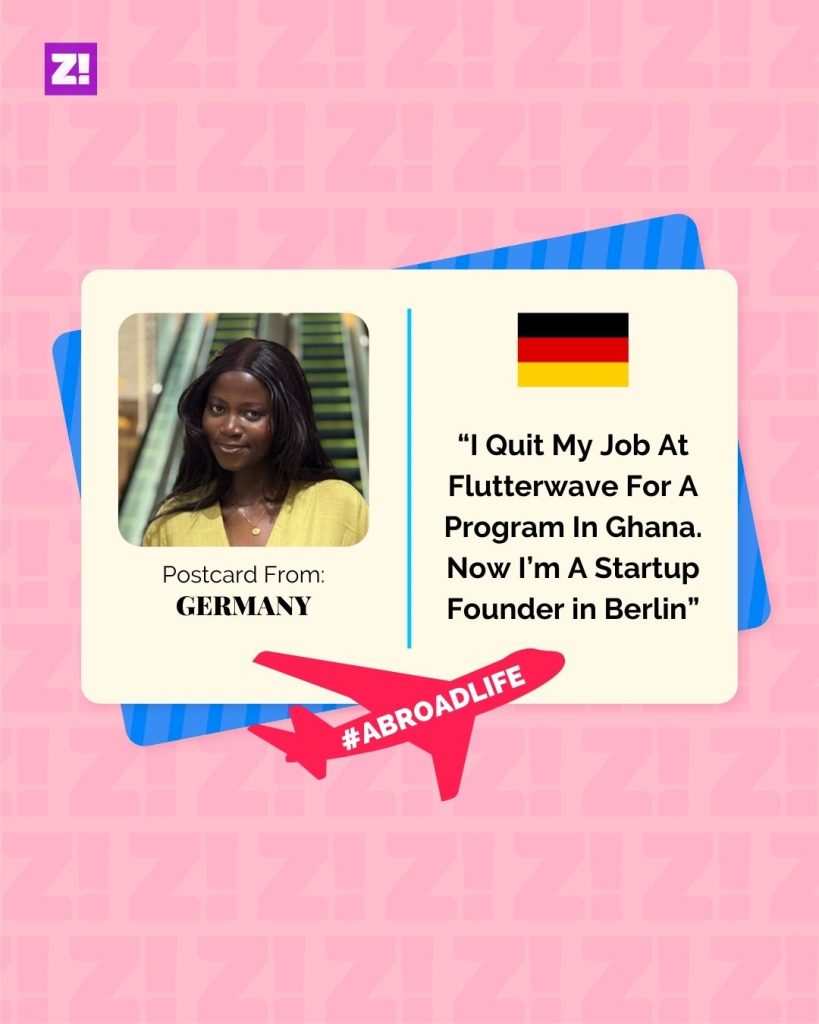
    Bimpe (35) had a good life in Nigeria as a successful travel consultant. But when her three-year-old daughter started shouting “Up NEPA,” something snapped. Determined to give her child a better life, she moved to Germany in 2020. In this story, she shares her experiences with systemic racism, the reality of raising a Black child in Germany, and why she is finally moving back to Nigeria.

    Where do you currently live, and when did you leave Nigeria?

    I currently live in Berlin, Germany. I left Nigeria in 2020.

    What inspired you to leave?

    I think it was the same thing that inspires most young Nigerians to leave: the belief that there is no future for them in the country. As a single mother at the time, my biggest motivation was my daughter.

    My work took me outside Nigeria often, so I had thought about migrating eventually, but it was not in my immediate plans. Then one day, I heard my three-year-old daughter shout, “Up NEPA!”

    Those words hit me like a train. It was heartbreaking to think she was going to grow up in that same environment. To have another generation shouting “Up NEPA!” just like mine did felt like a generational curse. I could not stand the thought. I started making plans to leave immediately. In less than a year, we had moved to Germany.

    You said you travelled often for work. What did you do?

    I was a travel consultant. If there was a potential language barrier, I would escort clients to their destination to ensure they got through immigration processes without any issues. I loved my job. Apart from being away from my family, leaving my career was the hardest part of moving away from Nigeria.

    So how did you leave?

    I had built up many contacts in the travel business over the years. I let them know I was looking to move to Europe, though I had not even decided on a specific country. I certainly was not thinking about Germany. I had been all over Europe, but never there.

    However, I had a business partner with a travel agency there, and they were the first to show serious interest. The initial plan was to work for them on a sponsored freelance visa and regularise my stay later.

    Did it all work out?

    It almost did, but then the pandemic happened, and everything fell apart.

    We arrived in Germany just days before they shut the borders. Once in Germany, I started the onboarding process at my new job. Then the lockdowns began. It was not just the borders that were closed; everything was shut down. It was a terrible time for the tourism industry, and the agency had to downsize. Naturally, they started with the newest hires. Suddenly, I was without the job that had brought me to the country in the first place.

    Get More Zikoko Goodness in Your Mail

    Subscribe to our newsletters and never miss any of the action

    What did you do?

    The money I had saved in Nigeria started to look like nothing once changed to Euros. Between feeding and rent, I was burning through my savings very quickly. It felt like my life was going up in flames.

    Without the job, I lost my visa sponsorship. I started receiving letters from the German government asking me to leave as soon as the borders reopened. But I was not ready to go back. I felt I had already given up too much to get there. I had sold everything in Nigeria and referred my clients to colleagues. There was nothing to go back to.

    I got a lawyer to help plead my case, and eventually, I was given what is called Duldung here. It means “Tolerated Stay Permit.” Essentially, they suspended my deportation and tolerated my stay for humanitarian reasons. The whole situation was not my fault. I came to the country legitimately and had a plan. The pandemic was unexpected and affected so many people.

    This must have been a very anxious time for you. What happened next?

    The tolerated stay was for one year. I spent that time thinking about my next move. I decided to learn German as quickly as possible so I could apply for a tuition-free university programme.

    I could not afford English-taught programmes, which are quite expensive. But for the German-taught programmes, you have to reach a C1 level in German to be admitted. Learning a new language at thirty was not easy. But I studied hard, took the language exam, and just managed to pass. I was admitted to an MBA programme. 

    On the job front, I eventually found a remote marketing role with a Malaysian company. That covered my living expenses. Things started to look better financially, but juggling everything was still incredibly difficult. I often considered giving up and going home, but my family in Nigeria relied on me for assistance. The €100 or €200 I send back regularly goes a long way there.

    That sounds like a lot to handle. How did it all turn out?

    Fast forward almost six years, and things are finally stable. I have finished my master’s and secured a government job, though I still keep my remote marketing role. My daughter is older now, I have a son, and I am married. Things turned out okay eventually.

    That is great to hear. So you must be happy with life in Germany now?

    Not exactly. Honestly, the idea of raising my daughter here is something I’ve completely abandoned. That goal was defeated.

    While I met my husband here and Germany has been good to me in that sense, I would not advise someone in my former situation to come here. If you have no job or prospects in Nigeria, then fine, come. But if you are creative, talented, or entrepreneurial, stay away.

    Why would you not recommend it?

    Nigerians have fire in their blood. We are hustlers who do not stay in one place. In Germany, they will quench that fire. This place is for people who prefer a quiet, solitary life. If you do not mind systemic racism or you just want to live on government benefits, then Germany might suit you. But if you want to “make it” in life, there is nothing for you here. Career-wise, it was a very bad choice.

    You mentioned your daughter. How has it been for her?

    The “Up NEPA” I was running away from was replaced by something much worse: racism.

    Things were okay in kindergarten because the school was run by British nationals and had an international mix of staff and students. She did not feel out of place. She even picked up German faster than I did. Her integration looked seamless. She was happy and confident. But primary school has shown us the darker side of Germany.

    My daughter is the only black child in her school. In Germany, social groups are very segregated. The Germans stay together, and other immigrant groups do the same. Since there are not many Africans, my daughter is basically isolated. Considering what I experienced at university with “educated” adults, imagine what a child goes through.

    Can you give an example of the racism you faced during your MBA?

    We had to interview people for our thesis. While my German classmates secured interviews easily, I could hardly find anyone willing to speak to me. The most glaring instance, however, was during a supply chain presentation.

    Our professor was a Greek man who was a lifetime civil servant in Germany. Alumni had warned me that he gave Black and Indian students poor grades, but I forgot the warning because he was actually quite engaging in class. When the group work came, our white classmates grouped up quickly, so I and the Indian students were forced to form the only non-white group.

    We presented a case study on Dangote. My classmates were shocked; they did not think Africa produced anything of that scale. During the presentation, one student even asked if Dangote was “pure Black.” They could not believe a Nigerian man built such a business; they assumed he must be mixed race. It was incredibly irritating.

    How did the professor react?

    He was clearly upset. Maybe he thought I was trying to prove something by using Dangote as the case study. He grilled us for ages with questions he did not ask the other groups. Everyone could see he was being biased and unprofessional.

    Since he could not find fault with the content, he attacked the slide design instead. He claimed the colours did not match and spent ages scrutinising the references and looking for missing commas. He even suggested we had not made the slides ourselves.

    I had to pick up my son, who was not even a year old, so I left after our presentation. I later found out through our WhatsApp group that the professor was furious I had left and threatened to give our group the lowest score. I fought back, emailing the administration with proof that I designed the slides myself and challenging his bias.

    Did the school take any action?

    They called me for a meeting, but the professor’s “solution” was to give the entire class a C-grade. He did this to turn my classmates against me for “playing the racial card.” That is how the system brings you down—if they cannot get you directly, they turn the crowd against you.

    That sounds incredibly isolating. As a family, how do you find ways to have fun in Berlin?

    I would not call it fun; I would call it “unwinding.” Fun usually involves human connection. Without my husband and children, I would be completely alone. We go to church on Sundays and sometimes to the playground. But even there, other children do not play with mine. It is a cold, detached place to raise Black children.

    How did you meet your husband?

    I met him on a dating app because I did not have time to socialise elsewhere. He is German, but he does business across Europe. Meeting him is the best thing that has happened to me here. He is a wise man, which is rare. Germans are smart, but many lack emotional intelligence. My husband is different.

    How was your dating life in Germany before you met him?

    There is just no comparison between Nigerian and German men. I went on dates where the man expected me to split a €10 coffee bill. I am a liberated woman, but if a man cannot pay €5 for my drink, we have no future. We cannot even be platonic friends, because I do not see why friends would split such a small bill.

    When I met my husband, I asked his opinion on that “Berlin tradition” immediately. He laughed and said he would never make me pay. I got lucky.

    How would you compare pregnancy and childbirth in Nigeria versus Germany?

    The Nigerian experience was better, but it’s only because of the racism. As a Black woman, you are not always treated properly by white doctors and midwives. I received better, more empathetic care in Nigeria.

    In Germany, the staff only behaved nicely when my husband was around. Honestly, if I have another child, I would prefer to have them in Nigeria.

    Have you visited Nigeria since you left?

    Yes, we visited earlier this year. I had mixed feelings. I was shocked by the cost of living. I spent ₦100,000 in Shoprite on just toiletries. I was changing foreign currency and still complaining; imagine those earning Naira. It was painful to see people looking so skinny and hungry.

    But on the other hand, I loved seeing my family. Meeting my new nephews and nieces for the first time felt amazing. My daughter was so happy to finally have people to play with. Her cousins and the neighbours’ children were all over her. She has been asking to go back ever since.

    My husband also had a great time. He’s been telling his colleagues how warm and bold the people in Nigeria are. He says he has had better conversations with Nigerian businessmen than he has ever had with Germans.

    What does the future look like for you?

    I plan to relocate back to Nigeria. It could be as soon as next year. I will gladly leave my government job, but I’ll keep my remote marketing role with the Malaysian company because I’ve enjoyed a fantastic five years with them.

    When I return to Nigeria, I want to resume my travel business to help young people move with proper information. They need to know that as a first-generation migrant, you will likely struggle.

    If I had known I could not comfortably raise my daughter here, I would have chosen another destination. So I want to help other Nigerians with the information that will help them make the best decisions.

    Are you worried about a reduction in your purchasing power when you move back?

    Not really. Earning foreign currency in Nigeria provides a very good life. My only real worry is insecurity. However, I want my children to have that Nigerian drive. In Germany, they will be mediocre because the system only wants them to be average. In Nigeria, they will learn to be tenacious.

    What have been the major culture shocks for you in Germany?

    They do not use email; everything is sent by post. Letters, letters, letters! We are drowning in paper in 2025. The banking is another shocker; transfers that are instant in Nigeria take three days here.

    But one thing I like here is how your days pan out exactly as you plan them. People are punctual, and there’s no traffic, so those annoying delays you’ll experience in Nigeria don’t happen here.

    What have been your best and worst experiences?

    The worst experiences have been with the systematic racism here. In healthcare, you will call 30 doctors for an appointment and be told they are full, but if a white friend calls, they get in immediately. You cannot prove it, but you know it is happening. Every day is a battle.

    My best experience was meeting my husband. Meeting him and having my son made the entire journey worth it.

    On a scale of one to ten, how happy are you in Germany?

    Taking my family out of the equation, I would give it a two. It is very depressing here.


    Do you want to share your Abroad Life story? Please reach out to me here. For new episodes of Abroad Life, check in every Friday at 12 PM (WAT).


    Before you go, help us understand how you and other young people feel about the 2027 general elections by taking this 10-minute survey.


    Click here to see what other people are saying about this article on Instagram

    [ad]

  • From romcoms and dramas to thrillers and 600 epic movies, Nollywood chose range in 2025 and kinda snapped tbh. Some movies were terrible, some were just fine, and others had tongues positively wagging long after the credits rolled. That last group of movies is what we’re here today to celebrate.

    The best Nollywood movies of 2025.

    10. The Masked King

    Director: Uduak-Obong Patrick

    Genre: History, Drama

    Runtime: 1 hour and 58 minutes

    The Masked King is set in precolonial Nigeria and follows King Ensa (Daniel Etim Effiong), who rules his people so ruthlessly, you’ll think the only book he’s ever read is Mein Kampf. His mother, the queen (Shaffy Bello) is torn between supporting her son and taking him out so the people in the kingdom can catch a fucking break. And that’s not even all of it.

    Epic movies aren’t usually my thing, but I gave this a chance just to see Daniel Etim Effiong in a role that saw him do more than passionately make out. And he blew me away. So did Shaffy Bello as the matriarch torn between loyalty to her demon spawn or loyalty to her people. Also, many period pieces throw their actors in mini-skirts/eyeliner combo and call it a day. The people in charge of sets and props here did a great job helping to immerse the audience in the world of the movie.

    The Masked King is no longer showing in cinemas, and as at the time of this article was written, isn’t yet on any streaming service.

    9. Reel Love

    Director: Kayode Kasum

    Genre: Romance

    Runtime: 1 hour and 38 minutes

    Tomide (Timini Egbuson) is a famous relationship influencer whose career is threatened when a video of him in a heated argument with a small business owner named Rachel (TJ Omusuku) leaks on the internet. Tomide’s girlfriend, Imani (Atlanta Johnson), suggests that he and Rachel stage a romantic relationship to distract from the scandal and get back in the general public’s good graces, and it works. The public eats it up and both parties’ social media followings grow astronomically. Things start to suck for Imani when Tomide and Rachel fall for each other. And now Imani has to take matters into her own hands to fix things.

    I love a good “and hijinks ensue…” type of movie, which is exactly what Reel Love becomes the second Imani figures out romantic treachery is afoot. Timini Egbuson and TJ Omusuku really sell the enemies to unintentional lovers arc. With the exception of Imani getting royally screwed over, this really is one of the best romantic comedies of the year. 

    Reel Love is available to stream on kava.tv.

    8. The Herd

    Director: Daniel Etim Effiong

    Genre: Thriller

    Runtime: 1 hour and 51 minutes

    Gosi (Daniel Etim Effiong) is battling family problems but cleans up for one day to celebrate the nuptials of his friends, Fola (Kunle Remi) and Derin (Genoveva Umeh). While returning from the reception, they’re ambushed by kidnappers, kicking off a brutal fight for their lives.

    The Herd had me early on with the chemistry of all three main characters. But the second the main plot kicks off and it starts depicting all of Nigeria’s insecurities (corruption, kidnapping, and organ trafficking) along with the emotional toll these take on the loved ones of people affected, I was completely sold. The movie holds a mirror up to society and really doesn’t sugarcoat anything. 

    The Herd is currently available to stream on Netflix.

    7. Red Circle

    Director: Akay Mason

    Genre: Crime Thriller

    Runtime: 1 hour and 59 minutes

    Fikayo Holloway (Folu Storms) is an investigative journalist determined to make a name for herself. The only problem, and you may have clocked this from her last name, is she’s from a filthy rich family of socialites. Fikayo gets wind of a major story about a powerful crime syndicate and is determined to blow it wide open until the case becomes super personal, threatening her life and the lives of those close to her. Now, she has to decide whether to drop the whole thing or face the true cost of doing what is right.

    I love a good fictional investigation. Nothing gets me seated faster than a story where a character does Lois Lane cosplay with no Superman. And Red Circle gives me all of that.

    Red Circle is no longer showing in cinemas, and as at the time of this article was written, isn’t yet on any streaming service.

    6. Over The Bridge

    best nollywood movies of 2025 over the bridge

    Director: Tolu Ajayi

    Genre: Psychological Thriller

    Runtime: 1 hour and 39 minutes

    Folarin Marinho (Ozzy Agu) is a big boy Lagos investment banker who seems to have it all: prestige, money, and a career most people can only dream of. The only problem is that behind the polished exterior, Folarin’s mental health is wobblier than a Jenga tower. When a major infrastructure deal he’s overseeing begins to unravel, exposing layers of corruption he’s not exactly responsible for but is complicit enough to be implicated in, the pressure causes him to snap and disappear. Now Folarin must confront who he is and the consequences of the actions that brought him here without power or status.

    Over the Bridge offers a nuanced depiction of the mental health deterioration process, much different from how much of Nollywood portrays it. It shows that mental illness isn’t always obvious in the ways many people think it is. And Ozzy Agu does a great job with his performance.

    Over the Bridge is no longer showing in cinemas, and as at the time of this article being written, isn’t yet on any streaming service.

    5. Blackout

    best nollywood movies of 2025 blackout nollywood

    Director: Okechukwu Oku

    Genre: Psychological Thriller

    Runtime: 1 hour and 29 minutes

    Judith (Padita Agu) is a young woman whose life is suddenly rewritten when she wakes up with no memory, married with children to a man (Gideon Okeke) she barely recognises. As she struggles to understand how she ended up in a life that doesn’t feel like hers, unsettling truths begin to surface. Judith soon realises she has been deliberately trapped in this reality, and reclaiming her identity may cost more than she’s prepared for. I would say more, but I need you to witness the greatness that is this movie’s plot unfold by yourself.

    I haven’t been this unsettled by a movie since Jordan’s Peele’s US. Enough said. 

    Blackout is no longer showing in cinemas, and as at the time of this article being written, isn’t yet on any streaming service.

    4. Freedom Way

    best nollywood movies of 2025 freedom way

    Director: Afolabi Olalekan

    Genre: Action Thriller Drama

    Runtime: 1 hour and 28 minutes

    Themba and Tayo (Jesse Suntele and Jable “Ogranya” Osai) create a start-up named Easy Go to support okada riders. It’s initially successful but gets crushed by hostile government policies and police corruption. The film shows how the venture’s collapse affects people across the city, like Abiola (Mr Macaroni), a struggling okada rider, who are forced to navigate survival, dignity, and compromise in a system seemingly designed to make life harder for them.

    There is a certain individualism in the way many Nigerians navigate the things we go through in the hands of our government. You hear it when people say things like, “This government will favour me and my family, in Jesus name”. I feel like the makers of Freedom Way noticed this and said, “Let’s show people that you can’t ‘God forbid’ your way out of poor governance. And that politics is not a game but human lives literally hanging in the balance.’” And I think they nailed it.

    Freedom Way is no longer showing in cinemas, and as at the time of this article being written, isn’t yet on any streaming service.

    3. The Fire and the Moth

    best nollywood movies of 2025 the fire and the moth

    Director: Taiwo Egunjobi

    Genre: Crime/Drama/Thriller/Mystery

    Runtime: 1 hour and 39 minutes

    The Fire and the Moth follows Saba, a small-time smuggler who steals a rare Ife bronze head and tries to transport it through a harsh border town in western Nigeria. As word of the stolen artefact spreads, Saba’s plan goes to shit as people who want it for themselves, each one more dangerous than the last, begin coming after him. Now Saba is confused about how to proceed but doesn’t have time to stop and think.

    Some people will say that this movie sacrifices plot execution on the altar of visuals, and I can confidently tell you they’re wrong. The movie has stunning visuals that’ll gag you, and then gag you some more as the plot unfolds. Get into it.

    The Fire and the Moth is available to stream on Amazon Prime Video.

    2. My Mother is a Witch

    best nollywood movies of 2025 my mother is a witch

    Director: Niyi Akinmolayan

    Genre: Drama

    Runtime: 1 hour and 40 minutes

    My Mother Is a Witch follows Jess (Efe Irele), a successful fashion editor living in London who is forced to return home after being told her estranged mother (Mercy Aigbe) has died. When she arrives, Jess discovers the death was a lie, designed to pull her back into a relationship she ran from years ago. As old wounds resurface and buried resentments come to the surface, Jess is pushed to confront the truth about her mother, her past, and whether reconciliation is even possible.

    Watching Efe Irele and Mercy Aigbe hash out generational trauma is something akin to a religious experience. The entire movie hinges on their performances. And oh my god, do they deliver. 

    My Mother is a Witch is available to stream on Kava TV. 

    1. My Father’s Shadow

    best nollywood movies of 2025 my father's shadow

    Director: Akinola Davies Jr

    Genre: Drama

    Runtime: 1 hour and 34 minutes

    When the June 12th political crisis of 1993 paralyses Lagos, Akin (Sope Dirisu), a struggling Lagos mechanic, is unexpectedly saddled with the responsibility of caring for his two young sons for the day. Over the course of a single day, Akin must confront his own shortcomings as a father while trying to keep his children safe, turning an ordinary moment into a defining test of love, responsibility, and survival.

    I love when movies are basically just, “Here’s a slice of these fictional characters’ lives set against a major real-life event as a backdrop”. Akinola Davies Jr does an incredible job showing how much the kids adore their father despite his shortcomings. A scene from the movie that haunts me (and doesn’t surprise me that this movie has been chosen to be the UK’s official entry at the Oscars) is where one of the boys tries to make sense of love and distance. He asks his father about God, about being loved, and about why the people who say they care never seem close enough to stay. The question hangs in the air, unanswered, not because it is complicated, but because it is painfully simple.

    Excuse me while I go sob. 

    My Father’s Shadow is no longer showing in cinemas, and as at the time of this article being written, isn’t yet on any streaming service.

    ALSO READ: 20 Of The Best Nigerian Albums of 2025

  • The topic of how young Nigerians navigate romantic relationships with their earnings is a minefield of hot takes. In Love Currency, we get into what relationships across income brackets look like in different cities.


    Interested in talking about how money moves in your relationship? If yes, click here.

    How long have you been with your partner?

    My wife, Rhoda, and I have been together for six years and married for four.

    How did you meet?

    Through a mutual friend. I needed a tailor to sew some outfits for a family event, and I remembered my friend who always looked sharp in native attire. So, I asked for his tailor’s details, and it turned out to be Rhoda. 

    The first thing I noticed was how pretty she was. Also, she seemed really hardworking. I went to her studio to give her the materials, and the place was filled with apprentices, with customers dropping in at intervals. I love seeing young people do really good work, and besides her beauty, that was another thing I admired about Rhoda. 

    I didn’t fall in love on the spot, but there was definitely fascination at first sight. Even when she delayed my outfits and gave multiple excuses like Nigerian tailors usually do, I didn’t get angry (laughs). 

    So, how did you move from a working relationship to a romantic one?

    After I got my outfits, I kept chatting her up at intervals. At first, she wasn’t the most responsive. But she must’ve noticed I was trying to get close because she eventually started responding regularly. 

    We talked for almost a month before we went on our first date at a restaurant I’d been meaning to check out. I spent about ₦35k on food and transportation for that date. That’s where I popped the question: Will you be my girlfriend? She said yes.

    That’s sweet. What were your finances like at the time?

    I’d just gotten my first official job, earning ₦100k/month and squatting with my brother to save on rent expenses. 

    Rhoda and I didn’t really talk about each other’s finances while we were dating, but I’m sure she made more money than I did. Her business was quite successful, and she even bailed me out with the odd ₦10k once in a while when I went broke before salary day. 

    Also, after we got engaged, she often visited me at my brother’s house to cook for me out of her own pocket. So, while we didn’t actually sit down to track how much either of us was making, we had this unspoken agreement that we’d do nice things for each other whenever we had money. For instance, Rhoda hasn’t paid for internet ever since we got together, because I always buy her data. She also buys me stuff, so it’s vice versa.

    The first time we made a specific effort to discuss our expenses was during our 2021 wedding planning. 

    What did you both agree on?

    We agreed that it wasn’t realistic for me to handle all the expenses. I think my salary at the time was just under ₦200k/month, with a few side hustles bringing in extra money here and there. 

    So, we agreed that I’d handle bills like the hall and photography, while Rhoda would handle the outfits and her makeup. Our parents chipped in to help with food, hall decoration and other small expenses. It wasn’t a big over-the-top wedding. We just did what we could afford. I’m not sure our total expenses reached ₦2m.

    What’s the financial dynamic like now that you’re married? Do you still split bills?

    Yes, we split bills. However, I can’t say we’ve settled on an approach that works for us. I think this is because we didn’t clearly share our financial expectations with each other before marriage.

    I believe that my money is our money, and my wife’s money should be ours too. When one person brings out money to pay house rent or buy food, it’s not a case of “I paid the rent,” it’s all our money. So whether it comes from my wife or me, we should use it together for the good of our home.

    However, Rhoda can be particular about her money. She believes I should take on the bulk of the expenses, so whenever she has to pay for something, she complains or acts like she’s shouldering my responsibility.

    It’s strange because she didn’t give me this impression of her when we were dating. Or maybe I didn’t notice because we didn’t have shared expenses. 

    Get More Zikoko Goodness in Your Mail

    Subscribe to our newsletters and never miss any of the action

    Hmm. Does this cause friction between the two of you?

    At first, we fought a lot about it. I’m a salary earner, so it’s inevitable that I’ll be broke before salary day. 

    So, what usually happened was that I’d spend all my money on transportation and household expenses. When it finished, I’d ask her to support my transportation and pick up the rest of the bills.

    I didn’t know she found that uncomfortable. To her, it was as if I was forcing her into a breadwinner role and collecting her money. So, she’d complain about it, and that didn’t go down well with me. It felt like she was saying she didn’t want to contribute at all. As a result, we fought a lot about money in the first two to three years of our marriage. We even saw counsellors in church.

    We’re better now, but it’s not necessarily because Rhoda has changed; I’m just learning to live with it. She now covers most of the food expenses, while I handle the rest. Despite that, she often complains about how expensive things have become, but I just try to ignore her. Sometimes, I support the food expenses. Other times, I simply tell her to manage what we have. If there’s no money, we can drink garri.

    Do you both know what the other earns now?

    My wife knows how much I earn. She also knows that I regularly take on side hustles to cover expenses, but we don’t really discuss how much I earn from side gigs because the amount is not a constant figure.

    My wife doesn’t work a salaried job, and I don’t track everything that enters her account, so I can’t say this exact figure is her monthly income. However, since we’ve been taking our money issues to counsellors, she’s been trying to be open about her income. She can just say, “A client paid me ₦50k today, so I used it to buy chicken” or something like that.  

    I still think she isn’t pulling her weight, though. I mean, she helps, but I don’t think she’s contributing fairly. I work multiple jobs to earn around ₦600k monthly, but we’re not living a good life. It’s even more difficult because we have a child. I believe we’d be more comfortable if my wife were more open to pooling resources, but raising matters like this often leads to long talk, so I just let it be. 

    Interesting. Do you both have safety nets?

    It’s mostly for rent. Our rent costs ₦800k/year, and I save ₦50k monthly, while Rhoda pitches in whenever she has extra money to make up the full amount. I also have a different ₦50k/month savings for emergencies. I have a little under ₦800k in the emergency fund.

    Over the years, we’ve had to take loans for major projects. For instance, in 2022, we took a ₦1m loan to set up our solar electricity system and inverter. I don’t think I’ll do that again anytime soon. Since I couldn’t manage to save and repay the loan at the same time, I asked Rhoda to fund part of the monthly repayment — we were paying around ₦100k/month, so she was bringing ₦65k. I know the complaints I got from her during that period. It’s like, you’re also enjoying this thing, but you want me to carry all or most of the financial burden because I’m the man. That’s not realistic. 

    I just hope things will continue to improve and we’ll understand each other better as we spend more time together.

    How do dates and gifts work in your relationship?

    Dates are usually limited to birthdays and anniversaries. If it’s my birthday, my wife takes me out and handles the bills and vice versa. I usually handle the bills for anniversary dates, but we buy each other gifts. For our last anniversary, Rhoda bought me a pair of shoes, and I bought her a jewellery set for ₦20k.

    What’s your ideal financial future as a couple?

    I’d just like us to be a true unit when it comes to finances one day. I think it’s only then that we can have big dreams, such as owning our own house or relocating in the future.

    Interested in talking about how money moves in your relationship? If yes, click here.


    *Names have been changed for the sake of anonymity.


    NEXT READ: He Tries His Best, but I Often Feel Financially Stressed

    [ad]

  • Tunde*, 29, had lived in the UK for barely three months when the requests started pouring in. 

    It was 2023, and his move on a Global Talent Visa had wiped out 90% of his savings. But the proof his friends and family members needed to believe he now had disposable income was the social media pictures announcing his relocation.

    “I didn’t even have a job in the UK yet,” he recalls. “I was still working remotely with the company I left in Nigeria, earning naira and trying to survive as I job-hunted. But how many people could I explain that to? Everyone thought I’d made it.” 

    Every week, Tunde received WhatsApp messages and Twitter DMs from people asking for financial help and immigration assistance. “A cousin I hadn’t spoken to in years asked me to connect her with an agent who could help her secure a visa,” he says. “When I told her I didn’t use one, and she could find the information online, she said, ‘Just say you don’t want to help me.’”

    Tunde’s breaking point came in August 2023 when he woke up to 15 missed calls on WhatsApp from his uncle at 2 a.m. Fearing something had happened, he rang his uncle back, only to find out he was calling to ask for money. His son was getting married, and he wanted Tunde to help with ₦200k. 

    “He said it was just about £200, so I should be able to afford it,” Tunde laughs dryly. “This man didn’t even know how I got to the UK and how I was surviving. He just heard I was abroad and called to bill me.” 

    When Tunde refused to send him money, his uncle tried to guilt-trip him, saying he didn’t understand the importance of family. He also reminded Tunde that he’d bought his diapers when he was a baby. 

    After that incident, Tunde turned off his read receipts on WhatsApp, blocked most of his extended family and locked his Twitter DMs. It’s been two years since, and while he’s in a better financial situation now, he still desperately avoids what he calls the “Nigerian entitlement” to other people’s money. 

    “Once you start helping out, you can never stop. If you do, you become the devil in their eyes. I’m the black sheep of the family now, but I prefer to be hated than to let anyone suck me dry.”

    Tunde’s situation is one that many Nigerians, both at home and abroad, find relatable. Whether you’re landing your first job, announcing a promotion or quietly buying a new car, expectation comes knocking the moment you look like you can give.

    In Nigeria, generosity is often expected. Once an individual “blows” (slang meaning an improved financial status), they’ll most likely become a walking emergency fund. Cousin’s rent, friend’s wedding, mother’s church donation, neighbour’s medical bill — everyone looks to the person for help when needs arise. 

    However, behind the “urgent ₦2k” jokes lies something deeper. In a country where social systems barely function, people have become each other’s safety nets. When healthcare, education, and employment fail, help from others becomes the only form of welfare Nigerians fall back on.

    It’s no coincidence that Nigeria remains one of the top remittance-receiving countries in the world. In 2024, Nigerians abroad sent home nearly $21 billion, according to remittance data from the World Bank. This figure marked the highest level in five years, with a notable year-on-year increase of 8.9%. In July 2024 alone, remittance inflows hit $553 million, a 130% increase from July 2023. 

    While Olayemi Cardoso, Governor of the Central Bank of Nigeria (CBN), attributes these figures to economic reforms and new CBN policies that encourage more Nigerians in the diaspora to choose formal channels for remitting funds, it’s also an indication that many Nigerian residents depend on the financial lifeline from migrant remittances for survival money.

    Following a data overhaul, Nigeria’s headline inflation appears to be decreasing on paper (down to 16.05% in October 2025), but unemployment rates continue to rise and remain largely underrepresented.

    The inference is simple: With many Nigerians out of jobs or underemployed, and battling with the steep cost of living, success signals ripple out. When someone starts earning well or receives a windfall, they become an entire community’s safety net. More often than not, this knits support and expectation so tightly that boundaries become blurred.


    Get More Zikoko Goodness in Your Mail

    Subscribe to our newsletters and never miss any of the action


    Temi, a 28-year-old product designer in Lagos, calls her family group chat “a monthly GoFundMe.”

    “My parents are retired, and my two younger siblings are in university. Every other month, there’s a new emergency: rent, medical bills their HMO plans don’t cover, pocket money and school needs. If I say I can’t help this time, they’ll remind me of my recent purchases or travels. Suddenly, my personal choices are public considerations.”

    This communal culture is in action in many Nigerian low-income households. When one child rises, they rise for many. Over time, it becomes less of a choice and more of an obligation.

    Yet the pressure isn’t purely financial. It’s also emotional: the guilt of success and the worry that refusal becomes a betrayal. 

    “I can’t be earning over ₦1 million monthly and leave my family to suffer. It’s unnatural,” Temi says. “My parents took multiple loans to send me to a private university and set me up for the success I enjoy today. My elder brother even had to drop out so I could stay in school. Yes, I often feel overwhelmed with responsibilities and feel like they’re too demanding, but there’s no one else who’ll come to their rescue if I don’t.” 

    Even though Temi’s income places her in the top percentile of Nigerians, she has almost no savings or a wealth management portfolio due to the expectation of “black tax” and the entitlement that comes with the Nigerian culture of communal success, where money flows upward and sideways before it flows inward.

    But when the flow becomes a flood, resentment begins to build quietly under the surface. This phenomenon isn’t limited to family expectations; it also leaks into friendships and relationships. 

    Chika*, 31, has been close friends with her two friends for 12 years, but over the last two years, she’s noticed a difference in their dynamic. The switch began after she changed jobs and got a 300% pay increase, a move that made her the highest earner in the friend group.

    “I began to notice that my friends expected more from me,” Chika says. “We used to pool funds together for group outings and staycations, but now they tell me, ‘You be rich madam na. Pay for us.’”

    Chika insists she doesn’t mind spoiling her friends; the problem is that it has now become a constant expectation for her to handle the bills. Once, she joked about spending all her money on her friends, and one of them accused her of being stingy. 

    The switch from choice to responsibility is subtle. What started as mutual support turns into expectation. And sometimes, introducing boundaries or resistance can sour relationships.

    For Chika, resisting this obligation has meant reducing contact [with her friends]. “When I complained, my friend said, ‘How much are you spending? Is it not just our once-in-a-while outings?’ That hurt because it’s not like they’re broke. I’m unmarried; they have husbands who also support them financially. It doesn’t make sense for me to do everything because I earn more. I still love my friends and I know they don’t necessarily mean me harm, but the cost is making me avoid group outings these days.”

    While people with friends like Chika can introduce distance to limit financial expectations, it’s a different play in romantic relationships, where money and love seem to be inextricably entangled. 

    In the realm of Nigerian relationships, the message is loud: if you love me, you’ll support me financially.

    Kemi, 27, once dated a man who got upset when she refused to invest in his business. “He said if I believed in him, I’d show it with money. I was like, sir, I’m your girlfriend, not your bank.”

    Here again, the expectation is collective success: your partner’s dream becomes your reality. These aren’t isolated incidents; they’re reflections of a society where economic hardship has blurred the lines between emotional and financial roles. When survival is a love language, money becomes a form of affection and a means of validation.

    When entitlement doesn’t come in the form of familial or romantic expectations, it shines in the heavy influence of religion.

    In Nigeria, blessings are often tied to giving, and giving is connected to being “a good person.” The scriptures come out quickly when someone needs help: “God loves a cheerful giver.” “Your reward is in heaven.”

    Adewale, 33, says a random church member once sent him a WhatsApp message that read like a sermon outline, complete with Bible verses about generosity, all because he said he couldn’t loan him ₦500k to start a business.

    “It was like he was trying to guilt-trip me with Jesus,” he laughs. “As if refusing to give meant I didn’t fear God.”

    Religious communities often operate like extended families. If you’re “doing well,” you’re expected to support church projects, mosque renovations, welfare programs, and allow yourself to be in a position to be someone’s “helper”, sometimes at the expense of your own financial stability. 

    Your prosperity isn’t just yours; it’s seen as evidence of God’s goodness to the collective. So, when you say “I can’t,” what people hear is “I won’t let God use me.”

    Angel Yinkore, Consultant Psychotherapist at Welcome to Truth, says entitlement is a universal human trait, amplified by Nigeria’s communal society and high poverty rates. While it exists differently in the different socio-economic classes, it’s more prevalent and normalised in the approximately 139 million Nigerians who live in poverty

    “When a low-income family rallies to send one child to school, and that child makes it out of the hood, they’re expected to lift everyone else out of poverty or at least provide for their parents and siblings. It’s like a long-term investment.”

    This expectation can also transcend family lines. “Because Nigerian societies are more communal than individualistic, everyone in a community feels like a stakeholder in a child’s life,” Angel explains. “So, they expect to share in whatever success the child attains. The more successful a person is, the wider the net of people who feel entitled to their success. 

    A multinational company could announce you as its CEO today, and people from your parents’ village who have never met you will go, ‘That’s our child,’ as though they had anything to do with it.”

    Angel clarifies that entitlement in itself isn’t always a problem. It’s what comes after it. “Nigerians can share in the success of an athlete who represents the country internationally and wins awards. We feel a sense of pride and some connection to that success. However, sometimes, as in the case of the black tax, it doesn’t end with feeling connected to the person. Entitlement then comes with manipulation and threats; an obligation to share your resources.”

    Angel emphasises that addressing poverty in the country is crucial to solving the wave of this phenomenon, as people feel entitled due to financial instability and the pressure of staying afloat. 

    “We have to look at it as a systemic thing. People are poor. You can’t expect someone living on ₦500, then their brother wins the lottery, and you tell them not to feel entitled to help.”

    As it is in all things, balance is key to navigating the Nigerian sense of entitlement. 

    Tunde is adamant about creating boundaries, but he helps when he can. “I call it structured generosity,” he jokes. “I budget what I can give close family members every other month, and I’m done once I hit that limit. I know people still call me stingy, but I’m not doing this to be liked. I know some people actually need help, and I do what I can. Nothing more.”

    Finance manager Seyi A. agrees. “Help, but don’t self-destruct. You can’t pour from an empty account. You’re not the government. The best help is sustainable help. Give what doesn’t deplete your finances.”

    Sustainable help doesn’t always have to be cash. It could be connecting someone to a job, sharing information, offering mentorship, or even emotional support.

    The nuance is that you’re still generous, but you also take care to watch out for your survival. In a country where inflation is a significant concern, and many live without financial buffers, the expectation that one person will carry the burden of many is unfair. Because if everybody owes everybody, no one truly rests.

    And in a country where help is both a virtue and a burden, learning when to stop giving might just be the kindest thing we do for ourselves and for each other.

    Perhaps the new lens is this: generosity remains a virtue, but entitlement should not be the default.


    *Names have been changed to protect the identity of the subjects.


    Follow Zikoko Money on Instagram for relatable stories and actionable insights to help you make the most out of your money.

    [ad]

  • For better or worse, Nigerian romance gave us plenty to talk about this year. We watched all kinds of relationships play out in the public eye, and each one raised the same question: What does it really mean to be in love when everyone is watching?

    Some couples stayed out of the drama, while others leaned fully into the spotlight. Still, all of them kept us invested. No two journeys looked the same, and that’s exactly the point. Here’s Zikoko’s list of celebrity couples who shaped Nigerian romance in 2025, and the categories their love stories earned.

    Most Talked About Couple: Priscilla Ojo & Juma (Jux) Mkambala

    Priscilla Ojo and Tanzanian singer Juma Jux met by chance on a flight to Rwanda in early 2024, and their dreamy love story moved quickly from there. Within months, Jux met Priscilla’s family and publicly confirmed their relationship in July, after featuring her as his love interest in the music video for his single “Maboss”. By September 2024, the couple announced their engagement. 

    From February to May 2025, Priscilla and Juma leaned fully into the spotlight with a lavish, four-part wedding rollout across Tanzania and Nigeria. Just when it seemed like the attention around their relationship might finally slow down, the couple announced they were expecting a baby in July and welcomed their son a month later.

    Between their elaborate celebrations and strong online presence, Priscilla and Juma were impossible to ignore, easily making them one of Nigeria’s most talked-about couples of the year.

    Most Romantic Couple: Shawn Faqua & Akugo Sharon

    Sharon Akugo met actor Shawn Faqua at a worship event she attended in October 2024 to support friends, and their relationship unfolded naturally from there. Somewhere along the way, Sharon casually mentioned she’d love to take a train ride one day, and months later, Shawn turned that offhand comment into a grand gesture and proposed after the trip in May 2025. 

    As if the proposal alone didn’t set the bar high enough, they exchanged vows aboard a moving train and made history as Nigeria’s first-ever train wedding. What gets more romantic than that?

    Get More Zikoko Goodness in Your Mail

    Subscribe to our newsletters and never miss any of the action

    Most Fashionable Couple: Frank Itom & Ifedayo Agoro

    After Ife, founder of “Diary of a Naija Girl”, and digital creator Frank went public with their relationship and engagement in February 2025, their shared sense of style quickly became part of what people loved about them. The couple became known for their coordinated outfits and regularly pop up on our feeds looking well put together without trying too hard.

    As their wedding plans unfolded, fashion played a significant role in how they told their story. In the lead-up to their wedding, Frank and Ife released a pre-wedding shoot that blended Edo and Yoruba traditional wear, paying homage to both their cultural backgrounds. They won us over completely when they recreated outfits worn by their late parents as a tribute. 

    Chronically Online Couple: Veekee James & Femi Atere

    Veekee James met Femi Atere in 2019 through a mutual friend he worked with as a manager, but their relationship didn’t turn romantic until 2022. They got engaged in October 2023 and followed up with elaborate traditional and white weddings across Akwa Ibom and Lagos in 2024. From the start, their marriage lived very publicly on Veekee’s social media.

    From their constant PDA to hot takes on money and marriage roles, Nigerians had plenty to say about the couple throughout 2025. While Femi still describes himself as a behind-the-scenes person, he has remained supportive of Veekee’s fashion career. He has slowly stepped into the spotlight himself, popping up in her content and brand campaigns. Love it or hate it, Veekee and Femi say they feel comfortable sharing their lives online, even as people criticise them for oversharing.

    Best Low-key Couple: Temi Otedola & Oluwatosin Ajibade (Mr Eazi)

    Mr Eazi and Temi Otedola have quietly done their thing since going public with their relationship in 2017, after meeting at one of DJ Cuppy’s gigs in London. For eight years, their relationship has stayed drama-free and intentionally private. Even when Mr Eazi proposed to Temi in Venice in 2022 on the set of his “Legalize” music video, Nigerians still questioned whether the proposal was real.

    True to form, they kept things low-key all the way to the altar. Between May and August 2025, Temi and Eazi held a series of private weddings across different countries, including a legal ceremony in Monaco on Mr Eazi’s late mother’s birthday, with just two of them present. Even though speculation swirled for months, the couple only confirmed their union when Vogue shared their official wedding photos in August.

    Most Viral Couple: Innocent (2Baba) Idibia and Natasha Osawaru

    In January 2025, 2Baba sent the internet into overdrive when he announced his divorce from Annie Idibia and almost immediately went public with a new relationship and proposal to Edo State lawmaker Natasha Osawaru. Videos confirming the romance surfaced while the divorce was still unfolding. 

    We barely had time to process one headline before the next dropped. By February, 2Baba’s mother had made a public plea asking Natasha to “free her son” from an alleged spell, and later claimed he had gone missing and might have been abducted. 

    Despite shutting down the allegations and insisting their relationship was loving, the couple continued to go viral for the opposite reason. By November, they were trending again after 2Baba’s former management team claimed Natasha was ruining his career. Heated arguments caught on camera soon followed, including one at a London airport and another during an Instagram Live with Daddy Freeze. One way or another, they managed to keep our 2025 interesting from start to finish.

    Best Second Chance Couple: David Adeleke (Davido) & Chioma Rowland

    Davido and Chioma attended the same high school, but their paths didn’t cross until 2013, when they met at university through a mutual friend. Davido announced their relationship in the sweetest way in 2017, convincing Chioma to star in his “Assurance” music video. A proposal followed, and in 2019, they welcomed their first child just a month later. The couple announced wedding plans for 2020 but paused them due to the coronavirus pandemic, after which the relationship went quiet.

    By 2021, when Davido and Chioma unfollowed each other on Instagram, it confirmed rumours that had been swirling since 2020 that the couple had split. The breakup appeared to be cemented by loved-up photos of Davido and Instagram model Yafai on holiday in the Caribbean. 

    Still, they found their way back to each other. In early 2022, a video of Chioma leaving with Davido after his concert confirmed they were giving it another shot. Through the devastating loss of their son later in 2022, the couple stayed together. They welcomed twins in 2023 and officially tied the knot with a traditional wedding in Lagos in 2024 and a white wedding in Miami in May 2025. Their love story was really worth a second chapter.

    Best Musical Couple: Simi Ogunleye & Adekunle (Gold) Kosoko

    People often say mixing love and work is a bad idea, but Simi and Adekunle Gold proved otherwise. The pair dated for five years, mostly out of the public eye, before quietly getting married in January 2019. Many fans first saw glimpses of both their relationship and wedding through the music video for their duet “Promise”.

    Their careers have remained closely intertwined ever since. Over the years, they’ve collaborated on some of our favourite love songs while also supporting each other’s solo projects behind the scenes. Speaking about his latest album, “Fuji”, Adekunle Gold explained, “My partnership with Simi is very seamless. She has mixed most of my albums, and I trust her with my work even when I’m not in the room.”

    Most Enduring Couple: Afeez Owo & Mide Martins

    Afeez Owo and Mide Martins’ love story is as Nollywood as it gets. They met through Mide’s late mother, veteran actress Funmi Martins, with Afeez initially living with the family as her manager. Their relationship deepened when Mide supported Afeez through a difficult heartbreak from a previous relationship. By 2003, they married and have stayed together for over two decades.

    Of course, the marriage hasn’t been without its rough patches. In 2016, the couple weathered a very public separation. Still, they chose to stay together. Years later, Afeez admitted that social media amplified much of the crisis. In August 2025, the couple marked their 22nd wedding anniversary, with Afeez openly stating keeping their marriage intact required a lot of work.

    Best Fictional Couple: Omasilu & Zion

    Though newly married in “My Body, God’s Temple” by Zikoko Life, Omasilu and Zion’s relationship is tested almost immediately when they struggle to consummate their union due to a fear tied to Omasilu’s prolonged virginity. Instead of pulling away, Zion chooses patience as they work through the issue together.

    Yes, Omasilu and Zion are fictional, but the grip this short film had on us made rooting for them feel very real. Their chemistry felt tender and intentional, and Zion’s tenderness made it impossible not to hope things work out for them. The film may have ended, but we’re still rooting for Omasilu and Zion to stay together forever (at least in our heads).


    Read Next: Love Life Wrapped: 15 Nigerians Look Back on Their 2025 Love Stories

    [ad]

  • Wizkid Live in Lagos, scheduled to hold on Sunday, 28th December, 2025, is set to be one of the most anticipated concerts of the year. The event marks a powerful homecoming for one of Afrobeats’ most influential global stars. Returning to the city where his journey began, Ayodeji Balogun, popularly known as Wizkid, will deliver a landmark performance celebrating Nigerian excellence, Afrobeats dominance, and a career that has reshaped global music culture.

    From global hits like Essence, Ojuelegba, and Joro to Grammy recognition and sold-out arenas worldwide, Wizkid has cemented his place as one of Africa’s biggest musical exports. The live concert, tagged GOAT: The Greatest of All Time Experience, will be a celebration of that legacy, impact, and connection to the city that never sleeps.

    For fans seeking a premium experience, PartyVerse, Nigeria’s go-to planning app for premium events and parties, is offering exclusive Golden Circle access, which places attendees right at the heart of the performances. Golden Circle ticket holders will enjoy front-row positioning and an immersive concert atmosphere designed for true fans, all for ₦100,000.

    Speaking on the experience, Mobola Awe, General Manager of PartyVerse, said, “Wizkid’s return to Lagos is a defining cultural moment. With our Golden Circle offering, we’re giving fans the opportunity to experience this night in the most immersive way possible, right where the energy and music come alive.”

    “There’ll be no better way to experience the concert than from The Golden Circle,” she added. 

    In addition to front-row access at Wizkid Live in Lagos, Golden Circle ticket holders will also receive exclusive entry to a mega rave at the same venue on Monday, December 29, 2025, extending the celebration beyond the main event.Golden Circle tickets are available in limited quantities and are currently on sale on PartyVerse. Fans are encouraged to secure their access early and be part of a Lagos moment that will be talked about long after Detty December is over.

  • In 2025, What She Said went to the places we usually only talk about in whispers. This year, we told the stories of 26 women.

    Stories about the quiet, heavy burden of being the eldest daughter and the radical act of finally choosing oneself; stories about the terrifying reality of being 40 and still under the control of your brother and stories about the complex grief of loving a child while wishing, sometimes, that they were never born.

    We explored motherhood, from the hope of surrogacy to the physical toll of losing a fallopian tube to a complicated love. We navigated the friction of identity, from the nuances of mixed-raceness and colourism in the workplace to the isolation of the “Japa” dream, where freedom in a new country often came at the cost of deep loneliness.

    We told stories of survival: navigating life with HPV and PCOS, and the harrowing aftermath of sexual violence and legal battles. Most telling of all, however, were the stories of autonomy. Whether it was a woman deciding to have a baby on her own terms or another finally walking away from a “worst nightmare” marriage, the recurring heartbeat of 2025 was African women reclaiming their power from partners, families, and society.

    In honour of these 26 brave voices, we’ve curated the moments that stayed with us the longest. Here are our top 10 stories from What She Said 2025:

    1. “I’m the Eldest Daughter Who Chose Herself” — Fifunmi*, 27

    Being the “firstborn daughter” is often a life sentence of service. This story struck a chord with every woman who has ever felt like a second parent, documenting the radical, messy, and necessary journey of finally putting her own needs first.

    “I was the deputy parent, the emotional punching bag, and the family ATM all at once. I remember sitting in my room, looking at my savings, and realising that if I didn’t leave then, I would spend the rest of my life living for people who didn’t even know what my favourite colour was. Moving out wasn’t just about a new address; it was the first time I chose my own survival over their convenience.”

    2. “Surrogacy Gave Me the Child I Couldn’t Carry” —Susan*, 39

    In a society that often weaponises infertility against women, this story was necessary. It took us through the emotional and financial rollercoaster of surrogacy, proving that motherhood isn’t defined by biology alone, but by the fierce love that brings a child home.

    “After the third miscarriage, I felt like a broken vessel. People kept telling me to ‘wait on God,’ but I felt like God had already given me the answer through science. Seeing another woman carry my child was an exercise in total surrender. When I finally held my daughter, I didn’t care whose womb she came from; I just knew that every prayer I’d ever whispered had finally found a home in her.”

    3. “I Found Out My Boyfriend Had Another Babe After He Died” — Demi*, 28

    Grief is hard enough, but finding out about a double life after the person is gone is a different kind of pain. This story explored the messy overlap of heartbreak and anger, and how one woman had to learn to forgive a man who wasn’t there to apologise.

    “I was scrolling through his iPad, looking for photos of us to play at the service, when the notifications started popping up. ‘I miss you, baby.’ ‘When are you coming home to us?’ It wasn’t just a fling; it was a whole life. I spent the funeral staring at his casket, feeling this burning rage because I was mourning a man who didn’t actually exist. He took the truth to the grave and left me to drown in the lies.”

    4. “I Wasn’t Born From Love, But From a Fetish” — Daphne* 27

    This was perhaps our most jarring and honest piece on identity this year. By exploring the reality of being mixed-race not as a romanticised ideal, but as the result of a fetish, it forced us to look at race, power, and parentage through a lens we rarely ever see in mainstream media.

    “My father didn’t fall in love with my mother’s soul; he fell in love with the ‘aesthetic’ of a ‘white woman’. Growing up, I realised he looked at me like a prize or a rare collectable, not a daughter. Every time he complimented my ‘exotic’ features, it felt like a reminder that I was born out of an obsession with difference rather than a genuine connection between two people.”

    Get More Zikoko Goodness in Your Mail

    Subscribe to our newsletters and never miss any of the action

    What She Said: I Caught My Father Burying a Bible with a Goat’s Head


    5. “I Dropped Out of School to Japa, Then My Brother Snitched” — Vanessa* 32

    A story of betrayal that felt like a movie script. We followed the high-stakes gamble of a woman who put everything on the line for a better future, only to be betrayed by her own blood. It sparked a massive conversation about family loyalty and where it should end.

    “I thought my brother was my confidant, but he was actually the mole. He waited until my dad was on a business trip and I had gone to school to pack the last of my things; then he noticed the TV was gone and called our father. My dad blocked the compound, and the poor driver I’d hired was beaten and dragged to the police station. My brother didn’t just snitch to ‘save’ us; he destroyed everything I was building. I ended up drowning in debt before ever leaving Nigeria, and while we’re civil now, I’ve never truly forgiven him for cutting me that deep.”

    6. “I Love My Son Deeply, But Sometimes I Wish He Was Never Born” — Evie* 28

    The honesty in this piece was staggering. By admitting to maternal regret, she gave a voice to thousands of women who feel trapped because they love their child with their whole heart and still mourn the life they gave up for them. It was a heavy, necessary reminder that we need to support mothers as human beings, not just as caregivers.

    “I love him with my whole life, but living in this cycle of hospital visits and seizures is draining. There are moments, when he is going through a crisis, and the fear of losing him overshadows everything, that I have lowkey wished it would just end, or both our sakes. I look at my friends who are travelling or doing their master’s, and I think, ‘I could have been there.’ I carry this cross with love, but I also carry the mourning of the woman I was before I became ‘Mum.’ I would rather live my life like this than without him, but I wish people understood the weight of the life I didn’t realise would be this lonely.”

    7. “Loving My Boss Cost Me My Fallopian Tube” — Damilola* 28

    This story is a cautionary tale about the blurred lines of workplace romance and health. It laid bare the dangers of power imbalances in the workplace and the ways women often trade their health and safety for the hope of being loved. It was a stark reminder of how emotional entanglements can have devastating, permanent consequences on a woman’s body.

    “He was my boss, so everything had to be a secret. When I started bleeding and felt that stabbing pain, I didn’t even know I was pregnant. By the time the doctors confirmed it was an ectopic pregnancy, they had to rush me into surgery to save my life before it ruptured. They took out one of my Fallopian Tubes, leaving me with a permanent scar and the knowledge that my chances of conceiving again are now halved. I realised I had literally lost a part of my body for a man who, throughout our relationship, was cohabiting with another woman and engaged to two others. All his apologies weren’t about changing; they were just about hiding his cheating better.”

    8. “My Ex Tried to Pull Me Into a Threesome, Then Sued Me for Defamation” — Bekky* 25

    This story had us all in a chokehold. It highlighted the terrifying ways that boundaries can be ignored in modern dating and the weaponisation of the legal system. It served as a stark reminder that sometimes, moving on is the most dangerous part of a breakup.

    “I woke up in her bed to find her fully naked with toys scattered everywhere, and later, she and her boyfriend started making out on the couch right next to me, putting their hands on my thigh to pull me in. When I blocked her and moved on, she teamed up with a creepy admirer from my past to send me a 30-day notice for a defamation lawsuit. They threw everything at the wall, accusing me of damaging her business and ‘accusing her of homosexuality’ to clients. It was a terrifying attempt to use the law to intimidate me into silence.”


    What She Said: I Almost Lost Myself Trying To Keep My Sister Alive


    9. “I Married My Worst Nightmare” — Amanda* 28

    The title says it all, but the story went deeper. It chronicled the slow erosion of a woman’s spirit in a toxic marriage and the incredible, bone-deep courage it took for her to plan her escape and start over.

    “He borrowed ₦30k from me the very first day I agreed to date him, and it only got worse from there. Sometimes, it was ₦500k or ₦1m at a time. After the wedding, he would literally take off his ring at the gate and spend weeks at a friend’s house while I stayed at home sick and hungry. When I was pregnant and needed a CS, he dropped me at the hospital and went back to his friend’s house; I had to sort the bills and baby things alone. He told me I couldn’t leave because people would insult me for being a ‘single mum twice.’ But the day I realised he only sent ‘change’ so I wouldn’t tell our child he did nothing, I knew I was done. I’m never looking back.”

    10. “He Asked for Sex Days After My Abortion” — Tonye* 23

    This story highlighted a specific kind of cruelty: the lack of empathy during a woman’s most vulnerable physical moment. It was a powerful look at bodily autonomy and the realisation that sometimes, the person you’re with doesn’t see your pain; they only see their own needs.

    “I was still bleeding, still cramping, and my body felt strangled. Just days after the abortion, he came to me and said he was horny. Stupidly, I allowed him, and that experience rewired my brain to think I was just a tool for sexual satisfaction. To him, my body wasn’t a person in recovery; it was a utility that was temporarily out of order. Years later, I still haven’t enjoyed sex, and I still struggle with the anxiety of checking my calendar every time I’m touched. I thought I was mature enough for a 28-year-old at 17, but now I see he should have known better.”

    Click on each title to read more of What She Said.


    What She Said: I Was the Other Woman for Two Years

    [ad]

  • Lagos, Nigeria, 11th December 2025 – Flytime is back once again with a full calendar of events set to own December. Coca-Cola Rhythm Unplugged happens December 21 with headliner Rema and guest performers Central Cee, Moliy, Shallipopi, Odumodublvck, BXN and more. Flytime Fest takes over December 22 through December 25 with headliners Flavour, Olamide, Asake, and Davido across four unforgettable nights. All events take place at Eko Convention Center.

    Leading the charge in Nigeria’s entertainment industry for over two decades, Flytime confirms that Coca-Cola Rhythm Unplugged will return on December 21st, followed immediately by Flytime Fest from December 22nd through December 25th. The company’s full calendar of December events includes a TAPE London popup (from December 12th) with Rich Hospitality Flytime’s House of R&B featuring legendary RnB duo, Total and DJ Kid Capri on December 19th, and a private Women Leading Music gathering on December 20th. From the 21st, the music giants come out to play. 

    Flytime continues its legacy as a key architect of the Afrobeats movement, providing artists with world-class infrastructure and seamless production that elevates performances and strengthen fan connections. This foundation allows African stars to perform at home, offering audiences safe venues to experience their artists that have become worldwide phenomena live at home.

    Speaking on the December slate, Flytime CEO/Founder Cecil Hammond says: 

    “We started Flytime in 2004 with the core belief that African artists are global superstars. We are thankful that the show’s sponsors, partners and guests have been with us as we fulfilled this vision. We’re happy to continue to provide a space where Nigerians and fans from all over the world can come to Lagos and enjoy their favorite artists in a safe environment with high production standards. Our December slate has never been more exciting; there is something for everyone.”

    Rhythm Unplugged, founded in 2004, is West Africa’s longest-running concert series, with over 70 shows hosted throughout Nigeria. Host cities have included Lagos, Benin, Abuja, Port Harcourt, Jos, and Ibadan. Rhythm Unplugged has established itself as a cornerstone of the Nigerian music landscape. The list of artists the concert has platformed is staggering and includes Burna Boy, Davido, Wizkid, Rema, Adekunle Gold, Simi, Bovi, Gunna, T and Neyo.

    Building on the foundation laid by Rhythm Unplugged, Flytime Fest was launched in 2017 in order to expand and deepen Flytime ‘ offerings. Flytime Fest is Nigeria’s first-ever multi-day music indoor festival. Its history includes Asake, Tems, Davido, Tiwa Savage, Olamide, Ayra Starr, Megan Thee Stallion, Boyz II Men, Bobby Brown and Bell Biv DeVoe amongst many more star artists.

    While Flytime’s legacy includes many firsts, those firsts are not solely about being first to market; they are about believing in Nigeria’s music and entertainment industry before most did, and playing a part in laying the groundwork upon which many industry actors have built. Speaking on this, Flytime Promotions COO Keke Hammond says:

    “We’re grateful to be back for another year, creating spaces that bring joy, connection, and opportunity to artists, fans, and the creative industry as a whole. Building infrastructure is deep work that comes with a lot of sacrifice. We’re 21 this year, that’s over two decades of being on a journey of building and expanding our homegrown music industry. We’re set to expand globally beginning in 2026, but for now, the focus is on giving Lagos a December they won’t  forget.”

    Event Sponsors

    Coca-Cola Rhythm Unplugged and Flytime Fest are supported by headline sponsor Coca-Cola, the official beer partner Heineken,  Providus Bank, Martell, Premier Lotto, Desperados, Road14 Studios, MagicLine Films, and Cene.

    Flytime’s House of RnB is proudly supported by Glenmorangie, Coca-Cola and Heineken. 

    Venue: Eko Convention Center

    Tickets: Available now at cene.xyz

    FLYTIME’S HOUSE OF RNB – DECEMBER 19, 2025

    Featuring: Total & DJ Kid Capri

    COCA-COLA RHYTHM UNPLUGGED – DECEMBER 21, 2025

    Headliners: Rema & Central Cee

    Main Acts:
    Blnde, Bnxn, Chella, Famous Pluto, Fola, Mavo, Moliy, Odumodublvck, Shallipopi, Shoday, Smada, Zaylevelten, Zerrydl

    Supporting Acts:
    Siraheem, Why Dee

    Hosts:
    Jimmie, MIA

    DJs:
    Dope Caesar, Titanium

    FLYTIME FEST – DECEMBER 22-25, 2025

    Day 1 – December 22, 2025
    Headliner: Flavour

    Day 2 – December 23, 2025
    Headliner: Olamide

    Day 3 – December 24, 2025
    Headliner: Asake

    Day 4 – December 25, 2025
    Headliner: Davido

    ABOUT FLYTIME 

    Flytime Promotions is Nigeria’s leading live entertainment and event production company, setting the standard since 2004. As the creator of two of Africa’s most influential music platforms, Rhythm Unplugged and Flytime Fest. Flytime has spent over two decades as a cultural catalyst: elevating African talent, serving as a gateway for global performers, and providing world-class stages that have helped propel many of today’s biggest stars onto the global map.

    Rhythm Unplugged, West Africa’s longest-running iconic concert, has been the platform for rising voices, breakout performers, and celebrated artists including Burna Boy, Davido, Wizkid, Rema, Adekunle Gold, Simi, Bovi, Gunna, Neyo, and more. Featuring more than 40 performers annually, the show offers artists an elevated live experience to connect deeply with fans, refine their artistry, and build visibility that carries them onto international charts and global tours. 

    In 2017, Flytime expanded its legacy to Flytime Fest (previously known as Flytime Music Festival), an indoor multi-day headliner festival that unites homegrown audiences and international visitors through excellent performances and immersive experiences. The 3–5 day festival has hosted some of the world’s most influential stars, including Asake, Tems, Davido, Tiwa Savage, Olamide, Ayra Starr, Megan Thee Stallion, Boyz II Men, Bobby Brown and Bell Biv DeVoe etc. 

    #WEOWNDECEMBER #CocaCola #RHYTHMUNPLUGGED #FLYTIMEFEST#FLYTIME

    [ad]

  • Every day online, someone is getting dragged, harassed, doxxed, body-shamed, threatened, or baited into unsafe situations.

    You’ve seen it. You’ve scrolled past it, thinking, “Hmm… should I mind my business or do something?”

    Good News: You don’t have to be helpless on the timeline. You can step in safely, quietly, and effectively. No dramatic heroics. Just small actions that keep people safer, especially during the 16 Days of Activism and beyond.

    During this campaign, being an active bystander is one of the simplest, yet most powerful ways to help keep others safe. Here are simple, safe, digital-first ways to step in and support people facing Online GBV and tech-facilitated harm.

    1.  Notice When a Digital Space Turns Hostile

    OGBV isn’t always loud. It can be a “joke”, a pile-on, a creepy DM, a sexualised comment, or someone repeatedly targeting a woman or girl online. Trust your instincts. If a situation seems unsafe, discriminatory, or harmful, online or offline, pay attention rather than brushing it off.

    Look out for:

    • Harassment in replies
    • Screenshot-threats (“I’ll expose you”)
    • Unwanted sexual messages
    • Doxxing or non-consensual location drops
    • Digital blackmail
    • Deepfake misuse (“Grok, remove her top” etc.)
    • Gendered insults

    2. Protect Yourself First, Don’t Enter a Digital Fire Bare-Handed

    You cannot help if you’re unsafe.

    Before acting, check:

    • Will responding expose you to the same harassment?
    • Is the troll account targeting anyone who replies?
    • Could they obtain your private info?

    If that’s the case, choose safer steps such as reporting, documenting, or privately supporting the victim.

    3. Interrupt the Harassment

    Call out harmful jokes, harassment, or abusive behaviour. Silence enables violence. Your voice might be the one that shifts the moment. Try any variation of these: 

    • “Hey, this is going too far.”
    • “Stop. This is harassment.”
    • “Leave her alone.”
    • Change the subject to break the momentum.

    Ask a clarifying, cooling-down question that slows trolls.

    Research actually shows that even tiny public nudges reduce pile-on confidence.

    4.  Support the Targeted Person Privately

    Check in with them privately. Ask how they’d like to be supported (Online violence removes control from victims. Giving control back matters.) Listen without judgment, and respect their choices.

    Ask:

    • “Do you want this escalated?”
    • “Should I report this with you?”
    • “Do you want help blocking, muting, or filtering?”
    • “Would screenshots help?”
    • “Do you want someone to sit with you online while you handle this?”

    5. Document the Abuse, Safely

    Documentation is gold in OGBV cases, especially when content might get deleted later.  If you can’t intervene directly, recording details (time, place, what happened) or safely filming can help the person seek justice later. Always ask for their consent before using or sharing it.

    Pull quote: “Evidence helps survivors, exposure doesn’t.”

    6. Report. Report. Report.

    Use the platform’s reporting tools:

    • Instagram: Report > Harassment or Hate Speech
    • X/Twitter: Report Tweet > Abuse or Harm
    • TikTok: Report > Bullying/Misogyny
    • Facebook: Report Post > Harassment

    Then go one layer deeper:

    • Block the abuser
    • Restrict replies
    • Use keyword filters
    • Encourage others to report too
    • If it’s sexual blackmail, escalate immediately

    For each of these contexts, direct survivors to kuramng.org to report Online GBV confidentially.

    7. Log Off, Breathe, and Protect Your Well-being Too

    Helping someone through OGBV can be serious emotional labour.

    So, take breaks. Unfollow triggering content. Use digital wellness tools.

    If you feel overwhelmed, hand over everything to someone else.

    You’re human, not a firewall.

    8. Seek help when you can’t act alone

    Get security, friends, colleagues, or authorities involved if the situation is risky. Being an active bystander doesn’t mean acting solo; it means acting responsibly.

    Bring in:

    • Trusted followers
    • Community moderators
    • Admins of a group or page
    • Friends who can help flag/report
    • Digital safety organisations (like TechHer, NGOs, and community digital advocates)

    A coordinated digital response is always stronger.

    Need to report OGBV Now?

    If something makes you uncomfortable, trust that instinct. Go to kuramng.org to report safely and privately. Reporting harmful content or behaviour, especially online, can prevent repeated abuse. 

    Amplify resources and report abuse.

    [ad]


  • As football fever builds across the continent, Goldberg has unveiled a new collective set to capture the pulse, passion and personality of Nigerian fans like never before.

    Introducing The Golden Clan, a carefully curated circle of cultural tastemakers assembled to amplify the heartbeat of Nigerian football through storytelling, humour, emotion and lived fan experiences.

    The Golden Clan brings together four distinct voices who represent different sides of Nigerian culture and fandom: Kunle Remi, Shaffy Bello, Brown Ideye and Broda Shaggi. Together, they will serve as the faces and voices of Goldberg’s Feel the Beat. Taste the Gold. campaign, spotlighting how Nigerians experience football beyond the pitch, from viewing centres and streets to chants, rituals and shared moments of joy and heartbreak.

    At the centre of the campaign is a simple truth: football in Nigeria has never been just about the game but about community, sound, movement, banter, pride and belief. Through the Golden Clan, Goldberg is leaning into these realities, telling football stories through people who genuinely live and understand them.

    Actor and cultural tastemaker Kunle Remi brings warmth, depth and contemporary storytelling to the Clan, capturing match-day moments and fan connections with sincerity and style. Veteran actress Shaffy Bello adds elegance, gravitas and cultural pride, reflecting the generational bond Nigerians share with football. Former Super Eagles striker Brown Ideye offers insider perspective, experience and emotional resonance from someone who has worn the green and white on the biggest stages. Rounding out the Clan is comedian Broda Shaggi, whose street-smart humour and unfiltered energy mirror the voice of everyday fans across the country.

    Throughout the campaign, the Golden Clan will come alive across viewing parties, fan engagements, digital content and surprise moments, documenting how Nigerians feel the beat of football and celebrate the culture that surrounds it.

    With the Golden Clan, Goldberg is stepping into the crowd, standing with fans, and turning match-day moments into stories worth sharing, because when Nigerians gather around football, the energy is unmistakable, and the vibe is always golden.

    [ad]

  • The scary and unfortunate reality of life in Nigeria right now is that kidnapping is big business. It’s become a billion-naira industry, and under Tinubu, the business has boomed a great deal. But it’s Nigerians who are paying the price of the seeming normalisation of kidnapping.

    Maximising shareholder value

    According to security research consultancy SBM Intelligence, the numbers have been tracking upward in a manner that would make any shareholders jump for joy.

    • Between July 2021 and June 2022: 3,420 people abducted; ₦653.7 million paid in ransom.
    • Between July 2022 and June 2023: 3,620 people abducted, ₦302 million paid in ransom.
    • Tinubu gets sworn in as president in May 2023.
    • Between July 2023 and June 2024: 7,568 people abducted (more than twice the previous year); ₦1.048 billion paid in ransom (kidnapping becomes a billion-naira business).
    • Between July 2024 and June 2025: 4,722 people abducted; and ₦2.56 billion paid in ransom (that’s a 144% year-on-year growth).

    Locking in for the last quarter

    There’s a real human cost to the growth of this violent industry, and we’ve really seen it play out in the last quarter of 2025. In the second half of November, we witnessed a devastating week of violence and kidnapping that we will not forget any time soon:

    Sadly, the kidnappings have not stopped. In fact, as the year comes to a close, they appear to be ramping up. But in a news cycle that feels like it’s moving at 200 miles per hour, these kidnappings can get lost in the constant noise. So here’s a list (that is by no means comprehensive) of some of the recent incidents you might have missed.

    13 Women kidnapped in Mussa, Askira/Uba Local Government Area of Borno

    On Saturday, November 22, 2025, 13 young women were kidnapped in Mussa, Askira/Uba Local Government Area of Borno state. The kidnappers let one of them go after she told them she had a newborn that still needed breastfeeding.

    The remaining 12 were released a week later on November 29. According to Abubakar Mazhinyi, the president of the local Askira-Uba council, it was the parents of the victims who went into the bush to speak with the kidnappers and secure their release. But Mazhinyi claims that no ransom was paid because the kidnappers realised the army was in pursuit.

    ₦300 million ransom demand in Isapa, Kwara state

    On Tuesday, November 25, 11 villagers were kidnapped from the Isapa community in Kwara state. The kidnappers demanded ₦300 million as ransom.

    They gave the community a deadline of December 10 to pay the ransom and refused the ₦5 million offer the community members offered. There have been no further updates and it’s unknown if the victims are even still alive.

    The Red Wedding of Sokoto

    On the night of Saturday, November 29, armed attackers abducted 13 women and a child in the village of Chacho in Wurno LGA, Sokoto State. A bride and ten of her bridesmaids were among those abducted.

    Two days after the abduction, the kidnappers contacted the bride’s family, demanding to speak with the traditional ruler of the community. He refused to speak with them, and the kidnappers have declined to negotiate with anyone else. There have been no further updates since.

    Snatching royalty in Ifelodun LGA, Kwara

    On November 29, Kamilu Salami, the Ojibara of Bayagan-Ile community in Ifelodun Local Government Area of Kwara State, was kidnapped. The community has accused security agencies of not doing enough to rescue him, which has left the people feeling afraid and uncertain.

    Cherubim and Seraphim Church in Kogi

    On Sunday, November 30, a newly established Cherubim and Seraphim Church in central Kogi was attacked. About 20 people were taken by the attackers, including the pastor and his wife. The attackers are demanding ₦200 million.

    Attack on ECWA Church in Kogi

    During the morning Sunday service on December 14, armed men attacked Evangelical Church Winning All (ECWA) in the Ayetoro Kiri area of Kogi state. They took over 30 worshippers away. The kidnappers contacted the community on December 16 to demand a ransom of ₦600 million.

    It’s someone’s job to stop this, right?

    We have security agencies whose job it is to stop this kidnapping epidemic, and those agencies all answer to one person: the Grand Commander of the Order of the Federal Republic (GCFR). In other words, President Tinubu.

    So what has Tinubu and his administration been doing about all of this?

    Get More Zikoko Goodness in Your Mail

    Subscribe to our newsletters and never miss any of the action

    Officially, there is fire on the mountain 

    As we’ve already made very clear at this point, things are not looking good. It’s been looking bad for a while. But the widespread coverage of the incidents between November 15 and 22 seemed to help our dear president realise what everyone could already see: there is fire on the mountain.

    They say whenever you wake up, is your own morning. Tinubu’s morning apparently came  on November 26 when he declared a “nationwide security emergency.” He announced a number of steps to address the situation.

    • The police are to recruit an additional 20,000 officers.
    • Police training facilities are to be upgraded, and they can also use National Youth Service Corps (NYSC) camps as training depots.
    • Police officers serving as security for VIPs are to be withdrawn and deployed to security-challenged areas of the country.
    • The DSS are to recruit more forest guards and deploy those who have already been trained as such.
    • The Federal Government will support state governments that have set up security outfits at the state level.
    • The National Assembly is to begin reviewing our laws to allow states that need state police forces to establish them.
    • Mosques and churches in vulnerable areas can request police protection during gatherings.

    Who’s worth protecting?

    The withdrawal of police security from VIPs has probably been the most talked-about item on that list of emergency responses.

    Members of the National Assembly have complained about the withdrawal of their police orderlies, especially when they can see the directive is being selectively enforced.

    On Tuesday, December 9, Senator Abdul Ningi raised a point of order to complain about the withdrawal of his police orderly. He called out the selective enforcement of the directive, claiming he had seen certain groups retain their own police protections while senators were being stripped of theirs.

    Ningi said, “It should be done across the board. Let us see what happens from the office of the President to the Vice President, the Senate President, the Speaker of the House, ministers, governors, business concerns, and even the sons and daughters of political office holders.”

    Added to Ningi’s comments, Nobel Laureate, Wole Soyinka, recently criticised Tinubu’s son, Seyi Tinubu, for moving with a security team large enough to “take over a small country.”

    Honestly, we see the good intentions behind the directive. But it makes no sense for elected lawmakers to be stripped of protection while the President’s son goes about with a small army.

    The karate instructor as Defence Minister

    I’ve never been president before, so maybe I just don’t know what I’m talking about. But I think that when you have to declare a nationwide emergency because kidnappers are carrying hundreds of school children away at a go, it’s a sign someone at the Ministry of Defence is slacking.

    But I guess Tinubu sees it differently because he didn’t sack the Minister of Defence, Badaru Abubakar. Instead, Abubakar resigned on Monday, December 1, 2025, citing health issues.

    Still, it offered an opportunity for Tinubu to bring in fresh blood, fresh eyes and fresh impetus. So what did he do? He appointed the immediate past Chief of Defence Staff, retired General Christopher Musa.

    It feels too much like Tinubu rewarding another ally with an appointment, just like he’s doing by nominating names like Femi Fani-Kayode, Reno Omokri, and former INEC chairman, Mahmood Yakubu, for ambassadorial positions.

    While he was still Chief of Defence Staff, General Musa advised Nigerians to learn martial arts like karate to protect themselves from bandits and kidnappers; the same ones the security agencies claim have “sophisticated weapons.” Forgive me if I’m struggling to be excited that he’s been appointed Minister of Defence.

    When asked how these karate skills would protect against bullets, Musa said Nigerians should “avoid where bullets are flying.” I’m still wondering whether the schoolgirls in Kebbi and Niger should have avoided their school in order not to be kidnapped.

    Well, from the actions the government is taking, it appears the answer to that is yes.

    The “holiday” no one asked for

    Between Wednesday, November 19, 2025 and Saturday, November 22, several states announced full or partial closure of schools or boarding houses:

    • Kwara State
    • Plateau State
    • Katsina State
    • Taraba State
    • Yobe State
    • Niger State

    On a federal level, the Ministry of Education has shut down 41 of the 104 federal government colleges. By November 26, when the nationwide emergency was announced, 20,468 schools across seven states had been closed indefinitely.

    You have to catch them first 

    One of Tinubu’s security emergency directives was for the National Assembly to work on laws to establish state police forces. But the Senate has decided that what needs immediate attention is increasing the punishment for kidnapping.

    The Senate is working on amending the Terrorism (Prevention and Prohibition) Act to classify kidnapping as an act of terrorism. If the amendment bill gets passed, it will make it possible to sentence offenders to life imprisonment.

    This implies our lawmakers think that kidnappers are not afraid enough of the current punishment. But I’ll argue that these kidnappers are not afraid of being caught. They are boldly posting videos on TikTok. That’s not the behaviour of people who think they are about to be arrested anytime soon.

    So while the Senate’s amendment is good in theory, does it really achieve anything if the kidnappers are never caught in the first place?

    “I will look for you, but I will not find you”

    So how’s the hunt for these kidnappers going?

    Liam Neeson’s character in the Taken franchise might have had a very particular set of skills, but it seems all the Nigerian government has is a particular set of excuses.

    Despite the fact that we have bandits and kidnappers posting like content creators on social media, the federal government claims it cannot track them. The explanations for this failure vary depending on which official you ask.

    Special Adviser to the President on Policy Communication, Daniel Bwala, says it’s because they use the Starlink satellite network, and that makes it impossible for the Nigerian government to track them.

    The Minister of Communications and Digital Economy, Bosun Tijani, says they bounce calls over multiple cell towers using special technology.

    Yet somehow, according to presidential spokesperson, Bayo Onanuga, security agencies were able to secure the release of the 38 worshippers from Eruku by tracking the kidnappers in real time.

    And though they could track this group of kidnappers, the security agencies did not pursue and arrest them after they released the worshippers. Apart from the crime of kidnapping, they killed two people in their attack on the church, yet they are allowed to continue roaming free.

    This is Nigeria

    We can’t deny that the government is making moves to address the insecurity in Nigeria. It’s just so sad to see the same nepotism, corruption, incompetence and all-around anyhowness that have come to define life in Nigeria show up in each of these moves. One can see them in:

    • The directive to withdraw police security to fight insecurity is being selectively enforced.
    • The new defence minister is the old Chief of Army Staff under whom kidnapping became a billion-naira industry. As though that’s not bad enough, his solution is for Nigerians to learn karate and avoid bullets.
    • We’re passing laws to increase punishments when we can’t even track and arrest the criminals.
    • We cannot track kidnappers because they use Starlink and bounce their calls, except when the case is high enough in profile, then suddenly we can track them in real-time.

    The bottom line

    It is hard to decide what’s scarier: the fact that kidnapping has become a billion-naira industry with a growth rate to rival tech unicorns, or that the people paid to stop it think “avoiding bullets” is valid advice.

    While the “shareholders” of the abduction industry continue to see record-breaking returns, it’s ordinary Nigerians who pay the dividends in trauma, ransom, and lives. We are watching schools close, churches and homes turn into crime scenes, and roads become no-go zones. 

    Meanwhile, the government plays musical chairs with security appointments and suggests we karate-chop our way out of a national crisis.

    Unless this government fixes up or gets replaced by an actually useful one, the only “booming” business will be the snatching and trading of people.


    Before you go, help us understand how you and other young people feel about the 2027 general elections by taking this 10-minute survey.


    If you or anyone you know have been affected by the epidemic of kidnapping or any of Nigeria’s many problems, share your story with us here. We’d love to hear from you!


    [ad]

  • How did 2025 treat your romantic life? Whether you were outside breaking hearts or inside healing, your love life has receipts we can pull up for you.

    [ad/ad]

    Take this quiz to find out what shaped your romantic year and whether you were the problem, the lover, the God when-er, the most nonchalant, the best in healing or the relationship hopper.