• The Nigerian experience is physical, emotional, and sometimes international. No one knows it better than the amazing people on #TheAbroadLife, a series where we detail and explore Nigerian experiences while living abroad.


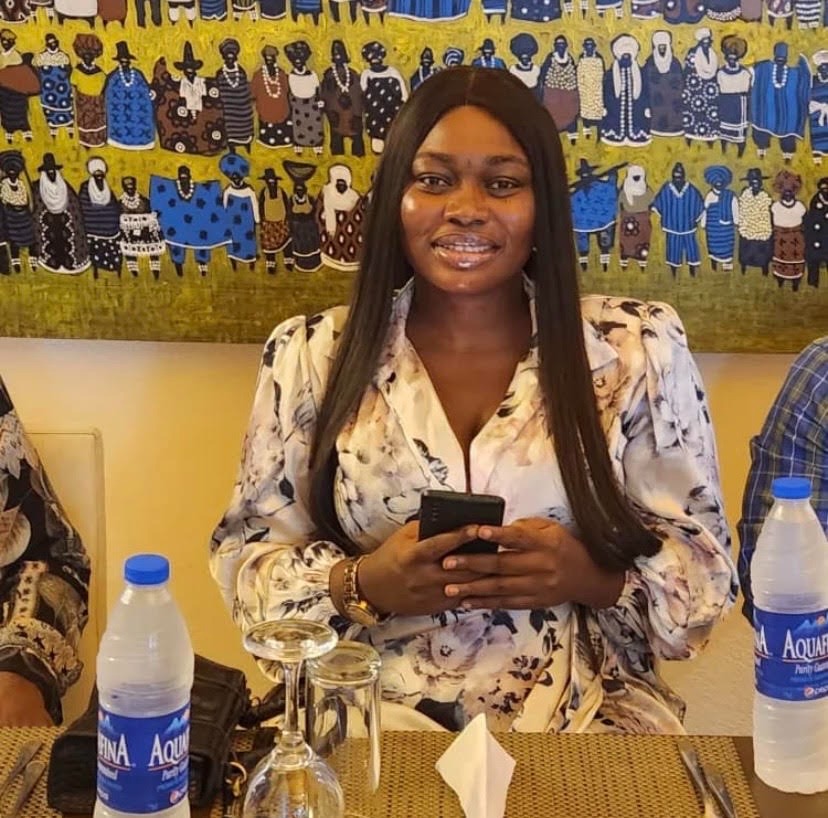
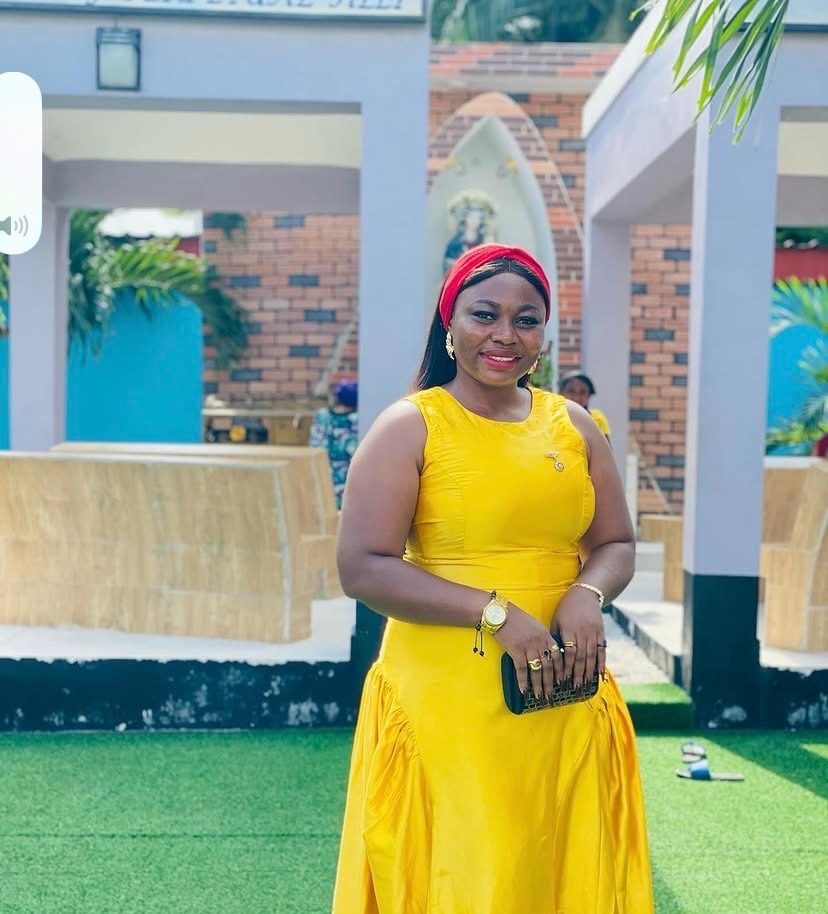
    Raimot (30) had always wanted to study abroad. So, when the opportunity presented itself, she jumped at it and said goodbye to Nigeria. In the midst of adjusting to a new life and settling down, she experienced a mix of the good, the bad, and the ugly.
    Where do you live at the moment, and when did you leave Nigeria?

    I’m currently in Italy, and I left Nigeria in October 2022.

    Why did you move to Italy?

    I relocated because I got a scholarship to study. 

    Was that your plan all along?

    Yes, when I was at university in Nigeria, I knew if I was going to get a master’s degree, it wouldn’t be in Nigeria. I had been trying to study abroad since around 2017 or 2018. Initially, Italy wasn’t even part of the plan. It was all about the US. One of my biggest priorities was securing full funding. I started applying to US universities around 2018, and in 2020, I finally got an adviser. For people in Science, Technology, Engineering, and Maths (STEM) and research fields like mine, you often need an adviser who can support or fund your research.

    So what happened?

    Everything seemed to be going well. The professor told me I could apply by around July, but then COVID-19 happened. After that, I stopped hearing from him.

    To be honest, I still don’t know what happened to him because he used to be very responsive. I even checked his website, but there was no updated information. At some point, I just thought, Maybe we lost him. So, I moved on.

    Then one day, I was scrolling online and came across the University of Padova. I checked the requirements and immediately noticed that they had scholarships. By then, I’d been applying for years, so I understood the process a bit better. I looked at everything and thought, It looks like I have a better chance here. Let me shoot my shot.

    The application opened in November, and I submitted mine in the first week because I was already prepared. I just had to edit a few documents.

    Twenty-four hours later, I got an email saying my application had passed the first evaluation stage. I was happy, but I had been through this process before, so I knew that wasn’t the main issue. The biggest thing was funding.

    What happened after you passed the evaluation stage?

    The scholarship list was supposed to come out in March, so we waited and waited. I remember the day the results came out. I was at work and just praying, God, I beg. The information was that successful applicants would get an email, and the list would also be published online.

    So I kept refreshing my email. Then, around noon, I saw an email pop up. I was in the cold room at work, and the moment I saw the highlight, I hadn’t even opened the email yet, I screamed. That was what changed everything for me. Honestly, that was the beginning of Italy.

    Get More Zikoko Goodness in Your Mail

    Subscribe to our newsletters and never miss any of the action

    What was your family’s reaction to the news? 

    My family knew about the process, so they were very excited that I would be leaving because it’s something I’ve always wanted.

    How did you fund your travel and living expenses in Italy as a student?

    I was awarded the Padova International Excellence Scholarship, which funded my studies and living expenses in Italy at the time. 

    Did anything impress you when you finally arrived in Italy?

    To be fair, I don’t think I was impressed when I first arrived. I came during winter, and everything was strange. It was also my first international flight, so I was just taking everything in.

    Really? So, when did your first big impression happen?

    The first time I actually thought, “Oh, wow, I think I like this place”, was when I started classes. I found out that, depending on the university, you could rewrite an exam up to three times. And not just because you failed. If you got a score you weren’t comfortable with, you could choose to rewrite the exam.

    So, if the grading was over 30, maybe you got 20 and wanted 28 instead. You could reject the score and try again. I’m someone who really loves excellence in everything I do, so when I heard that, I was like, Wow. This is good. It gave me the feeling that I could pursue the level of excellence I actually wanted from my degree. 

    What course did you study at Padova?

    I studied Marine Biology and specialised in aquaculture production and management 


    The Big Daily is your weekday shortcut to the biggest news shaping Nigeria. We cut through the noise, connect the dots, and explain why the news actually matters, all in one quick read.


    Outside the classroom, what was your first real struggle with life in Italy?

    The language barrier. Italy isn’t an English-speaking country. Though my programme was taught in English, and my professors spoke English to us, the community itself wasn’t English-speaking.

    It was very difficult and frustrating to communicate. Even with a translator, it wasn’t always easy. Sometimes, someone would literally tell you, “I’m sorry, I don’t speak English,” in English. 

    Why do you think this is?

    It was obvious. They weren’t interested in communicating in English. It was either Italian or they wouldn’t speak with you at all. That was probably the biggest challenge I faced when I first arrived.

    How did you navigate this challenge of language?

    I am so poor at learning the language. I tried registering for an Italian class and using Duolingo, but most of the time, it’s the Google Translate app to the rescue.

    Sounds like a culture shock. Were there any others you experienced?

    Yes, one would be paying for nylon bags to pack their groceries. They also value family time. Italians have a particular lunchtime everywhere, both in corporate environments and local communities. By 1–2 p.m., everywhere will be closed, including pharmacies. I’ve had that experience a couple of times when I needed to buy something. I’d forget they’d be closed and already walk for minutes, or even take a bus, before I realised it. So, I had to wait until they reopened their shops.

    I actually like that culture. Some people can even be inside their shops during lunchtime, but they won’t attend to anyone. Some may go home to their families for a meal and then come back to their shops.

    How did you sustain yourself after graduating?

    I didn’t get a job immediately after graduating. One good thing about Italy, though, is that you get a one-year post-study period to look for a job. During that period, you can legally remain in the country while figuring things out.

    Another thing is that the job doesn’t necessarily have to be in your field. As long as you get a job that gives you a contract, you can use it to apply for a work permit.

    At first, I was looking for research assistant roles and other opportunities in my field, but I couldn’t find any. It was challenging.

    So I had to go back to the odd jobs I used to do. I worked in a supermarket, helping with stock arranging and all. I did that for months before I eventually got my current job in my field.

    What do you currently do in Italy?

    I work as an aquaculture technician. The job is to care for aquatic species and ensure they grow well in their habitats. 

    Would that be your advice for any Nigerian abroad struggling to get a job in their field of study?

    Sometimes, you have to survive first before you find the career you actually want. You can’t always insist that it has to be your field. Bills have to be paid. You have to eat. You have to be okay.

    Who or what helped you survive emotionally during that period of job scarcity?

    One thing I always say is that going abroad isn’t a journey you should do alone. You need good people around you. You need people with similar interests and people you can confide in.

    I have colleagues here who have become more than colleagues. We share opportunities and support each other. And back home, I have a very strong community of friends. Honestly, my friends can lay down their lives for me.

    So during that period when I was trying to transition into the career I actually wanted, that’s how I survived. Financially, I took the jobs that were available. Emotionally, I had support both in Italy and back home.

    Was there anything about the Italian system that made you think, “Ah, Nigeria could actually emulate this”?

    For me, it was the willingness of professors to help students. I’m not saying every professor is perfect. I don’t expect everyone to like me, just as I don’t like everybody. But I believe that if you’re in a room of 100 people and 80 of them are willing to help you, you focus on the 80.

    In my experience, most of my professors were willing and ready to help, especially if you showed up, participated in class and made an effort. You didn’t always have to know somebody or pay somebody before you could get support.

    What’s one experience that gave you this impression?

    One of the best examples was when I was looking for an internship. I’d planned most of my journey from the beginning, and I knew I didn’t want to do my internship in Italy. I wanted to explore another part of Europe.

    I was applying through LinkedIn and other platforms, but nothing was working. It was always, “Unfortunately…”. Then one day, I decided to speak to one of my professors. I liked his course and participated actively in his classes, so I felt comfortable approaching him.

    I told him I wanted to do my internship outside Italy. He started mentioning Spain and Portugal, but I said, “Professor, I love Europe, but maybe Germany, Canada or the Netherlands?” I wanted to explore places with stronger economies. He said he’d look into it. 

    What then happened?

    Two or three days later, he sent me an email saying one of his colleagues had reached out because they needed an intern in Germany. He asked if I was interested.

    I was like, “Ah! I love Germany!” He simply forwarded me the person’s email and asked me to send my CV and application. There wasn’t even a formal application process like that. They needed someone, reached out through their network and found someone through a recommendation. That’s how I got my internship in Germany.

    And that taught me something important about the European job market. Sometimes, your grades and skills aren’t enough. Recommendations and relationships can open doors, too.

    That’s why I always advise people not to just go to class, say hello, and go home. Build genuine relationships because those relationships can help you long after you finish studying.

    When life gets overwhelming, what do you do to unwind?

    I love videos and pictures. If I’m overwhelmed, I make myself happy by dressing up, visiting places, taking pictures and making videos. The memories make me happy.

    Hmm, sounds nice. Italy is popular for romance. Any gist for the timeline?

    No gist oo. I  got married two months before my relocation. So, there’s no space for any relationship that is strictly not business or just a casual friendship.

    Nigerians abroad usually say they encounter racism. Can we say you’re an exception?

    No, I’ve actually experienced racism a couple of times, actually.

    Could you share one?

    The first one I can’t forget happened with a bus driver. I had an exam that morning, and my school was about an hour away, so I had to leave early.

    It was winter. I got to the bus station and waited for the bus. I was the only person at the bus stop at the time. When the bus came, I waved it down. But instead of stopping, the driver just drove past me.

    I cried that day. And it wasn’t because I was going to miss an exam. It was because the driver didn’t see me as important enough to drive me. Another bus came about 30 minutes later, and I got on it. Thankfully, I’m a “what if ” person, and that’s why I left my house very early. Otherwise, I’d have missed that exam.

    How did that make you feel?

    What hurt was that I’d already been standing outside in the cold for about 45 minutes. I had my jacket and gloves on, but I was already freezing. Then the bus finally came, and the driver just left me there.

    I stood there crying and asking myself, What is the meaning of this? To me, there was only one reason he did it: I was Black and the only person at the bus stop. That experience has stayed with me since. There’s another one that was as heavy as that.

    That’s a lot. And you said there was another experience?

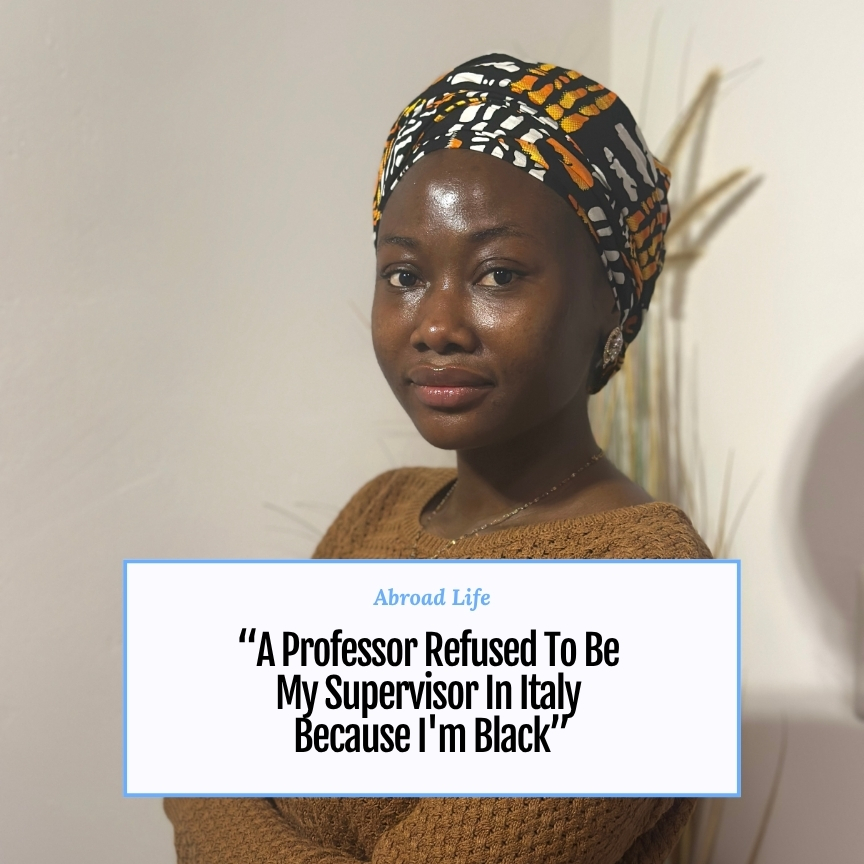
    Yes. This one happened in an academic setting, and I feel like people don’t talk about this type of racism enough. There was a professor whose course was closely related to an area I was very interested in. I actively participated in her classes, and at one point I thought she could be a good supervisor for my project.

    So I reached out to her by email, which is the normal process. But she wouldn’t respond. Even if she replied today, the next reply could come weeks later. I kept wondering what was happening.

    Then I was talking to another international student who mentioned that they had found a supervisor. I asked who it was, and when they mentioned the same professor, I realised they had sent an email just the day before, and she had already responded positively.

    I’d sent my own email weeks earlier. I thought, “Okay, maybe she didn’t see it”. So I sent a follow-up to my last email, but she didn’t respond. I sent another one, still no response. I sent the third one. I didn’t get any response. That was when I stopped reaching out. But I thought she could have just said no. Meanwhile, I used to notice a certain attitude with her during classes. I was pained because she could have just responded.

    Sorry about that. So, how do you navigate dealing with racist people and places that may not be too comfortable for you?

    Racism is everywhere. I just focus on the good ones. There are days their actions make me question why I am there but then, some of them have been so nice and kind to me when they don’t have to.

    Is there any plan to come back to Nigeria?

    Yes. I’ve lived here for a while, but I’m not an abroad person. I’m a proper Yoruba. I like going out and parties. Sometimes, I feel like life is short here. If you don’t make time for fun stuff, you’ll realise you’re just working and working.

    It might sound strange to people, but I might come back after weighing my long-term options. However, I have to be strategic about it.

    What’s one thing you’d want any Nigerians thinking of coming to Italy to know?

    Bureaucracy is very real here. Many things take a long time. And to find good jobs in Italy and progress in any career, you cannot joke with the language. You must learn Italian. Otherwise, you may not get a job at all, or you may end up with a job you can’t survive on.

    How would you rate your experience in Italy on a scale of one to ten?

    I’d say 7.5. Italy is treating me well to a large extent. So, I give them their flowers. 

  • Every week, Zikoko seeks to understand how people move the Naira in and out of their lives. Some stories will be struggle-ish, others will be bougie. All the time, it’ll be revealing
    .


    Nairalife 390 bio

    What’s your earliest memory of money?

    Money was important to me since primary school because of snacks. I could get tired of school food and want to get meat pie outside. I remember a lady who sold meat pies for ₦50 back then, and they had actual, huge chunks of meat inside.

    My parents gave us snack money, but sometimes I saved mine for two or three days just to buy that meat pie, or to get ice cream after school. The ice cream guys on bicycles had Jamil Yoghurt or Fan Milk for around ₦30, while the cheaper ones, basically ice block and colour, were ₦10 or ₦20.

    How much would your parents give you?

    I can’t remember the exact figure; maybe ₦20 or ₦30. My older sisters got more because they were in higher classes. But we always had lunch boxes from home too, so we weren’t lacking.

    What was growing up like financially?

    I’m the fifth of six children. My dad worked at an oil company, so things were good. One thing he never compromised on was school fees. He made sure everyone’s fees were paid promptly, so no one was ever chased out of school. My mum worked in community health.

    I wouldn’t say I was born with a silver spoon, but we had the necessities: shelter, food, and clothes. Getting new Christmas clothes every year was a big deal, and we always had that.

    When was the first time you did something to earn money?

    In secondary school, I was heavily into video games, mostly fighting games like Mortal Kombat and Dragon Ball. People at the game centre would bet on my games, and if I won, I’d get a percentage of the win. I also entered small gaming tournaments. Winning could fetch up to ₦1,000, which was a lot of money when one hour of gameplay cost just ₦50.

    I finished secondary school in 2009 and stayed home for two years while trying to get uni admission. During that time, I did basic computer training and learned safety procedures under a safety officer. My boss was an HSE officer who trained people for rig work and worked with companies like Shell.

    I worked with him informally, learning CPR and how different fire extinguishers worked. I’d go to schools and hotels, market fire extinguisher refills, and collect the cans. My boss got his cut, and the profit margin was mine.

    What was the pay like?

    I earned around ₦50k monthly. It was big money for someone who had just finished secondary school. The transport fare to the office was like ₦50, and I could even walk there if I wanted. Since I didn’t have real responsibilities, I spent most of the money on clothes, gadgets, and video games.

    I left in 2011 after I was admitted to the university and moved to another state. 

    Did you make money while in university?

    It wasn’t steady because I’ve never been much of a business person, but I did side hustles when opportunities came up. I used to buy graphic tees and resell them to guys. When Dashiki shirts started trending, I bought them for cheap from a seller around school and took them back home to Port Harcourt on order.

    I also bought charm bracelets from Amazon, swapped updated video games for a fee, and sold downloaded PC games to guys in the hostel from time to time.

    That said, I didn’t really need cash at uni because my dad was transferred to the same state where I schooled, and his house was close to campus. I lived with him, and he gave me ₦2,000 a day for transport, plus pocket money on the side. Since I ate at home and didn’t have off-campus rent, I practically had zero expenses.


    TechCabal is bringing 7,000 founders, investors, operators, creators, and talent from across Africa and beyond to Moonshot 2026 at the National Theatre in Lagos on October 28 & 29.
    This is the best opportunity to join the convergence of Africa’s best builders.
    If you are seeking investors, enterprise partners, cofounders, or your next employer, while hearing directly from some of the continent’s boldest builders. Moonshot is the perfect place to be.

    Get your Moonshot 2026 ticket


    What happened after graduation?

    I graduated in July 2015 and went for NYSC in Abuja. My Place of Primary Assignment (PPA) was at a government agency. They paid a stipend of ₦5,000 in addition to the ₦19,800 federal allowance. My job involved compiling data on national issues from all 36 states and summarising it into reports sent directly to the President.

    I stayed close to the office so I could walk to work, which saved transport costs. Abuja was great; good roads, nice parks, and accessible malls.

    Did you stay back in Abuja after service?

    No, the agency complained about a lack of funds, so they couldn’t retain us. In 2017, I returned to Port Harcourt and went back to the safety firm where I had worked after secondary school. My salary was raised to ₦100k/month, along with a promised office phone and laptop that I never received.

    I stayed for about five months, worked briefly at a fuel station my sister managed, and then spent the rest of 2018 preparing for my master’s degree.

    How did you fund your master’s degree?

    My dad deeply valued education. When I expressed interest in a master’s, he backed it and released the funds before he passed away in 2018. I also secured a 50% scholarship. In January 2019, I left Nigeria for Cyprus.

    I’m sorry about your dad. 

    Thank you. It’s life. It happened.

    How did you handle your finances while abroad?

    Shortly after arriving in Cyprus, friends introduced me to cryptocurrency. I bought one Ethereum coin for ₦80,000 (around $170–$200 at the time).

    When COVID hit in early 2020, the entire market crashed, and my Ethereum dipped to $114. Friends told me to sell, but I decided to hold. By 2021, when the crypto market boomed, my single Ethereum token rose to $4,000. When it started fluctuating between $3,800 and $4,000, I converted it to USDT to lock in the profit.

    But you weren’t spending the crypto, right?

    I wasn’t. To make extra money, I did some odd jobs. I worked on a bee farm where the owner paid 300 TL (Turkish Lira) a day, fed us well, and gave us fresh honey. Normal odd jobs paid around 60 – 80 TL per day for hard labour. I also did farm clearing, moved restaurant equipment, and chopped firewood for an elderly neighbour who paid 50 TL for 20 minutes of work.

    I wasn’t purely surviving on odd jobs, though. Before leaving Nigeria, my family made a joint investment of ₦10 million into a bitumen company (everyone contributed equal shares of about ₦2 million; my contribution came from what my dad left me). My share returned $300 monthly. But during COVID, financial policies shifted, the dollar skyrocketed, and the investment payouts froze.

    Thankfully, things weren’t really expensive in Cyprus. The TL equivalent of ₦10k could last me for a week. I also had some money left over from my dad’s master’s funds. I completed the degree in 2021.

    What came next?

    I tried to move to Australia on a work visa. An agent asked us to come to Nigeria for biometrics, so my roommate and I flew to Lagos and paid over ₦300k. Then the agent started giving endless excuses, and by then, our Cyprus student visas had expired, so we couldn’t go back. 

    Phew. So, what did you do?

    In 2022, after a few months of staying at home doing nothing, I withdrew ₦1.550 million from my crypto profits (almost the entire amount) and bought a car to run an e-hailing cab service.

    Initially, I made over ₦20k daily after covering fuel. Over time, I built a network of private offline clients. I picked up remote call-centre workers between 9 p.m. and 11 p.m., did airport drops for ₦20k, and handled inter-state trips.

    By 2023, fuel and maintenance prices had skyrocketed. Engine oil went from ₦6,000 to ₦14,000. Nigerian roads cause heavy wear and tear, and I was constantly fixing something. I decided it didn’t make financial sense to drive full-time regularly. So, I cut back my hours and focused more on private clients. My daily income dropped to around ₦15k, but I was still making good money and was very comfortable.

    How long did you run this e-hailing business?

    Until February 2025, when my car was stolen.

    I had parked near a church to answer a phone call about a driving gig. I left the car parked behind some school buses and went inside to wait for my friends. When we came out, the car was gone. My tracking subscription had expired, so I couldn’t trace it.

    Oh my. I imagine you must have felt terrible

    I did. That car was my business and my main source of income, so losing it just like that was a huge blow. But I still joined my friends for karaoke that same Sunday evening. 

    Skrim. Was the plan to sing your pain away?

    Well, the car was gone, and we already had plans to go out that day. Sundays were my only time off and my only opportunity to hang out with my friends. That day just turned out to be an unfortunate Sunday.

    So, yes, we still went out. They were all trying to console me, but I just figured the car was gone. Later, my friend, who worked at the church, reported what had happened to the church management. They involved the police, but nothing came of it. A few weeks later, around the end of March, the head pastor gave me ₦1 million as support. 

    I spent most of that money trying to fix a family Sienna car to see if I could work with it, but it’s currently parked at a mechanic shop with gearbox issues.

    What did you do after?

    Around the time my car was stolen, my uncle called me about a potential government job in another state, so I spent five months living with my sister there. The job eventually didn’t work out, so I returned to Port Harcourt in August 2025.

    Back home, I focused on building a faceless YouTube gaming channel. I’ve always been something of a gamer, and I figured I could try to make money from it.

    How did that go?

    It took me a while to hit 1,000 subscribers, but when I did and qualified for monetisation two months ago, I faced multiple ID verification issues. I eventually linked a friend’s AdSense account to get approved.

    Just recently, the post office called me to pick up my physical Google AdSense code. But the exact day I brought the code home, my laptop battery died. The battery model isn’t available in Nigeria, so the code remains unread, and my $62 channel earnings are stuck until I get a working PC.

    Get More Zikoko Goodness in Your Mail

    Subscribe to our newsletters and never miss any of the action

    Sigh. How do you make money now?

    I assist my sister by marketing her organic cosmetics and supplements on social media for a commission, earning around ₦10k or more per month. I also clip music on another YouTube channel of mine, which earns about $60- $80 (approx. ₦90k) monthly after taxes, alongside occasional side gigs. For instance, I recently helped administer online exams for an institution. I just do whatever brings money. 

    I’ve been applying for various opportunities, but jobs in Nigeria are time-consuming and pay poorly. Recently, I applied for remote call-centre expert roles with foreign companies, but I didn’t get the job because they wanted someone with an upbeat American accent and tone, which I don’t have. With many remote jobs, once you state you are Nigerian, it becomes much harder to get hired, even if you’re qualified.

    I’m also looking into AI video making and animation. People recommend AI, but no one talks about the expensive subscription plans. If your prompts fail, your money goes down the drain. Still, I want to learn it because I can already generate AI voices and images, and I want to master video creation next.

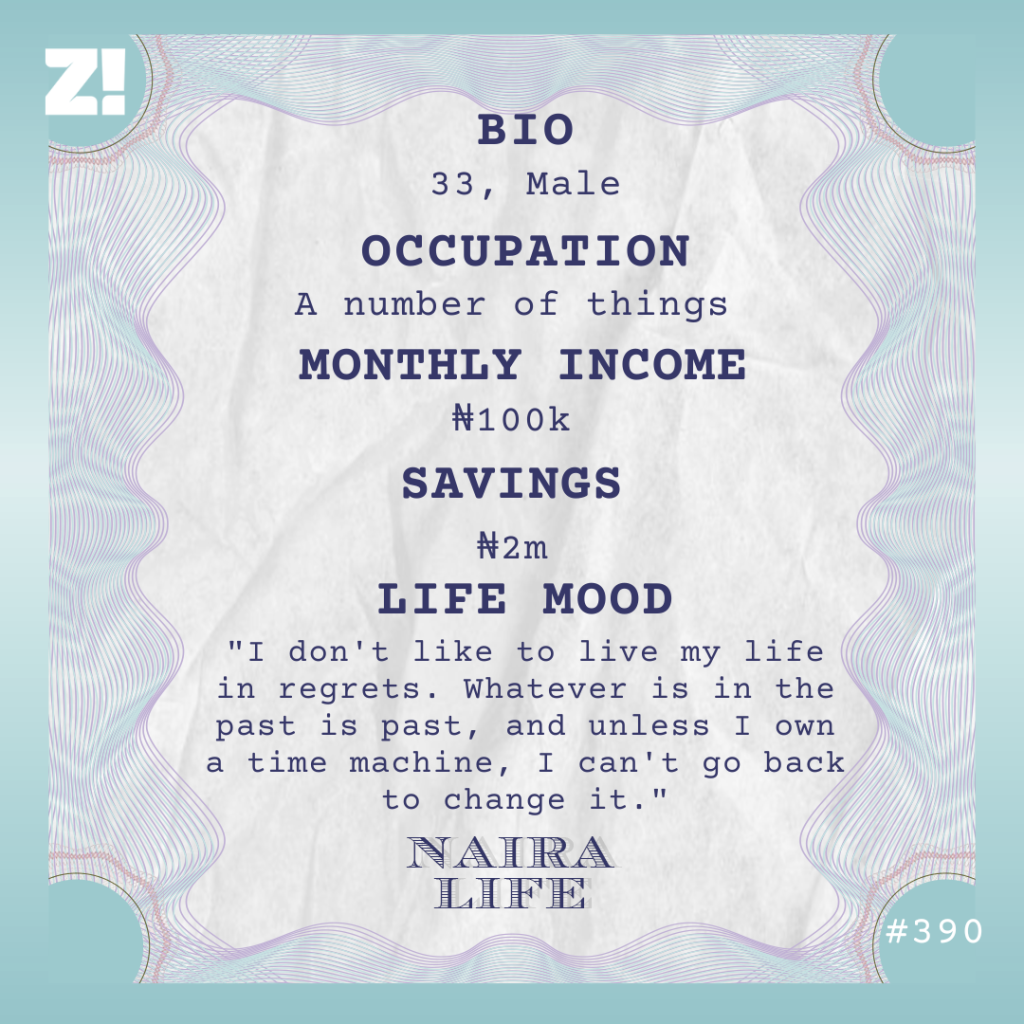
    Currently, my monthly income sits around ₦100k.

    What kind of life does that afford you?

    Life? Ah. I’ve become an introvert by force. Living in Port Harcourt is expensive now. We are on Band A electricity, where ₦1,000 only gives 4 units of power. So, in a week, electricity can cost around ₦15k. That’s like ₦60k per month just for power.

    Wild. Do you live alone?

    I live with a friend, and we share the expenses, but he contributes more than I do. If I were to break down my share of the monthly expenses, it would be:

    Power: ₦30,000 (my share)

    Internet: ₦10,000 (my share of a three-way MTN Fibre split with our neighbour)

    Food: Varies, but takes up the bulk of the remaining funds. My flatmate contributes more to the food.

    Our rent jumped from ₦800,000 to ₦2.2 million last year, so my share is now ₦1.1 million.

    Mad. I thought they only did that in Lagos. Do you have a safety net?

    It’s down to about ₦2 million. Half of that is from cryptocurrency I’ve invested in over the years, and the other half is savings from what I earned driving cabs. With my laptop broken and rent coming soon, this cushion is going to go down again, which is really worrying. I’m just trying to get back on my feet. 

    How would you describe your relationship with money?

    It’s toxic. When I have money, unexpected issues pop up, or I spend on wants because I can afford them. But my current financial state has forced me to prioritise needs over luxury.

    Do you have any money regrets?

    I don’t like to live my life in regrets. Whatever is in the past is past, and unless I own a time machine, I can’t go back to change it. What if going back in time to change something caused me to die, and I wouldn’t be here to give you this story? As long as I’m here right now, I still have a story to write. Whatever will be, will be.

    Is there an ideal amount you think you should be earning?

    ₦1 million a month. It’s a realistic target if my hard work pays off.

    What is one thing you want right now but can’t afford?

    A high-performance laptop for video editing and AI content creation, like an HP Onyx, which will cost around ₦750k, or an Alienware, around ₦1 million.

    Have you ever considered where you’d have been today if your car hadn’t been stolen?

    I’d probably still be driving private clients at night and focused on growing my YouTube during the day. At least, I’d be earning enough from driving to sponsor YouTube content creation.

    How would you rate your financial happiness on a scale of 1-10?

    2. Going from having $4,000 in crypto and an active daily cash flow to where I am today is a massive drop.

    Losing my car set me back significantly, but I haven’t gone all the way back to level zero. It’s like playing a game where your data gets corrupted; instead of dropping from level seven to level zero, an auto-save brings you back to level four. It’s just a setback, and if I get the right equipment and opportunities, I know how to get back up there.


    If you’re interested in talking about your Naira Life story, this is a good place to start.

    Find all the past Naira Life stories here.

    Subscribe to the newsletter here.
  • Someone you know has left or is planning to leave. 1,000 Ways to Japa speaks to real people and explores the endless reasons and paths they take to japa.

    Nigerian student studying at Erasmus University Rotterdam in the Netherlands

    Busayo (19) always planned to leave Nigeria; the only question was where and how. After watching his friends get shut out of US student visas one by one, he pivoted his entire plan to the Netherlands, landed a scholarship at one of the country’s top universities, and rebuilt his life.

    Where do you live now, and when did you leave Nigeria?

    I live in Rotterdam. Everyone thinks of Amsterdam when they hear “Netherlands,” but Rotterdam is honestly one of the best cities here. I left Nigeria on August 19, 2025.

    What did life look like for you before you left?

    I finished high school in 2024. The original plan was America. I applied to a bunch of universities while I was still in school, got into a few good ones, and even got scholarships ranging from 20% to 60%, but when my family sat down and did the maths on four years of tuition, it just didn’t make sense in the long term. My older sister, who’d already been living in the Netherlands for years, was the one who the bigger picture, the job market, the opportunities, in a way the rest of us couldn’t yet.

    Wow, so what actually killed the American dream for you?

    A few things stacked up. I didn’t want to retake the SATs, so I applied to two Ivy League schools with just my GPA, and that didn’t work out. Then there was the high rate of visa denials for international students and the tuition affordability in the long run. That’s when America was officially off the table for me.

    So you pivoted to the Netherlands. How did that happen?

    I actually applied to the Netherlands the same year I applied to US schools, before I even finished high school, and I got into Erasmus University Rotterdam. I just didn’t get the scholarship, so it would’ve still meant a huge amount of money. 

    During my gap year, I reapplied. My sister kept telling me Erasmus is one of the best universities in the world, with a really strong media and communications program, so I put more effort into the scholarship application this time. I got in, and I got the scholarship. 

    Nice! Walk me through the process, how you found the scholarship, and what the application involves

    Honestly, a lot of it was self-directed research. I still have a YouTube playlist titled “university application” full of videos of people breaking down how they got in and guidance from my sister. For the university application, I submitted my West African Examination Council (WAEC) results and a motivation letter. 

    For the scholarship, I had to write two essays, one on why I needed the money and one on why I deserved it academically and socially. I leaned on the fact that I’d been on scholarship in high school too, so I could show I wouldn’t waste the investment. The scholarship was €5,000.


    The Big Daily is your weekday shortcut to the biggest news shaping Nigeria. We cut through the noise, connect the dots, and explain why the news actually matters, all in one quick read.


    Alright. What did the process cost?

    My tuition was €11,300. But once you add the living fee, a deposit you pay upfront to prove you can sustain yourself, which gets returned to you once you’re in the country, plus tuition and immigration costs, the total comes to €25,500. With the €5,000 scholarship, I was left paying €20,500.

    Okay, now the visa. What was that process like?

    Because my university was my sponsor, I didn’t apply separately; the school handled much of the paperwork on my end, including obtaining my V-number from the immigration authority. What I signed was more of a declaration-of-acceptance form, along with the usual documents, like my Nigerian passport. Before you get your actual residence permit, you need a Machtiging tot Voorlopig Verblijf (MVV), which is a provisional entry visa sticker that lets you enter the country and is valid for 90 days.

    Did you face any issues during this process?

    Yes! I went to submit my documents in person, very organised, and found it shocking there was hardly anyone in line. The woman who attended to me told me the MVV would now take 40 to 60 days instead of the usual five to ten. I panicked because I already had pre-academic programs and orientation to attend before school started on September 1st.

    I emailed my school immediately, and they emailed the embassy the same day. Within a day or two, I got a message telling me to come back; my visa was ready. That was the fastest process time I have ever experienced, Kudos to my Uni on that one. I literally collected it the day before my flight and started packing that same night.

    That’s so stressful. What was your first week in the Netherlands actually like?

    It was mostly documentation, honestly. My sister picked me up from the airport, and even the free luggage trolleys shocked me, coming from Nigeria. In my first week, I registered at the municipality to get my Burgerservicenummer or Citizen Service Number (BSN), which is your citizen number. 

    You need it for literally everything: a SIM card, a bank account, and health insurance. I also signed up for my school’s pre-academic programme and got my OV chip card sorted for public transport, where you have to remember to tap in and tap out, or they’ll charge you the full fare regardless of where you actually got off. So it was a pretty decent first week.

    Get More Zikoko Goodness in Your Mail

    Subscribe to our newsletters and never miss any of the action

    What do you love most about living there?

    The organisation, hands down. Everything is documented, accountable, and clean. 24/7 electricity still shocks me sometimes. I can leave the house and come back, and my lights will be on as long as I’ve paid my bill. I also love that the country is so central, a two-hour train gets you to Belgium, and an hour’s flight to Paris. My residence permit lets me travel anywhere in the EU.

    And what’s been the hardest part?

    The restrictions on international students, honestly. There aren’t nearly as many scholarship opportunities for us compared to students from other regions. I also had an internship offer from a global company that I had to turn down in my first year because of a binding agreement between the student, the university, and the employer that doesn’t apply to EU passport holders. That one really hurt.

    So sorry about that. What’s the housing situation like in the Netherlands? 

    It’s genuinely tough. Rent runs anywhere from €650 to €1,200 a month, and that’s often for a shared place; a studio to yourself can go for €900 to €1,300. It depends on where you find housing and how lucky you are. My honest advice: have a very solid financial plan before you get here. If you don’t have family or any other person here already, reach out to your university directly; they’re usually lenient with first-years and keep some emergency housing for international students. Facebook groups can help too, but watch out for scams, and don’t send money upfront. Some people end up commuting an hour or two from a neighbouring city because they couldn’t find anything closer.

    What about jobs and the cost of living? Does the pay match the cost of living?

    It depends on the job. As a non-EU international student, you’re capped at 16 hours a week during the school year or 40 hours in summer, but only one or the other, not both. Your employer must also apply for a work permit for you every 6 months, except for internships. I’ve worked a bar job and a cup-stacking job; the cup-stacking paid about €12 an hour. Pay generally scales with age, too; an 18-year-old typically earns less than someone in their early twenties for the same retail-type job. Some corporate student jobs pay better. I earned €19 an hour leading a team for my school’s pre-academic programme over the summer. Whatever you make, you get taxed, but you can file at the end of the year and often get money back if you were overtaxed.

    Is the language a barrier, and how did you build community?

    Not really, most people speak English here, which is part of why the Netherlands is such a popular study destination. Learning basic Dutch helps with day-to-day life, but you won’t die without it. For the community, I joined my university’s African Students Association, where I met people who are my friends now. I also go to Hillsong church here, and I’m part of a church connect group. It takes time, and I’d tell anyone not to be desperate about it; you’ll find your people.

    Do you miss Nigeria?

    I miss my friends and family back home. I miss the accessibility of proper Nigerian food. We mostly cook African food at home, but it would be a great addition to  just step out for a proper Nigerian meal. I don’t see myself moving back permanently anytime soon, though. Maybe short visits during summer, when it’s calmer.

    Any mistakes you’d warn other japa hopefuls about?

    Kill the mindset that you’ll land and start making serious money immediately, even as a student; the reality is very different from what you plan for. Don’t come in with an unrealistic, Netflix-fed idea of what university life abroad looks like either. Save money, even if it’s just €5 a week. Don’t try to work a full course load and a full-time job at the same time; it’s not sustainable. And please, stop converting every price back to naira in your head, it’ll only stress you out.

    On a scale of one to ten, how would you rate life in the Netherlands?

    A solid 7.9. It’s not an eight or a nine because the restrictions on international students are real, and funding cuts have been hitting scholarships and social programmes hard recently. But the organisation, the quality of life, and the fact that I can afford to travel around Europe on a few hundred euros have made this start to feel like home. The main thing that still reminds me I’m an international student are the restrictions and heavy documentation to do certain things- internships. 

    Any final words for someone thinking about doing the same thing?

    Do your research obsessively, Think and prepare finances in the long run before you come, and don’t be afraid to put yourself out there, even when it’s scary. It’s worth it. And at times when you feel less in comparison to your classmates AKA Imposter syndrome remember you earned your spot here just like everyone else you deserve every bit of it. 


    Want to share your japa story? Please reach out to me here

  • Sunken Ships is a Zikoko weekly series that explores the how and why of the end of all relationships — familial, romantic or just good old friendships.


    Chikamso* (23) had known Adaeze* since secondary school, but they only became best friends at university. When Adaeze experienced a mental health crisis, her family blamed Chikamso and shut her out before she could understand what had happened.

    For Sunken Ships, Chikamso talks about losing her best friend without understanding why and how the experience changed the way she approaches new friendships.

    How did you and Adaeze* meet?

    We attended the same secondary school and were seatmates, but we weren’t particularly close then. Then, after we graduated, we ended up at the same university. That was when we really grew a bond and became as close. 

    At one point, she got into a toxic relationship that my family knew about. My mum was always concerned because she treated Adaeze like her own daughter. She eventually talked Adaeze out of that relationship. That was how much of a place she had in my life.

    And how would you describe the friendship itself?

    It was beautiful. In fact, we were more like sisters. We had each other’s backs. Naturally, we disagreed from time to time, but nothing that threatened our friendship. Adaeze was my favourite person, and she could be incredibly thoughtful. In 2023, I applied for a UK visa to visit my sister, but it was denied the day before my birthday. My family had spent a lot of money on the application, so I cried all morning on my birthday. 

    Meanwhile, Adaeze had secretly contacted my siblings, parents and friends to make videos for me. She compiled them, sent me a gift and made the day special for me.

    I also showed up for her. When she couldn’t secure accommodation, I let her stay in my hostel space for a semester because I genuinely saw her as family.

    So at what point did you start noticing cracks in the friendship?

    A few days after my birthday, Adaeze suddenly left the group chat we shared. We hadn’t quarrelled, so I called repeatedly, but she didn’t answer. I asked one of our mutual friends if she knew what had happened, but she didn’t.

    Then, one of our classmates contacted me. He said Adaeze had sent him a voice note about me and asked him to rebroadcast it, but she deleted it before he could listen to the whole thing. From what he heard, she called my family and I evil and warned people to stay away from us.

    I was confused and somewhat angry.  Shortly after,  Adaeze’s brother called and told me she was experiencing a mental health crisis and had been taken to a psychiatric hospital. 

    My anger immediately turned to worry. I couldn’t sleep all night because I kept thinking about her. So, I decided to visit her the next day.

    And how did that visit go?

    It never happened. Her brother refused to share the hospital details because the family believed I had a hand in Adaeze’s condition. 

    My aunt is a pastor, and whenever Adaeze visited my family, we sometimes attended her church. She had received prophecies there, and her brother was convinced those messages had affected her.

    I tried to explain that I had no idea what was going on, but there was no real opportunity to have that conversation. He blocked me. Her mum blocked me, too, and eventually Adaeze blocked me.

    I also couldn’t reach her sister, so after a while, I stepped back.

    Get More Zikoko Goodness in Your Mail

    Subscribe to our newsletters and never miss any of the action

    Hmm.

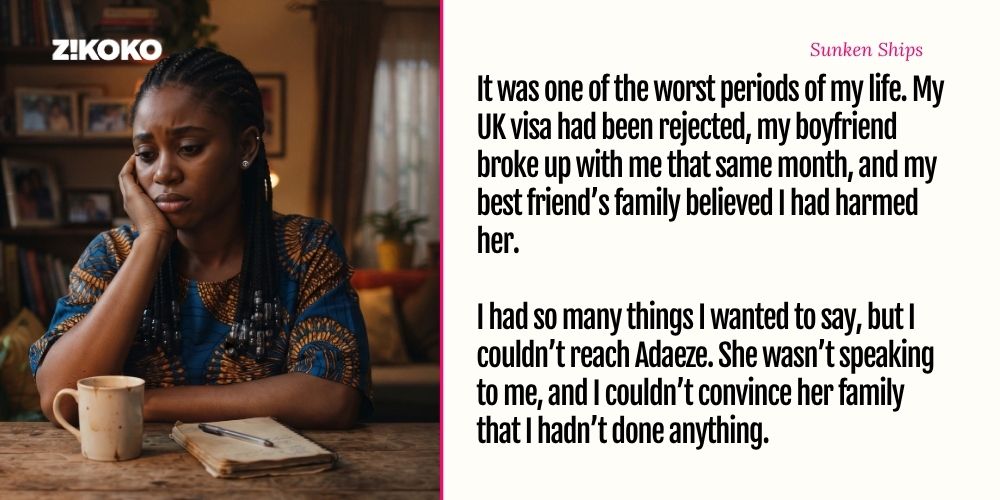
    It was one of the worst periods of my life. My UK visa had been rejected, my boyfriend broke up with me that same month, and my best friend’s family believed I had harmed her. 

    I had so many things I wanted to say, but I couldn’t reach Adaeze. She wasn’t speaking to me, and I couldn’t convince her family that I hadn’t done anything.

    So I bottled everything up and tried to carry on with school.

    I’m sorry. What happened when she returned to school?

    She saw me and walked straight past me as though she didn’t know me. It hurt so much. 

    This was someone I considered a sister, yet she cut me off for reasons I didn’t understand. Whatever she believed had happened, she clearly didn’t want anything to do with me. So I took it as a sign that I needed to leave her alone.

    After that, we didn’t really interact in school anymore.

    Sounds cold. Did she ever apologise?

    We eventually spoke in 2024 at a mutual friend’s traditional marriage.

    She apologised,  and I told her what had happened from my side. I explained that I had tried to reach her, but her family had blocked me from contacting her.

    She told me she didn’t know that. From her perspective, she had simply stopped speaking to me. Once we finally talked, we were able to put the issue behind us.

    We’re cordial now, but the friendship isn’t what it used to be.

    Do you think you could ever become close again?

    No. It’s been almost three years, and I’ve healed from what happened. I’m not sitting around waiting for her to explain herself anymore.

    If she had spoken to me when everything happened, maybe things would have been different. I would have preferred to have a difficult conversation than wake up one day and realise that my best friend had disappeared from my life.

    I don’t think I can put myself through that again.

    How has the experience affected the way you approach friendships now?

    It has made me scared of friendships. I’ve met amazing people since then, but I still find it hard to completely trust anyone. I’m afraid the same pattern will repeat itself. 

    Friendship breakups can hurt just as much as romantic ones, and this was one of the hardest experiences I’ve had.

    I’m still learning that just because one person disappeared from my life without an explanation doesn’t mean everyone else will do the same.


    Hey, if you’d like to share your own #SunkenShips story with Zikoko, fill out this form! 


  • Written by Tezor Dedam

    Tonia is a businesswoman, a safety and first-aid officer at an oil-servicing company, and a passionate Nigerian citizen. In March 2023, during the state governorship elections, this passion was put on centre stage when police officers invaded her polling unit to hijack ballot boxes. Tonia caught the entire event on camera. This is Tonia’s story, as told to Tezor Dedam.


    It all started in March 2023, at the polling unit situated at Holy Family Catholic Church, Woji, Port Harcourt, during the governorship election. On that fateful day, we had all cast our votes, and it was time for counting. Suddenly, we saw a Hilux and a Sienna pull up, driving quickly right into the compound and parking directly in front of us.

    At the time, we were already hearing reports that other polling units were being attacked by unknown people, so seeing them appear out of nowhere made evryone tensed. Some people stood far away, and some were close by. I was among those who stood around. Their arrival was abrupt, but I noticed the workers (INEC officials) did not run; they stood their ground.

    Get More Zikoko Goodness in Your Mail

    Subscribe to our newsletters and never miss any of the action

    That was when I immediately turned on my video and started recording. I just held my phone close to my chest, so no one would really know that I was making a video. In that moment, one of the men who had arrived then started instructing them,

    “Carry the box!”

    “They should take everything and move, take it into the car!”

    Then people started to lightly protest, asking “Where are you taking our boxes to?”

    Throughout all of this, I was still recording. One of the police men then walked past me and noticed I was making a video. He walked past the first time, then he walked past again and grabbed my phone.

    Meanwhile, I could see that the Sienna was still parked there, filled with young men who didnt look like police officers but had come with them. After the officer grabbed my phone, I started shouting, “Give me my phone, give me my phone!” I followed them and kept shouting. 

    When people saw that I was unafraid and making a stand, they joined in: “Give her her phone!” I think that overwhelmed the officer; he didn’t see that coming. And God so kind, the video was still on, and I then dragged my phone from him. 

    He entered the vehicle with the polling boxes and one of the men from the accompanying Sienna came from behind and pointed at me, saying, “You, I will kill you”. He repeated this a few more times. He then got into the Sienna as they drove off with the police.

    I remember saying to myself that I had their plate number. And that was how they left with their boxes. Fortunately, people started coming back to ask for the video and sharing it on social media. Over the next few days, I had gotten calls and messages from people saying that they had seen my video and heard my voice. I started seeing it get reposted on major channels and on media stories, that was pretty much how that unfortunate incident made me go viral.

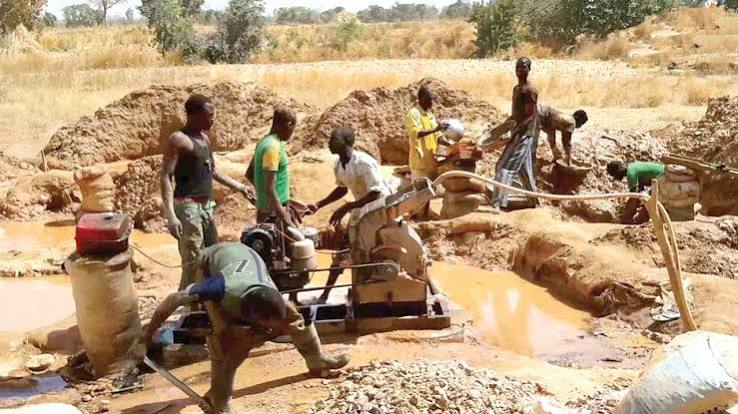
  • Between Tuesday, September 15, and Wednesday, September 16, 2026, the Nigeria Security and Civil Defence Corps (NSCDC) in Niger State carried out what it called a “burst operation” against illegal mining in the Wushishi-Lukoto area west of Minna, and arrested dozens of suspects. By Thursday, September 17, 37 of those detained were found dead inside the NSCDC detention facility.

    Credit: The Guardian NG

    What killed them?

    The NSCDC’s Niger State Commandant, Suberu Siyaka Aniviye, said the deaths were caused by a suspected disease outbreak, with the suspected disease being diphtheria. The Minister of Interior, Olubunmi Tunji-Ojo, has since suspended Commandant Aniviye pending the outcome of the investigation. 

    Niger State Governor, Umar Bago, who confirmed the death toll at 37 during a Thursday press conference in Minna, however, said the cause of death hadn’t been officially established, and it was too early to draw conclusions. 

    Bago disclosed that investigators were examining several possible causes, including exposure to hazardous chemicals. Meanwhile, an AFP intelligence report suggests overcrowding and poor ventilation inside the detention facility may be the reason for the deaths.

    A video filmed during the Minister of Interior, Olubunmi Tunji-Ojo’s, visit to some of the survivors has added another layer to the dispute. In it, one survivor says: “They sprayed something in the cell after putting us inside, and people started falling down.”

    The clip has circulated widely on social media, with other survivor accounts say that around 65 to 66 people were packed into a small cell.

    Families of the deceased are not buying the disease explantion and are questioning how a sudden infection could kill dozens of healthy youths in a single night while leaving facility guards untouched. The bodies have been taken to the General Hospital, Minna, for autopsy.

    Who’s telling the truth?

    The NSCDC’s Commandant General, Professor Ahmed Abubakar Audi, has ordered an internal panel, led by the Deputy Commandant General for Intelligence and Investigation, to examine the arrests, detention conditions, medical care provided, and the circumstances of the deaths. 

    Separately, the Nigeria Police Force (NPF) has opened its own investigation, with its spokesman Wasiu Abiodun confirming this on Thursday, September 17.

    What are people saying?

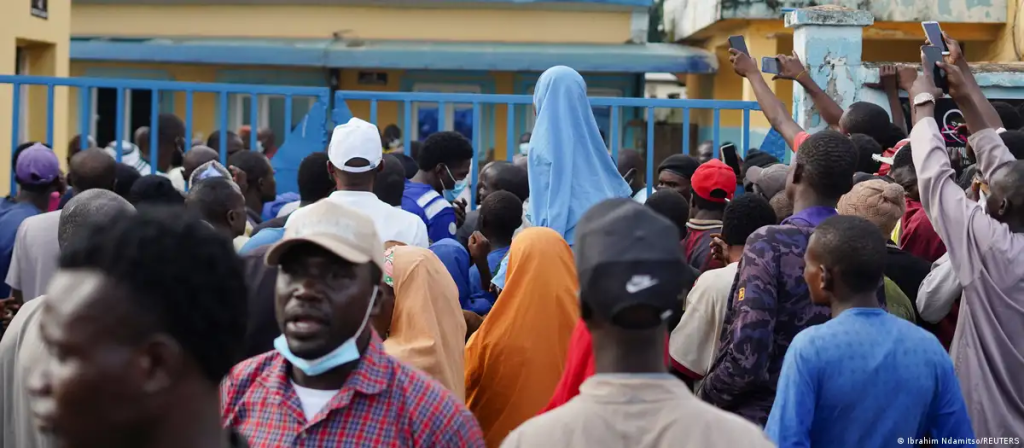
    The deaths have triggered protests in Niger State, with families and residents gathering at Minna General Hospital and demanding answers. Some protesters are calling for criminal charges if negligence is confirmed.

    Credit: DW News

    The bigger picture

    Niger State is rich in gold and attracts thousands of small-scale miners, many of whom are from poor communities. Security agencies have stepped up raids on illegal mining sites in recent years, arguing the informal trade is helping smuggling and armed criminal activity. 

    A 2024 SwissAid report found much of the region’s gold moves through global supply chains largely untracked, which is part of why crackdowns like this one keep happening.

    We need answers

    As of the time of this report, we don’t know the actual cause of death, and that shouldn’t take long to establish. Both investigations need to conclude quickly, and whoever’s responsible needs to be held accountable for their actions or inactions.

  • What would Big Brother Naija (BBNaija) be without a few chaotic ships to keep us invested? Like other seasons, the Show Ya Sef season has given us sweet friendships, budding romances, and complicated situationships. And we’ve been paying attention.

    Here are the pairs currently keeping us entertained.

    Oyin & Flora

      These two have one of the strongest bonds in the house. They’ve consistently had each other’s backs and shown up for each other. Unlike some of the house’s more chaotic relationships, their friendship has stood the test of time. Safe to say, Oyin and Flora are giving the rest of the pairs a run for their money.

      Yusuf & Bells 

        YuBells is one of the most loved ships in the house, but they’ve kept fans guessing, primarily because Yusuf seems unsure about where they stand despite their frequent genital meet-and-greet. But underneath all the drama, they make a cute pair. It’s only been days since their last fallout and there’s already a video with them under the sheets last night. Let’s hope they make it to the end of the season without breaking up again.

        Get More Zikoko Goodness in Your Mail

        Subscribe to our newsletters and never miss any of the action

        Ricky & Sheba 

        Their slow burn chemistry is interesting to watch. But Ricky telling Sheba he’s married, then later telling Yusuf that it’s all part of his strategy, has left us wondering what exactly he’s playing at. But we’ve seen Sheba gradually warming up to him over the past few days, so we’ll have to wait and see if they develop into a more solid ship as the season goes on.

        Chimsom & Bluethopia

        They’ve gone from constantly fighting and bickering, only to circle back as a couple again. It’s hard to tell if there’s an actual ship here or if they’re simply being kept together by circumstances. Either way, we’re not convinced this one is making it to the end of the season.

        Tram & Temi Nkem

        With the way they keep having intimate moments but avoid defining what they are, it’s not a strong ship. Their dynamic feels more like a friendship with a sprinkle of under-the-sheet activities. From the outside, it doesn’t seem like they genuinely care for each other romantically and may be more focused on creating content for the show.


        Read Next: The Most Expensive Push Gifts Nigerian Celeb Mums Have Received

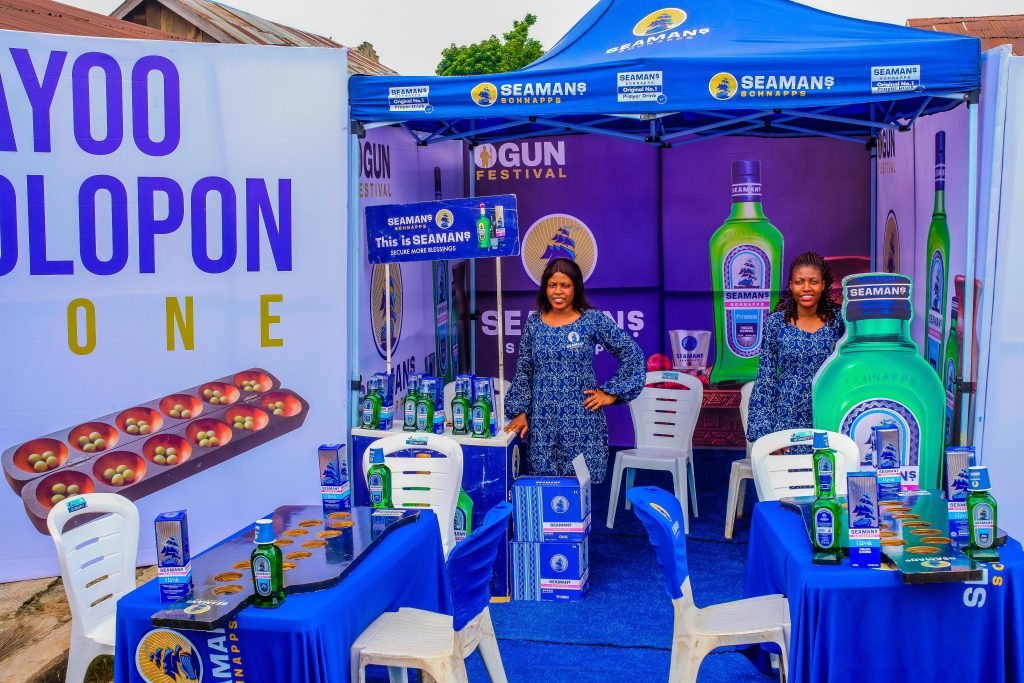
      1. Just as superheroes are synonymous with American pop culture, the orisa are the legendary figures of the Yoruba world. And one of the most iconic among them is Sango. Ask any young Nigerian who grew up in a typical Yoruba home, and they’ll likely have stories passed down from their mothers and grandmothers about the deity known for thunder, lightning, and his signature red garments. They might even argue they know what the real Sango looks like, thanks to Nollywood’s many adaptations. 

        But Sango’s legacy isn’t just a childhood memory or a movie trope; it is a living, breathing tradition. Keeping that heritage alive requires spaces where it can be actively practised, witnessed, and renewed. For Seaman’s Schnapps, this generational handover is evident in the way its bottles have become part of Nigerian celebrations. The 75cl bottle has traditionally been associated with elders, prayers, blessings, and major ceremonies, while the 20cl (Omo Agba) offers younger Nigerians a format that fits the way they interact with and evolve these traditions today.

        By actively participating in these celebrations, Seaman’s Schnapps serves as a physical bridge between generations, ensuring that the sacred practices of the elders are safely and visibly passed to the youth.

        A ten-day homecoming

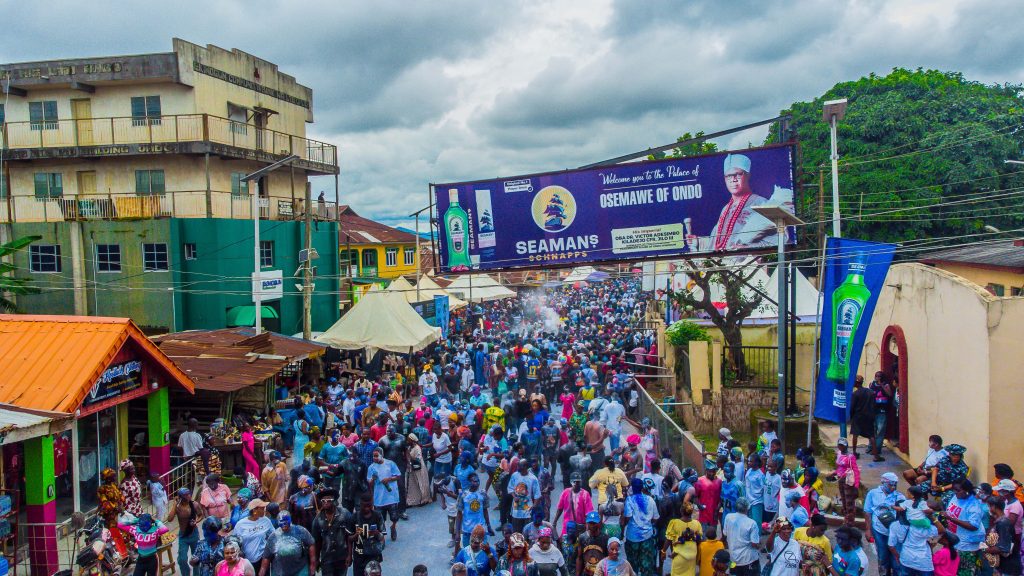
        For an orisa so deeply woven into Yoruba folklore, it makes sense that there’s a festival dedicated to celebrating his legacy. Every August, the ancient Koso Temple and the streets and corners of Oyo fill with people who have found their way home.

        For ten days, the city hosts a teeming crowd of devotees, traditional leaders, and people from all walks of life. The Sango Festival commemorates Tella-Oko, the third Alaafin of the Oyo Empire, widely believed to be the earthly incarnation of the mythical Sango. Devotees honour this legacy by donning bright red outfits, sharing roasted new yams and palm oil, and gathering for high-energy rites, chanting, storytelling, and drumming.

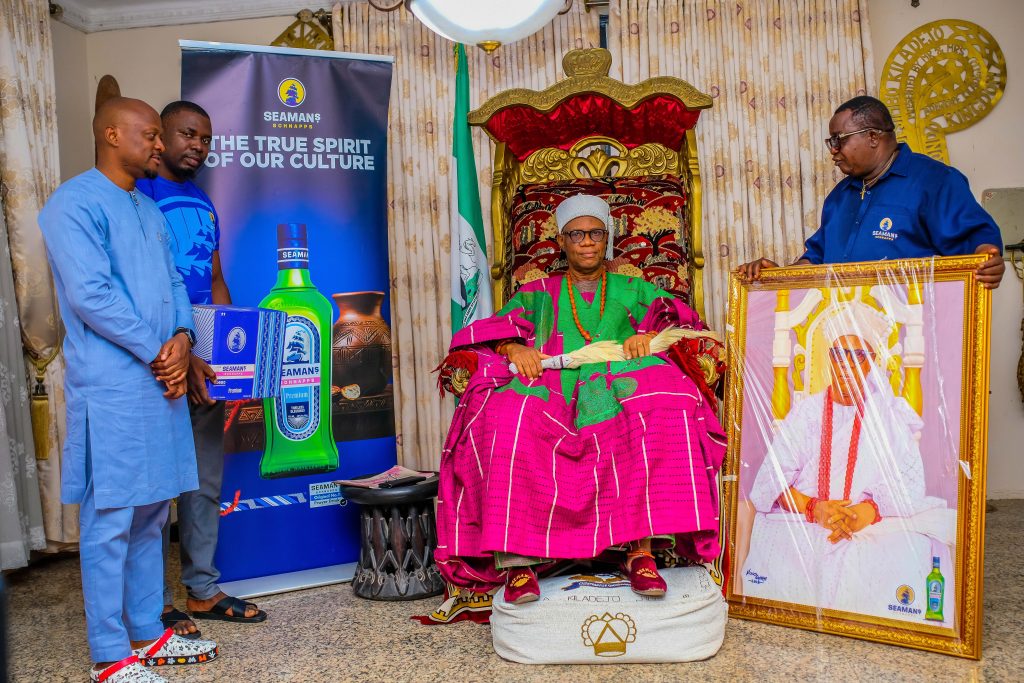
        At the center of these high-energy rites sits the iconic Seaman’s Schnapps bottle. In the hands of traditional leaders and elders, it is the definitive vessel used to offer deep blessings, pour royal libations, and anchor the prayers that help keep the people and practices of Nigerian heritage alive. 

        The 20cl: Passing down the magic to a new generation

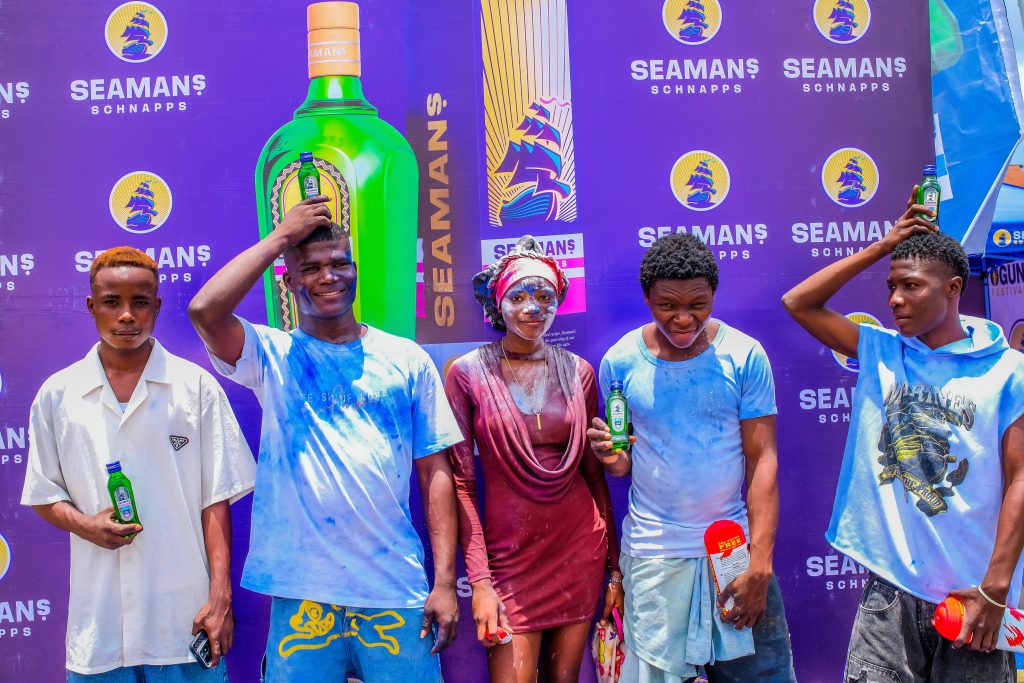
        This is where Seaman’s Schnapps’ 20cl drink comes in. While the 75cl bottle has traditionally been part of the grand ceremonies and rituals led by elders, the 20cl size speaks to a younger generation engaging with these traditions in ways that feel more natural to them. It reflects the reality that younger people don’t always inherit traditions exactly as they found them. They adapt them, give them new meaning, and find ways to make them part of their own lives.

        The Sango Festival captures this process. Children learn by watching elders during worship at the Sango Temples, while deeper elements of the culture, including Sango’s magical crafts and sacred performances, are preserved through dedicated apprenticeships. The knowledge moves from one generation to the next, but it doesn’t have to look exactly the same each time.

        Seaman’s Schnapps has continued to support spaces like the Sango Festival because they give these traditions room to remain visible and relevant. Its 20cl drink fits into that same conversation. It’s an easier, more affordable way for younger drinkers to not just follow tradition, but help shape it going forward. 

        As Nnenna Uche Onyenacho, the company’s Senior Brand Manager, puts it, “The brand remains committed to platforms that promote cultural continuity through modern creative expression.”

        Marketing Manager at Nigeria Distilleries Limited, Mr. Gbemileke Lawal, echoed that  “This is where our values align with the people’s heartbeat. Seaman’s Schnapps remains committed to celebrating Nigeria’s rich traditions while standing as a symbol of authenticity, respect and unity.”

        That commitment is particularly significant at a festival built around a tradition that has lasted for centuries. 

        Ultimately, culture survives only when people continue to practice it, share it, and find new reasons to embrace it. For the Sango Festival, whether it is a solemn prayer poured by an elder from a 75cl bottle or a vibrant celebration fueled by a youth with a 20cl bottle, every libation poured becomes another vital link in a tradition built to endure for centuries. 

      2. Trigger warning: Suicide.

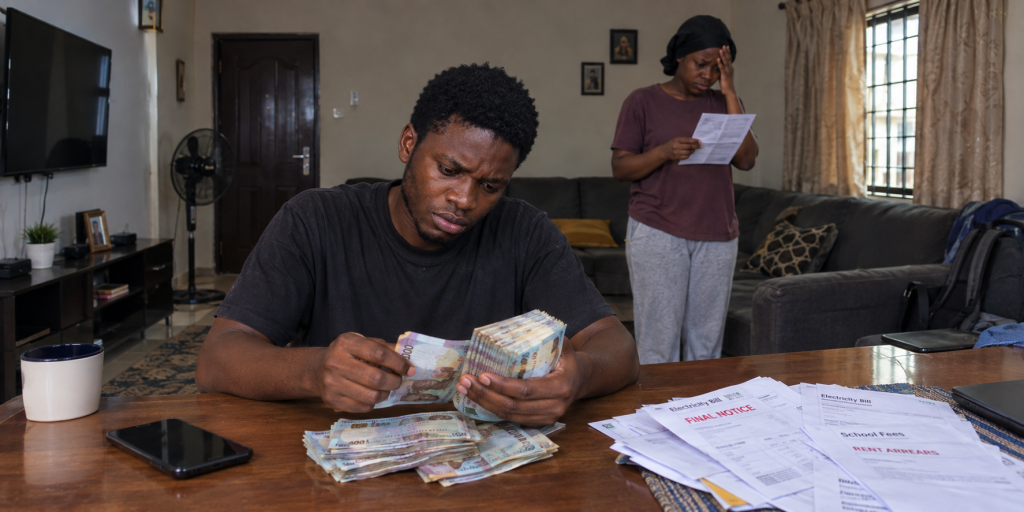
        Mental health struggles are complex, and for many Nigerians, the country’s financial state worsens their mental health.Here are five Nigerians who suffered severe mental health crises due to financial pressure and the poor state of the economy, and what thankfully made them choose to stay.

        “Dead people don’t pay bills” — Nafisa*, F, 26, Lagos. 

        I’ve always had financial anxiety. Even when I was steadily earning ₦200k/month, the state of the country would make me panic about how much I had and if it would be enough to keep me alive.

        Then I lost my steady job earlier this year when the company I worked for pulled out of the country. So now I’m a freelance makeup artist, earning ₦100k-₦200k per job. Technically, I can potentially earn more now, but my income is unstable, and I only get one or two makeup jobs a month. So, the way I see it, I’m basically jobless.

        I have to think about my ₦1.2 million/year rent, amongst other expenses. Because of this, I isolate myself, afraid that if I go out with friends, I’m wasting money.

         Sometimes, my anxiety gets so bad that I have depressive episodes and nervous breakdowns. I panic, wondering when I’ll next get a makeup gig. I passively consider ending my life. After all, dead people don’t pay bills, right?

        I’m still here because of my friends. They send me money sometimes and always encourage me. Plus, when I do get a gig, my anxiety temporarily goes away. 

        “Being the man of the house is hard” — Tobi*, M, 26, Abuja.

        My father died of cancer two years ago. Even though we all saw it coming, the grief was overwhelming.

        At his funeral, an aunt whispered to me, “You know you’re now the provider of the family?” It was the first time I had a panic attack.

        Even though my mum’s business is still bringing in a good amount of money, she’s getting old, and I worry every day about providing for her and my sisters. I earn well at ₦600k a month, and I still live at home, but the pressure to be the man of the house is crushing, especially because I’m still grieving my dad.

        I’ve considered ending my life a few times, just in passing, so I can escape the anxiety. But the thought of my little sisters living without me is even more terrifying, and I’m too scared to go through with it. 

        “I don’t want to struggle for a life that feels pointless.” — Ruth*, NB, 22, Lagos.

        I left my oppressive parents’ house in 2025. They’ve never been supportive and are the most closed-minded people I’ve ever met. I was already considering suicide under their roof, so my options were either to kill myself, steal their money and leave, or run away and thug it out. I chose the last one.

        I live alone now, and it’s difficult to provide for myself. The abuse I endured already made me suicidal, but now, I have times when I spiral really hard and get close to the act. The worst thing for me is struggling so hard for money just to live a pointless life and eventually die.

        The main thing keeping me alive is spite. I want to prove to my parents that I’m better off without them and prove to life that I can do this. It also helps that I have god-tier friends.

        Get More Zikoko Goodness in Your Mail

        Subscribe to our newsletters and never miss any of the action

        “Ending my life felt better than waiting for Nigeria to end it.” —  Eni*, NB, 25, Lagos.

        I moved out of my house earlier this year because my father was abusing me and trying to control my finances. The switch from being taken care of materially to barely being able to eat was terrifying.

        At first, I felt very useless. It was hard to feel trapped in my own life, so much so that I could barely afford a crate of eggs. I thought ending my life was better than waiting for Nigeria to end it for me, and I was stuck in this headspace for at least three months.

        I never thought of giving myself grace. I was doing my best, working multiple freelance gigs and living frugally, but I blamed my money struggles on not working hard enough, rather than the insane cost of living in Nigeria.

        One day, I had to decide that I would not die simply because I didn’t have the financial freedom I had envisioned for myself as an adult. Also, I now know that life isn’t just happening to me; I have the power to shape my story. Plus, my friends have come through for me a lot.

        “Seeing my husband depressed made me depressed.” —  Lola*, F, 30,  Ibadan.

        In 2020, right after I got married, COVID made my husband lose his job. He was a businessman, but the lockdown made it difficult for him to transport goods and the like. As a teacher earning ₦210k/month, I wasn’t making enough to sustain us. It was a major hit to our finances. It didn’t help that we were in a lockdown and could do nothing but worry.

        My husband became miserable. I’d never seen that man cry so much. I was always the emotional one, so having my rock break down that way broke me as well.

        I would wake up, and my first thought would be to end my life so that my husband could have one less expense to worry about.

        I knew these were bad thoughts, so my husband and I began praying every night. It helped to know God was still on the throne.

        Eventually, the lockdown lifted, and my husband could continue his business as smoothly as before. I thank God for watching over us at that time.

        If you need support, someone to talk to, or immediate help, these Nigerian mental health resources may help.

        Mentally Aware Nigeria Initiative (MANI) — Youth-focused mental health support.

        mentallyaware.org | Crisis support: +234 916 841 7413

        Blueroomcare — Affordable online therapy.

        Blueroomcare.com | +234 901 667 9754

        SURPIN — Suicide prevention & crisis intervention.

        surpinng.com | 080 0078 7746


        READ NEXT: “I Wish I Had Done More”: Nigerians On Losing Loved Ones To Mental Health Struggles

      3. Written by Tezor Dedam

        In 2008, Collins moved to Malaysia at 19 years old. For the next 12 years, he lived in Malaysia, the Maldives, and Singapore. For most of his stay in Asia, his girlfriend’s father’s company had been sponsoring his visa. In 2020, he returned to visit his family in Port Harcourt. During this time, he had a fallout with his girlfriend, and over the next few weeks, she had his visa cancelled.

        Later that year, he made a friend through his younger brother. This friend, a travel agent, had assured Collins that he could help him get a job in Europe, since the agent had lived and worked in Cyprus.

        “I trusted him, and I gave him ₦2 million to get me a job”

        Photo: The Citizen

        A month later, the agent called Collins with news of a job in Norway. He sent the job agreement, which Collins took to Abuja to further the process. At the end of this process, he spent an additional total of ₦4.38 million on biometrics, authentication of results, verification of bank statements, work permits, domestic flight tickets, etc. 

        A few weeks later, he got an email from the Royal Norwegian Embassy in Abuja, stating that he had been banned from entering Europe for the next five years for forging a job agreement. He tried to reach out to the agent, who was back in Cyprus, but to no avail.

        According to the Nigerian Immigration Service (NIS), 3.6 million people left Nigeria between 2022 and 2023. This represents a growing number of people like Collins who have successfully relocated in the past. But it also represents a wider group of people, like Collins, who are still trying to leave Nigeria. That’s a wide pool of people who can get scammed. So we did the hard work for you. Here is where to get help if you have been scammed by a travel or “japa” agent.

        Alert your bank, ASAP

        You may sense you’ve been scammed in an instant, or it may slowly dawn on you. Either way, the moment everywhere starts to blur, contact your bank. Give them all the details: the amount, transaction date, recipient bank details, etc. You should probably also provide evidence of your communication with them. If the bank is too slow, contact the  Central Bank of Nigeria (CBN) Protection Department after a few days. The bank can freeze the said account if you act promptly and with enough evidence.

        National Association of Nigerian Travel Agencies (NANTA)

        The National Association of Nigerian Travel Agencies (NANTA) oversees travel agents and tour operators in Nigeria. You should have checked with them to verify your agent, but it’s probably too late at this point, so you should make your report to them. NANTA can use unspecified measures to sanction the agent. But if they are not a NANTA member, then this will not help much.

        Get More Zikoko Goodness in Your Mail

        Subscribe to our newsletters and never miss any of the action

        Economic and Financial Crimes Commission (EFCC)

        Photo: Business Day

        The Economic and Financial Crimes Commission (EFCC) has an online portal, an app, and an email address where you can contact them. Be prepared to apply more pressure and visit their offices in this case, because responses can be slow. You should also document all correspondence with the EFCC for evidence if you have to escalate the matter beyond them

        Federal Competition and Consumer Protection Commission (FCCPC)

        Source: FCCPC

        The FCCPC is typically used for consumer protection and can be overlooked in this case. But if the scammer used a registered agency that provides goods and services to consumers as a cover-up, the FCCPC has enforcement power to order refunds and escalate the matter further. Being that it serves as the apex consumer protection and anti-trust authority with a broad mandate across commercial sectors. You can reach them for free at consumer.gov.ng or by email at contact@fccpc.gov.ng

        Report in the person’s country – if they are abroad

        If the scammer is abroad, you can also find the agencies responsible for fraud and scams in the respective countries. In the US, the FBI’s IC3 (ic3.gov) takes reports. If they are in the UK, Action Fraud is the way to go. If they are in Canada, the Canadian Anti-Fraud Centre is the responsible agency. If you can do this concurrently with filing complaints here in Nigeria, it could have a much stronger chance.

        One of the saddest things about japa scams is that they prey on the simple desire for a better life. This better life is worth chasing; it just shouldn’t cost you everything.

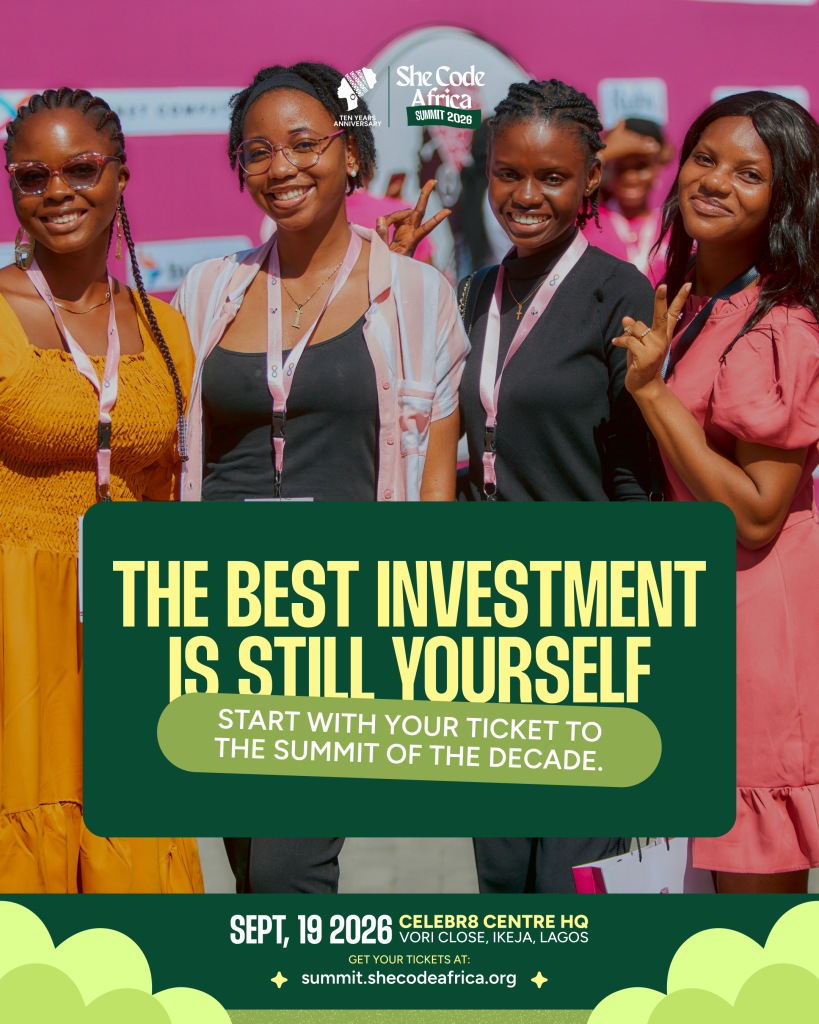
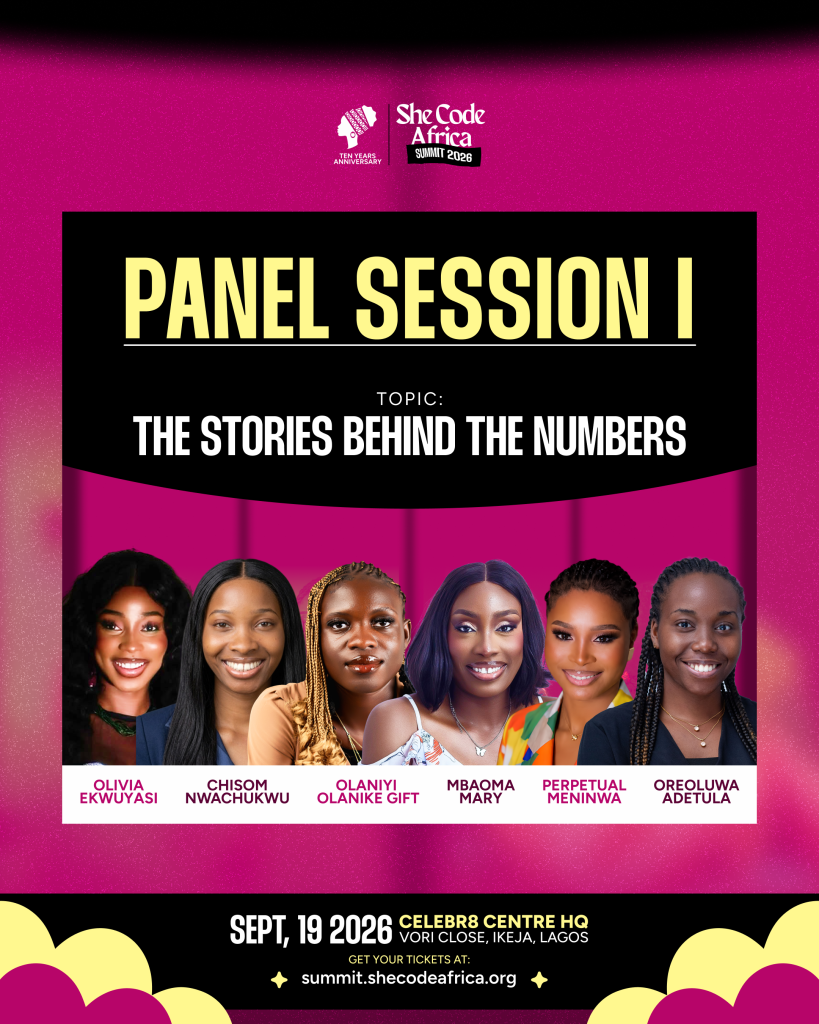
      4. Ten years after beginning its journey to create greater access, visibility and opportunity for African women in technology, She Code Africa, a Pan-African nonprofit organisation working to equip African girls and women with digital skills and foster economic independence, will mark its 10th anniversary with the She Code Africa Summit 2026, taking place on September 19, 2026, in Lagos, Nigeria.

        Held under the theme “A Decade of Impact: African Women Architecting the Digital Future,” the Summit will bring together 500+ women in technology alongside founders, industry leaders, investors, ecosystem partners and other stakeholders for a day of learning, networking, collaboration and conversations about the future of Africa’s digital economy.

        The Summit marks a significant milestone for She Code Africa as it celebrates ten years of creating pathways for African girls and women to access digital skills, mentorship, career opportunities and resources needed to participate and thrive in the technology ecosystem.

        Since its inception in 2016, She Code Africa has impacted more than 65,000 women through its programs and scholarships, while its community has grown to more than 50,000 members across 20+ African countries.

        What began as a movement connecting African women interested in technology has evolved into a Pan-African nonprofit organisation delivering programmes across digital skills development, technical training, scholarships, digital literacy, mentorship and career development. Through these initiatives, She Code Africa has worked to address some of the barriers that continue to affect women’s participation in technology, including limited access to digital skills, devices, mentorship, professional networks and economic opportunities.

        Beyond conversations about technology, the Summit will explore the progress made over the past decade and the opportunities, challenges and collective action required to build a more inclusive digital future for Africa. Participants will have the opportunity to learn from industry leaders and practitioners, connect with peers, explore career and business opportunities, build meaningful professional relationships and engage with conversations shaping the continent’s technology ecosystem.

        “Ten years gives us a lot to celebrate, but the work is far from finished. What excites me about this Summit is the opportunity to bring women together again and create the kinds of connections that can change what happens next, whether that’s a new career opportunity, a mentorship, a business partnership or simply the confidence to believe that something bigger is possible. That’s the kind of impact we want to keep building in our next decade.,” said Ada Nduka Oyom, Founder & Executive Director of She Code Africa. 

        As She Code Africa enters its second decade, the organisation is looking beyond the milestone to the work still ahead: expanding access to digital skills, creating more pathways into the technology economy, strengthening opportunities for women to build and lead, and ensuring that African women have a meaningful role in shaping the continent’s digital future.

        The She Code Africa Summit 2026 will serve as both a celebration of the organisation’s decade of impact and a platform for imagining what the next decade can make possible.

        The She Code Africa Summit 2026 will take place on September 19, 2026, in Lagos, Nigeria, with opportunities for both in-person and virtual participation.

        For more information about the Summit tickets and participation, visit: https://summit.shecodeafrica.org/

        About She Code Africa

        She Code Africa is a Pan-African nonprofit organisation on a mission to bridge the gender gap in technology by equipping African girls and women with digital skills and fostering economic independence. Since its inception in 2016, the organisation has delivered programmes spanning technical training, scholarships, mentorship, digital literacy, STEM education and career development, reaching more than 65,000 women. Its growing community spans more than 50,000 members across 20+ African countries.

        Media Contact:
        Juliana Ajagunna
        Julianaajagunna@shecodeafrica.org

      5. First dates are supposed to be about getting to know someone, but in Nigeria, there’s always a little mathematics involved in dating. How much should dinner cost? Should there be drinks? Who’s paying for the cab ride home? And at what point does a nice first date become an unnecessarily expensive outing?

        With the cost of almost everything rising, Nigerians have very different ideas of what a first date should look like. For some, ₦50k can get you good food, ice cream and a decent conversation. For others, anything less than ₦200k means you probably haven’t planned properly. 

        We asked Nigerians how much they consider acceptable to spend on a first date, where they’d spend it and what they expect that money to cover. Their answers reveal just how differently we think about money, dating and what counts as a good time.

        “₦50k” — Ruth*, F,  22, Delta

        ₦50k works just fine for me. I’m still at a stage where ₦50k is real money, so I can’t imagine expecting somebody to spend ₦200k on a first date. I’d be happy with a nice café or casual restaurant where we can eat, talk and maybe get ice cream afterwards. If the food is ₦25k and transportation is another ₦15k, we’ve already had a proper evening. I also don’t want someone spending more than they can comfortably afford just because they think that’s what women expect.

        “₦100k” — Maxwell*, M,  29, Ibadan

        ₦100k works best for me because it gives me enough flexibility. I’d probably budget ₦60k to ₦70k for a good restaurant, then keep the rest for drinks, transportation and anything spontaneous. I don’t believe the first date should be cheap just because you’re testing compatibility, but I also don’t think you need to spend ₦300k to show that you’re serious. If I spend ₦100k and we have an amazing time, that’s money well spent. If we don’t click, at least I haven’t spent my rent trying to second-guess chemistry.

        “₦100k” — Kamsi*, F, 28, Port Harcourt

        ₦100k is enough for the whole date, but I wouldn’t expect the man to pay it all. I’m perfectly fine paying my half. He can get the food, I can sort out drinks and dessert, or we can just split the whole bill. 

        We’re both adults, and we’re both going on the date because we want to meet each other. I don’t think paying for someone’s meal should automatically become a test of whether they’re a serious man. If he insists on paying, that’s different, but I’m not going to sit there pretending I forgot my wallet.

        “₦120k “ — Ife*, F, 30, F, Lagos

        ₦120k feels reasonable because I want the person to be able to plan a proper evening without being financially reckless. I’d probably expect dinner at a nice restaurant, drinks and transportation, with enough left over for dessert or ice cream. I’m also not impressed by somebody spending ₦120k if I later discover that’s half their monthly income. To me, the amount has to make sense for the person’s lifestyle. I don’t want a man performing wealth for me on the first date and then complaining about how expensive women are afterwards.

        “₦200k” — Chuka*, M, 31, M, Calabar

        ₦200k is a good budget. I’d probably take her to a proper restaurant where dinner and drinks could come to around ₦150k, then we could go somewhere else for cocktails or dessert. 

        I’m at a point where I can afford to spend that amount without it becoming a financial crisis, so I don’t see why I should pretend otherwise. But I also wouldn’t judge somebody who wants to spend ₦50k on a first date. Your budget should reflect your pocket, not what Twitter says a man should be spending.

        “₦350k” — Nneka*, F, 29, Lagos

        ₦350k is a reasonable budget for the kind of date I’d enjoy at this stage of my life. I’d probably choose one of the more expensive restaurants, have dinner and drinks, then go somewhere else for cocktails afterwards.

         It depends on what we’re doing. I don’t think women should feel guilty for enjoying expensive dates when the person taking them out can genuinely afford them. What I don’t like is someone spending ₦350k and then acting as if you’ve signed a contract to become their girlfriend just because they bought dinner.

        “₦500k” — Kunle*, M, 32, Ibadan

        ₦500k is the maximum I’d budget for a first date, but I’m not necessarily trying to spend it all. I’d rather have the flexibility to take someone to a very good restaurant, order what we want, get drinks afterwards and not spend the evening doing mental calculations. 

        If the whole evening costs ₦300k, that’s fine. If it gets closer to ₦500k, that’s also fine because I can afford it. But I don’t think a man should spend ₦500k on a first date if that’s going to affect his bills. There’s nothing romantic about spending your rent money on dinner.

        “₦500k” — Faizah*, F, 31, Abuja

        ₦500k is honestly around the minimum I’ve spent on a proper date before. I’m not saying that’s what everybody should spend, because obviously, people’s lifestyles and incomes are different. But if someone takes me to a high-end restaurant, then we go somewhere else afterwards, ₦500k doesn’t shock me. 

        The mistake people make is assuming that because a date costs ₦500k, the woman must have demanded ₦500k. Sometimes that’s simply the lifestyle both people are already accustomed to. I also don’t expect anything in return because somebody paid for an expensive evening. A date isn’t a transaction.

        Get More Zikoko Goodness in Your Mail

        Subscribe to our newsletters and never miss any of the action