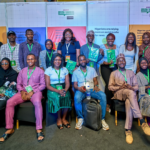
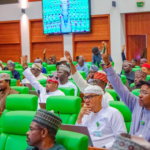
• Remember when we told you the Citizen Townhall wanted to help you lend your voice to the state of affairs in Nigeria? The event finally happened; all the cool people came through, and it was everything we thought it’d be. If your FOMO caught up with you, this full recount of everything that happened at the town hall will fill you in.

    About the Citizen Townhall

    First of all, the Citizen Townhall 2025 was a hybrid event held on February 25 in Abuja. It was organised by Zikoko Citizen in partnership with Luminate to serve as a platform to bring together stakeholders to discuss the crucial role that young people play in Nigeria’s democracy and development.

    This year, for its first edition ever, the town hall featured industry experts, changemakers, and, of course, young Nigerians who brainstormed ideas for improving youth involvement in politics and governance. It also featured the launch of a data-driven report on youth insights.

    A welcome address and an interactive session

    The event started with a welcome address by Tomiwa Aladekomo, the CEO of Big Cabal Media (BCM), Zikoko Citizen’s parent company, emphasising the role that Zikoko Citizen has played in keeping young Nigerians informed and aware, the importance and potential of the event’s outcome, the report.

    The welcome address was followed by a pretty interactive discussion among the attendees– you just had to be there.

    The spice in the conversation first came in through a statement made by an attendee from the Advocate for Human Rights and Development, who said he believes the Nigerian youth are docile and not interested in politics. Chukwudi Ozalla, from the Advocacy for Change Initiative, agreed with him, while another attendee, Mathew Dennis, argued that this was kind of untrue as he believes Nigerian youths are not given the opportunity to participate in leadership.

    This was followed by strong opinions from Abdullahi Faruk of Activista, who pointed out that young Nigerians are active and interested and have shown this in various ways, including the EndSars protests and EndBadGovernance protests, both of which have shown the governments’ intolerance to constructive criticism and complaints. If you think it stopped there, you’re wrong– other attendees gave strong opinions on the factors that have blocked young people from participating in governance. You should probably watch the full conversation here.

    A keynote address

    The conversation was followed by a keynote speech by Toyin Akinniyi, the Vice President of Luminate, Africa. Her speech touched on various areas such as the efforts of young people (in Nigeria and Africa) to contribute to good governance and development. She pointed out that a bulk of these activities take place in online spaces and that it is important to figure out how to make those spaces safe for them as “erosion of rights to free expression online, online harassment, weak data protection threaten their ability to participate fully and safely.”

    Akinniyi’s speech also emphasised the importance and timeliness of the Citizen Report. “It provides us with an opportunity to redefine youth engagement in governance, particularly in a digital era where technology and Artificial Intelligence (AI) are redefining civic participation,” she said.

    A second interactive session

    Akinniyi’s keynote address was followed by another interactive conversation which dwelled on one of the things she addressed in her speech– the use of social media by young people as spaces for discussions involving democratic change as well as the threat that misinformation poses a threat to civic engagement among the youth. This interactive session was just as engaging as the first, with several attendees sharing their diverse opinions on key issues raised both by the host and fellow attendees.

    Panel one–  Youth as Catalysts for Democratic Change.

    The discussions gave way for the first panel of the day titled Youth as Catalysts for Democratic Change. The panel was hosted by Osaruonamen Ibizugbe, Project Officer, Media in Gender, at the Centre for Journalism Innovation and Development (CJID). It was made up of three panellists– Busola Ajibola, Deputy Director of the CJID; Chioma Iruke, a FactChecker at the Centre for Democracy and Development (CDD) West Africa, and Mahmud Jafar, a Senior Analyst at Gatefield.

    The panel discussed a number of issues, such as the impacts of the Not Too Young To Run bill in giving youths the opportunity to effect change through politics and the role of traditional and religious leaders in influencing civic change among young people, among others. Some of the panel’s resolutions are that:

    • There’s a need to educate young people about the direct impacts of their participation towards the wellbeing of the country’s democaracy and development.
    • Young people at low levels must be trained on how to actively engage the government and how to drive change.
    • Town halls should be organised in rural areas to engage young people on the importance of civic engagement as a tool for change.

    Panel Two– The Role of The Media In Amplifying Youth Voices.

    The next panel to follow was the second panel titled The Role of The Media In Amplifying Youth Voices. The panel was hosted by Chigozie Victor, Senior Editor at Zikoko Citizen. It was made up of three other panellists– Rotimi Olawale, Executive Director at YouthHubAfrica, Samad Uthman, Digital Investigative Journalist at AFP, and Ope Adetayo, Nigeria Correspondent at Reuters.

    The panel examined various issues like the representation of the youth in the media and how it impacts their participation in politics and the role of the media in curtailing misinformation among others. Some of the panel’s resolutions were that:

    • There’s a need for positive representation of the youth in the media
    • There’s a need to tell both good and bad stories about young people equally
    • The media has a role in clamping down on the misinformation that discourages young people from participating in Politics.

    The panel was followed by a tea break and an interactive conversation among attendees and speakers about the discussions and issues raised in the first and second panels.

    Report presentation and an interactive session

    The Citizen Report is a data-based insight into how young Nigerians are affected by misinformation and digital threats, how they are trying to navigate it as well as what the government and other stakeholders can do better.

    The presentation of the report was done by  Anita Eboigbe, the Chief Operating Officer of Big Cabal Media. While pointing out some of the key findings of the report, Eboigbe pointed out the need for the media, Civil Society Organisations (CSOs) to use this information to make the digital space safe and conducive both as a place for Nigerian youths to interact with each other, find information, and drive democratic change.

    The presentation was followed by an interactive discussion among the attendees about the findings of the report, particularly on the low level of trust in traditional media.

    Third panel– Best Practices for Co-Creating Initiatives With and For Young People

    The last panel, titled Best Practices for Co Creating Initiatives With and For Young People. This panel was hosted by Zubaida Baba Ibrahim, Sub-Editor at Nigeria Health Watch, and it was made up of two other panellists– Amina Salaudeen, Women’s Rights & Safety Officer at TechHer, and Titilope Fadare, Assistant Production Editor at Science Development Network, Sub-Saharan Africa (English).

    The panel examined various issues, like the need to hear from young people before developing projects and initiatives directed at them and the challenges and flaws in programs directed at young people among others. Some of the panel’s conclusions include:

    • The need to hear from young people before creating programs and initiatives for them.
    • The need to create programs that impact as many young Nigerians as possible rather doing creating surface level initiatives that have little to no impacts on them.
    • The need to encourage the implementation of initiatives among young people by giving them a sense of ownership in the programs created for them.

    The final panel was followed by a vote of thanks by Anita Eboigbe to mark end of the event. While thanking the participants and Zikoko Citizen’s partners, Luminate, Eboigbe pointed out the need for the conversations had at the townhall to go beyond the venue, as well as the need for the findings of the Citizen Report to serve as directives for stakeholders who make decisions that impact young Nigerians. She also emphasised Zikoko Citizen’s commitment to holding more events that advocate for young people in Nigeria.

    “We want to develop this (the Citizen Townhall and The Citizen Report) and continue to create a space for us to have data and for us to gather the ecosystem together to do the things that really matter. We want to do this as people who have understood and continue to try to understand young people,” she said.

    [ad]
  • Put a finger down if you’ve said, “God abeg”, “What kind of country is this?” or “I heard the national grid has fallen” again in the last 100 days. Put down another finger if you don’t have ₦50 million to japa in 2025. If you have two fingers raised, we can both agree on two things — you are tired of Nigeria’s current state and don’t have enough money to leave the country. If we’re stuck here for now, we have no choice but to fix the country. So enough of the rants and cho cho cho, it’s time to show workings — walk with us, and we’ll show you how.

    What can I do about the current state of Nigeria?

    Your name doesn’t necessarily need to start with a T and end with a U before you can fix some of Nigeria’s mess. Zikoko Citizen has been brooding over this million-dollar question since 2020, and we finally have an answer—Citizen Townhall! 

    The Citizen Townhall is a free hybrid event where young people, industry experts, and changemakers will come together to discuss strategies for youth inclusion in Nigerian politics and governance. It’s happening at the Centenary Hall, Ibeto Hotels, Apo, Abuja, on Tuesday, February 25, 2025, but you can join from anywhere in the world and give your hottest takes.

    If you don’t know the first thing about policymaking and lobbying, Citizen Townhall is the perfect place to start. If you’re thinking it’ll be boring, dead that idea now because it won’t. We won’t just be yapping; we’ll be ideating, throwing hot takes, coming up with solutions and networking with smart people. 

    Who should attend the event?

    The Citizen Townhall is designed for young Nigerians, Media practitioners and journalists Students and researchers Advocacy groups, and more.

    How do I register for the Citizen Townhall event? 

    We’ve made the registration process simpler than ABC. Click here, choose how you’d like to attend the Citizen Townhall event and look out for a confirmation email.

    Is there a registration deadline?

    Yes, registration will close a few days before the event. We encourage you to sign up early, as spaces are limited.

    Is there a registration fee?

    No, attendance for The Citizen Townhall is completely free. However, pre-registration is required for both in-person and virtual participation.

    How do I access the event virtually?

    A streaming link will be shared via email with registered virtual attendees a few days before the event.

    Who do I contact for more information?

    For any inquiries, please contact us at zikoko@bigcabal.com or follow us on social media for updates.

    What else do I need to know about the Citizen Townhall event?

    The event will feature a keynote speech from one of the smartest people you might ever meet and three panels, each featuring a group of young people doing pretty amazing stuff.

    We sprinkled in a tea break for a little razzle dazzle and a networking session where you could interact with the interesting people at the event.

    Here’s where it gets even more fun– the launch of the Citizen Report. This is a data-driven report, specifically made to get a better understanding of how young people feel about the things that shape their future. The current one focuses on Misinformation, Disinformation, AI and its impact on your privacy and wellbeing.

    The report will show you how misinformation has shaped the way young Nigerians see and engage with the government, how it has contributed to division and bigotry among them, how social engineering affects young people’s privacies and a bunch of other interesting things.We have started unveiling our speakers and panellists and will continue till the day of the event. Follow us on social media (@ZikokoCitizen), turn on notifications, be the first to find out and join us on our countdown!

    [ad]
  • Lawmakers in the House of Representatives are talking about a cool bill that will pave the way for young people in Nigeria to finally get a chance to run the country. It is called the Bill for Independent Candidacy and has just scaled its first reading on Thursday, September 26.

    Goodbye to political parties, hi to equal opportunity

    Unless you want to, you literally would not need to be a registered member of a party to contest for any political office of your choice if this bill becomes law. What this means is that political party membership would become an option instead of a necessity.

    It also means that “most vulnerable populations such as women, youths, and persons with disability are given a level playing field, to explore opportunities within the political and electoral system,” Ibijoke Faborode, Executive Director of  ElectHer, a Non-governmental Organization (NGO) says.

    Hundred million Naira form, who?

    During the 2023 general elections, young Nigerians watched in disappointment as political parties put their nomination forms at prices that were unrealistic for them to afford.

    If you wanted to stand a chance at being the candidate of the All Progressive Congress (APC) at the last election, you needed to pay the following:

    1. Presidential form- ₦100 Million
    2. Governorship form- ₦50 Million
    3. Senate form- ₦20 Million
    4. House of Representatives- ₦10 Million
    5. State House Of Assembly form- ₦2 Million

    But if the bill for Independent Candidacy is passed, more young people who have been discouraged by these prices would be able to contest because they wouldn’t need to buy nomination forms anymore.

    Here’s all you’ll need

    In place of nomination forms that you can’t afford, the drama, and the ugliness that usually comes with political parties, you would mostly need signatures to secure that position that you want.

    If for instance, you are looking to contest for the Presidency, you need to get signatures of at least 10 percent of registered voters from two-thirds majority of all 36 States to be able to contest without joining a political party.

    Suppose you are interested in being the Chairman of your Local Government Area (LGA). In that case, you need at least 10 percent of registered voters from a two-thirds majority of all electoral wards in your LGA to be able to contest without joining a political party. It’s the same for all posts; 10 percent of registered voters from a two-thirds majority of wherever you are running for office.

    “The signatures of such voters are expected to be verified by the Independent National Electoral Commission (INEC) or the State Independent Electoral Commission in the case of local government elections, while no voter is allowed to write the name of another person.” Also, INEC will “prescribe a security deposit to be paid” by Independent candidates.

    What are the odds of this bill becoming law?

    If it succeeds, this bill might get Nigeria out of the trenches by giving equal opportunity to the younger generation, and more qualified people to take part in politics. Will it make it? Probably not, and this is because its brief history has proven it might not be given the time of day. An explanation:

    The bill for Independent Candidacy has been around before. In 2018, former President, Muhammadu Buhari signed it into law as part of the Not Too Young to Run Bill but it’s unclear why it was never enacted. 

    In 2020, The House of Reps proposed the bill and In 2022, it was finally passed and given to former President Muhammadu Buhari for approval but again, nobody really heard much after that. In fact, in 2023, two NGOs sued the Nigerian governemnt at the ECOWAS court for delaying the passage of the bill. They also asked the court to “direct the Nigerian government to immediately implement” it for all future elections,” but the case was dismissed partly because Nigeria did not “file its statement of defense within the stipulated time,” and mainly because the ECOWAS said it doesn’t really have the authority to make Nigeria implement the bill.

    Can you do anything about the bill?

     Depends really. If Citizens like or dislike the idea of a bill enough, they can take some or all of these steps to influence its passage into law:

    1. Start a social media campaign to talk about it
    2. Call their reps to speak their minds about the bill
    3. Participate in public hearings organised by the National Assembly
  • Navigating life as a woman in the world today is interesting. From Nigeria to Timbuktu, it’ll amaze you how similar all our experiences are. Every Wednesday, women the world over will share their experiences on everything from sex to politics right here. 

    Even though Yakubu Gowon was only 31 when he became Head of State, few younger millennials (30 and under) are in political offices today. But since 2015, I’ve noticed this subject’s consistency in public service, so I reached out to her to share her journey and inspire other young people to action.

    This week’s #ZikokoWhatSheSaid subject is Nafisa Atiku-Adejuwon, a 29-year-old Nigerian woman. She talks about experiencing politics in secondary school, choosing public service over a legal career and finding purpose in helping young women enter politics through “Girls Just Want to Run”.

    What inspired you to get into politics?

    Exclusion. It’s widespread in Nigeria. I have this memory from when I was very young: I was in a car driving by some young kids begging on the road, and I felt terrible because I had access to education, a good home, food, electricity, water, and these people didn’t. Exclusion has always been a thing for me. I’ve always hated it. 

    Tell me about your personal experience with exclusion

    In SS 2, my Economics teacher encouraged me to run for Assistant Dormitory Prefect. I didn’t want to because one of my good friends was running for the same post. I’d even written her speech for her.

    What did you do?

    The teacher submitted my name anyway, so I had to enter the race. I was really bullied for it because other people in our class saw me as a betrayer. I would go to eat in the dining hall and that clique of girls would just hiss at me, so I would leave without eating. 

    I still won the election and became one of only six SS 2 prefects that year. Other teachers saw how responsible I was in that welfare role and nominated me for Head Girl the next year.

    How did university go? More leadership roles?

    The incredible irony is I didn’t really do anything in university. I’m sure if my uni classmates see me now, they’d be shocked and be like, “We didn’t know she had it in her.”

    I almost can’t believe that

    You know the kind of culture we have. Women aren’t exactly encouraged to be leaders. I went to university, and I was just like the average student. I went to class, had friends, went to church, and went back to my room. 

    When I went home during school breaks, I always had an internship or job or volunteering experience. But in school, you couldn’t distinguish me from the pack.

    Why though?

    I think it’s because I went from a private secondary school to a federal institution — the University of Nigeria, Nsukka. It’s a big school with plenty of people to compete with, and as I said, the dynamics weren’t exactly friendly for female leadership. 

    I studied law, and we set up mock chambers every year to put everything we learnt to practice. I wanted to volunteer to be a counsel or witness or something. But the guys were monopolising all the spots. They would edge out the girls and were very assertive about what they wanted. I didn’t feel like I had the energy to fight back, so I just said, “Fine. I’ll just pack my things and go and read my books”.

    And nothing changed through the years?

    Actually, in my fourth and final year, I got involved in more service-to-humanity-type activities. I joined the Rotary Club and became the secretary. I was a member of the legislative arm of my class that year. But in general, it was too late to make any real impact. 

    It comes down to the environment. Some are engineered to allow you to thrive; some actually choke your potential.

    All that exclusion, what would you say it changed for you?

    My whole uni experience taught me to have thicker skin and appreciate the struggle. It gave me a teaser of the real world. I spent the first few years trying to discover myself and my own place. 

    While I knew I could be a leader because I’d done it in secondary school, moving to university, I felt like a small fish in a very, very big pond. I couldn’t find my place in it. So a lot of existential questions flew through my mind. Like, what exactly do I want to do with my life?

    I considered entrepreneurship because everyone was doing that at the time. I started curating hamper baskets, but it didn’t work out. I tried NGOs and got into some leadership roles in community service organisations. It was kind of my thing, but it was already too late to capitalise on it since I was basically graduating.

    What happened after graduation?

    Law school. I was at the Lagos campus, and it was a hustle. You’re in classes from morning to night just struggling to pass, to be honest. I made some friends and met a guy called Temi Vaughn. His dad was doing some youth development town hall meetings and told him to get some of his friends who were passionate about Nigeria. 

    I come from a very political background. Politics is a huge topic in my household, and we’re always dissecting government policies, so it wasn’t a new conversation for me. I saw the way Nigeria was going in 2015 when there was a major election. I’d started interrogating the system and consistently posting write-ups on Facebook about politics and youth empowerment. 

    So Temi’s dad got some of us to host his town hall meeting in collaboration with the Lagos State government. I capitalised on that until I got chosen for the Young Professionals Bootcamp, by Pastor Poju of the Covenant Christian Centre, the same year. It was the turning point of my entire life. 

    How?

    At the boot camp, Mark Okoye, a commissioner or special adviser serving under Peter Obi’s Anambra state government, told us about his journey into public service, and how he troubled Peter over and over to give him a place in his government. 

    I was like, if this dude can leave the US where he schooled and had excellent grades, to do that, I could too. It was like a view into what my life could be. I went to the boot camp still wondering about my career options. Should I go the normal route of becoming a lawyer or the unpredictable path of public service? 

    After hearing Mark speak, I said, I have my choice, and that was it.

    What did you do next? 

    I had a couple of job interviews already lined up, one in particular at a law firm offering some good money. I told them I didn’t want it and found my first job on Facebook at a youth organisation called Leads Nigeria. From there, I moved to She Leads Africa as a program associate. 

    I’m currently the program officer at the Shehu Musa Yar’Adua Foundation. We work on creating safe spaces on university campuses to protect young women from sexual violence. We also have an anonymous whistleblowing platform for survivors of sexual harassment within Nigerian tertiary institutions.

    How did you get into the foundation?

    In 2020, I wanted to pivot fully to the non-profit space and work on women’s issues. It made sense for my political future. I was also tired of Lagos stress and traffic and needed to move to a less stressful place for health reasons. I talked to my dad, who referred me to someone at the foundation. They called me to interview for a position in their new gender justice program. I got the job and moved to Abuja.

    It’s been an interesting six to seven years in public service so far, but there’s been a lot of sacrifices. 

    Sacrifices?

    During NYSC in Ibadan, I decided I would do a project teaching civic and political education to senior secondary students who, by the next election in 2019, would’ve been old enough to vote. 

    I was earning ₦18k from the federal government, and ₦3k from the ministry of justice. And I was living in a flat with roommates. I had to buy food, etc. I went to those schools, raised money to donate schoolbooks, and pay school fees, all without a proper job.

    After NYSC, while I was waiting for a job, I continued the work with schools in my neighbourhood in Lagos State. 

    MEANWHILE: 10 Corpers Tell Us How They Spend Their NYSC Allowance

    What exactly inspired the project?

    Young people have always been the focus of my political work; young women are my primary focus. My book, Girls Just Want to Run, was born out of my own experience trying to be actively involved in politics.

    Going into politics, I discovered that there were no other women in my age range. How do we get women in their 50s to run for office when they’ve not built up their social and political capital from when they were in their early 20s like men do?

    We would only continue to pay lip service to women being involved in politics if we don’t concentrate on getting them into the political party system young. That was what made me say, “Okay, somebody has to write this message. And I don’t mind being the bearer of good news”.

    How did that go?

    Getting the money to launch the book was by God’s grace. I saved up, people donated, and I managed to do it well. It’s now grown into a community young women are inspired by.

    Before then, through my NYSC projects, I set up an organisation for civic and political education called “NYouth Speaks” because young people aren’t very aware of their civil and political rights. 

    My political articles, school tours and initiatives became subsumed under NYouth Speaks. Then when I evolved into pushing for youth and women’s political participation and published my book, everything fell under “Girls Just Want to Run” but focused on young women.

    What are some of the things you’re doing under this initiative?

    This month [September], we’re doing a book drive, to give young women civic education books. Through that, we would form leadership clubs for girls in secondary schools. We want them to be acquainted with social change, justice, political participation from now so that even in their own way, they can bring change to their communities. 

    It starts with influencing the younger generation. We talk to them about the qualities to look for in a leader. We educate them about their rights, what the constitution provides for, and how to enforce or challenge the constitution. What are the gaps in our society that need to change within the next few years? We want them to start taking ownership of these things.

    And what’s your personal journey into the political system been like?

    It’s been a constant process of upskilling and making meaningful change by educating young women. This country needs leaders. Not everyone can leave. If I set my mind to japa, I could probably be gone by next year. But I won’t do that.

    It also helps that I married somebody who’s just like me. He was at my book launch and, crazy story: I was scheduled to give a TEDx talk in Abakaliki, Ebonyi state, the day before my launch. We missed our flight coming back to Lagos because of bad roads. 

    So we had to take a night bus to get back in time. We met armed robbers on the road, and they shot at our bus. It was so scary, but did I look like I’d gone through that by my launch the same evening?

    So sorry you had to experience that. Did your political growth happen naturally or was it something you worked towards?

    A lot of intention and hard work has gone into it. While I was waiting for my NYSC placement, the boot camp came up and I thought that if I could get into the program, I would get some clarity about what steps to take next. I applied for it while I was still posting political pieces on Facebook, BellaNaija, etc.

    Right

    Then I was posted to Kebbi State for NYSC. I have delicate health, so at the beginning, my family said, “We have to get you reposted. We can’t risk certain things. You need to be closer to home so if anything happens, we can rush you out quickly”. 

    So I went to Kebbi knowing I wouldn’t stay past orientation. But I got there and changed my mind because I felt like I could do some good regarding girls’ education there. I called home to tell them, and they said, “Okay, no problem. We won’t change it”. But they didn’t listen. I was still transferred down to Ibadan.

    Where your civic education journey started

    Yes, I was able to do what I wanted to do in Kebbi in Ibadan, and I got chosen for another boot camp by RED Media, called the Future Project. It was a three-day boot camp on understanding how the local government works. People like Demola Olanrewaju and Lam Adesina, a member of the Oyo State House of Representatives, spoke to us. 

    My circle widened, and I applied for more opportunities, looking for what I could do next. I started thinking about how to join the process officially to see how it works. I joined the KOWA Party, and it proved to be instrumental because it was my firsthand experience there that birthed Girls Just Want to Run in 2018, which opened platforms for me to talk about young women’s issues, political justice and participation. 

    Why KOWA?

    Because I felt KOWA was a youth-friendly party. Ironically, that’s where I met my husband; he was the national youth leader of KOWA Party. I needed somewhere I could volunteer my skills and add some value to the system as a young person. Also, it was easy to join. If you want people to be part of a process, you need to make it easy for them to join it.

    Is it really? I’m not sure access to political parties is readily available to the average citizen 

    A lot of work could be done to bring more awareness to these kinds of fellowships, boot camps, training, and so on. I wouldn’t have found the information if I wasn’t intentionally looking for it. 

    The political system and process in our country are not straightforward; it’s not user-friendly at all. The established parties don’t make it easy for you to find or join them. Only the newer parties do a level of mobilisation. 

    But APC did a membership drive around last year [2021], and PDP had an online registration portal going on around the same time.

    But where? Do people know about these things?

    The APC one was physical in local government councils of different states. I do agree there’s not enough awareness of these systems and initiatives, but people also need to be active about their interest in finding them. Let them not shave your head in your absence. 

    Some parties use digital membership channels. PDP has tried to do a whole campaign by revealing their online registration portal in 2021. The link was flying across my WhatsApp like no man’s business. You could just upload your passport and details, and it would go into the members’ register.

    But at the end of the day, to improve the system, we need to be part of it. And that can only happen by being intentional about it.

    Fair. So how did it go at KOWA?

    I was a party member for about a year. Apart from the fact that INEC deregistered the party, I left in 2019 because I wanted a more in-depth political experience. So I joined PDP in 2021, through the e-registration portal.

    Beyond community development, do you see yourself actually running for political office?

    I do. But not right now. I’m a new mom, I run a business and work in an office, so there’s only so much I can juggle. The next four years will be critical in gaining some much-needed experience within the political space as part of the system now, as opposed to being a community service advocate. 

    I need to see and understand the intricate workings of politics in Nigeria. After four years, I can then officially say I’ll take a step and run as a candidate to serve people on whatever level I think will be practical at that point in time.

    And what’s one thing about your life right now that makes you happy?

    One thing that really makes me happy and fulfilled is being on a journey to becoming the person I dreamed I could be. Someone who creates change. I’m happy I can sit down, look back on my life so far and see that I’ve improved a lot of people’s lives.

    NEXT UP: Do We Really Need Celebrities in Nigerian Politics?


    For more stories like this, check out our #WhatSheSaid and for more women like content, click here