• The Nigerian experience is physical, emotional, and sometimes international. No one knows it better than our features on #TheAbroadLife, a series where we detail and explore Nigerian experiences while living abroad. 


    After being stuck in the UK’s small dating pool for so long, Amaka (26) finally made it out. In this edition of Abroad Life, she talks about falling in love with a Yoruba man, getting comfortable with an inter-tribal relationship, and working in the UK.

    Where do you live, and when did you travel out of Nigeria? 

    I live in Liverpool, United Kingdom (UK), and I left Nigeria in 2023. I moved here for my master’s, but it feels more permanent now. 

    Why does it feel more permanent? 

    Life is better here. I was earning ₦55,000 monthly in Nigeria. If I wanted to do the same job here, I’d be earning over £2000 monthly. In addition to the money, there’s also a working system here. The UK just offers you a better life in almost every way possible.

    It’s been two years since you moved. Have you settled into your new life?

    Not exactly. I still haven’t gotten the job I want. Rent is monthly here, and it’s not cheap. I’m also saving up for my postgraduate study visa so I can stay in the UK. It costs almost £3,000, and I need to save up for it while footing other bills. When I finish paying that, I have to start looking for sponsorship. It’s just a roller coaster phase right now. 

    I’m rooting for you. Are there things that you’ve grown to love about your life there?

    I have an amazing community here. Back in university, I joined a community of young Nigerian women, and it’s been great since then. They host events and parties, but that doesn’t happen as much as I’d have loved because we’re all super busy.  I just completed a nine-hour shift, so there’s barely any time left to do other stuff. I hardly go anywhere these days except on date nights with my partner.  With my friends, it’s always “Don’t worry, we’ll see each other next week”, but that “next week” quickly turns into months. 

    Did you meet your partner in the UK too?

    Yes, I did. It’s harder to find a Nigerian partner who checks all your boxes here, but somehow, we got lucky. 

    Why is it harder?

    If you’re looking for someone from your tribe, your options are limited. If you add that to the other specifics on your list, you’ll realise there aren’t many people you’d be open to dating. We had just four Nigerians in my class— two ladies and two guys. One was a married man, and the other was Yoruba. I’m Igbo, so a Yoruba man isn’t exactly my first choice (tribe-wise). But I eventually met my partner through a friend.

    Is he Igbo?

    Funny enough, he’s Yoruba.  I had already made peace with the fact that I might end up with a Yoruba man before I met him. He’s currently in Manchester, which isn’t that far from Liverpool but he drives, so the distance doesn’t affect us that much. I liked him immediately because he never love-bombed me. The more I got to know him, the more comfortable I felt about him being Yoruba.

    ALSO READ: “I Don’t Know Where To Find Single Men in Australia” – Abroad Life 

    How do your parents feel about the relationship?

    My parents didn’t care about his tribe either. They just wanted to know if he was treating me well and whether a single mother raised him. It’s funny how his parents asked the same question about me. I wonder why the older generation is so particular about single-parent households. 

    LMAO. You mentioned returning from a nine-hour shift earlier; what do you do?

    I work in a care home from 8 a.m. to 8 p.m., which isn’t so bad. But the downside is that I work in Wales. The train ride back home is about an hour and 15 minutes. Sometimes, my shifts are back-to-back, but I don’t mind it. I’m hoping to get a job that lets me work longer hours.

    Why?

    The pay is hourly. They pay me about 12 pounds per hour, so the more hours I work, the more money I make.

    I hope you get your dream job soon. On a scale of one to 10, how happy would you say you are in the UK? 

    I’d say nine. There’s room for growth and new adventures here. 


    Do you want to share your Abroad Life story? Please reach out to me here. For new episodes of Abroad Life, check in every Friday at 12 PM (WAT). 

    [ad]
  • Someone you know has left or is planning to leave. 1,000 Ways To Japa will speak to real people and explore the infinite number of reasons and paths they use to get to Japa.


    Shalom (23) is not a stranger to chasing big dreams. At 19, she said goodbye to her parents and moved to Lagos alone. At 23, she’s getting paid to study for free in a prestigious London school. She talks about how other Nigerian students can land the same scholarship in this week’s episode of 1,000 Ways to Japa.

    When did you leave Nigeria, and where did you move to?

    I’m currently schooling in London. I left Nigeria about three months ago.

    How did you end up in London?

    I applied for the Chevening scholarship last year and got in. It still surprises me because I could not have imagined that I would get a fully funded scholarship with the potential to change my life in every way.

    Why was it such a surprise?

    First of all, it’s important to know that Chevening is very competitive. Like a 0.3% chance of landing the scholarship competitive. I couldn’t believe that I’d be among that 0.3%; When you’re young, there’s a chance that you’d want to underestimate yourself— I felt like I hadn’t done enough in the advocacy space, but I applied anyway, and here we are today.

    0.3% is crazy! Tell me a bit about life in London

    Funny how I made a tweet one time that since I had experienced what it felt like to live in Lagos, I’d love to experience living alone in London next, and that’s what has happened, so this is literally a dream come true for me.

    London and Lagos have the same energy, though London can be a bit more fast-paced than Lagos in a way. It shares a lot of similarities with Lagos, actually; both cities are where dreams come true, and they are both super expensive. But Chevening gives me an extra allowance for staying in London.

    I moved from Abeokuta to Lagos to chase big dreams, and I’m here in London doing the same thing. Since I moved, I’ve made some African and British friends, and my Nigerian church has a beautiful branch in London. It feels like Lagos, but the Lagos that works.

    You mentioned moving from Abeokuta to Lagos to chase big dreams. Tell me more.

    Respectfully, I’ve always felt like Abeokuta was too small for my dreams. There are so many old people there, and the young ones look satisfied with life’s basics. You see superstars like Kizz Daniel and Fireboy? They looked too hungry for Abeokuta, so they had to move to Lagos—I was 19 when I moved, I just knew the world was waiting for me.

    The only friend I had in Lagos lived in Iyana Ipaja, and the job I got was in Victoria Island. I was spending at least 6 hours in traffic daily, but I was happy. My mom begged me to come back home, but I told her that I wouldn’t leave Lagos until it gave me what I wanted. Now, I can say Lagos owes me nothing—It gave me quality friends, life-changing experiences and a very overpriced apartment that felt like home.

    So you manifested the life of your dream? 

    I’m a Christian, I pray my dreams into existence. Plus, these are not my dreams; This is God’s way of preparing me for what He wants to do in my life. I’ve seen visions of all these things; they only catch me by surprise when I lose my faith. 

    Love that. So back to the Chevening scholarship from before. What is it, and who is it for?

    The Chevening scholarship is a fully-funded scholarship offered by the UK Government. Every year, young people from over 160 countries are selected by Chevening to come and study any course, in any UK university of their choice. When you’re done studying, you have to go back to your country and apply what you have learned there for at least two years before you can return to the UK.

    You’re not restricted from travelling down to the UK when you have events, engagements, workshops or anything else; they just don’t expect you not to go back to help your country after getting access to world-class education from the UK government.  

    That’s crazy. What makes someone a potential Chevening scholar?

    The whole point of the Chevening scholarship is that the UK government is trying to bring together young leaders and potential leaders who are trying to drive change in their countries. So, a perfect candidate for Chevening is someone who’s trying to drive change, has leadership skills and is working on innovative ideas, either in the non-profit or corporate sector. The scholarship gives you access to a large alumni network and an opportunity to study in the UK without worrying about money. 

    Because your tuition is covered, right?

    Oh, it’s not just your tuition. I don’t think I fully appreciated Chevening until I moved here and met many international students who are funding their studies themselves. I would not even advise anyone to go through that stress. If your family is not very wealthy, please don’t leave your life in Nigeria to come down here. Try to get a fully-funded scholarship like Chevening. It makes your life easy.

    When you get the Chevening scholarship, your visa is taken care of and they pay for everything—think health charges and even flights. If you want your flight booked down to the city you’re going to, you just have to tell them what city it is, and they’ll book it. Everything is taken care of. Your own is just to board the plane and start your new life. 

    They cover your tuition and also give you a stipend for your accommodation and your living expenses. Even after you’ve paid for these things, you’ll still have about £500 left. Your visa also allows you to work 20 hours if you plan to work and study simultaneously. 

    The benefits sound dreamy. What?

    And there’s more. Because the Chevening scholarship is well recognised, it’s easier to get internship placements and jobs wherever you go as a  Chevening scholar. It just opens many doors that ordinarily will be difficult to assess as an international student. Also, if you’re the kind of person who likes to explore, travel for conferences or experience different cultures,  you can travel with the money you manage to save from your Chevening allowance. But you only get the grace to be away for  30 days during your study in the UK experience. 

    What kind of job are you allowed to do?

    As a Chevening scholar, you can work in any industry, but scholars should be strategic with their work choices. You’re already getting a world-class education that is completely funded. You don’t want to spend your time trying to work for just money; you want to work for experience, and you want to work with brands that can add value to your portfolio.

    How would you advise Nigerians who are interested in the Chevening scholarship to start their application?

    Applications for the 2025/2026 session have closed,  The next thing is to note that you don’t apply for Chevening because you want to leave Nigeria. If you are desperate to relocate,  it will show in your essay.

    Chevening is about giving back to your community, so figure out what problem pisses you off and why you want to solve it badly.  Once you figure out what you’re passionate about, the next thing is to tell your story.

    You can do your research in one day by reading more and watching many videos about Chevening on YouTube. Then tell Chevening what they need to know about the work you’re doing in Nigeria.  Write like you want the person reading your essay to remember your story.

    LOL. I’m stealing that line. 

    Please, feel free to. The next thing applicants should do is go to YouTube. There are several videos by past scholars explaining what the Chevening scholarship is about. Those videos can help you save time. They also have a breakdown of how to write the essays on the Chevening website. Read the Frequently Asked Questions (FAQS) on the website too. Once you’ve done all of that, pick your course.

    Any personal advice on how to pick the perfect course?

    Now, if you are like me and your undergraduate degree is different from what you want to study, narrow it down to one field that has the biggest impact on your work.  You don’t want to come off as someone who doesn’t know what they’re doing. You get to select three courses, but it helps ensure they are related. Don’t say you want to study public policy in school one and economics in school two. So when you have picked the course, look for schools that offer that course and are eligible to be funded by Chevening. You’ll see a course finder on the Chevening website.

    Ah ahn, fancy!

    Yeah, they make the application easier. The essays are the most important parts of your application, so you want to ensure they flow. When writing your leadership essay, pick at least three strong leadership experiences that display who you are. I always tell people I work with to start with the problem statement; Do some research in your field, figure out the problem you’re trying to solve and back it up with data to show how much of a serious problem it is.   Pick the best examples of how you’ve tried to solve this problem and show the impact. Please, brag. Your Chevening application isn’t where you should try to be humble. Talk about numbers and your impact. Talk about the projects you’ve worked on or opportunities you’ve been selected for.  

    So basically, blow your own trumpet?  

    Exactly. For your networking essay, Chevening wants to know that you’re friendly and can leverage unprofessional relationships to create meaningful impact. It’s wiser to pick those three examples of how you created impact in your leadership essay and show how relationship helps you do those things. Remember that the flow of your story is important. You also want to show how you’ll network with members of the Chevening network and use that access to create a bigger impact.

    That makes a lot of sense. 

    Yeah. Then you can move on to your study plan, where you demonstrate why you want to get your master’s education in the UK.  Chevening wants to know why the UK is the country you’re interested in, that’s why your research should be really heavy. Go down to the website of your three preferred schools.  You don’t need to research the entire school; just focus on your course, faculty, and lecturers, what they are doing and how it aligns with your interest. Look at the course modules in depth and pick one or two courses in the module that are directly related to what you are currently doing and how what you’ll learn will help you do better. Also, feel free to talk about the city your school is in and what you’re looking forward to experiencing there. 

    What about the fourth essay?

    The fourth and last essay is your career plan essay. Here, you want to show them that you have a strong sense of why you’re getting this degree and what the future of your work looks like. Show your big picture— how your life after Chevening will impact generations, but keep it realistic and well thought out. 

    To keep things as realistic as possible, you need to show them what you plan to do when you return to Nigeria. you also need to demonstrate mid-term goals and long-term goals. You can also find out what the UK government is doing in your country related to your field. The UK government has projects they do in Nigeria every year; Build that connection between what they are doing in your field, find an opportunity for collaboration and link it. Also, if your career plan is not related to your study plan, that’s a problem because you’re insinuating that the degree won’t impact your career in any way.

    You also need academic and professional reference letters. You can apply without the letter, but you must find two people who can vouch for you and submit their details.

    On a scale of 1-10, how happy are you, you know, with your life right now?

    I’d say 9.5. I’m happy. I’m getting a master’s degree I could never have afforded on my own and worshipping at my local church.


     Want to to share your japa story? Please reach out to me here

  • Someone you know has left or is planning to leave. 1,000 Ways To Japa will speak to real people and explore the infinite number of reasons and paths they use to get to Japa.


    Jimi (24) started guiding his relocation plans the moment his visa was approved. From failing to say goodbye to friends to reducing his movement because of “village people,” he didn’t take any chances. He shares how he’s gotten questions about his sexuality from a relative since he moved to the UK and how he plans to stay in the country permanently.

    Where do you live and when did you leave Nigeria?

    So I live in Cardiff, Wales, and I moved out of Nigeria in  2023.

    Was there a particular reason why you wanted to japa?

    Relocation has always been in the plan for me. My parents have always had it in mind that I’d move for my master’s after NYSC. I found out some years back that they  had been saving up for it since I was young. It was a huge sacrifice, and I’m really grateful for that. 

    So was relocation something you wanted or was it a decision influenced by your parents?

    I’ve always been indifferent about relocation, but I wouldn’t say my parents made that decision for me–I wanted to be in a place where I’d be able to succeed without feeling like the system was working against me, so when the opportunity came, I was like, “Why not?” Plus, it wasn’t like my life in Nigeria was anything spectacular. It was regular– I worked in an advertising agency and went out with friends from work every Friday. That pretty much sums up everything I was up to in Nigeria.

     Let’s talk about the UK. How did that happen?

    I left Nigeria through a student visa. So unlike several other people who moved through this route, I only applied to one school. I think one of the reasons why I chose that school was because I had a friend there and he was happy to hold my hands through the admission process. That’s very important because you need someone knowledgeable about admission-related stuff to walk you through the process. That’s how I got the admission and my visa.

    When my visa got approved, my parents kinda sat me down and told me that I was no longer allowed to leave the house until it was time to leave the UK.

    Why?

    You know African parents and how they believe in village people. It was a struggle because even the few times that I tried to visit some friends, my dad would call me and ask for all the details.

    My mom didn’t care as much, but I still had to sit at home. I don’t know if it was because my dad was projecting his fears, but I became extra careful myself. For instance, if I were on a bus, I’d pray for God to help me back in one piece. I didn’t want my parent’s fears to come true.

    Did you get to say goodbye to your friends?

    I said a few goodbyes, but you’d probably meet people who would tell you that I forgot to tell them about my relocation.

    I left Nigeria without telling some people and that’s mostly because my parents were serious about me not sharing the news that they didn’t even tell some family members I was relocating until much later.

    I didn’t see the need to drag it with them because they are my sponsors. When some people found out that I had relocated, they were upset;I’ve done my part by apologising, but I can’t exactly tell people how to react to my apology. Some have accepted the apology, others are still upset.

    You seem to really hold your parents in high regard. 

    As I mentioned earlier, they were my sponsors. It wasn’t exactly like I had any choice. But now that I’m figuring out my life in the UK, I can confidently make bold decisions and stand by them.

    Before my graduation in November, I locked my hair and pierced my ears. It was a spontaneous decision, but it’s something I’ve kinda always wanted to do. My parents were sort of disappointed when they saw me at my graduation–My dad even asked me to wear my graduation cap in all the pictures we were taking together because he didn’t want his friends in Nigeria to see my dreads.

    My dad’s reaction wasn’t even the worst – a relative saw my new look and told my parents I was gay. I couldn’t even understand how he arrived at that conclusion, but I told my parents that they were stuck with the new look either way. I think they calmed down the next day after they watched me get baptised. 

    That’s interesting. Can you tell me more about that event?

    I’ve always been a Christian, but I wasn’t born-again. Contrary to what my new look suggested, my relationship with God got better after I  moved to the UK. The baptism was the day after my graduation, and I really wanted my parents to be there. They showed up and were proud of me. We haven’t really talked about the new look since then.

    Love that. I know you mentioned that your parents are your primary sponsors but did you explore other funding options?

    The school gave me a reasonable discount, but most of my funding came from my parents. Shout out to them for real because the exchange rate was already all over the place when they cleared my tuition. 

    Seeing how much they sacrificed to pull that off made me double up on studying. For the longest time, they were not doing what other people their age were doing. For instance, my dad delayed his plan of getting a nicer car for a while, and my mom made several sacrifices too.

    Shoutout to your parents for real

    The craziest part is that I can’t even say my parents were rich or had millions to spare. They were just financially responsible and cared about giving my siblings and me a soft landing. Being here without a scholarship or alternative funding would have been a nightmare without their help.

    Earlier, you mentioned that you only applied to one university. What made you so confident that you were going to get in?

    I did a lot of research before I chose that university. And as I mentioned earlier, I had a friend in the school who guided me through the application process. 

    Success can be replicated, so I always advise people to seek guidance from people who have gone through the same process. It also helped that I had faith and was confident that God was involved.

    Remember how I said my parents didn’t tell some family members about my relocation until much later? My uncle was one of those relatives. One day, they called and decided to inform him that I was moving to the UK since he was there too. I wasn’t close to the uncle in question, but the craziest thing happened; It turns out the uncle was living very close to the school, so he offered to take me in. In my head, I was just like “What are the odds?” I just felt like that was God helping me out. I got a super soft landing – I didn’t have to worry about food or shelter. 

    Love that for you. What’s your advice for people who are planning to apply to graduate schools in the UK?

    It might sound cliche, but your personal statement is super important. You should know how to tell your story better than anyone else. Another advice is to always ask questions. Keep sending emails to the school like you’re sending WhatsApp messages. You’re better off asking too many questions than making mistakes because you didn’t ask at all. You should also be intentional about your research because there are many schools that offer discounted school fees for first-class or second-class upper students. 

    Are you planning to stay in the UK?

    Of course, I’m applying for a postgraduate work visa. My student visa is going to expire next month so I’m getting ready to apply for the other one. It’s almost 3000 pounds now. 

    I always advise new graduate students who plan to stay in the UK to start saving for this visa early. Aside from the money, you must also meet some criteria, such as having good grades and working for a maximum of 20 hours weekly. Some people don’t play by the 20-hour weekly rule, but I like to respect myself.  

    The application process is quite easy. You can complete the whole thing on your phone in 30 minutes. Your chances of getting the visa are also really high.

    I hope it works out. Can you share what life in Cardiff looks like?

    Cardiff is small. You can walk to almost every place you need to be.  I’ve had time to fall in love with the city but it was rough at the beginning. I was the only black guy in my class when I was doing my master’s. I had to start hanging out with friends from other races. There was one time my white friends asked me to come to a party with them, and I thought it was a good opportunity to socialise until I realised what kind of party it was.

    What kind of party?

    It was a techno party—just noise and headaches. I really blamed myself for going in the first place. After that incident, I found a Christian community, and everything became better. I’ve made friends with Nigerians and other nationalities since then.

    So no more techno parties?

    God forbid!

    LMAO. On a scale of one to ten, how happy are you with your life in the UK?

    I’ll say 8.5. Things are getting better. I can now afford to satisfy my cravings and tick stuff off my bucket list.


     Want to to share your japa story? Please reach out to me here

    [ad]

  • The Nigerian experience is physical, emotional, and sometimes international. No one knows it better than our features on #TheAbroadLife, a series where we detail and explore Nigerian experiences while living abroad.


    This week’s Abroad Life subject is a Nigerian Twitter influencer who’s known as Oluomo of Derby. He lives in Derby, United Kingdom, where he doubles as a business entrepreneur and founder of the Nigerians in UK Community. He speaks with us on migrating to the UK, starting his community of 9,500 members and his views on the 2023 elections back home. 

    What motivated you to move to the UK?

    Mostly my desire to have a better life than the one I was living in Nigeria. I grew up with a single parent, my mother. Paying bills for a family of five wasn’t easy for her. Many years ago, my uncle advised me to continue my education in the United Kingdom, so I could have more chances of providing a better life for myself and my family back home.

    What was the migration process like? 

    I did my undergraduate degree in mechanical engineering on a student visa. After my graduation, I was able to get a work permit and the rest is history.

    What was school like?

    It was a unique learning experience for me. The teaching process was more practical than Nigeria’s theory-based style. I could therefore assimilate everything much faster and easier. UK nationals usually see Nigerians as smart, so I was tagged “a bright lad”. 

    Focusing on school while working odd jobs, which I needed to pay my bills, wasn’t the easiest thing to. Sometimes, you want to go out with your friends, and you need money to finance the outings. I had to consistently remind myself of my goals to keep from giving up. The good part was that my uncle gave me shelter during my stay at the university. I didn’t have to worry about rent, at least.

    How did you transition from mechanical engineer to business entrepreneur?

    I’ve always wanted to be an entrepreneur. After university, I got a job in London where I made less than £2k a month. It sounds like a huge amount of money, but there are so many bills to pay: rent, car insurance, the British council tax, regular tax and black tax. By the time I paid those bills every month for three years, I realised I couldn’t continue working under someone. This strengthened my resolve to be an entrepreneur.

    My friend who runs a business in Derby offered to train me as a business entrepreneur. I was under her for a few months before I started my own business. At the end of the day, finances will always be a key factor in choosing a career.

    How are the living expenses in Derby compared to London?

    Living in London is very expensive. I wrote a thread on Twitter a couple of months ago, about how London is like Lagos in the areas of cost of living and the general “hustle and bustle”. On the flip side, Derby is this peaceful town with affordable living conditions. I’d like to call it the “Ogun State” of the UK. 

    For instance, in London, you can rent a room for about £700 a month, but the same room in Derby will be £350 a month, with bills all-inclusive. If it’s a house, you can rent that for £700 in Derby while you’d pay £1,400 for the same house in London.

    WOW

    Yup. And the one in Derby would be a well-furnished house with a driveaway, garden, everything. That’s why it’s always advisable to live in cheap cities around London like Northampton, especially if you’re new to the UK. And it’s always better to seek a Nigerian community in whatever new country you live in, so you don’t get stranded.

    How did you build a Nigerian community with over 9,000 members in the UK?  

    The idea came to my head in March 2022. I noticed other diaspora communities, like the Indian, Filipinos, Polish and so many others, have made a lot of progress in terms of the standard of living for their community in the UK, but Nigerians? Not so much. We always say we’re intelligent, but as a community, we’re not doing so well with issues like tuition fees, job hunting, accommodation and what have you. 

    I decided to take it upon myself to build a community to make sure these issues become a thing of the past. I achieved membership growth by partnering with other Twitter influencers in the UK plus calls for membership on my own platform.

    What are the benefits of being in this community? 

    Personal development trainings, career networking, job opportunities, real estate ads and even speed dating. Essentially, the Nigerians in UK Community is a home away from home. Recently, we started political awareness meetings to remind ourselves of the elections that’s about to take place at home. And we started a movement for members to contact their family back home to collect their Permanent Voter’s Card (PVC). 

    We didn’t tell our members to vote for any particular candidate because everyone has the right to vote for whoever they choose. We don’t organise rallies, but our members attend the candidates’ rallies to show their support. For instance, I went with some to Labour Party (LP) candidate, Peter Obi’s London rally in 2022, where we had the opportunity to speak with him and Aisha Yesufu on his plans for implementing diaspora voting here in the UK.

    Why Obi?

    We’ve tried the People’s Democratic Party (PDP) for 16 years, and they didn’t change Nigeria. We’ve tried the All Progressives Congress (APC) for eight years, and that didn’t work out either. We’ve heard about national gridlocks, fuel scarcity, nepotism, inflation, high level of unemployment, Buhari’s “medical tourism”, insecurity, kidnapping, etc. I cannot in my right mind vote for another APC candidate after everything that could go wrong HAS gone wrong with Buhari. Nigerians are tired of suffering. We can’t keep going in the same direction. 

    I’m not saying Obi is a Messiah, but compared to two bad eggs, he looks like a saint.

    So you make sure your members remember their Nigerian roots?

    Yes, I do. I use my Twitter platform to educate Nigerians on politics and policies like minimum wage, unequal distribution of wealth, etc. Lately, I’ve also hosted a lot of Twitter Spaces with political analysts to keep Nigerians abreast of the 2023 elections. 

    It’s important that even as we work towards making a living for ourselves here, we never forget who we are — Nigerians.

  • This is Zikoko Citizen’s Game of Votes weekly dispatch that helps you dig into all the good, bad, and extremely bizarre stuff happening in Nigeria and why they’re important to you.

    Subscribe now to get the newsletter in your email inbox at 8 am every Friday instead of three days later. Don’t be LASTMA.

    It's Raining Nigerian Doctors in the UK

    If you’re feeling mischievous and throw a stone into a United Kingdom hospital, there are good odds it’ll land on a Nigerian-trained doctor who’ll scream, “Wetin be that?” 

    Seven years ago when Buhari became president, only 233 Nigerian-trained doctors moved to the UK. But that’s only 33 more than the 200 Nigerian doctors who moved to the UK in September 2022 alone.

    If you had to guess how many Nigerian-trained doctors have relocated to the United Kingdom the entire year, what would your number be? According to the UK’s General Medical Council, the number of fleeing doctors between January and September is 1,307.

    It's Raining Nigerian Doctors in the UK

    And there are more doctors waiting on the queue to get out of the country [Image source: Zikoko Memes]

    For a country that already has a shortage of doctors in the health sector, losing even one doctor to other countries is a concern. To lose 1,307 professionals in just nine months is a tragedy. According to research by BMJ Global Health, low and middle-income countries lose $15.86 billion annually when locally-trained doctors migrate to high-income countries. The greatest total costs are incurred by India, Pakistan, South Africa and, of course, Nigeria ($3.1 billion).

    The unchecked loss of highly-qualified doctors to new dispensations poses a threat to Nigeria’s already troubled health sector. Not only is it a loss of human capital with economic consequences, but can be a matter of life and death for Nigerians that need quality care.

    It's Raining Nigerian Doctors in the UK

    [Image source: Zikoko Memes]

    Nigerian doctors, like other Nigerians surfing the japa wave, are fleeing poor working and living conditions in pursuit of better opportunities abroad, and you have to wonder when the Nigerian government will tackle the exodus with ideas more sophisticated than just simply chaining them to hospital beds.

    What else happened this week?

    The 2023 presidential election is finally gaining life

    The top three candidates for the 2023 presidential election finally breathed some life into their campaigns two weeks too late. On September 28, 2022, the Independent National Electoral Commission (INEC) officially opened the floor for candidates to start campaigning, but all three have been sluggish with kicking things off. 

    What changed this week?

    The candidate of the Labour Party (LP), Peter Obi, announced a presidential campaign council comprising 1,234 (seriously, this number isn’t a joke) members. Former presidential spokesperson and Obi’s current ride-or-die, Doyin Okupe, is the campaign’s director-general. Okupe boasted Obi already has a minimum of 15 million votes waiting for him at the polls, as long as INEC doesn’t do anyhow. 

    Notably, Obi skipped the committee’s unveiling ceremony for a speaking engagement at the ICAN 52nd Annual Accountants Conference. But with how low the standards have got, you’re just thankful he wasn’t off somewhere in London secretly treating an undisclosed illness.

    The candidate of the Peoples Democratic Party (PDP), Atiku Abubakar, officially flagged off his campaign and promised Nigerians would never again suffer from hunger and insecurity.

    It's Raining Nigerian Doctors in the UK

    [Image source: Zikoko Memes]

    But his campaign is still haunted by the ghost of Rivers State governor, Nyesom Wike, who predictably didn’t show up at the campaign launch, putting a question mark on Atiku’s high regard for himself as a unifier. In fact, days later, the party postponed two campaign outings in two states reportedly to give the candidate more time to patch things with Wike.

    The candidate of the All Progressives Congress (APC), Bola Tinubu, also oversaw the launch of the party’s Women Presidential Campaign Committee. He charged his campaigners to preach his gospel and politely tell people that want his party out of government to shut their dirty mouths. It’s a great way to endear yourself to undecided voters if the goal is to lose the election.

    Question of the week

    What should the Nigerian government be doing about the ongoing flooding crisis that it isn’t already doing?

    Click here to tweet your answer to @ZikokoCitizen on Twitter.

    Ehen, one more thing…

    The governor of Rivers State, Nyesom Wike, appointed over 28,000 officials for political units this week. When you get over the taxpayer cost of these appointments, you have to wonder if the governor is preparing for an imminent war the rest of us don’t know about.

  • Queen Elizabeth II of the United Kingdom has died after 96 long years on this rock planet. She ascended the throne in 1952, just eight years before Nigeria finally became independent from the colonial grips of her British empire.

    We look at her relationship with Nigeria through the lenses of many cameras over the decades.

    1956: Queen Elizabeth II’s first time in Nigeria

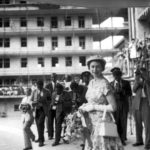
    Queen Elizabeth’s first excursion visit to Nigeria happened in 1956. She spent 20 days after landing on January 28th, making a lit entrance in this borrow-pose Rolls Royce:

    Queen Elizabeth II's "Relationship" With Nigeria in Pictures

    Here are a lot of black and white pictures from the visit:

    [Image Source: Nigerian Finder]

    Queen Elizabeth II's "Relationship" With Nigeria in Pictures

    [Image Source: Arewa Cycle]

    Queen Elizabeth II's "Relationship" With Nigeria in Pictures

    [Image Source: Guardian Nigeria]

    [Image Source: Nigerian Nostalgia Project]

    [Image Source: Nigerian Nostalgia Project]

    Queen Elizabeth II's "Relationship" With Nigeria in Pictures

    [Image Source: Facebook/TalkRealSolutions]

    Queen Elizabeth II's "Relationship" With Nigeria in Pictures

    [Image Source: Only Africa Facts]

    The Queen got some colourful pictures too:

    Queen Elizabeth II's "Relationship" With Nigeria in Pictures

    [Image Source: Nigerian Nostalgia Project]

    Queen Elizabeth II's "Relationship" With Nigeria in Pictures

    [Image Source: Study HQ]

    Queen Elizabeth II's "Relationship" With Nigeria in Pictures

    [Image Source: Nigerian Info]

    [Image Source: Nigerian Nostalgia Project]

    And she had adoring fans at the time too, or people who just needed to make their urgent ₦2k:

    Queen Elizabeth II's "Relationship" With Nigeria in Pictures

    [Image Source: Nigerian Nostalgia Project]

    2003: Queen Elizabeth II’s reunion with Nigeria

    Queen Elizabeth visited Nigeria a second time for the Commonwealth Heads of Government Meeting (CHOGM) summit in 2003. She spent only two days, so you only get two pictures from her visit.

    President Olusegun Obasanjo played host: 

    Queen Elizabeth II's "Relationship" With Nigeria in Pictures

    [Image Source: Alamy]

    ALSO READ: Operation London Bridge: Queen Lizzie Is Dead

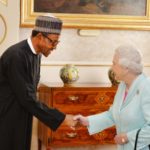
    Handshakes with Nigerian presidents

    President Obasanjo was Nigeria’s only democratic president to host Queen Elizabeth, but she hosted others in her country.

    Like President Yar’Adua:

    Queen Elizabeth II's "Relationship" With Nigeria in Pictures

    [Image Source: Dominic Lipinski/PA Images]

    Queen Elizabeth II's "Relationship" With Nigeria in Pictures

    President Jonathan and his orange juice:

    Queen Elizabeth II's "Relationship" With Nigeria in Pictures

    [Image Source: Getty Images]

    She also shook hands with this guy:

    Queen Elizabeth II's "Relationship" With Nigeria in Pictures

    [Image Source: Presidency]

    …on more than one occasion:

    Queen Elizabeth II's "Relationship" With Nigeria in Pictures

    [Image Source: Presidency]

    And then, there was this one time she synced in formation with the Nigerian High Commissioner, George Oguntade:

    Queen Elizabeth II's "Relationship" With Nigeria in Pictures

    [Image Source: Vogue]

    ALSO READ: But How Does Queen Elizabeth II’s Death Affect Nigeria?

  • Queen Elizabeth II of the United Kingdom lived a long eventful life, but she finally died at the age of 96 on September 8th, 2022. 

    The queen’s exit is the end of an era and its impact isn’t limited to just her home from where colonialism did a global tour. Her death will directly impact many things in Britain from the nation’s anthem to its banknotes. 

    But what impact can the queen’s death possibly have in Nigeria?

    We’ll probably name something after her

    But How Does Queen Elizabeth II's Death Affect Nigeria?

    As Nigeria’s former monarch, it should come as no shock to anyone when the Nigerian government decides to (re)name something important after Queen Elizabeth.

    Serial presidential aspirant, Adamu Garba, is already ahead of everyone and suggesting the University of Nigeria, Nsukka (UNN) be renamed in the queen’s honour

    We can expect the Nigerian government to do oversabi and name the Fourth Mainland Bridge or soon-to-be-completed Second Niger Bridge in her honour.

    There may be a public holiday

    But How Does Queen Elizabeth II's Death Affect Nigeria?

    The United Kingdom will likely set aside a day as a public holiday in honour of the queen. As part of the Commonwealth of Nations, Nigeria may decide to adopt this holiday, but this isn’t set in stone. We can always do with an extra holiday sha, and treat it as a final gift from the queen. Buhari, make it happen!

    ALSO READ: Why the FG Needs to Give Us More Public Holidays

    Renegotiate Commonwealth membership

    Speaking of the Commonwealth of Nations, the queen’s death is expected to affect the political association that’s been criticised as a post-colonial legacy of the British empire. It’s a PR club to launder the history of an empire that colonised and exploited the world. And the queen’s death may be the catalyst to finally burn it to the ground.

    But How Does Queen Elizabeth II's Death Affect Nigeria?

    Those Benin Bronzes

    Over 100 years after British soldiers destroyed the Benin Kingdom and stole thousands of artefacts, many of them remain scattered all over the world. While many institutions are starting to return these artefacts, the British Museum which houses the biggest collection has insisted on hanging on to them. They keep telling Nigeria:

    Maybe King Charles will press the museum’s neck to return them in an attempt to earn some low-hanging goodwill?

    Buhari has a trip to plan

    But How Does Queen Elizabeth II's Death Affect Nigeria?

    Buhari can’t allow a good excuse to travel to the UK go to waste, and the queen’s death is a reason as good as any. Expect our travel blogger-in-chief to hop on a plane anytime soon to go console King Charles.

    But How Does Queen Elizabeth II's Death Affect Nigeria?

    ALSO READ: Operation London Bridge: Queen Lizzie Is Dead

  • On June 30th, 2022, our coloniser the United Kingdom’s Home Secretary, Priti Patel, announced the signing of an immigration deal with Nigeria.

    She tweeted, “Our new landmark agreement with Nigeria will increase the deportation of dangerous foreign criminals to make our streets and country safer.” 

    Nigeria wants deported criminals

    The deal is part of the UK’s New Plan for Immigration policy, and Patel’s announcement caused some unease in Nigeria, for obvious reasons.

    Why would Nigeria import dangerous foreign criminals to make the UK safer? It’s not like we don’t already have our own steady supply of criminals just roaming the streets.

    The UK has a problem with foreign criminals

    The UK is easily a favourite destination for legal and illegal immigrants from all over the world. It has one of the world’s oldest monuments, gave us James Bond and there’s always Royal Family drama so we understand the appeal. 

    Sometimes, the foreigners landing in the UK may commit crimes and get into trouble with the law. Such an offender is classified as a foreign national offender (FNO) by the New Plan for Immigration. If the foreign offender is sentenced to a prison term of at least 12 months, they get a bonus punishment — automatic deportation. 

    Nigeria wants deported criminals

    This means once you trigger that release clause, you should be ready to return to the trenches your country of origin when you finish your sentence, or even before then.

    But here’s where the UK’s headache sets in. As outlined in the New Plan for Immigration policy statement, foreign national offenders aren’t interested in returning to their own countries.

    So foreign national offenders use the instruments of the law to file claims in courts to delay their removal or even nullify it, if they get lucky. This was how the UK ended up with 10,000 undeportable foreign national offenders as of 2020. The UK also has 42,000 foreigners whose asylum applications have failed but have refused to leave.

    Nigeria wants deported criminals

    ALSO READ: “When I Got to the UK, I Realised the Meaning of ‘It’s So Cold Outside’” – Abroad Life

    And that’s where Nigeria comes in

    To be clear, the “dangerous foreign criminals” the UK will be sending to Nigeria are Nigerian-born, not random citizens of other countries as was initially feared.

    The agreement between the two countries also affects immigration offenders, not just convicted criminals. It speeds up the process of removing Nigerian-born convicted criminals and illegal migrants. 

    The UK has already deported 13 Nigerians as a result of the deal. Eight of the deportees were convicted criminals, and the remaining five were described as immigration offenders. The UK government has signed similar deals with Albania, Ghana, India and Serbia.

    Why would Nigeria agree to this deal?

    Nigeria wants deported criminals

    The Nigerian government hasn’t released any public statement addressing the UK deal, so it’s impossible to speculate what the thought process — if any — behind the agreement was.

    But the New Plan for Immigration policy statement was clear that the UK would pressure countries into accepting their convicted citizens in an expedited manner. 

    And if the affected countries don’t agree? 

    The UK government could enforce stricter control of UK visa availability to any stubborn country. We can guess one or two reasons why that’s the kind of thing to turn a few heads in Abuja. Hint: It starts with “m” and ends with “edical tourism”.

    ALSO READ: How to Stay Safe in Nigeria — Tips from the Nigerian Police

  • One day you’re a senator of the Federal Republic of Nigeria; the next day you’re a guest in a UK prison. That’s currently the (developing) story of Senator Ike Ekweremadu.

    Who’s he?

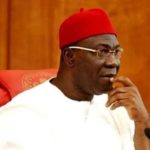
    Senator Ike Ekweremadu

    This guy.

    Ekweremadu first won an election to the Senate to represent Enugu West senatorial district in 2003. He’s also Nigeria’s longest-serving deputy senate president, from 2007 to 2019. 

    But before he became a parliamentary Methuselah, Ekweremadu bagged a bachelor’s and master’s degree in law and also served in the Enugu State government between 1999 and 2002.

    What’s he done now?

    British media outfit, Sky News, reported on June 23rd, 2022 that Ekweremadu and his wife, Beatrice Nwanneka, had been arrested by the Metropolitan Police. Authorities accused the couple of conspiring to harvest the organs of a child in the United Kingdom (UK). They were charged to court for arranging the travel of a homeless Nigerian boy for an organ-donation operation in the UK.

    ALSO READ: These Politicians’ Kids Are Taking Over from Their Parents

    What are the issues?

    The Ekweremadus have four children: two sons and two daughters. Their UK prosecutors told the Uxbridge Magistrates’ Court that one of their daughters, Sonia, suffers from kidney failure. This made it necessary for her to get a kidney transplant to save her life.

    It’s important to note that the average wait time for a kidney transplant from a deceased donor is two to three years in the UK. But this wait time drops down to between three and six months for a living donor transplant. Crucially, living donors must also be aged 18 years or older according to the UK’s National Health Service (NHS). But the Ekweremadus said:

    Why Senator Ekweremadu Is Currently Sleeping in a UK Prison

    In contravention of this requirement, the living donor procured from the streets of Lagos by the Ekweremadus is only 15 years old. The minor in question has been identified as Ukpo Nwamini David. The UK prosecutors told the court that the facilitation of his travel for exploitation took place between August 1st, 2021 and May 5th, 2022. 

    The Metropolitan Police’s Specialist Crime unit launched an investigation into the Ekweremadu family in May after detectives were alerted to potential offences under modern slavery legislation.

    The two suspects were finally arrested on June 21st, 2022 at Heathrow Airport in London. Prosecutors said they were on their way to Turkey, still trying to make the organ donation procedure happen for their daughter.

    What are the suspects saying?

    Why Senator Ekweremadu Is Currently Sleeping in a UK Prison

    Senator Ekweremadu and Beatrice have denied the allegations in signed statements their lawyers presented to the court. Ekweremadu’s lawyer, Gavin Irwin, said his client has led a blameless life as a public servant and can’t possibly be guilty of what he’s accused of. Beatrice also claimed she has an unblemished record and couldn’t be involved in illegal trafficking.

    A letter has surfaced online showing Ekweremadu notifying the British High Commission that David was a potential donor for Sonia. But the UK’s issue appears to be David’s minor status which makes it impossible for him to be a donor.

    What’s going to happen now?

    The court has adjourned a further hearing of the case till July 7th, 2022. The Ekweremadus were also denied bail and will remain in prison until the adjourned date.

    Why Senator Ekweremadu Is Currently Sleeping in a UK Prison

    ALSO READ: How Senate President Ahmad Lawan Is Getting Served Political Breakfast

  • Nigerians are tired of writing the International English Language Testing System (IELTS). And the frustration with the system has fueled the launch of a campaign to address certain issues they have with it. In the past few weeks, thousands of people have signed the #ReformIELTS petition

    Nigerians want IELTS gone

    History lesson

    IELTS was established in 1989 to assess the English language competence of non-native speakers with standardised tests. It’s jointly run by the British Council, University of Cambridge English Language Assessment and the International Development Programme (IDP), Australia. 

    IELTS results are globally recognised by over 10,000 organisations including educational institutions, governments, and employers. But Nigerians are questioning the necessity of the test and are calling for it to be reformed or scrapped. 

    Nigerians want IELTS gone

    The founder of Policy Shapers, Ebenezar Wikinar, is leading the reform campaign alongside other young Nigerians. Let’s look at some of the arguments presented.

    1. High application fees

    Registration fees for IELTS range from ₦83,000 (US$200.5) to ₦89,500 (US$216.2) in Nigeria — almost three times the country’s monthly minimum wage of ₦30,000.

    Nigerians want IELTS gone

    Young Nigerians who want to japa to study in foreign institutions are often required to present IELTS results. The fees required to fulfill this requirement represent an additional financial burden many prospective international students bear when pursuing their student visas.

    There are 11 IELTS test centre locations managed by the British Council in Nigeria, a 2020 ICIR report shows. Up to five test dates are observed monthly, and an average of 120 people write the test at a centre each day. With such a high frequency and the number of candidates, it was estimated that the Council must have made at least ₦5.15 billion from Nigerians in 2020. 

    This does not include the fees charged for remarking and certificate authentication which is what happens when a candidate is not satisfied with their result.  Such a candidate may apply for the remarking of the paper for a fee of ₦15,000. The fee is refundable if the score increases upon review.

    There are also extra costs like transport fare to exam centres and amounts paid to coaching centres for training. These centres charge between N20,000 to N40,000 per month. 

    2. Short shelf life

    An IELTS test result becomes invalid after two years. That’s a shorter shelf life than agege bread. If you don’t migrate within the two-year timeframe, you have to re-apply for the exam. That means you also have to pay all the fees again. 

    Nigerians want IELTS gone

    It’s surprising that the organisers set such a short validity for a language proficiency result when people hardly lose their ability to speak a language within such a short period. 

    Wikina argues, “There’s no way that my English knowledge would expire.”

    3. IELTS is absolutely unnecessary

    While there are genuine demands for the reformation of IELTS, many people want it completely scrapped because it’s unnecessary. Nigerians seeking further education abroad have been taught in the English language their entire lives. This makes testing for their capacity to speak a language baked into their consciousness kind of ridiculous.

    The UK Home Office granted an exemption to 18 countries from writing the IELTS. That exemption list includes Antigua and Barbuda, the Bahamas, Barbados, Belize, Dominica, Grenada, Guyana and Jamaica. 

    In October 2021, Policy Shapers wrote the UK Home Office for explanations on why no Anglophone country was on its Majority English Speaking Country (MESC) list. The UK replied that it must first have evidence that more than half of the people in the country speak English as a first language.

    This explanation is considered a lazy one by campaigners because there’s enough evidence demonstrating the English proficiency of Nigerians. 

    Nigeria has maintained a high spot in the EF English Proficiency Index, currently ranked 29th out of 112 countries globally and 3rd in Africa. 

    Also, in 2018, Nigerians had the sixth-best performance out of over 140 countries that took IELTS. 

    Nigerians want IELTS gone

    What other evidence does the Home Office need to know that Nigerians deserve a place on its IELTS exemption list?

    4. Nigerians deserve better treatment

    Post-Brexit, the UK has been reviewing its immigration policy to attract more international talent. This includes the introduction of the Graduate Visa route which grants two years extended stay for students after their master’s degree in a UK school and three years for doctoral graduates. 

    Nigeria is one of the UK’s biggest markets for international students and deserves its listening ears regarding the IELTS exemption. 

    If the UK is serious in its bid to attract more Nigerian students and respect the economic gains it enjoys from Nigerian visa applicants, it should provide a better explanation as to why the country isn’t on its exemption list, the high registration fees for the test, and the short validity.

    Reforming the IELTS will go a long way in restoring the Nigerian students’ confidence in the UK student visa application process, which will help it achieve its post-Brexit immigration policy. 

    In other words, the UK has more to gain in this whole call for reform.

    Olusegun Akinfenwa writes for Immigration Advice Service, a leading UK-based law firm offering global immigration services and representation.