• If you’ve ever sat at a restaurant in Lagos and felt like your bill was somehow flexing higher than the prices on the menu, congrats, you’ve met the tax squad: VAT, Consumption Tax, and Service Charge.

    Since 2009, Lagos State has charged a 5% consumption tax on meals at restaurants, hotels, bars, and basically anywhere you’re having too much fun. On top of that, since February 2020, the Federal Government has also added a 7.5% Value Added Tax (VAT) on all goods and services. 

    This means you have to pay a total 12.5% tax on every spoonful of Jollof you order at a Lagos restaurant. Some restaurants might not display these charges, and no, it’s not because they don’t feel like taxing you — they’ve just folded the cost into their pricing. 

    Tax isn’t the only thing driving up your bill. Some restaurants also slap on a service charge, ranging from a chill 5% to an audacious 20%.

    We looked at 10 Lagos restaurants to see just how much extra you’re paying on top of your actual food. Let’s just say the bill for your small “starter meal” isn’t so small when the tax shows up.

    1. Zen Garden – 20% extra charges for a Chinese dining experience
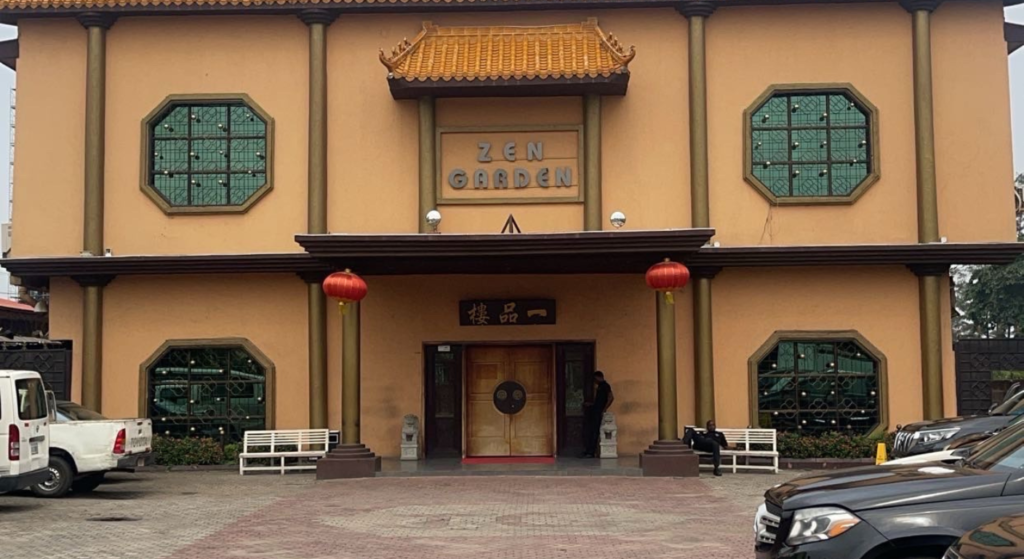
    You may think that ₦17k egg fried rice on the menu is just ₦17k. You might even convince yourself it’s worth the price because the plating is cute, the waiter is extra nice, and they handed you a steaming hot towel to soothe your hands before feasting. In reality, you’re enjoying premium service because your wallet is about to get hit with premium charges. 

    These are the extra fees you should expect:

    • Service Charge: 10%
    • VAT: 5%
    • Consumption Tax: 5%
    • Total extra fee: 20%
    • Location: Ikeja GRA.
    • Price per person: ₦20,000+ (you still need to do the tax maths before your bill humbles you).
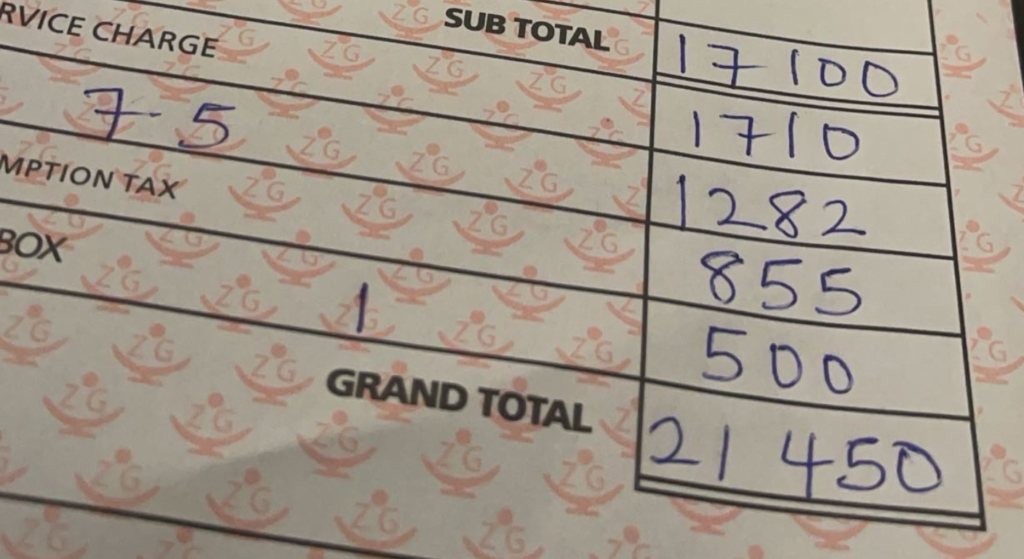
    Zen Garden takes you on a culinary journey and a math test. If the menu says ₦30k, just know that with 20% tax and service charge, you’re paying ₦36,000. That’s ₦6k extra to enjoy the restaurant’s ambience and the sizzling Chinese experience. 

    You can try their vermicelli noodles with Chinese pickles soup, but just be ready for those triple-decker charges.

    2. Cilantro – A smooth 17.5% extra for a taste of Indian cuisine
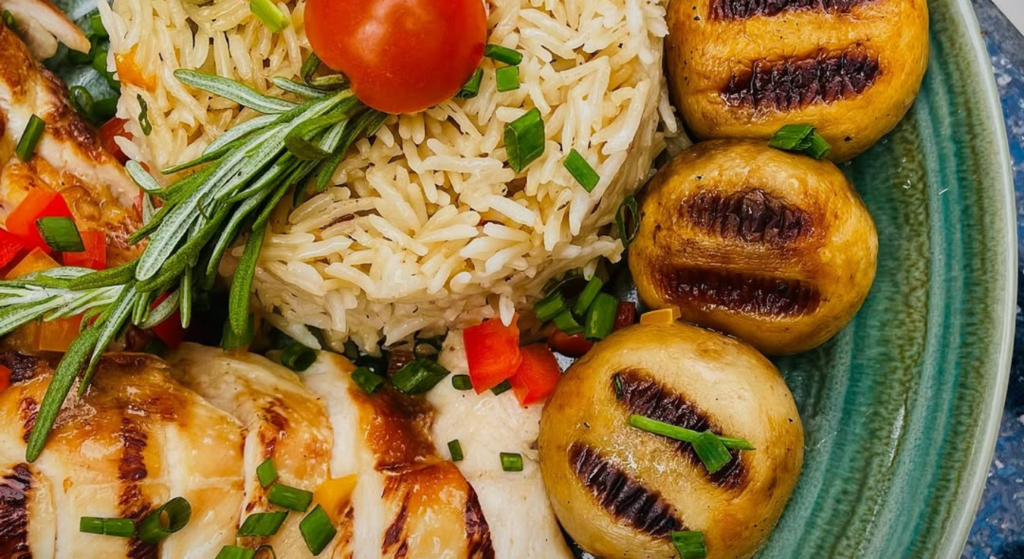
    Cilantro is the restaurant that’ll remind you that you live in a capitalist society. First, you make a reservation and book a table at least 24 hours before. Then, you pay a 5% service charge, 7.5% VAT, and 5% consumption tax. It’s not too bad if you’re in the mood to splurge. 

    • Service Charge: 5%
    • VAT: 7.5%
    • Consumption Tax: 5%
    • Total extra fee: 17.5%
    • Location: Ikeja GRA.
    • Price per person: ₦20,000+ 

    You’re basically paying for the ambience, the vibe, and your waiter’s smile. But don’t say we didn’t warn you: they charge for the experience. 

    3. Afefeyeye – The “I’m Not That Taxed” Option
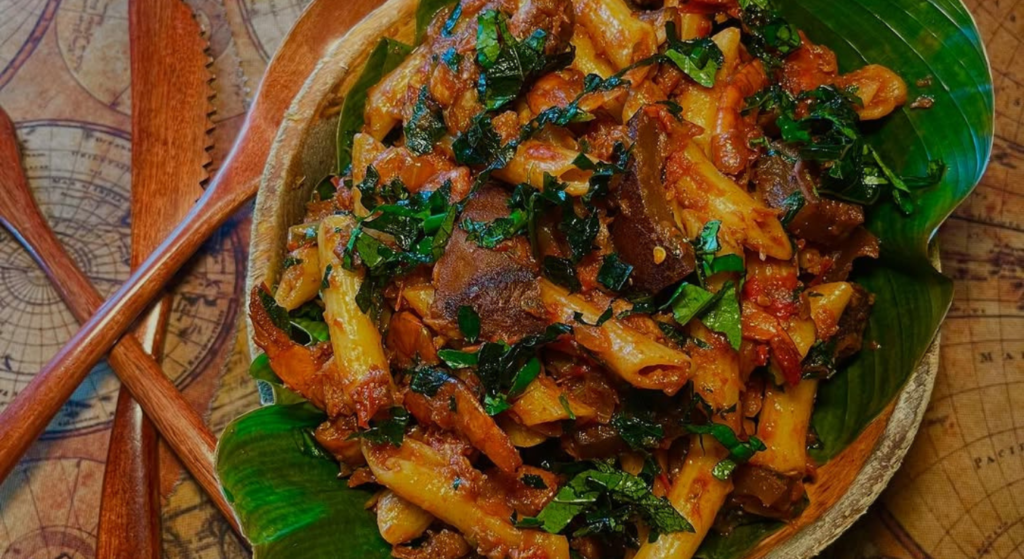
    For when you want the food without the financial gymnastics, Afefeyeye keeps it simple with a 7% total tax

    • Total tax: 7%
    • Location: Ikeja.
    • Price per person:  With ₦20,000, you can have a decent meal — the portions are great. 

    They keep it cultural and neat, with no surprise service charge or double-threat tax combo lurking. You can try their Eko Lawa starter, Abula Special, Babami Penne Pasta or Babami Seafood Carrot Rice. And if you’re in the mood to go big, the Faaji Kelele platter is also an option — all without worrying about ballooning extra charges.

    4. Sycamore by One Basket – Only 12.5% extra
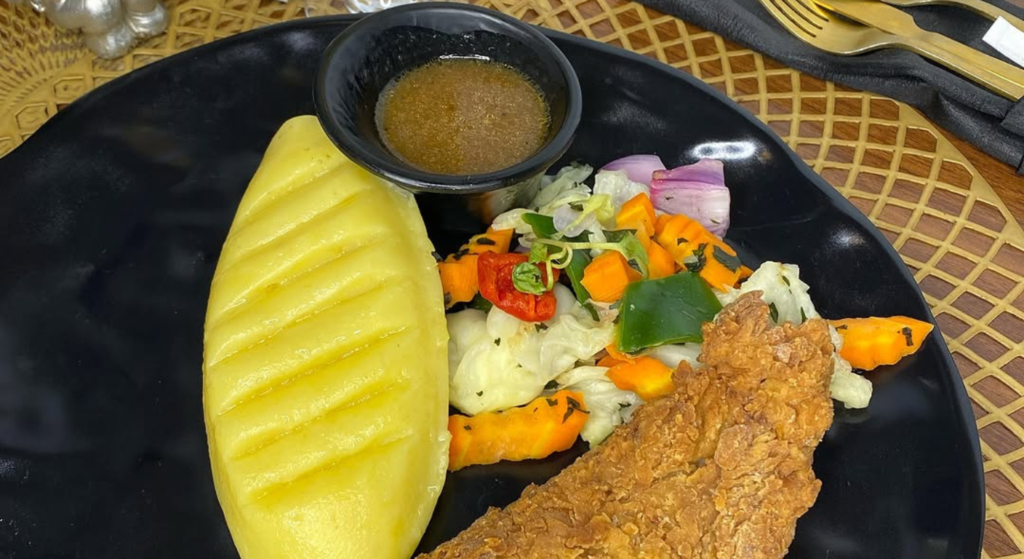
    Sycamore keeps it simple with the standard Lagos restaurant charges: 5% consumption tax and 7.5% VAT. There’s no extra service charge, and you’re not paying just to sit down and eat.

    • Consumption Tax: 5%
    • VAT: 7.5%
    • Location: Magodo Phase 2.
    • Price per person: You can enjoy unlimited cocktails from ₦10,500, and on Wednesdays, unlimited wings go for ₦12,500.

    When you’re here, the only thing you’re focusing on is whether the food’s worth it — not whether some extra charges are secretly ganging up on you.

    5. The Orchid Bistro – Up to 20% extra charges, depending on your squad

    The Orchid Bistro said, “What’s fine dining without a little extra service charge drama?” You pay a 15% service charge for a table of one to four and 20% for a table of five or more. 

    • VAT: 7.5%
    • Consumption Tax: 5%
    • Service Charge: 15% (table of 1–4), 20% (table of 5+).
    • Location: Ikeja.
    • Price per person:  ₦20,000+
       

    Basically, the more friends you have, the more you pay. Friendship is expensive.

    Get More Zikoko Goodness in Your Mail

    Subscribe to our newsletters and never miss any of the action

    6. Hua Han – 22.5% extra for the full Seoul experience

    Hua Han really lures you in with the whole Korean grill drama — the kind where someone grills your meat while you sip soju and pretend you’re in a K-drama. But the real drama? It’s in the bill. With 10% service charge, 7.5% VAT, and 5% consumption tax, your total extra charge is a jaw-dropping 22.5%. That’s nearly a quarter of your bill vanishing into the tax abyss.

    • Total Tax: 12.5%
    • Service charge: 10%
    • Location: Ikeja.

    Just know: when you order that bulgogi, you’re also paying for the full Seoul experience — plus tax. You’ll probably forget the service charge once the Korean BBQ hits your taste buds, but your account balance won’t.

    7. Encanto – A classic 17.5% combo

    Encanto’s tax game is like that one friend who knows how to have fun but still makes it home before 10 p.m. Not too much, not too little. With a 5% service charge, 7.5% VAT, and 5% consumption tax, you’re looking at a 17.5% add-on to your bill. It’s not bad for a fine dining experience. 

    • Service Charge: 5%
    • VAT: 7.5%
    • Consumption Tax: 5%
    • Total Tax: 17.5%
    • Location: Victoria Island.

    If you’re splitting the bill with friends, prepare for calculator drama.

    8. Ile Iyan – Taxes for your swallow
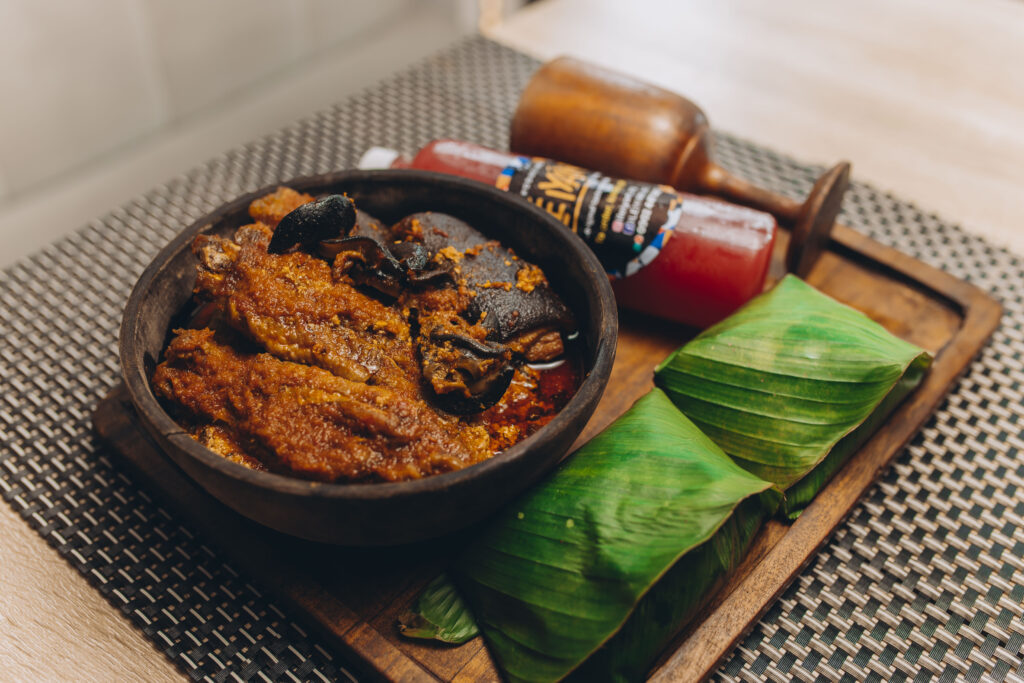
    Ile Iyan keeps things semi-transparent: you’ll definitely pay 12.5% in taxes (7.5% VAT + 5% consumption tax), and a service charge might be added “for your convenience.” 

    Heads up, it’s not a tip for your waiter, so don’t skip the gratitude if the service was actually good.

    • VAT: 7.5%
    • Consumption Tax: 5%
    • Service Charge: This may be added to your bill.
    • Total extra fees: 12.5% + possible service charge.
    • Location:  Lekki.

    Even pounded yam is not exempt from the Lagos tax hustle.

    9. Sketch Cafe & Restaurant – The “no surprises here” spot
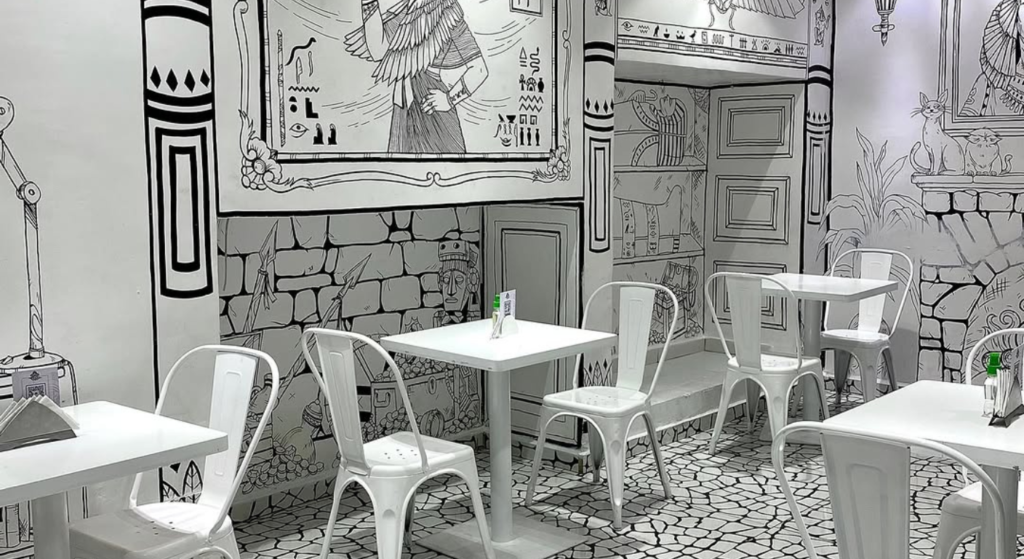
    This review highlights that Sketch has no sneaky extra charges. What you see on the menu is what you pay. Your total bill is exactly that — your total bill. Simple.
    But word: It’s probably factored into the price somewhere.

    • Total Tax: 12.5% (standard tax)
    • Service Charge: Not specified.
    • Location: Victoria Island.

    For a place that looks like a comic book, the prices feel very real.

    10. Yellow Chilli – 12.5% extra for the seafood feast
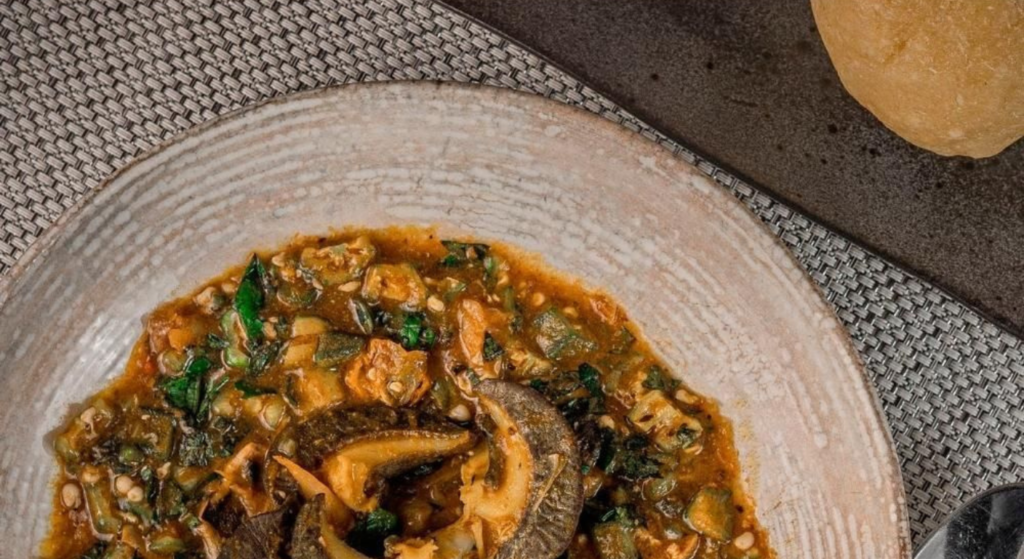
    Yellow Chilli is pretty open about taxes: you’ll be paying 7.5% VAT and 5% consumption tax, for a total of 12.5%. They don’t specify any service charge, though, so keep an eye on your bill! 

    • VAT: 7.5%
    • Consumption Tax: 5%
    • Total Tax: 12.5%
    • Location: Ikeja GRA.

    But hey, it’s worth it for their famous seafood platter. You may go for their eba and seafood okra, but best believe the taxes are coming too.

    Bottom Line

    When you’re dining out in Lagos, it’s not just about the prices on the menu; it’s what’s on the final bill. These extra charges can turn a ₦20,000 brunch into a ₦25,000 event real quick. So the next time your date orders that extra cocktail, just know the government might be sipping, too.

    Join 1,000+ Nigerians, finance experts and industry leaders at The Naira Life Conference by Zikoko for a day of real, raw conversations about money and financial freedom. Click here to buy a ticket and secure your spot at the money event of the year, where you’ll get the practical tools to 10x your income, network with the biggest players in your industry, and level up in your career and business.


    Also Read: The Cost of Exclusivity: What It Takes to Join Lagos’ Elite Clubs


    Zikoko readers are currently giving feedback about us this year. Join your voice to theirs by taking this 10-minute survey.

    [ad]

  • Nigeria has  been blessed with extraordinary women across different fields. Dora Akunyili, Chimamanda Adichie and Ngozi Okonjo-Iweala will be remembered for their vast achievements.  But one woman in our history books appears relegated to merely being the first Nigerian woman to drive a car. 

    Funmilayo Ransome-Kuti, once described as the “Lioness of Lisabi”, was an activist, a politician, a teacher and a women’s rights advocate. Let’s take a look at some of her exploits.

    The first female student at Abeokuta Grammar School

    It’s not weird in this age to have more girls than boys in a classroom, but this wasn’t always the case. Ransome-Kuti, born in 1900 as Frances Abigail Olufunmilayo Thomas, was the first female student to be admitted into Abeokuta Grammar School — the first grammar school in Nigeria. She enrolled as a student in 1914, the  same year five other female students joined the school. 

    She founded the Abeokuta Women’s Union (AWU)

    In 1932, after her education in London and her marriage to Reverend Israel Ransome-Kuti, she founded the Abeokuta Ladies Club (ALC) which was exclusive to only western-educated women. 

    However, the club gradually became more feminist and political. By 1944, it finally became open to market women who were illiterate and suffering under colonial rule. The club became open to all Abeokuta women in 1946 and changed its name to the Abeokuta Women’s Union (AWU).

    In 1918, colonial rule brought changes that made life particularly difficult for everyone, especially for women. One of these changes was a tax imposed on women considered to be of marriageable age and affected girls who were as young as 14 years old. They were required to pay a tax of three shillings yearly. 

    Another problematic policy was the food price control tax placed on market women. When they defaulted on these payments, the women were beaten, stripped or even arrested.

    By 1948, the women had finally had enough. Since protests were banned, they gathered at the palace of the then-traditional ruler of Abeokuta, Oba Ladapo Ademola II, for “picnics” and “festivals”. Ransome-Kuti taught the protesters how to deal with the tear gas thrown at them. 

    Day after day, the protesting women sang war chants calling for the abolition of taxes. They also demanded the removal of Oba Ladapo Ademola II for implementing the colonial policies. Eventually, the women won the drawn-out battle as the colonisers removed the taxes and the king abdicated his throne for two years. 

    She was the only woman in Nigeria’s 1947 delegation to London

    Nigerians often celebrate men like Obafemi Awolowo, Nnamdi Azikwe and others like them for their role in the country’s struggle for independence. But many people don’t know Ransome-Kuti was a member of the 1947 National Council of Nigeria and the Cameroons (NCNC) delegation to London to table demands before our colonisers. 

    While in the United Kingdom, she stirred things up with an article she used to blame colonial rule for the political and economical marginalisation of Nigerian women.

    She’s the only Nigerian woman to receive the Lenin Peace Prize

    Ransome-Kuti travelled far and wide, and gave lectures everywhere she went to highlight the struggles of Nigerian women and campaign for their rights. In recognition of her efforts, she won the Lenin Peace Prize in 1970.

    She’s a Member of the Order of the Niger (MON)

    After AWU’s win against tax impositionin 1948, Ransome-Kuti created the Nigerian Women’s Union (NWU) to support women’s rights across the country. She set up branches around Nigeria and ensured educational opportunities for girls and women. She also worked towards improving the participation of Nigerian women in politics.  And the government named her a Member of the Order of the Niger (MON) in 1965 to appreciate her hard work

    As we already know, Ransome-Kuti passed much of her activism onto her third child, the famous Fela Anikulapo-Kuti. Unfortunately, during a military raid of her son’s house in 1978, soldiers threw her out of the two-storey building, and the injuries she sustained claimed her life at 78. 

    Funmilayo Ransome-Kuti lived a full life and was passionate about Nigerian women and their representation in the country. With everything she achieved, it’s a great disservice if we remember her only for her motor skills or simply as “Fela’s mother”.  

  • Nigerians treat money like knacks; they want a lot of it, but won’t be caught talking about it. Every week, we ask anonymous Nigerians to show us their Naira Life – some will be struggle-ish, others boujee–but all the time, it’ll be revealing.

    (Shout out to Refinery29’s Money Diaries for the inspiration.)


    First in line is a family man who believes he’s a diehard team player.

    Age: 37

    Occupation: Financial Analyst

    Location: Lagos

    Relationship Status: Married (with two kids)

    Salary: 700,000 (net)

    Household income: ₦700,000

    Rent: ₦750,000/year


    What was the first salary like?

    I mostly spent on people; family for the most part. I was quite traditional about it. I remember sending all of it to my mum as a gesture, and her sending it back to me. My net income at the time was ₦182k, and my annual package was ₦2.8 million. That, of course, includes bonuses and all of that. Also, this was 2010.

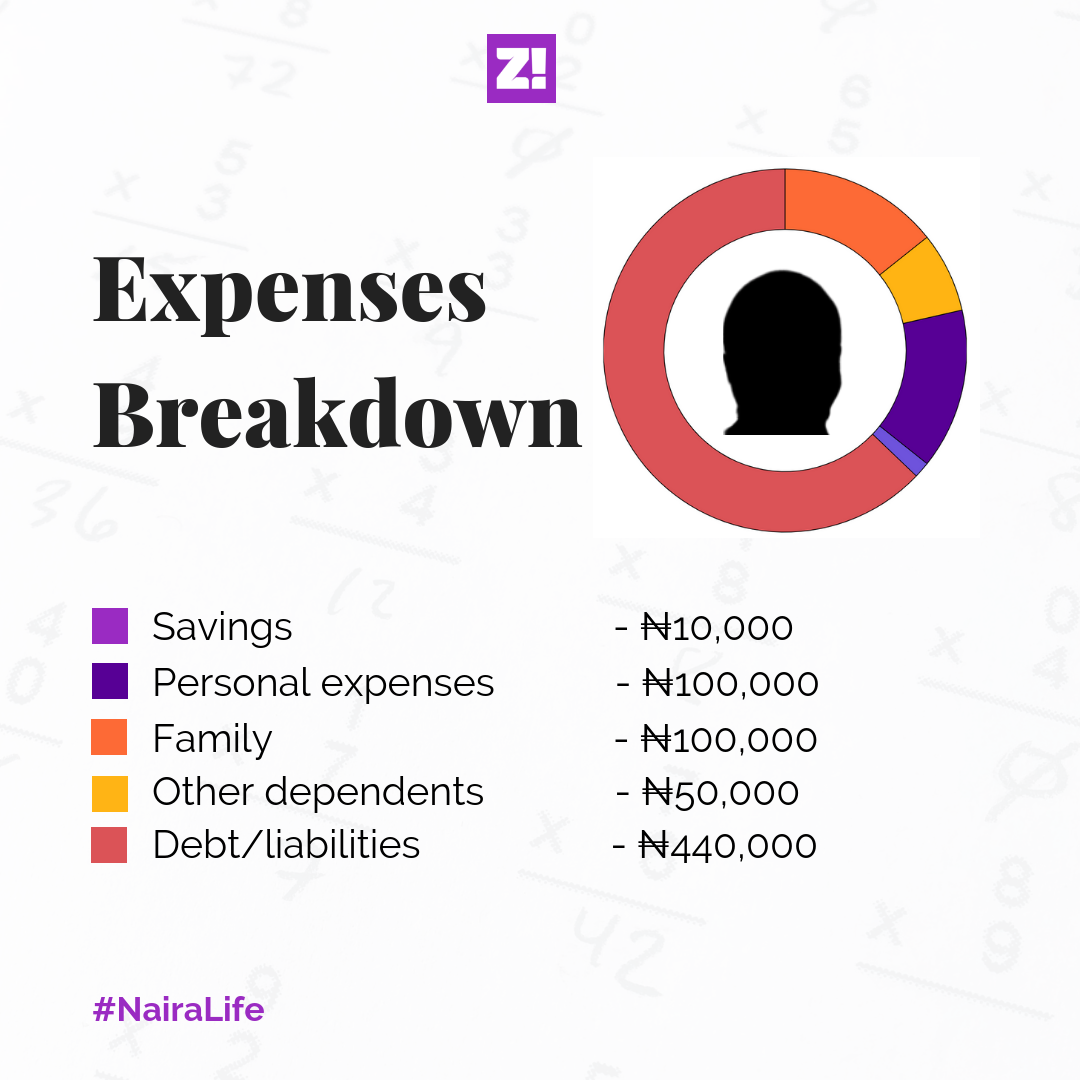
    Less than 2% of your income goes into savings?

    Yes, and that’s because the rest of my income goes into settling debts and other recurring commitments and liabilities. Also, I have this indiscipline of people asking for money and me not turning them down. Those 20 and 30k’s add up.

    Investments?

    None. I currently have no financial investments. I made some investments two years ago; they went bad, and I’m still paying for it. That’s where the debt came from. It’ll be completely paid in about six months though. For now, over 50% of my income goes into settling that debt.

    What’s going to change about your spending when the debts are paid?

    A lot more of it can now go to my family. Need to push up that family budget.

    2019, almost 9 years since your first salary. What’s the annual package now?

    My annual package is currently at 9.4 million.

    How much do you feel like you should be earning now?

    ₦1 million. Net. I didn’t make some important switches in my career at the right time. Now, I believe you should move every 4 years max. I spent 7 years at my first job.

    How much do you think you’d be earning in five years?

    Using industry average, and where I currently am, I’d say somewhere between 1.5 and 1.8 million, net.

    What do you feel like you should have had, but don’t have now?

    Land. It’s just one type of investment I never really paid attention to. I just had a “never tie down capital” mentality. Most of my investments have actually brought me loss. Still, I’m not scared to take another risk.

    Despite your bad investments, what are your best investments?

    Definitely my certifications; the ICANs, ACAs, ACSes etc. When you work in an industry as structured as the financial industry, certifications help you stay competitive and valuable. Also, I’m kinda glad I got most of those certifications before I got married. 

    When do you want to retire?

    You know, I used to think I’d retire at 45, but I realise now that I’m not a great businessman. It took a while to realise this, but I’m going to be working till the end, maybe 60. I’m the perfect company man; great energy, always representing, putting in the work for the team. I’m usually the person sharing impactful insights, and driving execution.

    What’s your pension plan?

    I don’t pay too much mind to it, but about 50-something-k goes into the pension account monthly. Currently, it holds no less than 4 million. It doesn’t make sense to me that I have that much somewhere–that is giving me about 7% annually but still–I can’t afford a house. I’ve done the math, and my pension is going to work best for me if I already own a house.

    I imagine that the best use of my pension will be one where it helps me get a mortgage. I imagine a future where Pension Fund Managers in Nigeria create housing packages for consumers. If I have a 20 million pension and don’t own my house, I’m still screwed.

    I inherited a mindset from my mum where I always imagined that I’d buy a house, instead of going through the trouble of building one. I was much younger, and that doesn’t seem so realistic now.

    What are you long term plans at the moment?

    I’ve been in debt for too long that it’s hard to see beyond it. At 700k, I can build a house in 3 years, because I really don’t have huge personal expenses. I’m just caught in the debt trap. At 700k, and with the responsibilities of family, I’d still be able to save 150k at least. In fact, 40% of my entire income can go into saving and investing.

    What do you wish you paid attention to in 2010?

    Discipline. I wish I’d began saving and investing early.

    How would you rate your happiness on a scale of 0-10?

    I’m really glad a lot of my happiness isn’t tied to my finances because I’d probably have high BP now. I’m totally fine. And while this might sound cliche, I have a family. I invest a lot of time in them, and it’s easy to underestimate how important this is for our future and mental wellbeing.


    My head is still above water, and for that, I’m grateful.

    Check back every Monday at 9 am for peeks into the Naira Life of everyday people.

    If you’d love to share your Naira Life with us, tell us here. You’ll be anon, of course 🙂