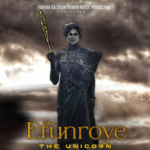
• Barely hours after the film Efunroye: The Unicorn, which is based on the life of Efunroye Tinubu, the infamous Madam Tinubu was announced, producer and lead actress Faithia Williams (formerly Fathia Balogun) came under heavy criticism for glorifying her legacy of slave trade.

    “Power. Trade. Legacy… The untold story of a warrior queen is about to unfold. She built an empire. She defied kings. She changed history. When freedom had a price, she paid it in gold. The merchant queen who rewrote the rules. Now, it’s time for her to rule your screens,” Williams posted on Instagram on Tuesday, 22 October 2024.

    What are critics saying?

    Critics have blasted the promotion of the film as trying to whitewash Madam Tinubu’s dirty laundry as a staunch defender of slave trade and make her a patriotic martyr. 

    “A deliberate decision was made to fund a Nigerian movie lionising not just ‘a’ slave trader but THE ULTIMATE SLAVE TRADER, as in THE EFUNROYE TINUBU herself,” David Hundeyin, the journalist said on X. “The one who decided she would rather sink a ship loaded with a cargo of kidnapped African human beings than reduce their asking price to the European buyers. THAT Efunroye Tinubu. This would be like getting Tyler Perry and Spike Lee to produce and direct a movie titled ‘Robert E. Lee: The Unicorn.”

    “Africans who say you are victims of slavery and forced labour by the Whites are now building monuments and making movies to honour your own people who sold you as slaves to whites. You hate the slave buyers but are hailing the slave sellers as ‘unicorn’ who ‘re-wrote history.’ The yoke is heavy,” another user posted under Williams’s post.

    “One of the most wicked female Figures in African History. They are calling her a Warrior,” a user posted.

    Who is Madam Tinubu

    Madame Tinubu was just about her coins. She had serious political power. She was tight with four Lagos Obas — Adele, Dosunmu, Oluwole, and Akitoye. She married Oba Adele for that extra street cred and used her wifey perks to build a solid trade network with European merchants. Her stock list? Slaves, tobacco, salt, cotton, palm oil, coconut oil, and firearms. 

    When the British came with their “abolish the slave trade” energy in 1852, they had Oba Akitoye sign a treaty to officially put an end to it. But Madam Tinubu was like, “Treaty for who?” She kept her trade popping on the down-low with her Brazilian and European business partners, and Akitoye was just there looking the other way.

    Benjamin Campbell, the British consul at the time, wasn’t having it and called her out for still dealing in slaves and basically controlling all the trade in Lagos.

    After Oba Dosunmu took the throne, things got a bit spicy for Madam Tinubu. Under pressure from Campbell, Dosunmu had no choice but to exile her to Abeokuta after she plotted and scattered the British influence in Lagos and even planned to assassinate Campbell.

    When the Kingdom of Dahomey came for Abeokuta, Tinubu stepped up, supplying Abeokuta with the weapons needed for victory. This earned her the title of Iyalode of Egba.

    Madam Tinubu passed away in 1887, but her legacy is very much alive. Lagos’ Tinubu Square is named after her, and there’s even a statue of her there.

    What we know about Efunroye: The Unicorn

    Williams has not said much about the film. In fact, the poster she posted on X was the first public announcement she made about it. There is no release date yet, but it’s coming soon. The film is a biopic of Madam Tinubu’s life. Williams is the producer and will also play Madam Tinubu.

    ALSO READ: The 13 Best Nollywood Movies on Showmax Right Now (Oct. 2024)

  • If you asked a Nigerian in the 15th to 19th centuries to describe their version of “oil money”, two words come to mind — slave trade.

    British traders were at the heart of the slave trade before the UK government abolished the trade [BBC/Getty Images].

    Popularly known as the Transatlantic Slave Trade or Euro-American slave trade, this involved selling enslaved Africans to the Americas and Europe, usually by other Africans. 

    The first slave traders in Nigeria were Portuguese, who sold over 3.5 million Nigerians to the Americas and the Caribbean, primarily as cotton plantation workers. More than a million died from disease and starvation during the voyages. 

    Captive Africans being transferred to ships along the Slave Coast for the transatlantic slave trade, c. 1880. [Photos.com/Getty Images]

    Despite these deaths, these amounted to exponential economic growth for the nations involved. 

    The USA grew to provide 60% of the world’s cotton and some 70% of the cotton consumed by the British textile industry. 

    Profits made in the slave trade provided money for investment in British industry, with banks and insurance companies offering services to slave merchants. 

    Local chiefs enriched themselves with guns, mirrors, and other profitable income due to the trade-offs with these Western powers. 

    All this happened until the abolition of the slave trade in 1807 with the Slave Trade Act by William Wilberforce.

    The official medallion of the British Anti-slavery Society [Wikimedia Commons]

    Once slavery was abolished, Britain needed a legitimate means of exploiting resources conducting business. One of the largest slave ports came to mind — Lagos.

    This is where the story of Oba Akintoye and Prince Kosoko comes to light.

    The Akintoye-Kosoko power tussle 

    Obas Akintoye and Kosoko.

    After abolishment, slavery didn’t just disappear from Africa until 1852, especially in coastal places like Lagos.

    Trading at that point was so bad that the British Royal Navy had to establish a Task Force called the West Africa Squadron to pursue Portuguese, American and French slave ships and prevent local chiefs from selling more people.

    This affected local politics as some chiefs and kings wanted to keep trading, while some thought quitting was reasonable.

    A West Africa Squadron ship, HMS Black Joke fires on the Spanish Slaver, El Almirante [HistoryUK].

    In 1841, Oba Oluwole of Lagos died from a gunpowder explosion triggered by lightning. This left a vacancy on the throne that was contested between Prince Kosoko, the rightful heir, and his uncle, Prince Akintoye.

    Prince Kosoko was pro-slave-trade, making him popular with the chiefs and slave traders. However, Akintoye was a populist, a friend to the British and anti-slave trade, which made him unpopular with the local leaders.

    With these factors against Akintoye, it was easy for Kosoko to establish a coup against Akintoye and oust him from the throne into exile in 1845. With Kosoko’s ascension to power, the slave trade heightened. Lagosians became domestic slaves or chattel slaves for export. 

    Kosoko grew in wealth, with the ability to purchase guns, velvet robes, umbrellas, gunpowder and other valuable items from the proceeds of the slave trade. 

    With all this going on, Lagos looked more like a lost cause for the British anti-slave trade movement despite negotiations with Kosoko, and they didn’t like this. 

    They sought counsel on their next steps from a formerly enslaved person and first Black Bishop, Samuel Ajayi Crowther.

    The Revenge of Bishop Samuel Ajayi [Adjai] Crowther

    Bishop Samuel Ajayi Crowther [Guardian Nigeria]

    Samuel Ajayi [Adjai] Crowther is a familiar name in Nigerian history. 

    Many of us know him as a child from Osogun sold into slavery at 13 and traded several times before being rescued by the Royal Navy West African Squadron in Sierra Leone. 

    We also know him as the first Black Anglican Bishop and the first person to translate the Bible from English to Yoruba. 

    How was he then involved in the Lagos tussle? 

    Samuel Ajayi Crowther, 1890 [Slavery Images]

    Eight years after being admitted to the ministry as a priest by the Bishop of London, Crowther was received by Queen Victoria and Prince Albert in November 1851.

    Both the Queen and the Prince studied a map showing Lagos and Abeokuta and displayed great interest in the country’s trade. Ajayi described his enslavement and the state of slavery in Lagos at the time. 

    When Queen Victoria asked what the solution could be for slavery on the West African coast, Ajayi replied, “Seize Lagos by fire and by force”. He also argued that if Lagos were under Akitoye instead of Kosoko, the British commercial interest would be guaranteed and the slave trade suppressed.

    On November 20, 1851, a team consisting of the British consul in Lagos, Lord Beecroft, and other officers negotiated with Prince Kosoko one last time to end the slave trade, but he refused. 

    And with that, Beecroft sent the word to the senior officer of the Bights Division, Commander Forbes, to expel Kosoko and wage war on Lagos.  

    Preparation for war 

    “British Men o’ War Attacked by the King of Lagos” [James George Philip, 1851]

    One month later, in December 1851, the British Naval Forces travelled to Lagos for warfare. 

    On the part of the Lagosians, they had two concerns — the safety of their gunpowder, which was essential for fighting, and the effectiveness of the artillery forces, which were cannons, rockets and muskets. 

    For the British, their problems lay with the lagoon’s shallow waters. This made movement more difficult for their larger warships (HMS Penelope and Samson). Therefore, they had to make do with the smaller warships, HMS Bloodhound and Taser. 

    You will enjoy this story about the Ekumeku War: How Igbo Vigilantes Resisted Britain for 31 Years

    This was good news for the Lagos Army Commander, Oshodi Tapa. The Lagosians would not have been able to withstand 32-calibre cannons firing at them per minute. But that didn’t mean they were going to take chances. 

    Obituary poster for war chief, Oshodi Tapa [Sahara Weekly]

    Two rows of spiked coconut tree stems were placed underwater as an engineering technique to prevent the big warships from moving towards the shore. Then they placed long cannons on piles above sea level. 

    Now, the Lagosians were ready for the British. 

    A bloody Christmas 

    1851 Bombardment of Lagos by the British Naval Forces [Guardian Nigeria]

    On December 25, 1851, Oshodi Tapa attacked British ships that had gathered at the ports for weeks in disguise of a truce. Tapa planned to lure them into the traps they had set as soon as possible.

    The British fleet, which had 306 soldiers under Commander Forbes, sailed inward the following morning, and the Lagosians fled.

    However, this was a decoy, as the British were ambushed by Lagosians who murdered one officer and 13 soldiers and wounded four officers and 60 soldiers, including Lieutenant Corbett. They also captured one of their warships. 

    But the British retaliated 

    The Royal Navy were furious with the battle’s outcome and retaliated on December 27, 1851. They decided to go the route of an artillery storm because they knew they’d lose with infantry combat. 

    Captain Jones led the attack party consisting of HMS Bloodhound, HMS Teaser, and a flotilla of boats, including The Victoria and The Harlequin, equipped with overwhelming firepower.

    They engaged Kosoko’s army in a battle lasting three days. Kosoko put up a stiff resistance, but the Royal Navy’s superior firepower won the day. Kosoko and his leading chiefs fled Lagos for Epe on December 28, 1851.

    The aftermath

    A group of Lagosians managed to escape the blaze of the war and ran to the city’s northern outskirts. 

    They created a community called Agindigbi, which signifies the deafening sound of the cannons. This still exists as an area in the now Ikeja part of Lagos.

    Modern day Agindigbi in Ikeja [PropertyPro]

    The British chased away the remaining indigenes to spread the word upon arrival. 

    They found 48 letters in Kosoko’s palace corresponding with Kosoko and European slave traders. These can now be found in the British National Archives. 

    On December 29, the British installed Oba Akintoye as the Oba of Lagos. After Akintoye’s death on September 2, 1853, his son, Dosunmu, succeeded him as king. 

    King Dosunmu, King of Lagos [Alubarika]

    Under Dosunmu, the slave trade was revived briefly until the British convinced him to exchange the ports of Lagos for a yearly pension of 1,200 cowries (equivalent to £1,000). This was known as the Treaty of Cession in 1861. 

    From then on, Lagos was annexed to become a colony under the British.

    The impact 

    An aerial view of CMS in modern-day Lagos [Council on Foreign Relations]

    Britain’s conquest of  Lagos and its commercial activities made Lagos an economic hub. By 1872, Lagos was a cosmopolitan trading centre with a population over 60,000

    Since then, it has become one of the largest cities in West Africa, with an estimated metropolitan population of over 15.9 million people in 2023. Lagos is also the most profitable state in Nigeria, with a $136.6 billion GDP