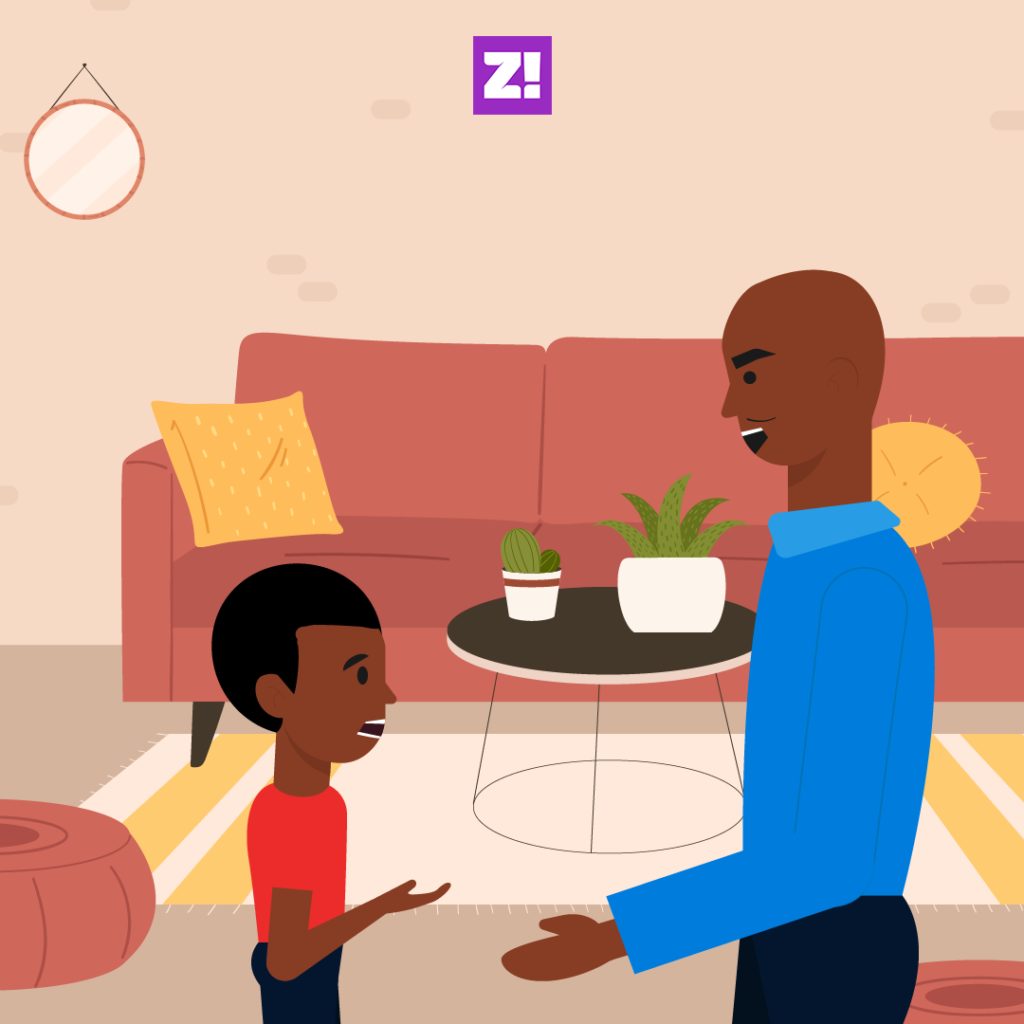
• A little over a decade ago, a then 14-year-old Denyefa* returned home from school and was greeted with accusations of promiscuity by her father. Unsatisfied with her response, he beat her, demanded names, and the next morning, took her to women in their community for a public virginity test.

    TW: Sexual abuse, Assault, Violence

    This is Denyefa’s Story as told to Princess

    The pasty white ceiling had a crack shaped like a river.

    I traced its course with my eyes as if my life depended on it — memorising every bend, every fork where it split into smaller branches. One, two, three, four, five, si… At some point, I lost count, but my eyes never left the crack. 

    I couldn’t look anywhere else. I couldn’t meet the faces of the women surrounding me, women I had known my whole life, whose laughter I could recognise from across our compound, women who had carried me as a baby and should have been shielding me from what was about to happen.

    My heart pounded so hard it felt like my ribs were rattling. The room was so quiet I could hear my own shallow, ragged breathing and the faint swish of fabric whenever someone shifted or moved closer.

    “Just relax,” my aunt said, her voice warm and gentle, the way you’d speak to a child with a fever. But her hands, cold, hard, unflinching, told a different story. When her palm met the under of my thigh, I could have sworn I felt a bruise. Nothing about this moment was relaxing.

    This was the same aunt who, just the week before, had been in Aba buying lace fabric and gold earrings for her upcoming wedding. The aunt I had been excited to see, to hug, to help unpack her bags. But now, she was the one holding my legs apart while other women leaned in to watch or help pin me down.

    My fists were clenched so tightly my nails dug into my palms. I could feel the blood pooling beneath them, the small half-moons they were carving into my skin. Those marks stayed for weeks, little echoes of that day, but they were not the real wound.

    The betrayal was worse.


    It had started the day before. I’d come home from school sweaty and hungry, thinking only about the rice and stew I was planning to have for lunch.

    Our street in Bayelsa was unusually quiet. It felt ominous, but I brushed it off. Inside, my father was in the living room, half-sitting, half-slouched in his old wooden chair, the one with the worn cushion that always smelled faintly of palm oil. He looked like he’d been sleeping, or at least resting, but the moment he saw me, his eyes sharpened.

    “Denyefa,” he called.

    I answered and greeted him, my voice wary. 

    “I know what you’ve been doing,” he said, no greeting, no preamble.

    “What?” I asked.

    “Are you stupid? You’re asking me what? I know where you have been going and what you have been doing.”

    The words felt like smoke in the air — thick and choking. My stomach turned cold. I couldn’t feel air passing through my nostrils and into my lungs. Everything was still. This wasn’t new. Ever since my chest began to swell and my hips filled out, my father had looked at me differently, no longer with what I thought was adoration and pride, but with suspicion and contempt. The way men in the street turned their heads when I walked past wasn’t, to him, evidence of their disrespect. It was proof of my guilt.

    I shook my head, confused and already afraid. “Daddy, nothing is happening. I haven’t done anything wrong.” I said, placing my school bag gently on the floor, afraid that any sudden movement might further agitate him. “I’m not—”

    Before I could finish, he was on his feet, the chair scraping against the floor. He grabbed the cane from behind the door inches to his left, and the belt from his waist.

    The first lash caught my arm. The second, my back. Then it was just blinding pain everywhere. I was crying, pleading, swearing on anything holy that I hadn’t done what he thought. But the more I begged, the harder he swung.

    “Tell me their names!” he barked. “The boys from your school you’re riding — tell me!”

    I shook my head until my neck hurt. “I’m not—”

    “NAMES!” Another belt strike.

    That day, I really did think I might die. I started calling random names. Boys I barely knew. Boys I’d only passed in the corridor. Boys whose faces I couldn’t even picture properly. Anything and everything to make it stop.

    Something in me shattered into so many pieces, and 12 years later, I still haven’t found them all.

    Finally, he dropped the cane, breathing hard. “Get ready. We’re going to your school.”

    That was when I bolted to my room, locked the door, and pulled out my small travel bag. My hands were shaking so badly I could barely fold my clothes.

    I called my aunt, the one who would later hold my legs open, and told her through sobs that Daddy wanted to drag me to my school to shame me, to parade me as proof of his suspicions. She told me not to run away, that she’d be coming in from Aba the next day.

    By the time my father came out of the bathroom, towel slung around his neck, he said it was too late in the day to go to the school. We would go the next day.

    That night, I couldn’t stay asleep longer than 20 minutes. 

    Get More Zikoko Goodness in Your Mail

    Subscribe to our newsletters and never miss any of the action

    The next morning, I woke up feeling sick. The kind of sick that makes you feel like you’ve had a heatstroke for days, and your skin feels too tight. My head throbbed, and the air felt stuffier than usual. My stomach churned, and I had a fever so high, the bed was burning up. I could hear voices downstairs, women’s voices, soft and serious, like people talking at a funeral.

    Then, footsteps on the stairs.

    When I opened my eyes fully, my aunt was in the doorway. She was not alone. Behind her were three other women from our compound — neighbours, family friends, women I’d greeted every morning before school. Women who had clapped for me when I danced at Christmas.

    “Come,” my aunt said from the doorway. Her eyes avoided mine. 

    They led me to the kitchen.

    It was the same kitchen where I learned to slice onions without crying, where my mother and I had laughed over burnt plantains, where the smell of pepper soup used to wrap around me like a blanket. Now it felt like a courtroom or a prison or maybe even an execution ground.

    A mat had been spread on the floor.

    “Lie down,” one of them said, like it was the most normal instruction in the world.

    I felt my chest tighten even more. My hands were trembling.

    “Please,” I whispered. I didn’t even know who I was speaking to — maybe my mother, who was miles away in another country, working. Or maybe God. Maybe anyone who could hear me. It all fell on deaf ears.

    I lay down. The women moved around me, their skirts brushing against my legs. Someone knelt beside me; I could feel her breath near my thigh. The air smelled of kerosene from the stove, of sweat, of perfume clinging weakly to skin.

    It didn’t take long. The “test,” if you can call it that, was over in minutes. But each second stretched until it felt like I had lived an entire lifetime on that mat. My aunt pulled my labia apart and placed an egg there. I could hear a muffled “Ah, ah. There’s nothing now.” She tried to force it in until I cried out a little.

    When they finished, there was no conversation. No verdict. They didn’t even tell me what they thought they’d found. They simply stood up, smoothed their wrappers, and left me there, still staring at the crack in that ceiling, the only witness to what had just happened who wasn’t pretending it hadn’t.


    Next Read: The Hospital Told Me to Wait Until I Had Another Baby Before They’d Give Me Birth Control


    The days after were a blur. I walked through them like a ghost.

    I couldn’t eat. At night, I’d lie awake, replaying every sound, every movement. Sometimes I’d wake up sweating, heart pounding, and for a split second, I’d think I was still on that mat, legs apart, women’s faces above me.

    My father never mentioned it again. He didn’t apologise. He didn’t explain. He spoke to me like he always did, about chores, about school, about keeping my skirt length decent, as if nothing had happened.

    But everything had changed.

    I couldn’t look at him without remembering his voice saying, “Tell me their names.” I couldn’t respect a man who would rather have strangers examine his daughter’s body than believe her word.

    I stopped going to family events. I couldn’t stand to see those women again. Some of them still smiled at me like nothing had happened. Others avoided my eyes, but not one of them ever said, I’m sorry.

    Not even my aunt. I felt violated. It feels like I have carried that violation on my back, my entire life.


    For years, I carried it alone.

    I didn’t tell my friends. I didn’t tell my teachers. How do you explain something like that to someone who’s never heard of it? How do you describe the way your stomach drops when you realise your body isn’t yours anymore, or never really was? And I never breathed a word of it to my mother. It wouldn’t have done anything. My father’s word was absolute. 

    Part of me thought maybe I deserved it. Maybe I had been too friendly with boys at school, too quick to smile. Maybe my walk was too fast, or too slow, or too something. I didn’t have the language yet to know that none of this was my fault.

    It took growing older, meeting other women, and hearing their stories, to realise it wasn’t just me. This happens to other girls, fathers sending them to nurses, aunties, “traditional birth attendants”, to prove they are “still pure.” It’s control disguised as concern. Violence disguised as protection.

    Now, almost 13 years later, I’m telling this story because I want it to stop happening.

    If you’re a father reading this: your daughter’s body is not your property. Your fear doesn’t justify humiliating her. Your tradition doesn’t make this any less of a violation.

    And if you’re a girl who has gone through it, listen to me: it was never your fault. You didn’t deserve it. You were not wrong for existing in your own skin.

    I’m in a better place now. I have people who trust me, people who believe me when I speak, people who know that healing isn’t linear. But that fourteen-year-old girl deserved better than what she got.

    She deserved to keep staring at ceiling cracks because she was bored in class or daydreaming about her future, not because she was trying to climb inside them and drown a nightmare her own family created.


    Next Read: 4 Nigerian Women Talk About Taking Virginity Tests

    [ad]
  • Photo credit: Human Rights Watch

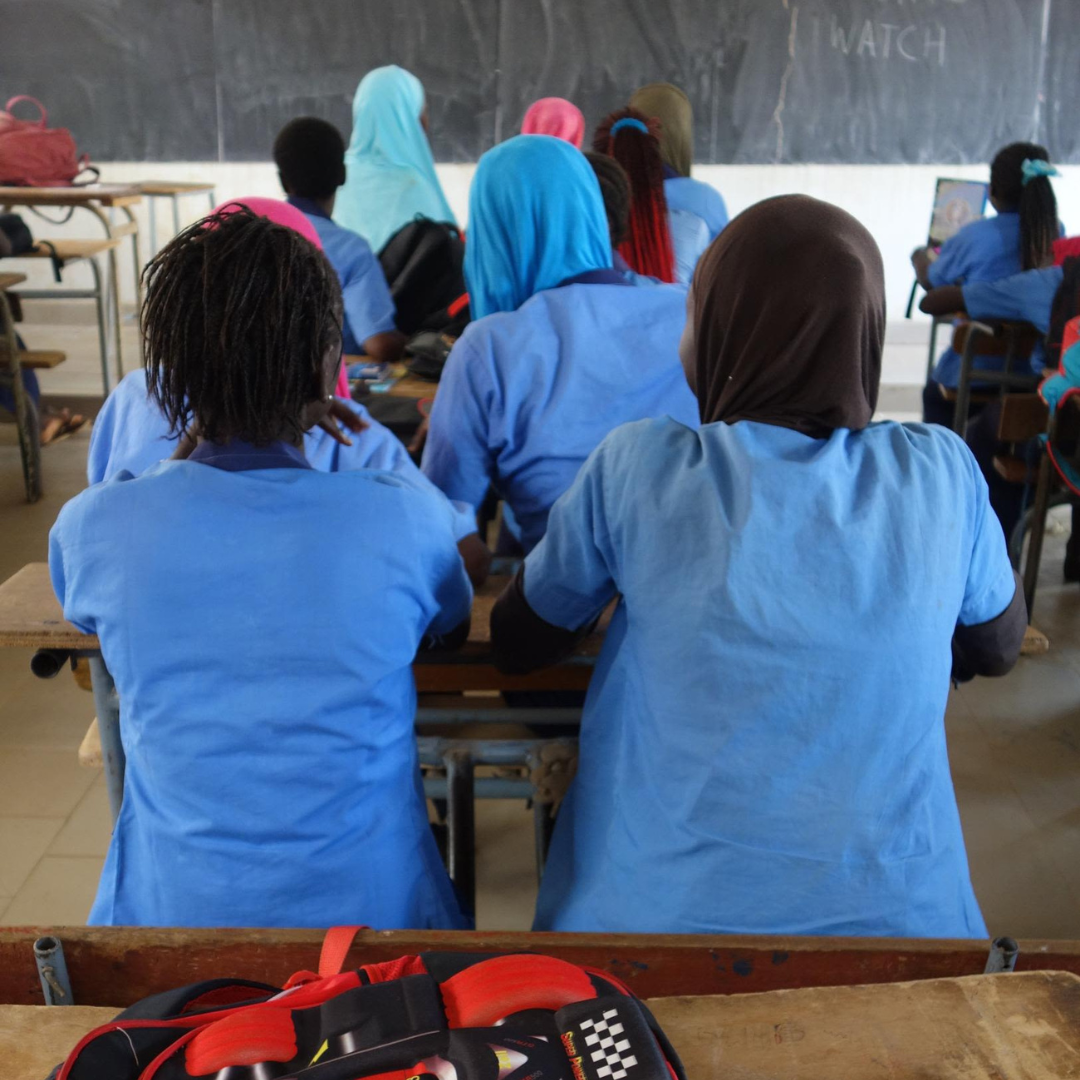
    At 14, *Faiza only cared about two things: her grades and Hannah Montana. Boys weren’t even on her radar — until a 29-year-old teacher arrived at her school and changed everything.  

    She remembers him being young and charismatic. “He was very different from our other teachers,” she told Zikoko. “I became his favourite almost immediately, and he would call me during lunch break to gist about all the older students who wrote him love letters.” 

    At first, their interactions seemed harmless to Faiza, like the typical relationship between a teacher and a “teacher’s pet.” But their already questionable dynamic shifted after she saw him strolling through her neighbourhood. She later learned he had a close friend he often visited nearby.

    One in four Nigerian girls between the ages of 13 and 24 have experienced at least one form of sexual abuse. For many, like Faiza, it begins with a trusted adult whose actions blur the line between care and harm.

    “He would call me whenever he was around, and I would go to him,” she recounted. “I knew we were becoming close in a way we shouldn’t be, but I didn’t feel unsafe with him because the visits lasted for months without him making any inappropriate move.”

    That sense of safety, however, wouldn’t last. Looking back, Faiza recalls the first time she questioned why she had ever trusted him: the day he invited her to his house after her surgery. At 15, frail and trying to escape the chaos at home, visiting her “kind” teacher, who promised to care for her during her recovery, seemed harmless. True to his word, he cooked her a meal, a gesture that made her feel at ease. Exhausted, she fell asleep shortly after eating, unaware of how drastically things were about to change. While she slept, he pinned her down and raped her. 

    For Faiza, the assault marked the beginning of a dark and confusing chapter in her life. “I had lost my virginity and felt like there was nothing left to lose,” Faiza said. “So I started visiting his house regularly. He would tell anyone who saw us together that I was a university student.” After every visit, he insisted she clear their Facebook chats — their primary mode of communication — and warned her not to tell anyone. “Sometimes, he’d smile at me with this knowing look, as if to remind me that no one would believe me anyway,” Faiza recounted.

    Faiza’s experience is not an isolated incident but part of a troubling pattern of abuse in Nigerian schools. In Nigeria, 44% of school girls experience at least one form of physical or sexual violence perpetrated by teachers or classmates. 

    Over the years, Faiza often faced the same question from those she confided in: why did she keep returning to him after he raped her? It’s a question she struggles to answer.

    Toluwalase David-Oluwole, a mental health advocate, explained that this is common among survivors of sexual abuse. “When the abuse happens at the hands of a trusted individual, the survivor often internalizes it, believing on some level that it’s acceptable to be treated that way,” she said. “They go back sometimes because they’ve been conditioned to see it as a norm.”

    She added that the psychological effects of such traumatic experiences often follow survivors well into adulthood, shaping their emotions, relationships, and sense of self-worth. “It takes a lot of dismantling and psychological help for survivors to live a normal life,” David-Oluwole said. “These individuals usually don’t have balanced emotions and struggle in some way with their mental health. When they grow up, they often make poor choices in partners, driven by fear or the belief — shaped by past experiences — that they only deserve love or desire in unhealthy ways.”

    For Faiza, the exploitation didn’t end after the rape. Her teacher continued to groom her, leveraging her vulnerability and his position of authority. Like many other abusers, he had unprotected sex with her and kept Postinor 2, a contraceptive pill, ready before her arrival. But when an unplanned visit led to him forgetting the pill, he knew she would get pregnant. 

    “One day, he dragged me out of my classroom to his house, claiming it was urgent,” Faiza recounted. “He made me take a pregnancy test, and I’ll never forget how terrified he looked when it came back positive.” She never got to tell her parents; her teacher immediately gave her pills to terminate the pregnancy and continued to exploit her afterwards. Even after he got married, he didn’t stop texting her and demanding that she visit him. 

    Sadly, Faiza’s story is not unique. Across Nigeria, countless girls face similar abuse, yet their voices are often silenced by societal stigma, and even when they speak up, they are denied justice as a result of institutional failures.  

    Tori, a 17-year-old, was expelled from her secondary school after she reported that a teacher raped her. But her determination for justice never wavered. “I told my mom everything, and she got the teacher arrested,” Tori said. “We went through all that to discover that my school principal bailed him out,” Her boyfriend, frustrated by the lack of justice, tracked the teacher down and beat him till he was almost unconscious. “That’s all the punishment the teacher got,” Tori concluded.  

    The systemic nature of the problem is further illustrated by the 2023 Delta State case, where a school principal was arrested for allegedly raping a four-year-old pupil. Despite assurances from authorities that justice would prevail, the child’s mother revealed she was pressured to settle out of court. To date, no evidence suggests the principal was sentenced.   

    These stories highlight a harsh reality: while laws like the Violence Against Persons (Prohibition) Act (VAPP) exist, enforcement is weak, and justice for victims remains elusive.  

    Chidinma Ibemere, an award-winning educator and advocate, believes that societal intervention, alongside parental vigilance, is critical in putting an end to the sexual abuse of school children. “From my experience, most students only reveal what they want their parents to know, so it can be tricky for parents to identify when their children are being abused in school,” she said. “But that’s not to say we can’t try.”  

    One of Ibemere’s key recommendations is for parents to build open and trusting relationships with their children. “If the children are boarders, strive to attend visiting days,” she suggests. “And for day students, be interested in what they do or say.” She emphasises the importance of taking concerns about teachers seriously and to stay vigilant for any unusual behaviors, asking supportive questions until the child feels safe enough to share. 

    Ibemere also acknowledges that there’s no easy way to spot predatory teachers. However, she highlights the importance of normalising conversations about sex and consent, as paedophiles often exploit the lack of knowledge in these areas. Faiza herself didn’t realise she had been abused until she read a book about sexual abuse at the age of 18. 

    Ibemere added that schools must also play a critical role in safeguarding children. “Educational policies should mandate schools to prioritize the safety of children in their care,” she advised. “Schools should be held accountable and face strict sanctions whenever a case of sexual assault occurs.”

    Names have been changed to protect the identity of victims.

    [ad]

  • Fola* (40) got diagnosed with bipolar disorder and depression at 19 after surviving an abuse-related mental breakdown. She shares her frustrations with how mental illness has affected her relationships, quality of life and her ability to parent her children.


    TW: Sexual abuse, domestic abuse and self-harm.


    As told to Boluwatife

    Image designed by Freepik

    I’ve lived with bipolar disorder for 22 years, but I wasn’t always like this. 

    Growing up, I was the regular fun-loving child who played with her siblings and stayed over with her cousins during school holidays. But then my uncle started sexually abusing me, and my “regular” life ended.

    The first time it happened, I was 10 years old. He lived with my parents for a few months and constantly made me and my siblings touch him. Sometimes, he’d touch us. It didn’t occur to me to say anything, and it stopped when my family moved out of the area, so I just pushed it to the back of my head.

    Three years later, my parents separated, and I had to go live with my grandmother. At this time, my uncle was an undergraduate. He also lived in my grandma’s house when he wasn’t at school. I was in JSS 3. The abuse started again and continued on and off for three years whenever he was home on holiday.

    This time, it came with threats. He’d warn me to tell anyone unless he’d kill me. I think my mental health issues started accumulating from there. Whenever he wasn’t around, I simply forgot he’d abused me. Then he’d return and begin again. I now know from therapy that forgetting was my subconscious way of protecting myself. I just locked the memories away in my head.

    One time in SS 3, I overheard him tell his girlfriend that he’d “destroy Fola’s life”, and I started having panic attacks. My heart raced for days, and I kept having thoughts of death. I was preparing for my WAEC exams, but I couldn’t concentrate. It was like all my bottling up eventually reached a breaking point. 

    I remember when I finally broke down. It was the day of my chemistry exam for WAEC. I walked into the lab, and my friends were waving at me to join them when I ran out. The school’s secretary had to call my mum to let her know I was behaving strangely. She took me home, and I grew worse. I couldn’t bathe, eat or talk to anyone, and I kept crying.

    My mum thought I had acute malaria that was affecting my brain and took me to a hospital. I spent about three months there and honestly don’t remember most of what happened. There was a time when I was unconscious, and the doctors had to resuscitate me. When I started trying to cut myself and drag injections from the nurses, the doctor referred me to a psychiatric hospital.

    It took two years of regular hospital visits and consultation for the psychiatric hospital to officially diagnose and start treating me for bipolar disorder and depression in 2001. The doctor didn’t admit me to the hospital, and it took that long for an official diagnosis because I’d blanked out a lot, and it took a while for me to remember specific details. 

    I also told my mum about what my uncle had done. The family was involved, and the matter ended with begging and assurances that it’d never happen again.

    But the damage was already done. I was 19 years old, and suddenly, I was faced with the reality that I’d have to be on medication for the rest of my life.

    It took a while for me to adjust. I’d take my medication religiously for a while, but then I’d get tired and refuse to take anymore. I relapsed three times before I accepted that I couldn’t run away from medication. 

    I almost emptied my family house during one of those relapses. I stopped my drugs and had this huge burst of energy. So, I decided I was going to clean and rearrange the house. It wasn’t even dirty, but I wasn’t thinking straight. I called an aboki and told him to pack everything, even the valuable things. Luckily, my mum returned before he could take them away. 

    Living with bipolar disorder is one thing. Navigating relationships with it is another thing entirely. At different points in time, men came to me wanting to date me, but once I told them about my sickness, they ghosted me. It didn’t even matter that I was on medication, and I was always upfront about my condition. They just disappeared.

    Even when I decided to focus my attention on church and let relationships rest, this sickness still didn’t let me be. I joined the choir but couldn’t meet up with the early hours and vigils required as a church worker. 

    One of the side effects of my medication is excessive sleep. An average person sleeps eight hours, but I sleep 15-16 hours daily. That also affected my university studies, but fortunately, I still graduated. 

    I met my husband, Robert*, just after NYSC service year in 2012. We met in a keke, and he asked for my number. I remember he had one small torchlight phone, and I thought, “See the phone this one is using to toast woman?”

    Anyway, we got talking, and I immediately told him about my condition. He didn’t mind. He even declared that my uncle was now his enemy and he’d never talk to him if he ever saw him. 

    Robert and I got married within a year of dating. My mum was happy I’d found a man willing to marry me with my condition because not many men would want someone with bipolar disorder in their house.

    The early days of our marriage weren’t too bad. Robert understood that my medications left me tired and always oversleeping, so he helped with the chores. I also didn’t work, so he took care of the bills. I did try to run a salon, but the stress of standing for a long time affected me, and I had to stop.

    Then, Robert started hitting me. It wasn’t regular, and it happened when he grew frustrated with my inability to do certain things. He’d complain about it, I’d try to defend myself, and he’d respond with slaps. We moved to a different state after marriage, and none of my family members were close. 

    Whenever he hit me, he’d quickly call my parents to report to them about how I was in the wrong — I think he was just trying to talk before I did. He never told them about the beatings, and I didn’t say anything either.

    I had my first child in 2013. I have three children now, and each time I get pregnant, the doctors change my medication to prevent birth deformities in the kids and so that the trauma of birth and blood loss wouldn’t affect my mental health. 

    I’ve gone from using four tablets daily to eight, and my energy levels have dropped with each birth. I can’t concentrate well and can no longer do as much as I used to. As of 2015, I could still go to the market, cook in bulk and store soups in the freezer. Now, I can only cook soups thrice a month, and even that is with serious determination. 

    [ad]

    I had my last child in 2022, and my doctor instructed me not to have any more if I didn’t want to be totally useless. 

    My husband is aware of how much childbirth has affected me, but it still doesn’t change the fact that most of our issues are because of my condition. I do try my best. I run a provisions store, which I started in 2023, and I try to go in the evenings when I feel well enough to do so. But then my husband comes home from work and wants me to cook fresh food, but I can’t do it. It’s really affecting our relationship.

    To be honest, he tries his best. When he’s in a good mood, he helps me out and tries to make sure I’m fine. He cooks, helps with the children’s school runs and provides for us. But when he’s tired, he takes it to the extreme. He says things like, “What kind of wife did I even marry?” and accuses me of faking my weakness. Does he think I’m happy that I can’t be much of a wife and mother to my kids? I can’t even be actively involved with my children. 

    Sometimes, I cry all day and question God. Like, why did this have to happen to me? But then I console myself that I won’t live forever. I’ll be gone one day, and the drugs will stop.

    I guess Robert’s feelings are valid. I know my condition isn’t the easiest thing to manage, but this is a lifelong thing, and I wish he’d be more understanding. I know he has many female friends he goes to meet whenever he leaves the house angry, but I don’t even mind. If I’m not giving him the joy he wants, maybe it’s okay for him to find it elsewhere. There’s nothing I can do. I can’t stop my medication so I can have more energy because it’d only make my condition worse. So, what’s the point?

    I’ve tried to talk to him about how I feel on numerous occasions. Sometimes, he listens. Other times, it’s like, “Abeg, I’m tired of all these stories.” I’m glad he’s even stopped hitting me. I finally told my mum last year, and she threatened to arrest him. He hasn’t hit me since. 

    In all this, I’m glad I have my family as a support system. Most days, I think less of myself and worry about the things I can’t do. But my mum calls me weekly to talk to and encourage me. She was there when I first broke down and constantly reminds me how far I’ve come. I survived, I have children, and my condition is manageable even with the side effects of medication. I’m grateful to God for the little wins.

    *Names have been changed for the sake of anonymity.


    NEXT READ: “Don’t Tell Anyone”: The Sexual Abuse Of Nigerian Boys

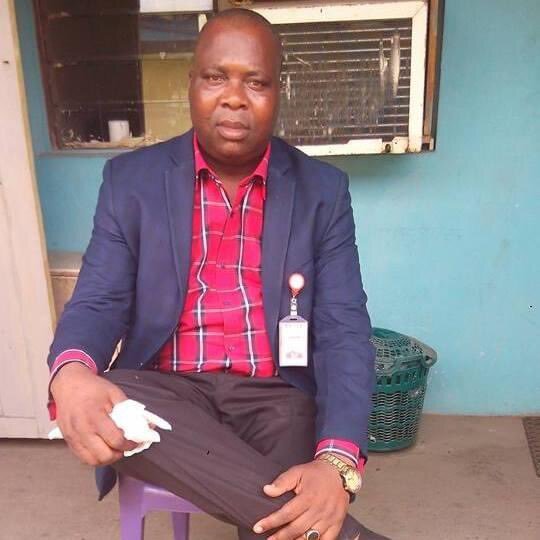
  • The accused, Superintendent Owolabi Akinlolu

    At 4:46 AM, before dawn yesterday morning, a restless X user @AdetheExplorer took to his X account to seek the public’s help for justice for his 17-year-old sister who was raped in Ogudu police station by a police superintendent named Owolabi Akinlolu.

    @AdetheExplorer‘s cry for help came two days after the matter escalated, and their mum, Mrs. Aramide Olupona, stated that the accused’s wife and family members were begging her to let it go because the accused’s retirement is near. The mum also mentioned that the authorities are trying to bury the accusation. The Area Commander invited her to convince her to let it go. The police informed her that the accused’s whereabouts are unknown, although the Lagos State Police Command’s spokesperson, SP Benjamin Hundeyin, said the suspect is in custody.

    According to the victim’s recount, the accused police officer offered to help her track and recover her stolen phone after he overheard her narrating her situation to her mum.

    On June 29, 2024, the teenager’s mum received a call from Officer Owolabi stating that the phone thief had been caught and demanded the teen come to the police station. On her arrival, they told her that they arrested the wrong person due to a mistake in tracking.

    Then Officer Owolabi sent his personal assistant to call the teenager into his office. On getting inside, the officer locked the door and kept the keys in his pocket. Scared and confused, the teenager asked what was happening, and she was threatened with a cocked gun instead. He threatened to shoot her if she didn’t keep quiet and cooperated. He began to pull her clothes and harass her. When she struggled with him, he hit her on the back of the head with his gun—then violated her.

    The accused, Superintendent Owolabi Akinlolu

    Then, the officer demanded that she report to his office daily, during school lunch break or on her way home after school. Then he added that she finally fell into his trap after watching her for two years.

    On June 14, the Lagos State Police Command’s spokesperson, SP Benjamin Hundeyin, tweeted that the police aren’t trying to conceal the case and that a full-scale investigation has started.

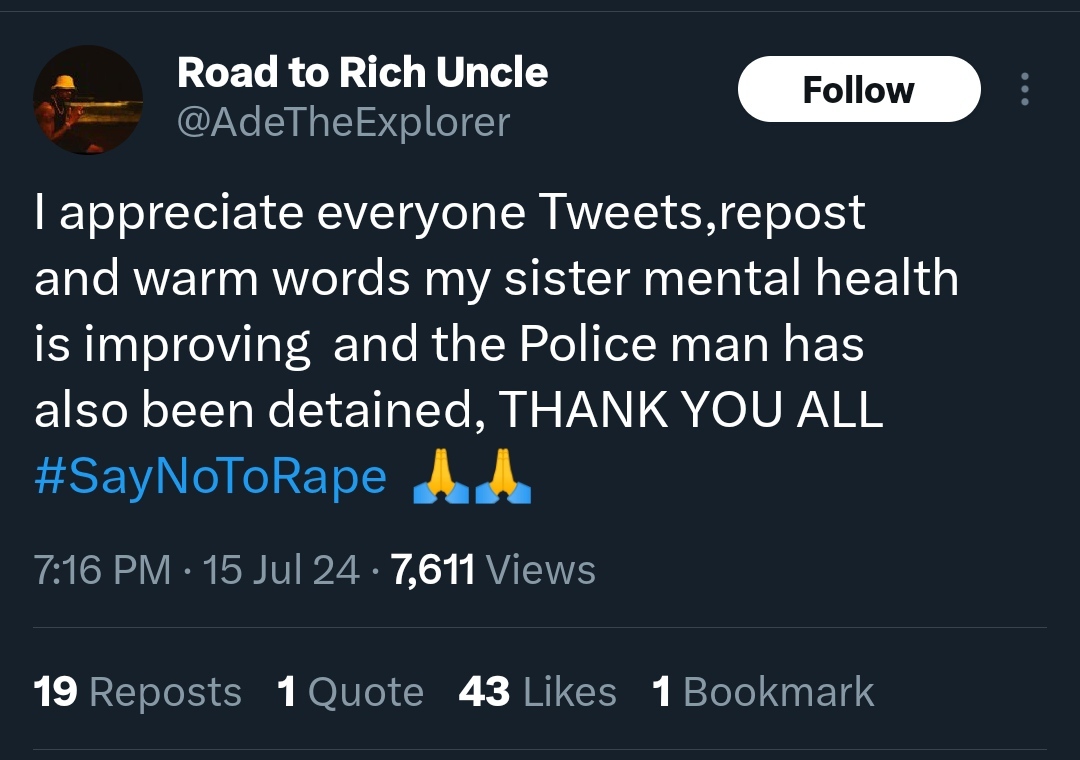
    At 7:16 on July 15, the victim’s brother posted on X that the accused superintendent is now in police custody.

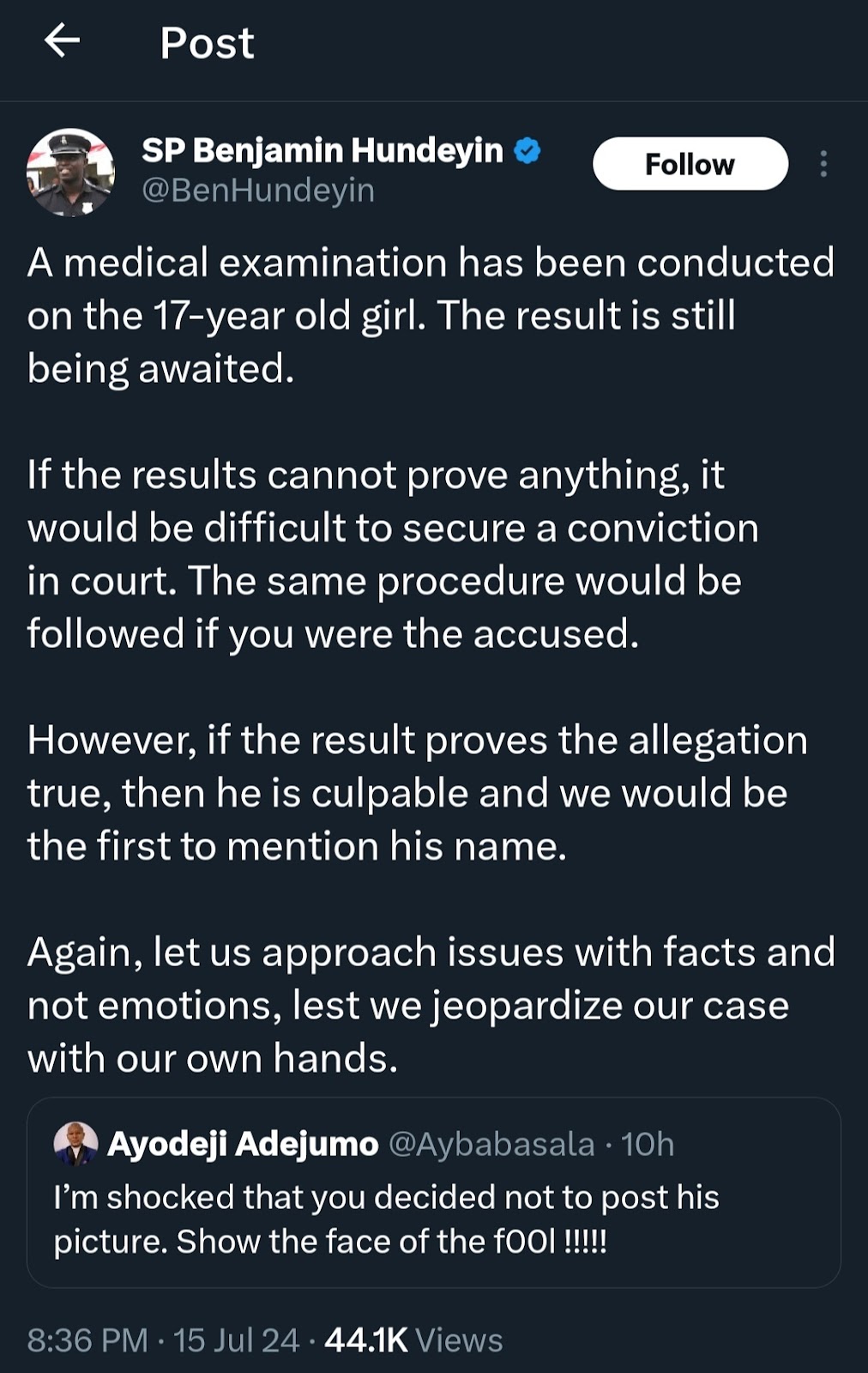
    An hour later, Benjamin Hundeyin tweeted that the teenager had undergone a medical examination and that they were waiting for the result.

    What Nigerians are saying

    The public is curious why the name, pictures and crime of the accused police officer, Owolabi Akinlolu, aren’t publicly displayed, as the police force posts other suspects and accused.

    This is a developing story.

  • Trigger warning: Sexual abuse

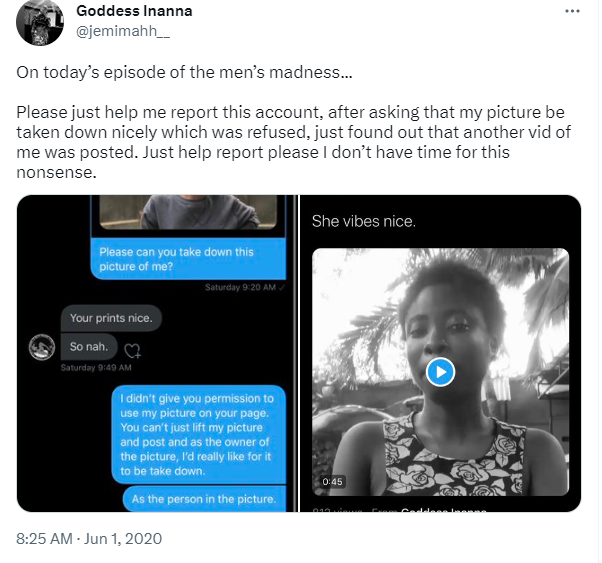
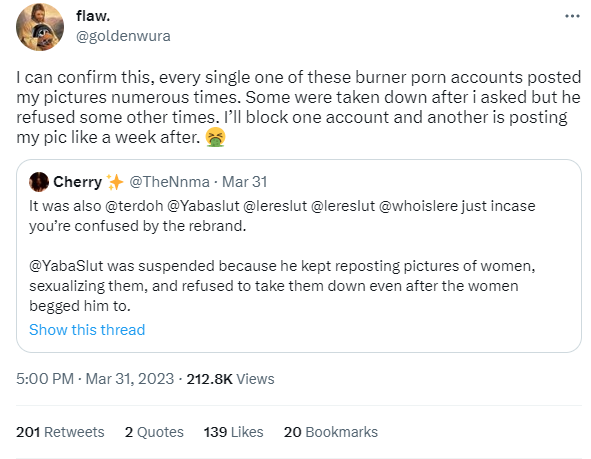
    On March 30, 2023, Nigerian Twitter woke up to a thread — an exposé on a decade-long chain of sexual blackmail, revenge porn and manipulation allegedly carried out by Terdoo Oluwadara Bendega on unsuspecting young women.

    Who is Terdoo?

    Source: LinkedIn

    In a recently-hidden LinkedIn profile, Terdoo describes himself as an “experienced Sales and Marketing Manager with a background in Computer Science and a knack for Informed Decision Making through Data Analytics.”

    LinkedIn searches confirm this account is no longer open to public view.

    Terdoo was formerly a Growth Manager at Omnibiz Africa and is currently the editor-in-chief and co-founder of Sodas ‘N’ Popcorn

    On social media, Terdoo is alleged to have gone by multiple aliases: [@Terdoh @WhoIsLere @Terdoo @0lvdara @Lereslut @YabaSlut @noirethedad @tiddiesandass @PervertedHost @lereslvt @cumical]. As of reporting this story, these accounts have been deactivated, making it difficult to get a solid grasp of his digital footprint at this time.

    He is also active on Telegram — where most of the revenge porn videos is said to have been shared.

    When did the allegations start?

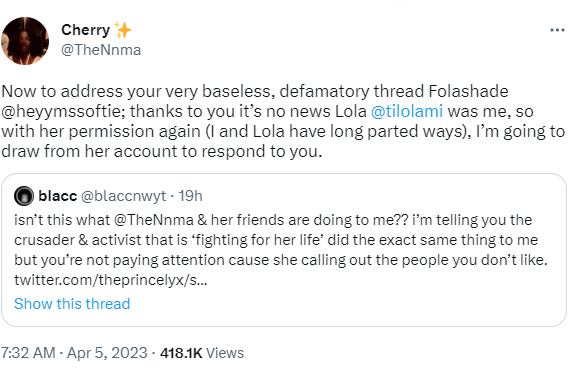
    While @TheNnma’s Twitter thread went viral on March 31st, the allegations started much earlier. On February 25, Terdoo’s ex identified as “Blacc” (@blaccnwyt) accessed one of his Twitter burner accounts to give her account of the abuse she endured at his hands.

    Blacc claimed that Terdoo would “choke [her] till [she] was screaming for help” and that he “stole someone’s sex tapes off [her] phone to masturbate to.”

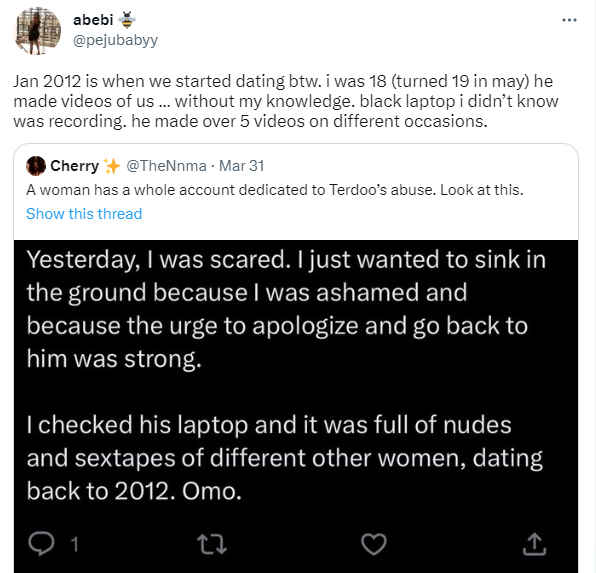
    @TheNnma’s thread also mentions another woman (@tilolami) on Twitter who “has an account dedicated to Terdoo’s abuse”. Tweets from this woman point out that Terdoo’s pattern of gathering women’s nudes and sex tapes dates back to 2012.

    Twitter users following the story later discovered that the same person runs the @tilolami and @TheNnma accounts. @TheNnma seems to confirm this in a separate thread.

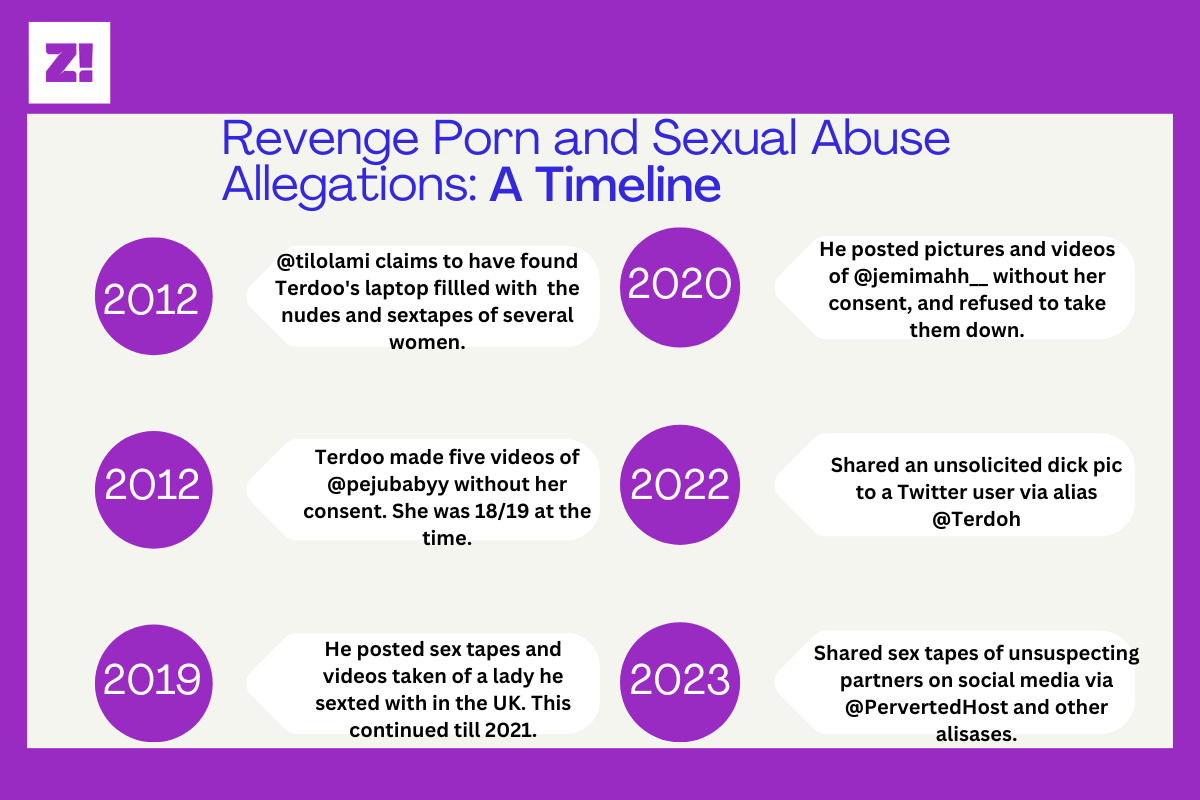
    A timeline of Terdoo’s alleged sexual offence

    Terdoo is being accused of recording videos of his sexual partners without their consent and blackmailing his victims with same, or sharing these videos on social media.

    According to @TheNnma, his mode of operation involves recording partners with a laptop, phone or camera that appears to be blank.


    ALSO READ: What to Do When You’re a Victim of Revenge Porn


    Victims and survivors speak up

    While most of the evidence shared by @TheNnma in the wake of the thread about Terdoo are from sources who’ve chosen to remain anonymous, more women have spoken up. Notably,

    Have the authorities done anything?

    At the time of publication, there’s no indication that Terdoo has been invited for questioning by relevant authorities. However, the Lagos Domestic and Sexual Violence Response Agency (DSVA) has stated that they’re actively addressing the situation.

    Terdoo’s former workplace, Omnibiz Africa, also released a statement confirming he’s no longer in their employ and imploring all affected parties to channel the allegations to the appropriate authorities.

    *We are unable to clarify Terdoo’s current status as he seems to have vanished from the internet. This is a developing story.


    NEXT READ: 11 Nigerian Women Talk About Being Coerced

  • Trigger warning: This story features multiple accounts of child sexual abuse.


    *Seun was only four when his 17-year-old neighbour sexually abused him. 

    His parents were doctors, and they regularly sought the help of extended family members, neighbours and friends to look after Seun and his two siblings whenever they had to work long hours or on weekends. 

    On one of such weekends, a neighbour’s daughter volunteered to watch them. Seun, now 33, still isn’t sure how she managed to get him alone, but he remembers that she summoned him to the couch she was spread across and put his hand between her legs. 

    “She did her thing until she came. It was such a weird experience for me,” Seun recalls. 

    In the past year, while interviewing Nigerians of different ages, gender identities and sexual orientations about their sex lives, I noticed a shocking pattern: almost all the men I spoke to had been sexually abused before turning 13, and most of them didn’t even consider their violation to be noteworthy. I found that particularly worrying.

    According to a 2015 UNICEF report, one in ten Nigerian boys experience sexual violence before turning 18. For girls, it’s one in four. Sexual abuse, which is defined as “any type of sexual contact or behaviour that occurs without the explicit consent of the recipient,” is endemic in Nigeria, especially against children, who are legally incapable of giving consent. 

    Seun admits to not fully understanding what was going on at the time, but he remembers enjoying it. That’s why when she told him, “Don’t tell anyone” — a sentence every man I spoke to vividly remembers — Seun didn’t think twice about keeping the secret. 

    She continued to abuse him for eight more years.

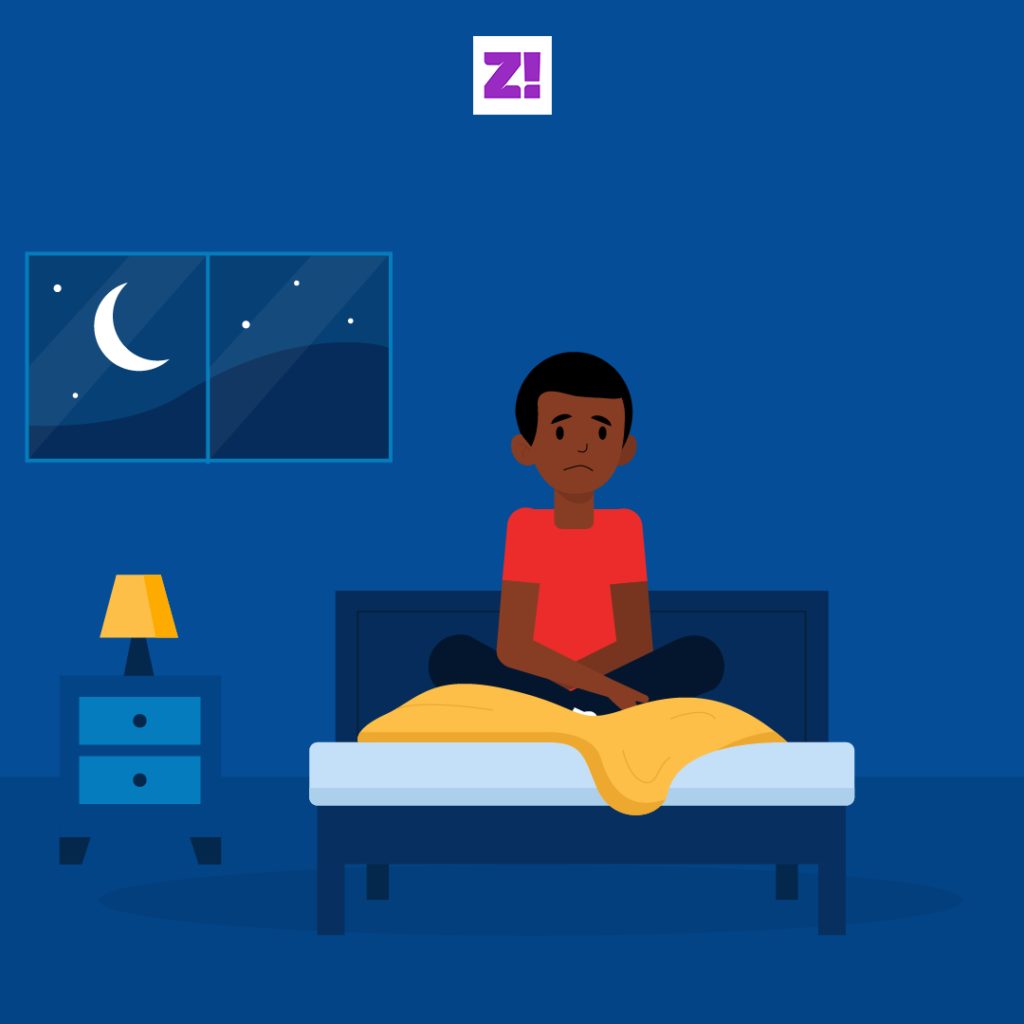
    Like many male survivors, Seun found it difficult to acknowledge the prolonged abuse he had suffered as the traumatic experience it was. It wasn’t until he turned 20, six years after his family had packed up and moved far away from his abuser, that he finally opened up to his older sister. She was the one who explained to him that he had been abused.

    “My sister was randomly talking to me about how a lot of Nigerian guys lose their virginity to their maids, and it got me thinking about what had happened to me,” Seun says. “I told her everything soon after and she was shocked.”

    A 2014 survey by The Cece Yara Foundation reports that Nigerian boys are almost never abused by strangers. The perpetrators are typically people they have personal relationships with, such as family members, neighbours and caregivers. For most of the men I interviewed, their abusers were women who had been brought into their homes to look after them. 

    Unlike male perpetrators, who are more likely to use violence and force against their victims, female perpetrators tend to groom their victims, using coercion and emotional manipulation to make the abuse seem consensual. This makes it a lot harder for their male victims to effectively interpret what happened as abuse.

    *Dayo, 28, who was repeatedly abused by his family’s live-in maid when he was seven, is one male survivor who still downplays the entire ordeal. 

    “She would make me lie down naked and then climb on top of me,” he says. “I don’t think it affected me in any way. Now, I just remember it as something that happened to me a long time ago.”

    Chinelo Nkennor, a certified child trauma practitioner, says it’s impossible for abuse to not affect the victim in some way. From depression and low self-worth to reckless sexual behaviour, the effects may vary from victim to victim, but they always linger. 

    “Everyone deals with trauma differently, but the damage is very real,” Nkennor told Zikoko.

    Boys who are abused are also much less likely than girls to report it. “In my experience, boys rarely get help because they hardly talk about it,” Nkennor said. “Even when they do, it’s usually long after it’s happened.” 

    Dayo, for example, only opened up to his mother when he turned 18, over a decade after the maid had been fired for unrelated reasons. His mother was devastated. 

    It’s important to note that even as adults, there are many barriers to men actively seeking professional help. According to the Psychiatric Times, the most common are low mental health literacy, limited resources, fear of negative social consequences, and concerns related to stigma, shame and rejection.

    Seun is the only man I spoke to who has seen a mental health professional. With the aid of a therapist, he has been able to unpack how his abuse affected him. One of the major ways being his inability to commit. “I’ve never been in a proper relationship,” he says. “I’ve tried it twice. The first lasted two weeks, and the second lasted three months.”

    He also believes the abuse caused him to ignore a core aspect of his sexuality for most of his life. “I think it delayed the realisation that I’m also into men,” Seun says. “For the longest time, I was thoroughly fixated on women — much older women to be precise — but last year, I finally had sex with a man and it was a real awakening for me.”  

    For boys who are abused by men, there’s the added layer of homophobia. *Ebuka, 32, was abused for months by his 28-year-old uncle when he was 12. “He would make me wear one of my mother’s wigs and pretend to be his girlfriend. He would then kiss and fondle me,” Ebuka recalls. “It continued for months until my mother finally caught him.” 

    Ebuka, who identifies as gay, knew he liked boys long before the abuse began, but when he eventually came out to his mother many years later, she was convinced his uncle had turned him gay. The homophobic myth that abuse can somehow alter someone’s sexual orientation is just one of the many reasons boys abused by men are hesitant to speak up.

    There’s also the issue of how boys are raised in today’s society. From a very young age, men are taught that heterosexual conquest and masculinity are inextricably linked. Sex is framed as something women give and men take. I’ve spoken to a heartbreaking number of Nigerian men who, to this day, brag about losing their virginity to their caregivers, refusing to accept that it was, in fact, abuse.

    *Sochi, 28, remembers the excitement he felt at the prospect of being abused by his 21-year-old maid when he was 14. “I had a bunch of friends who always talked about how they were sleeping with their maids, and I used to envy them,” he says. “I was just a clueless teenager with raging hormones.”

    So, when she began to ask him inappropriate questions about his relationship status and sexual history, he went along with it. “I didn’t understand why, but I remember thinking it was odd,” Sochi admits. One night, when they were both watching TV alone in the living room, she showed him her vagina. Sochi panicked and ran to his room. It never happened again. 

    The Child Rights Act, which Nigeria adopted in 2003, declares that anyone convicted of sexually abusing a minor is liable to spend between 14 years to life in prison. According to four different lawyers I spoke to, however, the lack of easily-accessible data around court cases in Nigeria makes it near-impossible to tell how many, if any, of such convictions have been made.

    “Getting court case files in Nigeria is a whole hassle, and there are no digital records,” says Femi Fadahunsi, a lawyer and men’s interest writer. “It’s difficult to ascertain an accurate number of convictions.”

    For a little more context on Nigeria’s flawed justice system, our criminal code didn’t even recognise men and boys as victims of rape until a few months ago. The amended bill, which was passed in July 2020, substitutes “woman or girl, without her consent” in section 357 of the criminal code with “any person, without consent”. 

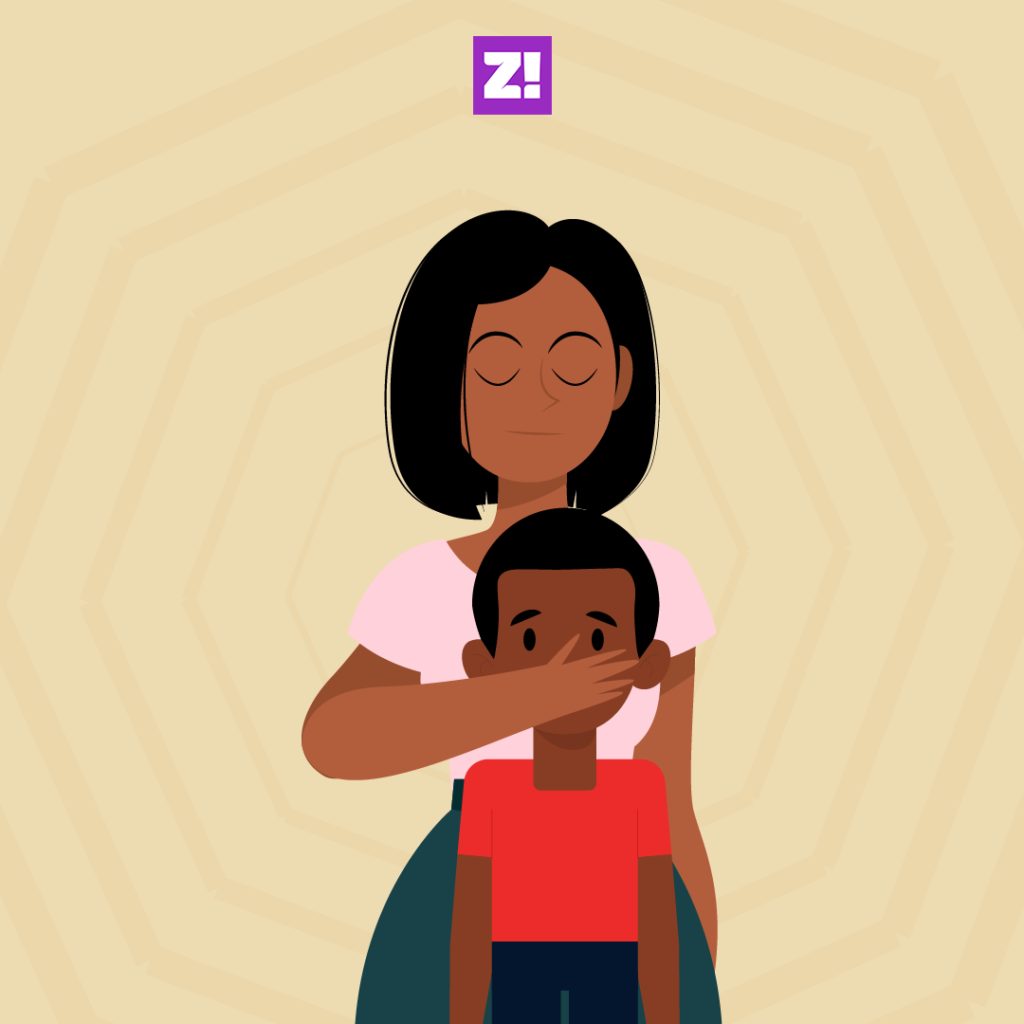
    Unfortunately, even if the system suddenly started working, parents of victims would still pose a significant barrier to seeking justice. Solomon Ayodele, the founder of Boys Quarters Africa, a two-year-old NGO focused on advocating for boys, says the parents of every victim his organisation has tried to help chose, instead, to keep the issue under wraps.

    “In all of the cases we’ve directly handled, no parent has allowed us further the issue with the authorities,” Ayodele said. While he acknowledges that a small part of that decision might stem from a general mistrust of Nigeria’s justice system, he’s also certain that it’s mostly due to the belief that boys cannot be abused — a belief he says is “especially held by fathers.”

    *James, 27, who was repeatedly abused by his 31-year-old aunt when he was 12, says he still hasn’t forgiven his father for not acknowledging what happened, even after he opened up to him about it. 

    “He just brushed it aside. He chose his paedophile of a sister over me, and that’s not something I’m ever going to get over,” James says.

    As a society, we clearly need to unlearn many things regarding sexual abuse and raising boys. According to Ayodele, the most important thing for people to remember is that boys aren’t yet men. 

    “They are children. They need to be protected, cared for and raised very deliberately. That’s the only chance they have,” Ayodele concluded.

    *Names have been changed for anonymity.