• Musa Garba*, 59, joined the Nigerian Army in 1988 at age 22, hoping to build a life of meaning and stability. He spent over thirty years in service, rising from a junior airman to Squadron Leader.

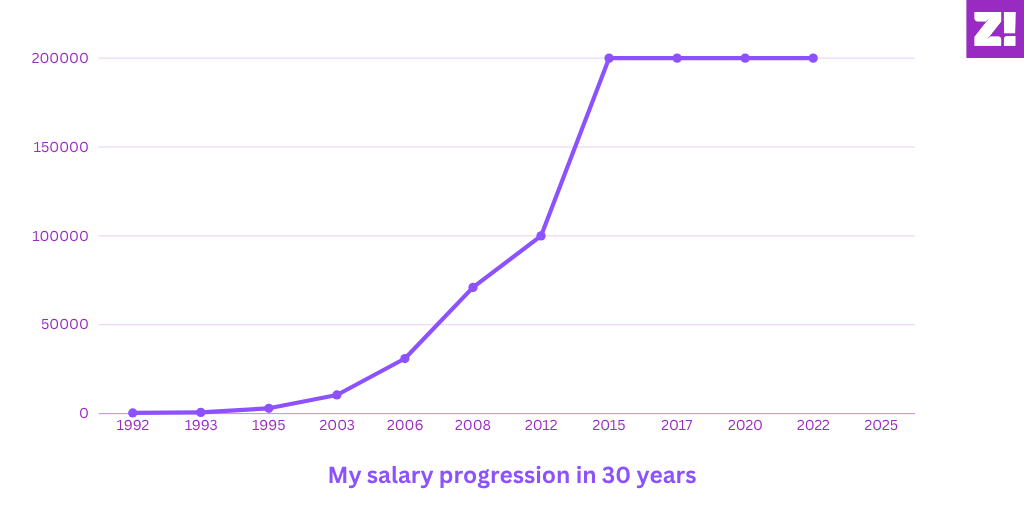
    His first salary was ₦400. When he retired in 2019, he received ₦15 million in gratuity and a ₦200k monthly pension. But within a year, the money was all gone. 

    In this story, he breaks down how his salary grew, what retirement gave him, and what a lifetime in the military truly cost.

    This is Musa Garba’s story, as told to Aisha Bello

    I was the oldest of five children, the only boy in a house that suddenly felt too quiet after my father died in 1979, when I was twelve. By 1986, at 20, I’d finished secondary school with two paths before me: sell Peugeot spare parts or find something bigger than myself.

    The spare parts business felt like surrender. It was an Igbo man’s trade, and only a few people from my tribe, in the North, made it work. The older relatives who suggested it meant well, but they were really asking: Who else will pay for your dreams?

    It was one of those hot afternoons in 1987. I was running an errand at the motor park when I saw a Nigerian Air Force recruitment poster on a wooden board near the ticket stand.

    That same week, I ran into an old schoolmate who had joined two years earlier. He had come home in uniform, boots polished, posture straight, and people calling him Officer. He told me they were recruiting again soon and that all I needed was my WAEC and some guts.

    The Air Force offered something different: purpose, education, and a chance to become someone important. While university remained a far-fetched idea, the military remained an open door. Once I’d earned my place, I could fight to the top.

    So I chose the uniform over the spare parts.

    My First Salary Was ₦400

    In 1987, I decided to join the Air Force. I had ₦20, which was only enough to buy the form, so I trekked most of the way to the Air Force base and joined hundreds of young boys already queuing under the hot sun.

    We went through every test, physical, medical, and mental. After two gruelling weeks of screening, I ranked in the top five for my region.

    Then, we were off to a military base for basic training, where we drilled, marched, and trained for six months straight.

    At 22, I was officially an Airman, posted to Bauchi.

    My starting salary was ₦400; by 1990, it jumped to ₦700.

    Then Abacha toppled the Babangida government, raising our salaries to ₦3,000 in 1993. 

    Still, I remained at the bottom of the ladder —  an Aircraftman, the lowest rank in the Air Force. It wasn’t enough for me. I wanted the salute, respect and prestige. 

    I Wanted More

    The Nigerian Air Force has two main career paths: non-commissioned and commissioned.

    I started at the bottom — a non-commissioned airman, straight out of basic training. The highest you can go is becoming an Air Warrant Officer. But the path upward is painfully slow, especially without someone pushing your name or pulling strings.

    We do the grunt work: patrol duty, maintenance, logistics, field drills, even guarding officers’ homes. But it came with fewer perks, less power, and even less money.

    The commissioned route is different. That’s where the leaders are made. You either spend five years at the Nigerian Defence Academy (NDA) or join through the Direct Short Service Commission (DSSC) if you have a diploma or degree. After six months of officer training, you’d be commissioned as a Pilot Officer. From there, your career can climb to Air Marshal if you play your cards right.

    They get the bigger salaries, better housing, promotions, and prestige. That was the life I wanted.

    But I didn’t have a diploma or a degree.

    By 1995, I still hadn’t moved a rank. Meanwhile, younger airmen, with school certificates or backers, were climbing up fast. That was when I knew I had to switch up the game.

    I enrolled in a part-time ND programme and paid every kobo from my salary. I got my diploma in 1997, applied for the Short Service course, took the exams, and passed.

    By 1998, I was commissioned as a Pilot Officer, and my salary jumped to ₦10,500. More importantly, I was saluted for the first time in my life.

    Back in my base, life was finally starting to feel stable. I had started a family: a wife, two children, a steady posting, and a future that looked like it might finally live up to the dream.

    Or so I thought.

    Join 1,000+ Nigerians, finance experts and industry leaders at The Naira Life Conference by Zikoko for a day of real, raw conversations about money and financial freedom. Click here to buy a ticket and secure your spot at the money event of the year, where you’ll get the practical tools to 10x your income, network with the biggest players in your industry, and level up in your career and business.

    Career Growth Before Retirement

    After I was commissioned in 1998, I was posted to another state, and by 2001, my name finally appeared on the promotion list for Flying Officer. I wrote the exam, passed, and my salary jumped to ₦31,000. It was the first real financial sign that I was moving up.

    In those years, I learned what it meant to lead. I wasn’t just receiving orders; I was briefing airmen, coordinating missions, and working closely with ground troops to plan aerial support. 

    In 2006, Obasanjo’s second administration reviewed our salaries, and mine rose to ₦71,000.

    By 2009, I was promoted to Flight Lieutenant and earned about ₦100,000, the standard pay for that rank.

    In 2012, I climbed up to Squadron Leader, and my salary rose slightly above ₦200k. But that was the last promotion I ever got.

    I kept writing the exams, year after year, but nothing changed. It was clear: my career in the Air Force had run its course.

    By 2021, I was served a letter of voluntary retirement. At 55, I had hit the official retirement age.
    I Retired From the Air Force with ₦15 Million. It Was Gone in a Year.

    When I retired, I was paid ₦15 million in gratuity.

    I moved my family back home, where it all began. After three decades of service, all I had to my name was a property I’d bought years ago. I spent every kobo raising it from a shell to a finished house. 

    I paid off the kids’ tuition, refurbished the house, installed solar panels, and tried to piece together a life, but the money was gone within a year. 

    Now, I live on a ₦200k monthly pension. It covers the basics for now. But how long will it last? Ten years? Twenty? My youngest is just 16. There’s still a long road ahead.

    If I could go back to when I first got that ₦15 million, with a clear head, I would’ve invested a good chunk in farming. Now, starting a farm isn’t cheap, but I try.

    Most days, I’m out there, cutlass in hand, tending a small garden behind the house.

    I’ve served. I’ve seen war. I’ve seen death. Now, I’m just trying to live.


    *Editor’s note: At the subject’s request, his name and certain details of his active-service years have been withheld to protect his anonymity.


    Also Read: The Nigerian Air Force Is Recruiting. Here’s Everything You Need to Know


    Get More Zikoko Goodness in Your Mail

    Subscribe to our newsletters and never miss any of the action

    [ad]
  • Every day, we gain new insight that often makes us wish we could revisit a past decision and take a different approach for better results, especially regarding financial decisions.

    Forex traders wish they’d made better predictions after a loss, gamblers regret certain betting decisions after negative results roll in, and everyday Nigerians wish they’d bought more stocks before the prices went up. In many cases, these situations can be fixed by making better decisions.

    But what do similar regrets look like for older Nigerians who might no longer have as much time to fix them? We spoke to four Nigerians aged 50+ who shared their biggest financial regrets and the alternative decisions they’d have made if they knew what they know now.

    “I shouldn’t have invested in a cyber café”

     — Okorie*, 54

    It took a couple of trials and errors to accept that I wasn’t cut out for business. But the biggest error I made was investing all my money to set up a cyber café in 2012.

    I’d just lost my job at an automobile company where I was a parts manager. The company made my role redundant for some office politics-related reason, but they gave me a ₦2m severance pay. I decided I was too old at 41 to start looking for a new job, so I decided to focus on a business. 

    I reasoned that my earlier business ventures failed because I was dividing my attention between them and my regular job. I’m not sure exactly how I got the idea to set up a cyber café, but it felt like a good idea. 

    I lived close to a university and figured that students would need a place to access the internet and print documents. Also, there weren’t any cyber cafés around, so there was no competition for me. In retrospect, that should’ve been my first warning sign. 

    Feeling optimistic, I took out my ₦1m savings from the bank, added it to my severance pay, and rented an office space. The space cost ₦500k/year, and I used the rest of the money to buy two computers, a commercial printer and sort other set-up needs. 

    Business was bad from the first day I opened the shop. It turned out that most of the students did their printing inside the school, where it was cheaper due to competition. Also, people didn’t need cyber cafés as much anymore because of smartphones. They only came if they had to do group projects and assignments, and needed a computer to type. 

    In hindsight, I should’ve done extensive market research before dropping all that money on an idea, or better still, consulted people who had better business sense.

    I’m not sure I made up to 10% of my investment when I shut down a year later. I didn’t know I’d still have to spend money to maintain the computers and printers. By the end of the year, I had no money to renew my rent, so I just packed it up.

    I can’t remember how much I sold the computers and printer now, but I’m sure I didn’t use the money for anything reasonable because I’d have remembered. I returned to the job market and fortunately got a job within months. I’m still there and religiously saving for retirement with my pension and treasury bills — I have ₦1.8m in the latter. I’ve been burned too much to consider business as a source of income when I retire.

    “I had the chance to buy land, but I let it go”

     — Bayo*, 61

    I lost the chance to own millions of naira worth of real estate because I believed holding money was safer than letting it go.

    In 1993, my wife’s brother tried to sell me land in Satellite Town, Lagos —  two plots of land at ₦65k each. I’d just received a ₦100k windfall from my late dad’s pension settlement money, and my wife wanted me to invest the money.

    There’s nothing she didn’t use to convince me to buy that property. She even volunteered to borrow the balance from people. But I didn’t think it was a good investment. The land was in a “bush” area that didn’t look like it would be developed in years. Besides, buying the land was one thing. What would we build on it?

    I decided to save the money instead. Months later, I used it to remodel our house from a bungalow to a one-storey building so we could rent out the extra space.

    However, my brother-in-law bought a plot in that area and sold it for ₦19m in 2021. I hear that land in Satellite Town goes as high as ₦50m today, even more if it’s in a better area close to the road. 

    That extra floor I built in my house? We stopped renting it out years ago due to problematic tenants. My family occupies all the rooms now. 

    I still think about that property from time to time.

    Get More Zikoko Goodness in Your Mail

    Subscribe to our newsletters and never miss any of the action

    “I over-relied on my pension and didn’t utilise loans”

    — Femi*, 64

    Early retirement seemed like a good idea in theory. However, when I retired in 2016, it quickly became clear I wasn’t prepared for it.

    By the time I retired, I had a house with two tenants and a pension account scheduled to pay me ₦120k/month for the next 20 years. I assumed collecting rent and my pension would be more than enough to survive on — ₦120k was good money in 2016. 

    Now, it’s barely enough to sustain me, my wife and our lastborn child for a month. My lastborn is still in university and her tuition fees went from ₦20k to ₦200k in 2023. My older kids still call for financial support once in a while.

    I still get at least ₦1.8m in rent yearly from my tenants, but I can hardly plan around that. Most of the time, I use it to settle loans I took during the year to support my wife’s trading business and handle medical bills. 

    I wish I hadn’t relied so much on my pension. I should’ve followed the footsteps of colleagues who took loans from cooperative associations to build houses and start businesses. I assumed taking loans would be me “doing more than myself” and reducing my monthly take home. 

    But I now realise it would’ve just been a temporary sacrifice for future gain. If I’d taken advantage of those loans, I would’ve had at least one more house to supplement my income. I might have even set up a business and put someone in charge. 

    It’s sad that I’m supposed to be enjoying my retirement now, but I keep thinking about how to make money.

    “I regret staying with my children’s father”

    — Grace*, 55

    Marriage in itself can be good, but it’s my biggest financial regret. I was married to my husband for 20 years before we separated. While we were together, he never held a stable job for three consecutive years.

    As a result, I had to handle our home and children’s expenses. In addition, I had to finance whatever new business venture my husband took an interest in. The businesses always failed, but like a virtuous wife who wanted to protect her husband’s ego, I never questioned him. 

    I allowed him to have the final say on money I worked for because I didn’t want fights. I didn’t want him to think I lacked “respect” because I was the breadwinner. I let him make terrible financial decisions because I wanted him to be the “head of the home”. Money wasn’t the primary reason we eventually separated in 2022, but it played a role.

    Now, I’m five years from retirement without reasonable savings or investments. I know when people were using ₦500k to buy land. Now I can’t think about that unless I have like ₦10m. If I’d left my marriage earlier or not endured the plenty of nonsense I did, I’d have land and property today. 

    I’ve been trying to save as much as possible to have a retirement safety net. I also have my pension to look forward to, but it’s nothing compared to how much I’d have achieved for myself if I hadn’t gotten married, or maybe married a more sensible man.


    *Names have been changed for anonymity.


    NEXT READ: These 10 Money Market Mutual Funds Are Making Nigerians Rich in 2025

    Join 1,000+ Nigerians, finance experts and industry leaders at The Naira Life Conference by Zikoko for a day of real, raw conversations about money and financial freedom. Click here to buy a ticket and secure your spot at the money event of the year, where you’ll get the practical tools to 10x your income, network with the biggest players in your industry, and level up in your career and business.

    [ad]

  • In 1998, this 53-year-old retiree took charge of her financial freedom with small, consistent investments. Over the years, she strategically grew her assets and positioned herself for an early, comfortable retirement. 

    This is how she made it work in Nigeria. 

    As Told To Aisha Bello

    Model not affiliated with the story. Actual subject is anonymous.

    I spent my entire career as an accountant in an insurance company, helping people plan for retirement. During my active years, I saw firsthand what happens when people don’t prepare early enough — the anxiety, the regrets, and the desperate attempts to stretch out insufficient pensions. 

    I was 26 when I received my first paycheck, and I never wanted that to be me.

    Also, I didn’t grow up rich. From a young age, I understood that if I wanted financial security when I was older, I had to build it myself. So, while most people were thinking about how to spend their salary, I was thinking about my retirement plans.

    That’s why, from my first paycheck, I made a non-negotiable rule: save and invest 40% of my income, no matter what.

    27 years later, I retired at 53 as a director, with a portfolio worth over ₦1 billion spread across real estate, stocks, bonds, forex, and fixed deposits. Over the next 20 years, I’ll also receive a monthly pension of ₦500,000.

    This didn’t happen by luck. It was the result of deliberate decisions, smart investments, and some hard lessons along the way.

    Breaking down my Retirement Portfolio

    Here’s what my assets look like today:

    Now, let’s talk about how I built each of these.


    Fixed Deposit: The early money move that made a difference (₦65M)

    In 1997, I started my career as an entry-level accountant, earning ₦16,000 per month. At this point, the Nigerian minimum wage was ₦450 before President Olusegun Obasanjo passed a new wage bill to give workers ₦5,500 in 2000. 

    At the time, I wasn’t investing; I was just saving aggressively. But everything changed when a friend at National Bank introduced me to fixed deposits. 

    That small decision laid the foundation for the rest of my financial journey. 

    My organisation had a unique payment structure: I received a portion of my salary monthly, while the rest was paid upfront at the beginning of the year. My basic salary (₦16,000) accounted for 60% of my total income (₦26,000 per month), while the remaining 40%, which covered housing and furniture allowances, was paid in bulk annually.

    In 1998, I decided to take a risk with my annual upfront salary, which was about ₦128,000. 

    Subsequently, I saved my annual upfronts in fixed deposits with the National Bank until the bank failed to meet the Central Bank of Nigeria’s capital requirement in 2002. The CBN took control, and three years later, the bank was acquired by Wema Bank. Afterwards, I made fixed deposits with different banks to grow my savings.

    Today, I no longer use banks for fixed deposits — except for VFD Microfinance Bank, where I’m a shareholder. Instead, I invest through asset management companies like Vetiva, FSDH and Anchoria because of their higher interest rates.

    For instance, GT Bank’s fixed deposit rate is 5.25% per year, and FSDH’s returns can be up to 10% per annum, depending on the investment amount.

    Right now, I have ₦65 million in fixed deposits and earn fixed interest annually.  

    Real Estate: My biggest asset class (₦500M)

    I’ve always believed that owning property is key to financial security in Nigeria. 

    In 2001, I bought my first property in Isolo, Lagos, for ₦7 million. When I sold it in 2008, its value had appreciated to ₦100 million, a 1328% increase. 

    In 2009, I bought a plot of land in Ajah for ₦3 million. Seven years later, I sold it for ₦45 million. The value skyrocketed because of rapid development in the area; new housing projects were being built, and the road network improved significantly, driving more people to rent homes there. 

    I currently own three properties in Lagos worth a combined ₦500 million and earn ₦10 million in rental income from each property annually. 

    FGN Bonds: My safety net (₦300M)

    I prioritise security, so Federal Government of Nigeria (FGN) bonds have always been part of my plan. And as an accountant, I’ve always known about them.

    FGN bonds are managed by the Debt Management Office (DMO), which allows the government to borrow money from citizens in exchange for interest payments. 

    Regular FGN bonds require a minimum of  ₦50 million, and these predominantly long-term investments range from three to fifty years.

    FGN Savings Bonds, which are short-term, offer a more accessible option. They have a minimum subscription of  ₦5,000 and a two- to three-year term. Once the bond matures, the principal is returned.

    With FGN Savings Bonds, I receive quarterly interest (coupon payments), while longer-term FGN bonds pay interest twice a year. At the beginning of every month, the government issues savings bonds for those who want to buy; the most recent interest rate was around 18%.

    My children also have FGN Savings Bonds, and they’re already earning passive income, with quarterly interest payments deposited into their accounts. Since they don’t need the funds, I reinvest their earnings to compound their wealth over time.

    To get FGN bonds, you need an agent. I have bought through GT Bank, FSDH, and Vetiva in the past, but I currently use Afrinvest. I reviewed their financials while working, so I knew it was safe to go through them.

    I hold both short- and long-term FGN bonds worth ₦300 million. 

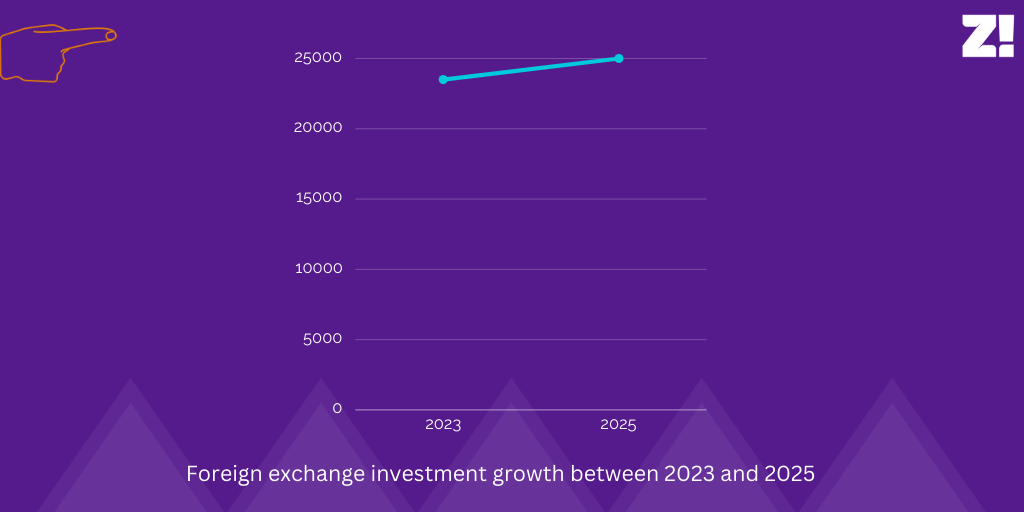
    Foreign Exchange Investment: Beating inflation with hard currency  ($25,000)

    For foreign exchange investments, I use Zenith Bank and FSDH for fixed deposits and Vetiva for my Eurobond investments. This is different from online forex trading, where people actively buy and sell various currencies to make a profit. Forex trading is high-risk and requires active monitoring.

    I focus on foreign currency investments by depositing dollars in fixed-income instruments like Eurobonds and dollar-denominated fixed deposits. This protects my money from naira devaluation while earning a stable return.

    I started investing in forex two years ago when the naira started losing value. My initial investment of $23,500 has since grown by 6%.

    Stocks: Slow and steady growth (₦22M)

    I invested heavily in stocks until the 2008 stock market crash changed everything. The market dropped by at least 70%, and people lost their lives over the financial ruin. At the time, I had invested ₦500,000 and later bought rights issues worth ₦4 million to increase my shares. Rights issues allow existing shareholders to buy more shares when a company wants to raise capital.

    The Nigerian stock market has only recently regained some stability. After the 2008 crash, I stopped actively investing in stocks, though I held the ones I already owned. I still receive annual dividends from solid companies like GTB, First Bank, Flour Mills, Nestlé, and Transcorp Hotels. At this point, I’ve already gotten my initial investment and continue to earn from them.

    The only new stock I’ve bought recently is VFD Microfinance because I trust the company’s growth potential. I initially invested ₦5 million, then bought their rights issue for ₦8 million. 

    Today, my stock portfolio is valued at ₦22 million.

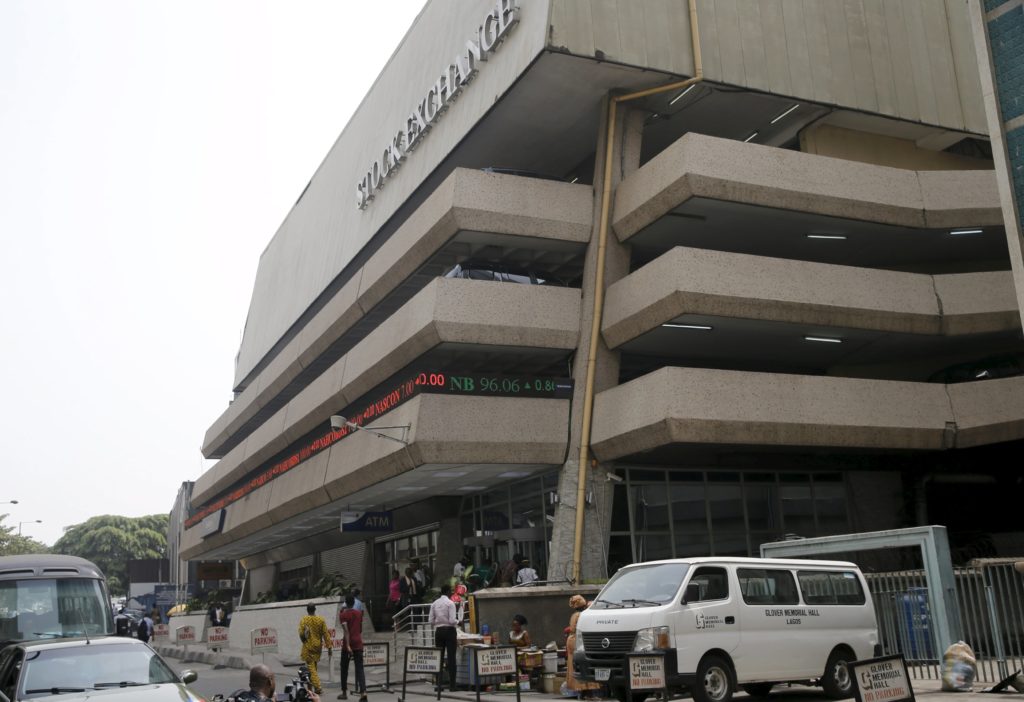
    Anyone interested in stocks can’t just walk into the Nigerian Stock Exchange (NGX) building on Lagos Island to buy shares; you need a licensed stockbroker. They handle buying and selling on your behalf. I used to use Meristem but now work with FSL Capital Limited.

    Pension: The passive income that gives me peace of mind (₦500K/Month)

    In 2004, the federal government introduced a new pension scheme that required me to contribute 8% and my employer 10% of my salary towards retirement. 

    I also had the option for voluntary pension contributions, which I locked into because it meant more pension income. Before this, we had a fixed system where every employee had to pay ₦4 monthly, while the employer added  ₦10. That didn’t do anything, but the new scheme meant my pension was directly proportional to what I earned in service.

    When it comes to pensions in Nigeria, you can either choose Programmed Withdrawal (PW) or  Annuity. With Programmed Withdrawal, you receive a set amount of money for a set period, say 10 or 20 years, after which the payments stop. 

    An annuity, on the other hand, is paid for life. When you opt for an annuity, your money is transferred to a life insurance company that administers income until you die. This type of pension is for life but can be transferable to living family members based on the specific terms of the contract.

    I opted for Programmed Withdrawal because, as an accountant, I prefer to have control over my finances. With an annuity, I’d need to transfer my entire balance to an insurance company and receive fixed payments for life. I don’t need any company to manage my money; I have the experience. With Programmed Withdrawal, my funds remain invested, and  I can still benefit from returns. 

    I now receive a monthly pension of ₦500,000 and will continue to receive that for the next twenty years. 

    In addition, I bought a personal pension plan from the insurance company where I worked. A year before retiring, I stopped the plan, took my money, and invested it in other assets.


    Investment Diversification: Not all eggs in one basket

    If a project requires funding, I liquidate some of my investments to finance it. Then, when I have more funds available, I’ll reinvest.

    But the rules are different with government bonds. If I invest in a two- or three-year bond,  I wait until maturity to access my funds. Although I can sell the bond, it’s not a liquid asset, and I won’t get my money back immediately.

    In contrast, fixed deposits with banks are more flexible. If I invest in a one-month fixed deposit, I can withdraw my funds at the end of the month or even before that if needed.

    I’ve had real estate projects that required funding, so I terminated some investments to finance them. Then, when I generated returns, I reinvested what I took out. 

    I believe in diversifying my investments, so I don’t put all my eggs in one basket. I mix fixed deposits, government savings bonds, real estate, and shares. I’m also into foreign exchange investments. If I decide to run a business now and invest some funds, that’s diversification.

    This way, I can rely on others for support if anything happens in one sector.

    My Two Cents on Investing For The Future 

    Economic challenges are constant – inflation, downturns, market volatility, and instability have always existed and won’t stop. Regardless of any economic downturn, you must plan and invest towards your retirement to ensure a secure financial future. My two cents:

    • Start early, no matter how small. 
    • The best time to start investing is with your first paycheck.
    • Prioritise investments over saving. Think of savings as money you can access anytime, but it doesn’t grow much. And investments as money locked for a period, earning higher interest.
    • When you save, your money sits in the bank, earning minimal interest, but when you invest, you put your money to work.
    • Don’t worry if the interest seems small at first; consistency is key.
    • Increase your investments as your income grows.
    • Aim to save at least 30% of your salary.
    • If 30% is too much, start lower and increase it gradually.

    Bottom Line

    Don’t be greedy about earning high interest rates. Explore low-risk investments, start investing early, be consistent, and aim to invest at least 30% of your income. 


    Editor’s note: This subject chose to keep her legal name and information confidential for privacy reasons, and Zikoko has verified her assets and earnings via income statements and necessary documentation.


    ALSO READ: I’m 22, and This Is How I Grew My Money by 29% in 2024

    [ad]

  • Ese* (26) has been responsible for 80% of her family of seven’s needs since her parents left the police force a year ago, and it hasn’t been a walk in the park.

    She talks about how her parents’ pension and gratuity payment delays have contributed to her family’s financial situation, sacrificing her needs and taking loans to meet demands at home, and how money has strained her relationship with her mum and sister.

    As told to Boluwatife

    Image: Canva AI

    I’m my parents’ second child, but I’ve supported them and my siblings financially since I started making some money.

    I graduated from the university in 2020 and almost immediately started working for an older coursemate who had a POS business. She had a chain of POS machines and didn’t trust her staff to transfer money to clients without diverting some of it, so my job was to do those transactions for ₦10k/month.

    From that ₦10k, I started contributing to sort home expenses. My parents were police officers who didn’t make much money — they each earned less than ₦150k/month — and had five children to feed. My elder sister wasn’t working, so I had to pick up small expenses like utility bills and gas. I even dropped half my salary once to buy my mum a birthday cake. Still, the financial load was bearable until my parents retired from the force.

    My dad retired first in May 2023. He retired as an Assistant Superintendent of Police (ASP) after 35 years of service. I didn’t imagine the lack of a salary would immediately worsen our financial situation. My dad said he was entitled to a cooperative association payout, gratuity, and monthly pension, so we all expected to get a tangible cash inflow soon. It didn’t exactly happen like that.

    First, my dad’s cooperative payout was only ₦600k. I expected it’d be more than that since it was supposed to be a portion of his salary for the whole 35 years he worked, but he may have withdrawn certain amounts at different times. 

    My dad decided to invest the payout in a fish farming business even though the family warned against it. Fish farming was a new business, and we weren’t sure there was enough capital. We suggested investing it in my mum’s small poultry business instead. 

    He refused, and as we predicted, the business folded up in six months. After building the pond, the remaining balance wasn’t enough to feed the fish regularly, and my dad ended up selling the fish at a loss.

    For the gratuity and pension, it’s been over a year, and we still don’t know when the government will process either. The gratuity is supposed to be a lump sum of ₦1m+. However, my dad knows police officers who retired a year before him and still don’t know when gratuity will come because of the unnecessary bureaucracy in the Nigerian system. 

    My mum also retired early this year and has joined the queue of expectant retirees. She’s expecting a bit more gratuity and pension because she retired as a Deputy Superintendent of Police (DSP), but as of right now, she and my dad are in the same shoes.

    With both my parents retired, I became the de facto breadwinner. Fortunately, I landed an account officer position at a bank in September 2023, and my ₦324k/month salary seemed more than enough to provide for my family.

    My first mistake was letting my family know how much I earn, though I don’t see how I’d have avoided that. My parents asked about my salary after I returned from training school, and I don’t lie, so I told them.

    Also, my local church is very small and almost entirely made up of my family. We have a tithe card system in the church, where members write the amount they pay as tithe. My family would’ve seen that my tithe had increased to ₦32k and would’ve easily added two and two together. 

    It’s not that I don’t want to help out. Earning more made it easy to fill the gaps my parents’ retirement caused, but the rising cost of everything due to inflation and increasing expectations at home have turned my salary into almost nothing. 

    By the time I remove ₦125k for ajo, sort out my lunch and transportation to work, food, utilities, school fees for my brother in secondary school and lend my parents money to do one thing or the other, I’m completely broke. I have to take quick loans from loan apps every other month to stay afloat.

    A few months ago, I had to take a ₦230k loan to support my brother through police training school. Then I took another ₦50k loan for my mum to feed her birds at the poultry and pay me back after she sold them off— she never paid me back. These loan deductions have brought my salary to about ₦250k/month, but I have no choice but to keep handling 80% of my family’s needs. 

    The other 20% is my undergraduate younger sister, who fends for herself in uni, and my elder sister, who works at a school now but hardly makes enough to transport herself to work, let alone contribute to the home.

    It’s exhausting being a breadwinner at 26. I’m constantly anxious about inflation and being unable to save for an emergency or even invest in property. I have about ₦300k saved up now, but it’s nowhere close to the ₦1m I need to buy land in my area or hold as emergency savings.

    I’m constantly worried that one health emergency will come and drain me financially. My dad is diabetic, and my health insurance only covers me. He has NHIS, but that doesn’t get him standard treatment. I need to find a way to get him regular care at a private facility. Anyone else in my family can suddenly fall ill too. What do I do then?

    The ajo I mentioned earlier was supposed to get me my own apartment, but since I can’t support two households, I used my share to update my work wardrobe, set money aside for my brother’s school fees and spent the rest on my family. 

    Aside from my concerns about savings and health, being breadwinner also means I constantly struggle with resentment toward and from my family. 

    My younger siblings don’t know how to manage with little, and they regularly ask for money. One could just go, “Can you give me ₦10k?” without giving reasons for why they need the money. Even me who’s making the money can’t make expenses like that.

    I also expect them to pick up small expenses like soap or gas, but everyone just keeps whatever money they get because they know I’ll handle everything. I resent that a lot. It’s like they think I have a magic tree where I just make money appear.

    On the other hand, I’m positive my mum and elder sister resent me because of this same breadwinner matter.

    My mum isn’t used to not having her own money, so she often lashes out because of frustration. When I have extra money, I try to give my parents around ₦10k – ₦20k just so they can hold it as pocket money, but it doesn’t always help with my mum.

    Whenever I complain about my siblings wasting food, my mum often throws shade. She says things like, “Some people complain too much just because they’re the ones who bought something.” Sometimes, she’s supportive, but most times, she’s annoyed with me. I never know what version of her to expect daily.

    For my elder sister, I think the resentment is because culture expects that everyone runs to the firstborn for financial help, and she feels bad that I’m the one in that “firstborn” position. Sometimes, she acts off towards me, and our relationship is often tense. Other times, she’s sympathetic and tells me she appreciates my sacrifices. Just like with my mum, I never know what to expect from my sister. 

    At least I don’t have to face that with my dad. He’s always appreciative and constantly praying for me.

    Still, I’m grateful that I can help my family. It’s difficult most of the time, but it’s my duty. My friends and colleagues assume I have no use for money because I live with my parents and get offended when I say I can’t join an asoebi wedding group or lend them money. How many people do I want to tell about my situation?

    I know things will get easier when my parents receive their gratuity and start receiving pensions. My mum would start a business again and no longer need to depend on me. If my siblings also get good jobs, they’ll be able to contribute to the living expenses. That hope is the one thing keeping me going right now.


    *Name has been changed for the sake of anonymity.

    NEXT READ: I Fear That My Husband Will Bankrupt Us One Day

    [ad]

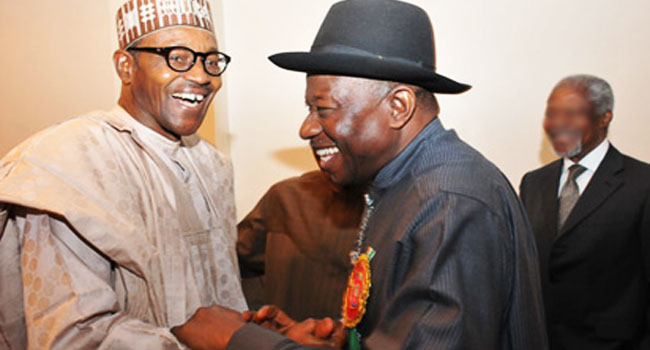
  • In January 2022, Muhammadu Buhari said during an NTA interview he was tired of being Nigeria’s president

    He said “I see my colleagues, they’re now resting, and I assure you I look forward to the next 17 months when I too will be less busy. The age is telling on me — working now for six, seven to eight hours per day in the office is no joke.”

    Buhari may be complaining about all the hard work he has to do as president, but he can’t deny he’s looking forward to the benefits waiting for him after May 29, 2023.

    If you have no idea what we’re talking about, allow us explain.

    What law guides the perks ex-presidents enjoy?

    That would be the Remuneration of Former Presidents and Heads Of State (and Other Ancillary Matters) Act of 2004. The Revenue Mobilization Allocation and Fiscal Commission (RMAFC) determines the benefits package for former presidents and former vice-presidents.

    What are these benefits?

    We know that’s what you’re really after, so here’s a list of the major perks former presidents and vice-presidents receive:

    1. ₦‎350,000 monthly allowance for ex-presidents and ₦‎250,000 monthly for ex-VPs. 
    1. The families of deceased former heads of state are entitled to ₦1 million per annum, paid ₦250,000 per quarter. The families of deceased ex-VPs get ₦750,000 per annum, paid ₦187,500 per quarter.
    1. Upkeep of the spouses and education of the children of deceased ex-presidents and deceased ex-VPs up to the university level.
    1. Three to four armed policemen for security.
    1. One State Security Service (SSS) officer not below grade level 10 as an aide-de-camp to be attached for life.
    1. Three vehicles for ex-presidents and two vehicles for ex-VPs, replaceable every four years. 
    1. Drivers.
    1. An officer not below the rank of a chief administrative officer and a personal secretary not below grade level 12.
    1. Diplomatic passport for life.
    1. Free medical treatment for ex-presidents and ex-VPs and their immediate family within Nigeria.
    1.  Treatment abroad for ex-presidents and ex-VPs and their immediate family where necessary.
    1.  30 days annual vacation in Nigeria or abroad.
    1.  A well-furnished and equipped office in any location of choice within Nigeria.
    1.  A well-furnished five-bedroom house in any location within Nigeria. An ex-VP gets a three-bedroom house.

    Look at that list again and ask yourself why you aren’t running for president.

    Oh, one other thing: the spouses of deceased leaders stop receiving their benefits if they remarry so it’s beyond till death do us part. 

    When did ex-presidents start receiving a pension?

    Former leaders enjoying these perks today have one man to thank: General Sani Abacha. It was during his administration Nigeria started thinking about providing pensions for living presidents and their families. Bad belle people would say Abacha was looking out for himself and the irony is he wasn’t around to enjoy it.

    Is this practice normal?

    Former leaders around the world like in the United States and the United Kingdom receive allowances and extra benefits after leaving office. But trust Nigeria to push things to the extreme.

    In 2016, the secretary to the government of the federation (SGF), Babachir Lawal, lamented that the government couldn’t pay the salaries of past presidents due to lack of funds. Between 2018 and 2021 alone, the perks that ex-presidents and ex-VPs received cost Nigerian taxpayers ₦9.2 billion. In October 2022, findings revealed ex-presidents, ex-VPs and other appointees would receive ₦63 billion in pension in 2023.

    Clearly, the benefits package for former leaders needs to be revisited as the cost is becoming too unbearable for a country already burdened by debt. But knowing Nigerian leaders, don’t hold your breath on things changing anytime soon.

  • Will you be grinding till you’re 60 or will you be sipping wine on a yacht at 40? Take this quiz and we’ll predict when you will retire.

  • Will your days as an old person be spent in Canada, or here in Nigeria?

  • 1. When your dad announces he will be retiring to the family.

    Ah! Why now?

    2. When you wake up and your dad is still around.

    Then you remember he does not have anywhere to go because, he is now retired.

    3. When he starts asking questions about things in the house.

    Oga this is how we have been doing things since oh don’t come and scatter it!

    4. When you or your siblings ask for money, he’s like:

    Are these ones okay at all?

    5. When he is bored and is looking for something to do.

    “Maybe I should go and frustrate my children so they will marry on time.”

    6. When his fellow retirees come and visit him.

    Association of bored gentlemen.

    7. When your mother goes out and he does not know when she is coming back, he’s like:

    Poor daddy!

    8. When the person that took over his role comes to ask for some advice and help.

    He will now be feeling cool!

    9. When him and your mum decide they now want to join fitfam so they can live long.

    You people are well done!

    10. When he remembers he has to go to the pension office.

    Wicked children.

    11. When he finds a new business he can get involved in.

    No need to stay in the house with these ungrateful children again.

    12. When his frustration has worked and you now want to marry, then he remembers he has to pay.

    Which kind of wahala is this one?