Answer these random questions and we’ll guess what religion you practice. Go on:
-
-
A Week In The Life” is a weekly Zikoko series that explores the working-class struggles of Nigerians. It captures the very spirit of what it means to hustle in Nigeria and puts you in the shoes of the subject for a week.
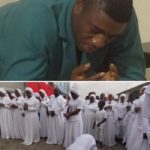
The subject of today’s “A Week In The Life” lives two lives. She’s a trader during the day and a pastor in between/when she’s not trading. For today’s “A Week In The Life”, she talks about her decision not to be a full-time pastor, balancing a 9-5 alongside her divine calling, and the many ways she enjoys herself as a human being.

MONDAY:
No matter what time I sleep, my body automatically wakes up at 7 a.m. The first thing I do after waking up is to prepare a light breakfast of tea and yellow crackers biscuit.
Breakfast ends at around 7:15 a.m. and I spend some time replying to WhatsApp messages from the night before. At around 7:30 a.m., I’m back in my bed preparing for round two of sleep.
Because I live two lives, both as a pastor and a trader, my day starts and ends at interesting times. On most days, I’m up till 3 a.m. praying and so I don’t leave for my shop until around 11 a.m. Luckily for me, the business I’m into — buying and selling of children’s bags, water bottles etc — doesn’t pick up until around noon so I’m good. If I was a full-time pastor my schedule would have been way more flexible. Sadly, I love my independence and I’d rather not be at the mercy of my congregation for money for food, clothing or school fees.
That’s why at 7:45 a.m. I turn off my data, put my phone on “do not disturb” and start my second round of sleep. When I wake up from round two of sleep, then my day will fully begin.
TUESDAY:I’m feeling nostalgic today and reminiscing about the past. It’s funny that there was a time when I wasn’t ready to serve God. At the time I received my first divine calling, I was running a fairly successful frozen food business in the heart of Lagos, and so the idea of leaving enjoyment for God seemed impossible to me.
God “called” me almost nine times, through people and directly, and I just let that phone ring and ring. At the time, I was certain that I was built for enjoyment alone.
However, calamity struck my perfect life. The abridged version is that the person who gave me capital to set up and run my business collected everything I had built and left me out to dry.
And so, like the prodigal son, I ended up returning to my father’s house. Ever welcoming, I was received with open hands where I enrolled into various schools under the church.
Since that experience, I learnt to put God first in all my dealings. I didn’t complain when I had to stop wearing trousers and weave on. I also accepted to live by the doctrine of the church.
In fact, when I wanted to start my trading business, I put a list of 10 businesses I was interested in with the boutique business at the top of the list. But a spirit kept on telling me that the boutique business wasn’t for me. To be sure, I gave this list to a few pastors to pray for me and a large majority ended up picking my current business.
As a now loyal servant of God, I let his will be done in my life and followed suit. I can say without any doubt that following God has been the best decision I’ve made. I’m not wealthy but he always makes a way for me.
What more can I ask for?
WEDNESDAY:
I’ve had an interesting Wednesday. My day started as usual; I slept late, woke up to eat, went back to bed and opened the shop by 11 a.m.
However, today was the first day this month where I made over ₦50,000 revenue in one sale. And to think that minutes before the customer walked in I was flirting with the idea of going to the market because the day was slow. I was in the shop from 11 a.m. till 3 p.m. and not a single customer came in. Just as I was about to start packing, the man came to restock new bags, water bottles and socks for his kids. When he paid for the goods, I screamed internally.
Almost immediately after he left, I got another call from someone in my congregation asking me to send my account number. I told the person not to bother but they kept on insisting and blowing up my phone with calls. According to the man, I was the only pastor who prayed for him without collecting money. Instead, I even gave him transport fare after each prayer session.
Reluctantly, I sent my account number to prevent him from blowing up my phone. When I saw the alert, I screamed out and shouted Jesus!
This person who was having challenges at one point sent me ₦150,000 as appreciation. I still couldn’t believe it even when I called to thank him later in the day.
Although the day is ending now, I’m still excited about how much of a good day I’ve had. I hope the rest of my week is also filled with unexpected good tidings.
THURSDAY:
I don’t go back to sleep when I wake up today. In fact, I wake up at 6 a.m., have a bath and leave my house by 6:30 a.m.
Today is different because I’m going to Idumota market to buy goods for my shop. It takes roughly two to four hours, without traffic, to make the journey from my house at Iyana Ipaja to Idumota.
With traffic, I might as well sleep on the road. Out of the many options available to me, I prefer entering a straight danfo from the park to my house. Although it’s more expensive, it’s the most convenient. The other options drop me way off from my intended destination and usually involve trekking. Me, I no dey for Israelite journey.
At the market today, I received a shock. The goods I last bought from the market at ₦1,800 and sold at ₦2,500 are now being sold for ₦2,500 in the market. This means that I didn’t make a profit from the last batch of goods I sold. I have no option but to still buy a new batch like that.
It seems that nowadays, it takes the grace of God for businesses in Nigeria to thrive. Although I feel a little pessimistic, I’m deciding to trust in God’s plan for me.
I’m tired and overspent both physically and financially, but I’m grateful when I finally buy the last item on my list. The next stop is home sweet home.
FRIDAY:
People always ask how I deal with the expectations that come with being a pastor. I tell them that as long as I honour God, respect the doctrine of my church and remain a good ambassador of the religion, I’m fine. These requirements don’t stop me in any way from being myself.
I’m not afraid of any man as long as I know that my behaviour is in line with God’s teaching.
Let me tell you something, I’m a minister of enjoyment. On days when I decide not to go to church or attend to customers or my congregation, I’ll run to Godly parties where I can enjoy myself.
Today is one of those days. For a few hours today, I’m closing my business and pastor life to attend a friend’s 50th birthday party. I’ve been looking forward to this party because my friend promised me that the DJ will play old school classics. Personally, I’m looking forward to screaming “Last night, I dreamt of San Pedro,” followed by “Hello, is it me you’re looking for.”
Whether it’s prayer, business or advising people, my guiding philosophy in life is that whatever I lay my hand on shall prosper, even if it’s enjoyment. Whatever I do, I must do it well and enjoy it.
Check back every Tuesday by 9 am for more “A Week In The Life ” goodness, and if you would like to be featured or you know anyone who fits the profile, fill this form.
-
Can you identify where these things happened in the Bible? Take the quiz:
-
I originally wanted to talk to atheists, but I decided to talk to irreligious Nigerians in general about what dating in Nigeria is like for them.
Here’s what they had to say:
Bisi, 27, Agnostic
I’ve been with the same person for eight years. I’m agnostic, and he’s an atheist. I’ve been “agnostic” since I was 11, but I had periods of intense Christianity up until I was about 19.
I care that he’s not religious because that was a major thing for me when I picked my partner.
I was having my cycles of agnosticism and religiosity when we met, but I knew that I didn’t want a “God-fearing” man. I used to go to church when we started dating, and he’d go with me even though he was an atheist.
Lare, 25, Atheist
Being irreligious has affected my love life. I don’t bother trying to pursue relationships with actively religious people because my atheism has reached a place where it’s a bad idea. I can’t even pretend that I’m still deciding anymore.
Before, I did not care if the person I was with was religious, but now it’s in everyone’s best interest that I find someone that doesn’t mind when I call a pastor stupid.
I used to think it was hard to find irreligious people, but it’s not that hard with the internet.
My ex said she had to break up with me because her mum read her a Bible verse that said you cannot be unequally yoked. After all, what does righteousness have to do with unrighteousness, and what does light have to do with darkness?
Lasobo, 26, Irreligious
I’m irreligious, and the only babe I’ve met that is like me is queer.
I don’t care if my partner is religious or not, but I prefer religious women, as long as they’re not overly religious. I believe in God or a higher power, and a part of me wants to believe in a religion. I think being with someone religious might help me find and settle in religion.
Religion was a major reason my ex and I broke up. Apart from her, I don’t remember meeting any woman that stopped talking to me after finding out I was irreligious.
Sogie, 22, Atheist
Being irreligious hasn’t really affected my love life. My first ex wasn’t a serious Christian, and the second one was irreligious.
When I became irreligious, my first ex used to look at me like “you just don’t believe in anything?”, but it didn’t affect our relationship.
I don’t think I mind being with a religious person as long as they respect that I’m irreligious and I respect their religion. I’m currently talking to a Christian, and things are getting serious.
Jai, 22, Irreligious
Dating for me honestly hasn’t been all that bad. I think the fact that I’m queer helps. I guess a lot of us aren’t religious.
There have been instances where I got involved with religious people, but it never worked out. They were always either trying to invite me for a service or actively trying to win my soul for Christ. Sometimes they say they’re okay with me being irreligious, but it later becomes a problem.
There are times I also think I can overlook it, but it generally gets tiring for me. Always having to watch what you say around your partner because you might offend them and their beliefs is exhausting.
But dating in general? I’ll give it a 7/10. I either live in a bubble or have just been lucky, because somehow I mostly meet other irreligious people like me.
Toyin, 26, Apatheist
It is extremely difficult to meet other irreligious people because of my conservative nature. People mistake my apathy towards religions with me living a wild life of freedom and liberties.
I don’t care if my partner is religious or not. I care about their ability to see me for what I am and how I treat others. Also, the fact that my actions and decisions are not hurting anybody.
I’m presently single, but my past relationships were heavily damaged by religious differences. My first relationship ended because of religious differences.
Victor, 26, Atheist
Being an atheist in Nigeria means no partner for you. I’ve been an atheist for 3 years, and I’ve not been in a relationship since I became an atheist.
Someone even stopped being my friend because I don’t believe in God.
It’s hard to meet other irreligious people in real life, but the internet bridges the gap.
I’ve not really been dating. A lot of people’s response is to try to change me. They want me to repent. Someone told me that I only became irreligious because I love fornication.
It doesn’t matter much to me if my partner is religious or not, but I’ll rather date someone like me.
Gabriel, 29, Agnostic
Navigating the dating scene as an irreligious person isn’t as complicated as one would expect.
I have never set out to look for irreligious people, I just know that I don’t want to be with a spiri coco.
I only ever meet overly religious people on social media. Most of the religious people I have been with just want to go to church and come back, and that’s fine. As irreligious as I am, I am open to having those conversations as long as you’re not trying to convert me or judge me.
I’m agnostic, and I get why certain people are religious. I guess it’s why I’m not averse to being with them.
Blue, 23, Agnostic
A major criterion for me when picking a partner is that they should not be overly religious.
Dating as an irreligious person is difficult. Most people automatically assume you’re a devilish person without morals just because you’re not religious, or they want to date you so they can convert you.
It is exhausting. You might find a partner who doesn’t mind that you’re not religious, but it eventually becomes a problem.
I broke up with my previous partner because even though she wasn’t overly Christian and didn’t mind that I was agnostic, I knew that she would want to pull me into religion over time. I just decided to end it instead of waiting for things to get there.
I respect people’s right to be religious, so I remove myself from situations where they may want to attempt converting me.
Most people just cannot comprehend that you don’t want anything to do with religion. They tell you that you haven’t found the right church or whatever.
On top of it all, I’m a queer African woman, and religion has never loved my kind of people.
-
A Week In The Life” is a weekly Zikoko series that explores the working-class struggles of Nigerians. It captures the very spirit of what it means to hustle in Nigeria and puts you in the shoes of the subject for a week.
The subject of today’s “A Week In The Life” is Omitonade Ifawemimo, an orisa priestess. Orisa priests/priestesses serve the function of spiritually guiding and counselling people so they can fulfil their destiny. She tells us about ways people stray from their destiny, how it can be modified, and what Yoruba indigenous religion means to her.

MONDAY:
I’m up before my alarm clock this morning. The light in my room is blinding and it takes a few minutes for my eyes to adjust. I stagger, carefully, to the toilet. After I’m done, I begin my morning routine.
I start each day by praying to my ori [spiritual head], to olodumare, to my egun [ancestors], to my orisa and to my egbe [astral mates]. I lie on my bed as I supplicate to them and it takes about 30 minutes to complete.
After I’m done with my prayers, I prepare my kids for school. I bathe, dress and cook for them. By 7 a.m. or a few minutes past 7, we’re out of the house to meet up with 8 a.m. resumption time. On the drive to school, I engage them in conversation and try to make them laugh. One minute we’re laughing, the next, we’re in front of their school gate.
I hand the kids over to their school teacher and my day starts.
As a full-time orisa priestess, I have an office I resume to by 10 a.m. every day. My role involves saving and guiding people. Orisa priests/priestesses are not seers — that is, we don’t see the future for people. Instead, through ifa/orisa divinations, we reveal a person’s past, present and future.
Practitioners of orisa spirituality believe that on our journey to earth, we made use of our ori to choose our blessings [wealth, long life, accomplishment, prosperity, etc]. However, on getting to earth, we forget all we’ve chosen and do things that are taboo to our ori, which hinders our progress. The job of a priest or priestess is to use divination to guide people on the right path of their destiny. Divination reveals strengths and weaknesses and allows for a smooth journey on earth.
Every day from 10 a.m. to 3 p.m., people come to my office to see what their ori is saying about their day, week or month. Today is no exception. There are people in the lounge waiting to see me when I get to the office. After exchanging brief greetings with a couple of them, I enter my office to settle down — then my workday truly begins.
TUESDAY:
In Yoruba spirituality, there are three ways we can modify human destiny. The first is through ifa/orisa divination[16 cowries]: people come to us, we divine for them and ifa/orisa reveals the problem along with a solution to us.
Image source: Omitonade Ifawemimo The second method is through sacrifice, appeasement and propitiation. After the problem has been revealed, we do certain sacrifices to solve it. The sacrifices are everyday items like fruits, food, domestic animals, etc. Anything that can be seen with the eye can be used in making this propitiation. This sacrifice is used in order to solve the person’s problem.
Lastly, we have ifa/orisa initiation. We, orisa worshippers, have a saying: there’s nobody with a bad destiny or head, but the only hindrance is that people aren’t aware of their taboos. They are not aware of the behaviours their ori doesn’t want, and these become stumbling blocks in the pursuit of their goals.
To be initiated means to get to know a person’s destiny. To know their strengths, weakness and align with their ori. This is important because we believe that everyone is born with an orisa. You can also use this knowledge in spiritual fortification because you know everything about them. All of this is used to help people become accomplished and fulfilled on earth.
Today, I spend a few hours at work explaining some of the functions of a priestess to curious people.
I also explain that in the olden days, when children were born, their parents would invite a priest/priestess to divine the child’s destiny. This would help in knowing the child’s taboo’s, strengths, weaknesses. However, a lot of people no longer have this privilege. For people who didn’t have this luxury, they can do initiation to know their destiny.
I also say that while priests/priestesses can divine and modify spiritual problems, we can’t interfere with physical problems. So, if someone has character problems like anger or laziness, we advise them to work on themselves and not look for spiritual solutions.
WEDNESDAY:
After dropping the kids in school today, I decide to visit my friends. On the car ride, I think about how most people believe that people who practice traditional religion are uneducated or wretched, which is false. I try to change people’s perception of this and my behaviour speaks for me. Like a good traditional practitioner, I don’t preach our religion or spirituality. There’s no point telling people, especially Nigerians, Yorubas, to come back to Yoruba indigenous religion. Everyone will return to it at the end of the day because it is their roots.
My job is to educate people who are curious and guide those who are interested. Any original practitioner [there are imposters in the religion] is tolerant of other people’s beliefs and opinions.
In fact, we don’t say because people practice other religions we won’t help them. And even after helping them, we don’t force anyone to convert to our belief. Our own is for you to see the solution to what’s bothering you.
THURSDAY:No work for me today. Why? Because body no be firewood. I’m going to spend my day resting and enjoying some peace and quiet. I’ve dropped the kids at school. I’ve cooked rice, fried plantain and boiled stew. I also have a cold Pepsi in the fridge to step it down with. The best part? I have the house all to myself, at least, until 4 p.m. when I go to pick the kids from school. Until then, I’m going to enjoy my alone time to the fullest.
FRIDAY:Today, someone asked me about the hardest part of my job. I told him two things: firstly, it’s not a job, it’s a calling — it’s passion. Secondly, there’s no hard part. Some aspects are just easier than the others.
My role involves finding lost souls and guiding them back to their roots to learn about themselves. I’m happy social media is helping with more awareness. People are reading stuff that’s making them curious and ask questions. I’ve also been using my platform to enlighten pẹople about traditional religion.
I’ve also used my platform to correct misconceptions that we worship idols. We don’t. Olodumare proves its existence through nature by giving us water, plant, wind, thunder and lighting, sunlight. And orisas are in charge of these things. Sango is in charge of thunder and lighting. Osun, Yemoja, Olokun, Olosa are in charge of water. Ogun is in charge of iron and technology. In respect of these orisas and the work they do, we have icons and not idols.
Image source: Omitonade Ifawemimo These things people call idols are used to beautify the shrine and not what is being called upon. Think about it as art to beautify your home. Can we call artwork idol worshipping? This is what I try to educate and enlighten people about on social media. I’m thankful to Olodumare because it’s not by my power. It’s just what works for me.
It is passion and bose ma je niyen [that’s how it will be].
[Editor’s note: some part of this post has been updated. We initially wrote that destiny couldn’t be stolen via sexual intercourse but the subject says it’s rare, but not impossible.]
You should read this next. Why? An Ifa priest tells us what it’s like being the youngest chief priest and the stigmatization of traditional religions in Nigeria.
People Are Afraid Of What They Don’t Understand — Man Like Osunniyi

Check back every Tuesday by 9 am for more “A Week In The Life ” goodness, and if you would like to be featured or you know anyone who fits the profile, fill this form.
-
Purity culture is usually a combination of religious and cultural beliefs that promote abstinence from sexual activities till marriage. These six Nigerian women share with us how they overcame purity culture.
Yinka, 23
A lot of the guilt and shame I felt around sex and decency came from following Christianity. I was taught that I needed to be “pure” until marriage. No sex, no masturbating, you have to “dress decently”. So, abandoning Christianity has helped me abandon that conditioning. I learnt to understand that wanting sex is completely human and that it doesn’t make me dirty or any less of a person.
Mo, 22
Honestly, I just know that one day I stopped caring about all that nonsense. Even though I stopped or thought I had, I think a tiny part of me still held on to that for myself. For example, when I tried having sex for the first time, it was kind of in my head. I wanted to, but I couldn’t. It just wasn’t working.
Amaka, 20
Purity culture was not introduced to me through my parents because I was born into an unconventional situation. I’d picked it up from things around me like school and church, and it stuck with me. There was also the fear that if I had sex before I got married, I would definitely get pregnant and my life would be over. I tried to overcome the mindset, but it was a conversation with my dad that really sped up the process.
We talked about a lot of things in general. I even found out he thought I was having sex at the time although I was not. He let me know it was okay and that he doesn’t believe in parents lying to their children that sex is a bad thing because it’s really not. He told me it’s natural and it can be really good when it’s good, and that it’s really just about waiting for when you think it’s right, with someone you really trust. There were still ways to go after that, but the conversation really helped.
Yinka, 20
Being an atheist really helped. Religion is a major reason why people hate and shame themselves for wanting and doing human things. Purity culture is built on the back of stupid religious beliefs. Cultural bits as well, but can we even divorce religion from our culture at this point?
Eden, 21
Purity culture was so ingrained in me that when I had my first serious relationship, I thought I was asexual. I wasn’t sexually turned on, didn’t have sex because I was always dry and lube didn’t help. I just thought maybe it’s not for me. Growing up, I heard about how during your first time, you get attached to someone and I didn’t want that. Last year, I decided to explore myself.
I took more control of what I wanted and explored my body more. Finally, I decided I was going to pop the cherry, so I texted someone that I knew wanted to sleep with me for a while. I smoked and drank a bit to ease my mind and then it happened. We kept at it for a while until I got bored and moved on. It took almost two years after my first trial to eventually to the point of my first time. In that time, I became more of a feminist and unlearned a lot of biases about gender and my body. I had to consciously unlearn a lot to get to the point where I now own my sexuality.
Chidinma, 25
There’s a certain level of “fuck it” independence brings. Also, having an open-minded and non-judgemental partner who is willing to explore things. So yeah, having my own house/being able to afford weekends away with an open-minded partner was basically what did it for me.
For more on all things women, please click here
-
As told to Mariam
I have known Wendy for about three years and during this time, I have watched her go from being irreligious to religious and back to being irreligious. As an irreligious person myself, I was curious about her journey so sometime in March I asked her. Here’s what she told me:

I grew up watching the people around me practice different religions. My grandparents would curse people who wronged them in a shrine but I would also follow them to church on sabbath days during holidays. My mum told me that when she was a child, water children came to her in her dreams and woke up with cane marks on her body. She told me her parents took her to a spiritualist who cut marks into her thighs and the dreams stopped. I found out my father was a Freemason when I was 8 but I never judged him for it. He taught me a lot about African spirituality and folklore because he was a King. When he died, they combined traditional rites with a church service.
When I went to boarding school at 14, I learned that Jesus had to be the only way to salvation. The matrons often singled me out to say that I was not Christian enough. In my third week at school, one of my classmates lied that he had sex with me and the boarding house mistress believed him. That night, she flogged me for about an hour, asking me to confess my sins. When I didn’t confess to it, she asked me to give my life to Christ because I was the seductress sent to ruin the life of the good Christian boy who was from a family of evangelists. I did what she asked so she could stop flogging me.
The next morning, my hands were swollen so I asked her for pain killers. She said I had to bear the consequence of my sin. I kept trying and failing to be Christian enough until I left that school. One time, the school’s proprietress insisted that I attended the school’s Easter holiday retreat at Obudu Ranch. She even paid for it when my mum didn’t. At Obudu, they held a deliverance service to cast the demons out of me. After prayers, they counselled me to stop masturbating. I didn’t know how to tell them I had never done it before.
They believed every rumour about me because I came from a secular school. The funny thing was that I wasn’t even attracted to boys then — I only liked girls. I spent the rest of my time in that school going from one deliverance service to another. I learnt the perfect fall that signified that the demon had left my body.
Somehow, I remained a Christian. After secondary school, I joined a popular teenage ministry where I became a leader. I moved into the ministry’s family house to be closer to God. As a leader, I contributed to outreach events and the church’s growth with my time and money. After a while, I started to feel underappreciated. On my 18th birthday, as is the tradition, the family house members gathered to pray for me. They kept alluding to my stubbornness in the prayers, saying that they prayed God helped me with it. I was annoyed because it seemed like something they had all discussed, so I moved out of the house within a few days.
The more I studied the bible, the more my doubts grew. No one was willing to answer my questions about Christianity. Instead, they labelled me a troublemaker. So I stopped going to church and abandoned all things Christianity. I focused more on learning about my ancestors. Rumours that I was a lesbian started flying around the Christian circles I used to be a part of. One day, a Christian brother was sent to convince me to come back to the church. Instead, he kept asking me to have sex with him. It was a hilarious experience for me and proved my point that everyone was faking it.
When I turned 23, I survived an accident so I decided to give Christianity another chance. I understood that they are supernatural forces guiding us and I felt like Christianity would help me understand it better. But I was older and able to see misogyny in the church as what it is so I didn’t last long. I had also become aware of my sexuality, and even though it is possible to be queer and a Christian, the church isn’t welcoming of queer people. I got tired of defending my humanity as a non-binary person to my church members so I left.
I don’t believe that people can be good all their lives and still go to hell for not declaring Jesus as their saviour. I hate the idea that people can rape other people then ask for God for forgiveness afterwards and end up in heaven. I do not want to be in the same heaven with people who have caused me harm — it doesn’t make sense to me.
I do not believe Christianity is the only path to God. Currently, I do not worship any deity. I have become what white people would call a hedge witch. I work with herbs and roots as a way to connect with my ancestors. I chose this because it is what resonates with me. My family has always worked with herbs. My granddad had a herb that used to cure cataracts. I intend to continue in his path as it is where I have found peace.
Subscribe to our HER newsletter for more stories about African women and how they navigate life.
-
What does the life of a Nigerian pastor’s child look like? Beneath the church programs and the excellence, what do they really struggle with? For this article, I spoke to 6 Nigerians who shared their stories with me.

Bolatito.
Being a pastor’s child hasn’t been a completely good experience. Yes, there are good parts, but the whole thing isn’t my choice so it’s hard to totally love something you didn’t choose.
I had to be in every single department in church. I also had to lead in whatever thing I was involved in because as a pastor’s child, I had to show an example by being the best. It was really hard for someone like me who likes to do things differently. I was beaten a lot. My father is extra; he demands perfection in everything. And now, as a pastor, that demand doubled. We had to put on a perfect front because the gaze of the entire church was on us and we could not afford to slip up.
At a point, my friends stopped talking to me because their parents used me as a metric of perfection that they had to follow. I was the good example, and each mistake they made was compared to my ‘goodness’ and magnified so much that they felt corrupt. Can’t you see her? Can’t you be like her? Eventually, they turned against me. And it was stressful, because I was suffering the perfection. If I did anything that was considered imperfect, I became a disgrace, and I was severely flogged. My father was generous with punishment. He flogged, scolded, and would even reduce my feeding allowance. Yet, I did everything he wanted.
I could not wear trousers, make coloured braids or use attachments. When I eventually left home, I began to do the opposite. It was a gradual thing. A pair of trousers, a coloured braid mixed with black. Even though I was no longer under his roof, I still had to do them in hiding. Whenever he was coming to school, my mother would call me to hide these things so he would not get wind of it. He caught me once with my hair tinted blonde and he almost killed me.

The only good part for me, I think, would be the ability to speak to large crowds. It was a result of always facing the church from a young age. My mum made it bearable. She was my support and told me that it was a matter of time before I left the house.
At home, I never really had friends too. I was the Pastor’s child; only a few people wanted to relate with me. Making friends in university showed me that I had the potential to write, sing and do other things, and I explored that side of me, but I was extremely careful. I got into freelance modeling, and my dad found out when a cousin posted a picture of me dressed in an outfit with a high slit. My father saw it, and went to print out a disownment letter and told me to sign it.
Being a pastor’s child gave me the confidence to address large crowds: Children’s anniversary and choir rehearsals didn’t go in vain. But despite this confidence, there are days I am depressed about being unable to express myself to my father. Sometimes, I don’t want to go to church but I have to because I am at home. In school, I don’t go regularly. I want to feel what it is like to be an ordinary church member, free from all the responsibilities and the scrutiny.I still have this desire of wanting to be first in everything because it is what was drummed into me. I want to be listened to, but I don’t listen to others. I want to be in front and lead, and if I don’t get the chance to be first in something, I feel the urge to destroy that thing entirely.
David.
The thing with being a Pastor’s child is that you get to see the human side of your parents, their blunders and mistakes and so this creates a disconnect in your head as you try to reconcile the holy, Christian part of them with the flawed, human side of them. The way I dealt with this was understanding that they were humans first of all and were trying to attain a high level of faith. Once I accepted this, the rest fell in place. Of course, this means you start to question a lot of things and this can lead to a crisis of faith. I think this is why a lot of pastors’ children go through a rebellious phase.
The part I struggled with the most, was the expectations people have of you. I still struggle with it now. I try to do things a certain way just so that I don’t bring disrepute to my parents. It can be crushing, and at some point, you reach a boiling point where you just can’t pretend anymore, and this is where you feel the urge to go overboard and want to try all the vices at once. This happened to me while I was away from home on IT in another state. There was no monitoring, I had my life to myself for once, and I decided to explore. Thankfully, I didn’t grow a taste for all my explorations.
Another stressful thing about being a pastor’s child is the constant morning devotions and vigils too. Good God! The problem with this is that because you aren’t the ones making the decisions, it starts to feel like a tiring chore and you just want to be done so you can get on with your day or sleep. It doesn’t help matters that you can’t even eat or watch TV until the family has had morning devotion. And then on Sunday, just know that you are spending your entire day in church as your parents move from service to meetings and meetings. Thank God for one woman like that that used to bring food for us to eat in church.
Also, there was usually a lot of uncertainty in terms of finances. Even though my parents tried their best to keep this from us, I knew the church usually owed salaries and my parents would have to take on some jobs here and there to make sure everything evened out. And of course there’s bad reps for pastors, but a lot of them are really passionate about the church and their members. My parents sold their car and house to support the church that he was planting in a community.
But being a pastor’s child is not all bad A good part that usually made me happy was Christmas period when we would receive lots of gifts and hampers. There was a year we received so many animals that the house started looking like a zoo. But not for long though. My parents gave out the gifts we received to needy people. It’s their habit.
Gloria.
I hate being a pastor’s child and I wish I was never one. Being a pastor was a good idea for my dad because it helped him get out of the ancestral stuff done in his village. If he hadn’t been a pastor, perhaps my sister and I would have been involved in the ancestral things too, but by being a pastor, he escaped that and got us an escape route too.
I never really got the chance to be close to my father. By the time I was born, he had become so invested in the ministry that he had little or no time for me. My father is the type of person who would favour his church members over his own family, and I did not like that. It was as though all the love he had left in him was reserved for them. They took higher precedence in his list of priorities, and I hated that.

I went from one member’s house to another, and eventually, I was molested, but I couldn’t tell anyone because I was too young to understand what happened. When I grew older and understood it, I blamed my parents for not being there for me. If they had, I probably would not have been in that situation. But they had the ministry in their heads and forgot their little daughter at home.
Oh, my father loved the church members. He would be lacking school fees for me, but would have money for the members. Sometimes, I didn’t even see him as my dad, just the pastor.
As a pastor’s child, too much was expected from me and I hated it. I was to be involved in every children’s program, do Bible recitation, sword drill and so many things I was not interested in but still had to perform the best. Whenever I fumbled, I was scolded by my father for disappointing him and embarrassing him before the whole congregation. My siblings were in school or married, and I was the only one at home, so I had nobody to cry to, except my mother.
I was also punished for things that had nothing to do with me. For example, when deacons had issues with my dad, they’d come to flog me. I was the scapegoat for all the punishments they couldn’t dole out to my dad, all the things they couldn’t say to him. I didn’t get it at first. But I spoke out to my mum and she put two and two together.
What I enjoyed the most about being a pastor’s child was the food that came in from members. I also got connections that went a long way in life. But to be honest, I feel that I could easily get some of these things as an ordinary member.
There are misconceptions about pastors children being the most spoiled. I’ll tell you the truth: I think I fit that bill. There are so many things I have done and still do that, as a pastor’s child, will make you shocked. Back then, I couldn’t do any of these things because the pastor’s child identity hung over me. I couldn’t talk to boys because people would report me, and I couldn’t talk to the girls, because they didn’t want to make friends with the pastor’s child.
There was also the constant transfer from church to church. I changed schools so many times and couldn’t even keep permanent friends. I didn’t know where I belonged. I could have a friend, and in 3 months, we’d have to move and I would have to start the whole process all over again.

If my dad wasn’t a pastor, I think he still would have been a terrible father and husband. Perhaps being a pastor just helped him manage it. He has terrible eye service, doing things for people to see and praise him, but doing the opposite at home. I think my life would have been a lot better if he wasn’t my dad at all. It’s just him as a person, I guess. And I’m not the only one who feels this way. I guess my mother did too, and that was why she left him eventually.
Lolade.
I grew up in a very conservative home. The kind of conservative that focuses on spiritual wickedness, etc. And while it might seem tough, the advantage is that I grew up with people who knew the Lord, had a solid foundation of the Bible, and who gave me a moral compass for my life as defined by the tenets of our religious doctrine.

As a pastor’s child, I saw how my family had to bear the brunt of sacrificing. If your parents have the heart for gospel or church, you’d sacrifice personally. Money that could have been used to do stuff at home was used to meet the need of a member, and we had to bear the consequence of this sacrificial giving. The complaint was always that there was no money, no money. Now, as an adult, I see that it had to be done and that there’s no sacrifice that goes unrewarded. God always rewarded our labour of love.
And yes, I am aware of the misconceptions. Some people have unrealistic expectations of how upright you should as a pastor’s child. Some others believe that we are the worst pretenders because we are spoiled. I have had to deal with both sides of this narrative. I think that at the end of the day, we have to find our path regardless of the misconception and what people project on you.
For starters, I had to find God for myself. I had been a pastor’s child for so long and yet didn’t know God until I was twenty-one. I’m currently twenty-four. I left religion and found a relationship with God, and by doing this, I got answers to questions that religion could not and did not answer for me.
At the end of the day, the pastor is a man, and the pastor’s children are just like every other person who has to deal with every other challenge life throws their way. But the advantage for us is this: we have a solid backing from the Bible, a solid scriptural foundation, and we have a worldvew that is framed by the gospel which can be a good thing or a bad one, based on how your home was, growing up. But yes, I am thankful for the family I was born into.
Chidi.
I thought I had it worse as a pastor’s child. I should know better than to say mine was more than someone’s or less because trauma is trauma. My dad is a pastor and my mum a deaconess, so people have always expected perfection from my siblings and me. I soon learned that being called “pastor’s child” is more of an insult than a good thing and I hated being called that.
My dad was never the type to force us to do anything in church when I was younger, I did all that on my own. I taught toddlers’ class, was in the choir, drama team and I think to a degree I even loved doing those things. Until I started to fully come into myself. That is, I’ve always been a sort of tomboy and queer, but in 2016/2017 I realized that I was gender non-binary. I wanted to be addressed with a different name because it didn’t feel like me anymore, different pronouns, I refused to wear dresses to church and I wanted my chest flat so I got a binder and my father started to lose his shit. To crown it all, I became agnostic. When you’ve seen how the church is run, the dirty politics that goes on, the irrelevant things people are punished for, the stealing, lies and manipulation, your sense will tell you to flee.
Last year during the lockdown, my father told me that God said I should cut my locs. It’s silly but that was when I knew that there would be no going back to any god. When I’m at home and in a good mood I follow my dad to church and create stories in my head the entire time. Since last year, I only went to church once.
I feel sorry for my dad because I know people talk and it maybe reflects badly on him but honestly, I don’t care anymore. He has the title, I am just the unfortunate sperm that has survived for way too long.
Godwin.
I was not born a pastor’s child. My dad worked as an accountant and earned a lot until 2008/9 when he said he got the call of God to be a pastor. He quit his job, went to pray on the mountain with 14 days of dry fasting. He came back very haggard. After he recovered, he went to Abuja to see a pastor who has the biggest influence on him. He spent two/three days there, and returned, ready to take on the duty ahead. And as his child, this meant that my life and my siblings’ lives would have to change.
We were held to a higher standard than the other children. “Pastor’s children” was a title that was held over us. I felt like I was not in control of anything. I was a child and could not be in total control, but even then, I was not allowed any control at all. My entire life was like being tethered to a rope. At first I felt loved by the community of members and the way they asked questions and cared for us, but when I became a teenager, the whole thing felt stifling and the community itself seemed intrusive, especially with regards to certain questions they asked and their attempts to crack my privacy.
Whenever we were reported to him, my dad would discipline us. He feared what people would say and he tried to keep us in a straight line with the cane. Once, he sat us down and tell us a Bible story about Dinah, Jacob’s daughter who kept the wrong company and was lured and raped. When he was done, he prayed with us. After the prayer, he brought out the cane and flogged the living daylights out of us.

An illustration of Dinah from My Book of Bible Stories. Day after day, I felt more resentful of him, and of the community. I had fallen out of love with doing things in church, but I kept doing it to keep up appearance. Finally, he moved to Abuja and it felt like a huge load was lifted off me.
But this relief was not enough to stop my religious apathy. When I got to university, the ship of my interest towards religion had already sailed. I cared very little. My dad still believes God has destined me to be a pastor and I anticipate future disagreements with him, because, after university, I don’t know when I’ll step into a church, especially now that I am even questioning God.
To be honest, it was nice to have the huge church family at first. But at some point, I had had my fill. I now felt restricted and oversaturated. Also, there’s something about how people respect pastors and place them highly, but you as their child who lives at home with them sees how very flawed they are. My dad makes judgements about people, he gets angry, and this is the same man people hail, the same man who preaches against those things. The images do not align.
Another thing I find impossible to overlook was how, when my father quit his job to become a pastor, our income went down and living conditions changed. We used to live very comfortably, all of a sudden we began to manage because of one decision by one person. The entire thing has made me tired of religion and my dad. Maybe as I grow, I will understand the motivation that led him to those things.
-
Love Life is a Zikoko weekly series about love, relationships, situationships, entanglements and everything in between.
Love Life: We Have Decided To Let Each Other Go Angel*, 29, and Akin*, 37, are deeply in love, but they are trying to go their separate ways. For today’s Love Life, they talk about getting back together after their first breakup and finally choosing to “decouple” due to their religious beliefs.

What is your earliest memory of each other?
Akin: We met at a conference in 2019. She was one of the brains behind the event, and I was there as an attendee. Throughout the conference, I had my eyes on her. I loved the way she looked and spoke. I wanted to know her better. After it was done, I walked up to her, acting like I had a work-related question.
Angel: When he said he wanted to hang out, I thought, “Join the queue, mister.” After the conference, he came to the DMs. He was interested in me and wanted me to know. I liked the consistency and intentionality, so I gave him a chance. We had dinner.
How did that go?
Akin: There was good food and there was great conversation. I wanted to get to know her, but at that dinner, it felt like we had been friends forever. We talked about everything. Even when the weather changed and everything became cold, we moved to another spot at the restaurant with blankets and kept on talking. Everything felt right.
Angel: He told me he was going to marry me, and I found it funny. On our way back to the car, it began to rain. We sat together in the car, and he brought out a CD he’d made for me. I thought the dinner was incredible, but listening to the CD felt like we had unlocked another level of being intentionally loved.
Was that the “official” start of your relationship?
Akin: She had to travel a few days after the dinner. Honestly, I didn’t want her to go. I wanted to spend more time with her. So when there was a problem with her visa and the travelling had to be pushed back a few days, I whisked her off to the beach.
Angel: LMAO. The beach trip was what sealed it for me. I had all my answers that he was the one for me. After that trip, we talked all the time. It was intense. We couldn’t get enough of each other’s company.
I came back from the trip, and he sent his driver to come pick me up. He made special arrangements for my comfort. All the little things he did to make me comfortable really warmed my heart.
But it didn’t last long.
Ehn?
Angel: The intensity reduced oh. Gone was the man who had my time, the man who always wanted to talk and be in my company. He just didn’t have my time anymore. It didn’t feel like he was into me as much as before.
Akin: In my defence, I had just gotten a new job, and it was demanding. But she didn’t get it. After a few weeks of awkwardness, she decided to be upfront. She laid out all the problems and asked, “Do you want to break up?”
What did you say?
Akin: I said, “Yes.”
Angel: You can imagine. The relationship was only three months old.
Akin: As I said, I just got a new job and it was killing me. When I met Angel, I was still in the onboarding stage, so I had time to be myself and love her with complete dedication. A few weeks down the line, I was done with onboarding, and they threw the real work at me. I was anxious about failing, and I was fighting so hard to strike a balance.
She would DM me randomly, “Let’s do lunch.” In Lagos. On a workday. Who does that? The pressure was mad. I live on the mainland, she lives on the island. I would struggle to meet up. But I wasn’t giving her half as much as I had, and she could sense it.
Angel: But you didn’t tell me this, so there was no way I could know. It just seemed like 100 to 0 real quick. My first thought was, “Oh, so you have caught fish now, and there is no need to be intentional anymore, abi?” Saying that work was killing him didn’t seem like a very valid excuse too. It just seemed like a way out.
How so?
Akin: Angel has a unique work schedule, and she gauged everything else by it. Work didn’t interfere with her life as much as it did with mine. So she couldn’t connect with the reality of not being able to text her throughout the day.
I would read her body language and feel guilty, sometimes, irritated. I understood where she was coming from: she had seen better days in the relationship, and she wanted those days back.
I wanted to give her those better days too, but I couldn’t. The relationship that used to be a comfort for me now became a source of stress. So when she gave me the option of breaking up, I took it. I believe we were two right people who met at the wrong time.
Angel: You know what was most annoying? After he agreed to break up, he now said, “If I’m in a better place and still single, would you give me a chance?” I was pissed off. Like, you didn’t succeed in this round, and you are booking space for another round. Are you okay?
Not going to lie, I was deeply hurt. I had told him my experience with people and yet, he was going the same way too.
I’m so sorry about that.
Akin: I kept trying to make amends. We had agreed to let each other go, but I knew it came from a place of deep hurt and resentment, and I didn’t want her to go into the world holding on to that.
But this one? She held on tight to it. I’d call her and she’d be like, “Ehen, what do you want?” Or I’d say, “I miss us,” and she’d go, “Okay, what am I supposed to do with that information?”
Angel: Oh, the attempts at making amends were the worst. I was taking time out to heal, and each time he reached out, it felt like the wound was being ripped open again.
Akin: One time, I called her by her oriki and she fired back, “DON’T EVER TRY THAT AGAIN!”
Angel: LMAO. You that I was trying to get away from, you’re now using such tender language on me. Did my village people send you?
Akin: I wasn’t ready to give up. No matter how short-lived what we had was, it was a perfect reminder that the kind of person I wanted and the kind of love I desired exists. And I wanted her to see this too.
Angel: Ah, I remember the gift too. LMAO.
What gift?
Akin: We exchanged gifts with each other’s names on them. And then one day, madam called me and said she wanted to give me back my own, so she could get hers back.
Angel: That gift was another reminder I wanted to erase. I was looking at it on my table one afternoon and I said, “Nah, the devil is a liar.” You know the funniest thing? A few days or so after I collected that gift back, mine broke. It seemed very symbolic. Almost like it was a breakage of all the memories the both of us had made together.
Akin: But then I found your slippers.
Angel: LMAO. This man called me months after we had broken up to say he found the slippers I left behind. I honestly didn’t believe him. Slippers, after how many months? But he sent me a photo of them, and so I had to go get it. I asked him to send it by dispatch, but he said he wanted us to meet.
Akin: Say the truth, you needed someone to talk to. Because, to be honest, I didn’t even think she would come. Anyway, we went out to get dinner, and it was like we were back to the beginning all over again.
That familiarity came back. Yes, it’s a case of once bitten, twice shy, but even in that shyness, I felt like I was home again. We caught up on old gist, told each other what we’d been up to, everything.
Angel: And then he said we should hang out that Sunday. At the beach. The beach oh. When he mentioned it, I was like, “The beach, AGAIN?” But of course, I went. And after we clarified where we were in our lives, Part 2 of our relationship began.
So that was Part 1… Okay, what happened in Part 2?
Akin: I wanted to try again. Angel knows how to love me. She gets it. She sees me beyond how I see myself. It’s almost like we’ve lived a lifetime together before and we understand each other so well. So I asked her if she would be willing to.
Angel: Honestly? My heart said a big yes.
Akin: This is the most beautiful love I have ever had. This woman is incredible.
Angel: You are incredible. I must have done something good in another life to be loved by you, the way that you love me.
Akin: Thank you for loving me the way you do. Thank you for always being so intentional and gracious. I believe in healthy, kind love because of you.
Angel: You know how you always affirm me and gently point out how I could be better when I am falling short? Even difficult conversations are easy with you. I will forever be grateful to have met you.
So, are there wedding bells coming soon?
Akin: Why do good things have to have comma? [Sad sigh]
Angel: I am Christian, and he’s Muslim. His faith does not forbid him from marrying me, but mine does. I also know that the practicality of a Christian woman getting married to a Muslim man are not black and white, especially in our blessed country. Then there’s a part of me that worries I won’t get the blessings of my parents if I go ahead with the marriage.

Wow.
Akin: I think we saw it coming. We talk about it a lot, even till now. There is so much love and our lives are so intertwined, but it doesn’t erase the other responsibilities that we have. We respect each other’s beliefs. Yes, we have found a common ground despite our religious differences, but that’s just the two of us. What happens when the children come? We are responsible to them, after all. And faith is a vital part of that responsibility.
Angel: I want my children to be Christian, and from his family, they believe it’s a given that his kids would follow his faith and be Muslims. My faith is at the base of a lot that I do, so how do I remove that when raising kids? Will they be confused? So many questions.
Yes, you can give children what to believe in, but you can’t predict how they will turn out. But there is a bedrock I am supposed to be responsible for.
He’s perfect the way he is. I have no intentions of changing or converting him.

Subscribe HERE. Have you met the families?
Akin: I have met her parents, and they love me. And she has met some of my family members too.
Angel: Funny story. After my mother met him just as a close friend, she called me and asked, “What’s going on between you and Akin?” I know what she meant, so I answered and said, “Ah ah, mummy, you know he’s Muslim, right?” I was vague and kept one ear open to see how she would react.
And she said, “Good. Let’s not get carried away.”
Omo.
Akin: It is tough. My family thinks we are not serious. They love us together, and they expect that she should just surrender for peace to reign. These are some of the practicalities she’s concerned about.
Angel: This is one of the things I’m worried about too: the community I am likely to lose once I marry out of my faith. What a Muslim-Christian marriage union would mean, going forward in a society like ours.
Why isn’t converting an option for either of you?
Akin: Neither of us cares to convert. We love each other, and we respect the faiths we profess.
Angel: He’s perfect the way he is. I have no intentions of changing or converting him.
So what next?
Akin: After an incredible relationship (especially Part 2), we have decided to let each other go. It’s tough, but I think it’s necessary pain. We call it “decoupling.”
Decoupling? That’s new…
Angel: We have decided to detach from each other slowly, rather than abruptly. An abrupt and total break-up cannot work. We are too interconnected to try that forceful method of detachment.
Akin: Think of it as trying to erase something gradually. We try to carry on with our lives separately, attempting to undo everything. We have tried seeing other people, for instance.
How has that worked out?
Angel: I’ll be honest. It doesn’t feel right. I find myself unconsciously holding other men up to his standard. Talk about physical attraction or intellectual connection, he is like the blueprint.
Akin: I have gone on dates, but I never follow up. Angel is the standard for me. She checks all the boxes. Even her hugs are different.
Angel: Yours too. I mean, they’re friendly hugs, because we’re trying to decouple, but the hugs feel different. And yes, I also admit that I get slightly jealous when I hear that he’s with other people.
Akin: Slightly?
Angel: Please.
Akin: One time, we were supposed to meet up, and I kept her waiting for like two hours because I had a female guest who refused to leave on time. She is a purely platonic friend, but she would not go home on time. When I eventually got to Angel and told her, you need to see the way she raked for me.
LMAO.
Angel: In my defense, he didn’t call me to inform me that he would be late. I was worried about him not knowing that our friend here was with a woman. Thank God I didn’t drive to his place to check up on him. I would have been so hurt.
Akin: In all, we have each other’s back. I know it’s cliché, but she’s the yin to my yang. She completes me.
Angel: Perhaps one day I’ll grow older and realise that the things I consider so important do not matter. Or perhaps we’ll find other people that are right for us and know how to love us the way we want. Everything will work together for our good and that’s what I keep holding out hope for.
Akin: I love you.
Angel: Me too. I love you so much.

Subscribe HERE.
Check back every Thursday by 9 AM for new Love Life stories here. The stories will also be a part of the Ships newsletter, so sign up here.
If you want to share your own Love Life story, fill this form.
-
As told to Olufemi
My friend, Onajite, told me this story about her exit from the Watch Tower Bible and Tract Society a few years ago. She has graciously allowed me to share her ordeal, in the hopes that it might be beneficial to people in similar circumstances and informative to others.
In the beginning, it all seemed pretty normal. Not celebrating birthdays, not associating with people who weren’t Jehovah’s Witnesses (JW). I mean, I was born into it. Everyone we knew was a Witness, and we were discouraged from making friends with non-JWs. We were divine people and anyone who wasn’t one of us was regarded as the spawn of Satan. As a child, it all felt pretty normal. I felt quite special because everything we did was different. We were Jehovah’s people after all.
I loved being a Witness, but I disagreed with some of the doctrines, like the order not to celebrate birthdays. I wished I could celebrate my birthday with my friends, have food and drinks and be the centre of attention, but I never had that. I pegged it up to being persecuted for righteousness’ sake. JWs have a kink where they enjoy being punished for their faith. I was punished every single day in school for not singing the national anthem because we’re not allowed to. I wasn’t mad or upset about it. On Sunday, during field service, all my JW friends would brag to each other about how we stood up to our teachers, how we stayed faithful to Jehovah and never caved.
You don’t realise you’re in a cult until something in your head clicks, and it didn’t click in mine until I was a teenager. The congregation was anti-secular education. There were plenty of publications, articles and letters, talks at the Kingdom Hall discouraging people from going to school. Universities were painted as some kind of corrupt cesspool where members go to lose their faith. We were told about how when God’s Kingdom comes, you were not going to need your degree in medicine or psychology or whatever you wanted to study because God’s Kingdom would be a perfect world, so there was no reason to go to school. Many Nigerian schools, for some bizarre reason, request a reference letter from your place of worship or a civil servant as a condition for admission. My brother, who was the most devout member, needed that letter, but the organisation treated him like a criminal. They had several meetings and tried to discourage my father not to let him go.
Watching him get treated that way lit the fire of doubt inside me. There was no indication that he would go to school and lose his faith, so why should he be treated like that? On the outside, I was still quite the fanatic, but on the inside, my mind was awash with doubt. I thought: if this doctrine is suspect, what else are we being brainwashed with? Why were they scared of enlightenment? If people went to school and lost their faith, then wasn’t the problem the faith and not the school?
This crack of doubt spread when I recalled cases of sexual abuse against JW children. In all of those cases, the matters were covered up and the perpetrator unpunished, thanks to yet another questionable JW doctrine — matters between Jehovah’s Witnesses must always be settled in-house.
Members were not allowed to report crimes or issues between members to the police. When I was young, a devout member sexually abused a child. I remember how it was covered up. Nobody reported to the police. Another time, a man embezzled another Witness’ money in his company. It was a lot of money, but because they were both witnesses, it was never reported, and he never got his money back. I didn’t think much of all this then, but it began to make sense.
My experience with sexism in the organisation also fuelled my doubt. An elder told us that it was impossible for a woman to give a public talk. One time, a woman mentioned that she had attended a remote women-only congregation where the speaker was a woman, the elder was adamant: if there were no men, that congregation should not exist. Women could only speak while sitting and with their hair covered. I thought, “Women dedicate their entire lives to the organisation and get nothing in return, not even the right to speak?” It didn’t make sense to me, but we accepted it because it was a “directive from Jehovah”.
My doubt finally made me search for ex-JWs content on Google to read the experiences of people who had left the organisation. There was this video of a woman who organised a flash mob in a Kingdom Hall in the United States to protest the cover-up of her rape as a child. It hit me. I couldn’t believe the organisation that nurtured me was capable of such evil. I did more digging and found more people who had been treated so poorly by the organisation. I never dug too deep because I always felt guilty reading on the experiences of ex-JW members, I had to do it secretly and even clear my browser history because I didn’t want my parents finding that on my phone.
I got into university in 2016. When I resumed, I discovered that there was a JW congregation in the university. I began to wonder why we were discouraged from going to school when there was a university JW community. Suddenly, it clicked. We were taught from a young age not to question anything. Whatever happens, Jehovah is the answer. If it’s bad, Jehovah let it happen to teach us a lesson. I recollected all the times the organisation covered up scary crimes. For the first time, I was not under the protection of my family, and when I started interacting with other JWs by myself, I started to see how toxic it all really was — the politics, gossip, shaming, misogyny — it just didn’t feel right.
But I still stayed. I had no choice. I was young and dependent on my parents.
All those little things built up incrementally. My classes clashed with meeting times, and I started going from attending meetings regularly to going once or twice a week to once a month. I was treated like scum for missing those meetings. It felt like I was trying to leave a controlling person who was trying so hard to hold on to me. I got calls and messages disguised as feigned concern for me. It was wrapped in, “We’re calling because we love you and care about you,” but I could always feel the passive aggression. I felt even less connected to them and stopped attending meetings completely.
It is rare for someone to actually leave the congregation. In my 18 years in the organisation, I only saw one person denounce the faith and all its doctrine.

When I stopped attending meetings for about a year, my congregation in school contacted my home congregation to inform them I had left. The thing is, everyone in the congregation has cards. These are like files on your character, how active you are, details about your home congregation — everything about you is on it. So the congregation retrieved my file and informed my home congregation that I had stopped attending meetings.
My father called me one day, yelling at me. Every person in my family stopped talking to me right after. They cut me off. From threats to emotional blackmail to curses, there was nothing they didn’t use against me — they even stopped sending me an allowance. In the middle of that, I fell severely sick. That weekend, all my roommates were away, and I had no money to buy drugs. I was so sure I was going to die, but I started feeling better a few days later.
When I found lumps in my breast, my mother said that it was my punishment for leaving Jehovah and that my troubles were just starting. She said I was never going to amount to anything, that speaking against God or the organisation would lead to my downfall, and I’d regret losing Jehovah’s love and protection. Discovering the lumps was one of the scariest moments of my life and there my mother was, threatening God’s fire and brimstone over me. My family’s reaction overall strengthened my resolve to leave the organisation. I had had enough of the threats and the stonewalling.
After about six months, my father was the first to reach out. I guess he missed me. Slowly, the rest of the family started talking to me. I was glad to have them back in my life. I knew they loved me even with their religion I wouldn’t say they made their peace with it, but they’ve accepted that their daughter isn’t going to “be in God’s kingdom with them.”
We’ve had conflicts since then, for example, when they found out that I regularly donate blood, they went mad as it is against JW doctrine to donate or receive blood, even if you were dying. My aunt almost died when she refused to receive a blood transfusion.
Whenever I’m at home and congregation members come to visit, they make me hide in my room because they’re ashamed of me. At first, it hurt, but now it’s just funny to me. Sometimes, I miss the relationship I had with my family before I left, but that ship has long sailed. I’m done with the faith.
Have you taken this quiz? QUIZ: Do You Have Ojukokoro?