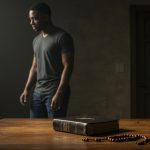
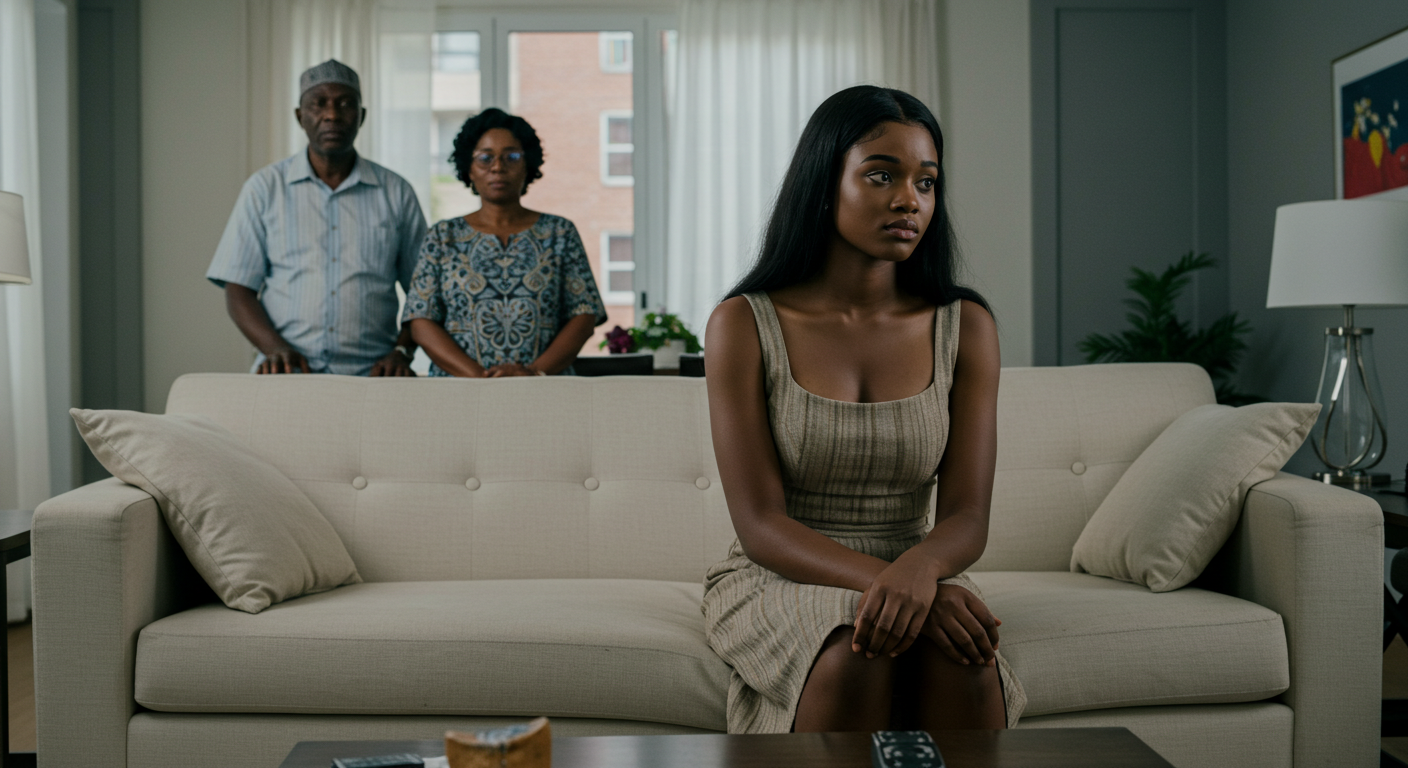
What’s it like to grow up with deeply religious parents who believe the world’s most celebrated holiday is a “pagan ritual”? Sophia* shares why she still feels guilty about Christmas, as a 25-year-old adult who no longer attends her parents’ church, but still lives with them.
As told to Boluwatife
The first time I remember hearing the word “Christmas” was in December 2006. I was nine years old, and my new primary school was organising a Christmas party. I’d just transferred to the school some months before when my military dad was posted to the state. My teacher had mentioned the party in class as she handed us letters to give our parents.
She talked about picking pupils to star in a Christmas play during the party, and I remember my best friend, Chidera, being all excited about it. Even at nine, I knew Chidera was dramatic, so it only made sense she’d want to act in the play. I had no interest in acting, but seeing her excitement made me look forward to attending the Christmas party. I never did.
I took the letter home and handed it to my mum — it was an invitation to the party, including details of how much each pupil was to pay. My mum went berserk, and the next day, she was at my school shouting at my teacher and headmistress. I didn’t really understand the problem at the time, but now, I know too well.
You see, my parents are staunch members of a conservative church whose doctrines deeply frown against things like make-up, female trousers, drumming in church, hair extensions, and most importantly, celebrating Christmas. They believe the Bible never mentions celebrating the birth of Christ or even the date he was born. According to them, the star that led the wise men to Christ could’ve been engineered by the devil to help King Herod find and kill the baby.
In conclusion, Christmas was a no-no in our house, and it became even more apparent after this Christmas party incident. I’m an only child, and since my dad is the stereotypical hardly-around, leaves-child-training-to-the-mother kinda father, my mum made it her duty to drill into my head the dangers of taking part in a “pagan ritual” and going against the will of God. It didn’t help that I suddenly became aware of all the lovely things other children in the barracks enjoyed during the festive season.
On Christmas day, you’d see them match around the barracks in new clothes, with money in their hands to buy sweets and biscuits. The stubborn ones would even buy banga when it was considered contraband in the barracks.
I desperately wanted to wear nice clothes and buy sweets too. But on Christmas Day 2008, I made the mistake of suggesting it to my mother. She beat me so much I still have a scar on my right elbow to remind me of my foolishness.
I never mentioned Christmas at home again. I moved out in 2014, when I got admission to the university, and stayed on campus throughout my five-year degree period, only visiting home during the holidays. My school was in a different state, and it was expensive to travel, so it only made sense to limit my visits.
Living away from home, especially when you have strict parents, opens you to a level of freedom you never had before. It was in school I started using makeup and wearing trousers. I also experimented with relaxers and hair extensions before I decided I hated it and went fully natural in my final year. I had freedom, but I was still religious. I don’t think it’s possible to just throw away everything you’ve known all your life.
I still regularly attended church, but not my parents’ church. I attended the campus branch of their church once, then my roommates invited me to their church. I went with them one Sunday and never looked back.
It was one of these new-generation churches I’m sure my parents would rather die than attend, but fellowshipping with young believers helped me experience religion in a different light. I learnt that God isn’t just the “all-consuming lion” my parents project him as, but he’s also a loving father. I loved that church, but never got used to the ladies praying with uncovered hair. What’s that they say about leopards never changing their spots?
Maybe it’s the reason why I never got comfortable during December activities at the church. They didn’t share my home church’s Christmas-is-a-sin beliefs, and from the very first day of December, you could tell Christmas was in the air. They’d decorate the church hall and stuff every service with Christmas messages and carols. We even did secret Santa and exchanged gifts during the Christmas Day service. I loved it, but I never got rid of my mum’s voice in my head, shouting, “Don’t participate in pagan rituals!”
For the December holidays I spent at home, it was just easier to follow the status quo and attend my parents’ church. They didn’t do any special December activities, of course, so it was just like old times. My mother did notice my relaxed hair once — I never wore makeup or trousers at home — and might have killed me if our neighbours didn’t interfere. She didn’t talk about it again, which is surprising, but I think she feared I might do worse in school.
After finishing university around 2020, I returned home for what was supposed to be a brief stay before National Youth Service Corps (NYSC) posting, but COVID happened, so I basically served from home, and I’ve been here ever since. I got a job close to home in 2021.
Even though I no longer attend my parents’ church since I started working in 2021 — I refused to give in to their demands to go with them — I still have to respect them by toning down my fashion, and of course, never mentioning Christmas. It doesn’t mean I don’t miss the carols, decorations and gifts, but to be honest, I’m not entirely sure my current anti-Christmas stance is out of respect for my parents or a nagging feeling that I’m sinning against God.
Maybe I’ll grow out of it one day, but I don’t see it happening while I still live under my parents’ roof.
*Subject’s name has been changed to protect her identity.
The Nigerian Voter is a series that seeks to understand the motivations that drive the voting decisions of Nigerians — why they vote, how they pick their candidates, why some have never voted, and their wildest stories around elections.
The subject of today’s The Nigerian Voter is Safiya, a Muslim lady from Kaduna State in her twenties. She moved to Lagos in 2018 in search of greener pastures. She told us about her past experience voting in the North, and her views on religion and tribalism when it comes to the voting process.
What made you come from Kaduna to Lagos?
I moved here in 2018. The economy is very poor there in Kaduna and farmers are not making ends meet. Here in Lagos, I am making more money than my secondary school teacher and I can employ him, even with my mama put business.
So that being said, I came to Lagos to get what I want, which is a better life for myself. Kaduna was just too poor and it is not safe with Boko Haram attacks here and there. Most people living in the North are just branching out to different parts of the country.
Have you ever voted before?
Yes, I have.
In 2019, I went to Niger State to vote (since that was where I registered), but it was a terrible experience because the INEC chairmen there did not allow one to vote.
It’s only the people that settled them with money (bribes) that they allowed to vote. If you don’t settle them well, the vote will not count.
Have you ever faced any form of harassment during voting?
Yes oh, very well.
I can remember an INEC guy slapping me across the face because I was arguing with someone that jumped the queue. Unknown to me, the person had already bribed this guy with N20,000, which back then, was a lot of money in the North.
Even a pregnant woman nearly lost her baby in my presence because she was pushed down with violent force. It was a really tough time.
Who did you vote for then and why?
That time, I voted for Buhari, because I was scared that nobody else would win if I voted for them. I know that with these elections, if someone is running for office a second time, it’s that person that will win.
So since 2019 was for Buhari’s second tenure, I just voted for him anyway.
Do you regret voting for Buhari now?
Ah, well, sometimes I wish I had the courage to vote for someone else.
Atiku may not be the best person for Nigeria, but he is better than this Buhari. Anyways, I’m just hoping that 2023 will be different with the right person, insha’allah.
Who would you vote for in 2023 and why?
Peter Obi, because we need an educated person that can develop the country financially. People know that supporting businesses will reduce the financial pressure on them as a government, instead of simply encouraging the usual employment by people.
Peter Obi has these ideas. And you know Igbos, they’re quite skilled with this business thing. So I know he would create financial freedom for businesses. We would also have our own Nigerian-made stuff instead of importing. I don’t trust men like Tinubu to deliver, and Atiku should go and rest. The man has been running for president ever since I was in primary school.
Igbo men are always very successful in business, so I know that if I vote for Obi, he will create ways for businesses to grow. Maybe I can get a restaurant instead of this mama put.
But would you say religion should be a big part of your criteria for a candidate?
Look ehn, Nigeria is the way that it is now because we are all voting based on tribe or religion. In 2015, my people voted for Buhari because he is from the North, but look at how that turned out. If I was ever told that my own Northern Muslim brethren could treat us this way, making us become refugees in other parts of the country, I would never have believed it.
Election is not about religion or tribalism. We need to vote for the right person. It is religion and tribalism that made us vote for Buhari the first time, and look at where that turned out. I can’t vote for Tinubu because he extorts people, and he doesn’t care.
Look at this flooding crisis for instance that happened in Kogi State. Did Tinubu ever go to visit any of those victims? How many days passed before Atiku visited? It was only Obi that had enough sense to go to those places and sympathize with them, and help them. Why would I not vote for that kind of leader?
Tinubu said emi l’okan and they’re playing with the presidential seat as some sort of royal seat that is turn by turn. Is it a royal family thing, that you’re saying emi l’okan? Rubbish. This time, we need to all vote and our vote has to count!
Who are the people you know voting for?
It’s still Peter Obi oh, even in the North.
I can’t say I know a single person that wants to vote for Atiku or Tinubu. It’s because my own people are all into a business and they’ve seen that Peter Obi is their man. They will go to the polls en-masse in 2023 and cast their vote!
Navigating life as a woman in the world today is interesting. From Nigeria to Timbuktu, it’ll amaze you how similar all our experiences are. Every Wednesday, women the world over will share their experiences on everything from sex to politics right here.
This week’s #ZikokoWhatSheSaid subject is a 28-year-old Nigerian woman. She talks about writing as a form of therapy, being a Christian in a staunch Muslim home and raising 17 cats.
What’s one thing that makes you happy right now?
Right now? Writing.
It was a huge part of my life until I had a four-year writer’s block. A few weeks ago, I started writing again, and I can feel myself becoming lighter. I still haven’t gotten my groove back, but knowing that writing isn’t completely lost to me makes me happy.
Of course, being around my family makes me happy too, but writing adds a layer of self-fulfillment.
How so?
When I had writer’s block in 2018, I almost prayed for death because I was tired of living. I’ve started writing again, and it gives me something to look forward to when I wake up. Sometimes, I hate getting sleepy because it means I have to stop.
I don’t even write to get my books published or anything. I just have so many stories in my head, and I love bringing them to life. It’s like I get to create my own world, and even if it’s just for a little while, I can live in it.
What do you write about, and how did you get into writing?
I started out of boredom. It was the first week of senior secondary school in 2007, and I was sitting in class doing nothing. I picked up a pen, took one of my school books and started writing a story. It was romance, but there were some elements of my life in it. When I was done, for some reason, my classmates liked reading it. So I wrote more.
After a while, it stopped being about boredom and became my every waking and sleeping thought. I would dream storylines and be inspired by everything and everyone around me. I even wrote a three-book series about my best friend that I hope will become a TV series someday.
You were on a roll. So when did the writer’s block happen?
After I met Christ in 2012, I wanted my writing to include my faith, but it was so difficult. I was used to writing your typical romance so switching to gospel was like learning how to drive an automatic car and suddenly having to go manual.
I refused to write anything else, but what I wanted to write seemed beyond me. Coincidentally, I was really busy with university, and then law school. A lot of things were happening at the same time, so writing sort of fell away from me. By the time I settled into adulthood, I realised I couldn’t write like before. I’m so glad that’s over now.
Me too. How did you shake the block?
I prayed about it a lot. I told God why I wanted to write, that I believe He gave me the talent as a means to tell people about Christ. I apologised for burying my talent because of my law pursuit and just let Him know I was desperate. After some time, the characters started speaking to me again.
Were you always Christian or did you just convert in 2012?
I was born into a Muslim family, so I’ve always been religious. I even used to represent my Arabic school in competitions. But I attended a Catholic primary school so I also had a deep knowledge of the Christian faith. I was okay with both religions.
When I was 16, I started spending time with a girl who lived in my area, and we talked about God a lot. She opened me up to things I thought I knew about Christ, and when I realised the difference between Islam and Christianity, I had to make a choice. I chose Christ then, but it was years before I truly understood what it meant.
What do you mean?
I later had the opportunity to study several religions at OAU. I literally got accepted for a degree in religious studies instead of the law I applied for. So I studied Islam, Christianity, Hinduism, Buddhism, Taoism and many others, and it was just one religion that had a God who loved me so much He was willing to die for me.
Others kept asking me to do things to attain “paradise”, but Christ was the only one saying, “You don’t have to do anything. In fact, there’s nothing you CAN do, so I’ve done it all. All you gotta do is believe me.” Only one religion had a God who called me His own child. The choice was between sonship and servanthood, and I chose to be a son.. Or daughter, in my case.
And how did your family take it?
I haven’t officially told my parents I’m a Christian yet, but they know. Everyone knows. My actions, words and very life reflect Christ. My big sister also attended OAU, so some people told her about it.
I’ve told my younger siblings because we have a close relationship, and I can tell them anything. At first, they were confused and wanted to know why I couldn’t just “be a Muslim”, but I explained how I felt, and they cheered me on.
What about your parents?
In the beginning, it wasn’t funny. They were all over me all the time like, “You were born into a Muslim family. It’s only someone who’s greedy and wants what other people have that’ll decide they want to step out of their own religion.” They would sit me down, and pray and fast.
So what’s writing post-block been like?
I finally found a balance. I still write romance, but now, every word is a conscious effort to reach out to someone and say, “You’ll be okay.” I’ve finally gotten to the point where the ideas that swim in my head are the ones that’ll heal people. And I can finally breathe.
Do you write for a living now?
No. I haven’t gone into it because I’m scared. I’ve been writing for a long time, but I just enjoy sharing my books with friends and discussing them. Lately, they’ve been pushing me to “let the world see”. I’m scared the world won’t be as kind as they are.
I’m scared of the day someone will tell me, “Your books aren’t actually that good” or “This is trash”. I’m scared I won’t recover from it, and it’ll take away my love for writing. Right now, I hear a lot of “This is good. This is great. You write well. The storyline is perfect”. And that’s good enough for me.
A while ago, I published the first book I wrote after my writer’s block, but I refused to post the link so people won’t see it. I just like going back to the site to look at it. Maybe as a birthday present to myself at the end of the year, I’ll finally share.
What do you do at times like this when you’re unsure of yourself, or just sad?
I think of a bright future. Lately, I’ve been thinking I want to settle down, get married and have two to five kids. I’d like to move into my own house with my husband and start living my own life. Apart from that, in the presence of God, there’s fullness of joy. So when I start to feel sad, I remember I dwell in His presence. I listen to music and play with my cats.
Cats?
Yes, I have cats. I have a lot of cats. Well, not anymore. I’m down to two now, but once upon a time, I had 17 cats at once. My dad was going to send all of us out of the house like “I can only live with one: human beings or cats.” Lol.
Oh wow. How did you handle 17 cats?
It was overwhelming but also easy because cats are fiercely independent. They love to do everything themselves unlike dogs. They clean themselves and some of them love to stay outside. They also don’t make noise at all. The only problem is when you have kittens and they start to pee on your couch. My parents tried to kidnap and give out one of my cats once, and it actually crawled all the way back home the next day. The older cats started dying, and we started selling off the kittens.
Omg. Do you feel alienated from your family at all?
My whole life revolves around my family. I work for my dad so we spend a lot of time together, and we’ve gotten closer. I’m his lawyer. I handle the administration of his real estate company. He likes to involve me in the construction side, so I visit his sites too. Then I go from work back home.
When I go out, I go with my siblings. We go everywhere together. Last time, we went to this Korean festival, and it was so much fun. We had Korean food, drank boba tea and sang K-pop songs. We all love to hang out together, and our differing religions don’t affect that. We are our own friends and sounding boards. If something happens at work with my dad, I report to my mom and siblings, and he reports me to them too.
Most people don’t like working with their parents. What’s it like for you?
I mean, some people ask if I intend to leave. But I don’t want to. I think of it as a permanent job, you know, a family business. At the end of the day, my dad hopes to retire and wants to have someone who already knows the business. I’m learning a lot really fast. I think it’s giving him the confidence that if he decides to take a break, everything will be okay.
I’ve been working with him for almost two years now, and I’m used to almost everything. The workers and staff, everyone is used to me. We hope the rest of my siblings join too. My youngest sister is studying architecture, but if she doesn’t want to come into the business, that’s fine too.
Why do I feel like your parents made you study law because you wanted to write?
Funny thing is I didn’t always want to be a lawyer. In primary school, I was called “small lawyer” because I was good at debates. I won all of them. I was small, but I spoke well, so they always involved me in anything to do with speaking. In secondary school, I was put in any competition that involved oratory skills even though I was in science class.
So what did you want to be?
I wanted to be a gynaecologist. I loved pregnant women and the whole process of pregnancy. I have three younger ones, not to mention many nephews and nieces. I’ve seen the pregnancy process from start to end a lot of times, and it amazes me.
I watched my sister move around in the womb and then move around the same way after she was born. My baby brother moved slowly and rarely in the womb. And when he was born, he was so quiet and gentle. I figured our characters are formed from the womb, and I found that fascinating.
I agree. So from gynaecology to law? How did that happen?
I didn’t have the skills to achieve that dream. Oh, my God, physics was hard. After graduation, I didn’t get admission for medicine; I got microbiology. I would’ve had to study microbiology for four years before I could switch to medicine.
Then my dad told me to take GCE for art class because, for some reason, he thought I was a genius and my only options were medicine and law. He also never really supported my decision to be in science class in the first place.
How did you manage such a shift after graduating?
I had to start reading and teaching myself government. Thank God, I did literature throughout secondary school because I loved reading, so it was easy for me. I wrote a second WAEC and did GCE for two different classes in the same year.
I got another admission for microbiology at the same time that I passed my entrance examination into art class pre-degree at OAU. I had to choose between “Microbiology then Medicine” and “pre-degree then law”. I chose pre-degree because it was shorter.
Law, finally, right?
Nope. After the one-year period, I got religious studies and English, which is how I learnt about so many religions. I was going to transfer to mass communication, thinking I would combine my love for writing and speaking. But during my second semester in religious studies and English, ASUU went on a strike that lasted months.
When will ASUU change?
At a point, it seemed there was no end in sight. My mom was like, “Look, all my kids are stuck in school.” My elder sister had been in OAU for years because of the strikes. My parents didn’t want the same thing to happen to me. So my dad said we should move to a private university.
He told me to write entrance exams for law and mass communication. We went to the law department first, I wrote the exam and passed. My mum just said since I’d entered for law, I didn’t need to write the one for mass comm., so we went home. That’s how I ended up studying law.
Talk about fate
In the beginning, I hated it because I had so many friends in OAU. I even had a boyfriend there. I was sad, lonely, and I felt old; I was almost 20 starting over in 100 level where my classmates were 16. But I found the NIFES fellowship, and after a while, I wasn’t sad again.
I learnt a lot while studying law. I saw so much injustice in the cases we had to study, and I told myself, “I would love to do something about this and make sure the people around me don’t suffer this kind of injustice.”
I feel like something changed
In law school, our lecturer made a statement once: practice is not the same thing as theory. I thought he was just being philosophical. But when I graduated, I realised he was right. I thought with my law degree, I could stand up to policemen in the face of police brutality.
But in Nigeria, when a lawyer goes to challenge the police, they can’t go with the confidence and power they taught us in school or you see on TV shows. They have to be subservient. If you want to get anything from the police, if you want your clients to be treated well in custody, if you even want to get police bail, you must be subservient and bribe them.
When I saw this, I was shattered. It wasn’t what I signed up for or imagined when I studied law for how many years of my life? I honestly don’t want to be a lawyer forever. I plan to practice for five years.
What about the family business?
My legal skills will still be applicable there. Right now, I go to court and deal with cases, all of which I’ve won so far. But after some time, we’ll hire a company lawyer for those. I really wish there was more I could do. I feel like a weak lawyer because I don’t have the power and experience to do most of the things I would like to.
I can’t stand up in court to speak against injustice because there are too many rules, from the way you dress and speak to the colour of your hair. While rules are good, people will always mismanage them, and many lawyers and judges do.
Right
Because I don’t have enough backing to get away with whatever, I have to be very careful and tiptoe around the law. I don’t enjoy doing that. I’ve practiced for two years so far. If in three, I can get some footing, I’d continue. If not, I’d just hang up my robe and wig, and do other things.
Navigating life as a woman in the world today is interesting. From Nigeria to Timbuktu, it’ll amaze you how similar all our experiences are. Every Wednesday, women the world over will share their experiences on everything from sex to politics right here.
Photo by Good Faces on Unsplash
This week’s #ZikokoWhatSheSaid subject is a 23-year-old Nigerian woman. She tells us about discovering her feminism, pansexuality and atheism through books while living with her close-knit conservative family.
What’s something about your life that makes you happy?
I’m enjoying being single right now. I don’t have commitments to anybody, and I don’t need to make weird decisions based on what society expects in relationships.
My last serious relationship was in 2018 when I was in year two at university. Right after that, I got into a toxic and demeaning situationship with an older guy, that went really bad. I was 19, and he was manipulative, so it was difficult to get out of it. Those two years were a character development phase for me, and I’ve only been in situationships since then.
Since the first situationship was so toxic, why did you enter more of them?
I’m scared of being in a proper relationship. And this is because I just don’t like most of the people who’ve approached me, or they’re misogynists. Or I don’t like them because they’re misogynists.
How do you know they’re misogynists right away?
Through conversation? The last time I met someone who wanted to be in a relationship with me, we had a very telling conversation. And I have some red flags that make knowing easier for me. One of them is if you’re anti-LGBTQ.
For me, feminism and freedom of sexual and gender identity are inseparable. If you claim to be a feminist man, you need to understand people can make choices on who their partner should be too. When you meet some men, they’ll say, “I’m a feminist, but….” Just know the ‘but’ will reveal how they’re not feminists because they’ll give an excuse. It’ll be “but you should understand….”
No, I want someone who understands the basics of equality.
And the guy you met?
He wasn’t LGBTQ. He said, “I don’t have a problem with them, but….” He might as well have said, “I’m a feminist, but….” Apart from that, he randomly asked me, “Do you know how to cook?” I said no, and he was like, “It’s a lie because if you grew up in an African home, every mother teaches their daughter how to cook”.
He started talking about how he knows it’s not compulsory, but he thinks a woman should know how to cook. Meanwhile, he didn’t know how because his mom didn’t teach him, and his daddy didn’t like men entering the kitchen. He was obviously not a feminist. That turned me off immediately.
Understandable. So how do these casual relationships work?
I’m a fool because I expect exclusivity in them. I think it’s the boyfriend-girlfriend tag I don’t want. I just want a go-to person I can see regularly, who’s not my boyfriend. And I’m terrible at casual relationships for someone who always finds a way to enter them because I always end up catching feelings.
There’s no avoiding those, I fear
I know. In my last situationship, the person was my G. We were just friends who started liking each other, and something happened. I was scared he would want something serious after that, so I told him I didn‘t want us to continue since I wasn’t ready for that. He assured me he didn’t want anything, and that’s when I caught feelings.
This only ever happens when I know the other person is not interested. Once it looks like the person likes me back, I run away. I don’t even know what my problem is, but I’m not interested in any kind of dating right now. And of all the new people I’ve met, none of them is giving.
What was growing up like for you, considering your progressive beliefs?
First of all, from JSS 1, my parents sent me off to boarding school, and I hated all the flogging and shouting there. But back home on holidays, my family was pretty close. Like most girls in the average Nigerian family, I was an omo get inside. I wasn’t allowed to go out. Once I’m home for even a midterm break, I’m locked in. I wasn’t allowed to attend my friends’ birthday parties. I wasn’t even given a phone until after I graduated from secondary school.
This is probably why I prefer to stay indoors now; I’m so used to it. I was always monitored, and I was never given a reason why. I got no allowance, so I couldn’t even sneak out, and if I was caught outside, I’d be flogged. It was just my siblings and me, reading books and watching TV indoors, all day every day, while our parents went to work. My mom would usually be home earlier than my dad; he was hardly available except on Sundays and some Saturdays. So I wasn’t comfortable with him because he was like a guest in our home.
Were you religious like the average Nigerian family?
Yes. We went to church every Sunday and for some weekday services too. When I was younger, we attended MFM, so we would always go to camp. Then we moved to Redeem and continued the trend. We never missed crossover services in particular.
We always had to go to church to cross over into the New Year and have the pastors pray over water and oil to rub on our heads. My parents would always remind us that God doesn’t like this and that, you’re supposed to do this as a child, and this is a sin.
And how did you feel about all that?
It felt normal, actually. I mean, I didn’t know any other way. And it wasn’t in my face that we were religious or my parents were restrictive. I enjoyed some things about my childhood. Like, on Saturdays, my dad would take us to the tennis club. On Sundays, we would go to restaurants.
We went to Apapa Amusement Park a lot because my dad worked in Apapa. We also visited my extended families, and I enjoyed seeing my cousins and gisting with them. Every December 25, my parents threw Christmas parties, inviting our extended family, and my cousins would stay over for a week or two. I enjoyed that a lot.
So I’m curious. How did you go from this everyday Nigerian daughter to having the strong beliefs you have now?
It started with feminism. When I was 17, and in secondary school, I read Chimamanda’s book, We Should All Be Feminists. I liked her definition of feminism and understood why ‘We Should All Be Feminists’. Growing up, I remember feeling cheated when I heard men say you’re supposed to do this and that.
I think every woman has some gender rules they’re uncomfortable with, but they’ve just gotten used to them. They’d say things like, “What can I do? It’s a woman’s place.” Early on, I decided I wouldn’t accept it. Feminism formed my understanding of the LGBTQ community and also led me to atheism.
In university, I studied sociology and learnt that society shapes who we are. The kind of family we come from, the environment we grew up in, the religion we were born into and the type of school we went to, all shape us. People aren’t a certain way because they were born like that; society shapes them. People are different because of how they grew up and the values they picked up as children and adults.
If that’s true, why didn’t you remain conservative as your family shaped you to be?
Family is the primary agent of socialisation, but my family sent me to boarding school.
I learnt a lot through books I read in the hostel and when my parents locked me up at home. We Should All Be Feminists was probably the first non-children’s book I read. Then A Woman Is No Man by Etaf Rum, and another Chimamanda book, The Thing Around Your Neck, which spoke about how the British colonised us through religion. It’s one of the vital moments I’ve had when I started asking questions about religion. Why didn’t God help black people when they were mistreated?
Then, I started Googling things. I found out the Bible contained more chapters, and the King James Version was shortened by an actual King James; a British King. I learnt that Christianity was infused with politics; the church was the state, so they made religious decisions and wrote their version of the Bible to take advantage of people.
That must’ve been a lot to discover so young. How did you process it?
As a sociologist, you ask questions like, is this book objective? And you find out there’s no book in the world that’s objective. The Bible is an account of people, their ways of life and the ideologies of society in those ancient times. When I read the Bible in secondary school, it was like it was against humanity and was meant to subjugate women.
People give their different interpretations of it — “No, it means you should love” — but it’s clear with words like ‘submission’, ‘subjugation’, ‘a woman should not climb the pulpit’, ‘she should not preach’. At that time, I wasn’t even an atheist. I just thought the Bible was ancient, and the people in it were practising the culture of their time. Times have changed, we’re civilised, so we’re not supposed to follow what happened then.
But as I read more and more about how women were not allowed to go to the market during their period because they were considered dirty, and in the New Testament, Matthew, Mark, Luke and John have different accounts of Jesus’ life, I realised the Bible is different people’s biased perspectives. I was about 20 years old when I decided I won’t take directions from it anymore.
Big decision
Yes, but it was strangely an easy one to make knowing the things I knew. I went to the root of Christianity and how it came from older religions, read about the evolution of religion itself and about our own gods. Then I formed a theory that maybe God exists; people just serve him in different ways because we’re from different societies.
When I read how Chinua Achebe and Chimamanda wrote about traditional prayer in the olden days, it’s similar to how Christians pray now. So when I see Nigerian Christians pray, I’m like, “You’re just praying to a foreign God.”
So why did you become an atheist instead of a traditionalist?
Because I realised nobody’s coming to save you.
There were points in my life when I was really down. I was in a toxic relationship, like I mentioned earlier, I was so young, and it was terrible for me. My self-esteem had gone to shit, and I felt very bad about myself.
I prayed and I cried, and nothing happened. Just looking back at my life, secondary school, primary school, I’ve had times when I pray to God for things, and when nothing happened, I’d just say maybe it’s not God’s will. And I realised we keep on making excuses for him.
How did you realise this exactly?
When I was in SS 1, they kidnapped the Chibok girls. I heard the news, fasted and prayed with so much faith because I believed faith could move mountains. I had so much faith that if I fasted as a child, something miraculous would happen, and the girls would be released.
But you know how the story went. Was it that God didn’t want it to happen? Was it not God’s will for the girls to be released? Since I started taking control of my life and decisions, it’s felt better not to hope for miraculous things. There’s nobody out there coming to save or help you.
And now, you no longer believe he exists?
My atheism is still evolving. Sometimes, I think he exists, but I’m just angry at him. Terrible things are happening in the world, and he’s not doing anything. I wonder why. People are getting killed. Girls are getting abducted, raped. Women are being treated anyhow, and good people suffer a lot in the world. In the Bible, they’ll tell you this is the reason. Sometimes, they’ll just tell you to do things without giving any reason, and I just can’t live like that.
These days, I’m also discovering things about the universe, how it’s much bigger than our Milky Way. I think the universe is too big for one person to control. I also don’t believe there’s heaven or hell. I’d rather just be on my own, make my own decisions, live my life the way I want and just be kind to people.
As for feminism, was there a defining moment that made what you read about in books more personal?
My earliest memory of feeling violated as a woman was in secondary school, even though I didn’t think of it deeply at the time or relate it to feminism. I was walking on the road with my friend, and this man tapped me to ask for my number. I said no. He was a much older man, and I think he was drunk. He was drinking pure water, and he just threw it at me.
I was very scared because I couldn’t confront him. I thought he would beat me. Things like that make me very sad. I’ve been groped on the road once before. And you just go to one corner and cry because you can’t do anything about it, especially when you’re young. I was sexualised a lot, growing up.
I’m so sorry
I’ve also seen it happen to others. One time during NYSC, a female flagbearer was marching, and because of the way she moved, a guy just shouted that she’ll know how to do doggy very well. It just gets to me when boys make rude comments about girls and their bodies, especially dismissively.
One other time, we were doing inter-house sports in secondary school, and a boy made a comment about a girl’s body, that her big bum bum was making her float. I don’t understand why people talk about women like that. It feels weird and wrong, and it makes me upset.
Did you talk about it to your mum or someone close?
No. I’m constantly fighting in my house sef because I have a younger brother who has a free pass to do whatever he wants, and I don’t. Growing up, my brother could go out and visit friends. But my sister and I were always locked inside and constantly harrassed with, “Where are you coming from? Where are you going to? Who are you talking to? Bring your phone.”
One time, my dad checked my phone and saw a text from a guy, and he was very angry. We were always monitored, but my brother didn’t go through that kind of vigorous training. Till now, I’ll be working, and they’ll tell me to go to the kitchen, while my brother is sleeping.
Do you push back? What’s your parents’ reaction to that?
They’re always angry, especially my mom, who feels she’s training me to be a woman. I tell them I don’t like it, and I’m not going to change. The only thing I can do is rebel and fight it. My dad, at one point, said my brother is not supposed to wash plates because he has sisters. I told him, “No, it’s not possible. He’s eating, so he has to wash it.” Sometimes, I’m sad because I’m tired of fighting. I just can’t wait to make money and get my own place, but for now, I’m a struggling youth corper.
And do these fights work to change their mindset at all?
Nope. Sometimes, they’re just tired and they let me be. But of course, their mindsets don’t change at all. My dad is a misogynist, and my mum is a patriarchy princess.
What about your brother?
He’s 20 now and is constantly told the reason he doesn’t have to do certain things is because a woman will do it for him, so he can just rest. And he believes it; he’s enjoying that male privilege. I try to have conversations with him, but his mindset is forming. Sometimes, my dad would say something like, “she’s just talking her feminism talk,” and they’d both laugh at me.
Even my sister who’s 24 isn’t a feminist. She says the double standard is wrong but still says feminism is extreme. I just think she couldn’t be bothered to fight or struggle over the injustice. She’s decided to go with what society dictates because she fears the repercussions and backlash. I’m always ready for the backlash.
How did your interest in the LGBTQ community come in?
It works hand in hand with feminism for me. I’ve always been pretty open-minded, so I’ve always just believed in people’s freedom of choice. I’m pansexual myself.
How did you discover your sexuality?
In 2019, I kissed a woman during a game of truth or dare, and I liked it. I’ve never been in a relationship with one, but I now know it’s something I would consider. The experience made me realise my attraction isn’t limited to gender because I’m still very much attracted to men.
How do your parents feel about your atheism and pansexuality?
My mom is always praying. I’m always fighting with her because I’m not the average Naija babe who’s looking for husband and hoping to be a good wife. I’m very vocal about my beliefs. And they just look at me as this weird Gen Z babe.
My dad keeps advising me that my beliefs are wrong; he takes a chilled approach. I can tell they don’t want to scare me off and lose me to the ‘devil’ for good, but my parents no longer force me to go to church. They’ve gotten used to it.
How has being an atheist, in particular, affected your friendships?
Well, first off, I lost a close friend because of it. She became very Christian at the same time I became an atheist. I’m still trying to get over it, but she’s moved on. Anytime I see her posts with other friends, I get really sad, I feel like crying. Towards the end, we fought a lot, and I would tell her it was because of our differing beliefs, but she’d deny it. I wanted to keep the friendship so bad I even compromised and started following her to church, but in the end, I still lost her.
How did you two form such strong differing beliefs despite being so close?
It was during the COVID-19 lockdown. It was a very mentally stressful time for everybody. So while I was reading books, she was getting closer to God.
Do you have friends who share your atheist views?
I have one friend who does. And he even helped me strengthen my atheism. Before, I just had these thoughts in my head, but I was surrounded by Christians so I couldn’t really express it because no one could relate. He could relate, and we had so many conversations in which we exchanged ideas. I asked him questions and we would Google stuff together.
You know when you’re in the closet and you meet other people who’ve come out of it? My other friends say he changed me, but I had these thoughts way before I met him. He was also the close friend I had a situationship with and ended up catching feelings. Now, we’re just friends.
Does it get lonely having fewer friends and not being close to your family because of your beliefs?
Yes, actually. Sometimes, it does. I haven’t seen my friends in a long time, and my closest friend doesn’t care about me anymore. But I don’t think I’m lonely because I’m an atheist or feminist. I think it’s because I’m terrible at socialising.
For more stories like this, check out our #WhatSheSaid and for more women like content, click here
We’ve advised you so many times to stop sinning. But since you won’t listen just take this quiz so you can find out where you’ll be when the rapture comes.
Sex Lifeis an anonymous Zikoko weekly series that explores the pleasures, frustrations and excitement of sex in the lives of Nigerians.
The subject of today’s Sex Life is a 31-year-old woman who didn’t have sex until her wedding night. She talks about how her relationship with God was why she waited till marriage, and how she married, to have sex.
Tell me about your first sexual experience
When I was 12, I had this neighbour who was a year older than me. We grew up together, so I used to go to his house daily. On one of such days, he played a CD that turned out to be porn. We watched for a bit, and then started making out. It happened three to four times over the span of a couple of months.
Did it ever progress past kissing?
It never did.
Why?
I’m a very religious Christian and waiting till marriage is my service to God. I wasn’t saving myself for a man; I was just doing what God wanted me to do.
In fact, in my university, people were taking a “covenant of purity”, but I didn’t because I thought it was unnecessary. Most of the people who were taking the covenant weren’t even serious about it. After they took the covenant, you could see them getting hot and heavy in corners. For me, waiting till marriage was about honouring God, and I knew I didn’t need a covenant to do that. I waited for the right time, but it wasn’t easy.
I tried to date only Christians, but I realised not every Christian was interested in saving themselves till marriage. When I dated those men and made out with them, I felt a little guilty, but the guilt was never overwhelming.
My relationship with God is a very loving one, so I spoke to Him a lot about the temptations I felt. I reminded myself of Christ’s work for me and how the life I live actually belongs to Him. I learnt about Jesus from the point of a Father, not just as a Lord and Master, even though He is.
So, did you stick to it?
Yes, I did! The first time I had sex was on my wedding night at 27. It almost didn’t even happen because we were both exhausted. Before then, many of my friends who had already gotten married shared stories about their wedding night with me. Some said they couldn’t have sex until months after, and I said it would not be me. I refuse!
But the wedding day came, and there was so much going on, we were so exhausted. It was so bad that we couldn’t even stay more than 30 minutes at the after-party our friends organised for us. When we got to the hotel, we just had our baths and dozed off. That’s when one strange breeze blew, and we were awake. Next thing, we were having sex.
Just like that? What was the sex like?
The sex was amazing. It was a bit painful because it was my first time, but he was gentle and soft. It made the experience incredibly intimate. He asked questions and I guided him on what worked and what didn’t.
Of course not. There was even a time I had to stop going to his house for three months because the temptation was choking us. Looking at each other and spending a lot of time together was making it harder.
However, it wasn’t as bad because we wanted the same things. Unlike me, he wasn’t a virgin, but he was celibate in his last relationship and wanted to wait with me in this one. We checked each other and knew when not to go too far and when not to be alone.
I like to joke that we got married so we could have sex. We were everything without the need for marriage. He was my companion and soulmate. The only thing missing was sex. That’s why after a year and ten months, we dragged ourselves to the altar.
Love it. How’s the sex now?
I’m having so many orgasms. There’s something so special about having sex with someone you love, someone who always wants you to be satisfied. It’s magic.
Do you ever wish you didn’t wait?
Not at all! I’m a very emotional person, and sex can be very vulnerable. I wouldn’t want to share that part of myself with just anyone.
So, on a scale of 1-10, what’ll you rate your Sex Life?
One million. I’m having the time of my life. I’ve been having sex with the same person for four years, but it feels like magic each time. I love it.
Thanks to the increasing conversation around wellness and self-care, the reawakening of charismatic Christianity and books like “Think and Grow Rich”, “The Secret”, “The Law of Attraction” and “The Power of Positive Thinking”, the idea of “manifesting your dream future” is gaining waves around the world, especially post-COVID-19 lockdown. A practice that’s vaguely Christian at times, pagan other times, what is “manifestation”, does it work and is it the Nigerian secret to success or the bane of our existence?
What does it mean to manifest?
No, it’s not to show signs of demon possession. The basic definition of “manifestation” is using your thoughts, feelings and/or beliefs to bring something to physical reality; the “conscious creation” of circumstances that lead to a fulfilling life. You may think it’s a variation of more common religious practices like praying or meditating. And you would be correct; manifestation goes hand in hand with spirituality after all. However, while it is based on science and inspires most religious beliefs, many approaches have turned manifestation into a pseudoscience.
There are several approaches to manifesting. People use affirmations, chants, prayers, special “angel” numbers, scripts, lightwork or they just daydream for hours. Special objects, associated with ethnic cultures, like crystals, cowries, relics, sigils, rosary, etc. also feature in many manifestation routines, as well as psychedelics. But what was once a way to raise our vibrations and connect to the universe has become a means of escaping work and responsibility.
It seems all the average citizen can do these days is hope for a better future than their present. So of course, many have turned to “manifesting” as a way to accomplish something they have no control over when they’re powerless to make any real change. All you need are your dreams and a strong creative mind to imagine how nice it would be if, no, when, they come true. Perhaps it is better than the previous generation’s penchant to “settle” and be content.
Great, right? So what’s the downside?
Well, even Christianity says “faith without works is dead”. Manifestation compels you to stay positive and the universe to align with your positivity. But the last, important element most forget is “doing”. When you believe you can get your dream job, for example, instead of worrying about it, or focusing on the many reasons you can’t get it, you work hard to get into a good school, get all the scholarships you need to do that and get an excellent grade to be qualified for the particular job. Then you gain even more positivity to aspire to higher levels. “Where your focus goes, energy flows”, or so Tony Robbins famously said.
When you believe your country will be great again, you work hard to get all the qualifications and exposure you need to navigate politics, engage in community service at the grassroots level, maybe research the demographic so you can make the moves that matter, build a viable political party or get into an existing one, and work your way up. Nigerians, however, do not truly believe Nigeria will be great again, not in their generation anyway. One might say that’s why our prayers and manifestation haven’t worked so far. The Nigerian dream is to successfully leave Nigeria for good.
Final words on manifestation
Some manifestation guides suggest that believing in something creates it. Many religious leaders encourage us to “pray without ceasing” and believe. Not much is said for action. On the other hand, the science-based approach says that if we truly believe we can achieve something, we are willing to put in the work to achieve it. Manifestation takes work. To manifest the dream life, we need to believe we can have it, feel strongly enough to be persistent, and ultimately, do the things and behave in the way that will bring the outcomes we desire.
In October 2016, I and my girlfriend at the time spent a week together at my house. We had not seen each other in three months so we spent most of our time indoors, catching up. We talked about the books we read in our time apart, about feminism and food. We washed and braided each other’s hair while listening to Asa blasting from my small Bluetooth speakers. I enjoyed spending time with her, but every night, after her bath, just before she went to bed, she’d always slip away to pray.
In the corner of my room, she’d sit facing the wall for some privacy between her and her God. She’d read through a devotional supplemented with her bible, then sing along to a Christian music playlist on her phone before kneeling to pray. I would remain on the other side of the room, ears listening, curious. Her prayers weren’t short like mine. It had layers and layers. She’d thank God for his goodness in her life and her family’s, then ask him for her heart’s desires. She also prayed for forgiveness of sins and interceded for those around her. Sometimes, I heard my name in these prayers. When I did, I would pause to acknowledge that God was possibly looking at me, watching me sin. It felt good though, to know someone other than my parents was praying for me. I never prayed past two minutes so I was in awe of how dedicated she was to worshipping a god she could not see.
On her third night with me, the prayers got intense — her voice was louder and she was speaking in tongues. She cried like she was in pain. The hair on my arms rose and goosebumps grew out of my skin. I would have left the room, but I wanted to be sure she was okay. I crushed the butt of my cigarette and tried to focus on the article I was reading but her words pushed their way into my ears with the same force they escaped her mouth. I did not realise that I was holding my breath until she stopped praying.
“Are you okay?” she asked, putting her bible and devotional away. I described how I felt to her and she recognised it as fear.
“You don’t know God, that’s why you’re scared of him.”
She was wrong — I did know God.
*
My parents grew up in Muslim households. They went to Arabic schools and fasted religiously during Ramadan. They were both raised to see Allah as supreme. Love brought them together in their twenties. When my mother noticed things were getting serious between them, she shared her biggest secret at the time with my dad — she was a Christian. She told him how her father caught her one day coming from charismatic lessons and warned her to never try it again. This did not kill her belief in Jesus Christ. She told my father that if he was serious about marrying her, he had to allow her to practise the religion of her heart. My father was baffled that it was even a problem. It’s a story she tells me with pride, a story about love and God’s plan. Their children would choose the religion they wanted, but along the line, that changed.
My siblings and I had Sunnahs, where rams were slaughtered to mark the seventh day of our births. We didn’t go to Arabic school, but I have vague memories of prayers in my early childhood being a repeated sequence of standing, sitting on my haunches, bowing with my forehead to the ground while mumbling words I didn’t understand — I was merely imitating my father. I remember watching him count his tesbiu and wondering when I would get mine. As I grew older, this was replaced with rides to St Paul’s Catholic Church, stuffed in the backseat with my landlord’s teenage daughters. We all wore long dresses with scarves, no arms and no legs.
At church, prayer was different. I understood what was being said, but the monotony of rituals remained. When the priest walked in with his flowing white gown and red scarf, we had to stand to acknowledge his presence. There was a lot of standing during the service. We also had communion, but only those with “grace” could receive it. Listening to the choir sing Amazing Grace sonorously soothed me, but I always wondered what it meant to be filled with grace.
After my sister’s Sunnah, she had her christening in a pentecostal church we eventually settled in. She was named “Faith” by the pastors, a name I refuse to regard as hers. Faith, the assurance of things hoped for, the conviction of things not seen — a concept that continues to evade me.
In this new church, the men of God did not wear gowns. They wore suits and spoke with authority. I could wear trousers, which I felt more comfortable in, to this holy house. During the first school holiday as a member of the church, my mum enrolled my siblings and I at the vacation bible school, where I met other kids in my age group. Together, we learnt about Abraham and God’s promise to him, Joseph and his coat of many colours, Moses and the Red sea, David and his psalms, Solomon and his God-given wisdom, and Jesus and his parables. I graduated second position in my class, and my mother bragged about it. The same way she bragged that her pastors were not miracle-obsessed like many pentecostal churches. A friend of hers would joke about how the members were nothing like their pastors though.
The members were nosy middle-class Nigerians who kept asking questions about my father. Was my mum married? Why didn’t he come to church? How do they cope? Do they fight about it? She answered them earnestly, “His rules were simple. No night vigils. No abandoning your family for church programmes.”
During Ramadan, she wakes up before 5 to prepare Sahur for him, and at night, she slices his favourite fruits into a bowl with which he breaks his fast. She makes elaborate meals to celebrate Eid with him. In 2010, they travelled together to Mecca. They both returned with gold teeth and new titles. She told her pastors before doing these things like she was seeking permission. As a child, my father would tell me that they served the same God, just with different names and modes of worship, but as I grew older, I began to doubt that.
One night just before I went off to boarding school, I saw Jesus. I had just finished dinner with my cousin and we were sitting together watching a popular pastor cast out demons from a member of his congregation on TV. The choir was singing in the background, asking the power of the Lord to come down. I remember wondering why we were not watching cartoons. The electricity current was low so the living room was dark save for the light from the TV screen. I was uncomfortable with the way the pastor pushed the little girl’s head around. Was the demon going to crawl out of her like in Nigerian movies? He covered her head with a white handkerchief and when she fell, I saw Jesus. A white man with gold streaked hair covering his face, dressed in all white, standing among the congregation just staring. He looked just like the painting of Jesus Christ in the Catholic church I grew up going to. I screamed and jumped into my cousin’s arms shivering. She kept asking what the problem was, but words failed me. Looking back, he was probably just a white man with long hair, but I had seen so many pictures and statues of Jesus that I was convinced that the man I saw on television had to be Jesus witnessing his servant do his good work. The incident bore my fear for Christianity. To today, whenever I hear, “Let the power of the Lord come down,” I fight the urge to run away.
When I was 8, I was sent to a Christian faith-based secondary school. It was founded by a well-known Pentecostal church. My mother thought it was the best option when compared to federal or missionary same-sex schools. My father had no objections. It was a mixed school but the boys and the girls did not see each other without supervision. We woke up every morning by 4:30, and after our baths, we went to church for an early service to set the day straight. We said a short prayer before breakfast, and afterwards, we had another quick bible service just before school started. The Gospel was integrated into everything we did. Each class started with prayers. After dinner, we had a prayer session just before prep class, which also ended with prayers. Then, we rinse and repeat. On Wednesdays, three of our classes were replaced with bible study, and after school, we ’d go to the main church for more bible study and prayers. On Fridays, we had a special service before dinner where the drama unit would stage a play. Saturdays were usually my best days because they were the most relaxed, but then, there was Sunday anxiety. Sundays came with a two-hour bible study before the main five-hour service. Every first Sunday of the month, we’d fast for the first few hours. It was torture considering that every first Saturday was visiting day. I could never get used to having too much to eat and not eating it. I’d start off fasting but before the service was over, I was already snacking on a chocolate bar I got the day before.
During most services, we were reminded of hell fire, that we would perish if we didn’t give our lives to Christ. I answered altar calls several times. As a born again, you are now covered with grace, no longer of the world. Telling lies, using cuss words and listening to worldly music was unacceptable. I fell out of grace every other day, but what bothered me the most was speaking in tongues. At bible school, I was taught that you had to be filled with the Holy Spirit to speak in tongues. I wanted to experience that.
One time, during evening service, the pastor asked those of us who had never been filled with the Holy Spirit to come forward with our hands outstretched in front of us. He pleaded with God to fill us with his spirit. After the prayers, he told us that all we had to do was speak. I spoke, but the tongues were stuck in my throat. I watched as my friends were kabashing and rolling on the ground in religious glee. When I asked my friend, she told me that she did not fully understand it herself. I wondered what they were doing right that I wasn’t. I refused to believe that God had skipped me, and I didn’t want to fake it. I worried about it until I attended my first deliverance service. People do absurd things when they catch the Holy Spirit. Some would prance around the room feverishly murmuring prayers. Others would freeze, fall to the ground shaking like they were convulsing. Sometimes, somebody would scream so loud I would still hear it in my head weeks after. To not be in control of my body is not an experience I want, so I decided being filled with the holy spirit wasn’t something I was okay with.
The older I grew, the more questions I had. I realised that I had never prayed anything into existence. In fact, most of the things I deliberately prayed for did not actualize, so I had to settle for God’s perfectly timed plan. I’ve never had a situation bend for me in that miraculous way that Christians talk about. Sometimes, I wished I could believe that because I did certain things, God would consider my desires over those who did not practice these same things.
That night, listening to my friend cry her eyes out, I hoped that he was listening to her and he would do as she wanted. When she lost her mother some months later, I wondered if it was part of his big plan. She kept believing though, and it scared me. Her unwavering belief made me think of faith as a superpower — something people like me, with questions where reverence should be, didn’t possess. Whenever I meet someone who is deep in their belief, I avoid them.
University was my chance to be free from religion. I spent my Sundays reading books or sleeping, recovering from all the strain I had been through over the years. I lived alone outside the university campus, so it was easy for me to not have anything to do with the church or the mosque. I was in awe of my friends who would wake up early by themselves, and dress up to go to church. If it was a new month, they would return with taglines from their pastors, uttering them at the slightest chance. The enthusiasm baffled me. Sometimes, they forced me to go to church with them. When I did, it was simply an excuse to socialize. A place to go before the main outing. While there, I had to caution myself to not scoff when the pastor was preaching. I reminded myself that even though the pastor may be interpreting the bible to fit his own narrative, I didn’t know enough to counter him. Eventually, I stopped entertaining any invites to church because it did nothing for me.
I have gone from believing in the possibility that God exists to questioning the reality of that chance. There’s a story of three blind men, my mum told me when I was a child. The men met an elephant on a walk, but because they were blind, they weren’t sure what was in their way. They used their hands to feel this strange thing. One of them said it felt smooth so it was fine wood. Another said it was rough like the bark of a tree, while the last one was convinced it was a tree because of the trunk he could feel. This story explains how I feel about religion today. I believe in the supernatural, that there are forces beyond us and that the ideas we have of these forces are incomplete. Thinking about that gap teaches me that every religion is valid because it’s conceptualised from the understanding each group has of God, like the three blind men.
My philosophy is that the world is too big — different people with their thought patterns influenced by their culture, religion and environment — to believe that there is only one way to do anything. Things happen beyond anyone’s control; wishes and prayers do nothing. I would rather hope that when something bad happens to me, I have the strength to move on from it than to entrust myself to any of the gods.
Sex Lifeis an anonymous Zikoko weekly series that explores the pleasures, frustrations and excitement of sex in the lives of Nigerians.
The subject of today’s Sex Life is a 24-year-old bisexual man who didn’t have sex because of his religious beliefs. He talks about the shame he attached to his sexual desires, masturbating in secret, and suppressing his high sex drive because it was against his faith.
Tell me about your first sexual experience.
When I was 13, I discovered masturbation. My best friend confided in me about some ungodly act she was into, which was masturbation. Later that week, I was going through the internet when I saw some pictures that got me excited.
I noticed the tip of my dick was super sensitive, and I touched it. Touching it felt so good, but rubbing it felt even better. I went to the bathroom and kept rubbing it till I had the very first orgasm of my life. The orgasm was filled with self-hate, pleasure and guilt.
Why did an orgasm make you feel all of those things?
Well, my faith at the time had a considerable role to play. I believed that the Bible must be taken at face value. I couldn’t combine loving God with enjoying sex. That’s why I felt very icky after masturbating in the bathroom. I hated myself intensely.
Does that mean it never happened again?
LMAO, not at all. As much as I had all these negative feelings associated with masturbating, I didn’t stop. It was the thorn in my side.
I was horny and walked around with an erection everywhere I went. So, I was masturbating every chance I got. I just felt very terrible after. At the time, I tried to convince myself that the Bible never explicitly said anything about masturbating, but it didn’t stop me from feeling the way I did. It didn’t help that I had an extremely high sex drive.
It was getting harder to talk to girls when all I wanted to do was have sex. Yet, I also couldn’t have sex because of my religion.
When I was 14, the guilt got worse. That’s when I realised that not only did I want to have as much sex as possible with all the girls I saw, I wanted to have as much sex with the men as well.
Did you ever act on that?
I couldn’t masturbate without fear, was it having sex with men I could do? I stayed in my closet and endured a never-ending cycle of reading my Bible, watching porn, masturbating, and hating myself.
Unfortunately, no. The older I got, the more questions I asked. There was a lot of cognitive bias I saw in the two major Abrahamic religions in Nigeria. That’s when I gave myself two options. Either I continue to live in this bubble of cognitive bias, or I walk away and do away with a faith that has kept me sane and helped me guide my life up until then. I chose to walk away.
What did walking away look like?
Well, when I was 20, I had a conversation with my parents. I told them I was no longer going to church, and I had stopped reading my Bible.
There was a constant back and forth for about two years, but they’re finally making peace with it.
And what about sex?
I finally had sex for the first time when I was 22, with a woman from a GC I was in. I had done a lot of research in the years I battled my faith. I had asked for help from some people I know who had walked similar paths as me. This was very helpful in unlearning all my previous biases I had associated with women in regards to sex. I’d like to believe I went into it well prepared, and I gave her a good time.
As for me, it felt so good. She was such a beautiful woman, and there’s something about knowing a conventionally attractive woman wants you. It makes you feel very good about yourself.
Surprisingly, I didn’t feel as guilty as I thought I would. I just enjoyed the moment.
Why’d you think you didn’t feel guilty?
I think I was finally ready to enjoy myself. I had spent almost a decade hating myself and my body because I felt being sexual was a sin.
Since I no longer held any religious inclination, I didn’t feel like I was committing any sin. It was a thoroughly enjoyable experience.
No, it didn’t get easier. I think because, unlike sex that had never happened, masturbation did. It was the one sexual act I committed for years; the one thing I felt was going to drag me to hell because I had acted on the urges I felt.
It wasn’t until I was 23 that I was able to actually masturbate without guilt. I had to teach myself to make it a form of self care. There was no way to have great sex without being able to be erotic with my own self.
And the sex drive?Still high?
Yes, very much so. For the past two years, it’s like I’ve been playing catch-up. I’m exploring the various things that caught and still catches my interest.
I’ve been getting heavily involved in BDSM, and it means unlearning all the biases I had towards it. I’m also building a stash of sex toys because self pleasure is something I’m investing in.
I’ve even been able to start having sex with men. The first man I ever had sex with was so silent, I thought he wasn’t that into me. I think what excited him was the fact that there was someone watching us.
However, the other men I’ve been having sex with are pretty good at it. So, I know it’s something I like and enjoy.
Tell me something you’ve learnt on this journey.
The most interesting thing to me is the fact that there’s been a lot of religious people who I’ve had sex with. For some time, I judged them because I couldn’t reconcile the two, but now? Not so much. Religion is a necessity for a lot of people. Life is very bleak, and not believing in something can wreck you.
That’s why I don’t make comments when they decide to meet up after they finish church service or have sex with me after Ramadan. I understand the role I play in their life and the role religion plays as well.
All I want to do now is have the sex I want with the people I want, whether they’re men or women.
Any regrets?
My only regret is not starting sooner in my teens.
How then will you rate your sex life on a scale of 1-10?
5, because it can be better. I want more partners, and I need to figure out my taste in men because I’ve not had as much experience there as I’d like. I’m still young, so there is still much to learn and experience, and I’d like a chance to really explore myself.
Zikoko is launching a new series where we explore those friendships, familial and romantic relationships that are no longer sailing.
Sex Lifeis an anonymous Zikoko weekly series that explores the pleasures, frustrations and excitement of sex in the lives of Nigerians.
The subject of today’s Sex Life is a 31-year-old woman who combines her religion with her sex life. She talks about combating purity culture, realising she was bisexual and combining her spirituality with her sexuality.
Tell me about your first sexual experience
When I was 10 years old, my best friend’s brother kissed me. My parents had dropped me off at her house because they were travelling to the village and didn’t want to take me along.
One day, my best friend and I decided to sleep in his room for reasons I don’t remember. My best friend fell asleep first, so it was just me and him awake. He was asking me about crushes and if there was anyone I liked. When I said no, he kissed me. It was a light kiss and it ended so quickly, but it felt nice. Very nice.
How did the kiss make you feel?
At first, it felt nice. It was a quick kiss so I couldn’t tell you much about technique. However, I felt terrible after. I remember when my mum used to tell me that kissing boys was a sin against God and how my punishment will be pregnancy and hell. I was so scared.
When my parents eventually came back, I told my mum I thought I was pregnant. She asked what happened and I told her I had kissed my best friend’s brother. That was the last time my parents let me visit my bestie again. She also told me I had to go for confession so I could be forgiven of my sins. Looking at it now, it was a very fucked up thing to tell a 10-year-old.
I’m so sorry. I can imagine that was the end of kissing boys. Right?
Well, yes. I never kissed a boy again. But when I was 14 I kissed someone again, and this time it was a girl.
It was this friend I made in the all girls Catholic boarding school I attended. We did everything together and were basically inseparable. Some of our classmates used to call us husband and wife.
The kiss happened during evening prep while the Reverend Sister was chasing everyone out, we hid in a corner of the room so we wouldn’t have to go for prep. So while our mates were reading, we just stayed up talking. We talked about so many things and then she asked if she could kiss me. I said yes. She kissed me and I didn’t want her to stop. Unlike the first kiss I had with my best friend’s brother, this one lasted longer and was more intense. She touched my breasts and kissed me for a long time. It felt like heaven.
And how did you feel after?
Guilty. I knew at this point that kissing couldn’t get me pregnant, but I did know that kissing women was frowned upon in my religion. My parents made sure all the sins and their punishments were ingrained in our memory forever. That’s why I started to withdraw from her.
We no longer ate together, washed together, or even read together. Everyone was wondering what the problem was, but I couldn’t look her in the eye. Then a few days later, she cornered me while I was in my classroom and she made sure we had a conversation about the kiss.
She told me she liked me, wanted to still be my friend and even apologized for the kiss. So I forgave her and we kept being friends. It’s just that I noticed that our interactions changed. We maintained eye contact longer and touched each other more often. Now that I think about it, she was practically my first relationship.
Did you guys ever do anything else?
If you’re talking sexually, yes. We kissed a few times but they were always short and chaste. I would catch myself leaning in for more but she never indulged me. I think it’s because of how I acted every single time we kissed. It took a while for me to stop the withdrawals. I would cry sometimes in the school’s chapel and pray for God to take away that feeling from me. It never worked.
That sounds like such a troubling experience.
Oh, it was. It was two years of softness and guilt. Even touching her hand made me feel like I was committing sin. I didn’t want to feel the way I felt anymore. At one point, I thought maybe God cursed me and the only way to cure it was to die. Those final years in secondary school were both some of the happiest and unhappiest moments of my life.
Did you ever get over the feeling?
I did. When I was 17 and done with secondary school, my parents sent me to Canada to see my aunt and her family. My parents would always send my younger brother and I on solo trips out of the country so that it’d be easier for us to get approved when applying for visas.
During the holiday with my aunt, I followed her to church. That day, the preacher was teaching about how God loved us for who we are, irrespective of what we are. It felt like the preacher was seeing me and it led to a very emotional service. I walked up to him after the sermon and asked him to pray with me. For the first time, I told someone everything that was going on with me and he listened and gave me advice.
I went home that day filled with some kind of purpose and understanding. I got back to Nigeria and had to constantly remind myself of the things the preacher said. That’s how I finally got myself to masturbate for the first time.
So in all of this, no sex?
Yeah, while I was trying to navigate my sexuality, I wasn’t having sex with anyone. I didn’t want to annoy God any more than I already had, so I just abstained.
Now that I had a somewhat sensible grasp on it, it was like all the hormones of the past couple of years got released at once. I wanted to sleep with anyone, but I was shy. Extremely.
The day I masturbated for the first time, I was seated in the living room, watching a movie. The scenes got heated really quickly and I felt turned on. I tried rubbing my thighs together but that didn’t work. That’s when I decided I needed something better.
I knew about the concept of masturbating, so I wasn’t completely lost when I went down there. There were some slight hiccups, but when I found a frequency that worked, it felt like I was about to burst. That’s when I locked eyes with the portrait of Jesus in our living room and had my very first orgasm.
From crying and wailing to locking eyes with Jesus during mekwe. How?
I don’t know how, because I honestly didn’t plan it. I was just a curious 20-year-old who was no longer as scared of doing sexual things in God’s presence. I was very excited.
I want to think all that religious trauma developed into the kinks I have today.
These kinks, should I ask?
I’m very dominant in bed. I like to tie people up and just let them enjoy themselves. I want to provide a space where my partners are so comfortable and can be themselves. I think all those years of hiding who I am has made me so desperate to be myself and allow people to live their truth as well.
For someone that wasn’t fucking, how did you know you were a dom?
After going to ring the devil’s doorbell, I got even more curious about sex. I think that’s the thing about it. You start one thing and then everything else just follows. So, I made it a conscious effort to look for someone that will take things a little farther with me.
At a departmental party I was in, there was this girl who flirted with me and collected my number. We planned to see and when we were both finally free, I went over to her place. While we were watching a movie at her place, she kissed me. This was the third kiss I had ever gotten in my life, and the first one I actually let myself enjoy. We were making out and her hands kept going everywhere. I thought to myself that it’ll be more practical to have her hands tied up, but I didn’t have any rope. When she tugged on the rosary on my neck, I knew it would do. So, I tied her up with it.
It was my first time touching a woman down there and with the way she screamed, I believed she enjoyed it. Eventually, I started looking for another partner because she was about to graduate. Some of the partners I ended up having were introduced to me by her. I was just trying to figure this whole sex thing out.
That was years ago. How about now?
I’m proud to be out to myself. I’m a bisexual woman and that’s not the end of the world. I’m sad that it took me so long to finally be able to say it, but I’m glad I’m at least able to say it at all. I’ve also never stopped taking my religion seriously. It’s still very important to me. I pray sometimes before sex and after. It’s grounding and familiar.
On a scale of 1-10 what will you rate your sex life?
A 7. I’m having a lot of good sex, but it can be better. The girl that was 14 years old and crying in the chapel might not be proud of the person I am now, but she’s free and that’s all that matters.