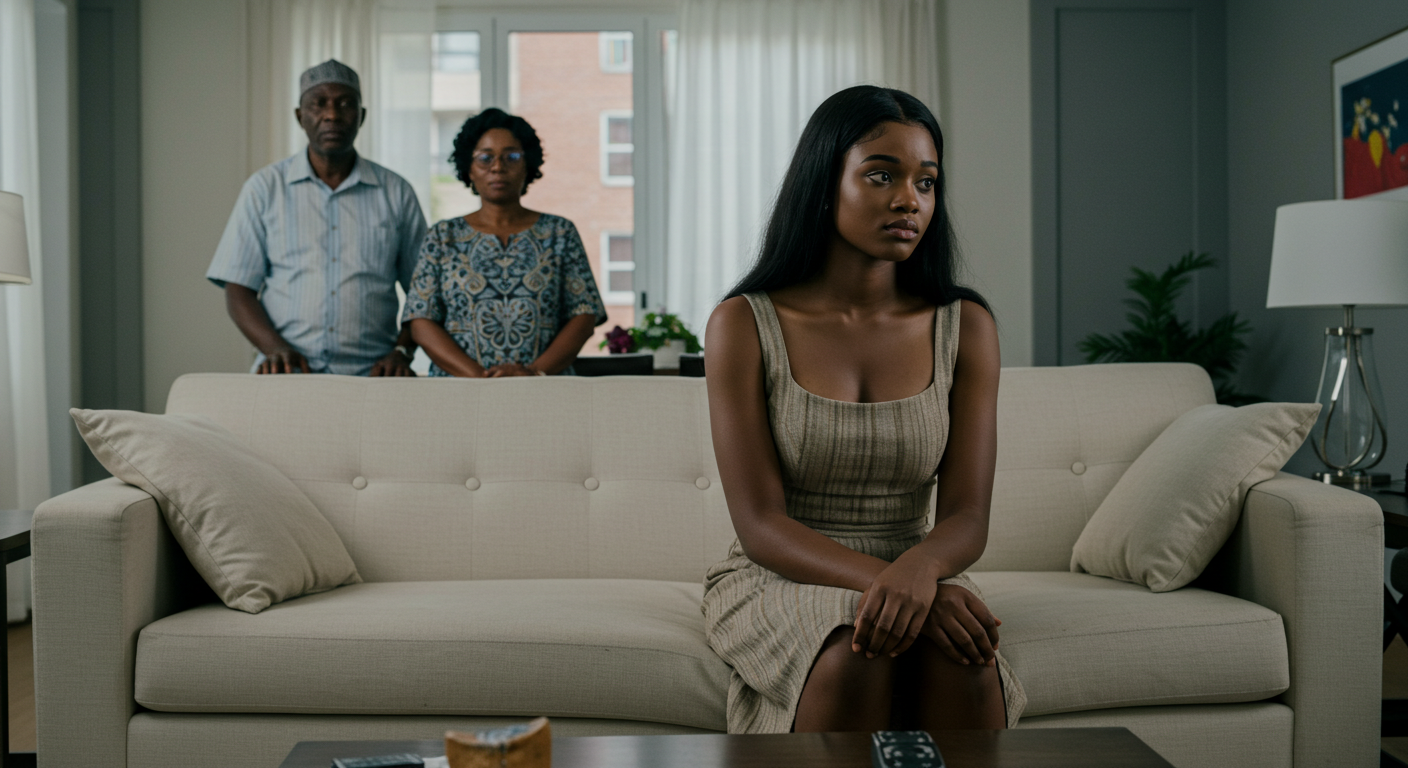
• For many people, Christianity isn’t just a belief system, it’s a way of life. It shapes culture, builds community, and often serves as a measure of morality. From Sunday services to midweek vigils, from family prayers to youth fellowships, religion can inform how people live, love, dress, and even think. But what happens when the very faith that’s supposed to bring peace becomes a source of guilt, fear, or pressure?

    For this piece, we asked five former Christians to share what it was like growing up in the faith, the questions that led to their disillusionment, and the result of leaving it all behind.

    “I was tired of pretending to maintain a certain public image” — Remi*, 25, F

    Remi was raised Christian, but as a pastor’s kid, the pressure to maintain a good image to protect her parents’ reputation took its toll.

    “Being a pastor’s kid was a very hectic experience. I had to maintain a certain image in public because any misstep could embarrass my parents. The church also came before every other thing in our lives, including socialising with friends.

    From when I was six, I watched my older siblings get flogged mercilessly at different points because a random church member spun a lie against them.

    As I continued to grow, I started to read more because some of the sermons I heard just didn’t seem right. I also did a bit of religious criticism in my school work, which exposed me to the underbelly of Christian history. I hated having to pretend I believed in the things my parents and other pastors preached, and I really just wanted out. So, one day in 2021, I made the decision to stop going to church. I had started living on my own, so it was easy to dodge any backlash from my parents. I don’t go to church anymore, but they don’t know that.

    Now that I’m free from religion, I can decide what is wrong or right without weighing them as ‘sins.’ I’m also very grounded in my sense of being, what I want and what I don’t want out of life. I’ve been slowly building a community of friends and family who aren’t religious fanatics, and who love me regardless of my lifestyle choices. I like it better this way.”

    Get More Zikoko Goodness in Your Mail

    Subscribe to our newsletters and never miss any of the action

    “I realised I didn’t need a god to give me the answers I was looking for” — Nkem*, 28, M

    Nkem’s world view expanded when he went for his NYSC service year. Once he went back home, he realised he didn’t believe in the faith any longer.

    “Growing up, practising my religion made me feel like I was part of a community. The process of deconstructing my faith was made up of many ‘turning points.’ When I went for my NYSC, I met people from all walks of life, not only people who shared my religion. When my service year ended and I came back home, I followed my parents to church. While I was listening to the pastor, I realised I disagreed with what he was saying and at some point during the service, it hit me that I didn’t believe any of this anymore. 

    During this period, I began questioning Christianity and wondering if it was true or not. The final turning point was when I concluded that I didn’t need to believe in a God to be a decent human being or care about other people. I could simply do that on my own. That was the moment I realised I didn’t want to be religious.

    Leaving religion behind made me re-examine and question all my beliefs and biases. I became more aware of the prejudice and bigotry I had towards other people. Without the lens of religion, I approached this self-audit with logic instead of scripture or something vague like the holy spirit. 

    I quickly realised how much of a shitty person I was and how any room for growth was hampered because in a lot of religious spaces, bigotry and bias were the order of the day, especially towards queer people, disabled people and poor people. I was also able to investigate existential questions like ‘What is my purpose on earth?’ and ‘What do I derive satisfaction from doing?’ 

    I’m currently in the process of answering, but it’s a great feeling that I don’t need to wait for a god to give me the answers I seek. I also got to really think about whether I wanted to do things like get married or have kids, and I realised that those are things I don’t really want when there’s no one whispering in my ear that God wants it from me. 

    Being irreligious has its perks, but it also comes with its own baggage. For instance, romantic and platonic relationships have become more complicated. A lot of people aren’t comfortable with irreligious people, but I’m more willing to be upfront about my beliefs than to be dishonest just so I’m accepted.”

    “I have let go of the enormous guilt I felt” — Timi*, 28, F

    While practising her religion, Timi was weighed down by a strong sense of guilt and a fear of hell. She shares how irreligion let her release this pain and choose peace.

    “I was never particularly devout. My parents raised me Christian, but they themselves were not so pious that I developed a strong attachment to my faith. What I do remember is all the guilt I carried around. Even though I wasn’t the most spiricoco person, too many things felt dirty. 

    As a child, I lived in almost constant fear of hell and God’s punishment. If bad things happened to me or people I loved, I took it as a personal failing because obviously, I didn’t pray hard enough. ‘Jesus hears the cries of little children’ was something I took personally. If children’s cries were heard best, then it was my responsibility as a child to make sure things were okay by praying, and when that didn’t work, I felt it was my fault. 

    Throughout my childhood, I had to contend with asking questions about parts of the Bible and other teachings, but I only got unsatisfactory answers like ‘God works in mysterious ways’ or ‘That’s just how it is’. As someone whose parents were insistent on me thinking for myself in every other aspect of my life, it was very confusing for me that this God, who was to be the most important thing in my life, could not be explained.

    When my father got sick, I was still a pre-teen. But his illness didn’t give me a crisis of faith, in fact, it plunged me deeper into God. The way I saw it, everybody was telling me his slow losing fight with cancer was God’s plan, so it didn’t really matter what I wanted or what I prayed for. Everything changed when I lost him. I got angry with this ‘plan’ and decided I didn’t like it. Why did I need to follow a plan I couldn’t understand or explain, even when it hurt me and my loved ones? After interrogating my personal moral code and ethics, I decided I didn’t like this god very much.

    Giving myself permission not to like Yaweh was the last crack in the dam. I allowed myself to ask all those questions I had suppressed since childhood. I read more of the Bible than I ever read the whole time I was still “dedicated” to being Christian, and in less than a year, I realised we were all lying to ourselves about this religion and took myself squarely out of it.

    Having left the faith, I find myself to be a kinder person, to myself as well as to others. When one accepts that there is no grand plan, it opens up one’s perspective to see that the strings were really being pulled by fellow human beings. People are the reason most things happen, not some mysterious, powerful being. 

    Whether it’s capitalism, self-interest, or plain old stupidity, you can find the human behind most disasters. You can also find the human behind most of the good in the world. I decided to dedicate myself to being part of that good. There is no more ‘’leaving it to God’, ’ it’s now ‘‘What can I do?’’ ‘’Who can I help?’’ The greatest benefit I have enjoyed so far is that I no longer walk around with a crippling fear of burning forever in a pit of eternal fire. I enjoy my life now for what it is.”

    “I wondered why God was so unkind to his followers” — Daniel*, 26, M

    Daniel was raised Catholic, but between the dwindling economy and church politics, his faith began to raise questions that he couldn’t answer.

    “I was born Catholic, and I probably would have remained so if my mother hadn’t left our church in an effort to distance herself from her problematic family. When I was still practising as a Pentecostal, I read the Bible a lot, but I had several questions that I had no answers to. I remember sitting in the back seat of the family car, asking my parents, ‘How do we know God is real?’ and getting vague answers.

    When I was 14, I was sent off to boarding school. Being away from my family, I found myself drawn more deeply to Christianity because I craved community. I heard it promised peace, and I desperately wanted that. ‘‘Holy Spirit, come into his heart now, give him peace’. I answered multiple altar calls, yet I never felt it. The only thing I miss is singing in the choir.

    As I grew, Nigeria’s dwindling economy affected my family financially. I couldn’t understand why God seemed unkind to my mother and her efforts, especially since she was deeply religious, kind, always helping her community, and doing her best for everyone around her. Suddenly, the pastors who once name-dropped her in their sermons didn’t mention her anymore. The church members who used to come around stopped showing up. All because we weren’t as financially buoyant as before. I began to notice how some of the worst people I’ve ever known, ironically, were deeply religious people.

    But the most ridiculous part to me was the ‘sacrificial giving.’ They would ask students to give everything they had ‘in faith’. When I questioned it, they said, ‘It’s after you remove your daily expenses for the month’. As if a student could ever predict their expenses. It just seemed like a money-making grift.

    I think the most important lesson I’ve learned since leaving is control. It hasn’t been easy, especially coming to terms with the fact that nobody is coming to save you. As a Christian, I found comfort in believing there was some grand plan or design, but now I know I literally shape my own outcome. It’s a realisation that’s both terrifying and comforting.

    And when it comes to relationships?  I’m upfront about it. I can’t be with anyone religious at all.”

    [ad][/ad]

    “While I was still a practising Christian, I felt like I wasn’t righteous or prayerful enough” — Izzy*, 24, M

    Izzy hit a low point in his life that made him question everything, including religion. He shares how he sees life after leaving his faith behind.

    “When I hit rock bottom two years ago, I began questioning my beliefs. It wasn’t a new train of thought for me. I had always felt like Christianity was biased and wasn’t a representation of the absolute truth. It didn’t take long for my faith to crumble under my scrutiny. While I was still a practising Christian, I felt like I wasn’t righteous or prayerful enough, and that evil spirits were the cause of my problems. It was a horrible way to live. 

    Now, I’m relieved I don’t see life that way anymore. I see life as an outcome of choices, the system in which those choices were made, and the probability of them going right or wrong. This new approach didn’t just eradicate the feeling of being cursed, ignored, or unloved by a god; it granted me the feeling of control. Now, I can make better choices to achieve my goals. 

    For my identity, I see myself as a living part of the universe becoming conscious and learning to understand itself. Because of that, I try to develop critical thinking skills that transcend biases. Though it took me a year to find my purpose again, I’m now more open-minded to other people and their own beliefs. I’m learning to understand why people think the way they do. I’m also less judgmental than I used to be. I approach life with the humility that I don’t know it all, and I try to focus on becoming a better person each passing day.”

    See what people are saying about this article on social media


    ALSO READ: Had I Known: 5 Nigerians On Staying Too Long in Broken Relationships


  • Growing up in a deeply religious household, Hannah* (19) learnt to fear everything that didn’t align with a rigid moral script. In her family, having an opinion was a gateway to evil. But after leaving home, her transformation began. 

    In this story, she talks about unlearning fear, embracing her sexuality and feminism, and the cost of choosing herself over her parents’ approval.

    This is Hannah’s story, as told to Mofiyinfoluwa

    I grew up in a strict, deeply religious household where every little deviation was labelled the devil’s handiwork. As I got older, I realised just being myself was enough to cause alarm. If I wasn’t quiet or submissive enough, if I dared to question things or voice an opinion that didn’t align with my parents’ version of God’s will, I was accused of doing something wrong. I didn’t have the language for it back then, but I understood what it meant to be punished for not fitting into the mould they had designed for me.

    By the time I got to university, something in me cracked open. Exposure to new ideas and people made me realise I could have opinions, not just as abstract thoughts, but as beliefs that helped me make sense of my life. I started questioning everything I grew up believing: my religion, how I was expected to behave, and everything I’d been taught to fear. I freely wore trousers, makeup, and jewellery — things I once believed would send me straight to hell. At first, the guilt weighed me down, but more than anything, I felt free.

    My parents, on the other hand, were horrified. I went home and they were convinced I’d joined a cult. They assumed  I’d embraced witchcraft and prostitution. All because I was finally becoming my own person.

    Get More Zikoko Goodness in Your Mail

    Subscribe to our newsletters and never miss any of the action

    I always knew my dad could be careless with his words, but after I started rebelling, I saw a darker side of him. He flared up over the smallest things, like a delayed greeting or how I dressed. The first time he called me a prostitute happened after I confided in my mum about a lecturer harassing me in school. I was scared and wanted help, but my mum told my dad, and he held on to it with no intention of addressing the problem. He waited until one of my school breaks to weaponise it against me during an argument. He accused me of sleeping with lecturers for grades and claimed I hung out with prostitutes. It hurt to hear him say that, but I’d grown up with that kind of emotional abuse, so I wasn’t surprised. My parents always cared more about how righteous we looked than how emotionally safe or loved we felt at home.

    Another time, I wore shorts out of the house, and instead of a calm conversation, my dad threatened to disown me and drop me off at Oshodi to do prostitution as a full time job.

    I’ve tried having conversations with my mum since she’s easier to talk to. I talked about how hard it is to be a woman constantly sexualised and pressured, especially by my own dad. But somehow, she always found a way to centre him. For her, supporting my feminist thoughts meant supporting those who want to overpower men. That’s the lens through which she viewed everything I said.

    At some point, I stopped feeling guilty for holding my beliefs. I started skipping prayers whenever I didn’t feel mentally present. But even that wasn’t allowed. My dad exploded after I missed morning prayers for three days in a row and called me a witch. He genuinely believed I was doing something demonic. In his world, everything boiled down to God or the devil— no in-betweens, or space for questions. That moment made me realise I could never win their approval. Anything outside their narrow expectations would always be labelled as evil. 

    I stopped believing in their version of God, a version that didn’t make room for women like me who questioned things and loved differently. I came into my bisexuality in my second year of university. The feelings had always been there, but I didn’t know what to call them until I developed a crush on a girl. It felt as natural as liking boys, but carried more shame than I knew how to handle.

    I still remember the first time I ever heard the word “lesbian”; I was just a child at a church retreat. I and a girl my age were playfully touching ourselves when, out of nowhere, some adults surrounded us and started shouting “lesbians”. I didn’t even know what that word meant, but I understood it to be the worst thing imaginable to have triggered fury. For years, I internalised the idea that something was wrong with me.

    I’ve never told anyone about my sexuality. I’m still figuring it all out, learning how to approach women and finding spaces that feel safe, away from the fear I was raised in. I don’t know many queer people yet, and sometimes, I still feel alone. But for the first time, I’ve made peace with my truth.

    These days, my relationship with my parents feels distant. We barely speak. I talk to my mum occasionally, but my dad? Only when necessary. He never calls, and I’ve stopped trying. They still see me as a disobedient child, not a  person with my own thoughts, desires, and a life beyond their expectations.

    I dreaded going home during the holidays for a long time. I still do, but now, I push back in small ways. I dress the same way I do in school and do what I want. When the nagging starts, I don’t shrink back or explain.  I let them tire themselves out. 

    I’m proud of the woman I’m becoming, but knowing I may never have their approval still hurts. A part of me knows they might cut me off if they ever know me for who I truly am. But every day, I’m learning to choose myself, in case that ever happens.


    Read Next: The Woman Who Found Her Way Back to an Ex After a Bad Marriage

    [ad]

  • The textbook definition of feminism describes  it as “a socio-political movement and ideology that advocates for the political, economic, and social equality of the sexes.” In other words, feminists believe women deserve equal rights and that restrictions should not be placed on their lives simply because they are women. 

    Now, where does religion and spirituality come in? 

    A lot of feminists have argued about the intersection between feminism, spirituality, and religion. Some believe that religion is harmful to the feminist movement and that to truly be a feminist, one must divest from and denounce religious practices. Others, however, believe their religion and spirituality should not, and do not, affect their feminism. 

    We sat down with a few women, some of whom identify as feminists and some who do not, and listened to what they had to say about feminism, religion, and spirituality. 

    women of different religions sitting at a table to discuss feminism and religion

    “Religion never felt real to me” – Anjola*, 20

    I started questioning religion when I was 15, and it’s been downhill ever since.  

    Every time I tried to be religious, it felt like a performance that everyone else seemed good at except me. The speaking in tongues, the long hours of prayer, etc. I could never get into it. Religion never felt real to me. It didn’t help that most of the  Christians I knew were hypocrites. 

    Realising I was queer also played a role. I couldn’t rationalise homophobia, and it didn’t feel right to participate in a religion that stood against who I was. The same thing happened with feminism. There was so much casual misogyny in the Bible. Lots of “Men are the head” conversations while women suffered and were treated as afterthoughts. I don’t think I can fully participate in religion with a clean heart while being queer and a feminist. 

    READ ALSO: I Dated a Man of God. It Was the Closest Thing to Hell

    “I think a huge part of my hesitancy to accept feminism is a result of my religion” – Christiana*, 23

    I believe women should have equal rights with men, but not in every aspect. The Bible and my religion make that very clear. I have never called myself a feminist because I don’t see myself as one. Feminism encourages women to be the head of the family and to not be submissive. But submission in itself isn’t bad; it’s just a sign of respect to your husband. Sure, you can be a feminist and a Christian, but I think my hesitancy to accept feminism is a result of my religion. If I wasn’t a Christian, I don’t think I’d care so much about what the Bible says about submission, but I am, so I do. 

    “I am not blinded by faith to look the other way when something is misogynistic” – Blessing*, 18

    I’m religious because I don’t believe human beings just spawned; I believe we were created with purpose and that there is a God. I’ve had certain experiences in my life that I don’t believe were just coincidences. I believe in something beyond myself. However, I am not blinded by faith to ignore misogyny, even if it’s in the Bible. I know it sounds contradictory, but that’s how I make it work. People will call it cherry-picking, but I focus on Jesus and His teachings, not what any other man in the Bible says. I am aware that even though a lot of the men mentioned in the Bible were influential figures in the church, they still had their biases. 

    Get More Zikoko Goodness in Your Mail

    Subscribe to our newsletters and never miss any of the action

    “What does Christianity have to do with equality?” – Ose, 66

    Feminism is why  I was able to go to school when I did. It is why  I can read, write, own property, and save money. I was born in a time when people said things like, “Why will I send a girl to school?” and “How person go just born girl, wetin you go use am do?” and other demeaning things, and no one batted an eye. Sure, some of those things are still being said today, but at least now people can publicly stand  up for girls being denied education. 

    I’ve been Catholic all my life, and that is not going to change. I believe in God the Father, the Trinity, and the Holy Catholic Church. I also believe God ordained different roles for us. A man being ordained to lead a home should have nothing to do with whether a woman can become the General Manager of a company or be paid equally. What does Christianity have to do with equality? 

    “When people tell me they’re religious and feminist, it feels like a joke” – Elizabeth, 19

    I wasn’t always irreligious, but to be fair, I never really felt the connection to religion like others did. Church and prayer always felt like a chore. I didn’t peg that I was an atheist at first, but I called myself a feminist from secondary school. Still, I used to excuse a lot of bad behaviour with, “Oh, the Bible says,” even when it felt wrong. Ever since I left religion completely, it felt like the scales fell from my eyes. There’s no longer any bias or excuse for misogyny. 

    When people say they’re both religious and feminist, it feels like a joke to me. Something would suffer for it.  But I don’t t say it out loud because I know people have different relationships with religion, and they hold on for whatever reasons. 

    “If I  ever had  to pick between identifying as a Muslim or a feminist, I’d pick feminist” – Aisha, 32

    Most days, I think I’m Muslim because there’s nothing else for me to be. My father, his father, and all the fathers before them were  Alhajis, Imams, and clerics. To be anything else feels like disobedience to an entire generation. Does that mean I always agree with what the clerics teach or what the Qur’an says? No. Do I agree that a lot of men used Islam as a means to control and subjugate women? Yes, I do. Do I also think that some women have found solace and peace in the religion? Yes, there’s that as well.

    Still, I saw how  Islam was used to punish my grandmother. I also saw how my mother and sisters fought for me to have peace and comfort. If I ever had to choose between Islam and feminism, I’d pick feminism. I know what my grandma endured at the hands of my grandfather, and I know it was feminism that saved her. If I ever find myself in her position, feminism will save me, too. It would be an insult to the women who risked their lives for me to deny that. 

    READ ALSO: 10 Nigerian Women Share What It’s Like Being a Hijabi

    “I am tired of people assuming I’m a feminist because I say I don’t believe in the existence of any god” – Fola, 28

    Whenever I tell people I am an atheist, they automatically assume I’m a feminist or that I support the LGBTQ+ community. While I don’t care what a gay person does with their time or body, I’m tired of people assuming  I’m a feminist because I say I don’t believe in the existence of any god. 

    Sure, I think women should go to school and have rights, but I don’t believe we can ever be equal. Based on biological and social factors, men are just better suited to leading society, and honestly, let them. I don’t want to have to worry about money or a 9-to-5 job. I want to marry a good man who’ll take care of me, so I can focus on raising our children and building a home. That’s what I believe women were biologically made to do, and it’s the life I want. 

    “If some women need to hold on to religion to keep living and they can square off the contradictions, then by all means, they should go for it” –  Amaka*, 24

    I think I’ve always been a feminist, I just didn’t have the word for it. I was raised by a single mother, and while it wasn’t easy, it was obvious to me from really early on that a woman can do anything a man can do. Sure, there was a lot of internalised misogyny I had to unlearn. Phrases like “A woman is the neck and a man is the head,” stuck because my mum said them when my sisters got married. Plus, it sounded catchy, so it stuck. But it wasn’t until I started my journey of discovery that I started unlearning all of those things. 

    I grew up Christian, but I remember a friend who lost his sister and father within a few years. I tried to comfort him the way I knew how, with the typical “God knows best,” but when he sat in the hospital crying and praying, he concluded that if he lost yet another person after everything, it was either God was callous or didn’t exist. That was the beginning of my journey into spirituality. I just stopped caring. I thought the worst thing that could happen would be I’d die and go to Christian hell, and I was okay with that.  If I died and God was real, I’d make Him answer for the convoluted and messy system he created before I went down to hell. 

    Now, I’ve gotten to a point in my life where I can say boldly that I am spiritual. There’s so much about being a human being that we can never understand. I think we live in a largely disinterested universe, and but I also believe in things only the spiritual can touch: love, kindness, music, connection, art. 

    At the end of the day, religion has morphed depending on what the times look like. If some women need to hold on to religion to keep living, and they can square off the contradictions, then by all means, they should go for it. Who am I to take that away from them?

    READ ALSO: I Called Off My Engagement Because of a Joke

  • The Nigerian experience is physical, emotional, and sometimes international. No one knows it better than our features on #TheAbroadLife, a series where we detail and explore Nigerian experiences while living abroad. 


    Kaima (26) turned down advances from a creepy boss who made her life difficult and moved to the UK alone. In this week’s Abroad Life, she talks about how living in the UK has changed her approach towards religion and how she’s been navigating marriage in a new country.

    When did you leave Nigeria, and where do you live now?

    I left Nigeria in 2021 through the study route. I live in the UK now. 

    Is there any particular reason why you left the country?

    At that point in my life, I couldn’t figure out what I wanted to do with my life in Nigeria. It felt like I was stuck following the same old pattern everybody followed–complete your NYSC, start looking for a job and pray that life gets better from there.

    I also didn’t want to find myself in a position where I would finish my NYSC and start hoping that my Primary Place of Assignment (PPA) would retain me. The PPA in question had started to feel like a nightmare at the time too. I was working with one egoistical and creepy boss.  I just didn’t want to find myself in a position where I wouldn’t have any other option than to be at his mercy or the mercy of the job market so I decided I would explore and leave the country.

    Plus, I really wanted to be independent because, at that point in time I was living with my auntie, and the living situation wasn’t the best. I guess I wanted to feel like a proper adult if that makes sense.

    Do you mind telling me more about your boss?

    He used to make weird advances at me. He would always ask me out or try to get me to go on dates with me, and it just felt a little inappropriate. 

    The job had a weird arrangement, too– It wasn’t letting me put any of the skills I had to use. Plus, he had this weird ego trip that didn’t help matters either–. He used to send me on errands that had nothing to do with why I was working there. There were times when he sent me to go and buy stuff or put on the generator, and soon, It went from errands to petty rules that made no sense.

    He wasn’t always in the office, so he made it compulsory to call him when I got to the office and before I left the office. Then he would say things like, “You’re no longer allowed to take any excuse.” I remember one time I went out for lunch, and when I say that I went out for lunch, I mean that I literally just went to buy food at the end of the street. He got to the office and found out that I had stepped out, and he started yelling. It was past 3 pm, and I hadn’t eaten all day, so I didn’t get where the outrage was coming from. He just kept yelling and talking about how I wanted him to show me his ugly side. That kind of behaviour among employers has become normalised in Nigeria, and I just couldn’t deal.

    Apart from my boss’s misbehaviour, there was also the NYSC side of things, in the sense that everything just seemed like a power trip. Even something as simple as monthly clearance becomes a nightmare. You can show up at your local government with the hope of thumbprinting and end up not being able to do so because your local government instructor isn’t in a good mood or got mad because of some petty reason.

    The decision to leave Nigeria was the result of all those experiences combined with my dissatisfaction with my work and personal life. 

    So is life different in the UK?

    Yes, completely different. For instance, your work relationship with your boss is healthier. Don’t get me wrong, I know there are a lot of good bosses and healthy workplaces in Nigeria, but here, things are more professional. You’re not at the mercy of your boss, and they treat you like a normal human being. 

    That’s good to know. You mentioned that you left Nigeria as a student; how’s that going?

    I’m done now. I graduated in 2022.

    Congratulations. How has life been since then?

    It’s been amazing.  I’ve figured out what I wanted to do and the field I wanted to go into. I’ve also been able to find all of the resources and all of the help I need to advance in my career at the tip of my fingers.

    My life is much more interesting, and I feel at ease. Back home, when I was always stressed or worrying about one thing or the other, it reflected in the way I approached religion.  Now that I’m in the UK, how I  pray has changed. I’m no longer praying for the basic things of life. 

    Can you tell me more about that?

    Back in Nigeria, I was praying for things that nobody should have to pray for. On days I have to go for my monthly clearance, I’ll say, “God, please let my LGI thumbprint for me today without stressing me”. When I’m stepping out of my house, I’ll say, “God, please, don’t let me get into any accident; may evil not be my portion.” 

    I’m not saying that being in the UK automatically means you’re safe from accidents, but I don’t really see the need to pray that way anymore. I also used to pray for money in Nigeria. Sometimes, I even prayed to God about wanting someone to send me as low as ₦10,000. Those were valid needs, but they haven’t featured in my prayer since I moved to the UK three years ago. This place just has a way of making life easier for you.

    I’m curious though, how did your parents feel about you making that mature decision to leave everything you knew in Nigeria to move to the UK?

    I was very intentional about moving to the UK alone. My family took the news well, and they supported me. My dad has never been a fan of japa, but he understood that it was a decision I was making for myself, and he supported me. Even some aunties and uncles supported me financially. The decision was also easier to make because my boyfriend at the time, who is now my husband, was in the UK.  He was very supportive too. I had a lot of support so that made moving alone less scary. But I would say that the first year after moving was not easy.

    How so?

    I was still paying off my school fees so there was a bit of financial stress. I was also in an entirely new country, and I didn’t know how many things worked. I didn’t have any friends, and I was an introvert.

     Back in Nigeria, I struggled to make friends, too, so I just used to wait until I met one nice extrovert to take me under their wings, but that was harder to find in the UK.  It also didn’t help that I was the only Nigerian in my class. I was actually the only black person in my class, so I felt like I was on my own.

    At some point, I stopped focusing on not having friends and started channelling that energy into getting a job because I still had school fees to pay. Being a student, I was only allowed to work part-time but the job offers I was getting were full-time offers. They didn’t want to hire anybody part-time, so I found myself working in a retail store. As somebody who had never done a menial job,  I struggled.

    I had to do a lot of heavy lifting, and I just couldn’t deal.  I remember my first night at the job, I actually started crying because I was not used to it. Everything just felt so heavy, but after a while, I got used to the whole thing so that became less of a problem.

    But the fact that I didn’t have friends or my family around still made things hard for me. I became very depressed because of that, actually. The depression got worse during my first winter in the UK. The cold had a way of making me feel alienated from everything I had ever known but I think after the first year, especially after I graduated, I started enjoying my stay here in the UK.

    What changed after graduation? 

    After graduation, I started volunteering for proper jobs. I was also relieved of the stress of writing my thesis and doing menial jobs. So after graduation, I had more time to focus on getting a full-time job and learning to enjoy my own company. I also had more time to actively step outside of my shell and start making friends.

    You mentioned that you got married. How did that happen?

    I’ll have to give you a backstory.  He was actually the one that encouraged me to do my Masters outside the country. I’ve always wanted to study abroad, but I didn’t know how. I’m not from a rich family, and I wasn’t financially stable either, but he asked,  “Why don’t you just get your international passport?” So I did that, and then he was like, “Why not just write your English proficiency test?” I did that too. Later, he said, “Maybe you should start applying to schools” Then I decided to try; the entire application or relocation process was just me trying my luck.

     Before I knew it, I was already in the UK. He was also very financially supportive throughout the move. Then I moved here, and we continued dating, but we lived in different cities. After I graduated, we  moved in together and got married, 

    Congratulations. I’m guessing that’s one of the good things that happened after graduation.

    Yeah, it is. For the entire duration of the study,  he was my only friend. It was helpful to have someone because, on days when I was just overwhelmed, he was there to help me get back on track. 

    Let’s talk a little bit more about married life. How’s that going?

     It’s been really good. One thing I’ve always wanted is to marry a Nigerian.  I don’t quite like change, so I love that my husband has a solid idea of who I am and where I’m from. I don’t want to spend all day at work speaking through my nose for my British colleagues to understand me and still not be able to speak freely with my husband. It’s also important for both of us to maintain our Nigerian roots. 

    We’ve been talking about having children, and we want to make sure that they know who they are so they don’t end up having an identity crisis. We’re not parents yet, but I think it will be tricky trying to strike that balance between life in the UK, which is primarily what the children will know, and our Nigerian roots.

    Now that you’re starting a family in the UK, is there any plan to move back to Nigeria in the future?

    No, we are not considering that. Even before I got married, I knew I wanted to stay in the UK. That’s why I was intentional about getting a job before my student visa expired. 

    Is there anything about the UK that still shocks you sometimes?

    There are things that still surprise me about living here. People can be very nice, but they can also be passive-aggressive. In Nigeria, I’m used to people being straightforward, but here, sometimes, if someone is being passive, it might be for you to understand that they just don’t like you. Nigerians are more open and bold with their emotions.

    But I’ve noticed good things too. For example, everybody opens the door for you. It’s those small social cues. I had to pick up too, when I moved. Even if someone is 100 meters away, you’re kind of expected to hold the door open for them.  It took a while for me to get the idea, but I’m getting used to it.

    I think the hardest part is just having an identity crisis. . I miss being in Nigeria, where everybody around me is Nigerian. I never had to code switch, all of that.  I guess that’s why the friends I made in the UK are Nigerians.

    I’ve travelled home a few times in the past couple of years; it just feels relaxing. I can relax and just be myself but in the UK, I always have to switch my accent when I go to work or anywhere else. When I get home after a long day of speaking like I foreigner, I always  feel the joy of removing a nonexistent wig

    I’m glad you have friends now. How did you end up meeting them?

    My friends are mostly spouses of my husband’s friends. I met them, and then I was introduced to some other people. I also met some friends in church.

    I have friends in Nigeria, too, but distance has been a barrier.

    How happy are living abroad on a scale of one to ten?

    I would say 9.5 because I  miss my family.  But I love my life in the UK.


    Do you want to share your Abroad Life story? Please reach out to me here. For new episodes of Abroad Life, check in every Friday at 12 PM (WAT). 

  • Over the weekend, the senior pastor of Dunamis Gospel centre, Paul Enenche, publicly embarrassed a congregant who shared a testimony about her new law degree. The woman who seemingly lost her composure due to stage fright described herself as a “BSc graduate of law”. For Enenche, this was all the evidence he needed to shut down her testimony as a blatant lie.

    In the hours that followed, pictures and documents surfaced on social media confirming the woman’s claims to be true. Enenche released an apology statement but not before the aggrieved woman lamented the treatment on Facebook saying: “How shattered I must have felt to be disgraced by my spiritual leader in such a manner?”.

    The entire exchange got me curious about the complexities of navigating conflicts with spiritual leaders who are often held in high regard by their followers. I found these people to share their experiences with their religious leaders.

    Habib*, 30

    In 2021, I returned to Quranic school because I had some free time on my hands. I was 26, but the Qur’an instructor always moved like no one was beyond ass-whooping. I didn’t like that but he had a way of teaching that made it easier to learn the Quran.

    One day, I missed a recitation and this man gave me six hot strokes of cane on my butt. I’d never felt that embarrassed in my adult life. I stopped attending the classes and ignored him on the streets. He soon noticed my absence and visited me at home. He tried to avoid the topic and asked why I’d not been coming. This was when I gave him a piece of my mind about how he humiliated and physically assaulted me. I don’t know if he was genuinely remorseful or just wanted another student back, but he apologised. I returned to school a few weeks later and we’ve built a mutual respect since then.

    The biggest women-only festival in Lagos is BACK.
    Get your tickets here for a day of fun, networking and partayyyyy

    Dami*, 28

    Back in uni, I once had a clash with our campus fellowship pastor who was a final year student at the time. I can’t remember the details of what happened because it’s been so long but I know it had something to do with me refusing a directive from him. He didn’t like that I disobeyed him in public and things got physical. Some other church executives settled us but this guy refused to apologise for raising his hand against me. I attended church after the weeks that followed and the pastor carried on like nothing happened. He limited his interactions with me and I returned the same energy. That incident lifted a scale off my eyes and till today, it’s a constant reminder not to place men of God on any high pedestal. They err, too.

    Kaffy*, 35

    I had the bitchiest fights with the Ameerah (leader of female Muslims) when I was in uni. I only wear scarves or hijab during prayer times but somehow this person thought she could change me. I mean, my parents didn’t even try to enforce the head-covering rule, but you, whom I only met in school, thought you’d change that? She’d give me the coldest shoulder when I wasn’t covered and try to warm up when I showed up covered in the mosque. 

    I wasn’t cool with the pretence and called her out on her bullshit during one of the Muslim sisters’ Sunday meetings. She didn’t see it coming and didn’t like it either. If she didn’t like me before, calling her out doubled the dislike. In my mind, I was like “You won’t make a malice-keeping sinner of me”. So, I met all her cold shoulders with loud greetings of “Salam alaikum sister” or asking her for help when I didn’t need it. More than six years after school, we’re still friends.

    Victor*, 40

    We moved from Lagos to somewhere in Sango Otta last year, and it wasn’t easy to keep up with the travel time to my church on the island. So I decided to scout for a church in the area and found one. It was a new fellowship and the head pastor seemed like a nice woman. I attended for a couple of weeks, but somehow the service didn’t feel like my former church. I decided to start alternating visits between my new and old church. The pastor at the new church noticed this and asked why I’d missed previous services. When I told her about my arrangement, I noticed a look of betrayal on her face. Her response also hinted that she wanted me to choose between both churches. In the following weeks, she reduced her niceties and barely regarded me on the days I attended. I was slightly disappointed but I didn’t let it deter me from attending. I’m there for God and not her. 

    Johan*, 32

    I didn’t really have conflict with my former pastor but I  left his church because I didn’t agree with some of his ways: He was anti-women. When my parents once had issues in their marriage, I shared it with him and I left that conversation feeling hurt because he outrightly put the blame on my mum, calling her a witch.

     He was also the “I know it all” type of pastor who felt his ministry was the beginning and end of salvation. At some point, I evaluated all of these experiences with him and knew it was time to leave. I’m now at a place of forgiveness so I find it hard to recount some of the things I encountered.

    READ NEXT: What It’s Like to Have a Mixed-Religious Family

  • BBC’s investigative documentary on TB Joshua is unhinged for many reasons, but one thing is crystal clear, the clergyman’s ministry ticks all the boxes of a cult.

    A cult is a religious organisation with unusual spiritual and philosophical beliefs. Followers are often brainwashed to embrace extreme teachings and practices, and would often need external intervention to get separated from the institution.

    We recently asked people who’ve found themselves in cults in the past, and if your church or mosque exhibits most or all of these signs, it might be time to pack it up and run for dear life.

    The spiritual leader is called “Daddy, Mummy”

    When you call a person who isn’t your parent “mum or dad”, it means you respect them a lot. In the case of a religious leader, you hold them in high reverence. They, in turn, see you as a child who needs guidance at all times. You’ve probably now been placed in this perpetual state of childhood, forever dependent on them.

    The institution is heavily tied to the founder

    On the websites, it’s quotes and pictures of the founder. You’re bombarded with posters and stickers of the founder often touted to offer some form of protection. Recommended texts are books written by the founder. Can you see the pattern at play? Please, dust your slippers and run away.

    “We’re one big family”

    We’ve already established this as a corporate workplace red flag, but if you didn’t know, you should also run if your church casually throws the statement around. The idea is to ostracise you from your actual loved ones to form new relationships with fellow brainwashed members.

    Every call-to-action comes with an ultimatum 

    When you start getting messages like: “If you’ve not paid your tithe by XYZ, God won’t be happy with you or If you miss this vigil, you’re not ready for blessings.” If you go against their directives, you’ll be met with subtle hostility, and sometimes, ostracism. 

    Punishment for missing activities

    A normal religious institution understands your spiritual activities are just one section of your life, and as such, there’ll be times when you’ll miss things. But if these lapses are greeted with penalties of any kind, there’s probably a huge problem that needs escaping from.

     [ad]

    Donations that tie your worth to money

    A religious institution is the one place that should be open to everyone regardless of social class or financial standing. If you’re constantly asked to donate, if rich members are given special treatment, if donations are ranked according to frequency and amount given, you really shouldn’t wait to find out the worst. 

    You must recruit new members

    While it’s not bad to want to spread the gospel and get more people to join your cool church or mosque, it becomes a problem when this takes the form of an aggressive sales pitch. It gets more suspicious if the special department carved out for those saddled with this responsibility are given a monthly quota of new recruits.

    Repetitive drills

    This is probably the most important sign to look out for. Sometimes, you don’t know when you’re being brainwashed, and you’re far too gone when people around you find out. But try your best to look out for repeated drills that take the form of chanting or constant recitals. According to Anneka, one of the late TB Joshua’s victims featured in the BBC Africa documentary, they’re trying to make you lose cognitive clarity so you can obey and take orders without question. 

  • In response to this tweet, I was on the lookout for people who actively practice non-mainstream religions when I found Chuka* (28).

    He talks about growing up as a member of the Brotherhood of the Cross and Star, believing their teacher is the returned Christ and the misconceptions people have about his belief.

    This is Chuka’s story, as told to Boluwatife

    Image designed by Freepik

    You know how people say they only realised they were Black when they relocated abroad? I only realised my religious beliefs were “strange” when I was seven years old.

    I was returning from a Brotherhood outing with my family, when a middle-aged man sitting by the road spat in my mum’s direction and said something like, “God is patient for keeping these occult people alive.” I asked my mum the meaning of what he said when we arrived home, but she brushed it off. 

    It stayed with me.

    I’m a member of the Brotherhood of the Cross and Star (BCS), but outsiders typically refer to us as “Olumba Olumba Obu”, which is the name of our leader. My family has been members of the Brotherhood for as long as I can remember, and we’ve faced accusations of our religion being a cover for “evil occult” practices for even longer.

    Our doctrine isn’t that far off from mainstream Christianity. We teach from the Bible, emphasise practising love, eschew sin and even have well-structured “church branches” we refer to as Bethels. 

    We don’t view ourselves as a church, but rather as the New Kingdom of God on Earth. We also don’t believe Christ is coming back to Earth because he is already with us. Our founder and supreme father, Leader Olumba Olumba Obu, revealed his son, His Holiness Olumba Olumba Obu, to be the second coming of Christ. We call His Holiness the “King of Kings and Lord of Lords,” and we know and believe him to be the returned Christ. 

    This is supported by the Bible because it affirms that the second coming of Christ won’t be like the first. Plus, His Holiness wasn’t born by intimacy but by prayer.

    The spitting incident isn’t the only case of intimidation I’ve experienced. In primary school, we were asked to write an essay about our holidays, and I mentioned the Brotherhood. From then till I left the school, they called me “Obu’s child”. I even had two teachers call me aside to try to “convert” me to the light, saying I’d go to hell. 

    By the time I was 16, my mum made us start removing our white garment immediately we left Bethel because we’d heard cases of people being stoned and drenched in water because of the regalia. We had a neighbour who always prayed loudly in the night for occultic people (AKA my family) to meet their end. 

    But interestingly, all that made me even prouder of my kingdom. Even the Bible says many won’t believe in the returned Christ, and people will always persecute the truth.

    In uni, I stopped trying to hide and became vocal about my beliefs. Whenever people tried to argue with me, I’d tell them to visit a Bethel or listen to any of our everlasting gospels online to hear the truth. People fear what they don’t understand. We pray in Jesus’ name, sing spiritual choruses, love each other and live a peaceful life. We’re core vegetarians because we don’t believe in killing animals, and it’s even healthier. 

    When someone recently asked me why it’s called “Brotherhood” if it isn’t evil, I referred to our Leader’s teachings, which explain that we’re one in spirit. “Brotherhood” simply means “oneness”. It’s why we don’t kill animals; we’re all one, and love is universal.

    I briefly dated someone who ended the relationship because she saw a comment I made on social media, along the lines of, “May the blessings of our father, Olumba Olumba Obu, remain with you.” It’s funny because I’d already told her that I was a member of the Brotherhood. Maybe she didn’t think I was serious. Another ex even told me to my face that “darkness has no place with light.” 

    Mainstream Christians are the most intolerable, and sometimes, hypocritical. In uni, one fellowship president tried to convince me that my beliefs were blasphemous and I’d be condemned if I continued. But the same person was fornicating on the low. 

    I still get strange stares today when people hear about my beliefs, but I largely ascribe it to the misconceptions about our Leader. I’ve heard stories about how we always use candles and other strange things to pray, but it’s not true. Some even say our Leader performed miracles by witchcraft, that he’s long dead, and his son just “took over.” If people can only look past pre-conceived notions and listen to the teachings with an open heart, they’ll come to the light of the Father.


    *Subject’s name has been changed for anonymity.

    NEXT READ: I’ve Felt Strange Presences All My Life, So They Don’t Bother Me Anymore

    [ad][/ad]

  • The Oyo State Government recently declared August 20 as a public holiday in commemoration of Isese Day; a special day dedicated to traditional worshippers in the state. Here’s all you should know about the traditional celebration.

    Isese Is the Latest Public Holiday in Town. Here’s All You Need to Know

    What is Isese Day?

    Isese is the Yoruba word for “tradition”. Isese Day is essentially an umbrella term for different festivals celebrated by traditional worshippers in Yorubaland and in the diaspora. Some of the activities include singing, praying, chanting and offering sacrifices. Common colours worn on the day include white, red and black.

    Is it a national public holiday?

    It is observed as a regional holiday in some southwestern states. Ogun, Oyo, Osun, and recently, Lagos, have officially named August 20 as the day set aside to mark the traditional celebration.

    When was it declared a public holiday?

    Isese Day was first declared as a public holiday in August 2014, in Osun state during Governor Rauf Aregbesola’s administration. According to the then Commissioner for Information and Strategy, Mr Sunday Akere, the United Nations (UN) celebrates indigenous religions across the world on August 20. 

    On August 18, 2023, the Lagos state government followed suit as Governor Babajide Sanwo-Olu declared Monday, August 21, a work-free day for public servants in the state. According to Lagos State Head of Service, Mr. Hakeem Muri-Okunola, Governor Sanwo-Olu’s decision was taken “with a view to promoting our indigenous culture and tradition while preserving our heritage.”

    Who can attend the Isese festival?

    The Isese festival is meant for practitioners of the Yoruba traditional religion. However, other interested attendees should know that the festival involves specific customs and traditions, which may require adherence to certain guidelines or dress codes.

    How to prepare for the Isese festival

    While there are no strict preparations required to attend, here are a few tips to ensure a smooth and enjoyable experience:

    1. Research the festival: Familiarise yourself with the festival’s activities. For instance, the appropriate greeting on Isese Day is “Isese l’agba,” and the correct response is “Isese l’agba gbogbo wa” (Tradition will stay with us always).

    2. Dress appropriately: Modesty and respect are important. Attendees often wear colours like white, red, and black.

    3. Plan your trip: States like Ogun, Oyo, Osun, and Lagos have set aside August 20th to mark the celebration. Decide where you want to celebrate so you can make the necessary arrangements for transport and accommodation.

    4. Offerings: If you plan to participate in rituals, consider bringing small gifts or offerings.

    5. Film content with caution: While it’s great to document your experience, be respectful. Always ask for permission before filming or photographing ritual activities.

    6. Seek guidance: Ask for advice on participating respectfully at every step.

    What festivals are celebrated in honour of Isese Day?

    Ojude Oba, Olojo, Oro, Sango, Eyo, Osun Osogbo and Igogo are popular festivals which are celebrated in the weeks leading up to August 20 which is the grand celebration known as Isese Day. 

    Other things to know about the Isese festival

    • Prayers, dances, and sacrifices involving animals like cows, goats, dogs, and birds take place at specific venues, depending on the deity.
    • Sacrifices to Osun are made at the river, while those for Oro are conducted at shrines.
  • Here’s Ibrahim’s* story as told to Sheriff


    I grew up in a Muslim family of five. We were moderately religious, at least when I was younger. 

    My father had grown up in a staunchly religious family but left home early, so he couldn’t learn so much about the religion before going off to boarding school. He didn’t want the same thing for me, so I started learning about Islam very early on.

    I was five years old when I was first enrolled in a Madrasa — an Islamic school, where I learned about the basics of Arabic and Islam itself. I spent two hours at the Madrasa after school on weekdays and five hours during the weekends. 

    By the time I was eight, I’d memorized the entire Quran. It was a flex; many people in the area and in my family thought it was a cool thing to achieve at such a young age. 

    I didn’t stop attending the Madrasa after this, so I was able to go deeper into my studies. At this point, I was in the high school equivalent of Islamic Studies. I learned about Islamic Law, Arabic Grammar, theological thought, and even how to write poetry in Arabic. When I was ten years old, I was already speaking fluent Arabic. 

    A female childhood best friend recently told me she always thought I’d become a Muslim cleric. But I did not. 

    At the time, though, I was the model kid for my dad and my extended family — well-learned in religion and doing great at school, too. It was the best of both worlds for them. 

    But there was one problem — I was too inquisitive. It started off as a harmless thing my dad indulged, but it eventually took on a life of its own. 

    I’d question everything I didn’t understand, and I’d debate you until I got a satisfactory answer.

    In early secondary school, I  got into religious debates with my Christian classmates about which religion was “more correct”. Now that I think about it, I must have been quite insufferable. To me, I knew everything, and my religion was perfect. There were no flaws in what I’d learnt, and I had sound logical explanations for everything. Not that the interreligious conversation ever went beyond harmless debates, but I derived pleasure from proving that I was right.

    I was 13 when I first realised that I might be wrong. It started when I asked the cleric I’d learned from a question about the concept of destiny. In the Islamic doctrine, belief in Qadar (destiny)  is one of the articles of faith.  

    But the explanation I got from my cleric just didn’t make sense.

    As a Muslim, you’re meant to believe that everything that happens is ordained and destined by God. Both the good and the bad stuff. And this doesn’t apply to just the broad strokes of our lives alone. Even the tiny details like the choice of food you had for breakfast on a certain Monday happened because God said so. 

    My question was simple: if this was the case, why does God still need us to pray, have faith, do good, or even do anything? Since it’s simply all His will playing out in everyone’s life. 

    For the first time, I was told that some questions are inspired by the devil. But this event was the start of my search for answers. I asked every adult I knew for answers, and while they all saw how inconsistent the idea was, it made them sick to their stomach that someone pointed it out. They were always shocked at the realization of what the logical conclusion is. So, they’d ask me to stop asking questions and stick to my faith, because some things are beyond the knowledge of man.

    Since I couldn’t get answers from the people in my life, I turned to books. My dad never censored the kinds of books we read, and luckily, my school had lots of them. It had books that had no business being in the library of a secondary school. It had novels that explored the history of religion, and even a copy of the Bhagavad Gita. It was there I read a lot about other religions and the doctrines they’re built upon. I also learned about Abrahamic religions through the lens of history and started to see things really differently. 

    For example, I read about how the collation of the Qur’an was completed many years after the prophet passed, and how the formation of the Qur’an formed the basis for standardised Arabic today, as the tribes had different dialects at the time. 

    So, how could I even be sure that what I’d memorised actually meant what I was taught that it meant? It all started to seem a lot less divine at this point.

    Also, with the thousands of religions that exist, and the documented reports of metaphysical experiences from each of them, how can I ever be sure that mine is the right one?

    I suffered cognitive dissonance for a while, but I just kept learning outside of what I’d always known. When I went off to university, I was finally able to be open up about my views with the friends I made. Some of them were shocked that I’d say such things, while others admitted that they had their doubts, but they’re choosing to believe. With time, I realised that I didn’t really care so much about the faith anymore. 

    I started missing prayers because I thought, “What’s the point anyway?”. I also got tired of asking questions because I mostly didn’t care anymore. At home, my parents noticed that I’d stopped praying altogether, but they thought it was just a phase. They still forced me to do it anyway, but it was all for show. 

    A year ago, I had an existential crisis that shook me. I felt like I needed some sense of meaning since I didn’t believe that anyone up there was guiding my life anymore. I was somewhat depressed because it felt like my life had no meaning whatsoever. I thought, “Why not just go back to the safety of having faith in God? Does it really matter if any of it is true?”

    I started praying often and doing all the things I’d normally do as a devout Muslim, but it felt like I was only going through the motions. 

    I’ve made my peace with it now — I’ve outgrown faith, and I doubt that anything can change it. But I don’t intend to come out publicly about my disbelief, at least not in real life. So, I’ll carry on and hope something changes and makes it feel right again. 


    NEXT READ: The #NairaLife of a Career Directed by God


    *Name has been changed for the sake of anonymity

  • Navigating life as a woman in the world today is interesting. From Nigeria to Timbuktu, it’ll amaze you how similar all our experiences are. Every Wednesday, women the world over will share their experiences on everything from sex to politics right here.

    Photo by Lucas Andrade

    Let’s start at the beginning

    When I was about four, my father donated his compound for a friend to use when he was starting a church, so you can say I lived in church growing up. I was immersed in the culture around church, religion and spirituality, and I loved it so much. 

    My childhood friends were children of ministers and workers who were also always in church — my home. I wasn’t as close to my primary school friends because I was always excited to get back home and hang with the church kids all evening. I was also excited about Sunday School and the Bible stories and lessons we were taught. 

    The church had all these activities for the kids: drama, dance, singing and competitions. I used to win all the Bible-related competitions like Bible sword, reciting memory verses, etc. 

    Sounds so nostalgic

    Yes. My favourite things about that period were the beautiful Christian picture books I owned, with vivid illustrations of the creation story, the nativity. I especially loved the depictions of Egypt — the stories of Moses and Joseph. 

    I’m a digital artist today because I fell in love with art while replicating those picture book scenes with my paper and crayons, and later, watercolours. I’d paste my replicas all over the walls of my room. I found art through Jesus. 

    I grew to love Jesus because He was so good, kind and caring. I still love the idea of being connected to and loved by such a divine figure. I had such a beautiful, happy childhood. I didn’t really notice anything missing until I entered secondary school.

    If you’d like to be my next subject on #WhatSheSaid, click here to tell me why

    What was missing?

    I discovered what it meant to be poor or rich, pretty or ugly, lonely or popular. 

    I always felt my parents were comfortable because they’d give stuff away and help people with money when they were in need. But they weren’t really; we were just getting by. Before secondary school, everyone hung out with everyone because the concept of being popular wasn’t a thing. But my church friends made new friends at their own schools and didn’t attend church as much. A lot of them even japa’d with their families or went to boarding school, or just weren’t as outgoing as we were when we were younger.

    And how did you navigate all that?

    I found singing, again, through Jesus. 

    While my school was secular, the owner was a devoted Christian, so there was strict assembly and devotion every morning with at least 30 minutes of praise and worship. In JSS 2, I volunteered to lead those. I did so well the first time that I was selected to lead the morning assembly once every week. I eventually became chapel prefect in SS 3. 

    Having that, and of course, studying to get good grades, gave me purpose, but I still struggled with loneliness. 

    Why?

    Things happening at home made me terribly sad. 

    My parents were constantly fighting abusive and violent fights at this point. They’d leave me and my siblings alone at home until nighttime. And as the middle child of three, I felt scared and neglected. I wanted to kill myself all the time. I’d lie in bed, seriously considering it because I didn’t have anything to look forward to. I wasn’t happy anymore

    But Jesus, and the thought of continuing my suffering in hell, stopped me from doing that.

    Did adulthood help these feelings?

    Adulthood comes with its own struggles — from family drama to work pressure to money wahala. There’s also the depression that comes with not achieving your dreams or goals. I find that I’m always struggling to find joy in the little things just to get by. And then, finding that I wasn’t straight didn’t help matters.

    How did that happen?

    In secondary school, I crushed on up to ten different guys, especially in senior school. I felt I was really attracted to these guys. I’d stare at them and some ended up being my friends. 

    But I only dated one guy towards the end of SS 2. We broke up in SS 3 first term because I didn’t know how to commit. I “liked” this guy, but I didn’t really want him in my personal space. I didn’t want to always hang out with him, which makes sense because I was 16 then. I think back to my classmates now and wonder how they could be so committed to their boyfriends at that age.

    READ THIS: What She Said: I’ve Given up on Teaching in Nigeria

    That’s a good question

    Exactly. But then for university, I went to a Christian private school, so it was more church culture, and I immersed myself in it. It was my comfort zone, after all. I joined the choir and was generally at peace until I realised I didn’t like any of the guys. It’s not like I was caught up in dating, but you know at that stage in life, it’s a huge focus for most.

    At one point, I thought I was a misandrist, but I didn’t have a problem being friends with guys. In fact, I get along with guys a lot. Most of my friends are guys today. But once they try to get romantic or remotely sexual, I get turned off. I’d just literally switch off and freeze up before I even notice. 

    How did your church preach about sex? Do you think that affected your perception of it?

    I don’t think so.

    My alma mater was strict regarding sex and relationships: if you were caught alone with a guy or even holding hands walking down the streets, you could get anything from a warning to suspension from school. But that didn’t stop anyone.

    I wouldn’t say my church affected my perception of sex, but maybe my personal relationship with God did.

    All right. How did you figure out what the problem was?

    Towards the end of 100 level, someone told me I behaved like a lesbian, and I was so confused. Until that point, I thought lesbians had to be tomboys. I’m quite feminine in my dressing and behaviour. Well, actually, I’m in between. I’m quite sporty and tend to be assertive, things people wrongly associate with being manly. But other than that, I wouldn’t consider myself a tomboy. 

    In 200 level, I realised I had a crush on my roommate. We were roommates for three years, and we’re still friends today, but she still doesn’t know I like her. In school, I wondered how boys weren’t falling over themselves to date her because she was so attractive.

    So you’re not attracted to men at all?

    No. I can’t stand them romantically, TBH. 

    How they talk once they’ve decided they want to date you or get in your pants? It’s off-putting to me. They aren’t all like that, of course. Some are actually serious about liking you and being committed, but on a fundamental level, I don’t really connect to how men think or process things. 

    Even their build and essence turn me off. When I think back now, all the guys I ever crushed on — secondary schoolmates, celebrities — were all almost effeminate. I know my friends would never be able to wrap their heads around this, but it really just feels natural.

    For more stories like this, check out our #WhatSheSaid and for more women-like content, click here

    Got it. And how’s it been since you discovered your sexuality?

    Uneventful. I haven’t had the nerve to approach women sexually or even search for communities where I’ll be welcome. I’m still very much in the closet. No one knows. Not one single person I know knows I’m gay. 

    Not even your family?

    My mother and siblings know I’m a pride ally and speak up against homophobia and for gay rights, but that’s it. I’ve tried to hint it to my mother because we’re like besties, and I’ve noticed she’s been much more respectful of the gay community, but she just zones out anytime I try to connect myself directly to it. 

    One time, while we were having a conversation, I told her I sometimes understand lesbians because I can’t stand men romantically, and it was like I didn’t even say anything. She just went on with what she was saying beforehand.

    She’s a Nigerian mum after all

    True. And I’m not really upset with it. But finding my sexuality in university brought back that feeling I had entering secondary school. I felt and still feel lonely, alone with my thoughts and wishes. Oh, and guilty because Jesus doesn’t love gay people.

    About that. How do you reconcile your faith with your sexuality?

    By not trying to date women? I don’t know. I don’t really reconcile it, and that’s why I’m so miserable right now. I’m not exactly active in church, but I never miss Sunday service. I find my relationship with Christ ironically uplifting when I temporarily suspend my interest in women.

    Do you have an escape this time, at least?

    My art and listening to music still. But I know I’m going to break and find a woman who’ll love me soon because I’m dying of loneliness. 

    How do you plan to find someone?

    I’ve reached an age where my worldview has expanded, especially with work and social media. 

    During COVID, I found out one of our freelancers was gay when my ex-boss told me about it in this scandalous tone as reason for cancelling her contract. My ex-boss never would’ve guessed I, too, was a lesbian. Through the freelancer, I’ve discovered a couple of other people like us. Honestly, I feel relieved because Nigeria can be so homophobic, right?

    Right. Would you ever come out to your friends and family?

    I don’t want to think that far. I have no idea. I’m so sure they’d just not get it. 

    I have this feeling I’d elope with a woman one day and leave my parents to believe I chose spinsterhood. Or maybe I’ll do nothing and just try to conform to being straight and a proper Christian. I’m not sure I’ll ever let go of the guilt otherwise. I’ll always think of how Jesus is disappointed with me. 

    He saves me from taking my own life every day, so maybe my sexuality is a small sacrifice to pay to show gratitude?

    RELATED: What She Said: Feminism Led Me to Atheism

    Can you handle the hotness of Zikoko’s Hertitude? Click here to buy your ticket and find out.