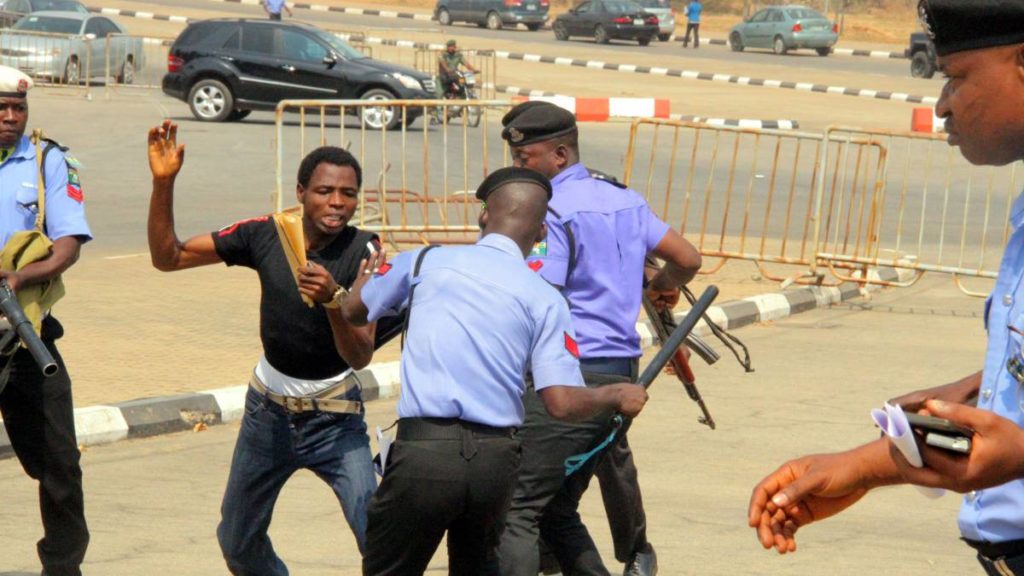
If there’s one thing the Nigerian government and its officials would do, it’s to behave like freedom of speech is an alien concept. On Saturday, March 15, Ushie Uguamaye, aka Raye, a member of the National Youth Service Corp (NYSC) posted a video on social media criticising President Ahmed Bola Ahmed Tinubu’s administration as well as the air quality and poor living conditions in Lagos State. Since then, she has been hounded more than people guilty of grave crimes against humanity.
From the threat she got from her NYSC Local Government Inspector (LGI), who demanded that she take down the post, to the President’s media aide (Temitope Ajayi), who said that she deserved “capital punishment under NYSC,” Raye has been through it these past few days.
The wild thing is that the Nigerian government is not new to this. Over and over, regardless of administration, governments at different levels have harassed citizens for criticising them. We couldn’t think of a better time to go down memory lane to highlight all the times the Nigerian government have moved like a dictatorship.
Olamide Thomas: tracked down and arrested for cursing Tinubu in a video

It’s not enough that the Nigerian government caused its youth pain during the EndSars protests; they have also continued to move weird at gatherings commemorating the sad event, either by show of force, arresting, or firing teargas at protesters. They did it in 2021, 2022 and in 2023.
On October 20, 2024, like clockwork, they teargassed protesters marking the EndSars anniversary. One of the protesters, a nurse named Olamide Thomas, took to Facebook Live to curse President Tinubu, his children, the Inspector-General of Police, Kayode Egbetokun, and Force Public Relations Officer Muyiwa Adejobi, for the pain she was going through.
Months later, on Friday, December 13, Thomas was arrested after the Police first arrested her colleague (by infiltrating a WhatsApp group), then her Uncle, whom they coerced to lead them to her.
She was first taken to Abuja, where she was arraigned on three counts of cyberbullying before a Federal High Court. The court ruled that she be detained on Cyberbullying charges and kept in custody at the Suleja Prison, Niger State. She was later granted bail on January 6.
Sea King: arrested for criticising President Tinubu and the Police
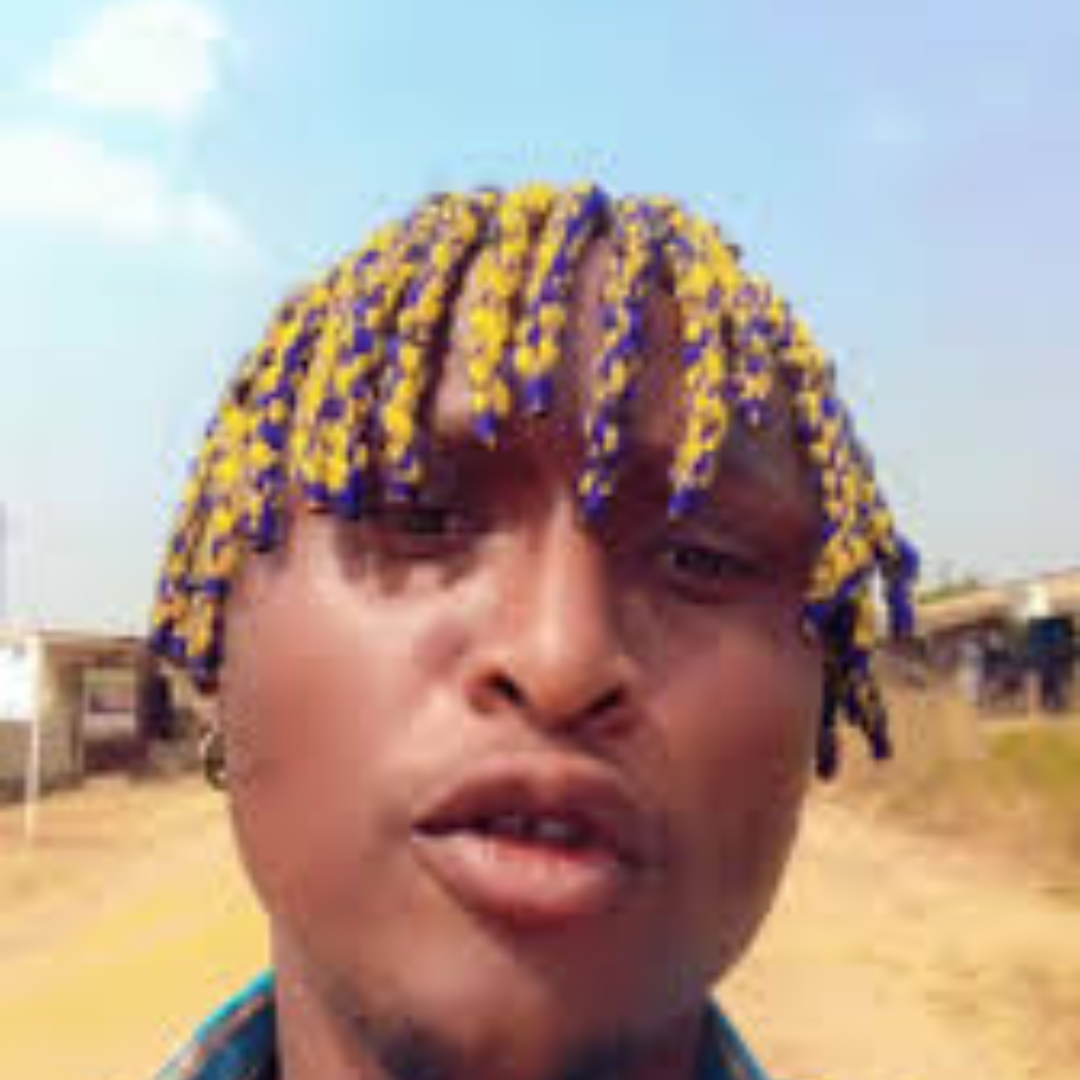
Roughly a week after Olamide Thomas’ arrest, the Police arrested another Nigerian for similar reasons on Saturday, December 21. The victim was Olumide Ogunsanwo, a TikToker popularly known as Sea King. Like Thomas, he had made a video cursing government officials, only this time, it was President Tinubu, Lagos Governor Babajide Sanwo-Olu, Inspector General of Police (IGP) Kayode Egbetokun, and the Police force itself.
Sea King was arrested hours after sharing his video and was remanded in KiriKiri prison for cyberstalking and alleged treason. On January 6, 2025, he was finally granted bail after 30 days, partly due to the Christmas/New Year holidays and administrative hiccups.
Hamdiyya Sidi: arrested for alleged incitement against the Sokoto government
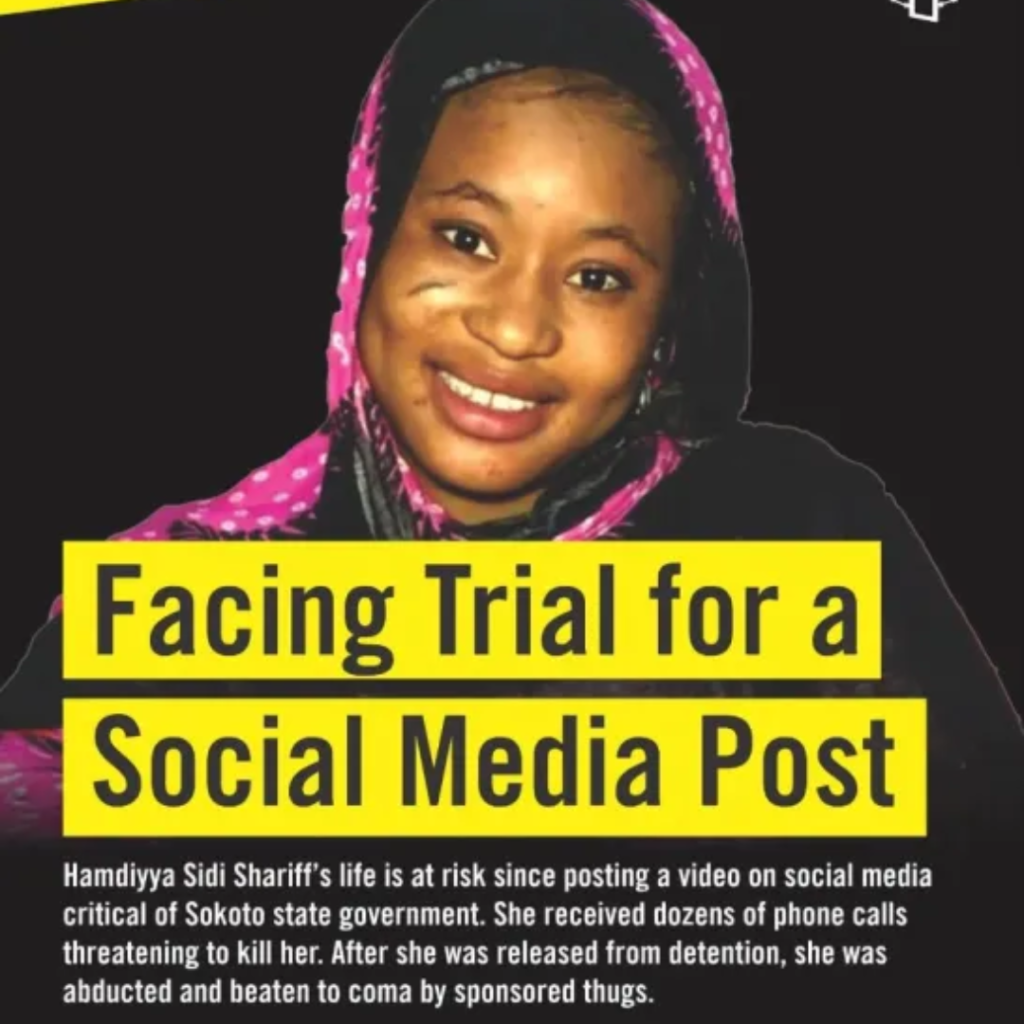
On November 9, 2024, 18-year-old Hamdiyya Sidi was arrested by the Sokoto Police after she posted a video where she criticising the governor of the State, Ahmad Aliyu, calling out the rampant banditry in the state and negligence of displaced people by authorities.
Though she was only arrested after her video made rounds, the Sokoto Police swears she wasn’t arrested because of the criticism contained in the video but for another incident on November 3, where she allegedly incited some women in a village in Wurno local government area of the State against the governor.
Sidi was later released, but on November 13, 2024, she was kidnapped by gunmen, beaten, and pushed out of a moving tricycle (keke), which left her with serious injuries.
After her first arrest, she was arrested again and charged in a Sharia court “for the use of abusive language and criticisms against constituted authority in the state.” In addition to this, Sidi also faces charges in regular court for incitement. During a hearing in January, her lawyer, Abba Hikima, said they were both stalked, accosted, and intimidated. Sidi last appeared in court in February 2025. Though her case was adjourned to March 13th and 14th, 2025, nothing has been heard since.
Abdulganiu Olushipo: arrested for demanding accountability on budget allocation
On March 4, 2024, a Nigerian activist, Abdulganiu Olushipo, was arrested by the Police in Lagos State on accusations of Cyberstalking and Cyberbullying. Olushipo was arrested after sharing information about budgetary allocation alleged to be received by the Lagos Mainland Local Government and asking that the Chairperson of the local government, Omolola Essien, be transparent with it.
Youths in the local government quickly accused Essien of arranging Olushipo’s arrest and rallied around to protest it. Bowing to the mounting pressure, the Police released Olushipo the following day.
Segun Olatunji: tracked, arrested and tortured for questioning a government official
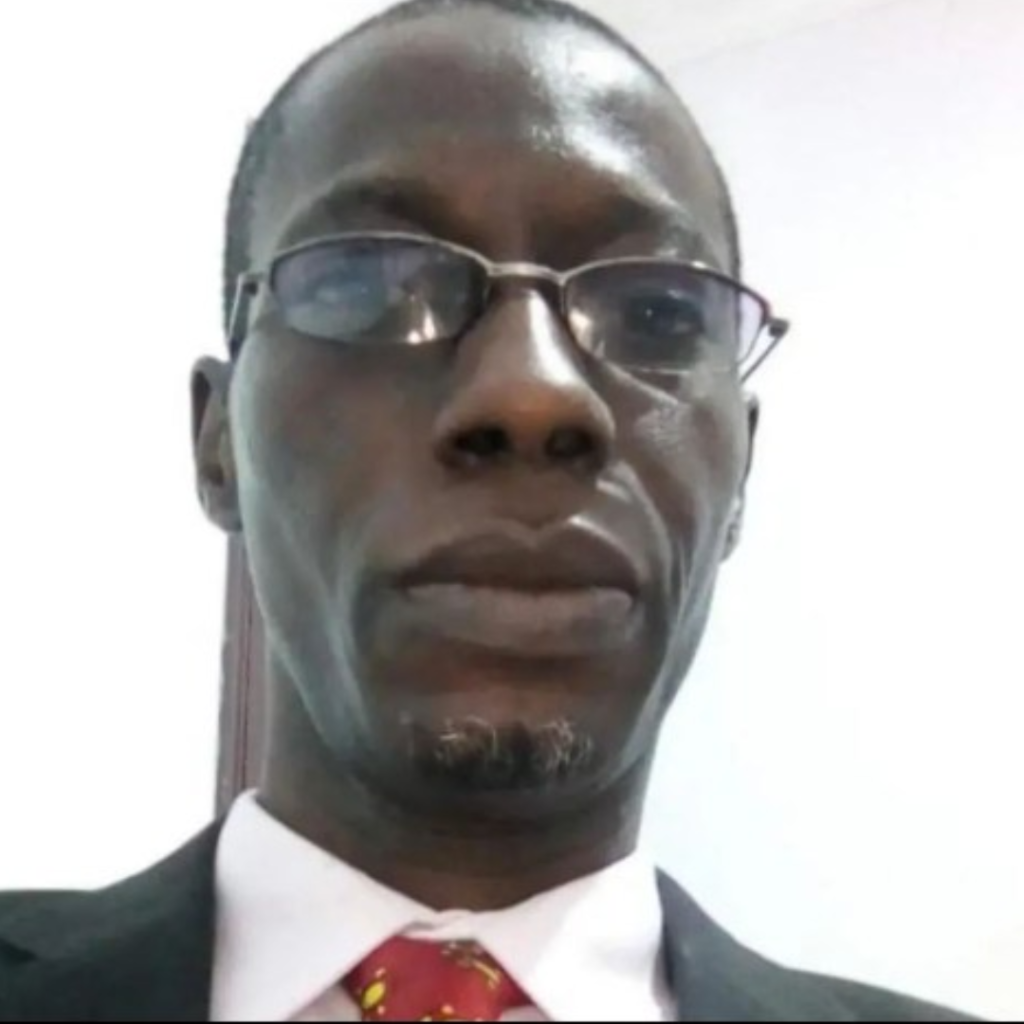
On March 15, 2024, Segun Olatunji, a Nigerian journalist and former editor of online news outlet FirstNews, was arrested, blindfolded, and flown to Abuja on a military aircraft after he published a story indicting President Tinubu’s Chief Of Staff, Femi Gbajabiamila of looting $30 billion.
The military initially denied abducting Olatunji, but following the immense pressure mounted on it, the journalist was released after 14 days.
Weeks after his release, Olatunji resigned from his job at FirstNews citing safety concerns for his life and that of his family. The management of the News outlet also tendered an apology to Femi Gbajabiamila regarding the news story but Olatunji continued to stand by his words. “in no distant time, the truth will come out and then it’ll be my word against theirs,” he said.
Sunday Egena Odeh: arrested for criticising Benue State governor

On April 30, 2021, the Police arrested and later released a journalist with Peoples Daily, Sunday Egena Odeh, for putting out a statement criticising then Benue State governor, Samuel Ortom, for the communal crises in Benue.
“…we reminded the governor to spare a thought for the people of the two communities who had been facing untold hardships due to the lingering communal war. “Unfortunately, our suggestions have fallen on deaf ears, or at best had attracted name-calling by the governor’s aide who preferred to see us as a faceless group,” Odeh’s statement read in part.
Ibrahim Dan-Halilu: arrested for social media post supporting a protest

At about 2:00 am on August 5, 2019, Nigerian journalist and former Daily Trust editor, Ibrahim Dan-Halilu, found himself in the custody of the State Security Service (SSS) in Kaduna State, after he made a facebook post calling out the failures of then President, Muhammadu Buhari, and supporting the #RevolutionNow protest.
Dan-Halili was released two days later but was rearrested after DSS in Kaduna “received a marching directive from Abuja that he should be made to undergo further thorough investigation.” He was finally let go after eleven days.
Henry Nwodo: arrested over planned protest against IGP

On January 26, an activist and member of the Take It Back Movement was arrested by armed police officers in the Jahi area of Abuja for his involvement in a planned protest against police extortion.
An eye witness said Nwodo “was beaten, his phone seized while he was resisting, but they immediately pushed him into a waiting black car and drove off.”
Agba Jalingo: arrested for news report calling out alleged corruption

In August 2019, Nigerian Journalist Agba Jalingo, publisher of the online news outlet CrossRiverWatch, was arrested for reporting on a corruption allegation involving then-governor Ben Ayade.
Though he was arrested in Lagos by the now-banned Special Anti-Robbery Squad (SARS) of the Nigerian Police, Jalingo was transferred the following day to another SARS facility in Calabar, the capital of Cross River State. The journalist remained in detention for nearly six months until the ECOWAS Court of Justice ordered the Nigerian government to release and compensate him for the prolonged detention.
Dunamis five: arrested for wearing ‘Buhari Must Go’ shirts

On July 4, 2021, five activists— Larry Emmanuel, Anene Victor Udoka, Samuel Gabriel, Henry Nwodo, and Ben Mannaseh were arrested and kept in the detention of the Department of State Services (DSS) after they wore #BuhariMustGo branded T Shirts at Dunamis Internation Gospel Centre to protest the state of things in Nigeria.
While in detention, they were not allowed to see their lawyers or families. On July 29, the DSS arrainged them in court for ‘constituting themselves as vagabonds’ to disturb public peace,’ but they were later released on August 3, after 29 long days in DSS custody.
Whether under the present administration or the one before it, whether on the Local, State, or Federal level, the Nigerian government has continued to show the sort of intolerance considered unhealthy for democracy. With each harassment and arrest, Nigerians ask the same question over and over again—“Are we truly in a democracy?”
[ad]