• Nigeria welcomes approximately 800 new births every hour, and it’s easy to understand why. Having (multiple) kids is strongly tied to our societal and religious beliefs. Plus, the idea of having a cute mini version of yourself doesn’t sound half bad.

    But beyond the cute smiles and precious moments, parenting can also involve endless worries and significant financial burdens. We spoke to five Nigerian parents, and they shared how having children has impacted their cost of living, financial stability and even income opportunities.

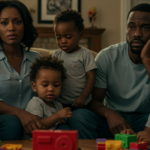
    Image source: Zikoko. Models are not affiliated with the story.

    “I went from earning ₦500k/month to ₦100k”

    Oyin, 35, single mother of one

    I knew I’d be a single parent while still pregnant with my son, so I mentally prepared for it. My partner and I planned to get married, but I caught him cheating when I was five months pregnant. The cheating incident revealed a history of lies I couldn’t overlook, so I left him and had my son alone in 2023. 

    I thought I was ready to raise a child, but nothing prepared me for the reality that motherhood would also affect my income source. Before my son, I had a job and a side hustle selling perfumes and thrift, bringing my monthly income to ₦500k on average. I still managed to juggle both while pregnant, but it became a different story after I gave birth.

    I quit my job and thought I could rely on my business, but that didn’t work. I couldn’t go to the market regularly anymore because I had no one to keep my son with. The few times I managed to go, I begged my neighbour to watch him. That stopped when I came home one day and saw she had left my six-month-old crying alone on a mat on her balcony. 

    When my son was eight months old, I decided to risk taking him along with me to the market. I saw shege that day. The heat made him very irritable, and he cried throughout the day. I also almost fainted from the stress of carrying him on my back and dragging heavy bags of clothes. Safe to say I didn’t try it again.

    Over time, I’ve had to scale my business down because there’s only so much I can do alone. I only sell perfumes now because they’re less stressful, and my customers come from social media — no time to go office to office hustling for customers. Right now, I make an average of ₦100k in profits monthly. It’s even more than I used to make between 2023 and 2024, when my son was still a baby and I had less free time.

    From that ₦100k, at least ₦80k goes to our feeding and my son’s needs. I manage the remaining ₦20k for utility bills, internet and emergencies. I had ₦800k in my savings when I got pregnant, but I’ve been pinching out of that to survive and pay rent. Only ₦60k is in my savings now. My son’s father sends ₦30k every three months to “support”, but it doesn’t go anywhere. Plus, the money only comes after I’ve called to shout at him several times. 

    I literally live hand-to-mouth every day, and it’s a sharp difference from who I was before. I don’t buy things for myself anymore, and I dread when my son will have to resume school because the expenses will only increase. But I try to console myself with the fact that school will mean extra time for me to try keeping a job. So, there’s hope. 

    “I’m tied to my job because of constant loans”

    Dabiri, 38, married father of three

    My wife got pregnant one month after our wedding in 2014, and we suddenly moved from newlyweds to new parents. As if that wasn’t shocking enough, we gave birth to twins. 

    I was initially scared — my wife was unemployed and I earned ₦80k/month — but I figured we could make it work. Fortunately, our family came through for us with monetary gifts, and my mother-in-law helped us with the babies while my mum often sent us food stuff. Those first few years were great, and I didn’t feel too much financial pressure. But to be safe, my wife and I agreed to leave it at two kids. She’d be a stay-at-home mum and we’d manage with my salary. 

    Fast forward to 2021, we found out we were expecting again — my wife’s IUD contraceptive failed. Our situation was much tougher this time. Our mothers had passed away, and the COVID lockdown had taken my job. I was still wondering how I’d provide for my family with no salary when we found out about the pregnancy. I begged my wife to have an abortion, but she refused. 

    The whole thing almost separated us. I was angry that she wasn’t being realistic, and I moved out of the house. I was honestly scared of the expenses. It took our family’s intervention for the issue to die down. A family friend also helped me get my current job at a microfinance bank that pays me ₦200k/month. 

    I have a salary now, but it really doesn’t feel like it. After paying for food and school fees, there’s nothing left. My twins had to change to a government school for their secondary education because I don’t have ₦500k to pay for both per term in a private school. 

    But the expenses aren’t my biggest challenge. It’s that I can’t change my job. I’m tied to my workplace because I’m constantly taking loans from my employer to cover household expenses. Currently, I owe ₦800k, and they’re removing ₦40k from my salary for a 20-month period. I’m very sure I’ll borrow more money before I finish paying this one. 

    Since I can’t get a new job and receive a salary immediately to pay my debts, I have to stay here until I can gather (or borrow) enough money to pay them off. It feels very limiting.


    Join 1,000+ Nigerians, finance experts and industry leaders at The Naira Life Conference by Zikoko for a day of real, raw conversations about money and financial freedom. Click here to buy a ticket and secure your spot at the money event of the year, where you’ll get the practical tools to 10x your income, network with the biggest players in your industry, and level up in your career and business.


    “It feels like the expenses are never-ending”

    Bukola, 44, widowed mother of three

    I didn’t fully realise how expensive raising children was until my husband died in 2022 and left me to provide for three teenagers alone.

    Suddenly, I had to bring out money from my unstable income as a fabrics trader for food, school fees, birthday gifts, and even barbing appointments. I sometimes get support from my late husband’s sister, but it feels like the expenses are never-ending.

    Two of my children are in uni and they’re constantly calling for money. If they don’t need a laptop for assignments, it’s that their ₦30k/month pocket money has finished. I laugh when I remember complaining about handling the feeding expenses when my husband was alive. Now that I’m paying for everything, I wish to return to the time when I only worried about food. 

    I’ve turned to an accountant by force, constantly drawing budgets and calculating how to save more money. In one way, it has made me better with money. I save more and avoid unnecessary expenses. I even started a ₦60k monthly ajo contribution for my house and shop rent. 

    I would’ve liked to become more intentional about money under different circumstances, but this is my situation, and I have to try my best. 

    “I’m slowly accepting that I can’t have it all”

    Esther, 27, married mother of one

    When I got married in 2023, I had a clear plan: Relocate with my husband to the US for my master’s degree, find a job, make money, and then start thinking about children.

    But like they say, man proposes, God disposes. I already had a uni admission offer, but the whole wahala with Trump led to the school pausing my scholarship. I dusted myself off and applied to UK schools instead. While the offers came, scholarships didn’t follow.

    Then, in August 2024, I fell sick and the hospital discovered I was five months pregnant. Even I didn’t know. I missed my period once during the five months, but my home pregnancy tests were negative. The periods even returned, so I’m still confused how I turned up with a whole five-month fetus.

    The baby put all my plans on hold. I quit my job after getting the US scholarship and am still unemployed. I can’t even look for a job properly because I have a baby to worry about. My husband provides all my needs, but it’s somehow not having anything to my name.

    I’m still half-heartedly applying for scholarships, but slowly accepting that I can’t have it all. Even if I get the scholarship, will I study with a baby? My husband won’t come with me because he has a really good job now. We can’t risk relocating to a new country as two unemployed people with a child.

    My financial prospects don’t look great right now. I just hope things start to make sense when my child gets older.


    RELATED: Having Kids Took Me From Middle-Class to Poor


    “I’m glad I invested before having children”

    Daniel, 36, married father of two

    I earn reasonably well at ₦800k/month, but I also have two growing boys who seem like they were born to chop my money. 

    Before we had our children, my wife and I could spend only ₦80k on food monthly. But now, it’s ₦250k and above. My children will eat breakfast at 8 a.m. and start shouting, “I’m hungry” by 10 a.m. I still have to worry about clothes, toys and school fees. 

    I’m just glad I wisely invested in a plot of land before getting married. Now, I just try to save 100k monthly and put it towards my building fund. I should have 3m by the end of the year, and I’ll use it to start building something. 

    If I hadn’t gotten land before having children, I doubt I’d be able to do it now, especially with the economy. I mean, it took me almost four years to save just ₦3m. This is me who saved ₦2m in a year for my wedding in 2018. But saving is a luxury now. I’m just glad I can still afford to put some money away.


    *Names have been changed for the sake of anonymity.


    NEXT READ: I Stopped Paying My Family’s Bills, and They Started Disrespecting Me

    Get More Zikoko Goodness in Your Mail

    Subscribe to our newsletters and never miss any of the action

    [ad]

  • Parenting is hard enough on its own, but when grief enters the picture, it becomes an entirely different journey, one filled with unexpected challenges and emotions many don’t openly discuss. We spoke to three Nigerians who’ve had to deal with this delicate balance, and here’s what they had to say.

    Tunde*

    How did you navigate the challenges of parenting while processing your own grief?

    I’ll admit it wasn’t easy. My mum passed just a month after my son was born, and I was stuck between the joy of becoming a dad and the devastation of losing the woman who raised me. The first thing I did was allow myself to feel everything. I cried, and I talked about my mum to anyone who would listen — my wife, my siblings, even my baby, who obviously didn’t understand. I made peace with the fact that I couldn’t pour into my son’s life if I didn’t address my own pain first. Therapy also helped me compartmentalise. Understanding that grief and joy could coexist in my life gave me the strength to move forward.

    Did the loss change how you raise your kids, or was it business as usual?

    My mum was a nurturer, always present and deeply involved in my life. Losing her made me realise how important it is to be fully there for my son. I’ve started journaling small moments with him, so he’ll have something to hold onto even if I’m not around someday. It also taught me to prioritise building a strong emotional connection. It’s the legacy I want to leave behind.

    How did you break the news to your kids about the loss, and how do you think it’s shaped them?

    My son is still a baby, so he doesn’t understand yet, but I talk about my mum all the time in little ways. I show him pictures and say, “That’s grandma. She would’ve loved you so much.” I think it’s important for him to know where he comes from, even if she’s not physically here. My wife and I plan to make sure he grows up with stories about her kindness and how much she meant to our family.

    What’s something that’s kept you sane while trying to be a good parent and handling your own grief?

    My faith. Whenever the grief feels overwhelming, I remind myself that God doesn’t give us more than we can handle. It’s also been helpful to lean on my wife; she’s been my rock through this. She reminds me to take things one day at a time, and knowing she’s in my corner makes all the difference.

    Amaka*

    How did you navigate the challenges of parenting while processing your own grief?

    For me, losing both parents felt like I’d lost my safety net. Suddenly, I was the grown-up everyone looked to for strength, including my teenage daughter, who was struggling to adjust. It was overwhelming. But I leaned into routines. It’s amazing how just having set times for meals, conversations, and activities gave us both a sense of stability. I also made sure to surround myself with support. My siblings and friends stepped up when I needed someone to take her for a day or help with chores so I could rest and process my emotions.

    Did the loss change how you raise your kids, or was it business as usual?

    My parents were traditionalists who believed children should be seen, not heard. But their passing made me realise how much I craved their validation growing up. It’s why I’ve consciously tried to be more open with my daughter. I want her to feel seen, heard, and loved, even when we’re not getting along. It’s also a way of healing some of the generational wounds I never addressed with my parents.

    How did you break the news to your kids about the loss, and how do you think it’s shaped them?

    My daughter was old enough to understand what was happening, and it hit her hard. She was close to my mum, who used to pick her up from school, and she struggled with her sudden absence. We had many honest conversations, often late at night when she couldn’t sleep. I told her it’s okay to feel sad and that grief is a process. At one point, we started a ‘memory jar’ challenge — we’d write down happy memories of my parents and read them whenever we missed them. It helped both of us heal.

    What’s the one thing that’s kept you sane while trying to be a good parent and handling your own grief?

    Two things: therapy and community. Therapy helped me unpack my feelings and learn healthy coping mechanisms, and my community — friends, siblings, even my church group — stepped in when I needed them most. They reminded me that I wasn’t alone and that it’s okay to ask for help.

    [ad]

    Dele*

    How did you navigate the challenges of parenting while processing your own grief?

    I’m still figuring it out, to be honest. Losing my mum while preparing to become a dad is like losing the guidebook for the journey I’m about to start. I’ve tried to channel my pain into action by reflecting on everything she taught me about resilience, kindness, and love. It’s not easy, though. I feel lost sometimes, but I remind myself that showing up for my child is the best way to honour her memory.

    Did the loss change how you raise your kids, or was it business as usual?

    My mum raised me as a single parent, so she was both my mum and dad. She didn’t have much, but she made sure I knew I was loved and capable of achieving anything. Now, as I prepare to become a dad, I want to replicate her ability to make a child feel secure, no matter the circumstances. Her passing has also taught me the importance of prioritising my health, something she neglected because she was always putting me first.

    How will you break the news to your kids about the loss, and how do you think it’ll shape them?

    My child isn’t here yet, but I’ve already been thinking about how to explain my mum’s absence when they start asking about her. I want them to know she was a remarkable woman; much of who I am comes from her. I also plan to create traditions honouring her memory, like cooking her favourite meals or visiting her grave as a family. It’s my way of keeping her spirit alive in our home.

    What’s the one thing that’s kept you sane while preparing to be a parent and handling your own grief?

    I find strength in remembering that my mum didn’t raise a quitter. She always found a way to keep going, no matter how tough things got. I’ve also started journaling my thoughts and feelings — it’s been a great outlet for processing my emotions. And, of course, my partner has been amazing. Knowing we’re in this together makes the journey feel less overwhelming.


    If you feel you might need support with grief or loss, please reach out to a self-help service provider like this one.

  • Children are blessings, or at least what most Nigerians hold on to as a reason to become parents or convince others to tow the parenthood line.

    But why do people really have kids? Do prospective parents stop to consider why they want a child? I spoke to seven Nigerians and they shared how — and why — they decided to become parents.

    Image designed by Freepik

    Oyin, 28

    I have kids because I love babies. It’s a weird reason, but I just love cuddling babies and inhaling their scent. 

    When I first got married, my husband and I agreed to wait a year before having kids so we’d get to know each other better. But I started getting baby fever after the first few months and “accidentally” got pregnant. I wasn’t prepared for how fast babies grow out of the cute infant stage and start scattering your house, though. 

    Baby fever hit again when my child was one year old, and I got pregnant again. Just like the last time, I loved the baby stage but I’ve realised it’s just a small reward for the years and years of raising them — which isn’t easy at all. I don’t know if I want to try for another one again.

    Sola*, 25

    I’m a single mum of a five-year-old. My baby daddy wanted me to get an abortion, and I refused. I was in uni when I got pregnant and wasn’t ready for a child, but killing an innocent child is a sin I didn’t want to add to my list of errors.

    I love my son, but I sometimes wish I didn’t have him so early. I’ve lost jobs because he was always falling sick as a toddler and we were in and out of hospitals. It’s also tough providing for him without help. I feel like I’d have been able to achieve more and even give him more things if I’d done the right thing at the right time.

    Samuel, 31

    Having children was the logical next step after marriage. My wife and I didn’t discuss whether we wanted children or not; we just discussed how many we wanted to have, and we landed on three kids. 

    It was after we had our first baby two years ago that I actually started to think about why we even decided on three. We can have one more to give our child a sibling, but that’ll be it. I love children, but they’re stressful and expensive. There’s honestly no need to amass them like property. 

    Tunde, 29

    I believe children are a commandment from God. The Bible says we should “go forth and multiply”, so I’ve always wanted a large family. Maybe it’s also because I was an only child. I only have one kid now, but my wife and I plan to have at least five. The only thing that might reduce that number is this economy. 

    Loveth*, 36

    I haven’t really thought about why I have kids. I’m a Nigerian woman; having children has been like a given since I was a child myself. All I knew was that pregnancy before marriage was a big no. After marriage? Start pushing them out. I guess I just did that. I got married in 2009 and I have three kids. They’re all I know, and I love them.

    Christy*, 28

    I’ve always loved children. But it’s not just wanting to have one for the sake of it. I think it’s important to guide the next generation on the right path and children are the best way to do that. If more parents trained their children well, we wouldn’t have so many evil people today. 

    And it doesn’t even have to be your biological children. I have only one child and I intend to adopt more rather than go through pregnancy again. There are more than enough kids on earth already who need guidance.

    Kunle*, 38

    I think children are what makes a family a family. So, after marriage, the next thing was obviously children. My wife and I dealt with infertility for a while, but deciding to go without kids just wasn’t an option. It took six years after marriage, but we’re a proper family now.

    *Some names have been changed for anonymity.


    NEXT READ: Am I a Terrible Mother for Wishing My Child Is Normal?

    Get a free ticket to Strings Attached and enjoy a feel-good evening of music, dancing and games at Muri Okunola Park, Lagos on May 11, 2024.

    [ad]

  • Chima* (36) has two children under five years old, and compared to the average income of most Nigerians, he’s a high earner. But when I asked how parenting has affected his budget and cost of living, he simply responded: “I’m now poor”.

    This is Chima’s story, as told to Boluwatife

    Image designed by Freepik

    I didn’t go into parenting blind. I knew having children would stretch my finances. But I wasn’t prepared for how much.

    It was a full house growing up — six children and just as many cousins and extended family members dropping in at one point or the other. It was chaotic, but I loved it. When I started thinking about marriage and having my own family, I decided I wanted six children too.

    Of course, my girlfriend (now wife) was horrified when I first mentioned it during one of our “planning the future” talks. Coming from a much smaller family with only one sibling, she couldn’t fathom having six children. The conversation went something like this:

    Me: I’ve always wanted to have six children like my parents. Don’t you think it’d be an adventure?

    Girlfriend: Six, as how? Who will “born” all of them?  

    We eventually reached a compromise — four children. That was the plan when we got married in 2018, but I can confidently say the plan has changed now.

    I was earning ₦400k/month at the time, and it was more than enough in the beginning. My wife’s salary was ₦100k/month, but it was mostly for her needs or when she took me out for a treat. I took care of everything else. The major expenses were the ₦800k annual rent, feeding, clothing and transportation, and of course, romance bills. My wife and I made it a duty to go on weekly dates. We also regularly had staycations. We were comfortably middle-class.

    We had our first baby in 2019, and the financial implications began to dawn on us right from the birth. My wife delivered by caesarean section, which tripled our hospital bills. We spent roughly ₦800k on that, which was a huge chunk of my savings. Then there was the cost of other essentials, like the baby’s bed, car seat, bath, carrier and others.

    My wife also had problems with lactation, so we had to lean on formula. I can’t recall how much each tin cost, but we typically went through two tins in a week. 

    Then there were the clothes. It was as if the baby grew an inch per day. We had to buy new clothes every three weeks. We thought we wouldn’t have to buy diapers for a long time because we got quite a lot as gifts, but most of them were the smallest size. As baby grew, diaper size increased, so we ended up giving out most of the gifted diapers.

    By then, my wife had stopped working temporarily to care for the baby, and my salary was our only income source. ₦400k that made us ballers before struggled to take us through an entire month. I was almost always broke by month’s end. Weekly dates and staycations? Those became a thing of the past.

    We had another baby in 2021. I blame the pandemic for this. We’d originally planned to space our kids by three years, at least, but what’s there to do when you’re locked up together in the name of global safety?

    I got another job around the same time, and my salary increased to ₦500k/month, but it hardly made a difference. We had to move to a bigger apartment (₦1m yearly) and take an additional ₦1m loan to cover the agent fees, renovation and furnishing. 

    Remember all those expenses I mentioned when we had our first baby? Multiply it by three. We now had two babies, while struggling with inflation and removing ₦100k out of my salary each month for one year to pay back the loan. My wife had to suspend all plans of returning to work because daycare and a nanny were additional expenses we couldn’t afford.

    I love my children, but my wife and I jokingly call them “money-sucking creatures”. They eat like the world is about to end and grow out of clothes like someone is pursuing them. If they’re not eating, they’re spoiling something. 

    I was complaining to a friend about having to change their game tablets because they’d spoilt them, and the friend was wondering why they couldn’t do without the tablets. I just laughed. When you have kids, don’t give them something to entertain themselves so they can expend the unused energy on your walls and home appliances.

    It’s starting to look like we’ll stop at two children, so we can continue to afford food. I still earn ₦500k/month, and 60% of that goes into child care. I try to stretch the remaining 40% to save for rent and other household expenses. But the truth is, every expense is still related to child care. 

    For example, the new fuel prices mean I spend at least ₦20k weekly to fuel the generator so my kids can sleep at night. I pay ₦1m for rent because I need more room for them. Our feeding bill is almost ₦160k monthly because of the extra mouths to feed. I can’t spend ₦10k without thinking too much about it. I feel poor.

    My eldest will be old enough to start school next year, and the thought of school fees is already giving me heart palpitations. My friend is paying ₦400k per term for nursery school, and the school’s planning to increase fees because of the economy. I don’t even want to think about it. My wife and I are considering homeschooling till primary school. We can’t starve because we gave birth na, abi?

    Again, I love my children and consider them a blessing. But my quality of life has drastically reduced because of them. I lived better when I was earning less than my current income. If you aren’t stupidly rich, and you plan to have children in Nigeria, just accept that you will see pepper.

    *Name has been changed for anonymity.


    NEXT READ: Rainbow Babies: “I Was Supposed to Be Happy, but All I Felt Was Fear”

    [ad][/ad]

  • Phil Dunphy was one of the best characters in Modern Family and the best TV dad in my books. If you don’t agree, drop your address. Let’s fight. He is especially great because he teaches you how to parent in a way Nigerian dads could never, all the shade to them. Here are 7 parenting tips Nigerian dads could learn from him. 

    1. Always show up for your kids.

    Phil was miles away during Alex’s high school graduation and still showed up via video call. As a Nigerian kid, if your dad attended all your school events, good for you. But how many Nigerian dads even know their kids’ age or school? Not to talk of being virtually present for graduation. It’s hard to make time while living in the poverty capital of the world, but a simple phone call can make all the difference. 

    2. Make time to bond with your kids

    Phil and Luke had one of the best father/son relationships on screen. Especially because they bonded over the simplest things. Nigerian dads bond with you by sending you money or asking you to sit down with him while he watches the news. They need to do better. 

    3. Be reasonably overprotective 

    Nigerian dads take things too far. You can’t have friends over, visit people, date, experiment with clothes, hairstyles etc. And this is the reason why many Nigerian kids lie all the time. They’ve figured out that lying is the best way to navigate having an overprotective parent. Haley was dating an older man, and while Claire was going to allow it, Phil ran after her because it just wasn’t right. She was a child. That’s the only time being overprotective counts. 

    4. Put your family first

    Yeah, you need to make money to make their lives easier but no one is indispensable. Imagine dying and all your kids have to say at your funeral is that you spent all your time working.  God abeg. Learn from Phil, who knew how to make his family his number one priority. 

    5. Support your kids

    Nigerian dads need to learn how to be supportive. Phil was a master at this. When Hailey had to drop out, he supported her. That didn’t mean that he didn’t want her to succeed. He just understood that she needed time. He genuinely thought the best of all his kids, no matter what. Even Luke, who everyone thought was stupid and wouldn’t amount to anything. 

    6. Love your wife loudly 

    Phil set the bar high for what to expect in a romantic relationship for his kids. He treated her right, so they knew never to settle for less. See where I’m going with that? Nigerian men need to do better.

    7. Show emotion

    Nigerian dads think that being tough through everything is the way to go and it’s not., It teaches your kids to never properly process how they feel about anything. Did Phil cry for a lot of stupid reasons? Yes. But he showed his kids, by example, that they could be vulnerable with him. He’s a G for that. 


  • Nigerian parents are known for being very no-nonsense, that is a given. But there are times when they do show that they are our parents and that they care about us. In this piece, we spoke with 5 Nigerians on moments when their parents helped them out of the craziest situations.

    Yes, we know it is not very common, but it is a possibility and the stories below confirm that.

    Reyna, 24

    About Nigerian parents showing up when it matters, when I was in 300 level, I met a really nice guy. He was God-fearing, caring, and most importantly, he had sense. At first, my relationship with the boy was smooth, and everything was going well, he was the perfect partner until he wasn’t. He started doing drugs and in time, I would occasionally join him. During our final year, I found out he had joined a fraternity. I talked to him about it but by then there was nothing I could do. He started threatening me, getting jealous, he would isolate me from my siblings, and was extremely violent.  He even shot one of my male friends at that time. I didn’t know what else to do and at that time I was already giving my mom details of what happened. My mom was my best friend so she practically knew everything about me, I hardly left out any details of the things I told her.

    At first, she didn’t know what to do and we couldn’t tell my father as it would get out of hand. But one morning, she showed up with his mom. We had an emergency family meeting. My mom was crying and begging on her knees with his mom, asking him to please leave me alone, that I had a better life ahead of me. And after a long time of that, he agreed to leave me alone, and that was the end of that part of my life.

    Tinuke 23

    It was in 2019 and I was doing badly in medical school. It affected my mental health and me very suicidal. My Nigerian parents sat me down and I told them I didn’t want to go back there. They agreed and my dad went back to my university to begin the process of my “dropping out”  while my mum stayed with me throughout to ensure I didn’t do anything to myself. They had spent a lot of money they didn’t have to get me to that point, but they said they just wanted me alive. That break really helped me and it took a long time before I got my sanity back. It’s still a process, but I hit a benchmark in healing towards the end of 2019 and it has been slow but steady and upward since then. 

    Lola, 31

    I had always been a very rebellious child growing up, but I am changed now, thank God. Thank God. When I was in my second year of university, and I was partying so much that I failed the entire semester. A friend had promised to hook me up with someone that could make change my grades for me and I was deceptively asking my dad for the cash. He kept asking what I needed the money for and after a while, he showed at my school and my dean told him everything. My father didn’t yell at me, he just called me, paid the school fees, bought me enough food, and hugged me goodbye. My G.P went from 2.1 to almost 4. 

    Akin, 35

    In 2002, I was arrested by the police for running a police recruitment racket. I was detained for almost 3 weeks and interrogated to give up the names of the other guys that we were running it together but I refused. They refused to grant me bail and insisted that the matter will be charged to court. Even though my father was a senior police officer, he refused to intervene at first. He had always told us that if we ever got into trouble thinking he would bail us out because he was a police officer, he won’t do such. It was my mother that was running around trying to see all she could do. I spent the Christmas of that year in police detention.

    My mother was able to talk to another senior officer that my father respected a lot who spoke to him and together he and the other office alongside my mum were able to get the officer in charge to drop the case against me and I was released and allowed to go home after 3 weeks in the police cell. I saw my father cry for the first time after I was released and I got home. That was the day I made a promise that I was never going to make my Nigerian parents cry because of me again. If they would ever cry, then it will be tears of joy. And that is how it has been since then.

    Chidinma, 23

    Sometime last year before the pandemic struck, I had just started a business and when the pandemic started, it ruined everything thereby forcing us to stay home. After four months of trying and failing to sell from home, I delved into another line of business but I had no capital to start.  I really needed money and I couldn’t figure out how to get it. I was sceptical about telling my parents at first, but later, I told my mother about it (she does business too, so I needed advice and tips from her) and was prepared for the usual discouraging words. Surprisingly she was supportive and was happy about it. So I just opened up even further and told her the genesis of the whole business and the trouble I was facing.  Some days later, she surprised me with an alert of 50k and also agreed to buy some of my wears for people so I could use that as a stepping stone(customer reviews) for my new business. That meant a lot to me and saved me from possible debts.