• Love Life is a Zikoko weekly series about love, relationships, situationships, entanglements and everything in between.
    What’s your earliest memory of each other?

    Jamal: I first saw her at a party—one of those loud, flashy ones in Lekki in 2022. I wasn’t really into all that stuff, but my boys dragged me there. She was wearing this neon green outfit that just stood out in the crowd. I remember thinking she was way too cool for me. I didn’t talk to her that night, but I stalked her Instagram for days after.  

    Tomi: Funny enough, I don’t even remember seeing him at that party. I only knew him from the DMs he sent after. I wasn’t going to reply at first because, you know, typical Lagos guys just want vibes. But he asked me what I thought about one weird, deep quote I posted. It wasn’t the usual “hi dear” stuff. I thought, “Maybe he’s not like the others.”

    I’m guessing he proved you right?

    Tomi: In some ways, yeah. 

    He wasn’t the typical guy I was used to. He wasn’t all about popping bottles or showing off. I mean, he did some of that at first, but deep down, he had this soft side, always asking questions about life and meaning. But it wasn’t all perfect; there were moments he’d still act like the Lagos boy—ghost me for a few days and then come back like nothing happened.  

    Jamal: Okay, to be fair, I was figuring myself out back then. I didn’t want to mess it up, but I also didn’t know how to be fully honest with her at the start. Lagos dating is a game, you know? You’re either playing or getting played. 

    But with her, I had to stop playing and start being real.

    How did you transition to “real”?

    Jamal: That was like two years ago. Feels longer though, with everything that’s happened since. We started off just chatting and hanging out, nothing too deep. But by the end of that year, things started getting serious.

    Tomi: Yeah, it was around December 2022 when we really clicked. I remember it was the “Detty December” period—people were going crazy with parties, but we were chilling, just talking about life, God, and everything in between. It was the first time I actually felt like a relationship could be more than just “vibes” and drama.

    Were you both religious before that?

    Tomi: No. I mean, I grew up in a Christian home, but I wasn’t serious about it. Church was just something I did on Sundays to make my mum happy. 

    At that time, I wasn’t even thinking about God like that. I was more into finding myself, trying to live my best life, you know? Like most of our generation, I was questioning everything—including religion.

    Jamal: My family is Muslim, but I wasn’t deep into it. Religion felt like something our parents’ generation cared about, not ours. I used to think, “What’s the point?” I was more focused on hustling, trying to secure the bag. But after a while, everything started to feel empty. I was partying, making money, but it wasn’t hitting like I thought it would. 

    When we got closer, we started having these deep conversations about faith and what it all means. It wasn’t planned; it just kind of happened.

    Is that how the relationship started?

    Tomi: Honestly, those conversations changed everything. We’d talk for hours, late into the night. At first, it was just about random stuff—life, why people do the things they do, Lagos madness. Then, somehow, it shifted to deeper questions about purpose and spirituality. 

    I didn’t expect it, but those talks made me see Jamal in a different light. It wasn’t just about the attraction anymore; it was like we were building something more meaningful together.

    Jamal: Yeah, those convos are what made me realise she wasn’t just another girl. We were both going through a phase of questioning everything and instead of drifting apart like a lot of people do when it gets that real, we got closer. 

    Tell me how that happened

    Jamal: I remember one night we were sitting in a lounge at the mall. After we’d had this heavy talk about the future, she just looked at me and said, “Do you even believe in anything?” That hit me. We were connecting on a spiritual level, which is wild because I never thought I’d be that guy.

    Tomi: It wasn’t like we were “religious” overnight or anything, but those conversations led us to start exploring faith together. And honestly, it was part of what sealed the relationship. I didn’t just want a relationship that was all vibes or built on physical stuff. I wanted someone who was on the same wavelength as me, someone I could grow with spiritually.

    So when did you become official?

    Jamal: Man, becoming official was messy at first. We’d been hanging out for months, and I knew she wanted to make it official, but I wasn’t sure if I was ready. I was still one foot in, one foot out. But after one argument where she basically told me she couldn’t keep doing this “situationship”, I knew I had to step up or risk losing her. So, I asked her out properly. We had a real conversation where I told her I wanted to be with her, no games.

    Tomi: Yeah, we had been in this grey zone for months, and it was frustrating. One day after we’d had a great weekend together, I straight-up asked him where this was going. I was tired of playing cool and acting like I didn’t care about a title. I remember being ready to walk away if he didn’t want something serious, but he surprised me. He finally said he wanted to be with me officially.

    When did you realise you loved each other?

    Jamal: When she called me out on my nonsense and didn’t let me off the hook. 

    I had a habit of disappearing when things got too serious—I’d just ghost for a bit. One time, I went MIA for like a week, and when I finally reached out, she didn’t just take me back. She told me straight up, “If you’re serious about this, you need to act like it.” No one had ever held me accountable like that before. It wasn’t just love, it was respect.

    Tomi: For me, it wasn’t one big moment; it was little things adding up. 

    Like, he’d stay up late talking to me about stuff that wasn’t even his vibe, just to understand me better. Or when he started randomly praying for me. One day, I was having the worst day, and instead of just being like, “Sorry babe, it’ll get better,” he actually prayed with me. I don’t know if that sounds cheesy, but that was real for me. I’d never had someone care for my soul like that. That’s when I knew it wasn’t just infatuation—it was something deeper.

    Was this before or after things became official?

    Tomi: It was after we became official. By then, I think we both knew we were onto something deeper, but I didn’t fully realise I loved him until we’d already put labels on it. 

    We made things official around mid-2023. I remember because it was after some serious back and forth. You know how Lagos dating can be—everyone’s afraid of getting played, so we were both a bit hesitant at first.

    Jamal: The moment she called me out for ghosting and held me accountable was a couple of months in. We had the whole boyfriend-girlfriend thing going, but that’s when I knew it wasn’t just a title or a phase. Before that, we were just figuring each other out and trying to see if we could trust the situation.

    Got it. So what was the relationship like once you got serious?

    Tomi: We were both going through different stuff—relationship issues, career stress, just trying to figure out life. And we both felt like something was missing. 

    So I suggested we start going to church, but not just because it’s what our parents did. I wanted to see if there was something deeper for us. We started going together, and for the first time, I wasn’t just going through the motions.

    Jamal: I wasn’t really on that level at first. I went to church a few times just to make her happy, but eventually, I started feeling like maybe this was what I needed too. 

    Lagos life has a way of making you feel like you’re chasing stuff that doesn’t matter—money, parties, whatever. It’s all a distraction. But when we started talking about God, praying together, and going to church, I realised I was tired of pretending like I had it all figured out. It was less about religion and more about finding something real, something that could give our relationship meaning beyond just us.

    Did you feel like you needed to find God to be together?

    Tomi: It was more about finding a purpose together. And I think doing it together made it even more special. We held each other accountable and grew spiritually in ways I didn’t even think were possible before.

    Jamal: I wouldn’t say we needed to find God to be together, but it felt like the missing piece. Before, our relationship was good, but it was like we were coasting: Having fun, going out, doing what couples do. But after a while, it felt shallow. We started questioning if there was more to it. 

    Finding God gave us a deeper foundation. It made us think about what we wanted long-term, not just for ourselves but for the relationship.

    And what did you discover?

    Tomi: We could’ve kept going without bringing faith into it, but honestly, I don’t think we would’ve lasted. The relationship was good, but along the way, I realised I wanted to grow with someone spiritually, too. 

    Jamal: I think God helped us realise we didn’t just want to be another couple with good vibes but no depth. It made us more intentional, more grounded. So, in a way, finding God together felt necessary for us to really thrive as a couple.

    Did it change anything about you as individuals?

    Tomi: Yes. I didn’t know how much until everyone noticed and mentioned it to me. 

    I was always the “let’s go out, let’s have fun” type, so when I started skipping events or saying, “I’m going to church,” my friends were like, “Tomi, are you okay?” They didn’t understand it at first. I lost a few friends who thought I was trying to be holier-than-thou, but the real ones stayed. My mum was happy, though. She’d been praying for me to get serious about God for years, so she saw this as an answer to her prayers. And she loves Jamal for it.

    Jamal: My friends clowned me at first. I’d say I couldn’t come out because I had Bible study, and they’d be like, “Omo, Jamal has joined the ‘church boys’ now.” It was jokes for them, but after a while, they noticed I was serious about it. Some respected it, some didn’t. 

    As for my family, it’s mixed. My dad was confused because we’re a Muslim family, so he didn’t get why I was going to church. My mum was more chill about it—she just wanted me to be at peace. It took time for them to understand it wasn’t just a phase.

    So, what’s a “godly” relationship really like in your experience?

    Tomi: A “godly” relationship isn’t perfect, first of all. People think because you’re trying to do things God’s way, everything’s smooth, but nah. We still argue, and we still get annoyed with each other. The difference is, we don’t walk away from tough conversations. We’ve learnt to check our pride at the door and pray through the challenges. 

    That’s a huge shift from my past relationships, where I’d bounce if things got too hard. Now, I’m more committed to working things out because I know there’s something bigger holding us together.

    Jamal: Yeah, in my past relationships, if it’s working, it’s working, and when it stops working, you move on. There wasn’t any real purpose beyond enjoying the moment. 

    But with Tomi, we’re not just dating for dating’s sake. We see this as something that could lead to marriage, so we’re more intentional. We try to apply what we learn in church or from the Bible. For example, forgiveness is big for us. I used to hold grudges for days, but now, we don’t let things fester. We pray, we talk it out, and move on.

    That’s a good plus

    Tomi: And being “godly” also means setting boundaries that most people in our generation might not get. 

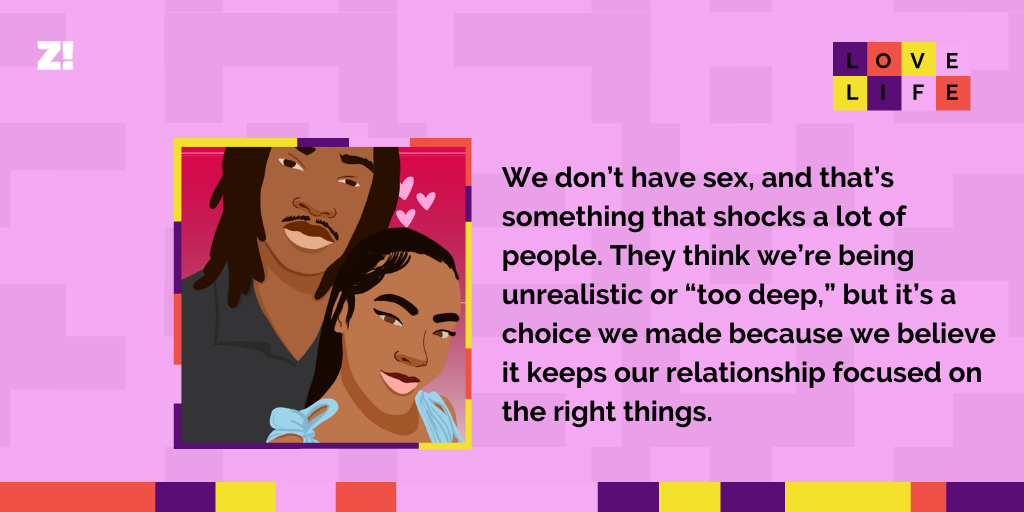
    We don’t have sex, and that’s something that shocks a lot of people. They think we’re being unrealistic or “too deep,” but it’s a choice we made because we believe it keeps our relationship focused on the right things. In a time when everything is so physical, being intentional about emotional and spiritual connection first makes us different.

    Jamal: We’re not trying to impress anyone. And honestly, that’s freeing. We’re focused on growth. It’s a different vibe from what most people our age are doing, but it’s working for us.

    Neat. How do you keep the faith strong?

    Tomi: By making it a priority in our relationship, not just something we do on Sundays. We pray together almost every day—sometimes it’s a long prayer, sometimes it’s just a quick, “God, help us today.” But we make sure we stay connected spiritually. We also talk about our faith a lot—what we’re struggling with, what we’re learning, how we’re growing. It keeps us accountable.

    Jamal: Yeah, the prayer thing has been huge for us. It wasn’t natural for me at first, but now, I can’t imagine our relationship without it. And we attend a church where we actually connect with the messages and people. We do Bible studies together, too, and we have debates about different topics. 

    It’s not always easy because we’re still young, and Lagos has a lot of distractions, but we try to stay focused on what matters.

    Like what?

    Tomi: Setting boundaries that align with our faith. As I said earlier, we’ve chosen to wait until marriage to have sex, and that decision keeps us focused on building a solid connection instead of being driven by physical attraction. 

    Jamal: And we remind each other why we’re doing this. There are days when we get tired or frustrated, and that’s when we have to refocus. Whether it’s through prayer, reading devotionals, or just talking about our faith, we make sure to keep God in the centre. It’s not always perfect, but we know the foundation we’re trying to build.

    How do you handle temptation, if any?

    Jamal: Honestly, temptation is real, especially since everyone’s just doing whatever they want. There’s always going to be someone or something trying to pull you away from what you’ve committed to, whether it’s other people, social media, or even just the culture. 

    But I don’t put myself in situations that will make me act out. If I know going out late to certain places with certain people will mess with my head, I avoid it.

    Tomi: I’ve had to cut off some friends or situations that weren’t healthy for my faith or our relationship. It’s not easy because people don’t always get it—they think you’re trying to be better than them or that you’ve “changed too much”. But it’s about knowing what I’m working towards. I keep my circle tight and surround myself with people who support our choices, not question them.

    That’s important 

    Jamal: And let’s be real, the sexual temptation is the hardest part. We decided to wait, but that doesn’t mean it’s easy. We’re human. 

    So we’ve put boundaries in place—like, we don’t spend the night at each other’s places, and we try to limit being in situations where it’s just us in a closed space, especially late at night. That helps keep us accountable. It’s not foolproof, but it works most of the time.

    Tomi: Also, when we do feel tempted, we talk about it. We don’t pretend we’re not struggling or act like we’ve got it all figured out.

    Jamal: At the end of the day, it’s about discipline. You can’t rely on willpower alone. That’s where the faith comes in—it gives us strength to stay on track, even when it’s tough.

    Got it. What was your first major fight about?

    Tomi: It’s linked to what Jamal mentioned earlier. It was when we were still figuring out where we stood. In the first few months of our official relationship, I felt like Jamal wasn’t serious—he’d go days without reaching out, and I’d see him on Instagram living life like I didn’t exist. 

    I remember calling him out on it, and he got defensive, saying he wasn’t used to people “demanding” so much attention from him. It felt like I was asking for too much when all I wanted was basic communication.

    Jamal: Yeah, I was definitely in the wrong. I wasn’t used to being accountable in relationships. I had a “do what I want when I want” mindset, and that clashed with what Tomi needed. She wanted stability and consistency, and I wasn’t giving that.

    The fight got really heated because, for the first time, someone was calling me out for treating them like an option. It felt uncomfortable, but it was necessary. We didn’t talk for a few days after that, but it pushed me to be more serious about us.

    How did you show you were serious, Jamal?

    Jamal: I had to change the way I moved. First, I stopped ghosting. That was the big thing. I made sure I was more consistent with communication—no more going MIA for days and expecting her to be cool with it. 

    I also started being more intentional about spending quality time with her, not just the casual “Let’s hang when I’m free” kind of vibe. We’d plan proper dates, even if it was just chilling at her place and talking. I made an effort to be there, physically and emotionally.

    Tomi: It was a turning point. It wasn’t enough to just say we were official; it was about showing up for each other in real ways. It wasn’t easy, but looking back, it was what we needed to really start building something solid.

    Right

    Jamal: And I made the relationship public. I know that sounds small, but I posted her on my socials, which was like me saying, “I’m serious about this girl.” It wasn’t just for show; it was about being open with everyone, including friends, that I was committed.

    Tomi: We’ve even started talking about the future now. Even though we’ve agreed we should wait another year or two to be properly ready for the commitment of marriage.

    On a scale of 1 to 10, how would you rate your Love Life?

    Tomi: I’d say it’s a solid 8. We’ve got the love, respect and commitment down, and we’re both working on ourselves individually. 

    The only reason I’m not giving it a 10 is because we’re still figuring out certain things, especially around balancing our faith and the pressures of modern relationships.

    Jamal: Yeah, I’d give it an 8 too. The love is there, and it’s real, but like Tomi said, there’s always stuff to work on.

    [ad]
  • How would you feel if your closest friend made a major decision like relocation without informing you?

    That’s what happened to Ezra. He talks about being blindsided by his long-term best friend’s relocation, getting angry, and why he’s decided not to let his feelings affect their friendship. 

    As told to Boluwatife

    Image by Canva AI

    If you’d asked me a year ago how I’d react to learning my best friend left the country without telling me, I’d have concluded that the friendship was over and cut off all communication. Now that it’s actually happened, I’ve found myself a lot more understanding. But it doesn’t mean I don’t feel bad about it. 

    Deji* and I have been best friends since 2014. We met when we started sharing a bunk bed in our first year in university, and, as is usually the case with roommates, we automatically became friends. 

    At first, our friendship was just the standard greeting, sharing food when either of us cooked and gisting about football and girls. Then, we became closer over the years. I still can’t explain how that happened, but we soon began visiting each other’s homes during the holidays and forming relationships with each other’s families. 

    Deji’s mum had my number on speed dial and would call me if Deji didn’t pick up his phone when she called. Whenever she sent money and food to Deji at school, she’d send mine, too. Our parents also became close friends — the fact that Deji and I happened to come from the same state also helped — and we unofficially went from friends to brothers. 

    After we graduated from uni in 2021, I decided against returning home so I could plan for NYSC, and I spent the full three months waiting for my call-up letter in Deji’s family house. His family was essentially my second family; there was nothing that happened in Deji’s family that I didn’t know. That’s why, even though I’m surprised Deji would japa without telling me, I’m not holding it against him.

    The thing is, Deji comes from a heavily competitive polygamous home. His dad has multiple wives who constantly throw shade at each other, and his mum is constantly praying against enemies and spiritual attacks. I don’t consider myself superstitious, but some things I’ve seen in his family are more than mere coincidences.

    For one, Deji and his siblings never hold big parties or celebrations due to his mum’s insistence. She believes that calling attention to themselves can result in spiritual attacks. The two times that Deji’s sister ignored that rule and held birthday parties without their mum’s knowledge, she fell sick and landed in the hospital. 

    Just before we wrote our final exam paper in uni, Deji posted final year costume day pictures on Facebook and suddenly developed malaria the next day. I had to carry him on my back from the school clinic to the exam hall so he could write that paper and not get an extra year.

    So, I understood that Deji had to make most moves in secret. But I didn’t expect that would also extend to me, considering how close we were. In fact, when he landed a tech job a year after graduation, I was the only one he told how much he earned. When he started seriously considering japa in 2023, I was the only person he told apart from his parents and siblings. We even brainstormed routes, and I helped him write some of the applications. 

    That’s why I felt blindsided when, a few months ago, Deji sent me a WhatsApp message informing me that he’d arrived in Canada two days before and apologised for not telling me earlier. I honestly had no clue. I’d visited his house two weeks before then and asked about the visa status, but he said he was still waiting for feedback. 

    Honestly, I was angry at first. It felt like he was subconsciously classifying me as one of the “village people” who would spoil his plans if he told me about it. If I even wanted to spoil the plan, wouldn’t I have done so when he first mentioned it?

    I reduced communication for a bit after that because of my anger, but after some weeks, I realised I needed to get over myself. This is someone I know, and I understand his family circumstances. He’s still my best friend, and I’m sure he meant no harm. Plus, japa is something you can’t really afford to play trial and error with, considering the money involved in the process.

    So, regardless of my feelings, I understand why Deji did what he did. If he had to do it again, I’d have no choice but to understand. The fact that I don’t believe telling me would’ve affected his plan in any way doesn’t mean I should ignore his fears. Whatever he chooses to do, he’s still my best friend, and I don’t want anger or a slight misunderstanding to change that. 

    Right now, I’m helping him sell off the properties he left behind. He didn’t sell anything while still here to avoid arousing suspicion. Once that’s done, I’ll send him the money and look forward to when he can afford to visit Nigeria. Or maybe I’ll be the next to japa. Who knows?


    *Names have been changed for the sake of anonymity.

    NEXT READ: At 62, I Returned to Nigeria to Retire. Things Took an Unexpected Turn


    [ad]

  • Love Life is a Zikoko weekly series about love, relationships, situationships, entanglements and everything in between.

    What’s your earliest memory of each other?

    Amaka: Honestly, I was so embarrassed the first time we met. I spilt wine on his suit at our friend’s wedding. I expected him to get mad, but he laughed.

    Dayo: I think it was funny because it was one of those lowkey “social distance” weddings. She was trying so hard to apologise, but I was more interested in how she handled the awkwardness. There was something about the way she spoke that I can’t explain.

    Amaka: He was like, “It’s just fabric, not the end of the world.”

    What happened next?

    Amaka: He slid into my DMs the next day. I was surprised because we didn’t even talk much after the wine incident at the wedding. But he found me through the wedding hashtag and sent a message that said, “I think I owe you a drink for ruining my outfit.” It was cheeky, but I liked it.

    Dayo: We started talking online. It was easy. No pressure. We clicked over photography and random memes. I wasn’t even thinking about dating at the time.

    Amaka: We kept it simple, but I always had this quiet vibe that we’d be more than friends. Neither of us pushed it, though, which was probably the best part.

    Why was it the best part?

    Amaka: This was in August 2020. I’d just gotten promoted at a time when a lot of people were getting laid off, so I was really focused on my career. I’d also been single for about a year after a messy situationship, and honestly, I was happy on my own. Relationships felt like unnecessary drama at that point.

    Dayo: It was right in the middle of the pandemic. Everything was crazy, and I was working from home full-time as a software engineer. I’d gotten out of a serious relationship a few months earlier, so I wasn’t in any rush to jump into something new either. 

    My last relationship ended because we wanted different things—she wanted to move abroad, and I was committed to staying in Lagos. So, when I met Amaka, I was honestly just chilling, not expecting much to come out of it. 

    Neat

    Amaka: Yes. It made the whole thing feel less forced. When we did fall in love, it was just good vibes, no baggage from our past creeping in.

    About a month after we met, we met up in person for the first time. Dayo suggested getting the drinks he said he owed me, and I was a bit hesitant. I wasn’t sure if I wanted to take it offline so soon, but something about him felt easy. So, we met at this quiet café in VI near my office—a safe, neutral territory.

    Dayo: It wasn’t one of those grand, romantic first dates; we just talked. I ordered the most basic thing—black coffee—and she made fun of me for it. But that’s when I knew I liked her. There was no pretense. No one was trying to impress the other.

    Is that when the relationship started?

    Amaka: Not really. It wasn’t about sparks flying everywhere; it was more like slipping into something comfortable. I didn’t even realise three hours had passed that night until they were closing the café. We walked around for a bit after, and it felt… nice.

    Dayo: We started talking about a relationship two months in, but it wasn’t a “DTR” (define the relationship) moment. It was more like, “Okay, we’re clearly on the same page here. Let’s stop pretending this is casual.”

    Amaka, what was your response to this?

    Amaka: I don’t remember. We never had that awkward “What are we?” conversation. It just evolved naturally. 

    I think the first time it felt serious was when he met my mum that Christmas. That was a big deal for me because she’s super protective, but he handled it well. After that, we kind of just knew we were in it for the long haul.

    What was the relationship like once it started for real?

    Amaka: Our dating period was very… simple, in the best way. There were no flashy date nights or grand gestures. It was more about the small things, like when I’d come home exhausted, and Dayo would just show up with shawarma or my favourite street suya without me asking. 

    Dayo: I think people sometimes over-complicate relationships. For us, it was the everyday moments that made it work. 

    I remember she’d make these fire playlists for me when I was coding late at night (she doesn’t anymore sha). I’d just have my headphones on, listening to whatever she put together while working, and it made those stressful nights easier.

    Sounds like things got serious soon after this?

    Amaka: It started feeling more serious when we both realised we were thinking long-term without even talking about it. 

    One Sunday, just after Valentine’s Day 2021, we were strolling around the area after lunch in a restaurant when I asked him, “Do you ever think about where this is going?” 

    I wasn’t trying to make it a deep conversation, so I didn’t expect much from the question. But Dayo stopped and looked at me like I’d asked the most obvious thing in the world. When he said, “It’s already going somewhere special,” it hit me that we were both on the same wavelength without needing to define anything.

    Dayo: I wasn’t really the type to plan out everything, but with Amaka, I could just see it. I knew she was it for me, and that moment felt like we’d acknowledged what was already happening. We didn’t rush anything, though. Over the next year, we just kept building, letting things evolve naturally. No pressure, no big talks about timelines.

    What was the next big milestone in your relationship?

    Amaka: One evening in 2022, we were sitting on my balcony. It was one of those quiet moments when we didn’t need to fill the silence with small talk. He casually pulled out a ring and slipped it onto my finger, saying, “This feels right. Let’s do life together.” My heart stopped for several seconds. I was so shocked.

    There was no dramatic proposal, no crowd. It was just us, exactly how I always imagined it would be.

    Dayo: It wasn’t planned at all, to be honest. I didn’t even think about getting down on one knee or anything like that. I just knew that there was no one else I wanted to be with. I didn’t need to make a show of it because our relationship wasn’t built on shows. It was built on these small, quiet moments, and that’s how I wanted to propose—intimately, just between us.

    It wasn’t planned, but you had a ring?

    Dayo: Months before that, my brother dragged me ring shopping for his girlfriend. And I saw one that I knew Amaka would love. I think that’s when I knew for sure I wanted her to be my wife. I carried it around in my pocket for months with no plan.

    So, what was the engagement period like?

    Amaka: It was awkward. 

    We hadn’t really talked in detail about our families or backgrounds. I think we both just liked keeping things light. It wasn’t until we got deeper into the relationship—maybe around the time we started talking about marriage—that we realised how different our upbringings were. 

    I grew up in a very middle-class, “comfortable” home. My parents are civil servants, nothing flashy but stable. We didn’t struggle, but we didn’t live large either.

    Dayo: My family’s wealthy. But I never really carried that on my sleeve, especially when I started dating Amaka. I didn’t want it to become this thing where people saw me differently or assumed I was entitled.

    Amaka, you didn’t know he was rich?

    Amaka: I had no clue. I just thought he was this humble tech guy, and that was part of what I liked about him. 

    But when he invited me to his parents’ house after the engagement, I almost choked. I remember sitting there, trying to act like I wasn’t intimidated, but it was a lot. His family was polite, but there was this unspoken vibe that felt like I didn’t exactly fit in.

    Dayo: I think that was the first time it really hit both of us how different our worlds were. 

    My family… They weren’t hostile, but they made a few comments about Amaka’s background, and it was obvious they had concerns. They were expecting me to marry someone inside our circle. I didn’t tell her right away because I didn’t want her to feel weird about it. But yeah, it wasn’t easy navigating that.

    How did you navigate it, though?

    Amaka: By the time we got serious about marriage, we started facing pressure, especially from his side. My family was more relaxed, but his? They had all these expectations. They weren’t against me personally, but the expectation of “proper Lagos society” just got exhausting. 

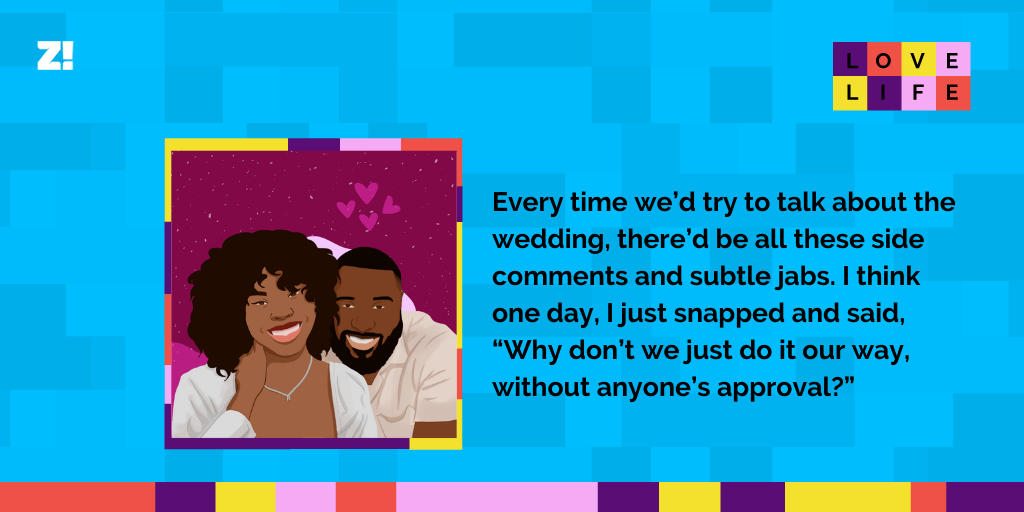
    Every time we’d try to talk about the wedding, there’d be all these side comments and subtle jabs. I think one day, I just snapped and said, “Why don’t we just do it our way, without anyone’s approval?” I meant it as a joke at first.

    Dayo: Yeah, that moment was funny because we were just venting about how complicated things were getting with family, especially my mum. We’d been so caught up in trying to make everyone happy, we almost forgot this was about us. 

    The idea of eloping started sounding like freedom. No drama, no trying to impress anyone, just doing what felt right for us.

    Eloping? In Nigeria?

    Amaka: Once the idea was out there, it stuck. It wasn’t a big, romantic “runaway together” moment. It was more like, “Okay, let’s just make this simple.” 

    We picked a random Thursday —two weeks after that conversation. No one knew, not even my best friend. We both took the day off work and got married at the Ikoyi Registry. It wasn’t fancy —just us, two witnesses, and a marriage officer.

    Dayo: We didn’t want anyone to talk us out of it or complicate things, so we didn’t tell our families until afterwards. After we signed the papers, I remember we went to this small bar, just the two of us, had a couple of drinks, ate pepper soup, and laughed about how we’d just done the most unconventional thing for a Nigerian couple. 

    It felt right, though.

    I’m in shock

    Amaka: Afterward, we went back to our apartment like it was just another regular day. No one knew we’d gotten married, not even our neighbours. It was almost surreal, but it felt like the most natural thing in the world.

    I’m scared to ask how your parents took it when you finally told them

    Dayo: My mum was livid. She couldn’t believe we didn’t throw a proper wedding, and Amaka’s family was shocked too. But we figured they’d come around eventually. We didn’t elope to hurt anyone.

    Amaka: It’s funny, though—when we eloped, a few people started putting the pieces together. They knew something was up, but they couldn’t figure out what exactly. Some of my friends still don’t know the full story. 

    But did your parents later come around?

    Amaka: Of course, my family came around faster than his. At first, they were shocked and a bit hurt that we didn’t have a traditional wedding, but after some time, they understood why we did it. My mum was just happy I was happy, and my dad kind of laughed it off, saying I’d always been a bit unconventional.

    We ended up doing the traditional in 2023 anyway. 

    Dayo: My mum didn’t speak to me for months, and there was cold silence from my extended family. I think they were embarrassed, to be honest. They kept bringing up how “proper” weddings were a big deal in our circle and how we basically disrespected my family by eloping. 

    But over time, they softened. I think they realised we wouldn’t apologise for how we chose to do things, and eventually, they accepted that this was who we were.

    [ad]

    Do you still get glances and whispers at family gatherings?

    Amaka: Not really. How many family gatherings do we even attend these days?

    There was one, months after we eloped, where his mum finally just sighed and said, “You two are stubborn.” But then, she smiled. That was her way of giving in, I guess.

    Dayo: She still wishes we had a big wedding, though. Every now and then, she’ll drop a comment like, “You can still do a vow renewal, you know?” But at this point, everyone’s accepted that we did things differently. I think they respect that now, even if it wasn’t what they wanted.

    What about your friends? Are they as accepting?

    Amaka: A lot of our friends were completely thrown off when they found out. Some were offended they weren’t invited. One of my closest friends even jokingly said, “You didn’t even give me the chance to buy aso ebi.”

    Dayo: Yeah, there were some awkward moments for sure. Some of my boys couldn’t understand why we didn’t just deal with the family drama. But I think over time, they realised it wasn’t about the ceremony for us—it was about keeping our peace.

    Right

    Dayo: The weirdest comments came from people who asked if our decision meant we were hiding something—like, “Did you elope because of money issues?” or “Why were your families against it that much?” It’s funny how people automatically assume something had to be wrong for us to make that choice. But nah, we just didn’t want the stress.

    Amaka: There were others who totally got it. Some of my friends said they respected how we didn’t let anyone’s expectations define us. Still, people give us a knowing look at parties, like we broke some unwritten rule. It’s like we’ve become the couple that did the “crazy, rebellious” thing.

    I thought it was impossible to elope, knowing Nigerian parents

    Amaka: And I think, even now, some of them are still trying to process how we managed to pull it off without letting anyone in. But honestly, most of our real friends are happy for us—they just didn’t expect us to go that far off the beaten path.

    Any regrets about it?

    Amaka: There are moments I wonder what it would’ve been like to have thebig, Yoruba wedding—wearing aso ebi, having our families all there, you know? But then, I remember the peace of mind we had doing it our way. The stress of trying to please everyone would’ve driven me crazy.

    Dayo: I wouldn’t say I regret it. The only thing I wish is that our families didn’t take it so hard at the time. It was tough navigating that, especially with my mum, but I don’t regret the decision itself.

    Would you do it again if you could go back in time?

    Amaka: I don’t know o.

    Eloping definitely changed the dynamic between us and our families. It put us in a bubble for a while, where it felt like it was just us against the world. In a way, it made us stronger as a couple because we had to rely on each other more. But it also created tension, especially with his family, and that’s something we had to work through.

    Dayo: Well, there was already tension there. Which is why we did what we did. 

    But yeah, it made us more united as a couple, but it also forced us to grow up fast. We didn’t have the safety net of a big wedding or family support from the start, so we had to figure a lot out on our own. It was a good thing in the end, but at the time, it felt heavy.

    Right

    Amaka: It also changed the way people saw us. Some relatives didn’t even believe we were married until the traditional wedding. We had to explain to a lot of people that we didn’t elope just to rebel.

    Dayo: But one thing for sure, eloping made us prioritise each other more. It took away all the noise and distractions. It set the tone for our marriage in a way, like, “It’s you and me, no matter what.” That mindset has helped us through a lot of the challenges we’ve faced so far.

    What was your first major fight about?

    Amaka: Ah, that was over something so silly. We were arguing about where to live. I wanted to stay in Lekki. I was used to the Island, it was close to my work, and let’s be real, it’s a vibe. But Dayo was set on staying on the Mainland. He had this whole thing about how Island living was overhyped and it was just going to drain our finances.

    Dayo: Yeah, rent on the Island is mad. I couldn’t justify paying all that money when we could get a much bigger place for less on the Mainland. I grew up in Surulere, and I didn’t see the big deal. Plus, traffic wasn’t that bad if we timed things right. 

    But I think, for Amaka, it was more than just location. It felt like we were fighting about lifestyle—what kind of life we wanted to live together.

    How so?

    Amaka: It wasn’t just about the house. The Island represented the life I’d worked hard for, and I didn’t want to feel like I was “downgrading” by moving to the Mainland. I know it sounds shallow, but I was used to a certain standard of living.

    Dayo: That’s when it got heated. I accused her of being too materialistic, and she said I was being cheap. We were both kind of stubborn about it. The argument went on for days—silent treatment, the works. We weren’t really fighting about the house anymore; we were fighting about the future and what it meant to be together.

    When did this happen exactly?

    Amaka: It was about six months after we moved in together. So, maybe around February or March 2022? We’d just gotten past the honeymoon phase of living together, and reality hit us hard.

    Oh, so, before eloping?

    Dayo: Yeah, that’s right. By then, we were starting to see the day-to-day struggles of sharing a life—money, commuting, all of that. I think it was the first time we had to confront the fact that our backgrounds and expectations didn’t always align perfectly.

    Amaka: I remember crying one night because I felt like we were so different, like maybe we wanted completely different things. But then we had this talk—one of those conversations that last till like 2 a.m. We finally got to the heart of it: we were both scared of losing who we were individually by compromising too much.

    How did you resolve this?

    Dayo: We met halfway. 

    We ended up living on the Mainland, but we made sure to prioritise comfort and style. It wasn’t the Island penthouse Amaka dreamed of, but it was a place we could both call home. Looking back, that fight was less about where we lived and more about learning how to really communicate. It was our first big test as a couple.

    Why does it sound like it wasn’t exactly halfway for Amaka?

    Amaka: Because it wasn’t. Let’s be real—I compromised more. I had anidea of what our life should look like, and I didn’t get that. Moving to the Mainland felt like a step down at the time, especially when most of my friends lived on the Island. 

    Dayo: I think it was more important for me to show her we could create a life we were both comfortable with, without letting societal pressures dictate everything. The truth is, we both had to adjust, but yeah, Amaka definitely gave up more in terms of location.

    Amaka: I’ll admit I was salty about it for a while. Every time I hit the Third Mainland Bridge traffic, I’d remind him whose idea this was. But over time, I got used to it. I think the real halfway came in the way we decorated and made the space feel like ours. That’s where we truly met in the middle.

    On a scale of 1 to 10, how would you rate your Love Life?

    Amaka: Hmm, I’d say a solid 8. We’ve had our ups and downs, but we’re always learning and growing together. The little things he does, like making me tea when I’m stressed, or listening when I just need to vent—it’s those moments that make it an 8 for me.

    Dayo: Yeah, I’d say around an 8 too. We’ve learnt to argue better, love better, and be more patient. Plus, Amaka makes the best creamy pasta, so that bumps the rating up.

    Amaka: See, it’s the food for him! But seriously, we’re still figuring things out, and that’s okay.

    Check back every Thursday by 9 AM for new Love Life stories here. The stories will also be a part of the Ships newsletter, so sign up here.

    READ THIS TOO: We Had “Divorce Regret” So We Remarried

  • Every year, you send the same “Happy Independence Day Nigeria” wishes. Your customers, friends and foes are starting to get tired of the rinse and repeat you’re doing. You can switch things up a little bit to celebrate Independence Day 2024 and I’ve taken it upon myself to save everybody around you from the same old boring Independence Day messages. 

    Positive Nigeria Independence Day Wishes

    • Happy Independence Day, Nigeria! Today is a celebration of not only our freedom, but also the strength, resilience, and vibrant spirit of every Nigerian. Together, we stand strong in resilience and continue to bring honour to our country.
    • It has been 64 years of unity, progress, and hope! As we mark our Independence Day, let’s honour the strength of our diversity, the richness of our culture, and the energetic spirit that characterizes us!
    • Happy Independence Day, Naija! Let’s continue to shine, break barriers, and show the world what we are capable of. From our bubbling cities to our deep-rooted traditions, the green-white-green shows no signs of ageing! Here’s to a brighter, better future for all of us!
    • Cheers to Nigeria at 64! Today we pay tribute to the aspirations of our past and the promising future ahead. Let’s persist in pushing boundaries, generating opportunities, and standing tall as a nation destined for greatness. Happy Independence Day, my fellow Nigerians!

    Nigeria Independence Day Wishes for Businesses 

    • Cheers to Independence and You, Our OGs! We’d offer you 64% off, but we’ve got something even better – our endless gratitude for keeping us in business! Here’s to more laughs, less stress, and more success together!
    • Happy Independence Day To You! Nigeria might be the Giant of Africa but you, dear customer, are the giant behind our success! Cheers to another year of not carrying last!
    • 64 Years of Freedom to Serve a Valued Customer Like You! Like Nigeria, you’re resilient and unstoppable, and occasionally cause us ‘small’ stress—but we wouldn’t have it any other way! Here’s to more money, more success, and more happiness!

    Realistic Nigeria Independence Day messages

    • Happy Independence Day if it’s necessary. I wish you success in your japa exploits. 
    • Happy Independence Day or happy public holiday, whichever comes first. Choose your “happy” wisely!
    • Roses are red, violets are blue. Today is Nigeria’s Independence Day but all I want is to depend on you. 
    • Happy Independence Day. Please send me ₦200,000 if you’re feeling patriotic.

    Now that we’ve gotten the boring Nigeria Independence Day messages out of the way, we need to get rid of your boring Independence Day plans too. Instead of sitting at home doing nothing, why not pretend to be a true patriot by hosting an Independence Day party like Remi Tinubu? If you’re feeling spontaneous, let this quiz determine how you should spend your day. Happy Independence Day, Nigeria (if it’s necessary).

  • Every week, Zikoko seeks to understand how people move the Naira in and out of their lives. Some stories will be struggle-ish, others will be bougie. All the time, it’ll be revealing.


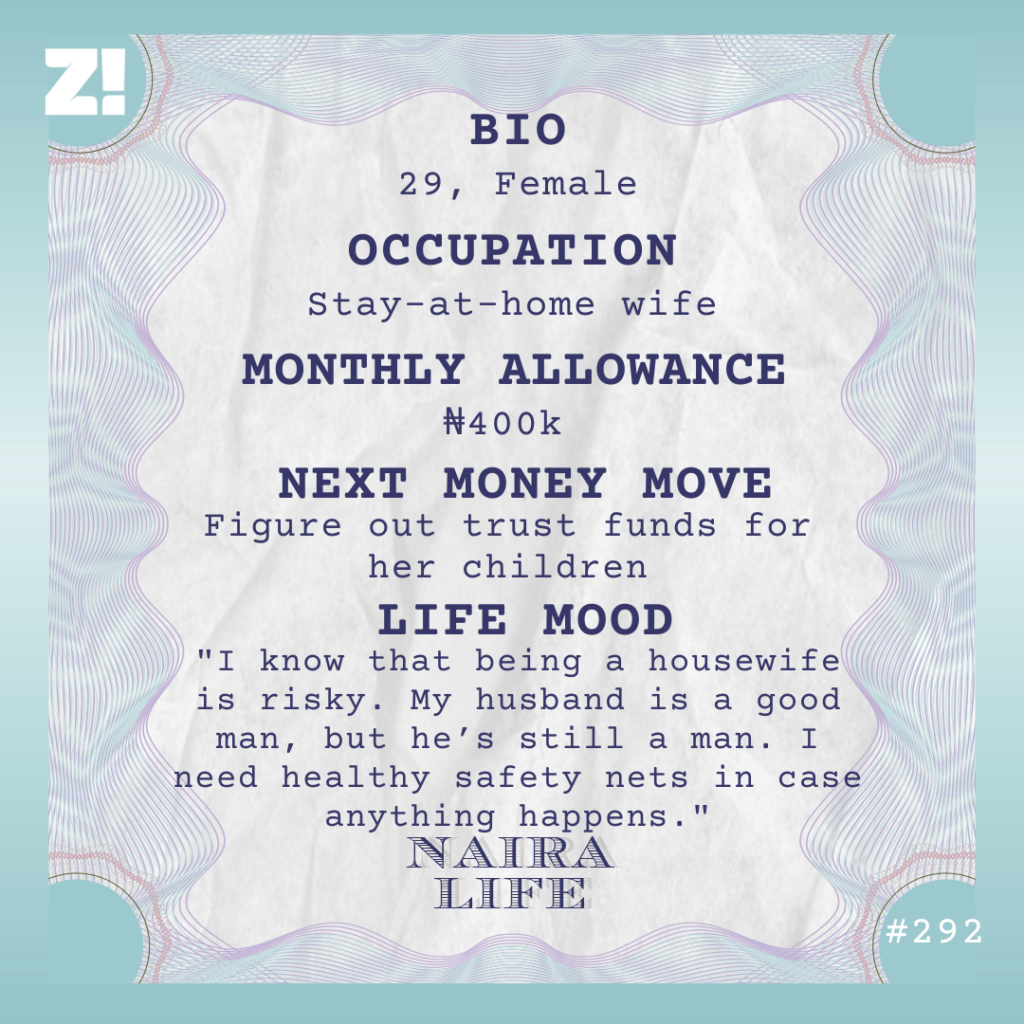
    Nairalife #292 bio

    Tell me about the first time you made money

    I was 13 years old and in SS 1. I had the bright idea of selling my sister’s time to senior boys in boarding school. She was in SS 3 then, and the finest girl in our school, and all the boys followed her like bees to honey. So, I monetised it.

    How did it even work?

    My sister and I are really close, but she’s quiet to a fault. I’m the stubborn, outspoken one. There was this boy in her class who liked her, but my sister was blissfully unaware. He came to me to help him talk to her, and I jokingly suggested he pay me ₦100 to arrange a time for them to talk during prep. 

    He paid, and I convinced my sister to talk to him. Then I did the same for another boy, then another. I got away with it five times before my sister stopped cooperating. 

    I still jokingly tell her we could’ve made serious money if she’d been more open-minded. Maybe she’d have agreed if I’d given her a cut of the money. But to be honest, it’s not like we needed the money.

    That means there was money at home, yeah?

    Oh, there was money. I come from a polygamous family; my dad had four wives and plenty of concubines, but he did right by everybody. My dad had filling stations, and all his women had their own houses. 

    My mum was the last wife and didn’t work — except for a lace store she kept for keeping sake — and my sister and I didn’t lack. I can also say we were spoiled. When I graduated from secondary school in 2010, my mum gave me a brand new Blackberry as a present. Blackberry phones were the iPhones of 2010. I was a big girl. 

    My mum doesn’t even know this, but I gave the phone to one foolish boy I liked at university. He broke my heart and refused to return my phone. 

    Breakfast … we’ve all been there. Talking about university, did you do anything for money while studying?

    I tried my hand at several small businesses, but I was a classic case of “money miss road.” I had too much money, and I’ll explain. 

    The minute I got into uni in 2011, I began receiving double allowance from both parents. They didn’t live together, so they sent me money separately, and I never mentioned that the other parent had already sent money. My mum sent ₦40k/month, and my dad sent ₦60k. Apart from the money, my mum regularly sent me foodstuff through other relatives. 

    Me, I was just spending like Mother Christmas. I had an off-campus apartment, and my friends loved to visit because I’d either cook or take them out. If I wasn’t buying my friends food, I was dashing them money. I once paid a friend’s ₦80k hostel fee because I was tired of looking at the money in my account. It was the same friend who suggested I try a business since I didn’t have anything to do with money.

    I’m screaming. So, what did you do?

    I decided to sell chiffon tops and jeans in 300 level. My sister introduced me to a friend who sold them wholesale. I think I bought each top between ₦1k – ₦2k, and a pair of jeans for around ₦2k. The first batch I bought cost ₦50k, and I added a profit of between ₦2k – ₦3k on each item and made good sales. But I didn’t see any money. Both capital and profit, I didn’t see. Everyone bought on credit and didn’t repay me.

    I think a major reason my friends were comfortable buying and not paying was that I already had a reputation for being Mother Christmas. Me too, I didn’t know how to pursue people for money, so I only asked a few times and left them. The business didn’t last three weeks.

    Next, I decided to sell makeup products. I used ₦30k to buy powders and brushes, but I ended up giving them out because marketing them was too stressful. Imagine someone asking whether the IMAN powder I was selling for ₦2500 was original. How will original IMAN be ₦2500? Nigerians should fear God. I sha left that one too.

    Then I tried to sell sneakers, but after I kept “collecting” my goods for personal use, I decided to hang up my entrepreneurial boots and call it a day. I survived on my allowance until I eventually left university in 2016.

    Let me guess. NYSC came after

    Yup. NYSC posted me to the north, but I wasn’t about to risk my life for ₦19800. So, I worked out redeployment through my dad’s friend to my home state. My PPA was a local government, and the only thing I did was to buy food for my supervisor. I did that twice before I gave myself brain and  decided I couldn’t use my one-year service to play errand girl, so I disappeared. I paid my supervisor ₦5k from my allawee monthly so I could leave to look for better opportunities.

    Did you find better opportunities?

    Not immediately. I wanted to get a job with one of the Big Four accounting firms, but omo, I saw shege with the assessment exams. When nothing came out of those, I took a gap year to just relax. I planned to rely on allawee and my mother’s food — an advantage of living at home. 

    But I almost didn’t survive that gap year sef — I was so broke. I didn’t realise just how little ₦19800 was until I had to live on it. I never went hungry o, but I was so limited. I couldn’t eat out with my friends or buy clothes and shoes. It was terrible. I couldn’t even whine my parents to give me money because they’d be like, “What are you using money for? Aren’t you at home?”

    I tried to find jobs halfway through the year, but the only one I found was a ₦50k accounting job, and the office was so far from my house. I’d have spent the whole salary on transportation. I didn’t take it.

    That period made me realise the importance of savings or a safety net before making foolish decisions like not wanting to work. Maybe if I’d saved when I was receiving so much money in school, I wouldn’t have felt like poverty was knocking on my door.

    Real. Did you have better luck with job search after NYSC?

    Not really. I wanted a job that paid nothing less than ₦120k. But I was broke, and beggars don’t have a choice. So, I settled for one at a small firm at ₦70k/month. This was in 2018.

    The salary wasn’t too bad, sha. My boss lived in my neighbourhood, so I hitched free rides with her daily. I wasn’t flexing as much as I did in uni, but I could afford to buy myself a nice bag after collecting my salary. I also tried to save at least ₦10k/month for my emergency savings.

    I worked at the job for almost two years before I got married and left in 2020. By the time I left, my salary had grown to ₦105k.

    Did marriage mean you had to stop working?

    Yes. My husband requested it before marriage, and he probably thinks I stopped because of him. Oga doesn’t know I was only happy to leave the workforce.

    A little backstory: My husband was widowed when I met him in 2019. His wife had passed away a few years before, leaving him with two children. He wanted someone who’d be there for him and the children. So, he was clear that he wanted a housewife.

    On the other hand, I was already looking for how to get paid to do nothing. I didn’t enjoy working and the idea of slaving all month for a salary that didn’t last two weeks. I was already checked out. But I didn’t tell my husband this sha. I made him believe he was asking too much of me. We came to a compromise — He’d pay me ₦300k/month as “salary” so I wouldn’t have to work.

    I have no choice but to stan

    Haha. That’s minus money for food at home and the children’s expenses. The salary is for me to spend as I like. My salary increased to ₦400k earlier this year after complaining about Tinubu’s economy and how inflation has made everything expensive. 

    However, the truth is, I hardly spend the salary. The ₦500k allowance I get for the home’s upkeep is enough to cover the necessities, and I still squeeze out a little to buy the random shoe or bag. I also whine my husband to give me extra money for aso-ebi and gold for family functions.

    My attitude to money has changed since I got married. I’m now very intentional about having different safety nets. I save and invest first before doing anything. I have about ₦2m in a secret savings account and two landed properties in my hometown. I also have a considerable gold collection I can sell in an emergency.

    Is there a reason for the sudden interest in safety nets?

    I know that being a housewife is risky. My husband is a good man, but he’s still a man. I’ve heard several stories about how men can suddenly start acting funny because their wives are 100% dependent on them. 

    Plus, he’s a Muslim. What happens if I wake up tomorrow and hear he wants to marry another wife? That might reduce my allowance. I also suspect he has a girlfriend, but I won’t bother myself with that. 

    I just need to make sure I have healthy safety nets in case anything happens. He doesn’t know about my properties, and I’m trying to convince him to build me a house as my next birthday gift. If anything goes south, I want a secure future for myself and our children.

    What needs to happen for you to know you’ve hit this goal?

    Hmm. I haven’t really thought deeply about this. I think the biggest indicator of a secure future is when I can afford to create a trust fund for my children’s school fees up until university. I’m not sure what that’ll cost yet, but this question has got me thinking about how I can do that. At least if anything happens, I should know I can keep my kids in school.

    Let’s go back to the monthly allowance and salary. How do you spend that in a typical month?

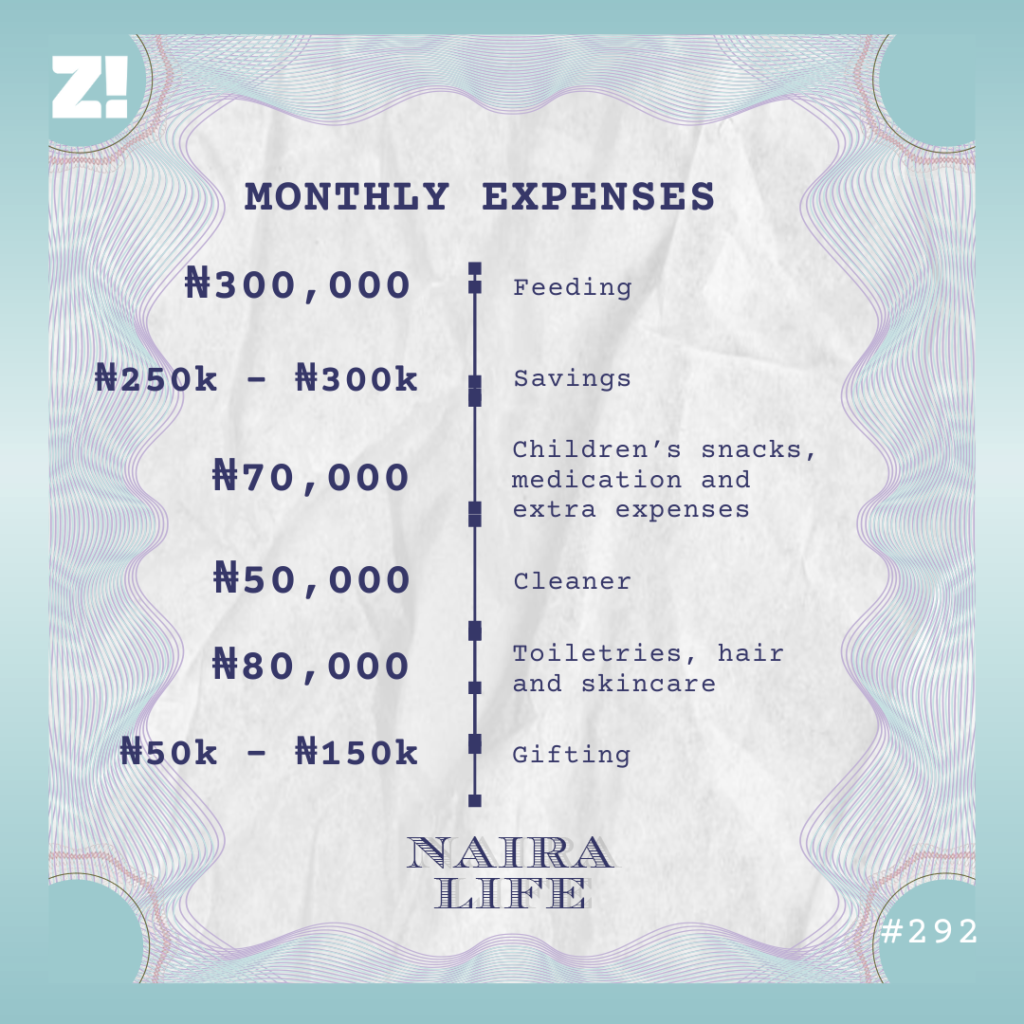
    Nairalife #292 monthly expenses

    My gifting budget is for the biweekly bulk cooking I do for charity. Sometimes, part of the money goes to settling people who come to me with needs. I send my mum a monthly ₦80k allowance, but that comes from my husband. It’s not part of my salary or home upkeep allowance. 

    Do you think you’d ever return to the workforce?

    What for? What am I looking for there? I intend to avoid having to work as much as I can. It’s not like I spend my days lazing around. I’ve had two more children since I got married, and taking care of four children isn’t beans at all. 

    A cleaner comes in twice a week, but I still feel like I’m constantly cleaning, cooking, and shouting at the children. I can’t add a job or business to the stress I already experience daily. That’s why I’d rather focus on having good investments and emergency savings to fall back on. 

    What’s an ideal investment portfolio for you?

    Real estate, gold, naira, and dollar savings. I’d like to own at least two houses and rent them out for extra income. If my husband builds me one, I’ll just have to focus on getting money to build the second one.

    I’m considering using one of my lands as a farm as I’m not building yet, but I’ll need to figure out how to get someone to run it so I don’t stress myself out. But then, I don’t trust Nigerians like that. I can employ someone to oversee the farm now, and they will use my money to enrich their own pockets. So, I may not do the farm thing. 

    I don’t have a cap on how much money I’ll have in naira and dollars that’ll be enough for me. I just want to have money.

    I get it. What’s the last thing you bought that significantly improved the quality of your life?

    This is funny, but I bought a child leash for my 1-year-old last month. We spent part of the summer holiday in my husband’s hometown, and I know my child likes jumping up and down. He literally watches for when you’re distracted so he can snatch his hand from your grip and rush into the road.

    I didn’t want him walking around, so I bought a child leash online for ₦50k and put it on him. It’s like a mini bag pack with a rope that I can snap on my wrist so he doesn’t go far. People kept looking at us weirdly, but I was so happy with my purchase. I wish I had known about child leashes for the other kids earlier.

    How would you rate your financial happiness on a scale of 1-10?

    7. I have all my needs met, and I don’t regret dumping my career. It’ll be a 10 when I have my houses.


    If you’re interested in talking about your Naira Life story, this is a good place to start.

    Find all the past Naira Life stories here.

    Subscribe to the newsletter here.

    [ad]

  • The Central Bank of Nigeria (CBN) has been hard at work trying to fix Nigeria’s economic struggles, and they’ve been rolling out policies like their rent’s due—from stabilising the naira, to fighting inflation and bringing in more foreign currency. Even though their moves aren’t making the waves, think of the CBN like the folks patching up holes in a leaky boat, quietly doing what they can to keep the ship afloat and avoid a “things fall apart” situation. So, what do these economic moves mean for you as a Nigerian, and why should you care? We’ve got answers; come closer.

    Going gung ho on FX market reforms

    The gap between official and black market exchange rates has been a major headache. Dr Cardoso has made one of the CBN’s biggest moves by narrowing the gap. By introducing forex market reforms, including liberalising foreign exchange trading, the CBN reduced the premium between official and parallel market rates to just 1.7%. It’s also made the FX market more transparent by removing restrictions on 43 previously barred items.

    What’s in this for you? It is now a smoother process to buy dollars for essential use without crazy gaps between banks and street exchange rates.

    Attracting foreign investors

    The CBN has been optimising for reforms that attract more foreign direct investment (FDI) and capital importation. In fact, capital importation increased by 234.4% year-on-year, reaching $5.92 billion in the first half of 2024. With more capital flowing into the country, Nigeria’s economic prospect is definitely looking good.

    Why is this your cup of tea? From new tech startups to big infrastructure projects, the knock-on effect of foreign cash flow can improve services like transport, electricity, and even healthcare. In short, the economy grows, and so does your access to better jobs and services.

    Teaming up with the Ministry of Finance

    It’s safe to say the CBN and the Ministry of Finance have become besties, working hand in hand to make sure Nigeria’s government isn’t borrowing itself into a hole. Think of them as the tag team fighting inflation and growing the economy at the same time.

    What does this mean for you? Hopefully, fewer hikes in the prices of basic goods and a more stable economy.  A more stable economy also means more businesses can not just survive but thrive.

    [ad]

    A “no gree for anybody” approach to inflation

    After months of rising costs, inflation dropped to 33.4% in July 2024, thanks to CBN’s tight monetary policies. Inflation eats into the value of your money, but with CBN’s efforts, that’s starting to slow down.

    Why is this good news? While inflation isn’t gone yet, the worst might be behind us. Your money might actually start lasting longer, and prices might not skyrocket as much as they have in the past year.

    Making the dollars rain

    No one likes it when the naira takes an L, so the CBN is bringing in more foreign inflow. So far, they’ve managed to boost our foreign exchange reserves by 35.5%, with inflows reaching $47.9 billion in the first half of 2024.

    What does this mean? Without this move hmmmm… Our naira to dollar exchange rate might have been double by now. More dollars in circulation mean a stronger naira and reduced pressure on exchange rates. Plus, the cost of imported goods like phones, laptops, and even some food items could come down.

    Stacking up remittances from Nigerians abroad

    If you don’t like the idea of japa, take comfort in the knowledge that those diaspora remittances actually mean something hooge for the economy. In the first half of 2024, remittances grew by 23.48%, bringing in $2.34 billion. The CBN is working to improve the efficiency of remittance channels, so more money flows in from Nigerians abroad. Every dollar sent home helps shore up the economy and boosts our foreign exchange reserves.

    How does this make life better for you? If you have family sending money from abroad, you can expect faster transactions with fewer delays. This extra flow of dollars into Nigeria helps strengthen the economy overall and can directly support households, especially when the local economy is tough.

    Read this next: How Much Money Have You Made This Year?

  • The back-and-forth about unpaid debts between social media user VeryDarkMan and socialite Bobrisky has turned into a messy situation that exposed that Bobrisky, who was recently released from prison for naira devaluation, may not have in fact served time in prison.

    The issue has since developed into claims of corruption against the Nigerian Correctional Centre, the EFCC, the prison and Justice system, Bobrisky, and her lawyers. This is everything you need to know about the case.

    VDM’s accusation

    On September 24, 2024, viral social media user Vincent Martins “VeryDarkMan” Otse took to the internet to accuse Idris “Bobrisky” Okuneye of illegally paying the Economic and Financial Crime Commission (EFCC) the sum of ₦15 million to waive off his money laundering case.

    If you remember, in April 2024, Bobrisky was sentenced to six months imprisonment for money mutilation. However, in the video, VDM claimed that Bobrisky didn’t spend his six-month jail term in prison. To corroborate his allegations, VDM shared a voice call recording of someone he said is Bobrisky talking about the details of what happened. In the recording, the person explained how the EFCC collected a ₦15 million bribe to clear the money laundering cases.

    In the recording, the names of popular lawyer and human rights activist Femi Falana and his son Folarin “Falz” Falana also came up. The person in the recording spoke about how Falz reached out to Bobrisky to offer legal advice and assured her that her name could be cleared with a pardon.

    EFCC’s response

    On the night of September 24, 2024, the EFCC boss, Ola Olukayode, responded to the allegations by ordering an immediate investigation. Furthermore, Olukayode has invited VDM and Bobrisky to the Commission’s Lagos office as part of an investigation into the matter. He promised that the findings would be provided to the public.

    Abubakar Umar, the spokesperson for the Nigerian Correctional Service, noted that they’re investigating the situation as well.

    Bobrisky’s response

    On September 25, 2024, Bobrisky addressed the allegations in a Facebook post. She denied the alleged bribery, called the viral call recording “fake”, and stated that she served her six-month prison term at Kirikiri Correctional Centre.  

    The Falanas’ response

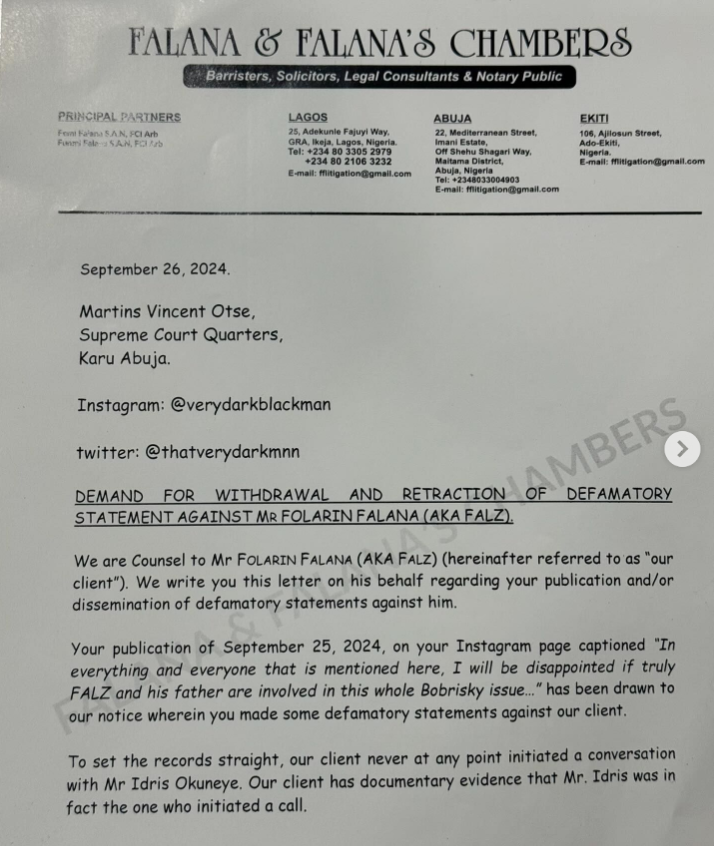
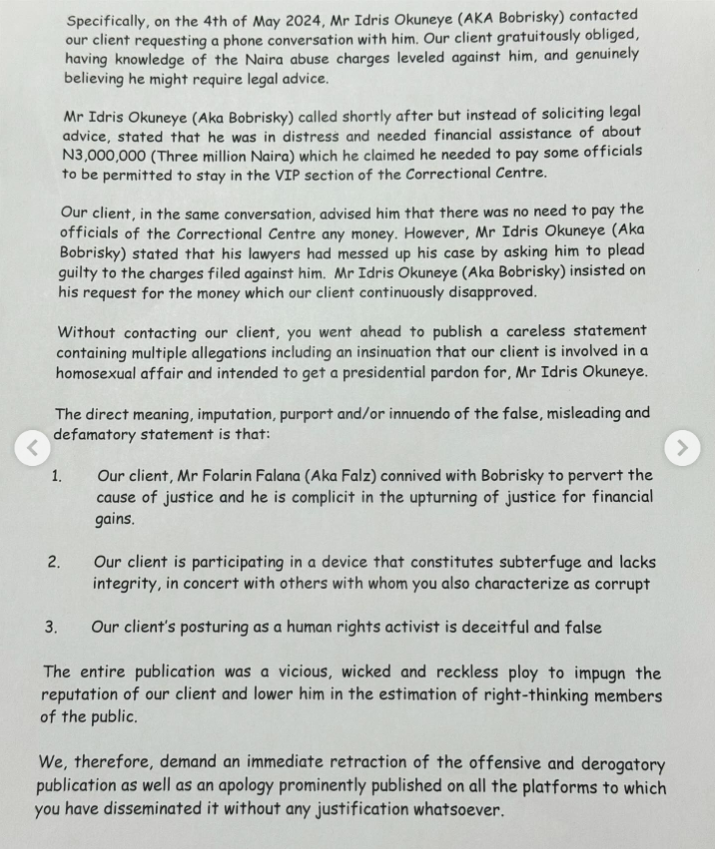
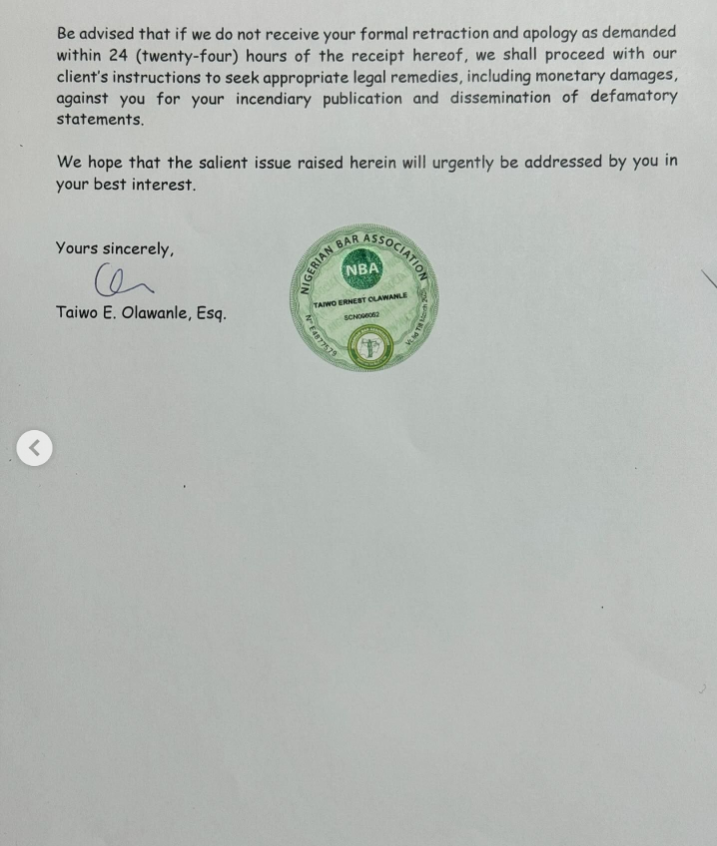
    On September 26, 2024, Falz posted a legal document that advised VDM to retract his statements against him and Femi Falana and apologise on his Instagram account in 24 hours.

    In less than 24 hours, VDM released another video to address Falz. VDM stated he had a phone call with Falz but the artiste didn’t deny that the recording is real. The call ended on the note that they’d see each other in court when the case is opened. 

    This is a developing story.

  • If your definition of hot romanz starts with a trip to the Maldives and ends with a limitless debit card, now’s the time to press exit. Now that I have the attention of those of us doing love on a “God, abeg” bundle, let’s get into how you can make that woman burn for your broke ass.

    Turn hot poundo and egusi

    Thanks to big daddy T-Pain, your precious ₦10k can barely feed two mouths in the cheapest restaurants these days.

    But with that same amount, you can whip up the baddest pot of egusi and poundo for two. Pro-tip: Send an invite that says, “Hey baby, home-cooked dinner, and it’s your favourite.”

    Street amala date

    The key is to tell her you’re making a “come-with-us” vlog to try the best amala for the tenth time.  She’ll jump on the offer quicker than she deeps that your ass is cheap. Plus, who knows? Y’all might even go viral together and get social media fame.

    Window shopping 

    Hop buses to fancy malls and let her imagine a future where she’s flexing everything her eyes have feasted on. She’ll return home basking in the delight of your grand future together.

    Hire a paranra player

    Forget Instagram vendors, paranra players are cheaper if you approach them directly. With ₦5k, they’ll play John Legend’s entire album for your understanding madam. Also, buy panadol extra because you’ll both need it. 

    Stargazing date

    This one works if you’re a student in a Nigerian federal university with lots of picturesque spots. Spend the ₦10k on cookies and drinks, grab a thick blanket, head to the spot and whisper sweet nothings in her ears as y’all stare into the sky.

    Movie night at home

    If you actually deep it, it makes no sense to go to the cinemas. No, because how will y’all share warm kisses or do hot tlof-tlof when the movie gets boring halfway? Your understanding babe will get this when you pitch the idea of staying home for “tudum” on your android phone. 

    Suya date

    Listen, a suya date is so slept on. It’s budget-friendly because there’s no way y’all will finish N10k worth of suya. However, for that element of romance, get the Mai Suya to rizz up your understanding babe in Hausa. She’ll never forget the date. 

    Beer parlour date

    Your local bar won’t have as much action as a Quillox or Secret Palace, but at least no one will make you feel lesser than or make your precious jewel see all she’s missing by riding it out with you. 

     [ad]

    Crash an Owambe

    You know what actually makes perfect sense? Gate crashing an owambe with your babe. You’ll only need to tip the servers to get an endless supply of everything on the menu. Might sound cringe at first but one thing about an understanding babe? She’ll reason with you even if it means doing mogbo moya. 

    Library date

    On countless occasions, Hollywood and Bollywood movies have shown you can find love in the library. So, doesn’t having a date in one makes total sense? Especially in the romance fiction section? You’ll only have to spend the ₦10k on snacks and drinks.

    Read this next: I’ll Never Date Someone Who Earns Less Than Me Again

  • Love Life is a Zikoko weekly series about love, relationships, situationships, entanglements and everything in between.

    What’s your earliest memory of each other?

    Shola: I saw her for the first time at a friend’s wedding in 1993. 

    She was wearing a bright yellow lace iro and buba, looking like the sun itself. She was much younger—just 18 or 19—but something about her energy drew me in. I didn’t talk to her at first; I wasn’t one to approach women like that, but I kept watching her from across the hall.

    Eva: Yes, I was young—barely 18—and honestly, I wasn’t looking for anything serious. I’d just started university, so I was focused on my studies. When I met Shola, I didn’t see him as husband material. I thought he was too serious. 

    When did you actually meet?

    Shola: A few weeks later, I saw her at another gathering and made my move. I was in my prime, already established in my career, so I knew what I wanted, and I could tell she’d make a good wife. 

    Eva: There was something about him that felt stable. He wasn’t like the boys I knew who were still figuring themselves out. Shola had his life together, and that was… attractive in a way I didn’t fully understand then. My mum always said I was too naive, too easily swept up by men’s charms, but I just thought I could make it work.  

    And did you make it work?

    Shola: Well, we did make it work… at first. I didn’t even notice the age gap back then. I just thought she was the kind of woman who could grow into a role, into a marriage, and support me like my mother supported my father. Isn’t that what most of us were looking for back then?  

    Eva: But I didn’t know myself yet. That’s what people don’t talk about. I was still becoming “Eva.” At the time, I thought I was mature enough to handle the weight of being a wife, but looking back, I had no idea what I was getting into.

    Did you get married soon after meeting?

    Shola: Back in the ’90s, relationships weren’t as complicated as they are now. There wasn’t all this back and forth with “talking stages” and whatnot. Once I met Eva and knew she was the one, I made my intentions clear. But we didn’t rush; we didn’t marry until 1996. 

    What did you do for three years?

    Shola: We… courted, you could say. I wasn’t one for long, drawn-out relationships, but I respected that she was still young and in school. I gave her the space to finish her studies, but I also wanted her to know that marriage was the end goal. There was no playing around.

    Eva: Courting is a generous word for what we were doing! 

    You have to understand, I was 18 when we started. I had no idea what I was doing, and honestly, it wasn’t some grand romantic love story in the beginning. 

    What was it like then?

    Shola: I remember the first time I took her to meet my parents in the first year. My mother—God rest her soul—immediately liked her. She said Eva had a quiet strength about her, and she looked like someone who could keep a home. You know how our mothers are. 

    Eva: Shola was serious, yes, but I was still caught up in the excitement of university and hanging out with my friends. I liked him, and I thought, “Okay, maybe this could be something.” But he was traditional. I remember when he told me outright, “I’m not dating for fun. I’m with you to marry.” And I wasn’t sure how to respond to that.

    Shola: You were playing hard to get, Eva.

    Eva: I wasn’t playing. I was genuinely unsure. 

    In what ways were you unsure?

    Eva: Like I said earlier, I didn’t know myself. I didn’t really understand what it meant to be a wife. I was barely 21 when we got married; I was still figuring out who I was. Shola had this clear idea of what a wife should be—supportive, nurturing, someone who could focus on the home while he focused on his career. And I tried to fit into that, but I was still a girl growing into a woman. I didn’t fully realise it until I hit my 30s and started resenting how much I’d put aside for our marriage.

    What did people around you say at the time?

    Eva: My friends thought I was crazy for even considering marriage so young. There were times when I felt like I needed to slow things down, but in our culture, especially then, you didn’t just casually date for years. I think I was pressured, not by Shola necessarily, but by society, my family, even myself. I thought marriage would bring me stability.

    Shola: My friends were a little sceptical about the age gap too, but no one really said much. Back then, it wasn’t unusual for a man my age to marry a younger woman.

    Tell me more about this courting/dating period

    Eva: It was a mix of spending time with each other’s families, and—if I’m being honest—me struggling to balance my school life and the subtle, growing expectation of marriage. 

    Shola: I knew I was already set in my career and life, but I gave her time to finish school. Looking back, maybe I should’ve given even more space. 

    Eva: I remember people always asking me when the wedding would be, even before I’d finished my final exams. It was a lot of pressure for a young woman. But I also convinced myself that I could balance both—marriage and my future. That was… naive.

    Yeah, he was set. But I wasn’t.

    When did you realise that you weren’t in fact “set”?

    Eva: I think it really hit me around my early 30s, maybe ten or 11 years into the marriage. 

    That’s when everything I’d pushed down—my dreams, the version of myself I thought I’d become—just started bubbling up. You know how, in your 20s, you feel like you have all the time in the world? I’d been so focused on being a “good wife,” raising the kids, managing the household, and supporting Shola that I didn’t stop to think about what I wanted for myself.

    Shola: I didn’t know she felt that way at the time. I thought everything was fine.

    Why?

    Shola: It just didn’t add up to me. We never talked about it either.

    Eva: That’s the thing. We were living in different worlds. You were doing well, providing for the family, and from the outside, everything looked perfect. But inside, I was drifting. 

    Weren’t you doing things too, Eva?

    Eva: I only worked for a year then the kids came back-to-back, so it made sense to leave work. Shola could afford to take care of us on his salary alone. But I soon started to feel like I didn’t get the chance to know myself outside of marriage and parenting. I was a wife, a mother, but I wasn’t *me* anymore. 

    Was there a defining moment when this dawned on you?

    Eva: If I must pick one, there was an evening maybe in 2005, when I’d just put the kids to bed, and I was sitting in the living room, scrolling through Facebook, a big deal back then. I started seeing people I knew before, who seemed to be making so much impact outside of their families. 

    And I just felt… lost. 

    Shola: I thought we had a solid marriage, a nice house, good kids, everything in order, and suddenly, Eva was talking about feeling lost? It felt like a slap in the face. I mean, I’d been working hard to provide for the family, to give us stability, and now, you’re telling me you’re not happy?

    Eva: I realised then that I wasn’t “set.” I wasn’t who I wanted to be. I’d been living according to everyone else’s expectations—my mother’s, Shola’s, even society’s—but not my own. That night, I broke down and cried. It was so random, but it was the first time I allowed myself to feel everything I’d been pushing aside for years.

    How did you respond to this revelation, Shola?

    Shola: Actually, she didn’t say anything to me at that point.

    Eva: Because I didn’t know how to. We weren’t taught to communicate like that. I didn’t even know what to say. All I knew was I felt like I was slowly disappearing. I wasn’t unhappy exactly, but I wasn’t fulfilled either.

    So how did things progress?

    Eva: It got worse when I started a baking business in 2007. On the surface, it was a success, but deep down, I knew it was plan B. I’d wanted to go back to school and get a second degree, but by then, it felt too late. I had to be practical, right? We had bills, the kids needed to go to good schools, and Shola was still climbing his career ladder. 

    So I put my dreams on the back burner.

    Shola: After she started the business and finally shared what pushed her to do it, I was confused—and, if I’m being honest, angry. Not because of the business but because of how she felt about her life at the time. I didn’t understand where all of that was coming from. 

    What was your reaction?

    Shola: I remember I said something like, “What do you mean you’re not fulfilled? You run a business, you’re raising our children, we’re not struggling, so what’s the problem?” It didn’t make sense to me at the time because, as a man, you’re taught that as long as you’re doing your part—working hard, bringing money home, keeping the family together—that’s enough. 

    I didn’t see the cracks forming because, to me, those weren’t even cracks.

    Eva: But it wasn’t just about the material things. I needed more than a roof over my head and school fees for the kids. I needed to feel like my life had meaning beyond the roles I was playing as a wife and mother. And I know that’s hard for you to understand because, in your world, those things were everything.

    Were you able to get past this?

    Shola: Honestly, no.

    In my mind, I was doing everything right. I didn’t cheat, I wasn’t the type to go out late drinking with friends. I wasn’t abusive. We had it good. So when she started talking about feeling unfulfilled, I felt like she was… ungrateful. Like she didn’t appreciate all the sacrifices I’d made for our family.

    Eva: He’d always tell me to stop comparing myself to other people, especially the women who were still chasing careers. 

    One time, he said, “Those women aren’t even in happy marriages like you are.” And I remember feeling so small because I didn’t have the words to explain that I didn’t just want a “happy marriage.” I wanted more for myself.

    Shola: I’ll admit, I was young and defensive. I started listing out everything I’d done for us—the sacrifices, the work, all of it. I was thinking, “You’re talking about finding yourself? What about finding time to appreciate me?” At the time, I saw it as a personal attack, as though I was failing as a husband.

    Eva, why do you think starting the business didn’t make it better?

    Eva: I’m not sure. Maybe the damage had already been done to my sense of self-worth and our relationship as a whole. 

    Baking was just a hobby I decided to make money off to keep myself busy. It wasn’t something I was passionate about the way he was about his investment banking, and stoked to go into the office every day like it was cocaine. That’s a major thing that triggered my emptiness, watching him for years, doing something he was deeply passionate about and getting value from it.

    Shola: It took me a while to realise marriage isn’t just about fulfilling basic roles—it’s about both partners growing together. At that point, though, I wasn’t ready to admit that maybe I wasn’t doing enough in that area.

    Eva: I needed us to connect emotionally, to feel like we were still growing together. I needed to be seen as more than just “Shola’s wife” or the mother of your children. I didn’t know how to express that properly back then, and I think that’s why things fell apart.

    Fell apart?

    Eva: I asked for a divorce towards the end of 2016. 

    The last of our kids had gone to the UK to join his siblings in college, and my sister convinced me to move so I could be a closer support system for them. It was as I considered what I needed to do to transfer my life from Nigeria to over there that I realised not much connected me to Shola any longer.

    Shola: At that point, we were civil, but we barely spoke. When we bought our house in 2012 and moved in, we took separate rooms. That was just it.

    Eva: I raised the idea of divorce with my sister, and she surprised me by validating it as a sensible next step—a fresh start. 

    Our divorce was finalised in 2018.

    So you just accepted her request for divorce, Shola?

    Shola: I didn’t see it coming, or maybe I didn’t want to see it. In Nigeria, we don’t get divorced. In my mind, no matter how bad things got, divorce wasn’t an option. You separate, you give each other space, maybe things cool off for a while, but divorce? No. 

    I remember telling her, “We don’t do this. We don’t break up families over feelings.” I was holding onto the belief that if I just stayed the course, eventually, she’d change her mind. But then she started sending papers and talking about moving to the UK.

    Eva: I didn’t make that decision lightly. I’d felt disconnected for years, and every time I tried to express it, it was like I was hitting a wall. He was so focused on what marriage looked like to the outside world that he couldn’t see what was happening inside.

    What happened when you saw she was serious, Shola?

    Shola: I was angry. Really angry. 

    I felt like she was abandoning me, like after all the years we put in, she was just throwing it all away. My friends, my family, they all told me the same thing: “Don’t sign the papers. She’ll come back to her senses.” Even my mother, God bless her, kept saying, “A woman’s place is with her husband. She’ll realise what she’s doing is wrong.” But she didn’t.

    Eva: By 2016, I knew staying in the marriage was only making me more resentful. I wasn’t being fair to you or myself. I didn’t want our kids to see us just going through the motions, pretending like everything was fine when it wasn’t.

    How did your kids react to the news?

    Shola: The kids… well, that was probably the hardest part. They took it differently, but it was tough on all of them. Our eldest didn’t talk to me much during the process. He was closer to his mother, and I think he blamed me for everything that was going on. There was a lot of tension between us during that time.

    Eva: He’d grown up seeing us as a unit, and suddenly, we weren’t that anymore. He told me once, “Mum, why didn’t you just talk to Dad? Why didn’t you guys work it out?” And that broke my heart because he didn’t understand that it wasn’t for lack of trying. He was angry at both of us for a while.

    I can imagine

    Shola: The other two took it much worse. 

    I’ll never forget one evening, shortly after Eva had relocated with them, Kemi called me crying. She said she missed how things were, and she didn’t understand why we couldn’t just fix it. I didn’t know what to say to her because, honestly, I didn’t understand it fully either. I was still coming to terms with everything myself.

    Eva: Kemi would often say she missed her dad, but whenever Shola called or visited, she’d be distant.

    So the divorce went through? What led you back to each other then?

    Eva: It wasn’t like one of those grand epiphanies you see in movies; we just reconnected thanks to the pandemic. 

    After the divorce, we didn’t talk much except when it was about the kids. I was living in the UK, and Shola was still in Lagos. Honestly, I thought that was it. I was focused on starting over—getting my life back together, and he was doing his own thing. But COVID happened, everyone was locked in, and suddenly there was all this time and space for reflection. 

    I think it was around April 2020 when he called out of the blue. 

    Shola: I realised how much I missed Eva during the lockdown. I was home alone in Lagos, my friends were all in their houses with their families, and I didn’t have the kids around for company. It was just me and my thoughts, and I kept thinking about her. Not as my ex-wife, but as someone who’d been a huge part of my life for so long. 

    The more I thought about it, the more I realised a lot of our issues had come from not really talking. I was always so focused on my job and friends, I didn’t listen to her enough.

    [ad]

    What was said during this call?

    Eva: I remember feeling irritated at first. Like, “What does he want now?” But the conversation wasn’t about logistics or the kids—it was just… us. We talked for hours that night. It was so strange because, after years of bitterness, anger, and silence, there was this sudden openness. I won’t say I forgave everything right away, but we started talking regularly. It became a thing. I’d look forward to his calls.

    Shola: The first call… I wasn’t sure what I was expecting, but it was easier than I thought. We laughed about old times. We didn’t jump straight back into a romantic relationship; that would’ve been impossible. We had a lot of issues to sort through, a lot of resentment to unpack.

    Did you figure out exactly what?

    Eva: Yes. Like how I felt unsupported, or how he felt like I’d changed after the kids came.

    It was hard at first because Shola has never been one to openly express his emotions. He’s the typical Yoruba man—everything is done in silence, with pride. But during those lockdown conversations, he was more vulnerable than I’d ever heard him before. He admitted to things I thought he’d never acknowledge, like how he wished he’d done more when I was trying to balance school, the kids, and the bakery. That meant a lot to me.

    How did you sustain this new energy after the pandemic eased up?

    Eva: When the world opened up again, I didn’t just pack my bags and move back. We visited each other a few times in 2021, and it felt nice, like we were rebuilding something that’d been lost. Suddenly, I felt this pang of “divorce regret” that wouldn’t go away. It kept reminding me that he didn’t do anything wrong; I only needed to find myself outside him, and now, I had.

    When I finally moved back to Nigeria in 2022, we decided to take things slow. We started dating again. I honestly don’t know how that happened. We went out, spent time with family. I think what really helped was that we no longer had the pressure of the kids living with us. They were in the UK, and we could just focus on each other.

    Shola: The truth is I’d never given up on our marriage. Divorce was just a formality; I’d never stop seeing her as my wife. 

    We just learnt how to talk about the things we avoided before. It wasn’t about assigning blame anymore, but about acknowledging how we both failed each other and figuring out how not to make those same mistakes.

    When did the idea of a remarriage come up?

    Shola: During the Christmas holiday of 2022, I felt she was ready. 

    I hosted a group of friends for dinner, and she was the last to leave, so I just asked her, “Should we do this again?” She smiled, and it was amazing how she immediately knew what I meant. That was it. We remarried quietly in a church service in early 2023. No big fanfare, just family and close friends.

    Eva: We needed to know we’d both grown enough to give it another shot. Now, it’s not about trying to be the perfect couple, but about being better than we were before. We communicate more, and we’ve learnt to respect each other’s individuality.

    On a scale of 1 to 10, how would you rate your Love Life now?

    Eva: I’d say a solid 7. I know that might sound low to some people, especially after all we’ve been through. But marriage—especially the second time around—isn’t about perfection for me anymore.Shola: For me, 8. I agree with Eva, but we’re in a much better and easier place than we were during our first marriage.