The miracle of the mobile device means people can stay connected 24/7. For some people, this doesn’t make digital communication with their loved ones any easier; in fact, it has become a factor that negatively affects their interpersonal relationships.
We talk to eight young Nigerians about their bad texting habits and how it has affected the relationships they maintain, asking them, “Are you a bad texter only when you don’t like the person you’re texting?”
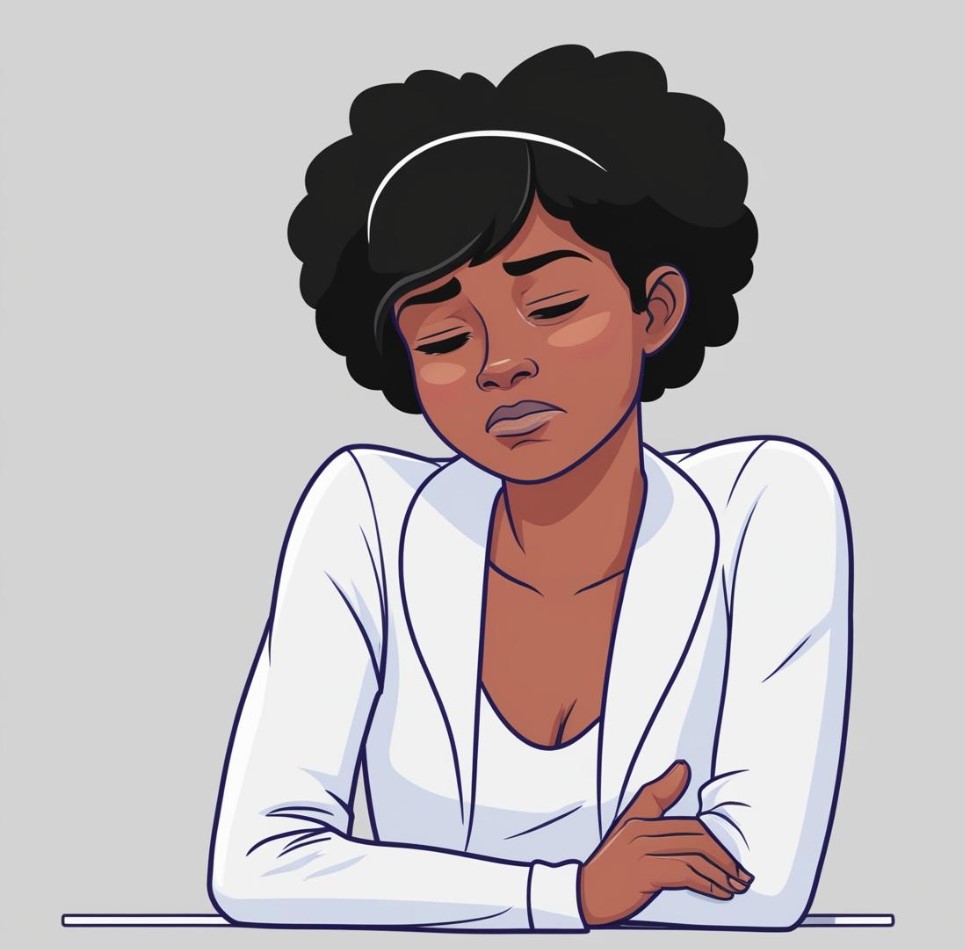
Source: Imagefx
Kwansogbu*
Nah. I like my friends very much, but I forget to text back because I’m absent-minded and easily distracted. I’ll see a notification and say, “I’ll respond to it when I’m done with what I’m doing,” but I never do. I often feel like a bad friend when it comes to texting because I really want to stay in touch, but it doesn’t come naturally. Sometimes I open texts from my crush and only realise (by seeing their name) hours later that I didn’t reply.
[ad]
Kylie*
I’m a bad texter even with people I really love. I’m better at calls, but I literally hate texting. I can’t explain why, but it just stresses me out. I feel like we should control our phones, not the other way around. With texting, I’m expected to respond immediately, and, I just don’t have the capacity for that. It has made my friends think I don’t like them as much because other people they barely know are ready to text them all the time. I enjoy physical interaction more than texts. I’d hang out with my friends every day if I could but sadly, most of them live in different cities now, and some abroad.
Sommelier*
Honestly, I’ve really tried to get better at it. I get bursts of motivation to text, but that never lasts. Most potential partners have to push through my bad response times to get to know me. I’m grateful my friends understand because it would be easy to get mad at me. I’d rather just have a phone call, a quick in-and-out.
Dana*
Sometimes, I think I’ve replied, and I find out later that I didn’t. It’s weird because I wasn’t like this in the past.
It all started 2 years ago. I was going through a lot and was a bit depressed, so I was unwilling to reply to any texts. I went on many social media breaks during this time, and most of my friends ultimately became tired and distant, which I totally understand. I became used to replying to texts when I felt mentally up to it.
My remaining friends have gotten used to it, so they just wait until I reply. On other days, they send messages repeatedly, so I reply to them.
Sometimes, I try to dedicate my day to replying to all my friends, but other days, I feel down and don’t reply on time. I’ve worked really hard to fix my bad texting habits, and I think I’m getting better.
Sunshine*
I’m really a bad texter, and it stems from having a traumatic childhood. I’ve always liked keeping to myself; I grew up being told to be more reserved. Now, I have an avoidant personality, and I fear being too much or saying too much.
This means I’m terrible at communicating with friends or texting. I’m used to going through stuff alone. So anytime I’m at a crossroads in my life, I panic, disappear and stop texting. I know I had a traumatic childhood, and I need to see a therapist because of my avoidance issue, but I’ve been managing it well. One day, I’ll have enough dispensable cash to see a therapist; there is so much to unpack.
Jay*
Omo, at this point, I’m a bad texter to everyone. Once, my estranged best friend tried to reconnect with me, and I aired her for days. There were also other factors involved (my sim got blocked, and I was writing exams). When I finally got back to her to reconnect, she said she was no longer interested. I didn’t even try to convince her because, lowkey, I knew I didn’t have it in me to actually text her frequently. At the time, I felt bad, but now I don’t really care anymore.
Hen*
In general, I find conversations quite overwhelming, especially after a full day of work. I don’t want to return to even more conversations. As such, I’ll put off responding until I feel better, but then I’ll forget to respond.
McGash*
No, I just struggle to connect emotionally to what’s not right in front of me. I think of myself as an “in-person” person. Also, I’ve come to gradually shun social media. This, combined with a myriad of short-term memory issues, means I struggle to maintain my attention in a chat setting and hardly remember why when I do. Liking someone has little to do with it for me.
Friendships don’t always have to end with a dramatic fight or a big betrayal. Sometimes, you just outgrow each other, or they show you a different side to them that makes it easy to use your scissors.
If you think compatibility only applies to romantic relationships, these stories will leave you in various degrees of “God abeg” and “God forbid”.
Joe*
I met this guy during the fuel scarcity period that followed the subsidy removal. We’d always bump into each other at the filling station, and it didn’t take long for us to start talking. We’d trade football banter as we waited our turn and watch over each other’s kegs. He seemed like a cool dude, so I asked for his number during one of our meet-ups. We weren’t friends yet, but from our conversations, I knew it was only a matter of time.
About three weeks later, he said he wanted to visit, and I didn’t think it was a bad idea. He showed up on the agreed day, but this person looked nothing like the guy from the filling station. Something about him was off, and he kept steering our conversation towards drugs and alcohol. Last last, he pulled out a bag of weed and offered it to me. Thankfully, I was the only one at home that day. I politely declined, and once he left, I knew he wasn’t my type of person. That was the last time we saw each other.
Ibrahim*
I think uni fools people into believing they’ve found lifelong friends. You feel close for those four years, but the real test comes when you leave the place that brought you together. That’s how I discovered my “friend” wasn’t really my kind of person. We both served in Ibadan, and since he had a big house, he offered to let me stay with him instead of renting a place. It felt like a good deal, plus I didn’t tell my parents so I could keep the rent money.
Looking back, it was the stupidest decision ever. I started seeing a side of him that hadn’t surfaced all the years we’d schooled together. He and his parents were controlling, and sometimes, I genuinely wondered if I was under a spell. On top of that, their approach to everything, especially religion, was extremist. Living with him during NYSC showed me that we weren’t cut from the same cloth. Somehow, uni had shielded that part of him. We still talk, but he wouldn’t even make my top 15 friends.
Sodiq*
He got me addicted to visiting brothels. It started on my birthday when he said he had a surprise for me. I thought we were going to an eatery or something, but he took me to a brothel outside school. I’m not going to lie; I enjoyed that night and many others that followed, mostly because he footed the bill. We even started taking all sorts of substances to “boost” our performance. Then it got out of hand—I was missing classes and constantly high.
After bagging two E grades and one STD, I knew I had to save myself. There was no beef; I just manufactured one because it was clear we were no longer on the same wavelength.
[ad]
Nugwa*
It happened during a heated Twitter discourse. We weren’t exactly friends but had gone past being mere acquaintances. I can’t remember the exact issue, but it was something about how a woman was treated by her partner. His takes on marriage and domestic abuse left me in shock. We’d never had conversations like that, so seeing how he thought about women was eye-opening—and disturbing.
Suddenly, I remembered all the times he’d casually said he was a beast when he was angry, and nobody could calm him down until he “drew blood.” I tried confronting him about it, but he lied, claiming he was only bantering. It was more than banter to me. I no longer felt comfortable calling him a friend, and the budding friendship died a natural death. God forbid.
Desola*
I met her during registration week in my first year of uni. She was super helpful and seemed to have all the answers. We hit it off immediately. A few days later, I ran into her again and mentioned I was looking for a flatmate. She was also squatting with a family friend and needed a place, so we moved in together. Some of my best memories from 100 level are from living with her.
But things got weird in 200 level. She became more outgoing, constantly had boys over, and you could tell who was visiting based on the shoes outside her door. She’d take weekend trips to Lagos and return with wads of fresh cash. I’d ask what was going on, but she’d wave me off, saying I should keep doing my “big girl.” Rumours started circulating that she was stripping and doing “runs,” but I didn’t want to believe—or ask. What really bothered me was that people thought we were both involved. I couldn’t move out yet, but I started keeping my distance.
Aisha*
We resumed 400 level, and my roommate of three years—who used to be my bestie—suddenly transformed into a hijab-wearing sister. We were both practising Muslims, but neither of us was the typical scarf-wearing, mosque-going type. That was one of the things that bonded us. I’d even assumed she was Christian when we first met because she was cool and carefree.
I tried not to act too shocked about her new look, but the real issue was how she started nitpicking and used every opportunity to preach to me. To this day, I don’t know what happened during that break, but it was clear my friend didn’t come back. We stayed cordial for the rest of our time in school, but the friendship had obviously sailed.
Love Life is a Zikoko weekly series about love, relationships, situationships, entanglements and everything in between.
Did you know that 900,000+ Nigerians are buying and selling Bitcoin on Yellow Card? You can buy as little as 2,000 NGN worth of BTC.
Yellow Card is very easy to use and has the best rates on the market, low fees, and top-notch security. Join Now!
What’s your earliest memory of each other?
Hassan: 1999. Her family had just moved to Surulere, where my family lived. Aisha always looked so reserved whenever she stepped out. One morning, I saw her rushing to catch a bus, and it was the first time she looked dishevelled and not as put together like the previous times I’d seen her. Her scarf was flying everywhere, and she looked determined as she raced after the bus. Her energy was hard to ignore.
What was it about her energy that stuck with you?
Hassan: I was used to seeing women act prim and proper. I have female friends who’d have chose waiting for another bus over running after one. So, I could tell she was different. Seeing her run made me think she wasn’t afraid of a challenge and didn’t care much for what people say.
Aisha: This day was a complete mess. I was late for work, and everything was chaotic. But yes, it was 1999.
My first real memory of Hassan, though, was at the central mosque in our neighbourhood. He was always there, helping the elders and taking care of things. He also had a calm, steady presence that made people feel safe.
I see. So, at what point did friendship come into the picture?
Hassan: It happened slowly. We’d see each other at community and mosque events, exchange greetings, and have short conversations. I’d ask her how she was settling into the new neighbourhood and we’d occasionally talk about our personal interests. The conversation never moved past these basic things because we’re both Muslims and we wanted to keep the budding friendship “halal”.
Our relationship changed after my mother got sick. I’d casually mentioned it once after Jumat prayers and Aisha came around to help, even though we were just acquaintances. You don’t forget that kind of compassion.
Aisha: For me, I’d say it was when I started to experience his kindness firsthand. I’d already seen how he helped old people in the mosque but upon getting closer to him, I realised he wasn’t doing it just to score rewards from Allah or give an impression of being a good person. This was genuinely his person. Hassan was respectful and considerate that it didn’t matter that we were just getting to know each other; he treated me like I was already family.
But it was also his sense of duty—I saw how he catered deeply to his mum and siblings. He took his responsibilities seriously, and that made me feel secure.
How did things progress from there?
Aisha: After his mother recovered, we continued to talk. We’d have long conversations about our dreams, faith, and what we wanted from life. We slowly became closer, and there was a point where I couldn’t imagine a day without hearing from him. It felt natural to fall for him.
Hassan: I’d also started making my intentions known by this time. Watching her spend time with my family and how everyone accepted her made me know I’d found the person for me. It was also the same with her family members who’d started treating me like an in-law.
What do you mean?
Hassan: Her siblings were already calling me “oko aunty Aisha” ( Aunty Aisha’s husband) whenever I visited. Her parents also excused themselves from the living room whenever I came over.
At this point, it wasn’t a strange idea that we might get married.
So, when did you both realise you wanted to get married?
Hassan: Sometime in 2000, a year after we’d become good friends. I remember her dad calling me aside during one of my visits, and he said to me “Where is this thing with my daughter going?”
I didn’t think twice before telling him I wanted to marry her. Even though Aisha and I had always known it was the end game, saying it out loud to her dad was the first time I truly realised how much I wanted to be her husband.
I also remember praying about it and feeling a sense of peace that Aisha was the one. I knew she had the qualities I wanted in a wife: strength, kindness, and faith. So, I asked her if she’d consider building a life with me.
Aisha: I had already been thinking about it, too. When he asked, I didn’t even hesitate. I knew he was serious, dependable, and that he’d always have my back. We got engaged shortly after and got married in 2001.
Sweet. What were the early days of your union like?
Aisha: Oh, it was a rollercoaster. We were young and full of opinions. I had a loud mouth and wasn’t afraid to speak my mind, and Hassan was deeply rooted in his traditional ways. We loved each other fiercely, but we argued just as passionately.
Hassan: Yes, she kept me on my toes. We had different visions for how our future should look. Aisha had big dreams; she wanted to continue working after marriage, and I had to adjust to that idea.
Aisha: This “work after marriage” thing caused our first big fight. I remember crying to God during my prayers and asking if I’d made a mistake by getting married to this man.
Tell me more about this fight
Aisha: We’d just had our first child, and I wanted to go back to work. Hassan was worried about what our community would think. We’d already argued about this earlier when he suggested that I should be a stay at mum. At the time, it wasn’t really a fight; just a big argument that we resolved with one conversation.
But it was different this time around. To him, having his wife return to work months after childbirth felt like a failure on his part, and I couldn’t understand why he didn’t see that I just wanted to support our family.
Hassan: It was more than just money; it was about making my wife comfortable just like the Qur’an advises. I was earning enough to cater for both of us and the new addition to our family. I also grew up in a household where I watched my dad handle everything. It felt like I wasn’t good enough if she had to work.
But Aisha made me realise that it was about partnership, not pride. It took me time, but I learned.
If you want to share your own Love Life story, fill out this form.
Fair enough. What did this fight mean for conflict resolution in your relationship?
Hassan: It taught me humility and the importance of listening. Marriage isn’t just about leading; it’s about growing together. We learned to be each other’s biggest supporters.
Aisha: Exactly. We had to remind each other that we’re on the same team for life. We’ve built a life based on compromise, understanding, and so much love. And that foundation has helped us through the most difficult times.
Speaking of difficult times,what’s been the hardest thing you’ve faced together?
Hassan: Aisha was recently diagnosed with cancer. It was like the world stopped. We’ve faced challenges before, but nothing prepared us for this.
I’m so sorry to hear that. How did you both handle the news?
Hassan: It’s hard to talk about.
When we got the news, I felt like the ground had been pulled out from under me. But Aisha… she handled it with so much strength.
Aisha: At first, there was shock, then denial and finally acceptance.
I think I’d always imagined the possibility after my maternal grandmother died of the same disease. But after her, no one else in my family got the diagnosis, and I thought to myself, “Maybe Allah has finally taken this thing away from our family.” But then, it happened and the only question in my head for weeks was “How did this happen?”
But once I got to the acceptance stage, I started thinking about my family. “What would happen if I didn’t make it? What do I need to do for my family?” I became consumed with the idea of making sure they’d be okay if the worst happened.
That’s heavy. What did that lead to?
Aisha: I decided to find Hassan a second wife.
I’m sorry, but why?
Aisha: I know it sounds strange, but it feels like the right thing to do. I want to have a say in who takes over my role. It’s not just about finding someone who can love him; it’s about finding someone who will love and care for our three kids the way I would. It’s hard to explain, but it feels like the only way to have some control over what happens if I’m not here.
These kids…they’re teenagers, but they still have a long way to go before they become independent. It’s important that I entrust them in the hands of someone I know. It’s the only way I’ll rest in peace if this sickness takes me.
Hassan, how do you feel about this?
Hassan: I was and I’m still angry that she considered and perfected the idea in her head even before she shared it with me. I didn’t want to hear it. To me, planning for a future without Aisha feels like giving up on her. I believe in God’s plan, and I’ve been praying for her healing. I believe the women she’s introduced me to are good people. The problem is, they aren’t her. They don’t have her warmth or her spirit. It just feels wrong.
Aisha: It’s painful for both of us. But I have to be practical. It doesn’t mean I don’t have faith; I just want to be prepared. And I want to have a hand in choosing who will be part of our family.
[ad]
I’m so sorry. How has this revelation changed your relationship?
Hassan: It’s an added strain, for sure. We’ve had arguments we never imagined we’d have. Sometimes, I’m too hard on her to follow the unending rules from the doctors. And she feels like I’m going about what could be some of our last moments together the wrong way.
But at the same time, there’s a new level of honesty between us. We’ve become more vulnerable with each other.
Aisha: Yes, we’ve become more open. There’s no room for pretence anymore. We laugh, we cry, and sometimes we just sit in silence, holding each other. It’s been hard, but it’s also made us cherish every moment we have.
You mentioned the kids earlier. Are they aware of any of these?
Hassan: We’ve kept things as gentle as possible. They know that their mother is unwell, but we haven’t spoken in detail about the situation. We don’t want to overwhelm them with fear.
Aisha: They’re still young, and it’s hard enough for them to see me tired or in pain. Talking about my plans to find their father a second wife would be confusing and upsetting for them.
Do you think there will come a time when you’ll need to have that conversation with them?
Aisha: Yes, probably. If things get worse or if we feel they need to understand more, we’ll talk to them. But for now, we’re focused on making memories, keeping their spirits up, and praying for the best.
That’s understandable. What will you miss the most about each other if that time ever comes?
Aisha: His voice. Hassan’s voice can calm any storm, even the one raging in my heart. I’ll miss the way he says my name when he’s trying to reassure me.
Hassan: Her laughter. It fills the room and makes everything feel alive. I can’t imagine a world without that sound.
How has your time together shaped your view of love and marriage?
Hassan: It’s made me realise that love is in the little things. It’s not about grand gestures but the everyday acts of care and sacrifice. Marriage is about holding on, even when it feels impossible.
Aisha: It’s also about acceptance. Loving someone through their pain, their flaws, their fears. It’s messy and complicated, but it’s worth every second.
Finally, on a scale of 1 to 10, how would you rate your love life?
Hassan: I’d give us an 8. We’re not perfect, but we’ve built something beautiful.
Aisha: I’d say a 9. Even with everything, our love hasn’t wavered. That’s something I’m proud of.
We all have that one ex who’s impossible to forget and the other one you don’t even remember until Facebook memories rudely remind you.
We ranked the exes from easiest to hardest to move on from.
11. The Detty December ex
You met them during that one Detty December or summer holiday. They were all vibes and good times, but once reality kicked in, so did the end of your “romance.” Moving on from this ex is easy because you both knew it wasn’t that deep. It’s more nostalgia than actual heartbreak.
10. The long-distance ex
It was exciting at first—WhatsApp calls, love letters in emails, and saving money for trips to see each other. But when the timezone differences and expensive travel got tiring, you both knew you had to pack it up. Moving on is easy AF because the emotional distance came way before the physical one.
9. The situationship ex
You never even officially dated; you just existed in a permanent state of vibes and inshallah, hoping they’d one day claim you. When it ended, the hardest part was realising you’d wasted emotional energy on someone who never gave a real shit about you. But once you accept that, moving on becomes relatively straightforward.
8. The ‘We grew apart’ ex
There was no drama or betrayal, just the realisation that you both weren’t made for each other. Maybe they moved away, or you both matured in ways that weren’t compatible anymore. This one hurts, but mutual respect makes wishing them well and moving on easier.
7. The work bae ex
Every time you enter the office or open a Zoom meeting, there they are. Seeing them regularly makes moving on harder, but the moment they get a new job or you do, it’s like an instant breath of fresh air. Out of sight, out of mind.
6. The one you cheated on ex
The guilt is real, and it makes it hard to move on. You keep replaying the mistakes, wishing you could fix them. But with time, therapy, or new distractions, you start forgiving yourself.
5. The one who cheated on you ex
Ah, the betrayal from this one frequently burns your chest and threatens to unalive you. The heartbreak and the dent to your self-esteem can linger for a long time. Even when you feel like you’ve moved on, trust issues and flashbacks can still haunt you in your next relationship. Healing takes a while, but it’s possible.
[ad]
4. The hot fuck ex
Let’s be honest, the ex who knows how to make your river flow is hard AF to forget. You’re constantly getting flashbacks, and the image of their genitalia is forever etched in your memory. You might have broken up for good reasons, but that physical chemistry? Unmatched. Moving on is tough because you can’t help but compare every new partner to them. It’s a struggle, but one day, you’ll meet someone who gives you their type of orgasm again.
3. The best friend-turned-lover ex
You didn’t just lose a lover; you lost a friend. The person who knew you best, your inside jokes, and your secret fears is now just a memory. Moving on is painful because you miss their presence in your life, but you also know it’s too complicated to remain friends.
2. The ‘Almost happily ever after’ ex
You saw a future with them and convinced yourself they were your last bus stop. Maybe you were even planning a wedding or talking about kids. Losing this ex feels like mourning an entire life that will never happen. Moving on is hard AF because it involves grieving not just them but also the dreams you had together.
1. The soulmate ex
The hardest of all. The person who felt like your other half, who understood you in ways no one else did. Even years later, their ghost lingers, showing up in random songs or the scent of their favourite perfume. Moving on from this ex can feel like an eternal wound, but eventually, you learn to live with the scar.
2024 has undeniably been the year for the couples and real lovers. Every Eke market day, couples on the internet have made it a point to make the necks of single people their podium. But single people can finally fight back today.
Your period of single-ness shouldn’t be spent pining and “God When”-ing for a partner. Granted, today is Monday so work may not allow you to go all out today, but pick a day this week to treat yourself!
Here are five fun things you can do to celebrate Singles’ Day in Lagos without breaking the bank.
1. Indulge in a little Monday Pick-Me-Up
Since it’s the start of the week, you can cosplay as a serious and responsible individual by grabbing some coffee. Nigeria is also as hot as an industrial oven right now, so it may be best to get a decadent iced coffee instead of a piping hot cup. We can recommend an iced coffee from Milk and Honey Lagos.
[ad]
2. Go and play
Source: Upbeat Center
A number of us crave the simplicity of playtime as a child. Running around with your friends on the playground is a feeling from your childhood that is unmatched. Now, you can thankfully buy the experience with your adult money! You and your friends can head down to Upbeat Center, a large indoor playground for adults to have a great time jumping in foam pits, on trampolines and for joy!
3. Get your Robin Hood on!
Source: Zen Archery
If you want a physical activity that also needs technical skill, you can try going to an archery range to shoot at targets. It’s an activity you can do alone or with friends, plus you can imagine yourself as Hawkeye while you launch the arrows. You can go to Zen Archery to start your archery career as soon as possible.
4. Chill at the beach
Summer is only over when we say it’s over. Combat the heat wave and celebrate by taking a beach day. The gentle waves, fresh seaside air and a cool drink on the beach are sure to spark some joy for you this week.
5. Scream for ice cream
Source: Frozen Rolls Ng
What is the perfect cap to the day if not some smooth, delicious ice cream? Give yourself a sweet little treat because you deserve it. It’s not easy being hot and single in Lagos. You can get some ice cream at your nearest supermarket, or you can get exotic and go for these frozen ice cream rolls. Either way, you’re going to have yourself a time.
Every week, Zikoko seeks to understand how people move the Naira in and out of their lives. Some stories will be struggle-ish, others will be bougie. All the time, it’ll be revealing.
LemFi is the no. 1 mobile transfer app for sending money from the UK directly to Nigerian banks within minutes at the best rates and with zero transfer fees! Sign up today and enjoy a £5 bonus for your first transfer to Naija. Download now!
What’s your earliest memory of money?
Mostly that we didn’t have it. I was eight years old when my dad lost his job at a vehicle manufacturing company, and things became so bad. We stopped eating breakfast and moved from an estate to a face-me-I-face-you apartment.
I transferred to a government school, and I remember hating the uniform so much because my bully in our old estate had a pair of shorts in the same colour. When I refused to wear the uniform on the first day of school, my mum said I had two options: go to school or hawk pure water to provide money for the house. I relented, but I still sold pure water after school.
Wait. Really?
Yup. My mum was a housewife when my dad had a job, and when the job disappeared, my dad blamed her for not bringing any income. Now that I think about it, I’m not sure what my dad did for money after he lost his job; he was just outside the house a lot.
Anyway, my mum started a small business, collecting cold pure water on credit and hawking them. When I returned from school, she’d put a bowl on my head and tell me where to go to sell the water.
For the next two years, I hawked water every day after school. Then, one day, I got hit by a car in the market. The driver left me and ran away while I lay there surrounded by shouting passersby. I might have died if my mum hadn’t come looking for me 20 minutes later. No one tried to help.
That’s crazy
The accident caused a big fight between my parents. My dad was annoyed that he had to spend his hard-earned money on hospital bills, which wouldn’t have happened if my mum had done her duty. My mum was like, “If you were doing your own duty, would we even be here?”
I suspect the whole thing caused their separation. When I returned home from the hospital, my dad had moved out. I’d just written my common entrance exams, and my mum decided she couldn’t put me through secondary school. So, she shipped me off to live with a family friend. This was in 2004.
What was living away from home like?
Slightly better. The woman and her family basically turned me into a houseboy, but at least they gave me cornflakes or golden morn for breakfast, and I didn’t have to hawk pure water. They also enrolled me in secondary school.
But I worked in that house o. I was very small as a child, but I climbed stools to wash the husband’s car. I also washed plates and hand-washed the children’s clothes. Sometimes, the woman would rub shea butter on my hands after I’d scrub them raw from washing clothes.
I still don’t understand how only two small children went through mountains of clothes in just one week. Every time I came home from school, the laundry basket multiplied, and I had to wash them clean or risk getting flogged.
Was flogging something that happened regularly?
Yeah, but I don’t think it was more than normal. It was just the woman’s way of making sure I did things quickly. And within a few months of staying with her, I knew how to gauge her mood and do what she expected to escape the cane.
I also learned how to make money from her. I started taking out ₦10 – ₦20 whenever she sent me on errands to get money for snacks in school. By the time I got to JSS 3, I’d started selling her children’s toys in school for ₦300 – ₦500 apiece.
No one noticed because the kids had many toys. Every single day, they asked for something new, and the parents bought it. This often meant they’d abandon the old toys and only play with the new ones. Then, after a while, the parents would gather the old toys and throw them away or donate them. When I noticed that, I turned it into a business opportunity.
I only got to do that for a year. The woman’s husband died when I got into SS 1, and she told my mum to come and carry me.
What did that mean for you?
Moving back with my mum showed how much our relationship had deteriorated. She’d remarried and was more interested in keeping her husband happy. It was a toxic situation. If the man complained small, she’d beat me and warn me not to try to be stubborn. I wasn’t even trying anything.
The good thing was that they paid my school fees. I basically took care of my other needs.
How did you do that?
I got a job at a cybercafe near my school in 2009. I must’ve been very convincing because I knew next to nothing about computers, but somehow, I got the job. I helped with typing, photocopies, and basically everything people do at cybercafes.
My salary was ₦6k/month, and I often abandoned classes for work. It’s a miracle I even graduated and passed WAEC in 2010. I worked at the cybercafe till 2014. My salary was ₦8500 when I left, and I had ₦35k in savings.
Why did you leave?
Problems at home. My mum’s husband felt I was proud and acting like the man of the house. Meanwhile, I was working and staying away from home until nighttime because I didn’t want to clash with him. But he had a problem with that.
My mum asked me to go live with another family friend, but I refused. I wasn’t about to do houseboy 2.0. Instead, I told a Facebook friend about my situation, and he said I could come squat with him in his parents’ house. So, I did.
I moved in, and his parents treated me like their own. I’ll forever be grateful to that family. I’d never experienced that level of acceptance before in my life. My friend’s mum would cook and ask me to go serve myself from the pot. As how?
The first time I took my friend’s parents’ clothes to wash without anyone asking, they were so shocked — almost like they didn’t expect me to do any chores. Forget, those people tried for me. They even allowed me to use their backyard to start a laundry business in 2015.
How did you land on laundry?
My friend suggested it when I complained about being broke. He was a university student and lived at home, but he had friends in the hostel who paid “any wash” guys to take care of their laundry.
It didn’t take much to start: I hand-washed the clothes, spread them in the backyard, and ironed them. I only had to buy soap and get water from Mai Ruwa when there was no light to pump water.
My first clients were my friend’s classmates. Then, I started hustling for customers in the hostels. I charged ₦200 per clothing item and ₦250 for items like bedsheets and blankets. In a week, I made between ₦5k – ₦6k.
By 2016, I could afford a ₦35k washing machine and dryer. In 2017, I secured a ₦60k/year shop to use as a proper office. My clients also expanded to working-class people, not just students. Business was good, and I often made ₦25k/week.
What were your expenses like?
Most of my expenses were for business operations. I also began chipping in at my friend’s place, paying light bills and dropping money for food. I wasn’t buying anything for myself or splurging — maybe because I knew how much I struggled to make money. So, I saved whatever I had left.
Between 2018 and 2020, I got two more washing machines and employed an assistant to canvas for customers and help with the laundry. I paid him ₦12k/month. By then, I was sure of at least ₦80k/month.
Business slowed down in 2020 because of the pandemic, and I began looking for other options. My friend’s dad suggested I gather my savings and invest it in a certificate — for backup. School was the last thing on my mind, but I respected him a lot and couldn’t throw his advice away. Plus, he introduced me to his friend, who was a key non-academic staff member at a nursing school, so admission was sure.
But did you want nursing?
Not really, but my friend’s parents convinced me that it was a respected and lucrative profession. I wasn’t dull in secondary school, so I knew it was something I could do.
I got admission that same year and had to move because the school was in a different state. I paid about ₦200k for the form, acceptance fee, tuition, and another ₦80k for hostel fees. I sorted all of these payments from my savings. I had about ₦400k in my savings account from all the years running my business and the sale of my washing machines, so that came in handy.
How did you handle subsequent school fees, though?
It was just the grace of God because I can’t point out one thing. Nursing school was expensive; we were always buying one instrument or uniform or travelling for one clinical posting or the other. I tried to resume my laundry business by offering to wash my classmates’ clothes, but they were mostly women and washed by themselves.
I tried different hustles like writing assignments and projects, but the money I made was only enough for food. I think I still had some money in my savings to pay second-year school fees, and my friend’s dad supported me with part of it. He also sent me ₦50k for the final year school fees, and I gathered the remaining ₦50k to complete the payment.
After every every, I graduated in 2023.
Whoops! Congratulations
Thank you. The journey was tough. I returned to my friend’s parents and got a job at a hospital. My salary was ₦80k/month, and I remember asking myself, “So, I spent all that money at nursing school to come back and earn the same thing I did as a laundryman?”
But six months into the job, I got another job at a hospital that only required me to come in at night thrice a week. They paid ₦95k. I juggled both jobs till July 2024, when I got a job at an NGO for ₦405k/month.
That’s quite a jump
I still can’t believe it myself. Remember the non-academic staff member my friend’s dad introduced me to? The man took a liking to me because I never visited him empty-handed — I always went with a bottle of wine or a tie — and we kept in contact.
He told me about the job, so I applied and got it. I feel like his referral helped a great deal because I doubt a nurse with just about a year’s experience would get that kind of opportunity.
Has your income growth come with any lifestyle changes?
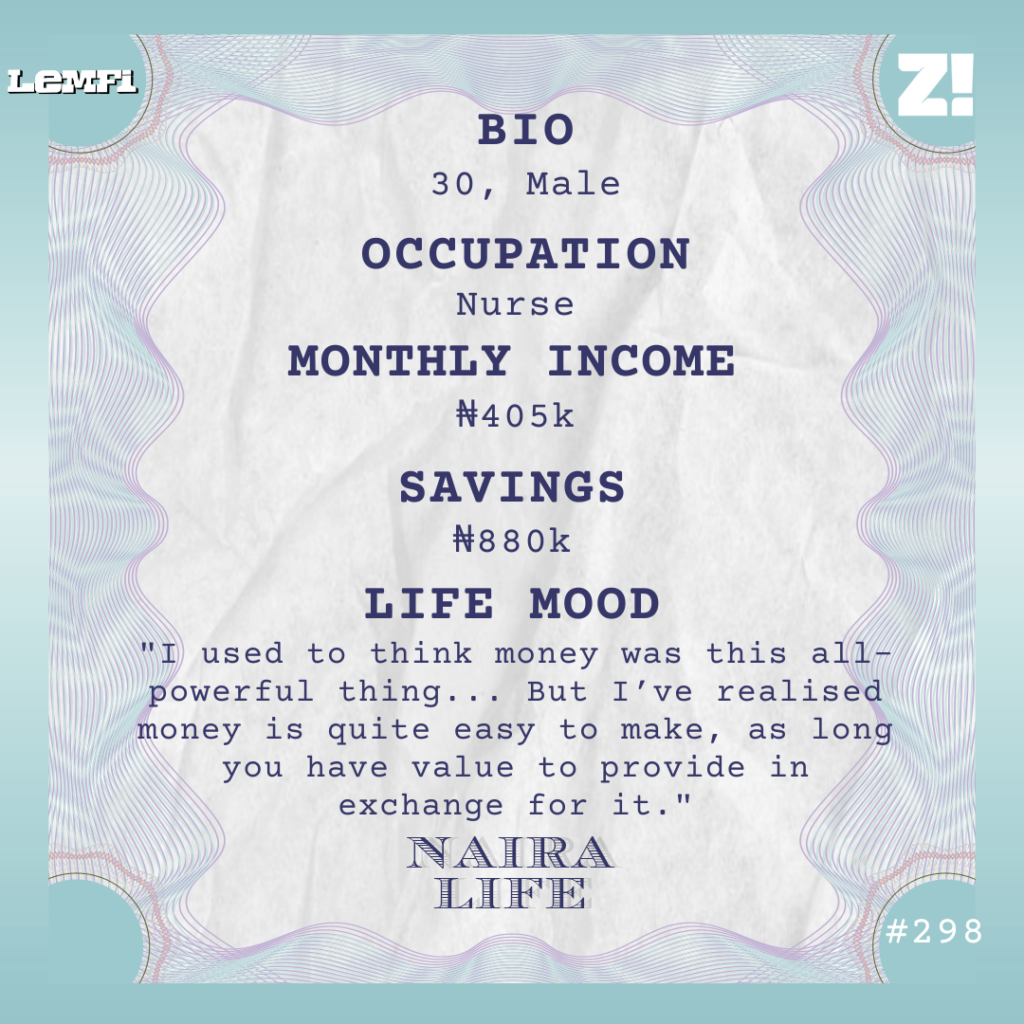
Honestly, I still see myself as a struggling man. I don’t spend money like someone who has it. I carefully examine my expenses and spend on myself when it’s absolutely necessary. My approach to finances is: save first, spend later.
I still live with my friend’s parents. There’s no point in renting an apartment when I don’t have a woman I want to marry. I’m hardly home because I often travel for work, and my primary work base in the north comes with free accommodation, so why get another place? Plus, the family loves having me around. All their children are grown and have moved away, and I keep them company.
However, whether I’m home or not, I send them money for feeding expenses and utility bills. I also dash them money sometimes. Considering all they’ve done for me, it’s the least I can do.
What do these expenses look like in a typical month?
My transportation expenses are low because my company pays for my travels. Sometimes, I hardly touch my salary because I get per diem allowances whenever I travel.
What do you do with your savings?
I just keep them in a savings app that yields monthly interest. Right now, I have ₦880k, and I’m considering buying a piece of land when it hits ₦1m. This should happen before the end of the year. Maybe by next year, I’ll look into other investment channels like stocks. I just want to have something solid with my money first.
How has your journey with money shaped how you view it?
Money has shaped how I view life. I used to think money was this all-powerful thing, considering how it scattered my family. But I’ve realised money is quite easy to make, as long you have value to provide in exchange for it. Of course, inflation and the economy are turning everything upside down right now, but I think the principle of value exchange still stands.
What’s something you want but can’t afford right now?
Marriage. I don’t have someone yet, but even if I did, I don’t think I have everything I need. For one, I hope to have a safety net of at least ₦2m to set up a home, and I’d also like to have started building a house before marrying a woman.
Because when a wife comes, children can come soon after. I don’t want to be caught up in the day-to-day expenses of running a household and not have resources left for a basic investment like a house.
Fair. What’s your financial happiness on a scale of 1-10?
9. I never imagined I’d be where I am so soon in life. The only reason it’s not 10 is because I still have things I hope to achieve.
If you’re interested in talking about your Naira Life story, this is a good place to start.
Unless you’ve been living under a rock or have let Tinubu and his unending shenanigans steal your joy, you’ve noticed that the Detty December season is almost here. As always, if you don’t plan ahead, you’ll end up exhausting your already limited “God when” bundle for the year.
But it doesn’t have to be this way. The first step to securing a lit AF December is assembling the sickest gang, and we know exactly which of your friends should make it outside with you.
1. The street native
You need a friend who knows where every single party or event is happening, the exact location, and your estimated degree of enjoyment if you attend. They’re like Google Maps, but for Detty December. If you don’t have a friend like this, you better assign this role to the most socially competent person in your group chat.
[ad]
2. The bartender
Then there’s the magician, in charge of food and drink. Where others pull rabbits out of hats, this one mixes the most nonsensical things in a plate or glass, but guess what? It tastes amazing and hits differently at 2 a.m. Yes, 5Alive and whiskey sounds like an abominable concoction, but wow, does it work or what?
3. The “No go gree” soldier
December is for the detty, not for the demure. Between hairdressers with their own creative direction, audacious event bouncers, rude servers, and chaotic ride-hailing drivers, you need someone in your crew who can change it for everyone—and who has coins to spare. They don’t accept subpar service, and people know to act right when they’re around.
4. The DMC initiator
Your DMC friend keeps the group grounded with deep meaningful conversations. “Ozeba” is still ringing in your ears, you’ve only just stepped out of the function for some fresh air, and your friend asks, “How are you doing? How are you really doing?” Suddenly, you’re having a heart-to-heart about radical joy and the beauty of being young.
5. The drip lord
And of course, during Detty December, neither friends nor foes should catch you looking unfresh. You need a friend who will give you unbiased, life-saving fashion advice. Plaid, stripes, and polka dots all at once? Send that GRWM to your resident Drip Lord for an assessment before stepping out.
Fawas*, 29, has been dealing with a complicated relationship with wet dreams since he was a teenager.
Now an adult, he finds himself still struggling with vivid dreams that make him feel conflicted and embarrassed, especially when they involve his siblings.
As told to Adeyinka
I’d just completed JSS 3 the first time it happened. We were taking reproduction in biology class at the time, and terms like ejaculation, sex, and wet dreams were flying around. They were new concepts to me, and the idea of my penis passing out something other than urine sparked curiosity in me. Some of the boys in my class who were older wouldn’t stop talking about the excitement they felt after ejaculating and how they also had wet dreams.
I must have been 13 or 14 then, but I knew I hadn’t experienced any of that, or maybe it was just a part of my body I’d never explored. I come from a strictly Muslim background, and sex was a taboo topic in our household growing up. Everything I learned about it was from biology class and the exaggerated tales from my schoolmates.
My curiosity increased as the class continued over the weeks, and we got deeper into the topic. One day, I called over a male classmate who seemed the most versed on the subject and asked how I could experience this ejaculation—and that was the first time I learned about masturbation. He told me to stroke my penis repeatedly when it’s hard, and I’d know I’d orgasmed when I produced a whitish, pap-like liquid. He also suggested watching porn to make it enjoyable or thinking sexual thoughts in my head. I didn’t even own a phone and hadn’t had any sexual experiences to aid my imagination, so that wasn’t an option. The closest thing that came to mind was half-naked models I’d seen on posters or the occasional sex scenes in movies.
So, I took his advice and started masturbating, but it yielded no results. I didn’t release the whitish pap-like liquid, and I didn’t feel anything either. The only thing I felt was pain in my penis from tugging too hard on the skin. I tried it a couple more times and finally gave up when my penis started hurting from friction.
Fast forward to the long break before resuming senior secondary school, I had my first wet dream. I woke up feeling confused because of the sticky wetness in my pants and thought I’d wet the bed. When I checked, the bed wasn’t wet, except for a little patch formed where the liquid had seeped through my boxers. I went to the bathroom, pulled off my boxers, and sniffed them. There was a weird smell I couldn’t understand, but I knew I’d finally experienced a wet dream. The situation only confused me more because I tried hard to remember my dreams from the night before, but I couldn’t.
The next day, I went to bed, willing myself to have another wet dream, but nothing happened when I woke up.
[ad]
At the time, my siblings were home—two boys and a girl. They’re all older, and I guess because of that, they were comfortable stripping naked around me. It wasn’t a big deal; even our parents did the same. I always found the sight disturbing and would look away whenever they stepped out of the bathroom or pulled off their clothes to change. Yes, I’d let my eyes linger on some occasions out of curiosity, but I never thought anything sexual about it.
So, it was jarring the next time I had a wet dream and found myself getting intimate with my elder sister in the dream. I didn’t think much of it then, but it happened again. This time, it wasn’t just my sister—my brothers were there, too, and we all touched each other. The experience made me extremely uncomfortable, and I tried to avoid them whenever they showed up naked.
These wet dream episodes involving my siblings continued throughout my time in secondary school and even into university. The dreams were sometimes so vivid that we’d do things that felt disturbingly real to each other. It also puzzled me that my brothers appeared in the dreams, especially since I’ve never had romantic or sexual feelings for people of the same sex. At one point, I thought about talking to our eldest sibling about it but couldn’t find the right words. I only mentioned that I was having wet dreams, and he told me it was natural and would stop eventually. He doesn’t believe in anything spiritual, so he dismissed my deeper concerns.
As an adult, the wet dreams have significantly reduced, especially since I’m now sexually active and intimate with my partners as often as I can be. But the dreams involving my siblings still happen occasionally, and sometimes, I don’t even ejaculate. I wake up feeling a deep sense of secondhand embarrassment because of how real the dreams feel.
Sometimes, I want to blame it on those few moments I saw them naked around the house, but it’s been years since we all moved out, and we aren’t in each other’s personal space anymore. Yet, the dreams still happen.
I’ve continued to pray about it, and the prayers help. Sometimes, I go for months without dreams, only for them to return quickly and out of nowhere. Maybe one day, I’ll have the courage to talk to my siblings about it, but the thought of how that conversation would go makes me dread the idea, at least for now.
For Doyin*(25), peace of mind trumps closeness to her family. She talks about how her family’s overzealous religious beliefs made her superstitious and drove a permanent wedge in their relationship.
As told to Betty:
Source: Canva Dream Lab
When I was six or seven years old, two cousins — a boy and a girl — from my father’s side of the family came to live with us. They were a bit older than me and my three siblings, and I thought they were cool.
My family was comfortable, so we could accommodate the additions. Don’t get me wrong—we weren’t wealthy, but we certainly weren’t poor. My father had a great job at a bottling plant, and my mum had a thriving store. We lived happily together with my cousins for a year. Then, everything changed.
My mother, a very spiritual woman, occasionally hosted clergymen for meals at our house. It was routine for a pastor or evangelist to drop by our house for lunch or dinner, so when this “Prophet” came through on a Sunday for lunch, I thought nothing of it.
After the meal, we all gathered in the living room for a short prayer before the Prophet left. This was also normal; the men of God who visited said a prayer before they left. The Prophet started to pray for each of us individually, placing his hands on our heads.
The prayer session was uneventful until he placed his hands on my cousin’s head to pray for her. She fell to the ground and started screaming that he was burning her ears. Her brother burst into tears and started writhing on the ground as well.
My cousins said they were witches sent to kill my mother and stagnate my father. They said my father was cursed and bad things would start to happen to our family by the end of the year. The living room descended into chaos and prayers.
For one awful week, no one left the house. We all fasted and did a week-long deliverance service for my cousins. It was very surreal.
On the last day, my parents gave my cousins some money and sent them back to my dad’s hometown. The Prophet prayed for our family one last time and left. That was the last time I ever saw him.
This happened 20 years ago, but my family hasn’t really moved on. Three months after the event, my father lost his job. In the same year, my mother’s store burned down. For many years, we believed we were cursed.
I felt the toll, too; I started doing poorly in school, withdrew from friends and became very superstitious. I believed everyone had some evil spiritual agenda against me and my family.
One day at school, which was getting harder to afford, a kind teacher called me aside to talk about my plummeting grades. I’d gone from being a really good student to a struggling student, and she didn’t understand why I was flunking.
I tried to explain to her that I was cursed and there was no way for me to do well at school anymore. I’ll never forget her; she didn’t laugh at me or call me a liar. She prayed with me and told me that only I can give a curse power. She encouraged me to study with her during break times and free periods.
I was very encouraged when my grades rose back up. I still believed in the power of the curse, but I didn’t feel powerless. I could work my way out, right?
My parents didn’t think so. Things kept getting worse — For starters, we sold our house and returned to renting. My dad moved from pastor to pastor, church to church, in search of a miracle, spending a good chunk of his savings to pay for holy water.
If I needed a textbook at school but some evangelist had told my dad to bring the same amount for them to read psalms over some water, I knew that we were paying for the water. The curse had become a whole new and expensive family member in my house, and I started feeling resentful in my teens.
Fast-forward to 2018. I was in 200L, studying for a law degree, and my relationship with my family really began to deteriorate.
Once, I went home, and as usual, a pastor was around to pray for some reason. We ate and during the following prayer session, he prayed for each member of the family. He stopped when he got to me and said that the Lord had revealed to him that I was a witch, the final stronghold of the curse in my family.
I have a gold chain that my parents bought for me when I was a baby. It was one of the few things we didn’t sell when times were bad. He pointed to this chain and said it was the talisman I was using. According to him, I had to take it off before they could do a deliverance service to save us from the curse.
I insisted I wasn’t a witch and refused to take the chain off. When I refused, the pastor tried to yank it off my neck, which escalated into a fight.
My parents believed me and gently ushered the pastor out, but I was angry that they didn’t throw him out as soon as he accused me. I told them this, and they argued that they had to honour the servants of God.
My parent’s blind belief in pastors whittled my own faith. I became concerned about the amount of influence that pastors and self-proclaimed prophets have on older Christians. Still, I couldn’t talk about it in my community or to my family because they felt these people were above censure.
As a result, I stopped going to church and turned to YouTube for sermons. The only way to sanely practice my faith is to do it by myself for now, and my parents hate it. The witch allegations have not gone away completely since then; my less pious approach to Christianity makes my family think I might become a witch in some way or another.
After finishing school, I moved out of the house and got a great job. I try to send money home to help out, but things are still tough, especially with the economic downturn. My mum tests me by offering me holy water to drink when I visit home, and I drink it every time because I have nothing to hide. More importantly, I don’t think it works.
[ad]
My dad and I are not on speaking terms anymore. When I moved out after school, I started sending my dad job applications so we could increase our family’s income but he’d take the applications to pastors to pray on it, and they would ask him for money to pray for his success. More often than not, he didn’t have the money to pay the pastors, and he’d end up not applying for the job.
It’s crazy to me because my father is so talented; he doesn’t need a pastor to co-sign everything he does. I believe that you can fight against a curse with personal faith and hard work, not by waiting on a human for a miracle.
My relationship with my family now is distant and transactional. I send money home when they need it—which is a lot, but I don’t mind. I miss the relationship I used to have with them, but I prefer the peace of mind that comes with hard work. I also like not looking over my shoulder for witches and witch allegations all the time. Most of all, I really love not feeling cursed.
In a bustling city where expenses seem to rise daily, Sarah found herself grappling with her finances. Like many, she recognized the importance of saving money but felt disheartened by the meager interest rates offered by traditional banks. The constant struggle to keep up with living costs left her wondering if her savings would ever truly grow.
One evening, while scrolling through social media, Sarah stumbled upon FairMoney, a financial service that promised to revolutionize the way she saved. Intrigued by the potential for higher returns, she decided to explore their offerings.
FairLock: A Secure Path to Growth
First, she learned about FairLock, a fixed-deposit savings option that caught her attention. With an enticing interest rate of up to 28% per annum—and an exclusive 30% for first-time users—FairLock seemed like a golden opportunity.
After a quick sign-up process, Sarah funded her FairLock account with a portion of her savings. The significant upfront interest payments she got exited her.This was the stability she had been looking for.
FairTarget: Flexible Goals, Rewarding Returns
But Sarah wasn’t one to shy away from flexibility. She also discovered FairTarget, which offered a competitive 20% interest rate per annum. This option resonated with her aspirations of saving for a vacation and a new laptop. With FairTarget, she could set specific financial goals while still having access to her funds if life threw her a curveball.
Feeling inspired, she opened a FairTarget account alongside her FairLock. With each deposit, Sarah felt a renewed sense of control over her finances. She was no longer just saving; she was strategizing.
FairSave: Daily Rewards for Short-Term Needs
As Sarah delved deeper into FairMoney’s offerings, she found FairSave—an option perfect for her short-term savings needs. The recent increase in interest rates from 15% to 17% per annum, combined with the benefit of daily interest accrual, made it an attractive choice for someone who wanted quick access to her funds without the penalties of early withdrawal. This option was like a safety net for her more immediate financial goals.
Excited by the idea of earning daily interest while keeping her savings accessible, she decided to allocate a small portion of her budget to FairSave. With each passing day, she watched her balance grow, and it fueled her motivation to save even more.
Getting started with FairMoney was a breeze. The seamless process of funding her accounts through her FairMoney app or external bank transfers meant she could quickly take advantage of the high-interest rates. With every click, Sarah felt empowered, transforming her savings journey from a daunting task into an exciting adventure.
As months passed, Sarah saw tangible growth in her savings. FairLock offered her the peace of mind she craved, FairTarget fueled her dreams, and FairSave provided the flexibility she needed for life’s unexpected moments. With FairMoney by her side, she was no longer just saving money; she was maximizing it, setting herself up for a future filled with opportunities.
In a world where financial health often feels elusive, Sarah had discovered a way to take charge of her savings—and she couldn’t be more grateful. With FairMoney’s innovative products, she had turned her financial goals into achievable milestones, one interest rate at a time.