• Loye’s story begins in Kaduna, in a home where faith is stitched into daily life. But even that kind of grounding cannot shield him from the blows life deals. After his sister died, his life was disrupted, and he had to leave Kaduna.

    In his AsToldTo with Zikoko, Loye peels back the layers of his journey: the struggle with religion, the near-breaking points, the grief and hunger, the brushes with fate that tested him and how he’s slowly rebuilding his faith.

    This is Loye’s story as told to Marv.

    The day my sister died was the day I began to lose my faith. We lived in Kaduna. Our mother was a prophetess at the Christ Apostolic Church. In church, she told people about their future. Everything she said came to pass. Children feared her. Cheating husbands feared her. Everyone who had sinned in the week feared her because on Sunday, she could reveal their deepest sins. Yet my sister died from a spiritual attack, and my mother could not stop it. 

    On Sundays, we woke up at 3 a.m., the air heavy with beans and pepper. Steam covered the kitchen. My mother was making moi-moi, which we helped her pack to sell in church.

    We wore our best clothes, my combat trousers dusted from under the bed where they had been all week. My mother led the way. Sundays were good—not just because we went to church, but because our mother walked with us. The boys who hung in the corner and tormented my life didn’t attempt to tease me, not when my mother was with us, not when it was safe.

    At church, we stood beside our mother as she emptied her cooler of moi-moi.

    I was born inside the walls of CAC. As far back as memory reaches, my life was measured in prayers. My mother had us fast for twelve hours twice a week, our small bodies aching with hunger, our lips moving over scripture. Every day meant Bible reading, and every season meant climbing mountains to pray louder, higher, and closer to heaven. Sundays were their own pilgrimage.

    I remember one night on the mountain, the air sharp and cold, my body trembling as I wrapped my arms around myself. She told us, “The more uncomfortable you are in the presence of God, the more serious He knows you are about your prayer.” I sat there, teeth chattering, trying to make sense of it, but it never really clicked. It still doesn’t.


    Get More Zikoko Goodness in Your Mail

    Subscribe to our newsletters and never miss any of the action


    When we grew older, my sister moved to Ilorin to live with a relative. But when she returned to Kaduna in 2017,  something strange began to happen. My mother said it was a “spiritual attack.”

    One morning, my sister woke to her back itching. Initially, it was nothing dramatic, just an irritation she couldn’t ignore. But the itch refused to fade. Day after day, she scratched until her skin gave way to sores.

    What started as restless discomfort became raw, open wounds. Her back was covered with bruises and injuries she couldn’t explain. She hadn’t fought anyone, hadn’t fallen, hadn’t been dragged across the ground. The marks appeared as though her own body had turned against her.

    The bruise got worse. Our fasting didn’t save her. After a while, my sister died. 

    It broke something in me. My sister had always worn her faith like an armour. God was the anchor in our home. But as I watched things unravel, that certainty slipped from me.

    I kept asking myself how tragedy could strike a family that prayed morning and night, a family with a mother who prophesied, who wore devotion like a second skin.

    Days later, I was walking on the streets and couldn’t breathe. I was gasping for air, and somehow I knew that I needed to leave Kaduna to breathe better. In December, I left. I never returned to Kaduna or my mother’s church.

    In 2020, I got into YabaTech, and things started to change. I had only just begun to make music. It was nothing too serious. I was just hoping I would blow. Beats were not hard to find. In Yaba, a music studio was easier to find. So, I recorded a few songs that I performed in school during social events; Miss YabaTech, Departmental Night, etc.

    Once, I was performing. Then, I heard it out of nowhere: a nudge, a voice whispering, “Step outside.” I couldn’t explain it, but I obeyed. I turned to my friends, urging them to follow, but they only laughed, waving me off. So I walked out alone, the noise of the event fading behind me.

    Minutes later, the sound of a gunshot pierced the night. Panic erupted. By the time the dust settled, someone lay dead in the exact spot I had been standing. I just stood there, my chest tight.

    My time in YabaTech was tough. I was dead poor, with no money and no place to sleep. Survival felt like a daily negotiation. I went five months with no home, no place to sleep. The school grounds became my bedroom: cold benches, empty classrooms, any corner I could claim for the night. 

    On some nights, desperation pushed me to sneak into a female friend’s hostel, just to have a roof over my head until morning. My entire wardrobe was four outfits. I’d swap clothes with a friend to keep up appearances, to pretend life wasn’t swallowing me whole.

    It was a hard, grinding time, but music kept me breathing through it all. 

    As word began to spread around campus that I was a musician, I started getting called to small shows, events that barely paid but kept me visible.

    Then one night, a group of guys approached me. They wanted me to perform—not at a concert, not at a campus hangout, but at an orgy party, tucked away in a Didi Hotel in Lekki. It was wild, absurd, and completely unexpected, yet it cracked open the path that would change everything for me.

    I swore I would make it there. I scraped and saved all week, collecting small change from doing my classmates’ assignments, tucking away every naira to get to where I’d need to perform. By the weekend, I had just enough, and with a friend by my side, I headed for the event.

    The club was thick with heat and noise when we arrived. Music throbbed through the speakers, men spraying cash like confetti, women dancing, hips rolling in the neon haze. I waited, clutching my chance, but they kept pushing me aside. “Later,” they said. Always later. Hours passed. By the time they finally called my name, the frenzy had died down. The crowd had thinned to maybe twenty people, their eyes glassy, their energy drained.

    Still, I sang. I let the notes rise and fall, wringing every ounce of strength out of my voice, filling the hollow room as if hundreds of people were listening. I sang to the lights, to the smoke curling in the air, to the tired bodies slouched in their seats. And when the last note left my mouth, there was nothing. No clapping of hands. No showering of cash. Only silence; it was heavy and echoed. And I could almost feel the sharp sting of hope draining from me, like sand slipping through open fingers.

    Outside the club, it was dark. Discouragement sat on my shoulders like a burden, and I wondered if the singing had been for nothing. Then, out of the blue, a small group of girls walked up to me. They clapped, smiling, their voices soft but certain: they’d heard me, and it mattered. That little spark lit something again.

    Not long after, a guy strolled over. “Omo, I get one gig for una with Infinix. I want you guys to come do a freestyle jingle. Don’t worry, I’ll cover transport. I’ll even pay you something small,” he said to my friend and me.

    It wasn’t much, but it was a door. And that night, it was the very first one that opened.

    Then came another twist. The guy’s girlfriend pulled me aside, her voice low, almost conspiratorial. She said there were some men tucked away in the corner, throwing advances at women, and maybe if I sang for them, I could make a little money. I hesitated, nerves tying knots in my chest, but I went.

    At first, my voice wavered, soft and unsure, but the music carried me. Soon, I was singing like I belonged there. One of the men, lounging with his friends, stopped mid-laughter. He leaned forward, eyes narrowing with interest, and said, “This guy good oh. Come, let me see you. Let’s talk.”

    We stepped aside, away from the noise, and he looked at me with a quiet seriousness. “My girlfriend just lost her sister,” he said. “I want you to sing for her, lift her spirit. You’ve got a voice that can do that.”

    He took my phone number before I slipped back to my seat, and I kept singing, trying to hold on to the night. When I finally wrapped up, his manager appeared, phone in hand, saying he’d been asked to collect my account details. I typed it in, half in disbelief, half in hope.


    READ NEXT: So, Toke Makinwa Just Introduced Us to her Daughter, Yakira Eliana


    That same evening, as if fate was lining things up, I met a girl who invited me to her birthday party. She sent me ₦5,000 afterwards. Small money, but it felt like something real. From there, it was back to my friend’s hostel for the night, pulling myself together to head for the freestyle jingle gig at Infinix. 

    The next day, we made it to the event, did our thing, then circled back again to my friend’s hostel to change.

    When we got back, I dialled the man who had asked for my account details, the same one who wanted me to sing for his grieving girlfriend. He said he’d already sent the money. Heart racing, I rushed to the nearest ATM, punched in my card, and waited. Nothing. No alert. No balance change.

    Confused, I called him back. “Sir, please, what name did you see when you made the transfer?” He paused, then replied, “Kabir Ali, or something like that.” My stomach sank. “No, sir. My name is Daniel,” I told him.

    He didn’t argue. He just said, “No problem,” and within minutes, another transfer hit—this time, it was real. Then he added, “Come by tomorrow.”

    One thing led to another, and soon I found myself standing before his grieving girlfriend, singing softly, trying to wrap my voice around her pain. Midway through, she picked up a call. I kept going, unaware of who was on the other end until she tilted the phone slightly — it was M.I. Abaga listening. He paused their conversation just to ask, “Who’s that singing?”

    Through the phone, he asked for my number, said he’d reach out. In that moment, my voice had travelled farther than I ever imagined, carrying me into a future I hadn’t even dared to dream.

    Two months slipped by, and the campus was already quiet with vacation. I had almost convinced myself M.I. had moved on, that his promise was one of those fleeting words people say in passing. Then, out of nowhere, my phone rang. It was my friend, a fellow student who doubled as my manager back then. Breathless, he said, “M.I.’s been trying to reach you.”

    I froze. All that time, I thought I’d been forgotten; he had actually been making plans and setting things in motion. While I was doubting, he was preparing to meet me.

    The moment I got the call, I left Epe, where I’d been squatting at a friend’s place for the holiday, and set out for the meeting spot. The journey felt endless, every bump in the road carrying the weight of what might come. By the time I arrived, my heart sank — M.I. was already at the door, about to leave.

    But then our eyes met. He paused, looked me over, and asked, “You’re Loye, right?” I nodded, breath caught in my chest. He held the door open. “Come in. Let’s talk.”

    We sat across from each other, the air charged with possibility, and the conversation began to flow. At one point, he leaned in and asked, “Tell me, who would you love to work with?” The names tumbled out of me: Don Jazzy, Olamide, and a handful of other giants who shaped the sound of the industry.

    Without hesitation, he picked up his phone, reaching out to them one after the other. Calls were made, bridges tested. But the timing wasn’t right. None of them were ready to bring someone new on. Don Jazzy’s offer came closest. He said I could spend two years in the incubator, sharpening myself under artist development.

    Two years. On the surface, it sounded like an opportunity, almost a blessing. But to me, it felt like a lifetime. I was too restless, too starved for something that could change my life now. Nights of curling up on hard benches, mornings waking in borrowed corners, days spent moving from one friend’s space to another, they had stripped me of patience.

    Not long after, M.I. reached out again. Another meeting. Another chance.

    When we finally sat down, he looked me in the eye and asked, “Where do you stay?” The question cut deeper than I expected. I told him the truth, that I didn’t really have a place of my own, that most nights I squatted at my manager’s house, drifting between borrowed spaces.

    Out of nowhere, he did something I never expected. He got a hotel room for me and my friend and told us, “Stay here for two weeks. Use the time to find an apartment.”

    That was how I stepped into my very first place: a two-bedroom flat that felt like a palace after years of drifting. Everything began to unfold like a dream, one door after another swinging open.

    Soon after, I signed with Incredible Music, the label M.I. created after he met me. For the next two years, I lived in the cocoon of artist development, sharpening every edge of my craft. I recorded hundreds of songs, each one a small breakthrough, each one teaching me something about who I was becoming. I even cut an EP with Chopstixx, one of the biggest producers, which is not out yet.

    One day, without thinking, I said, “Alhamdulillah.” It means “God is great.” I have come to believe that beyond every doubt, what happened to me was divine orchestration. I have not returned to church yet, but the experience made me return to God.


    READ NEXT: He Told Me I Couldn’t Rap, Then Became My Friend and Locked Me in an NDA


  • In late October 2022, a convoy carrying the famous Omega Fire Ministries pastor, Apostle Johnson Suleman, was attacked. The pastor had just returned from a trip to Tanzania and was driving on the Benin Auchi Road, Edo State, when gunmen opened fire on his car. A spokesperson for the pastor said that three police officers who were part of the pastor’s convoy had been killed.

    On social media, where Suleman had cultivated a controversial personality for his brand of miracles — including telling the story of a spiritual son who disappeared from Germany to France — critics demanded that the Apostle should have saved the police officers with his powers. After news broke that the pastor had stepped out of the incident unscathed because he was in a bulletproof car, the backlash against him intensified.

    Tucked away about 441 kilometres from the scene of the incident, in a stuffy music studio in the Zanga, the musician, Portable, who had only just catapulted into fame a few months ago after the rapper, Olamide, and hypeman Poco Lee featured in his song, “ZaZoo Zehh,” was hard at work. Weeks later, he released “Apostle,” a diss track about Apostle Suleman where he sings, “Pastor no wan go heaven / Commot your eye for church money. Na pastor get am… security wey dey guide pastor dem no get bulletproof car.”

    The song immediately cemented his status from a one-hit wonder into a musician that the Nigerian elite, who had laughed at him, would now laugh with.

    By January, he delivered what can best be described as a wicked live performance of “Apostle” on Echo Room, a show where many musicians perform with a live band. The song eventually found a home in his debut album Ika of Africa.

    Now a tried and true strategy, after his arrest in 2023, which was widely publicised, he released a song, “Am Not A Prisoner” about the incident. When he went to war on Instagram with the Snapchat personality Bobrisky, after days of back and forth, he teased the diss track “Brotherhood,” where he ridiculed Bobrisky, who is a transwoman. Fans so anticipated the song that it became a trend on TikTok days before he released it. After the Headies, the longest-running Nigerian music award, disqualified him that same year, he released the song “Bigger Than The Headies.”

    Last week, in less than 36 hours after veteran Fuji musician Wasiu “KWAM1” Ayinde was banned from flying, following an altercation with a pilot at the Nnamdi Azikiwe International Airport in Abuja, Portable dropped the teaser for a song called “Plane Stopper,” about the incident. He turned the heated national controversy into a creative narration of how KWAM1 tried to single-handedly stop a plane.


    Get More Zikoko Goodness in Your Mail

    Subscribe to our newsletters and never miss any of the action


    That’s the Portable way: stay current and quick, stay loud and make sure your name is attached to the day’s biggest conversation.

    Of course, Portable isn’t the first Nigerian musician to reference real-time events in their songs. Fela Kuti built a career out of responding to political unrest. Classics like “Zombie” and “International Tiff Tiff (ITT),” are shiny examples of this from the Afrobeat godfather.

    Acts that came later in the early aughts, like African China and Eedris Abdulkareem, also mirrored the headlines of their day. But while the African Chinas and the Felas built a legacy that immortalised their catalogue in history, the very virality that has constantly put Portable in the public’s eye is what seeks to tarnish any chance he has at being a legend.

    You see, Portable’s spin is different. With his songs, he doesn’t just aim to offer sharp, carefully crafted social commentaries. A champion of the Instagram Live call-out tournament, his strategy underscores how he has gamified virality itself in a new era of algorithms. One may even call it SEO for music.

    He has turned speed and topicality into a tactical music release strategy, turning new moments around release timing and song titles.


    READ NEXT: Portable’s Evolution From Sango Ota to International Shows


    Public perceptions about him are split right down the middle. On one hand, the elite, the ones who began to laugh with him after the release of “Apostle,” have never considered him the voice of their generation.

    “I used to think Portable’s lack of mainstream acceptance of his records was due to his lack of conventionally appealing production. But after listening to him and Tunez on banger, I admit I was wrong,” the music critic Joey Akan said. “Portable’s ability was not designed for pop culture. It’s for Egbeda culture.”

    On the other hand, fans of his call out respect him and his work rate, steadily releasing songs that speak to the moment. “I’m no fan of Portable, but you have to respect the dude’s work rate. I think he should be styled as the ‘emergency musician,’” the lawyer who goes by Ogundipe posted on X last week.

    Whether this can translate into a long-term legacy is the big question. The culture consultant and author of the book, E File Fun Burna, Jide Taiwo tries to answer this. 

    “Portable isn’t necessarily concerned with legacy,” he said. “He moves like someone who can only cares for the moment, from his antics to his continuous insistence on getting paid. He appears to think of his music career as expendable. In that sense, he won’t build a legacy.”

    But Taiwo cautions that this doesn’t mean Portable will have no legacy whatsoever when music historians document this moment in Nigerian music. “His legacy might be for his counter-culture status, not for the music.”

    When I asked him what he thinks about the kind of commentary Portable is making about Apostle Suleman and KWAM1, and the type that Fela made in his time, Taiwo interjected, “Certainly no, the fuck not! Portable doesn’t appear to have an ideological agenda to his commentary.” He concluded that, “at best, Portable is a commentator. But for him to be seen as a social crusader, he will need more than social media-based antics.”

    In the meantime, however, Portable’s approach has won him an international collaboration with music stars like Skepta, who recognised his talent and featured him on his song “Tony Montana.” Portable even announced that he has received his royalties from the song.

    This is what Portable has figured out: how to turn chaos into currency. He’s surfing the wave, shaping it, and occasionally starting it. In an age where artists are told to “find their niche,” Portable’s niche is the now. 

    When he famously declared, “I have more hit songs than Burna Boy,” it wasn’t just clout-chasing. It was him telling us how he measures success, not in awards or critical acclaim, but in the frequency and stickiness of his bangers.

    He’s the soundtrack to today’s headlines and tomorrow’s memes, and if you blink, you might miss the drop. But don’t worry, there’ll be another one by the time you refresh your feed.

    See what others are saying about this story on Instagram.


    ALSO READ: Zazoo to Za-Wanted: A Timeline of Portable’s Alleged Crimes

    [ad][/ad]

  • Some wounds don’t just bruise, they brand you. For Majesty Lyn, that moment came not in the chaos of criticism, but from a man who should have believed in her. She had just come off stage, her heart still thumping with adrenaline and applause, when he said to her face that she would likely not make it in music.

    In this As Told To, Majesty Lyn tells the story of that night and unpacks what it felt like to be dismissed before she even started, how the man came back into her life and hurt her again. 

    This is Majesty Lyn’s story as told to Marv.

    I still remember the exact words. I had just come off a stage in Port Harcourt, buzzing from the adrenaline of a killer performance. I had rapped. I sang. I had done everything I knew how to do well, and the crowd loved it. A friend introduced me to someone in the crowd, someone they said could potentially be my manager. I thought, “Okay, maybe this is my moment.”

    But the man looked me in the eye and said, “What you did on stage was fire. But I don’t think you’ll sell in Nigeria. Nigerians don’t listen to rap. And you’ll have to pick. Either sing or rap. You can’t do both.”

    I was stunned. I remember thinking, “Wait, isn’t your current artist doing both, too?” I couldn’t tell if he was being dismissive because I was new, or because I was a woman. But either way, his words hit hard. At that moment, I masked my anger, smiled politely, and left the event earlier than I’d planned. My spirit had dropped. Before that moment, I’d been giddy with excitement. After that, I just wanted to get home.

    That night, I did what I always do when I feel something deeply; I wrote music. I didn’t record the rap I wrote. I just left it in the book.. At the time, I was just a girl in 300 Level, studying Mass Communication in university, and going to rap battles, freestyling with instrumentals and turning my poems into bars.


    Get More Zikoko Goodness in Your Mail

    Subscribe to our newsletters and never miss any of the action


    You see, I started with poetry. My dad had this giant Shakespeare anthology that I used to go to his library to read. I couldn’t even understand half of it at the time, but I loved how it sounded. I loved how words could bend and breathe. My notebooks in school were filled with verses and sketches instead of notes. That was how I knew writing was home for me.

    Rap came later. My mom ran a business that doubled as a restaurant during the day and a bar in the evening, and I’d help out after school. The music we played was those old Naija mixtapes. They were my first taste of Hip-Hop and rap. Then I stumbled on an M.I. project. I can’t remember which, but it had that talk-your-shit energy, and my brain exploded. That was the first time I felt rap deeply.

    I wrote my first song in my uncle’s studio. My younger brother, a producer, had made a beat, and I asked if I could lay something on it. That was my first moment in front of a mic, not just a performer now, but a recording artist. Around that time, I also made a song called “Two Tablespoons of Lemon.” It was never released.

    Years later, after I’d put in more work, more hours, more freestyles and different kinds of songs and rocked different stages, I saw him again—the man who told me I’d never make it by rapping and singing. This time, I had just finished performing at a UBA-sponsored campus event. The crowd had gone wild. I came offstage, and there he was. He looked at me, smiled, and said, “I guess you proved me wrong.”

    He apologised sincerely. We even ended up becoming friends and worked together briefly at a campus radio station. He helped with playlist placements and show curation for my music. But it was a complicated friendship. There are things I still can’t talk about because of an NDA that I signed. But I won’t lie, some wounds don’t just vanish. Sometimes I have to train my mind to pretend it doesn’t sting anymore. And hope that one day, it actually doesn’t.


    READ NEXT: My Girlfriend Almost Killed Me With Billing Because I Hang Out With Celebrities


    I’ve grown. I’m no longer just the girl trying to prove something. These days, I’m focused, grounded. I know my sound as a hybrid of a singer and rapper better. I know who I am. I’m growing and making better music. I just dropped a single “Rover,” and my new EP, Situationship, is on the way. It’s a messy love story, but it’s honest and it’s me—a testament to my evolution as an artist and human being. He told me I couldn’t do both. So I did. And I’m not done.

    I have learned to use the pain of being written off to do something useful. I have learned to use the hurt as a hook, turn it into fuel and use it to make the angry songs. This is what I am now because I know that one day, I’ll be too rooted in my power to care what has been said to me.

    I’m not bitter about the situation anymore, but it may take a long time to forgive it. It’s just like when someone is in a toxic relationship. A lover says something hurtful to you and apologises so there’s peace, but you know what they had said is how they truly feel about you. Despite that, you take it to the chin because you love the person, but their hurtful words or acts cross your mind once in a while, and you still feel them.

    I still remember that situation and statement and it hits hard every time. As long as that persists, it may be hard to let it go. I’m learning that forgiveness is a process, one that time might heal at the end. But there’s still that underlying feeling, and at this moment, I wouldn’t say that I have totally forgiven it when I have not forgotten about it.

    See what others are saying about this story on Instagram.


    ALSO READ: A Popular Nigerian Music Distributor Promised Me Royalties, Then Ghosted Me


    [ad][/ad]

  • At first, it was love, or at least it looked like it. Until it wasn’t. In the wild west of dating, while semi-famous, the expectations to foot bills can be endless.

    In this As Told To, ShineTTW opens up about falling hard, loving honestly and how his interactions with famous celebrities led to his girlfriend demanding exorbitant money from him.

    This is ShineTTW’s story as told to Marv.

    I had just attended Lagos Fashion Week 2024 when a contact who worked at a fashion magazine in New York, US, reached out to ask if I would like to attend some of the New York Fashion Week shows. It would be my first fashion event outside Nigeria. I accepted the offer, even though I didn’t tell them I had to save up for it. It cost me a lot of money to be there, but I wanted to be at the show.

    Then boom, my pictures started flying around on the internet as one of the Nigerian artists at  New York Fashion Week. That was cool to see that, but also a bit strange. I wasn’t even pushing myself as a fashion-forward musician at that point. But I felt good to be in the spotlight. 

    People were paying attention even when I wasn’t performing.

    That visibility came as both a blessing and a curse. The truth is, people especially women, never really meet the real me.. They meet “the artist,” the me that went to New York Fashion Week. The guy in the fashion photos, the interviews and music videos. They fall for the idea, not the reality. And in the event that love blossoms, that illusion is always in the mix. 

    I lived with the music producer Spellz in 2019, so I knew early in my career how illusions manifest and people begin to have expectations. In those days, I was always around whenever big artists, such as Wizkid and Runtown, came to record music. The benefits of being in the same space with them aren’t just learning from their creative process but also picking up lessons from their experiences, including relationships.

    There is a babe I first met in 2021. She was beautiful, but nothing serious transpired between us. We just said hello and exchanged contacts.  I reached out a few times after, tried to link up, but it never happened. She always said she was busy. I’ve learned that if someone wants to be with you, they will. So, I didn’t push it.


    Get More Zikoko Goodness in Your Mail

    Subscribe to our newsletters and never miss any of the action


    In 2024, I was in the U.S, and I found out she was around too. That’s when we finally met up again. This time, it clicked. We went on dates, did grocery shopping together and hit the studio. It felt like a real relationship, like something was actually forming. In that one week I spent there, we saw each other constantly. I liked her. She liked me. But I still lived in Lagos, and she was in the US. We were both honest about not liking long-distance, but we decided to try.

    You see, I’ve always thought I was terrible at dating. Not because I’m emotionally unavailable or anything, but because, for some reason, I’ve always been unlucky in love.. I’ve had three serious relationships, and none of them worked out. They all started out the same way: good vibes, connection and real spark. But they always ended the same way too: in disappointment and distance.

    My single “Time” came out of that. It’s about those moments when something starts off feeling like magic but ends in a mess. “Time will determine if your love is real or vanity” came straight from that place of disillusionment. 

    When things start going weird in one of my relationships, I’d try to convince myself that maybe with time, it would get better. But it never does. 

    But with this babe, it felt good, even though my pessimism due to failed relationships was peaking. At the same time, I thought I could beat the odds. She came to Nigeria for Christmas shortly after, and we spent even more time together—weeks, actually. It felt real and consistent. But then came the unnecessary billing and demands.

    As an artist, people often assume I’ve got money lying around, that I can sponsor their lifestyles and fix all their problems. She’d always make insane demands for things; if it’s not luxury bags and hair, it’s to sponsor dinners for her and her group of friends. The one that broke the camel’s back and has since stuck with me the most was when she asked that I pay her rent. It was ₦5 million. When I said I couldn’t, she said I didn’t love her and wasn’t willing to spend money on her. I tried to make her understand that I don’t have unbudgeted funds lying around, but she didn’t see my point. The entitlement became clear to me. It felt inconsiderate and l wasn’t comfortable with it. I realised that she had seen me at fashion week and the clothes, and assumed I was a bag of money. Suddenly, someone who wasn’t interested in me in 2021 was now interested. So I ended the relationship.

    She tried to fix it, even after I said I was done. But I couldn’t do it. I’ve seen that play out too many times. Each time it happens, things repeat themselves. I had realised that with her, love is always transactional. It’s sad. It makes me wonder what people truly wanted from me: me, what they think I can give, or access to the famous people I am in proximity to. 

    At one point, every “I love you” sounded suspicious.  So, I began to slowly, though painfully, detach myself from the drama and relationship. I’ve become quick to get myself away from things that don’t serve me. It makes me guarded.

    Being an artist complicates everything, and it’s a weight I carry on my chest. That’s why now, I’m not looking for relationships. I’m not on the streets, I’m not in love. I’m just at peace. I just carry all of my feelings with me into the studio. And it’s crazy, some of these stories and memories show up in my music, even when I don’t intend to. Sometimes I write a line and don’t even know why I wrote it until later. That’s when I go, “Oh… this was about her.” 

    It’s a similar situation to “Time.” It’s why some people think it’s just a breakup song, but it’s a reflection and timestamp on a period of hurt and clarity. If love finds me again, cool. If it doesn’t, I’ve already made peace with the idea that maybe, just maybe, I’m better off on my own.


    ALSO READ: My Girlfriend Broke Up With Me Because I Don’t Rate Davido

    [ad][/ad]

  • Out of sight is out of mind. There was a time when certain names ruled our ringtones, radio charts, clubs, streets, and even Bluetooth file transfers. These artists were the moment. But suddenly… silence. No new singles. No drama. Not even a “coming soon” that never came. 

    So, where are they now? To answer that question about one of Afrobeats’ early 2010s hitmakers, I sat down with 47-year-old veteran singer Durella — once known as the King of the Zanga — about his sudden disappearance from the limelight and where life has taken him since.

    A bit about Durella

    Durella, born Oluwadamilare Okulaja, has never forgotten that Mushin is still home. Although he was in Paris for a bit and now spends most of his time in Lagos Island, he still comes home about twice a week.

    His rise to fame is the kind of ghetto-to-success story that keeps hope in the zanga alive. After a performance at a show in Ibadan in 2006, he was signed to the little-known TC Records. From that point, his achievements started rolling in. He had a run that spawned hits like “Enu O Se” (2008), “My Life” (2010), and “Gaga” featuring Wizkid (2011). Durella’s gift of gab caught listeners’ attention with tongue-twisting slangs like “omo yapayansky” (one of one), “askulupe,” “wisokolo wiska,” “enu ose” (action speaks louder than words), and “zanga” (hood).

    Some may remember him as one of the first Afrobeats artists to own a sneaker line, Durella Sneakers, under which he produced his “2Gbaski” kicks in 2007 (they didn’t quite take off). Others may remember him for his condom brand, Zanga Swagga. Some remember the constant comparisons to D’Banj (let’s be real, they sounded nothing alike). Or maybe it’s his $50,000 win on MTV Base’s Zain Advance Warning contest in 2008. For some, it’s his versatility. But to everyone, he was a street musician — long before it was a recognised genre or a badge of cool.

    Link up with Durella

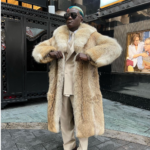
    At the sight of Durella’s car, a clean, dull blue Toyota “Big Daddy” Camry, the people around hailed him, “Miskiya. King of the Zanga. Zanga.” Durella ecstatically answers to these nicknames. Before he was done dapping people up, chairs had been arranged under a tree. Years after he vanished from the scene, at home in Mushin, he is still loved.

    I first broached the topic of interviewing him for this story in February. But after several calls, two months and a few weeks of patience, Durella and I finally sat, side by side in Mushin, to converse. It was on April 20, 2025, a day with two special worldwide celebrations: Easter Sunday and 420 (a special day for stoners).

    It is 9:00 AM, and we’re in the premises of a government primary and secondary school. On one end, smokers are buying and blazing. On the other, Agbo, water, Alomo Bitters, white rice, beans, and spaghetti are being sold.

    Get More Zikoko Goodness in Your Mail

    Subscribe to our newsletters and never miss any of the action
    Conversation starts…

    As part of the 420 celebration rites, I also had to partake in the smoking. Finally, I asked him where he had been all these years. “I didn’t step away from the limelight,” he says. “I’ve been here. I’m always here. It’s not just the way it was.” 

    His response doesn’t read like a veteran’s ego brushing off an arguable statement. For him, it’s about the owner of the story telling it right. When I asked what he has been working on recently, he said he has been “trying to discover new talents from the Mainland to Lagos Island, working and searching for new lamba and ‘formations’.”

    But what about his own music? “I understand that people may not jam me like before, but I’ve been creating and recreating.” 

    Then he goes back to 2014 to rehash how his fame took a hit. “You know, I was in Paris for a while. By the time I came back, things had changed. The music changed. The sound changed. We didn’t have an Alaba market to distribute again. The internet came too.”

    Fame takes a hit

    Here is how Durella remembers the incident: “In 2014, around the time I dropped my single, ‘Mary’, a show promoter called Bola Paris booked me to perform at a Nigerian fashion show in Paris. He took me to perform at some places, but they were not fashion show events. I found out later that the fashion event had happened in January 2014. Anyways, I demanded the remaining balance of my booking fee ($50,000 of $100,000). While I waited [in Paris for weeks] for payment, my Schengen Visa expired.” He ended up spending a year in France.

    He said the balance never came. All he got were promises and a lodge at a hotel. When the hotel bills entered demurrage, he said Bola Paris rented an apartment for him. They made music together, but none came out. The house rent eventually expired, too, and by then, Bola Paris had bolted. His then-manager, Josh, ran away too, seizing the opportunity to japa, leaving Durella alone and stranded. Josh is now a pastor in Paris.

    Durella fell on hard times. He said help didn’t come from the motherland, friends, or colleagues. Eventually, he fell in love with a Cameroonian woman, the only person in his building who spoke pidgin. Soon, they had a daughter. He wouldn’t say more about her, but he said this: “My baby mama became my helper who offset my demurrage and paid for my flight back to Nigeria in 2015.”

    Durella said he was never booked to perform at the fashion show. It was a front for a travel scam that illegally took immigrants into the country. He was the cover.

    “They said it was Durella and the Zangalists Band, but these ‘Zangalists’ are 300 African immigrants,” he said. “Some were lawyers and doctors who needed a French visa. I met one of them who asked me if I charged Bola Paris a lot because he paid him ₦3M to enter Paris. I discovered Bola Paris and his cohorts registered those people as my entourage and members of a music band I didn’t even create. That almost made me run mad. Even Fela and Egypt 80 didn’t travel with 300 people.” 


    READ NEXT: Reminisce Celebrates Fan Response to “Alaye Toh Se Gogo”


    More disappointments and trying again

    When Durella returned to Nigeria, he tried to mingle again, “but things had changed.” The industry and the public had moved on. “Most of my contemporaries weren’t popping again either,” he said. “Some of the DJs who used to spin my music back then had even relocated to the U.S and the U.K. I didn’t see a lot of people again. To regain relevance, I had to go through the new hot guys, but they were all gatekeepers.” 

    Before he went to Paris, he said he didn’t make friends in the industry. “I only offered assistance to people, I didn’t make friends with them except those who came before me, like Tony Tetuilla and 2Baba. They still pick up my calls. Someone like Timaya is looking for people to use to climb to fame. He tells me he’s busy whenever I call. Olamide too, but when he wanted me to give him a spot on my ‘Buddy Hanging’ song back then, he wasn’t busy, and I didn’t claim to be busy.”

    Speaking about the experience made the disappointment he felt from the industry new again. But he said he has moved on. “I stood firm in my confidence that I’m the guy. I brought new school vibes and lamba into the game before these new schools came. The same lamba I used to operate back then is what they use to date. Look around, Shallipopi and co are on top of the game, operating with lamba too. They’re thriving on what someone like me built.”

    After he cooled off for a few seconds, Durella picked up again: “I’m not trying to give anyone a bad name. They all worked hard and deserve what they get, but now their idols are nothing to them. Most of them still use the model I left, but won’t acknowledge or respect me.”

    Record label problems

    In 2011, three years after Durella released his debut album, King of the Zanga, he parted ways with TC Records. In an interview he did in 2023, he accused the label of stealing from him. He said he has not been paid royalties for over a decade and has not received any proceeds from the use of his songs.

    “They ripped me off,” he said. But Durella hasn’t been able to sue TC Records. He said that everyone who has tried to help him legally asked for his copy of the contract with the label, but he has nothing to tender. “Jide, AKA Rasta, the manager I had then, who was also my friend, went to jail for a crime he committed in the U.K. The Interpol came to arrest him in Nigeria and took every document that they found with him. Who will I call to ask for my label contracts and documents?”

    When I asked him about Ikonic Records, the second record label he signed to, he replied, “Nothing much came out of it. The label boss made a lot of promises that didn’t happen.”

    Lessons and new plans 

    Going over the timeline of his rise to the present, Durella has come to a realisation. “I learned patience. I was never a patient guy, but all these situations that happened to me taught me that. And that’s what I’ve been practising.”

    “I’m working on new stuff that I’ll put out. But it has to be meaningful and impactful. To do that, I need to work patiently. There are five budding recording artists under my supervision, too. These are the people who’ll take over the Zanga legacy. I’m excited for their music too.” 

    It was still a 420 morning. Around 11:00 AM, the sun was already out, and Durella was planning his exit. He told me about a show he had that night in Igbo Owu, his childhood area in Mushin, so I went to watch him perform. 

    It was a big night for the golden son of Mushin and those who love him. They came out in packs to watch him live on stage, and he delivered, though briefly. He had another event to be at. From old hits to unfamiliar but impressive new songs influenced by the slow groove of the current soundscape, he had the people cheering loudly. Durella’s presence woke up several blocks of streets, and his quick exit immediately after the performance, in turn, burst into a scuffle.

    If there’s anything in Durella’s story, it’s that at home, idols never stop being idols. Although out of the limelight and music radar, he’s still a man of his people — the “King of the Zanga.”


    ALSO READ: How Making His Debut Album 10 Years After Signing His First Record Deal Taught Zoro Patience

    [ad][/ad]

  • To the average Nigerian music listener in Nigeria, shedding an emotional burden on wax is synonymous with making music for those who are losing it. The younger audience, especially, gives the music a distinctive, morose name like Afro-depression quicker than the artist can say what actually inspires their tracks. Before they know it, they’ve become a spokesperson for the listener’s existential crises. 

    This is the box Lucid, a 22-year-old singer from Abuja born Victor Barnabas Nanribetmun, has found himself in, even though he doesn’t fit into it. Let’s examine Lucid’s inspiration and what it means to be a young artist in 2024, stripping down the stereotypes about his music to decipher the context of his two popular “Afro-depression” songs, Hooligan and Therapy.

    Lucid

    Since Omah Lay’s 2020 “Get Layd” release that drowned him purple in vulnerability and confessions, there’s been a sudden buzz use of the word “depression” in connection with Nigerian music. No doubt, mental health deserves more awareness, and Omah’s music has a melancholy to it. His soft Afropop, soulful falsetto and emo-focused phrasings have inspired more artists. 

    Lucid is one of them, but only on a sonic level.

    Lucid caught my attention with Hooligan, a track that came out alongside Why in a two-song single package on February 7, 2024. He opened the song with “Righteous boy I am, but this life turn me to sinner man / And each time I do the best I can, something go turn me to hooligan”, a confession about taking unexpected turns when life doesn’t pan out how he wants. Scratching off the surface of the lyrics that painted him a depressed kid with little affinity for inside life, Hooligan expresses that extreme instincts take charge when faith is tested. [ad][/ad]

    Although Lucid sings with an understanding of the duality of life, he maintains enough consciousness to stay in the right lane. “I’m lucky to come from a good background. My family are good folks. My dad is a pastor. But I understand that sometimes hands get dirty because it’s the only way to make something work out. That was how I felt when I wrote Hooligan, guided by the things I’ve heard and seen too,” the young singer said when I asked him about this.

    Lucid

    “This life turn me to sinner man” from his Hooligan chorus brings to mind the “I’m a born sinner” line on J. Cole’s Born Sinner. In Christianity, every human is born a sinner, but we can get better through repentance. Although J. Cole swore he’d die better than a born sinner, Lucid is yet to find that clarity. Speaking of his hooliganism in the context of the song, he’s a young adult who finds himself drowning in liquor or in bed with a partner faster than he could finish his vow to abstain from both.

    Lucid

    Therapy is a song off his seven-track “Hi I’m Lulu” EP that came out in May 2023 — the only song in his discography that actually hits on mental health. The lyrics express the feeling of speaking to no one, being alone, an undiagnosed mental health issue and his need for therapy. This song calls for concern for his health and not a satirical categorisation that sets artists up for uninformed comparisons and stan wars.

    When I asked Lucid about the story behind Therapy, he said, “People around me might perceive me to be quiet and anti-social. This song tells them what I might not be able to tell them in actual conversations. It’s titled Therapy because I try to distract myself with anything I find therapeutic, which is mostly music. I know there are many people out there who can relate perfectly to this song, and my advice is to always try to be more positive, and whatever it is that takes you out of that dark space, use it as therapy.”

    Lucid

    “Afro-depression” is considered a playful tag as a subgenre for Nigerian dysphoric contemporary music. This is the wave Lucid has decided to latch on to as long as the listener keeps his name and music in conversation. This became clear after I asked him why he hasn’t shut down the “Afro-depression” label. “Most Nigerians consider a jam that isn’t upbeat an Afro-depression song.” Naive, but he knows where his art belongs. “I get sad like every human, but I’m not a sad artist,” he stated. 

    Lucid is as poignant in some of his songs as he is fun and explores light topics in others. He’s a versatile artist who engages his Afropop heritage and sometimes channels his inner Travis Scott. 

    “I understand being a young artist in 2024 means being different and outstanding every day. Many young cats are working as hard as I am. We’re at a time when one needs to maximise whatever he has. I can’t relent.” Lucid sees the saturated industry’s competition as motivation and charges it to continue to improve.

    His music isn’t Afro-depression, neither is it a musical offspring of Omah Lay’s. If anyone is carefully listening, Lucid’s music mirrors his experiences with matters of the heart, like love, intimacy and heartbreak. He wants to make evergreen music like his top influences, Fela Kuti and Asa.

  • Two years have passed since I discovered Mohbad’s music. Post-lockdown, sometime in early 2021, I was waiting for my school to resume so I could finish signing my clearance form and head for my NYSC programme.

    At home, young guys around me were broke and complaining. Most of us felt if we weren’t “bombing” a site or cashing out or spending crypto money, we were idle and wastemen. I could get by with my writing gig, but honestly, that didn’t matter to me. I equated every compliment, feeling and value to only money. I was under pressure to become a “Benefit Boy“. Like a battered ship, aimless, I looked for an anchor to hold on to. But nothing hooked until one evening when I was out with my guys looking for a good time.

    I remember that playlist clearly. A mix of selected Naija rap music and street-pop songs played in the background — then a special track cued in. It sounded a bit like highlife, with a sharp leading note and a softer riff playing together. One of the cleanest baritones I ever heard came on just as the music pulled me under. This voice told a story that gripped me.

    Sorry is the leading track on Mohbad’s official debut project titled Light (2020), and I still find it hard to go past that one song when I play the album. Sorry, a subtle apology to his parents and a cry-for-help, quickly became my nighttime ritual. The song didn’t put me to sleep, instead, it woke me up to the reality that other people were also going through things. At the time my desperation was at an all-time high, and it could’ve turned me into a Nigerian prince collecting “clients’” money online, I found Mohbad, born Aloba Ilerioluwa Oladimeji.

    The song, a semi-autobiography, runs for two minutes and twenty-four seconds. Not only did he tell about his humble and religious background, woes and strife, Imole (meaning light), as fans fondly call Mohbad, bared his then newly-found vices on the song. That was his superpower — an awareness of his environment and talent with a balance of street knowledge and soul. Even though my situation wasn’t as bad nor did we share the same waywardness he mentioned on the song, Sorry was my anchor throughout 2021. I found clarity and strength in his flawed story.

    I would need Mohbad’s discernment a year after. In September 2022, the street poet Mohbad had just released Peace, and I was two months fresh out of the NYSC — extremely free-spirited and filled with the ginger to make my own way. At that point, we both weren’t where we used to be. Allawee had stopped coming, my writing gigs were slow, and I was particularly scared of life after service. Mohbad, on the other hand, was in a row with his principals at Marlian Music, his former music label.

    Peace was the last song he put out under Marlian Music, and he made it count.

    The cultural intelligence that advises against saying everything at once is what Imole applied. He opened up on his unending battles with enemies disguising as friends, not naming names. In this song, what really hit me were the lines: “Surviver, mí ó nígba / money chaser / faster than a bullet / flying like a rocket / bad man will never rest”. My head was in that get-rich-or-die-trying space and those lines stuck in my memory and lips throughout the year.

    Mohbad was the soul of the street. A ghetto philosopher of hustle and survival, love and good times. He represented well for the trenches everytime, never at the expense of his faith which came forth on almost all his records.

    In 2023, he pushed his music independently under his own umbrella, Imolenization. Into the year, he put out Ask About Me, the seventh track on Blessed, his last project. Mohbad had left the problematic music label he was signed to and went back to pushing his music without backing. Ask About Me showed me a guy who had found his mojo. He’d regained his confidence and was ready to put hit songs in the street and clubs. Like most of his sounds that deeply resonate with me, this too came out at the time things still seemed bleak. The difference this time was I was moved by Mohbad’s triumphant energy.

    I was moving with blind faith but at the time, I just started regaining my confidence and showing my face outside again. No other song gave me the satisfaction that I was the shit than Ask About Me.

    Yesterday, Ask About Me, my mood lifter, my I’m-unfuckwithable anthem reminded me how far I’ve come. One of the deepest lyric that I really love due to its profoundness became a heart wrenching note yesterday. “Ikú tó p’àyá Teacher, ó lè pàwon niggas.” The death that killed the elder can also kill the young. Mohbad explicitly tells us that caskets don’t care for your age. To lose him at 27, these lines feel like a harsh premonition.

    Mohbad came, saw and experienced life. He documented his life, in visuals and verse, and gave his story to multitudes that didn’t know him personally. He loved the streets. The streets loved him back.

    While someone like me has probably lost a god, Mohbad claimed his and even talked to him in his music. I hope Imole’s finally at peace. I wish him light.

  • On August 21, 2023, Asake sold out the O2 Arena and filled it with his fans of afrobeats listeners screaming his lyrics.

    From his iconic entrance to flexing vocals with Fireboy DML and an almost-there show performance, Ololade Mr Money etched his name into the timeline of afrobeats artists who’ve had the iconic arena’s doors open up in their names.

    Asake’s dramatic entry

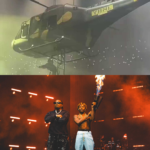
    Asake arrived on stage in a yellow and black helicopter with the YBNL logo sitting pretty on its side. We don’t call this guy Ololade Mr. Money for nothing. He has raised the bar for anyone who touches the O2 next.

    He paid tribute to the victims of his last concert

    A tribute video honoured Rebecca Ikumelo and Gabrielle who lost their lives at Asake’s O2 Academy (not to be confused with the O2 Arena) concert in 2022.

    Asake brought out Tunde Baiyewu

    It was a wholesome moment seeing Tunde Baiyewu, one of our veteran musicians, on stage to sing Ocean Drive — a song Asake sampled on Sunshine.

    He paid homage to Davido

    OBO had a show at the Afronation Fest in Detroit, U.S.A., on the same day, but Asake still paid respect to the old cat with his version of Davido’s No Competition

    He brought out other OGs

    Asake’s label boss, Olamide, came to perform Omo Ope and Amapiano with him. Tiwa Savage also sang some of her hits. Fireboy DML and Lil Kesh weren’t left behind either.

    Tribute to Wizkid’s mum

    Poco Lee and DJ Enimoney played some Wizkid songs, in honour of his mother’s passing on August 18, 2023.

    He performed his OG hit 

    Asake owned December 2020 with Mr. Money before people even knew him. He brought the jam back on the O2 stage.

    If Asake was this dramatic at his o2 concert, we wonder what actions his upcoming show at the Barclays Centre (New York) will unpack in September.

  • Among the current leading voices in the Nigerian music scene is the charismatic Somadina, a young female musician slowly penetrating the mainstream with radical, afro-psychedelic, emotion-lifting rock music.

    I first came across Somadina’s music in 2021. Her now deleted-off-internet debut EP titled Five Stages is a beautiful and melancholic musical interpretation of the stages of grief. It quickly became my life’s soundtrack for a few months, during a dark phase. Sometime in 2022, she shared that she doesn’t identify with the project anymore, hence its takedown, but she’s found a new channel to fully express herself.

    Off the strength of the cult-following she’s been building since her first official releases, IHY (I Hate You) (2018) and Lay Low (2019), she presented her album, Heart of The Heavenly Undeniable (HOTHU) in 2022. Ever since, she’s been going to music shows and on tours, from Lagos to Paris, Berlin to Accra, music taking her everywhere.

    Somadina was born in Garden City, Port Harcourt in 2002. She spent a year in Nigeria before going to the Netherlands to school and to stay with her dad. After going to London to secure a Sociology degree, she finally came back to Nigeria to pursue music in 2018. Her access to music as a kid was limited. She listened to Asa, Beyoncé, Rihanna and John Legend, only the music her dad listened to. But on coming back to Nigeria, she connected with the Alté community, collaborating with artists such as SGwaD, Lady Donli, Adey, etc.

    She’s breaking barriers and trailblazing her own path with her afropop fusion of R&B, punk and alternative rock music, and taking it beyond the barriers of Africa. In less than two weeks from now, (August 3 – 6, 2023), she’ll be performing at the 2023 Lollapalooza, Chicago, along with other Nigerian musicians like Tems and Rema, as well asinternational acts like Kendrick Lamar, Billie Eilish, Lana Del Rey, etc. On February 5, 2023, a month before her collaboration with NATIVE Sound System, Somadina played her first show in Los Angeles, courtesy of RnB Brunch. Between May 10-13, she took her Nollywood-punk sound to The Great Escape Festival 2023 in Brighton. On May 18, she was live at Live Nation UK; an event that brings artists and fans together to celebrate live music. On the 25th of May, the Kitty Amor remixes of her I Saw An Angel On The Roof & Wept song came out — the same day she was on the Royal Albert Hall stage in London, opening for her childhood hero, Asa.

    On July 12, the Gen-Z musician received the mainstream nod when The Headies, Nigeria’s most popular music award show, nominated her album, Heart Of The Heavenly Undeniable as one of the best Alternative albums of 2022. It’s an impressive feat, as it sits among strong contenders like Basketmouth’s Horoscope and Obongjayar’s Sometimes I Dream Of Doors

    READ: “Mami Wata” Is Taking Nollywood Around the Globe

    Unboxed by mainstream pressure and the dictates of the commercial market, Somadina forges ahead one release at a time, with her beaming falsetto. Somadina grew from a nomadic teenager who toured the UK with Odunsi the Engine and opened for Davido in Port Harcourt in 2019, to a songbird taking Nigerian pop culture to one of the world’s biggest festival stages in 2023. Go Somadina!

  • Should you have a baby with Portable or with DJ Cuppy? Take the quiz to find out: